
The Asklepion stands on a pine-shaded hillside about four kilometres southwest of Kos Town. The most celebrated ancient monument on the island and one of the most significant healing sanctuaries of the classical world. Built on three broad terraces connected by monumental marble staircases, the complex served simultaneously as a temple dedicated to Asclepius, god of medicine. A therapeutic centre where pilgrims sought cures through ritual and treatment. A medical school that carried forward the teachings of Hippocrates. The terraces rise in dramatic succession from the lower porticoes and baths fed by sacred springs, through the middle platform with its altars and temples. Plan the whole trip with Greece Tours.
To the upper terrace crowned by the grand Doric temple commanding sweeping views across the strait to the Turkish coast. The site embodies the fusion of religion. Science and architecture that defined ancient Greek approaches to healing. Its ruins preserve the physical legacy of the medical tradition born on this island.
Visitors ascending the terraces today walk the same stone paths that patients and physicians followed more than two millennia ago. Tracing the evolution of the sanctuary from its earliest structures on the middle terrace to the monumental expansions of the Hellenistic and Roman periods. The natural setting amplifies the experience: cypress and pine trees frame the marble columns. The scent of wild herbs drifts across the platforms. The panorama from the upper temple encompasses the town, harbour and distant mountains of Asia Minor. The Asklepion remains the centrepiece of any exploration of Kos, a site where the island’s identity as the birthplace of rational medicine takes tangible form in stone and landscape.
Understanding its layout, history and connection to Hippocratic tradition transforms a visit from a simple tour of ruins into an encounter with the foundations of Western medical thought.
What exactly is the Asklepion of Kos and why does it matter?
The Asklepion is an ancient healing sanctuary dedicated to Asclepius, the Greek god of medicine, built on three terraces on a hillside southwest of Kos Town.
The sanctuary occupies a sloping site chosen for its natural springs, clean air and commanding views, all considered essential to the healing process in ancient Greek thought. The three terraces rise in sequence, each level dedicated to different aspects of worship and treatment. The lower terrace contained porticoes where patients rested, bathing facilities fed by spring water, and administrative buildings. The middle terrace held the earliest temple of Asclepius, an Ionic structure, alongside altars where sacrifices and offerings took place. The upper terrace supported the largest temple, a Doric building visible from the sea, symbolising the sanctuary’s prestige and drawing pilgrims from across the Mediterranean.
The architectural progression from functional healing spaces to monumental religious structures reflects the inseparable relationship between medicine and faith in the ancient world.
Construction began in the fourth century BC, shortly after the death of Hippocrates, and continued through the Hellenistic and Roman periods as successive generations expanded and embellished the complex. The site reached its zenith during the second and third centuries BC, when Kos enjoyed prosperity and influence as a centre of learning and trade. Roman emperors and wealthy benefactors funded new temples, baths and porticoes, transforming the Asklepion into one of the most elaborate healing sanctuaries in the eastern Mediterranean. The ruins visible today represent layers of construction spanning more than six centuries, each phase adding to the sanctuary’s capacity to accommodate pilgrims and enhance its therapeutic reputation.
Marble columns, inscribed dedications and architectural fragments scattered across the terraces testify to the wealth and devotion that sustained the site.
The Asklepion served as both a religious shrine and a proto-hospital, blending ritual practices with empirical observation and treatment. Patients underwent purification rites, made offerings to Asclepius, and slept in special halls where they awaited healing dreams believed to be messages from the god. Priests interpreted these dreams and prescribed treatments that included diet, exercise, herbal remedies and bathing in the sacred springs. The medical school associated with the sanctuary taught anatomy, diagnosis and ethics, building on the rational approach to disease pioneered by Hippocrates. Graduates carried these methods throughout the Greek world, establishing the Asklepion as a fountainhead of medical knowledge.
The fusion of empirical medicine and religious ritual at the site illustrates the complexity of ancient healing practices.
The sanctuary’s significance extends beyond its historical function to its symbolic role in the development of Western medicine. The Hippocratic Oath, still invoked by physicians, emerged from the ethical tradition cultivated on Kos. The emphasis on observation. Documentation and patient care practised at the Asklepion laid groundwork for clinical medicine. The site’s rediscovery and excavation in the early twentieth century by Italian archaeologists brought international attention to the island’s medical heritage. Today the Asklepion stands as a monument to the transition from supernatural explanations of disease to rational, evidence-based approaches, a shift that defines the legacy of Hippocrates and the enduring importance of this terraced sanctuary on a hillside above the Aegean.
How are the three terraces of the Asklepion organised and what remains on each level?
The terraces ascend the hillside in a carefully planned sequence, each connected by wide marble staircases. The lower terrace contains the remains of porticoes, bathing facilities and support buildings.
The lower terrace, the first level visitors encounter, served as the functional heart of the healing complex. Porticoes with rows of columns provided shaded walkways and resting areas for patients awaiting treatment or recovering from therapies. The remains of a Roman-era bath complex occupy the western end, fed by springs that flowed down the hillside. These baths offered both therapeutic bathing and ritual purification, essential steps in the healing process. Foundations of administrative buildings and storage rooms line the terrace edges, indicating the logistical infrastructure required to support the flow of pilgrims. The terrace’s relatively flat expanse allowed for gatherings, processions and the daily activities of a busy sanctuary.
Fragments of inscribed stones and column drums scattered across the platform hint at the porticoes’ original grandeur.
A monumental staircase of white marble ascends from the lower terrace to the middle level, the oldest and most sacred part of the sanctuary. The middle terrace holds the foundations of the earliest temple of Asclepius, a small Ionic structure dating to the fourth century BC, built soon after the sanctuary’s founding. An altar stood in front of the temple, where priests conducted sacrifices and pilgrims left votive offerings. The terrace also supported a second, larger temple and additional porticoes that framed the open courtyard. Excavations have uncovered statue bases, dedicatory inscriptions and architectural elements that reveal the terrace’s role as the ceremonial centre. Patients participated in rituals here before proceeding to treatment areas or sleeping quarters.
The middle terrace’s compact layout and concentration of religious structures underscore its importance as the spiritual core of the Asklepion.
The upper terrace, reached by another grand staircase, dominates the site both physically and symbolically. The massive Doric temple of Asclepius, constructed in the second century BC, occupied the centre of this platform. Its columns rising above the landscape and visible from the harbour and town below. Only the foundations and scattered column sections remain, but the scale of the temple base conveys its original magnificence. The terrace’s elevation provides unobstructed views across the coastal plain to the sea and the mountains of Turkey. A vista that reinforced the sanctuary’s connection to the divine and the wider world. The open space surrounding the temple allowed for large gatherings and processions during festivals.
The upper terrace’s design emphasises monumentality and visibility, transforming the Asklepion into a landmark that announced the island’s medical and religious prestige to approaching ships.
The integration of the three terraces into a unified architectural composition demonstrates sophisticated planning and engineering. Retaining walls of massive stone blocks support each level, preventing erosion and creating stable platforms for construction. The staircases linking the terraces align on a central axis, guiding movement upward in a deliberate progression from practical healing spaces to sacred temples. Water channels and drainage systems managed the flow from the springs, directing it to baths and fountains on each level. The terraces’ orientation maximises sunlight and ventilation, factors the ancients considered vital to health. Walking the site today, visitors experience the spatial hierarchy that shaped the ancient pilgrims’ journey.
Ascending from the everyday world of treatment and rest to the elevated realm of divine healing and panoramic contemplation.
What is the connection between the Asklepion and Hippocrates?
Hippocrates, born on Kos in the fifth century BC and revered as the father of medicine, established a medical tradition that the Asklepion later institutionalised and perpetuated.
Hippocrates lived and practised medicine on Kos during the fifth century BC, a generation before the Asklepion’s construction. He revolutionised medical thought by rejecting supernatural explanations for illness and instead attributing disease to natural causes such as imbalance in bodily humours, diet, environment and lifestyle. His emphasis on careful observation, detailed patient histories and ethical conduct set a new standard for physicians. The Hippocratic Corpus, a collection of medical texts attributed to him and his followers, codified these principles and became foundational to Western medicine. The island’s reputation as a centre of healing attracted students and practitioners, creating a community of medical thinkers who continued his work.
The Asklepion emerged from this intellectual environment, built to honour Asclepius while advancing the rational methods Hippocrates championed.
The medical school associated with the Asklepion explicitly drew on Hippocratic teachings, training physicians in diagnosis, prognosis and treatment based on empirical evidence rather than divine intervention alone. Students studied anatomy through dissection, learned to recognise disease patterns and practised bedside observation. The school’s curriculum included the Hippocratic texts, ensuring that his principles of patient care, confidentiality and ethical responsibility guided new generations of healers. Graduates of the Asklepion carried these methods to cities across the Greek and Roman worlds, spreading the Kos tradition far beyond the island. The sanctuary thus functioned as both a temple and an academy, blending worship of Asclepius with rigorous medical education.
The combination of religious ritual and scientific inquiry at the site reflects the transitional nature of ancient medicine, where faith and reason coexisted.
The Plane Tree of Hippocrates, a massive tree standing in Kos Town near the harbour, symbolises the enduring link between the physician and the island. Tradition holds that Hippocrates taught students beneath its branches, though the current tree dates to a later period. The tree’s location near the ancient agora and the Castle of Nerantzia places it at the heart of the town’s historical landscape. Visitors often begin their exploration of Kos’s medical heritage at the plane tree before travelling to the Asklepion. Tracing the geographical and intellectual path from Hippocrates’ teaching to the sanctuary’s institutionalisation of his methods.
The tree serves as a tangible reminder of the island’s role in the history of medicine, a living monument to the father of the discipline.
The Asklepion’s preservation and interpretation emphasise its Hippocratic legacy, positioning the site as the physical embodiment of the medical revolution he initiated. Informational panels and guides highlight the connection between the sanctuary’s therapeutic practices and Hippocratic principles. Explaining how the site’s baths, diet regimens and herbal treatments reflected his holistic approach to health. The ruins themselves, with their emphasis on natural setting, clean water and open air, demonstrate the environmental factors Hippocrates identified as crucial to healing. The sanctuary’s decline in late antiquity and rediscovery in modern times have not diminished its symbolic power. It remains a pilgrimage site for medical professionals and historians who seek to honour the origins of their discipline.
The Asklepion stands as the architectural and institutional heir to Hippocrates, a place where his ideas took root and flourished.
What structures and features can visitors see on the Asklepion terraces today?
Visitors encounter the foundations and partial remains of temples, porticoes, staircases, altars and bathing facilities spread across the three terraces.
The lower terrace presents a broad platform where the outlines of porticoes and baths are visible as foundation walls and floor plans traced in stone. Sections of column bases mark the positions of the covered walkways that once framed the terrace. The Roman bath complex at the western end retains portions of its walls and channels that directed spring water into bathing pools. Visitors can walk among these foundations, gaining a sense of the terrace’s scale and the flow of patients through the healing spaces. Scattered architectural fragments, including column drums and carved capitals, lie where they fell or have been arranged by archaeologists.
The lower terrace’s openness and proximity to the entrance make it the most accessible part of the site, offering an introduction to the sanctuary’s layout and function.
The middle terrace, reached by the first grand staircase, contains the most archaeologically significant remains. The foundations of the earliest Ionic temple of Asclepius occupy the centre, a rectangular platform with column bases that indicate the temple’s modest size and elegant proportions. An altar base stands in front of the temple, a low stone structure where sacrifices took place. The terrace also holds the remains of a larger temple and additional porticoes, their foundations forming a complex pattern of walls and pavements. Inscribed stones and statue bases discovered here during excavations provide evidence of dedications and honours bestowed by grateful patients and benefactors.
The middle terrace’s concentration of religious structures and its position at the heart of the sanctuary make it the focal point for understanding the Asklepion’s sacred functions. The views from this level extend across the lower terrace to the coastal plain and sea.
The upper terrace, accessed by the second monumental staircase, offers the most dramatic architectural and natural features. The foundation of the grand Doric temple of Asclepius dominates the platform, a massive rectangular base with column positions marked by stone blocks. Several re-erected columns and capitals give visitors a sense of the temple’s original height and grandeur, though most of the structure has collapsed. The terrace’s elevation provides sweeping panoramas: to the north, the town and harbour; to the east, the strait and the Turkish coast; to the west, the slopes of Mount Dikeos. The open expanse surrounding the temple foundations allows visitors to walk the perimeter and appreciate the strategic choice of this hilltop location.
The upper terrace’s combination of monumental architecture and natural beauty creates the site’s most memorable experience, a place where the physical and spiritual dimensions of the sanctuary converge.
Throughout the terraces, the marble staircases remain among the best-preserved and most impressive features. The steps, though worn by centuries of use and weathering, retain their monumental scale and alignment, guiding visitors upward in the same progression ancient pilgrims followed. Retaining walls of fitted stone blocks support the terraces, their construction demonstrating the engineering skill required to create stable platforms on the sloping hillside. Pine and cypress trees shade portions of the site, softening the marble and stone with greenery and providing relief from the sun. Wildflowers and herbs grow among the ruins, adding colour and scent to the landscape.
The combination of architectural remains, natural vegetation and expansive views creates an atmosphere that transcends the fragmentary state of the ruins. Allowing visitors to imagine the sanctuary’s original splendour and understand its enduring significance.
How did the Asklepion function as a healing sanctuary in ancient times?
Patients arrived seeking cures for ailments, underwent purification rituals and made offerings to Asclepius. They bathed in sacred springs, followed prescribed diets and exercise regimens, and slept in special halls awaiting healing dreams.
Pilgrims travelled to the Asklepion from across the Greek world, drawn by the sanctuary’s reputation for effective treatments and divine intervention. Upon arrival, they registered with temple officials and made initial offerings at the altars on the middle terrace. Purification rites, including bathing in the spring-fed facilities on the lower terrace, prepared patients spiritually and physically for healing. The baths served both hygienic and ritual purposes, cleansing the body while symbolising the removal of impurity that the ancients believed contributed to disease. Patients wore simple garments and abstained from certain foods as part of the purification process.
The sanctuary’s priests, who also functioned as physicians, conducted examinations and recorded symptoms, initiating the diagnostic process that combined observation with religious interpretation. The structured entry procedures ensured that all who sought healing participated in the sanctuary’s established protocols.
The central therapeutic practice involved incubation, a ritual in which patients slept in designated halls on the lower or middle terrace, awaiting dreams sent by Asclepius. The god appeared in these dreams, either healing the patient directly or revealing the treatment required. Priests trained in dream interpretation met with patients each morning to discuss their nocturnal visions and prescribe therapies based on the divine messages. Treatments included herbal medicines prepared from plants grown in the sanctuary’s gardens, dietary regimens tailored to individual conditions, physical exercises and massage, and continued bathing in the therapeutic springs. The combination of rest, clean water, controlled diet and psychological reassurance provided by the dream rituals created conditions conducive to recovery.
The incubation practice illustrates the ancient belief that healing required both divine favour and human action, a partnership between god and physician.
The sanctuary’s physicians, educated in the Hippocratic tradition, applied rational diagnostic methods alongside the religious rituals. They examined patients, took detailed histories and observed the progression of symptoms over time. The medical school associated with the Asklepion trained students in anatomy, pharmacology and surgical techniques, ensuring a supply of skilled practitioners. Physicians prescribed treatments based on the theory of humoral balance, recommending foods, activities and remedies to correct imbalances of blood, phlegm, yellow bile and black bile. The sanctuary’s library contained medical texts and case records, allowing physicians to consult precedents and refine their approaches.
The integration of empirical medicine with temple rituals created a comprehensive healing environment where patients benefited from both the placebo effect of religious faith and the genuine therapeutic value of rest, nutrition and herbal treatments. The Asklepion’s success rested on this dual approach.
Patients who experienced cures left votive offerings at the sanctuary, including inscribed tablets describing their ailments and recoveries, anatomical models of healed body parts, and monetary donations. These dedications served both as thanks to Asclepius and as testimonials to the sanctuary’s effectiveness, attracting new pilgrims. The accumulation of offerings enriched the sanctuary, funding expansions and improvements. Festivals honouring Asclepius brought crowds to the site, reinforcing its role as a religious and social centre. The sanctuary’s reputation spread through networks of former patients and travelling physicians, establishing the Asklepion as one of the premier healing centres of the ancient Mediterranean. The blend of faith, empirical treatment and community support created a model of healthcare that persisted for centuries.
Only declining with the rise of Christianity and the closure of pagan sanctuaries in late antiquity.
What makes the setting and views of the Asklepion so distinctive?
The sanctuary occupies a pine-covered hillside with natural springs, chosen for its clean air, water and elevation.
The hillside location about four kilometres southwest of the town provided the sanctuary with a microclimate distinct from the coastal plain. The elevation ensures cooler temperatures and breezes, factors the ancients recognised as beneficial to health. Pine and cypress trees cover the slopes, their shade and fragrance contributing to the site’s tranquil atmosphere. Natural springs emerge from the hillside, supplying the sanctuary with fresh water essential for bathing, drinking and ritual purification. The soil and vegetation supported gardens where medicinal herbs and plants grew, providing raw materials for treatments. The choice of this specific site reflects a sophisticated understanding of environmental factors in healing, combining practical advantages with symbolic resonance.
The hillside’s separation from the town created a sacred precinct removed from everyday distractions, a place where patients focused entirely on recovery.
The views from the terraces, particularly the upper level, encompass a vast panorama that reinforced the sanctuary’s prestige and spiritual power. To the north, the coastal plain stretches to the harbour and town, the ancient agora and later fortifications visible in the distance. The sea beyond shimmers in shades of blue, dotted with islands and boats. To the east, the strait narrows to the Turkish coast, the mountains of Asia Minor rising across the water. The proximity of Bodrum, the ancient Halicarnassus, placed the Asklepion within sight of another major cultural centre, linking the sanctuary to broader networks of trade and pilgrimage.
To the west, the slopes of Mount Dikeos rise toward the island’s interior, their forested ridges marking the transition from coast to highlands. The panoramic setting elevated the sanctuary above the mundane world, positioning it as a threshold between earth and sky, human and divine.
The visibility of the Asklepion from the sea and town amplified its symbolic importance. Ships approaching the harbour saw the white marble columns of the upper temple gleaming on the hillside, a beacon announcing the island’s identity as a centre of healing. The sanctuary’s prominence in the landscape served as a constant reminder of the island’s medical heritage and the presence of Asclepius. Processions and festivals at the Asklepion were visible from the town, integrating the sanctuary into the civic and religious life of the community. The visual connection between the harbour. Where Hippocrates reputedly taught beneath the plane tree.
The hillside sanctuary created a narrative geography linking the father of medicine to the institution that perpetuated his legacy. The setting thus functioned as both a practical healing environment and a stage for the public performance of the island’s cultural identity.
Modern visitors experience the same interplay of architecture and landscape that ancient pilgrims encountered, though the ruins now stand silent and the rituals have ceased. The pine trees frame the marble fragments, their green contrasting with the white stone and blue sky. Wildflowers bloom among the foundations in spring, adding splashes of colour to the terraces. The scent of herbs and resin drifts on the breeze, evoking the gardens that once supplied the sanctuary’s physicians. The views remain unchanged, the same mountains and sea that patients gazed upon while awaiting healing. The setting’s natural beauty and historical resonance combine to create an experience that transcends the fragmentary state of the ruins.
Allowing visitors to connect with the sanctuary’s original purpose and the timeless human quest for health and wholeness.
How do visitors reach the Asklepion from Kos Town and what are the transport options?
The Asklepion lies about four kilometres southwest of Kos Town along a well-marked road. Visitors reach the site by rental car, scooter, bicycle, taxi or the small tourist train that runs from the town centre during the warmer months.
Rental cars and scooters offer the most flexible transport, allowing visitors to travel at their own pace and combine the Asklepion with other sites. The road from Kos Town heads southwest through the suburb of Platani, a village historically inhabited by the island’s Turkish community, then continues into the hills. The route is paved and well-maintained, suitable for all vehicles. Signage in Greek and English marks the turnoff to the Asklepion, and a car park at the site provides ample space for vehicles. The drive takes around ten minutes from the town centre, making the sanctuary an easy half-day excursion.
Visitors with cars can also explore nearby villages such as Asfendiou and Zia on Mount Dikeos, extending the trip into a full day of sightseeing. The convenience of private transport makes it the preferred option for those planning to visit locations.
Bicycles provide an environmentally friendly and enjoyable way to reach the Asklepion, fitting the island’s reputation as a cycling destination. The route from town is relatively flat until the final approach, where the road climbs gently toward the hillside site. Dedicated cycle paths and low traffic volumes on the secondary roads make the journey safe and pleasant. Rental shops in Kos Town offer a wide range of bicycles, from basic models to electric-assist versions that ease the uphill sections. The ride takes around twenty to thirty minutes depending on fitness and bike type. Cyclists can lock their bikes at the site entrance and explore the terraces on foot.
The journey by bicycle adds a dimension of physical engagement to the visit, echoing the ancient emphasis on exercise and outdoor activity as components of health. Many visitors combine cycling to the Asklepion with stops at roadside cafes or viewpoints along the way.
Taxis provide direct, comfortable transport for those preferring not to drive or cycle. Drivers in Kos Town are familiar with the Asklepion and can arrange return trips or wait at the site while visitors explore. Fares are metered, and the short distance keeps costs reasonable. Taxis accommodate small groups, making them a practical choice for families or travellers sharing expenses. Arranging a taxi through a hotel or by phone ensures availability, particularly during peak season when demand increases. The taxi option suits visitors with limited time or mobility concerns, delivering them directly to the entrance without the navigate roads or manage a vehicle.
Drivers often provide commentary on the route and the site, adding context to the journey.
The tourist train, a small road train that departs from the town centre near the harbour, offers a guided option during the warmer months. The train follows a set route to the Asklepion, with commentary in languages describing the site’s history and significance. The journey takes around twenty minutes each way, and tickets include entry to the archaeological site or are sold separately depending on the operator. The train’s schedule aligns with typical visiting hours, providing regular departures and returns throughout the day. Families with children often favour the train for its novelty and ease, while independent travellers appreciate the convenience of not needing to arrange transport.
The train’s visibility and distinctive appearance make it easy to locate near the harbour, and staff provide information on departure times and ticket prices. Combining the train with a visit to things to do in Kos creates a structured, hassle-free excursion.
What practical information do visitors need for exploring the Asklepion site?
The archaeological site operates with seasonal hours, typically opening mornings through late afternoon. Visitors purchase tickets at the entrance, with reduced rates for students and seniors.
The entrance to the Asklepion lies at the base of the terraces, where a ticket booth and small visitor centre provide access and orientation. Operating hours vary by season, with longer days in summer and reduced hours in winter, though specific times change and visitors consult current schedules before travelling. Tickets grant access to all three terraces and the surrounding grounds, with fees set by the Greek archaeological service. Reduced rates apply to students with valid identification, seniors and children, while certain days offer free admission to all visitors. The ticket booth accepts cash, and visitors receive a printed ticket and site map.
The visitor centre displays a model of the sanctuary showing its original layout, helping visitors visualise the complete complex before exploring the ruins. Brochures in languages provide historical background and descriptions of the main structures.
The terrain at the Asklepion presents challenges that require preparation and appropriate attire. The terraces are paved with ancient stone, worn smooth in places and uneven in others, creating tripping hazards. The marble staircases connecting the levels are steep and lack handrails, demanding careful footing. Visitors with mobility limitations find the upper terrace difficult to reach, though the lower and middle levels remain accessible with caution. Sturdy walking shoes with good grip are essential; sandals and flip-flops are inadequate for the conditions. The site’s elevation and open exposure mean strong sun and heat during summer months, with temperatures often exceeding thirty degrees Celsius. Shade is limited to the areas beneath pine trees, and no covered structures provide relief.
Visitors bring hats, sunglasses and high-SPF sunscreen to protect against sunburn. Carrying water is crucial, as no refreshment facilities operate within the archaeological site, though a small cafe near the entrance offers drinks and snacks.
Informational panels positioned throughout the terraces provide context and explanations in Greek, English and other languages. The panels describe the function of each terrace, identify specific structures and outline the sanctuary’s history from its founding through its decline. Diagrams and reconstructions help visitors interpret the fragmentary remains, showing how the temples and porticoes appeared in antiquity. The panels also explain the connection to Hippocrates and the medical practices conducted at the sanctuary. Visitors who take time to read the panels gain a deeper understanding of the site’s significance and the daily life of ancient patients and physicians.
Guided tours, available through tour operators in Kos Town, offer additional insights and answer questions, though independent visitors with the panels and a guidebook can achieve a thorough understanding. The combination of physical exploration and informational resources creates a rewarding educational experience.
Photography is permitted throughout the site, and the Asklepion offers exceptional opportunities for capturing both architectural details and panoramic landscapes. The marble columns and staircases photograph well in the soft light of early morning or late afternoon, when shadows add depth and texture. The views from the upper terrace provide dramatic backdrops for wide-angle shots encompassing the sea, coast and mountains. Visitors respect the archaeological remains by not climbing on fragile structures or removing any stones or artefacts. The site’s natural beauty and historical resonance make it a highlight of any visit to the island, and adequate time allocation allows for thorough exploration without rushing.
Most visitors spend between one and two hours at the Asklepion, though those with deep interest in ancient history or medicine linger longer. Planning the visit for morning or late afternoon avoids the midday heat and crowds, enhancing the experience and allowing for contemplative engagement with the ruins.


How does the Asklepion connect with other historical sites and attractions in Kos Town?
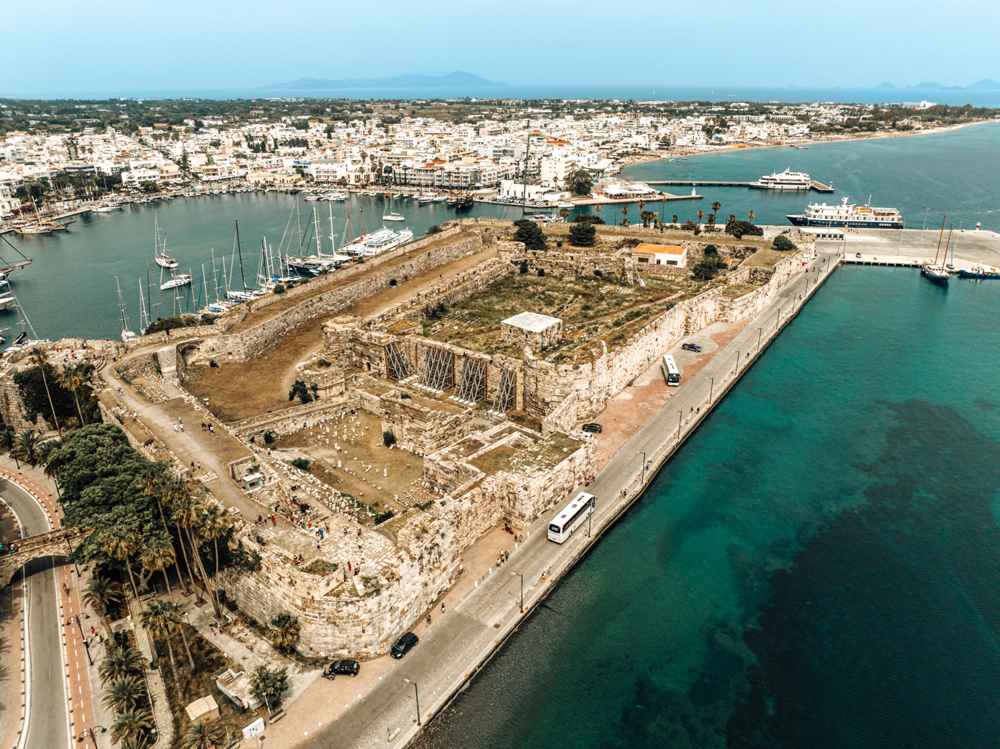
The Asklepion forms part of a network of ancient and medieval sites centred on Kos Town, including the Plane Tree of Hippocrates, the ancient agora, the Casa Romana, the odeon and the Castle of Nerantzia.
The Plane Tree of Hippocrates, standing in a small square near the harbour in the town centre, serves as the symbolic starting point for exploring the island’s medical heritage. The massive tree, supported by scaffolding due to its age and size, marks the traditional site where Hippocrates taught students in the fifth century BC. Adjacent to the tree, the Castle of Nerantzia, built by the Knights of St John in the fourteenth century. Incorporates ancient columns and stones from earlier structures, illustrating the layers of history concentrated in the town. The ancient agora, located near the tree, preserves the foundations of temples, stoas and civic buildings from the Hellenistic and Roman periods.
Visitors walking from the harbour to the agora encounter these sites in quick succession, experiencing the continuity of settlement and the reuse of sacred and public spaces across millennia. The proximity of these landmarks to the modern town centre makes them easily accessible on foot.
The Casa Romana, a restored Roman villa about one kilometre from the harbour, offers a glimpse of domestic life in the imperial period. The villa’s mosaics, frescoes and courtyard layout demonstrate the wealth and sophistication of Kos’s Roman elite. The site includes a small museum displaying artefacts from the villa and other excavations. The odeon, an ancient theatre near the Casa Romana, retains its semicircular seating and stage area. Hosting occasional performances and providing a tangible connection to the island’s cultural life in antiquity. These sites, along with the agora and the archaeological museum in the town centre, create a concentrated zone of historical attractions.
Visitors exploring the town on foot or by bicycle cover the main sites in hours, then travel to the Asklepion to complete the picture of ancient Kos. The geographical and thematic links between the town sites and the sanctuary reinforce the island’s identity as a centre of healing and learning.
The archaeological museum in Kos Town houses artefacts from the Asklepion and other island sites, including statues, inscriptions, medical instruments and votive offerings. The museum’s collections provide context for the ruins, displaying objects that once adorned the sanctuary’s temples and illustrating the daily practices of physicians and patients. Statues of Asclepius and Hippocrates, along with reliefs depicting healing scenes, connect the museum’s holdings to the sanctuary’s religious and medical functions. Visitors who tour the museum before or after visiting the Asklepion gain a richer understanding of the site’s material culture and the broader archaeological landscape of Kos.
The museum’s location in the town centre makes it a convenient stop on any itinerary, and its air-conditioned galleries offer respite from the heat. Combining the museum with the outdoor sites creates a balanced experience of indoor and outdoor exploration.
Planning an itinerary that includes both the Asklepion and the town sites requires logistical coordination but rewards visitors with a comprehensive view of the island’s history. A typical day begins with a morning visit to the Asklepion, when temperatures are cooler and the site less crowded. After exploring the terraces and enjoying the views, visitors return to town for lunch and an afternoon tour of the agora, Casa Romana and museum. The Plane Tree and castle, located near the harbour, provide a convenient final stop before dinner. Alternatively, visitors dedicate separate days to the sanctuary and the town, allowing more time at each location and reducing the pace.
The compact geography of Kos and the concentration of sites within a small area make such itineraries practical and enjoyable. Travellers considering where to stay in Kos find that accommodation in or near the town centre provides easy access to all major attractions, minimising travel time and maximising opportunities for exploration.
What role did the Asklepion play in the broader network of ancient healing sanctuaries?
The Asklepion of Kos ranked among the most prestigious healing sanctuaries in the ancient Greek world, alongside Epidaurus in the Peloponnese and Pergamon in Asia Minor.
Healing sanctuaries dedicated to Asclepius, known collectively as Asklepieia, proliferated throughout the Greek world from the fifth century BC onward. Each serving regional populations while maintaining connections to the broader cult. Epidaurus, the oldest and most famous, set the architectural and ritual template that other sanctuaries followed, including the use of terraced layouts, incubation halls and theatres. Pergamon, on the coast of Asia Minor, rivalled Kos in prestige and medical expertise, its sanctuary featuring elaborate baths, libraries and treatment facilities. The Asklepion of Kos distinguished itself through its direct link to Hippocrates, whose rational approach to medicine elevated the sanctuary’s reputation beyond religious healing alone.
Physicians trained at Kos carried the Hippocratic method to other sanctuaries and cities, creating a diaspora of medical knowledge centred on the island. The sanctuary’s location on a major maritime route between Greece and Asia Minor facilitated the flow of pilgrims, ideas and resources.
The architectural similarities among Asklepieia reflect shared religious practices and the dissemination of successful design solutions. Terraced layouts maximised the use of sloping sites while creating dramatic processional routes. Incubation halls, baths fed by sacred springs and open-air altars appeared at most sanctuaries, standardising the therapeutic experience. Theatres and stadia hosted festivals and games honouring Asclepius, reinforcing the social and communal aspects of healing. The Asklepion of Kos adopted and adapted these elements, its three-terrace design echoing Epidaurus while incorporating local topography and resources. The sanctuary’s physicians and priests maintained contact with their counterparts at other Asklepieia, exchanging knowledge about treatments, dream interpretation and temple administration.
Inscriptions record honours and dedications sent between sanctuaries, evidence of a network that transcended individual sites. The shared identity of Asklepieia created a pan-Hellenic institution that unified diverse regions under the banner of Asclepius and the pursuit of health.
The Asklepion’s medical school set it apart from sanctuaries focused primarily on religious healing. While all Asklepieia employed priests who interpreted dreams and prescribed rituals, Kos trained physicians in anatomy, surgery and pharmacology, disciplines rooted in empirical observation rather than divine revelation. The school’s curriculum included the Hippocratic texts, which emphasised natural causes of disease and the importance of prognosis, diet and lifestyle. Graduates of the Kos school established practices in cities throughout the Mediterranean, spreading the Hippocratic method and enhancing the sanctuary’s influence. The school’s reputation attracted students willing to travel great distances for training, creating an international community of medical scholars.
The combination of religious sanctuary and medical academy made the Asklepion a unique institution, bridging the gap between traditional healing cults and the emerging discipline of rational medicine. This dual identity ensured the sanctuary’s prominence even as medical thought evolved away from supernatural explanations.
The decline of the Asklepion in late antiquity mirrored the fate of pagan sanctuaries across the Roman Empire. The rise of Christianity brought official suppression of pagan cults, and imperial edicts closed temples and banned sacrifices. The Asklepion’s medical school persisted longer than its religious functions, as physicians continued to practise and teach even after the temples fell silent. Earthquakes and neglect accelerated the sanctuary’s physical decay, and local populations quarried the ruins for building materials. The site faded from memory until Italian archaeologists rediscovered and excavated it in the early twentieth century, revealing the terraces and structures that had lain buried for centuries.
The excavation and subsequent restoration brought international attention to the Asklepion, establishing it as a key archaeological site and a symbol of the island’s medical heritage. Today the sanctuary attracts scholars, medical professionals and tourists who seek to understand the origins of Western medicine and honour the legacy of Hippocrates and the healing tradition he inspired.
Frequently Asked Questions
How much time do visitors explore the Asklepion thoroughly?
Most visitors spend between one and two hours at the Asklepion, allowing time to walk all three terraces, read the informational panels and enjoy the views. Those with a deep interest in ancient history or medicine linger for three hours, examining architectural details and contemplating the site’s significance. The visit begins at the entrance, where a brief orientation at the visitor centre helps visitors understand the layout. Walking the lower terrace and examining the bath and portico foundations takes around twenty minutes. Ascending to the middle terrace and exploring the temple foundations and altars requires another twenty to thirty minutes.
The climb to the upper terrace and time spent appreciating the panoramic views and the grand temple remains adds another thirty minutes. Photography, rest breaks and reading the informational panels extend the visit. Visitors arriving in the cooler morning hours or late afternoon enjoy more comfortable conditions and better light for photography. Combining the Asklepion with other sites in the area, such as the villages on Mount Dikeos, creates a full-day excursion. Allocating adequate time ensures a rewarding experience without feeling rushed, allowing the site’s historical and natural beauty to make a lasting impression.
Can visitors with mobility challenges access the Asklepion terraces?
The Asklepion presents significant accessibility challenges due to its terraced layout and ancient construction. The lower terrace is relatively flat and accessible from the entrance, allowing visitors with limited mobility to explore the portico and bath foundations. The marble staircases connecting the terraces are steep, uneven and lack handrails, making them difficult or impossible for wheelchair users and those with severe mobility impairments. The middle and upper terraces require climbing these staircases, and no alternative routes or ramps exist. Visitors who cannot manage the stairs miss the temple foundations and panoramic views on the higher levels, though the lower terrace and entrance area still offer a meaningful experience.
The site’s historical nature and protected status limit the possibility of modern accessibility modifications. Visitors with mobility concerns assess their capabilities realistically before attempting the climb. Companions can provide assistance on the stairs, but the uneven surfaces and lack of support structures demand caution. The visitor centre near the entrance provides information and a model of the sanctuary, offering an overview for those unable to explore the full site. Planning ahead and understanding the terrain ensures that all visitors, regardless of physical ability, can engage with the Asklepion to the extent their circumstances allow.
What is the best time of year to visit the Asklepion?
Spring and autumn offer the most comfortable conditions for visiting the Asklepion, with mild temperatures, blooming wildflowers and fewer crowds than the peak summer months. Spring, from April through early June, brings green hillsides, flowering plants among the ruins and pleasant weather ideal for walking and photography. Autumn, from September through October, provides warm but not oppressive temperatures and clear skies that enhance the panoramic views. Summer, particularly July and August, sees high temperatures often exceeding thirty degrees Celsius. Intense sun and larger numbers of visitors, making early morning or late afternoon visits essential to avoid heat and crowds.
Winter, from November through March, brings cooler, sometimes rainy weather and reduced operating hours, but also solitude and dramatic light for those willing to brave uncertain conditions. The site’s elevation and exposure mean wind and sun are factors year-round. Visitors planning trips around how to get to Kos coordinate their travel dates with the preferred season for outdoor exploration. Spring and autumn balance comfortable weather, natural beauty and manageable visitor numbers, making them the ideal windows for experiencing the Asklepion at its best. Checking local weather forecasts and site operating schedules ensures a successful visit regardless of season.
Are guided tours of the Asklepion available and worthwhile?
Guided tours of the Asklepion are available through tour operators in Kos Town, offering expert commentary and historical context that enhance the visit. Professional guides explain the sanctuary’s architecture, the medical practices conducted there and the connection to Hippocrates, answering questions and pointing out details visitors overlook. Tours typically last around ninety minutes and include transportation from the town centre, eliminating the arrange separate travel. Group tours accommodate visitors and operate on fixed schedules, while private tours offer personalised pacing and itineraries. The guides’ knowledge of ancient medicine, Greek history and archaeology adds depth to the experience, transforming the ruins from abstract fragments into a coherent narrative.
Visitors who prefer independent exploration find the informational panels and guidebooks sufficient for understanding the site, though they miss the interactive element and nuanced insights a guide provides. Tours suit first-time visitors, those with limited time and travellers seeking a structured, educational experience. Independent visitors with strong backgrounds in ancient history or those who prefer solitary contemplation find self-guided exploration more rewarding. The choice depends on personal learning style, budget and interest level. Both approaches offer valuable experiences, and the Asklepion’s significance and beauty shine through regardless of how visitors engage with the site.
What other ancient sites on Kos complement a visit to the Asklepion?
Kos offers several ancient sites that complement the Asklepion and provide a fuller picture of the island’s history. The ancient agora in Kos Town preserves the foundations of temples, stoas and civic buildings from the Hellenistic and Roman periods, illustrating the urban centre that thrived alongside the sanctuary. The Casa Romana, a restored Roman villa with mosaics and frescoes, demonstrates domestic life and architectural style during the imperial era. The odeon, a small ancient theatre near the Casa Romana, retains its seating and stage, offering a venue where performances once entertained citizens. The Castle of Nerantzia, built by the Knights of St John in the medieval period, incorporates ancient columns and stones, showing the reuse of earlier materials.
The Plane Tree of Hippocrates, though more symbolic than archaeological, marks the traditional teaching site of the father of medicine. The archaeological museum in the town centre displays artefacts from these sites, including statues, inscriptions and everyday objects. Beyond the town, the Venetian castle at Antimachia and the early Christian basilicas at Agios Stefanos near Kefalos add medieval and late antique layers to the historical narrative. Visitors combining these sites with the Asklepion trace the island’s evolution from classical Greece through the Byzantine and Crusader periods. Creating a comprehensive cultural itinerary that showcases Kos’s rich archaeological heritage.
How does the Asklepion reflect the transition from religious to scientific medicine?
The Asklepion embodies the transitional phase in ancient medicine when religious healing and empirical observation coexisted and gradually diverged. The sanctuary’s dual function as a temple of Asclepius and a medical school illustrates this evolution. Religious practices, including sacrifices, dream incubation and votive offerings, addressed the spiritual dimensions of illness, invoking divine intervention to restore health. Simultaneously, the medical school taught Hippocratic methods based on natural explanations of disease, careful observation and rational treatment. Physicians at the Asklepion recorded symptoms, tracked outcomes and developed therapies grounded in the theory of humoral balance rather than supernatural causes.
The sanctuary’s architecture reflects this duality: the temples and altars served religious functions, while the baths, porticoes and treatment areas facilitated empirical therapies. Patients experienced both dimensions, participating in rituals while receiving diet, exercise and herbal remedies prescribed by trained physicians. The coexistence of these approaches at the Asklepion allowed for a gradual shift in medical thought, as successful empirical treatments gained credibility and reduced reliance on purely religious explanations. The Hippocratic emphasis on prognosis, ethics and documentation laid the foundation for clinical medicine, even as the sanctuary continued to honour Asclepius.
The Asklepion thus stands as a monument to the complex, non-linear development of medical science, a place where faith and reason intersected and the seeds of modern medicine took root.
What practical tips help visitors make the most of an Asklepion visit?
Arriving early in the morning or late in the afternoon avoids the midday heat and the largest tour groups, providing a more comfortable and contemplative experience. Wearing sturdy walking shoes with good grip is essential for navigating the uneven stone surfaces and steep staircases safely. Bringing a hat, sunglasses and high-SPF sunscreen protects against the intense sun, especially in summer when shade is limited. Carrying at least one litre of water per person prevents dehydration, as no refreshment facilities operate within the archaeological site. Reading a guidebook or researching the sanctuary’s history before the visit enhances understanding and appreciation of the ruins.
Allowing at least ninety minutes to two hours ensures adequate time to explore all three terraces without rushing. Taking photographs in the softer light of morning or late afternoon captures the site’s beauty and architectural details more effectively than harsh midday sun. Visiting the archaeological museum in Kos Town before or after the Asklepion provides context through artefacts and exhibits. Combining the sanctuary with nearby attractions, such as the villages on Mount Dikeos or the beaches along the north coast, creates a varied and rewarding day. Checking current operating hours and ticket prices before departure avoids surprises and ensures smooth entry.
Respecting the archaeological remains by not climbing on fragile structures or removing any stones preserves the site for future visitors. These practical steps maximise comfort, safety and educational value, ensuring a memorable and enriching visit to one of the ancient world’s most significant healing sanctuaries.