
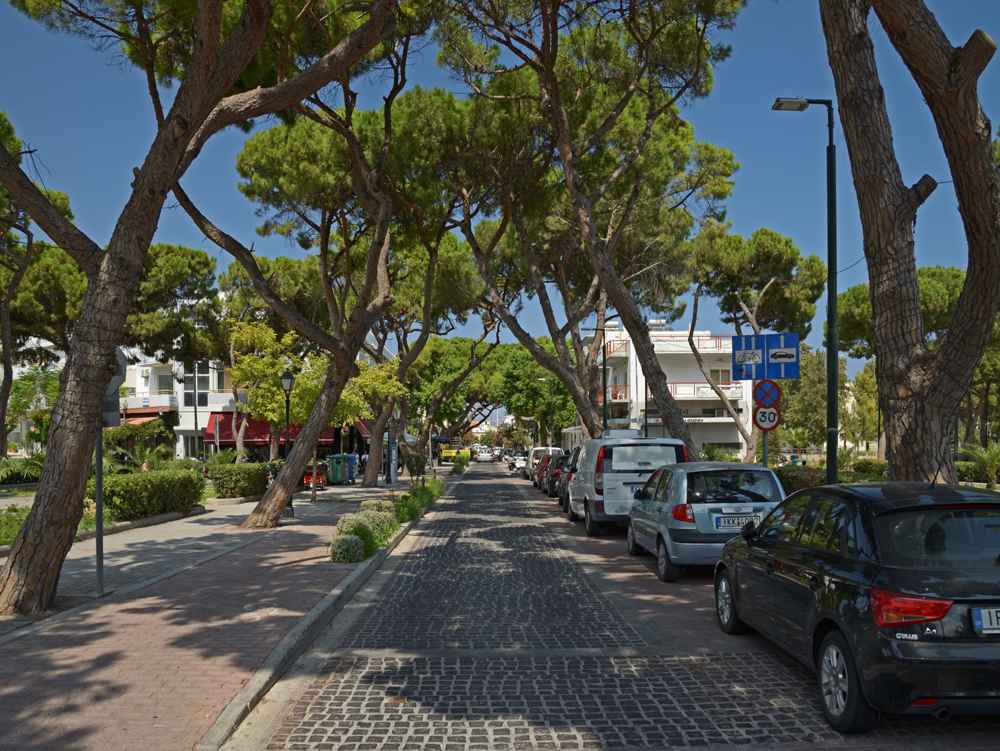
Kos Town, the bustling capital of Kos, blends ancient history with modern charm. Located on the northeast coast, this flat, cycle-friendly town invites visitors to explore its rich heritage and vibrant culture. Plan the whole trip with Greece Tours.
From the Plane Tree of Hippocrates to the Knights Castle of Nerantzia, Kos Town offers a fascinating journey through time. Stroll through ancient ruins, admire Italian-era architecture, and enjoy the lively atmosphere by the harbour.
What can you see at the Plane Tree of Hippocrates in Kos Town?
The Plane Tree of Hippocrates stands beside Kos Town harbour, a living link to medical history. Tradition holds that Hippocrates taught students under its spreading branches near the Castle of Nerantzia.
The Plane Tree of Hippocrates grows on Platanou Square, a short walk from the main harbour of Kos Town on Kos. The trunk spans about 12 metres in circumference, and stone columns and metal frames support its heavy, aging limbs. Tradition links the tree to Hippocrates, the physician born on the island around the fifth century before the common era. The living tree measures roughly 500 years in age, a descendant of the original that once shaded the square. An Ottoman fountain and a small mosque frame the plateia, adding layers of history to the setting. Visitors reach the square on foot within three minutes from the castle gate, making it an easy first stop.
Benches and cafe tables ring the plaza, giving travellers a shaded place to rest before touring the ancient sites nearby.
The Castle of Nerantzia guards the harbour entrance just north of Platanou Square, linked once by a stone bridge over Finikon Avenue. Knights of the Order of Saint John raised the double-walled fortress from local stone and reused ancient marble blocks in its ramparts. The outer wall carries round bastions at each corner, while the inner keep rises behind a deep moat now planted with palm trees. Coats of arms carved into the gateways record the Grand Masters who funded the works. Visitors climb the ramparts for wide views across the strait toward Bodrum, about 4 kilometres east on the Turkish coast.
The fortress protected the port and the town from raids for three centuries before Ottoman forces captured the island in the early sixteenth century.
The ancient agora spreads across an open archaeological field between the castle and the modern market hall. Excavations after a strong earthquake uncovered the marketplace, a harbour basilica, and the foundations of a temple to Aphrodite. Roman shops and Hellenistic colonnades line the paved streets, and marble column stumps mark the old commercial heart of the city. The site sits below the present street level, so walkways let visitors look down onto the ruins from the surrounding roads. Palm trees and hibiscus grow among the stones, and admission to the fenced grounds costs nothing. The agora joined the harbour, the gymnasium, and the residential quarters into a single planned grid that the Italian excavators later mapped.
A walk across the whole field takes about ten minutes.
Palm-lined avenues connect the Plane Tree, the castle, and the agora across a flat street grid built for walking and cycling. Kos Town rises barely above sea level, so travellers cover the historic core on foot within twenty minutes. Rental outlets along the waterfront hand out bicycles by the hour or the day, and marked cycle lanes run beside the main roads. The harbour promenade leads west past the agora toward Akti Kountouriotou, where fishing boats and day-cruise vessels tie up. Signposts in Greek and English guide visitors between the numbered monuments of the old town.
The compact layout lets a traveller link four ancient sites, the castle, and a harbour cafe in a single morning without a car and without a long transfer between stops.
What is the significance of the Knights Castle of Nerantzia in Kos Town?
The Knights Castle of Nerantzia commands the harbour mouth of Kos Town as a double-ringed fortress of the Order of Saint John. Its bastions and reused ancient stone reflect three centuries of Aegean defence.
The fortress rises on a rocky spit that once formed a separate islet at the harbour entrance. Builders of the Order of Saint John completed the inner enceinte first, then wrapped an outer wall around it after cannon warfare reshaped siege tactics. Both circuits use grey volcanic stone, marble drums from the ancient city, and inscribed slabs set into the masonry as spolia. Four corner towers anchor the outer defence, and a broad ditch once flooded with seawater separated the two walls. The main gate faces the town across the former bridge, and a second sea gate opens toward the anchorage.
The double-wall design let defenders fall back from the outer ring to the keep during a prolonged assault on the port. Its layout marks a shift in Aegean military engineering toward artillery-proof forts.
Carved coats of arms crown the gateways and towers, recording the Grand Masters and knights who paid for each stage of the walls. Visitors enter through the outer bailey, cross the old moat line, and climb stone stairs onto the ramparts of the keep. The wall-walk circles the whole fortress, opening views over the harbour, the town roofs, and the strait toward the Turkish shore. Cannon embrasures and rounded gun platforms show how defenders angled fire across the water. Stacked ancient columns and marble fragments lie along the parapets, salvaged during construction and left in place.
The elevated walk sits about 15 metres above the quay, so the ramparts double as the best vantage point over the entire waterfront of Kos Town. Interpretive panels near the entrance outline the building phases for arriving visitors.
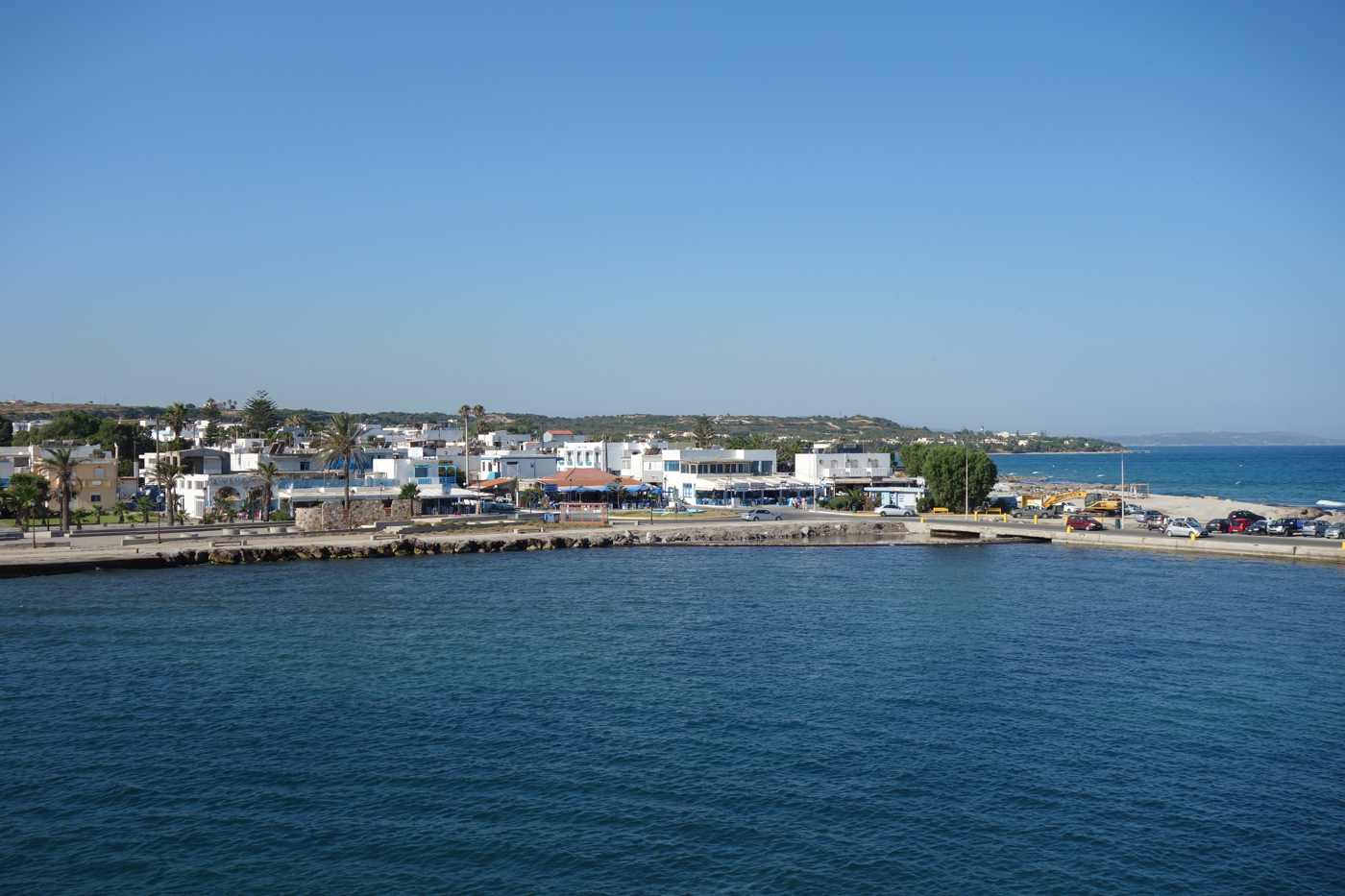
The working harbour wraps around the castle base, filling the day with fishing boats, ferries, and chartered yachts. Ferry gangways along Akti Koundourioti board vessels to Kalymnos, Nisyros, Pserimos, and the Turkish port of Bodrum. Fishermen sell the morning catch straight from moored caiques, and tavernas set tables at the quay edge under awnings. The mole shelters the anchorage from the northerly meltemi wind that sweeps the strait in high summer. A row of palms separates the water from the coastal road, where cyclists and pedestrians share a wide promenade.
The castle and the port work as one scene, the medieval walls above and the constant boat traffic below linking the town to the wider Dodecanese and the Anatolian coast. Cruise tenders also land day passengers near the fortress gate each season.
The castle stands within a two-minute walk of the Plane Tree, the agora, and the archaeological museum, grouping the main monuments in one quarter. Entry combines with the harbour walk, so a visitor tours the fortress, the ancient marketplace, and the waterfront in a single loop. The site opens through the day outside the winter closure, and the ticket covers the ramparts and the inner courtyards. Sturdy shoes suit the uneven stone stairs and the exposed wall-walk, which carries no shade at midday. The keep courtyards hold stacked inscriptions, catapult stones, and Hellenistic reliefs gathered from around the town.
The concentration of ancient, medieval, and Italian-era landmarks inside 300 metres makes the castle the natural centre of any tour of Kos Town. Guided groups often begin their route here.
What can you explore in the ancient agora and Roman remains of Kos Town?
The ancient agora and Roman remains of Kos Town reveal a planned classical city. Visitors walk among the marketplace ruins, the Casa Romana villa, the odeon, and mosaic floors within the compact centre.
The eastern excavation zone holds the ancient agora, one of the largest open archaeological fields inside any Greek island town. Colonnaded stoas, a harbour gate, and the base of a temple to Hercules line the paved central avenue. Christian basilicas built over the older shops show how the marketplace stayed in use into the early Byzantine period. The ruins sit below the streets of the modern town, ringed by roads that give clear sightlines over the whole site. Marble thresholds, fluted column drums, and inscribed statue bases lie where excavators recorded them.
Entry to the fenced field costs nothing, and gravel paths let visitors cross from the castle end to the market hall end in about twelve minutes on foot. Bilingual panels along the fence outline the layout of the classical square.
The Roman odeon stands in the western part of the town near the Casa Romana, cut partly into a low slope. Fourteen tiers of marble seating curve around the semicircular orchestra, restored to hold about 750 spectators for concerts and council meetings. Vaulted corridors under the seating once let audiences reach their rows, and statues of Hippocrates and Roman patrons stood in the niches. The recovered marble figures now sit in the Kos Archaeological Museum on Eleftherias Square. The odeon still hosts summer performances, linking the ancient stage to the cultural life of the modern town.
A short landscaped path connects the monument to the Casa Romana across the road, so visitors pair the two Roman sites in one stop. Cypress trees frame the seating and shade the upper rows.
The Casa Romana reconstructs a wealthy Roman townhouse on the model of a Pompeian villa, rebuilt over its excavated foundations. Three colonnaded courtyards organise the plan, and about 36 rooms open off the peristyles around central pools. Mosaic floors show a leopard, a panther, and marine scenes, while wall frescoes survive in fragments across the ground floor. A raised walkway guides visitors past the atrium, the private baths, and the reception hall without touching the ancient surfaces. The house dates to the imperial rebuilding after an earthquake levelled much of the earlier town.
The Casa Romana gives the clearest picture on Kos of domestic Roman life, pairing with the odeon and agora to complete the classical circuit of the capital. An entry ticket covers the villa and its restored garden court.
The Kos Archaeological Museum occupies an Italian-era building on Eleftherias Square, a short walk from the agora and the odeon. Rooms around a central atrium display the marble statue of Hippocrates, Hellenistic portraits, and Roman figures recovered from the town. A large floor mosaic of Asclepius arriving on Kos fills the courtyard, moved indoors from a nearby villa. Sculptures from the Asklepion, about 4 kilometres southwest, join finds from the agora to tell one continuous story. The collection sorts the objects by period, from Archaic votives to late-Roman portraits, across four main halls.
A single visit to the museum ties together the ruins scattered through Kos Town, giving names and faces to the sites travellers cross on foot each day. Restoration after earthquake damage reopened the halls for visitors.
How does Italian-era architecture influence Kos Town?
Italian-era architecture shapes the civic core of Kos Town. Public buildings raised during the Italian administration frame Eleftherias Square, from the market hall and the mosque to the archaeological museum and the governor’s offices.
The Italian administration governed Kos through the early twentieth century as part of the Dodecanese. Its planners rebuilt the capital after a major earthquake flattened much of the old town. Architects laid out a wide grid of avenues, planted palms and eucalyptus along the boulevards, and framed public squares with symmetrical fa\u00e7ades. The rebuilding used a restrained Italian rationalist style, with arcaded ground floors, plain rendered walls, and low civic towers. The same programme opened the ancient agora and the Roman sites to public view, integrating excavation with new streets.
Kos Town today keeps that deliberate plan, the ancient ruins, the medieval castle, and the modern administrative buildings arranged along clear sightlines from the harbour inland to Eleftherias Square. Street names and monuments from that era still mark the grid.
Eleftherias Square forms the civic heart of Kos Town, ringed by the landmark buildings of the Italian period. The Municipal Market fills the east side, an arcaded hall where stalls sell honey, herbs, sponges, olives, and local wine under a high roof. The Defterdar Mosque and its minaret stand on the south corner, a survival from the Ottoman centuries kept within the new plan. The former Governor’s Palace and the club building close the square with arcaded loggias and clock towers. Palm trees and a central fountain anchor the open paving, and cafes spread tables under the arcades.
The square works as the meeting point of the town, joining the market, the museum, and the harbour road within one block. Weekend crowds fill the arcades from morning until late evening.
Italian planners lined the waterfront with a run of administrative buildings that still house public offices in Kos Town. The former Fascist headquarters, the port authority, the customs house, and the courthouse share a uniform style of arcades, rendered walls, and shallow tiled roofs. Vasileos Georgiou Avenue and Akti Miaouli run dead straight from the castle along the sea, planted with double rows of palms. The Albergo Gelsomino, a large seafront hotel of the same period, marks the northern end of the promenade. Symmetry and long axes tie the whole waterfront into one composition centred on the harbour.
The buildings give Kos Town a distinctive twentieth-century layer above its ancient and medieval remains, unlike the whitewashed style of the Cyclades to the west. Restoration work keeps the fa\u00e7ades in daily civic use.
The Kos Archaeological Museum crowns the Italian ensemble on Eleftherias Square, purpose-built to hold the finds from the agora and the Asklepion. Its symmetrical front, arcaded entrance, and central atrium follow the same civic language as the market hall opposite. Inside, the mosaic of Asclepius and the statue of Hippocrates link the modern building directly to the island’s ancient identity. The museum, the market, and the mosque frame three sides of the square, so a single space gathers the Ottoman, Italian, and classical strands of Kos Town. Cyclists cross the square on the flat grid, and pedestrians pass under the arcades between the harbour and the ancient agora.
The Italian layer gives the capital a planned openness rare among Aegean island towns. Evening light on the arcades draws photographers to the square.
Why is Kos Town considered cycle-friendly?
Kos Town ranks among the most cycle-friendly towns in the Aegean. A flat street grid barely above sea level, marked bike lanes, and dense rental outlets let visitors reach every monument by bicycle.
The capital sits on a coastal plain on the northeast tip of Kos, where the ground rises barely above the harbour. This flat terrain removes the climbs that make cycling hard in the hillside towns of other Aegean islands. Wide, straight avenues from the Italian plan run parallel to the sea and inland to Eleftherias Square, forming a natural cycling grid. Marked lanes edge Vasileos Georgiou Avenue and the harbour promenade, separating bikes from cars along the busiest routes. The whole historic core measures under 2 kilometres across, so a rider crosses from the castle to the agora in minutes.
The gentle gradient suits children, older travellers, and casual riders as easily as sport cyclists on longer island loops. Sea breezes cool the flat routes even during the July heat.
Bicycle rental outlets cluster along the harbour road and the side streets of the old town, offering city bikes, mountain bikes, and children’s models. Rates run by the hour, the day, or the week, and shops fit helmets, baskets, and child seats on request. The dense supply means a visitor collects a bike within a short walk of any harbour hotel. Guided cycling tours start from the waterfront, tracing the monuments before heading out to the coastal paths toward Lambi and Psalidi. Repair stands and pumps sit along the promenade for riders covering longer distances.
The concentration of rental points, matched to the flat grid, makes the bicycle the default way to move around Kos Town rather than the car or the bus. Prices stay modest against taxi fares for short trips.
Dedicated cycle paths run out from the town along the coast in both directions, extending the flat grid into the countryside. The northern route follows the shore past Lambi toward Tigaki, tracing the salt-pan lagoon that draws flamingos in spring. The eastern path reaches the hot-spring beach of Therma, about 12 kilometres from the centre, along a mostly level coastal road. Inland lanes cross flat farmland toward Asfendiou and the foot of Mount Dikeos before the ground begins to climb. The paths carry markers, water points, and shade trees at intervals, built for the steady traffic of summer riders.
This network lets a cyclist combine the town monuments with beaches and villages in a single ride without touching the main highway. Bike carriers on local buses extend the range still further.
Cycling shapes daily life in Kos Town beyond tourism, with residents commuting to work, school, and the market by bike. Racks stand outside the town hall, the market, and the harbour offices, and traffic moves at a pace built around riders. Organised rides and charity events fill the calendar through the warm months, tracing the coastal paths from the centre. The flat grid also suits electric bikes, which rental shops add to their fleets for longer trips toward Zia and Kefalos. Cruise passengers and ferry day-trippers rent bikes at the quay for a short time to reach the monuments and Lambi.
This steady bike culture, backed by the Italian-era grid and the coastal paths, sets Kos Town apart from the car-bound resorts elsewhere on the island.
What beaches can you visit near Kos Town?
Kos Town gives quick access to town and coastal beaches. Lambi sits north of the centre, Psalidi and Therma lie southeast, and the cycle paths reach the wider Tigaki and Marmari sands within minutes.
Lambi Beach runs along the coast just north of Kos Town harbour, an easy walk or ride from the centre. Fine grey sand and shallow, gradually deepening water make the strip suitable for families with young children. A paved promenade backs the beach, lined with cafes, hotels, and watersport bases offering windsurf boards and pedalos. The northerly meltemi wind builds afternoon chop here in high summer, which draws windsurfers to the exposed stretch. Sunbeds and umbrellas cover the central section, while the ends stay open for free access. Lambi sits about 2 kilometres from the Plane Tree, so cyclists reach the sand in under ten minutes along the flat coastal path from the town.
Tavernas at the northern end serve grilled fish through the afternoon, and buses stop on the coast road nearby.
Psalidi Beach stretches southeast of Kos Town along the road toward Cape Psalidi, about 3 kilometres from the centre. Coarse sand and fine pebble form the shore, and the water stays clear and calm in the lee of the headland. Larger resort hotels back this stretch, with sunbed rows, beach bars, and diving centres spaced along the front. The sheltered position keeps the surface flatter than Lambi when the meltemi blows, so families and swimmers favour it. A shallow rocky shelf near the point holds fish that draw snorkellers with masks along the edge.
The flat coast road carries a cycle lane the whole way, linking Psalidi directly to the harbour and the town monuments in a short ride. Kite surfers use the open water beyond the hotels on windy afternoons.
Therma Beach lies about 12 kilometres east of Kos Town at the foot of the coastal cliffs past Agios Fokas. A natural hot spring rises here, feeding a stone-walled rock pool where warm sulphur water mixes with the cold sea. Bathers sit in the pool at the waterline, where the temperature holds around 40 degrees Celsius against the open Aegean. Dark volcanic pebbles cover the shore, and the mineral water carries a faint sulphur smell prized for its reputed skin benefits. A single taverna and a car park serve the cove, reached by bus, bike, or car along the eastern coast road.
Therma pairs a beach visit with a spa soak, an unusual stop within a short drive of the capital. Bathers arrive early to claim space in the small pool.
North-coast beaches sit a short ride or drive west of Kos Town, opening onto broad shallow bays. Tigaki, about 12 kilometres away, backs a wide golden strand with a salt-pan lagoon behind it that draws flamingos in spring. Marmari continues the same sandy coast toward Mastichari, where day ferries cross to Kalymnos in about 30 minutes. Southwest, the beaches of Kefalos bay hold Paradise, Camel, and Agios Stefanos with its basilica ruins and offshore Kastri islet. The flat cycle network and the island bus line both connect these strands to the capital along the coast.
A traveller based in Kos Town reaches sheltered swimming, watersports, and quiet coves within a short journey, detailed further in the guide to Kos beaches. Regular buses run west to Tigaki and Mastichari through the season.
How does the marina contribute to Kos Town’s atmosphere?
The marina anchors the nautical life of Kos Town on the harbour’s north side. Its serviced berths hold yachts and charter boats, drawing sailors, waterfront diners, and regatta crews who cross the eastern Aegean.
The Kos Marina opens on the eastern edge of the town, a short walk beyond the ferry quay and the castle. Its basin holds about 250 berths for boats up to 30 metres, protected by two long breakwaters against the meltemi swell. Fuel docks, a boatyard with a travel-lift, water, and power points serve visiting and resident craft through the year. The marina forms a base for bareboat and skippered charters that sail out across the Dodecanese from the town. Chandlers, repair workshops, and a customs post cluster at the head of the basin for crews clearing in from Turkey.
This full-service harbour turns Kos Town into a sailing hub, filling the waterfront with masts, rigging, and the steady movement of boats. A control tower and pilot boat manage arrivals at the entrance.
The marina promenade extends the town’s waterfront life with cafes, tavernas, and bars set along the quay. Diners take tables at the water’s edge, looking across the berths to the castle walls and the strait beyond. Fish restaurants serve the day’s catch landed at the nearby fishing shelter, alongside the standard Greek and international menus. Evening crowds walk the pontoons, and crews swap the day’s sailing news over dinner at the moorings. The lit masts and reflections on the basin extend the harbour scene of Kos Town into the night. This band of quayside dining links the marina to Akti Koundourioti and the old-town streets, so the nautical district joins the historic core as one continuous waterfront.
Ice-cream stalls and small shops line the landward side of the walk for strollers each evening.
The marina drives a share of the town’s economy, employing dock crew, mechanics, chandlers, and charter staff through the sailing season. Charter fleets based in the basin send visitors out to Kalymnos, Nisyros, Pserimos, and the Turkish coast for day and week trips. Provisioning stops fill the market and the supermarkets, so the crews spend across the whole town, not only at the quay. The boatyard hauls and stores vessels over winter, keeping the marina staff at work outside the summer peak. Berth demand grows through spring as flotillas gather for the Aegean cruising routes that pass through the Dodecanese.
This maritime trade supports the wider tourism of Kos Town, linking the harbour capital into the sailing network of the eastern Aegean. Local suppliers deliver fuel, water, and spares straight to the pontoons.
Sailing events and regattas fill the marina calendar through spring and autumn, drawing crews from across the Aegean and beyond. Offshore races start and finish in the basin, and the quay fills with spectators, prize ceremonies, and visiting fleets. Cruising rallies use Kos as a gateway between the Greek Dodecanese and the marinas of the Turkish coast at Bodrum and Marmaris. The marina also hosts sea festivals and boat shows that pull residents down to the waterfront alongside the tourists. These gatherings tie the modern harbour to the ancient maritime role of Kos as a trading and naval station.
The steady rhythm of arrivals, departures, and races keeps the marina district of Kos Town active from the first warm weeks into late autumn. Fireworks close the largest summer regattas over the basin.
What dining options are available in Kos Town?
Kos Town serves a broad range of food, from harbour tavernas to squares inland. Grilled seafood, mezedes, and island specialities sit beside Italian, Asian, and Mediterranean kitchens across the marina, the old town, and Eleftherias Square.
Traditional tavernas fill the old-town lanes and the harbour front, serving the island’s Dodecanese cooking to residents and visitors. Menus centre on grilled fish, octopus, and lamb, with moussaka, souvlaki, and stuffed vegetables from the wider Greek table. Local dishes include pitaridia pasta, katimeria pastries, and the soft posa cheese made in the hill villages of Kos. Family kitchens run most of these tavernas, cooking from garden produce and the daily catch landed at the quay. House wine comes from the vineyards around Asfendiou and Zia on the slopes of Mount Dikeos. A meal at a harbour taverna pairs the food with a view of the fishing boats, the castle walls, and the strait toward the Turkish shore.
Prices at these family tavernas stay lower than the marina restaurants nearby.
International kitchens spread through Kos Town alongside the Greek tavernas, reflecting the town’s long tourist trade. Italian trattorias serve pasta and wood-fired pizza, a legacy sharpened by the island’s Italian administrative past. Restaurants along the marina and the harbour add Asian, Mexican, and northern-European menus for the mixed summer crowd. Cafes and bakeries around Eleftherias Square open early for Greek coffee, bougatsa, and fresh loukoumades drizzled with honey. Diners eat outdoors under the arcades and palm trees, a habit the mild climate supports from spring into late autumn. The mix of Greek and foreign kitchens lets a visitor eat a different cuisine each night within a short walk, all inside the compact grid of the harbour capital.
Vegetarian and vegan spots have opened around the old town for the newer trade.
Nightlife concentrates in the old-town streets behind the harbour, where bars line the pedestrian lanes off Diakon and Nafklirou. Music bars, cocktail lounges, and clubs run late through the summer, drawing a young crowd along the narrow paved alleys. Quieter cafes and wine bars cluster around Eleftherias Square and the marina for a slower evening by the water. Tavernas add live rebetiko and bouzouki nights, where diners join in Greek dancing after the meal. The flat, compact centre lets visitors move between dinner, drinks, and music on foot within 300 metres. This concentrated nightlife keeps the harbour capital lively from the dinner hour until dawn through the warm months of the tourist season.
Bar staff hand out drinks along the alleys after midnight, and the crowds spill into the small squares between the tavernas.
The dining and nightlife of Kos Town make it the practical base for eating well while touring the island. Visitors return from day trips to Zia, Kefalos, or Nisyros to a full choice of tavernas, bars, and cafes at the harbour. The compact grid places most restaurants within walking distance of the harbour hotels, so no transfer stands between sightseeing and dinner. Rooftop bars near the castle open views over the lit ramparts and the strait for an evening drink. Markets and bakeries supply self-catering guests staying in town apartments across the old quarter.
A stay in the capital pairs this dense food scene with easy transport links, covered in the guide to where to stay in Kos. Ferry crews and yacht guests add to the evening trade along the quay.


What role does Kos Town play as a base for exploring the island?
Kos Town works as the main base for exploring the island. The port, the bus station, and the airport road link the capital to the villages, the beaches, and the ferry routes across the Dodecanese.
Kos Town sits at the road hub of the island, with the main highway running southwest along the 40-kilometre length of Kos. Local buses leave the town station for Zia, Kefalos, Kardamena, Mastichari, and Tigaki through the day in the tourist season. Taxis wait at ranks by the harbour and the market for shorter runs to the beaches and the Asklepion. Kos International Airport lies near Antimachia in the island’s centre, about 25 kilometres from the town by the main road. Rental cars, scooters, and quad bikes give independent access to the mountain villages and the southwest capes beyond the bus routes.
This central position lets a traveller reach any point on Kos within an hour from a base in the capital. Bike carriers on the buses let cyclists extend their range too.
The port of Kos Town runs ferries across the Dodecanese and to the Turkish coast from quays beside the castle. Fast catamarans and slower ferries reach Rhodes, Kalymnos, Leros, Patmos, and Piraeus on the mainland through the schedule. Day boats cross to Nisyros with its volcanic crater, to Kalymnos and Pserimos, and to Bodrum in Turkey about 4 kilometres east. The crossing to Bodrum takes around 30 minutes by fast boat, opening an international side trip from the harbour. Excursion caiques also run along the Kos coast to the beaches of Kefalos bay in summer. This ferry network turns the capital into the gateway for island-hopping across the eastern Aegean, all from the same central harbour.
Ticket agencies cluster along the harbour road, and the ferry quays sit close to the town hotels.
Kos Town holds the widest range of services on the island, from hospitals and banks to supermarkets and rental agencies. Hotels, apartments, and guesthouses spread from the harbour into the old town and along the coast toward Lambi and Psalidi. Tour desks book day trips, boat tickets, and car hire, so a visitor arranges the whole stay from the centre. The concentration of shops, pharmacies, and medical care makes the capital the practical choice for families and older travellers. Its own monuments, beaches, and dining fill days without a journey, while transport covers the rest of the island.
A base in Kos Town balances the quiet of the resort villages against full urban amenities within one flat, walkable grid. The bus station, the port, and the taxi ranks all sit within the same central quarter.
The Asklepion, the ancient healing sanctuary of Asclepius, stands about 4 kilometres southwest of Kos Town on three terraced levels. Patients once travelled here to seek cures under the tradition of Hippocrates, who was born on the island. Roman baths, temples, and a grand staircase climb the hillside, opening views back over the town, the strait, and Turkey. The site links directly to the town monuments, the museum statue, and the Plane Tree in one story of ancient medicine. Buses, bikes, and taxis reach the sanctuary from the centre in minutes along the flat approach road. A visit ties the capital’s role as a base to the island’s deepest heritage, detailed in the guide to the Asklepion.
Three levels of terraces connect by wide stairways cut into the pine slope.
What are the top attractions in Kos Town?
Kos Town gathers its top attractions within one walkable quarter. The Plane Tree of Hippocrates, the Castle of Nerantzia, the ancient agora, the Casa Romana, the odeon, and Eleftherias Square all lie minutes apart.
The Plane Tree of Hippocrates and the Castle of Nerantzia crown any tour of Kos Town from the harbour front. The tree shades Platanou Square by the port, a living link to the physician who taught on the island. The double-walled castle guards the harbour mouth a two-minute walk north, its ramparts open for wide views over the strait. Coats of arms, reused ancient marble, and corner bastions record three centuries of the Knights of Saint John on Kos. The two sites sit within 200 metres, joined by the old bridge line over Finikon Avenue. A visitor combines the medical landmark and the medieval fortress in one short loop at the start of the day.
Both stand steps from the ferry quay, so arriving day-trippers reach them without transport.
The ancient agora and the Roman monuments form the second cluster of attractions in the town centre. The open agora field spreads marble colonnades, basilica ruins, and temple foundations between the castle and the market hall. The Roman odeon, restored to about 750 seats, still hosts summer concerts near the reconstructed Casa Romana villa. Mosaic floors of leopards and marine scenes survive inside the villa, mapping the domestic life of imperial Kos. Free access to the agora and a single ticket to the Roman sites keep the whole circuit low-cost. These ruins let a visitor cross from Greek marketplace to Roman theatre and townhouse in one short walk through the capital’s core.
The archaeological museum on Eleftherias Square holds the statues and mosaics lifted from these same excavations for closer viewing.
Eleftherias Square and the Italian-era buildings give Kos Town its third cluster of attractions inland from the harbour. The arcaded market hall, the Defterdar Mosque, and the archaeological museum frame the square built on the Italian plan. A short ride reaches the marina to the east and the town beach of Lambi to the north along the flat coast. Cyclists link the square, the harbour, and the beaches on marked lanes without a car in under fifteen minutes. Cafes under the arcades and the palm-lined avenues fill the gap between the monuments with places to rest.
This third band widens a tour of Kos Town from the ancient core out to the modern square, the marina, and the sea. Market stalls under the hall sell honey, herbs, and sponges to visitors passing between sights.
The three clusters together pack the top attractions of Kos Town into a grid barely 1 kilometre across. A single day covers the Plane Tree, the castle, the agora, the Roman sites, the museum, and Eleftherias Square on foot. The flat streets and short distances let families, older travellers, and cruise passengers see the lot without transport. Evening extends the tour to the marina, the harbour tavernas, and the old-town bars a short step on. The capital packs ancient, medieval, Ottoman, and Italian layers into one compact centre unmatched among the Dodecanese towns. A full list of sights and day trips from the town appears in the guide to things to do in Kos.
The concentration of layered history within one flat grid makes the capital the natural first stop on any Kos itinerary.
Frequently Asked Questions
How do you get to Kos Town from Kos International Airport?
Kos Town lies about 25 kilometres northeast of Kos International Airport near Antimachia, reached by taxi, car, or bus. Taxis wait outside the terminal and cover the route in around 30 minutes for a fixed island tariff. Car rental desks operate inside the arrivals hall, giving visitors their own transport straight from the runway toward the capital. The public bus runs from the airport road to the town station on a set timetable, at a lower fare than the taxi. This service takes around 40 minutes, stopping at Antimachia, Zipari, and the coast road on the way into the town.
Scooter and quad hire also start at the airport for travellers heading to the beaches before reaching the capital. Signposts in Greek and English mark the exit road to Kos Town from the terminal forecourt. The flat main highway carries most airport traffic straight into the harbour quarter, so arriving visitors reach their hotels within an hour of landing.
What is the best time to visit Kos Town?
Spring and autumn suit a visit to Kos Town best, when the temperatures stay mild and the crowds thin out. April, May, and June bring days around 20 to 28 degrees Celsius, green landscapes, and open archaeological sites without the summer queues. September and October hold warm sea water from the long summer, so swimming continues while the beaches empty. These shoulder months favour cycling the flat grid and touring the monuments on foot, before the midday heat of July and August. Summer runs hot, often above 30 degrees Celsius, with the meltemi wind cooling the coast and the fullest calendar of festivals.
The Hippocratia cultural events fill the town through July and August, drawing the largest crowds of the year. Winter turns quiet, with reduced ferries and closed resort hotels, though the town itself stays open for its residents. A trip between April and June or in September gives the balance of warm weather, open sites, and lower prices.
Are there any cultural events in Kos Town?
Kos Town holds cultural events through the year, led by the summer Hippocratia festival that honours Hippocrates. The festival fills July and August with concerts, theatre, and exhibitions across the ancient odeon, the castle, and the town squares. A staged re-enactment of the Hippocratic Oath takes place at the Asklepion, linking the events to the island’s medical past. Open-air concerts use the restored Roman odeon, where about 750 seats face performers under the summer sky. Eleftherias Square and the marina host local markets, art shows, and live music through the warm months for residents and visitors. Religious feast days bring processions and village panigyria to the town and the surrounding parishes across the calendar.
Craft fairs and food events showcase Kos honey, wine, and cheese from the hill villages of Mount Dikeos. The archaeological museum and the castle add temporary exhibitions to the fixed collections. This mix of ancient theatre, festival, and market keeps the cultural calendar of the capital active well beyond the peak weeks.
What accommodation options are available in Kos Town?
Kos Town offers hotels, guesthouses, apartments, and hostels across the harbour, the old town, and the coast toward Lambi. Larger seafront hotels line the promenade north and southeast of the centre, near Lambi and Psalidi beaches. Small guesthouses and rooms sit within the old-town lanes, placing guests steps from the tavernas, the castle, and the agora. Self-catering apartments suit families and longer stays, with kitchens and space close to the market and the supermarkets. The flat grid puts most beds within a short walk or ride of the harbour, the bus station, and the ferry quay. Budget hostels and guest rooms cluster inland from the waterfront, holding down costs for younger travellers.
Sailors berth at the marina and stay aboard, while cruise passengers pass through on day calls without an overnight. A base in the capital pairs central lodging with the widest transport and dining choice on the island, set out in the guide to where to stay in Kos.
What transportation options are available within Kos Town?
Cycling leads the transport options within Kos Town, backed by the flat grid, marked lanes, and dense bicycle rentals. Rental shops along the harbour hand out city bikes, mountain bikes, and electric bikes by the hour, day, or week. Public buses run set routes through the town and out to Zia, Kefalos, Kardamena, Mastichari, and Tigaki from the central station. Taxis wait at ranks by the harbour and the market, and crews take short runs to the beaches or the Asklepion. Car, scooter, and quad rental desks open across the town and at the airport for trips beyond the bus lines.
The compact centre lets pedestrians reach the castle, the agora, and Eleftherias Square within twenty minutes on foot. Ferries and day boats leave the harbour quays for the Dodecanese islands and Bodrum on the Turkish coast. These layered links, from bicycle to ferry, let a visitor move around the town and the wider island without a private car.
Is Kos Town suitable for family vacations?
Kos Town suits family vacations, combining flat streets, shallow beaches, historic sites, and full amenities in one compact centre. The level grid lets children cycle safely between the harbour, the market, and the monuments on marked lanes. Lambi and Psalidi beaches sit within a short ride, with shallow water, sunbeds, and watersports for older children. The castle, the agora, and the Casa Romana turn a history lesson into an outdoor walk that holds young attention. Family hotels and self-catering apartments cluster near the beaches and the centre, with kitchens and pools for longer stays. Tavernas and cafes serve simple grilled dishes, pizza, and pasta that suit younger palates alongside the Greek menus.
Pharmacies, a hospital, and supermarkets stand within the town, giving parents quick access to supplies and care. Day boats and buses reach the wider island for trips to Zia or Kefalos without a long transfer. This balance of safety, sights, and services makes the capital a practical choice for a family stay on Kos.
What safety tips travelers keep in mind when visiting Kos Town?
Kos Town ranks among the safer destinations in Greece, though standard travel precautions still apply through the busy season. Keep wallets, phones, and passports secure in crowded spots such as the market, the ferry queue, and the bus. Lock rental bikes and scooters at the racks, and note the frame number in case of theft. Wear a helmet on a bike and follow the marked lanes, since traffic thickens on the harbour road in summer. Drink water often and cover up against the midday sun from June to September, when temperatures pass 30 degrees Celsius. Swim between the flags at the organised beaches, and watch the afternoon meltemi wind that builds waves at exposed Lambi.
Save the European emergency number 112 and locate the town hospital and pharmacies on arrival. Cross the flat grid with care, as cyclists and cars share the same lanes across the centre. These simple steps keep a stay in the harbour capital calm and secure from arrival to departure.