
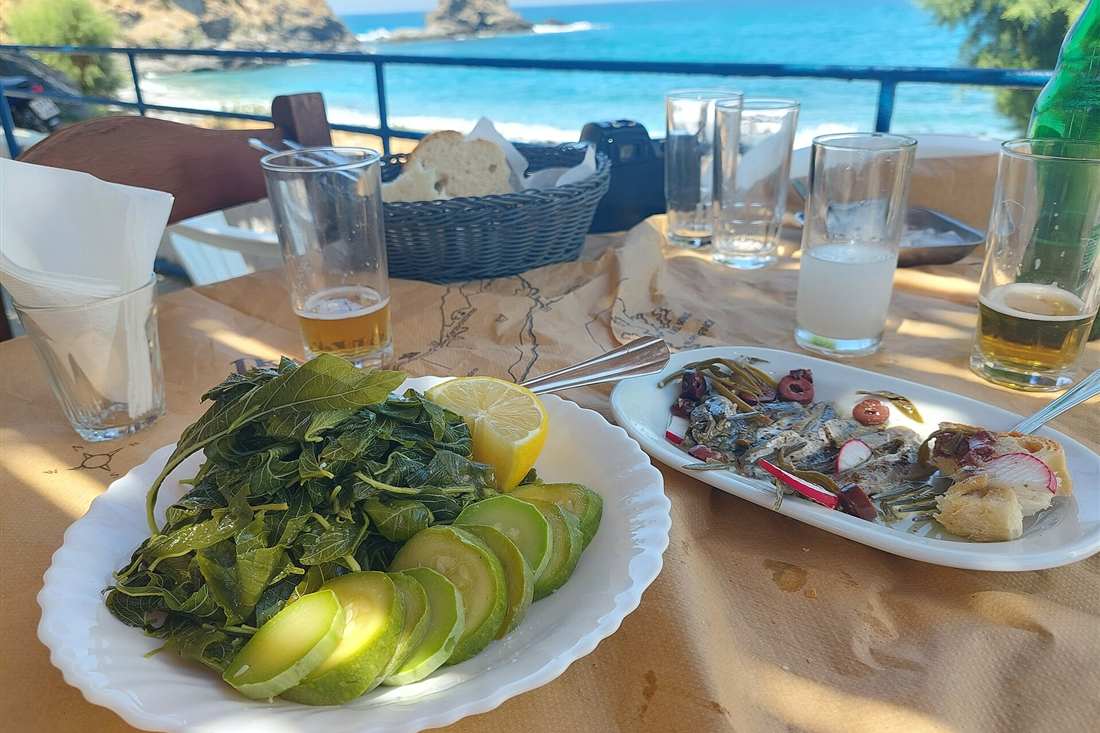
Thassos Cooking Class
A Thassos cooking class is a hands-on Greek cooking lesson on the northernmost Greek island, where travellers prepare village dishes with local olive oil, honey and herbs, then sit down to eat what they cooked. Greece Tours lists two options: a class with a 5-course feast, and a small villages day trip with a cooking class and lunch.
Every Thassos cooking class covers Greek home food such as tzatziki, village salad, pie with hand-rolled filo and a honey dessert, and no cooking experience is needed. The Thassos island page covers the beaches, villages and other days out to plan around a Thassos cooking class.
What is a Thassos cooking class?
A Thassos cooking class is a hands-on lesson in Greek home cooking on Thassos, the green island off Kavala in the north Aegean, where you prepare dishes step by step with the class host and then eat them at a shared table.
The idea is simple. You do not watch a chef from a distance. You chop, mix, roll and stuff with your own hands, and the host shows each step before you try it. A Thassos cooking class focuses on the food that Greek families cook at home, not restaurant plates, so the recipes rely on fresh vegetables, olive oil, herbs, cheese and bread rather than special equipment or rare techniques.
Thassos suits this kind of lesson. The island is covered in pine forest and olive groves, and it produces honey, olive oil, table olives, wine and tsipouro. That means the ingredients on the counter come from the same hills you drive through on the way. The lesson ends with a meal, so a Thassos cooking class works as both a lesson and a long lunch or dinner with the rest of the group.
Which Thassos cooking classes can you book?
Two Thassos cooking classes are on sale: an authentic Greek cooking class with a 5-course feast, and a small villages day trip that combines a drive through mountain villages with a cooking class and lunch.
The first option, Thassos: Authentic Greek Cooking Class with a 5-Course Feast, is a pure cooking session. The title promises an authentic Greek class and a meal of five courses, so the time goes into preparing dishes and then eating them. This Thassos cooking class suits travellers who want the kitchen to be the whole experience, with no driving or sightseeing added to the day.
The second option, Thassos: Small Villages Day Trip with Cooking Class and Lunch, adds sightseeing. The title names small villages, a day trip, a cooking class and lunch, so part of the day is spent on the road and part at the stove. Meeting point, start time, pickup and group size vary by listing, so check the tour listing before you book either Thassos cooking class.
- Cooking class with feast – a hands-on lesson that ends with a 5-course meal.
- Villages day trip – mountain villages, a cooking class and lunch in one day.
- Details to check – start time, pickup, menu and group size on each listing.
How does the class run step by step?
A Thassos cooking class runs in a clear order: a welcome and a look at the ingredients, hands-on preparation of each dish, cooking or baking, and a shared meal where you eat everything the group made.
The lesson opens with the ingredients laid out on the table: vegetables, herbs, cheese, flour and olive oil. The host explains what each item is and how Greek home cooks use it. On a Thassos cooking class the group then starts with the dishes that take longest, such as a pie or stuffed vegetables, so they can bake while the quicker dishes are prepared.
While the oven works, the class moves on to dips and salads. You grate cucumber for tzatziki, chop tomatoes for a village salad and shape meatballs if they are on the menu. The last step is the meal itself. The table fills course by course, and the exact order on each Thassos cooking class depends on the menu, so check the tour listing.
- Welcome – a look at the ingredients and the menu.
- Preparation – chopping, mixing, rolling and stuffing by hand.
- Cooking – baking, frying or grilling each dish.
- Feast – a shared meal of the dishes the group cooked.
What do you cook for the 5-course feast?
The 5-course feast on a Thassos cooking class follows the shape of a Greek meal: a starter, a salad, a pie, a main dish and a dessert, with the exact menu set by each class, so check the tour listing.
Starters in Greek home cooking are dips and small plates. Tzatziki, made from strained yogurt, grated cucumber, garlic and olive oil, is the standard first course. The salad course is horiatiki, the village salad of tomato, cucumber, onion, green pepper, olives and a slab of feta, dressed only with olive oil and dried oregano, with no vinegar-heavy dressing on top.
The pie course is spanakopita with spinach or hortopita with wild greens, both wrapped in filo. Mains in a Thassos cooking class draw on dishes such as gemista, which are tomatoes and peppers stuffed with rice and herbs, keftedes, moussaka, or grilled fish or octopus. Dessert closes the meal, with loukoumades or another sweet built on island honey and cinnamon.
- Starter – tzatziki or another yogurt or vegetable dip.
- Salad – horiatiki with tomato, cucumber, olives and feta.
- Pie – spanakopita or hortopita in hand-rolled filo.
- Main – gemista, keftedes, moussaka, or grilled fish or octopus.
- Dessert – loukoumades or a honey sweet.
How do you make a village pie with hand-rolled filo?
On a Thassos cooking class, you make a village pie by kneading flour, water, olive oil and salt into a soft dough, rolling it into thin sheets with a plasti, layering it with a greens and feta filling, and baking it until golden.
The dough comes first. Flour, water, a spoon of olive oil and a pinch of salt are kneaded until smooth, then left to rest under a cloth. The filling is chopped spinach or wild greens, softened spring onion, dill, mint, crumbled feta and an egg to bind it. On a Thassos cooking class the greens are squeezed hard, so the filling does not turn the pastry wet in the oven.
Rolling is the skill most guests remember. The plasti is a long, thin rolling pin, and you roll from the centre outwards, turning the dough and dusting it with flour until the sheet is thin enough to see light through it. Two sheets go under the filling and two on top, each brushed with oil, and the pie bakes in a wood or home oven until the top is crisp and brown.
Which Thassos ingredients go into the dishes?
A Thassos cooking class builds its dishes on island produce: pine and thyme honey, olive oil and table olives from local groves, and wild herbs such as oregano and thyme, joined by feta, yogurt and seasonal vegetables.
Honey is one of the island’s main products. Bees feed on the pine forest and on the thyme that covers the dry hillsides, which gives two distinct honeys, and Thassos pine and thyme honey appears in desserts and drizzled over cheese. On a Thassos cooking class, honey is tasted on its own as well as cooked with.
Olive oil is the fat in almost every dish, from salad dressing to pie pastry. The island’s groves also give table olives, and Thassos olive oil is the base for ladera, the vegetable dishes cooked slowly in oil. Oregano and thyme season meat, fish and salad, and both herbs grow wild across the hills above the villages.
- Plasti – the long, thin rolling pin used for filo.
- Filo – paper-thin pastry sheets for pies.
- Ladera – vegetables cooked slowly in olive oil.
- Horiatiki – the village salad with feta and olives.
- Tsipouro – a clear grape spirit served with meze.
Why do tsipouro, wine and spoon sweets belong at the table?
Tsipouro, local wine and spoon sweets turn a Thassos cooking class into a full Greek meal: tsipouro goes with the meze, wine goes with the main dishes, and a spoon sweet or honey dessert ends the table.
Tsipouro is a clear spirit distilled from the grape skins and pulp left after winemaking. In northern Greece it is poured in small glasses beside meze, and Thassos tsipouro fits naturally next to tzatziki and olives. Whether drinks come with a Thassos cooking class varies by class, so check the tour listing for what is served with the meal.
The island also makes wine from its own vineyards, and a glass of Thassos wine matches the grilled and baked mains. Spoon sweets are a village tradition: green walnuts, figs and other fruit preserved in thick syrup and served by the spoon with water or coffee. They show how Thassos households keep the harvest for the rest of the year.
Where does the villages day trip go?
The villages day trip pairs a drive through small mountain villages with a Thassos cooking class and lunch; the exact villages on the route are set by the listing, and the inland villages of the island include Theologos, Panagia, Potamia and Kazaviti.
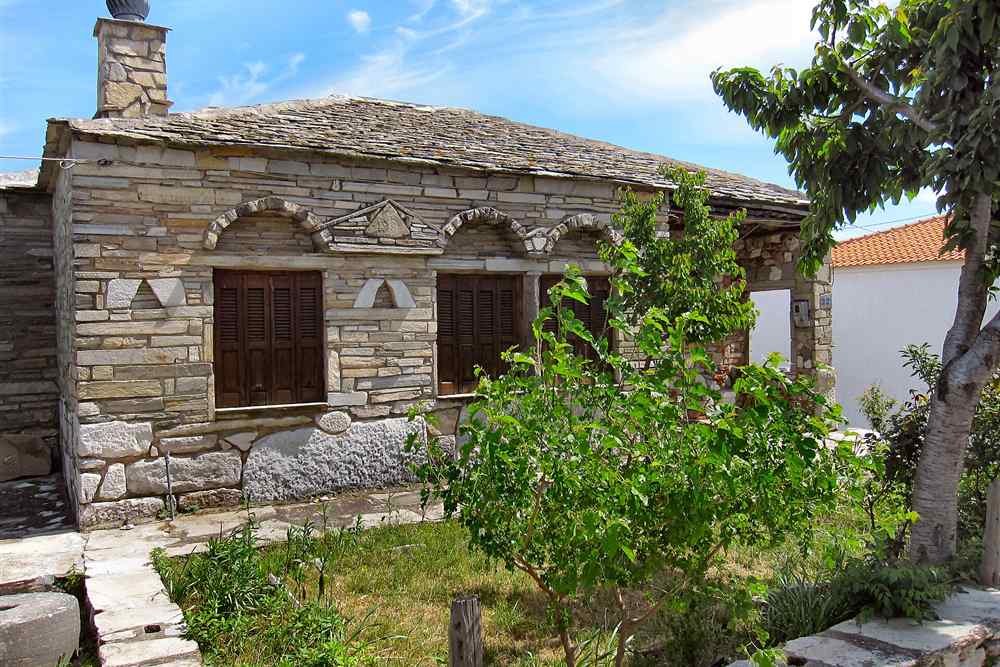
Theologos is the old capital of the island, set inland in a green valley, with stone houses and slate roofs. Theologos village shows how island families lived away from the coast. Panagia, Potamia and Kazaviti are hill villages with stone houses, shaded squares and views across pine forest and olive groves.
A day that joins these villages with a Thassos cooking class gives context to the food. The drive passes through the forest and olive country that supplies the kitchen, before you cook with its produce. The village of Panagia is a traditional mountain village worth a stop on any island drive. Route details, including which villages and the length of the drive, vary, so check the tour listing.
Can a Thassos cooking class cater for vegetarians and allergies?
Yes, a Thassos cooking class suits vegetarians well, because Greek home cooking has a long list of meat-free dishes, but allergies and other dietary needs go to the host at booking, and the listing sets which changes are possible.
Vegetables sit at the centre of Greek home food. Ladera are vegetables such as green beans, okra or courgettes cooked slowly in olive oil and tomato, and they are meat-free by design. Tzatziki, horiatiki, hortopita, spanakopita and gemista made with rice all fit a vegetarian menu, so a vegetarian guest on a Thassos cooking class still cooks and eats a full meal.
Allergies need planning. Filo pies contain wheat, tzatziki and feta contain dairy, and some desserts use nuts or honey. Tell the host about any allergy or intolerance when you book, not on the day, so the menu can be set in advance. Vegan and gluten-free requests depend on the class, so check the listing before you reserve a Thassos cooking class.
Who is a Thassos cooking class for?
A Thassos cooking class suits food lovers, couples, families and solo travellers, and no cooking experience is needed, because the host shows every step and the tasks range from simple chopping to rolling filo by hand.
Food lovers get the most from the lesson, since they learn the reasons behind each recipe and leave with dishes they can repeat. Couples use it as a shared activity that ends with a long meal. Solo travellers join a group at one table, and a Thassos cooking class gives them easy company for an afternoon or an evening on the island.
Families can bring children, who help with simple jobs such as washing vegetables, stirring dips and shaping meatballs, while adults take the knife work and the filo. Age rules and child places differ between classes, so check the tour listing. Beginners need no skills, and confident cooks still learn the filo technique, which few home kitchens outside Greece use.
- Food lovers – learn the reasons behind each Greek recipe.
- Couples – share a hands-on activity and a long meal.
- Families – children help with simple kitchen tasks.
- Solo travellers – cook and eat with a group at one table.
What do you wear and bring to the class?
For a Thassos cooking class, wear light, comfortable clothes you do not mind marking with flour or oil, closed shoes for standing in a kitchen, and tie back long hair; bring water, sun protection and your list of allergies.
Summer on Thassos is hot, and the kitchen of a Thassos cooking class is hotter with the oven running, so breathable cotton or linen works best. Aprons are common in cooking lessons, but the class sets whether one is provided, so check the listing. Closed shoes protect your feet from dropped knives and hot oil, and short sleeves keep cuffs out of the dough.
For the villages day trip, add walking shoes, a hat and sunscreen, because part of the day is spent outside in village streets. A phone or camera is useful for photos of each step, which help when you cook the dishes again at home. A small notebook helps too, since hosts share tips on quantities and timing that are easy to forget.
When is the best time to book a Thassos cooking class?
The best time for a Thassos cooking class is from May to October, when the island’s tourist season runs and summer vegetables are ripe; in July and August, book as soon as your travel dates are fixed.
Spring and early autumn are the most comfortable months to cook, since the kitchen stays cooler and the island is quieter. June brings early tomatoes, courgettes and fresh herbs, and September adds figs and grapes. High summer gives the richest produce but the hottest kitchens, so if a Thassos cooking class listing offers a choice of start times, a morning or evening slot is cooler than midday.
Booking works online through the listing. Choose the date, confirm the start time and meeting point, add the number of guests and send dietary needs in the booking notes. Read the cancellation terms on the listing before you confirm. A Thassos cooking class runs on a set date and time, so book it first and fit beaches, hikes and drives around it.
How does a cooking class fit into a day on Thassos?
A Thassos cooking class fits into a day as either the lunch or the dinner, leaving the other half of the day free for a beach, a hike or a drive, while the villages day trip fills a full day on its own.
A morning at the beach followed by an afternoon or evening class works well, since you arrive hungry and relaxed. The island has sandy and pebble coves all around its coastline, and Thassos beaches sit a short drive from the coastal villages. Skip a long hike right before a Thassos cooking class, since cooking means standing at a counter.
For a second food day, pair the class with a walk around the capital, Limenas, also known as Thassos Town, with its harbour, tavernas and bakeries. Travellers who enjoy the lesson on Thassos can repeat the experience elsewhere in Greece: an Athens cooking class is the mainland version of the same hands-on lesson in Greek home food.
How do you cook the dishes again at home?
You recreate the dishes of a Thassos cooking class at home by writing down the recipes on the day, buying good olive oil, feta and dried Greek oregano, and practising the simplest dish first, such as tzatziki or village salad.
Start with the dishes that need no special skill. Tzatziki needs thick strained yogurt, cucumber squeezed dry, garlic, olive oil and a little dill or mint. Horiatiki needs ripe tomatoes and a whole block of feta, not crumbled cheese from a tub. Both dishes from a Thassos cooking class work in any kitchen with a sharp knife and a large bowl.
Filo takes practice. Shop-bought filo sheets make a sound first pie while you practise rolling your own with a long wooden dowel in place of a plasti. Gemista and keftedes use supermarket ingredients, and a jar of island honey or a bottle of tsipouro in your luggage brings the flavour of Thassos back to your own kitchen.
Is a Thassos cooking class worth it?
Yes, a Thassos cooking class is worth it for travellers who want to understand Greek food, because you learn real home recipes, taste island honey, olive oil and tsipouro, and end with a 5-course meal or a village lunch.
A taverna meal shows you the finished dish. A Thassos cooking class shows you why it tastes that way: which oil, which herbs, how thin the filo goes and how long the vegetables stay in the oven. That knowledge lasts longer than one dinner, and it changes how you read a taverna menu for the rest of the trip.
The choice between the two classes depends on your day. Pick the class with a 5-course feast if the kitchen is the whole point, or the villages day trip if you want sightseeing as well. Both options suit first-timers, both use island produce, and both end at the table with food you cooked yourself.
Frequently Asked Questions
How long does a Thassos cooking class last?
The length of a Thassos cooking class depends on the option you book. The class with a 5-course feast covers cooking and a full meal, and the villages day trip fills a day, so check the tour listing for the exact duration and start time.
Do you need cooking experience for a Thassos cooking class?
No. The class is built for beginners, and the host shows every step before you try it. Tasks range from washing vegetables and mixing dips to rolling filo, so first-timers and confident home cooks both find work at their own level.
Can children join a cooking class on Thassos?
Yes, a Thassos cooking class suits families, and children help with simple tasks such as washing vegetables, stirring tzatziki and shaping meatballs. Age rules and child places differ between the two options, so check the tour listing before you book for the family.
Which dishes do you cook on a Thassos cooking class?
Classes cover Greek home dishes such as tzatziki, horiatiki village salad, spanakopita or hortopita with hand-rolled filo, gemista, keftedes, moussaka, grilled fish or octopus, and loukoumades or a honey dessert. The exact menu is set by each class, so check the tour listing.
Are vegetarian dishes part of the class?
Yes. Greek home cooking includes ladera, pies, dips, salads and stuffed vegetables that contain no meat, so vegetarians eat a full meal. Tell the host about vegetarian needs and any allergy when you book, and check the listing for vegan or gluten-free options.