
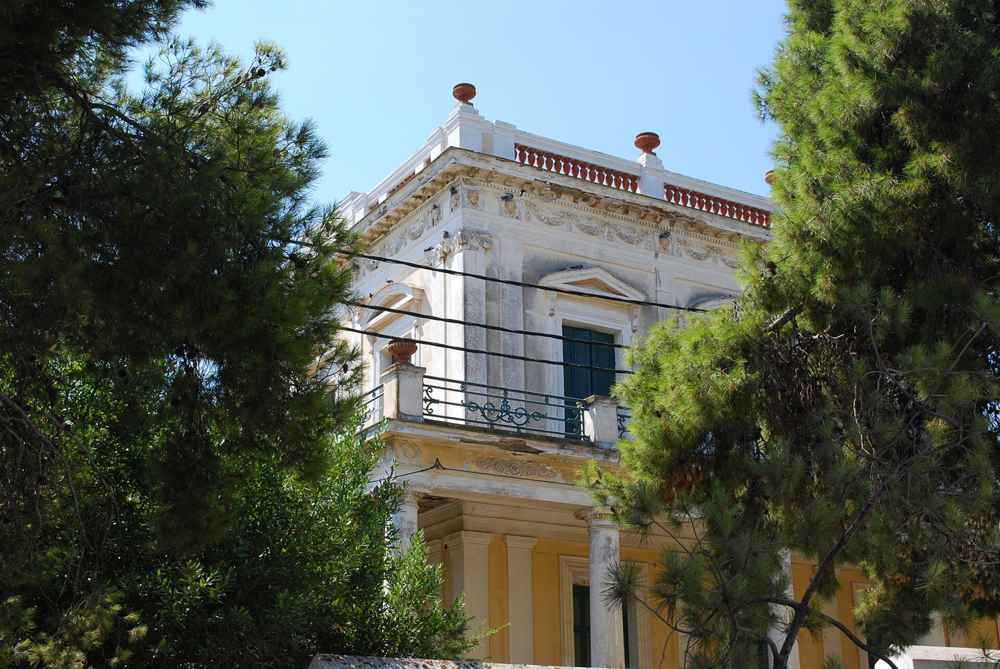
Spetses is one of the most photogenic islands in the Saronic Gulf, and a camera earns its place in your bag from the moment the hydrofoil rounds the point. This My Greece Tours guide maps the best photography spots on Spetses, from the cannon-lined Dapia to the wooden boats of the Old Harbour. The island stays car-free in its historic core, so Spetses gives you clean streets, warm neoclassical stone, and sea light without the usual roadside clutter.
Great images here depend as much on timing as on location. Early morning and the golden hour before sunset soften the marble facades and light the harbour water, while midday sun flattens the whitewash and crowds the quay. This guide walks you through the landmark spots, the quiet lanes, the pine-framed beaches. The hilltop viewpoints. Then covers practical matters such as getting around with gear and photographing people and churches respectfully.
Where are the best photography spots on Spetses?
Spetses concentrates its finest photography spots around Spetses Town: the Dapia waterfront, the Old Harbour at Baltiza, the Poseidonion Grand Hotel, neoclassical captains’ mansions, and pebble-mosaic courtyards, complemented by pine-framed beaches and hilltop viewpoints reached on foot or by scooter.
The island packs its landmarks into a compact arc, which is why a short visit can be so productive. The waterfront town holds the majority of the postcard views, chiefly the Spetses Town and the Dapia quay, the mansion facades, and the mosaic courtyards behind them. Spetses measures only about 22 square kilometres, and the built-up core is smaller still, so you can walk between most subjects in minutes. Bicycles, scooters, and horse carriages replace cars in the historic centre, and that absence of traffic keeps your frames clean. For a first orientation, follow the coast road from the Dapia toward the Old Harbour and let the sequence of quays. Boatyards.
Churches reveal itself gradually as you follow the water’s edge toward the boatyards.
Beyond the town, the coastline delivers a second set of subjects. Pine forest reaches almost to the water at bays, so beaches such as Agioi Anargyroi beach and Zogeria frame turquoise shallows against dark green trees. The northwest shore catches soft afternoon light, while sheltered coves on the south face stay calm for mirror-like reflections. Inland, the hill of Profitis Ilias and the ridges above the town give elevated views over terracotta roofs and the strait toward the Peloponnese.
Photographers who rent a scooter can string several of these locations together, pausing at the Spetses Lighthouse point where the whitewashed tower and the small church of Agios Mamas sit above the entrance to the Old Harbour and the boatyards below.
Human detail rounds out the island’s photographic vocabulary. Near the Dapia, the island’s horse carriages wait for passengers, their harnesses and painted panels making strong foreground subjects against the sea. Fishermen mend nets at the Old Harbour, cafe tables spill onto the flagstones, and cats doze on mansion steps. The statue of Laskarina Bouboulina, the island’s heroine of the 1821 revolution, stands near the waterfront and anchors many town compositions. These living scenes reward patience: wait for a carriage to pass a doorway, or for a boat to glide across the harbour mouth, and an ordinary view becomes a story.
Spetses rewards the photographer who slows down and watches for the moment rather than the one who rushes between checkpoints.
Timing and season shape every one of these spots. Late spring and early autumn bring clear air, manageable crowds, and long shadows that model the architecture, which is why photographers plan around the best time to visit Spetses. Summer delivers reliable blue skies but harsh midday glare and busier quays, so early starts matter more. Winter light is low and dramatic, though cafes close. Whatever the month, the Dapia faces broadly east and northeast, so it photographs best in the morning, while the west-facing beaches and the Poseidonion glow at sunset.
Planning your route around the sun rather than the map is the single biggest improvement most visitors can make to their Spetses images across even a short two-day stay.
Why is the Dapia the best waterfront spot to photograph on Spetses?
The Dapia is the island’s main quay and historic gun battery, lined with old cannons, cafe terraces, and mosaic pavements, giving photographers cannons in the foreground, the harbour beyond, and neoclassical facades behind, all in a single frame.
The Dapia takes its name from the fortified battery the islanders built here, and the bronze and iron cannons still point out to sea. Arrange them along the bottom of your frame and they lead the eye toward the water and the arriving boats, a composition that works at almost any focal length. The pavement is laid in the black-and-white pebble mosaic typical of the island, so a low angle catches both the pattern and the guns. Behind you, the grand houses of the old shipowners rise in ochre and grey stone.
This is the busiest point on Spetses Town and the Dapia, where hydrofoils dock and carriages gather, so it repays both wide establishing shots and tight detail studies.
Light on the Dapia is best soon after sunrise. The quay faces roughly east and northeast, so the early sun rakes across the cannons and warms the facades while the water is still glassy. By mid-morning the cafe umbrellas open and foot traffic builds, which suits candid street photography but complicates clean architectural shots. Sunset works too, though the sun drops behind the town rather than over the water here, giving soft reflected light rather than a direct glow. If you want the arriving hydrofoils in the frame, check the rough schedule and position yourself at the quay edge. The boats swing in fast.
Pre-focus on the docking point and shoot a short burst as they turn toward the mole and slow alongside the quay.
The Dapia is also the natural base for the town’s living scenes. Horse carriages line up at the edge of the square, their drivers waiting near the clock, and the animals make patient subjects between fares. Cafe tables under the plane trees frame people-watching shots, while the kiosks and shopfronts add colour. Just back from the water stand several of the mansions that made the island wealthy through shipping and the sponge trade. Walk metres inland and you reach quiet lanes where the crowds thin immediately.
The Dapia is a good place to test your exposure for the island’s bright whitewash and dark mosaic before you move on to the harbour or the pine-fringed beaches for the rest of the day.
Practical positioning helps at the Dapia. Shoot the cannons from the western end early, before the terraces fill, then move to the water’s edge for boat departures. A polarising filter cuts glare off the sea and deepens the sky, useful under the strong Aegean sun. For scale, include a carriage or a walking figure among the cannons. If you plan to continue on foot, the coast road east leads directly to the Old Harbour in about twenty minutes. Details on getting around Spetses help you decide whether to walk, cycle, or hire a scooter for the day.
Keep your gear light, because the flagstones and gentle slopes are easy going but the summer heat and glare off the water are not.
What makes the Old Harbour, Baltiza, so photogenic on Spetses?
The Old Harbour, called Baltiza, is the island’s traditional boatyard and marina, where wooden caiques, sailing yachts, waterfront tavernas, and the church of Agios Mamas below the lighthouse combine into layered, reflection-rich compositions at either end of the day.
Baltiza is the romantic heart of the island for photographers. Traditional wooden boats, called caiques, still take shape in the open-air yards here, their ribbed hulls and timber props offering texture that modern marinas lack. Sleek yachts moor alongside fishing boats, so a single frame can hold centuries of maritime history. The narrow inlet keeps the water calm, which means clean reflections of masts and coloured hulls in the early morning before any breeze picks up. Tavernas and bars line the quay, and their lamps switch on at dusk to double in the water.
For orientation and the wider story of the port, the guide to the Old Harbour of Spetses sets out what sits where along the length of the inlet.
The lighthouse point closes the northern side of the harbour and is worth the short climb. The whitewashed tower of the Spetses Lighthouse stands beside the blue-domed church of Agios Mamas, and together they make the island’s signature elevated composition, looking back over the masts toward the town. Reach it on foot in about ten minutes from the harbour quay. Sunrise lights the tower from the east; sunset silhouettes it against a warm sky. From the same headland you can shoot down into the boatyards, catching the geometry of hulls and cradles.
Bring a moderate telephoto to compress the layers of boats, church, and distant coastline, and a wide lens for the sweep of the whole inlet from the water’s edge.
Reflections define the best Baltiza images, so plan for still water. The inlet is most mirror-like at first light and again in the calm before dusk, when the moored boats hold steady and the surface stops rippling. Position low, near the waterline, to double the hulls and the taverna lights. A slow shutter on a small tripod smooths any residual movement and pulls colour from the evening lamps. During the Armata festival in early September, the harbour becomes the stage for a re-enactment of the 1822 naval victory, with a mock Ottoman flagship burned on the water.
Details of the Armata festival help photographers plan for that once-a-year spectacle of fireworks and fireships reflected across the calm dark water of the Baltiza inlet.
The lanes behind Baltiza reward wandering with a camera. Old shipwrights’ houses, chapels, and walled gardens line the alleys that climb from the water, and bougainvillea drapes doorways in season. Work slowly and look for framing: an arch that encloses a distant mast, a shaft of light across a mosaic step, a cat on a blue shutter. The area is quiet compared with the Dapia, so people shots feel less rushed, though you should still ask before photographing residents closely. Come back after dark, when the taverna lights and moored yachts turn the inlet into a field of reflections.
A monopod or a steady rail lets you shoot these low-light scenes without a full tripod, keeping you mobile along the narrow quay.
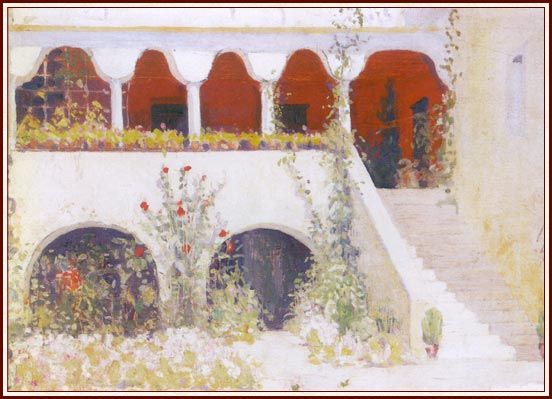
How do you photograph the Poseidonion Grand Hotel and the mansions on Spetses?
The Poseidonion Grand Hotel presents a symmetrical Belle Epoque facade best shot from the waterfront promenade at golden hour, while the neoclassical captains’ mansions reward detail shots of doorways, wrought iron, and pebble-mosaic courtyards throughout the town.
The Poseidonion Grand Hotel is the island’s most photographed building after the harbour. It opened in , modelled on the grand seafront hotels of the French Riviera, and its pale symmetrical facade with mansard roofs dominates the western waterfront. Shoot it head-on from the promenade to emphasise the symmetry, or from an angle to show its bulk against the sea. The building faces broadly west, so late-afternoon and golden-hour light warms the stone and fills the tall windows, while sunrise leaves it in cool shade. Include a palm tree or a passing carriage for scale and period feel.
The background on the Poseidonion Grand Hotel explains its place in the island’s social history and why it still sets the tone for Spetses.
The captains’ mansions, called archontika, are the other great architectural subject. Wealthy shipowners built them in the eighteenth and nineteenth centuries, and their tall facades, carved lintels, and walled courtyards fill the lanes above the Dapia. Many are still private, so photograph the exteriors from the street and respect the gates. Look for the black-and-white pebble mosaics, called votsalota, laid in the courtyards and thresholds; a top-down frame captures the maritime motifs of ships and anchors worked into the stone. Wrought-iron balconies, faded shutters, and heavy timber doors reward a short telephoto for isolating detail.
Early morning gives even light in the narrow streets before the sun climbs high enough to throw hard contrast across the facades and into the courtyards.
Two grand institutions extend the architectural theme. The Anargyrios and Korgialenios School, a large neoclassical campus that inspired the setting of John Fowles’s novel The Magus, sits above the town and offers imposing facades and formal grounds. The page on the Anargyrios and Korgialenios School covers access and history. Nearby, the mansion housing the Bouboulina Museum preserves the home of the revolutionary heroine, with a carved wooden ceiling and period rooms. Exterior photography is straightforward from the surrounding lanes, while interiors are usually limited to guided visits, so check the rules before raising a camera indoors.
Together these buildings let you tell the island’s story of wealth, education, and revolution through architecture rather than through captions alone, all within a short walk of the Dapia.
A techniques lift mansion and hotel photography here. Use a moderate wide lens and keep the camera level to avoid converging verticals on the tall facades, or correct them later; step back across the street where space allows. A polariser tames glare on painted shutters and glass. For the Poseidonion, blue hour just after sunset balances the warm interior lights against a deep sky, a classic architectural exposure. In the mansion lanes, watch your background so parked scooters and bins stay out of frame, and return at quiet hours for clean streets.
The guide to things to do in Spetses helps you group these architectural stops with other sights so a single walking loop of the town covers several strong architectural subjects.
Which beaches on Spetses are best for photography?
Spetses offers pine-framed beaches ideal for photography, with Agioi Anargyroi, Zogeria, and Agia Paraskevi providing turquoise water against green forest, while the northwest coves catch soft afternoon light and calm surfaces for reflections and clean seascapes.
Agioi Anargyroi is the island’s largest and most photogenic beach, a broad crescent of pale pebbles backed by pine trees on the southwest coast. The water grades from clear shallows to deep blue, which photographs vividly from the low hills at either end of the bay. A short walk leads to the sea cave known as Bekiris Cave, where light filtering through the rock makes an unusual interior subject. Come in the morning for calm water and fewer boats, or late afternoon for warm side light across the pines.
The overview on Agioi Anargyroi beach covers access by road, water taxi, and the coastal path, all of which give different vantage points for framing the bay and the sea cave.
Zogeria, on the northwest coast, is the beach photographers cite for its colour. A deep, sheltered bay ringed by pine forest holds some of the clearest water on the island, and a small chapel and taverna add human scale. The enclosing headlands make elevated compositions easy: climb a little above the shore and shoot down onto the turquoise shallows. Afternoon light suits the west-facing bay. The details on Zogeria beach explain how to arrive by scooter, water taxi, or the caiques that run from the town.
The water can stay mirror-calm well into the afternoon, which is ideal for reflections of the pines and the moored boats along the quiet shoreline of the bay.
Agia Paraskevi, further along the southwest coast, pairs a pine-fringed pebble beach with the small white chapel that gives it its name. A combination that frames beautifully from the approach path. The bay also carries a literary echo as a setting linked to The Magus, which adds narrative interest to the images. Nearby Vrellos, nicknamed Paradise, sits in a green amphitheatre of hills and glows at sunset. For calm mornings, the guide to Agia Paraskevi beach notes the quietest hours before the day boats arrive. Each of these southwest bays faces the Peloponnese across a narrow strait.
Distant mainland ridges often stack behind the water and give your seascapes a real sense of depth and place across the strait.
A few practical points improve beach photography on Spetses. Most shores are pebble rather than sand, so the water stays exceptionally clear, rewarding a polariser to cut surface glare and reveal the seabed colour. Carry a microfibre cloth for spray, and a dry bag if you shoot from a water taxi or kayak. The best elevated angles usually sit just off the beach on the coastal path, so scout the headlands. For turquoise-on-pine images, shoot when the sun is high enough to light the shallows but angled enough to model the trees, roughly mid-morning or mid-afternoon.
To plan a multi-beach day by boat and reach the coves only accessible from the water, the page on Spetses boat tours sets out the options.
Where are the best viewpoints for photographing Spetses?
Spetses offers elevated viewpoints from the chapel of Profitis Ilias, the ridges above Spetses Town, and the lighthouse headland at the Old Harbour, each giving wide panoramas over terracotta roofs, the harbour, and the strait toward the Peloponnese.
Profitis Ilias, the small hilltop chapel inland from the town, gives the widest panorama on the island. The climb is modest and mostly on track and quiet lane, and the summit opens views over the pine-covered interior, the town’s roofline, and the sea toward the mainland. Sunrise and sunset both work here because the elevation lets you shoot in almost any direction; the low sun rakes across the forested slopes and picks out the white chapel. Bring a wide lens for the full sweep and a telephoto to compress distant ridges and passing boats.
The hill is exposed, so carry water and a hat in summer, and start early to beat the heat and catch the cleanest morning air over the gulf.
The ridges immediately above Spetses Town offer quicker elevated shots without a long walk. Climb any of the stepped lanes behind the Dapia and you soon look down over terracotta roofs, mansion courtyards, and the harbour beyond. These vantage points suit late afternoon, when warm light fills the streets and the roofs glow against the blue water. Rooftop bars and the terraces of hotels provide legitimate raised platforms; ask permission and buy a drink rather than trespassing. From here the geometry of the town reads clearly, the curve of the waterfront, the clustered houses, and the pine hills rising behind.
A moderate telephoto isolates individual mansions and the domes of the churches from the surrounding rooftops for cleaner, more graphic compositions.
The lighthouse headland at the Old Harbour is the most rewarding low-effort viewpoint. From beside the tower and the church of Agios Mamas you look back across the masts of Baltiza toward the town. A composition that changes character through the day as boats move and light shifts. It is only a short climb from the harbour quay, so you can shoot it at sunrise and again at sunset in the same visit. The headland also overlooks the harbour entrance, where boats swing in and out and make moving subjects for a telephoto.
For the broader route linking these high points, the guide to hiking on Spetses outlines paths that connect the ridges, the interior chapels, and the coast into a single loop.
Reaching viewpoints is easy on a car-free island if you plan the light. Morning favours east-facing panoramas over the Dapia and the mainland strait; evening favours the west coast and the town roofs. A scooter shortens the approach to the inland hills, while the town ridges need only comfortable shoes. Carry a compact tripod for the blue-hour panoramas, when town lights and the last colour in the sky sit in balance. Watch the weather: the clearest, most saturated views usually follow a spell of northerly wind that scrubs the haze from the gulf.
For planning a route that strings the best light together, the notes on a Spetses itinerary help you sequence the climbs and the coast across a day or two.
How do you photograph the horse carriages and street scenes on Spetses?
The horse carriages gather near the Dapia and along the waterfront, making strong subjects against the sea and lanes; capture them with patience, a fast shutter for movement, and respect for the drivers and animals at work.
The horse carriages are among the island’s most distinctive subjects, a working survival of the car-free centre rather than a tourist novelty. They wait near the Dapia and the main square, and their painted panels, brass fittings, and patient horses make excellent detail and portrait shots. For motion, pan with a passing carriage at a shutter around one two-hundredth of a second to keep the horse sharp while the background blurs, conveying movement through the lanes. For calm studies, photograph a parked carriage framed by a mansion doorway or the harbour behind.
The guide to the horse carriages of Spetses explains where they gather and how the tradition fits the island’s transport, so you can anticipate their routes and stops.
Street photography thrives in the lanes away from the Dapia. Whitewashed alleys, blue shutters, draped bougainvillea, and mosaic thresholds supply endless backdrops, while residents, shopkeepers, and cats provide the human and animal interest. Work with a single moderate lens, keep your movements unhurried, and wait for a figure to enter a pool of light or a doorway to complete a frame. Early morning gives soft even light between the tall houses and near-empty streets; midday brings hard shadow that can be used deliberately for high-contrast graphic shots.
The market streets and shops near the waterfront add colour and daily life, and the overview of shopping in Spetses points you toward the busiest lanes where such daily scenes reliably unfold through the morning.
Photographing people asks for courtesy as much as technique. A smile, a gesture toward the camera. A nod of thanks go a long way, and many carriage drivers and fishermen are happy to be included if you ask first. Buy from the stall or share the finished frame in return. Avoid pushing a lens into someone’s face or blocking a working quay. Children should only be photographed with a parent’s clear agreement. These courtesies are not merely polite; they produce more relaxed, natural portraits than snatched candids. On a small island where the same faces recur. A respectful approach also means you are welcome to return the next day.
The community stays open to the visitors who follow you.
A settings suit the island’s street work. Keep shutter speed high enough to freeze a passing carriage or a walking figure, and raise ISO in the shaded lanes rather than risk blur. A near-silent shutter helps you stay unobtrusive. Pre-set your exposure for the bright whitewash so the highlights do not blow out, then let the shadows fall dark for mood. A wide aperture isolates a single subject against the textured lane while keeping you handholdable after dark. Carry minimal gear so you move easily and draw less attention.
For evening scenes, the cafes and bars around the harbour glow warmly, and the notes on Spetses nightlife point to the liveliest spots where lantern light and busy terraces make strong low-light frames.
When is the best light for photography on Spetses?
Spetses photographs best at early morning and the golden hour before sunset, when low sun warms the marble facades and calms the harbour water; midday sun flattens the whitewash and is best reserved for beaches and shade.
Early morning is the single most valuable window for photography on the island. The air is clearest, the streets are empty, the harbour water is glassy, and the low eastern sun rakes warm light across the Dapia cannons and the mansion facades. Reflections in Baltiza are at their calmest before any breeze rises. Start at first light in the town core, then move to the Old Harbour as the sun climbs. Because Spetses is compact and car-free, you can cover subjects on foot within this golden first hour before the cafes open and the day boats arrive.
Photographers who commit to one early start almost always return with their strongest images of the trip, and the streets stay pleasantly cool for the walking.
The golden hour before sunset is the second key window, and it favours the west-facing subjects. The Poseidonion Grand Hotel, the northwest beaches such as Zogeria, and the town roofs seen from the ridges all warm and glow as the sun drops toward the Peloponnese. Sunset itself falls behind the mainland from most of the town, so you gain a long, soft afterglow rather than a hard disc over open sea. Blue hour, the twenty minutes after sunset, balances the sky against the harbour and taverna lights and is ideal for the Poseidonion and Baltiza.
Carry a compact tripod for these low-light frames, and scout your composition in daylight so you are in position as the colour peaks and fades quickly.
Midday demands a change of subject rather than a pause. The high summer sun flattens the whitewash, throws hard black shadows, and turns the sea a glaring silver, none of it flattering to architecture. Use these hours for the beaches, where the overhead sun lights the clear shallows to their most vivid turquoise, or retreat into the shaded lanes for high-contrast graphic shots. It is also the time for interiors and museums, or a long lunch out of the heat. Overcast days, uncommon in summer but frequent in the shoulder seasons, act as a giant softbox and suit portraits. Mosaic detail. The boatyards, where even light reveals the texture of timber and stone.
A graduated day, town at dawn, beaches at noon, harbour at dusk, extracts the most from the light.
Seasonal light varies as much as the daily cycle. Spring and autumn bring low-angled sun, clear air after the northerly meltemi wind, and long shadows that model the architecture beautifully, which is why photographers favour them. High summer offers reliable blue skies but a fierce, high midday sun and busy quays, so early and late sessions matter most. Winter light is soft, low, and dramatic, though cafes and boats stop running. Whatever the season, watch the wind: a day or two after a strong northerly, the haze clears and distant mainland ridges snap into focus behind the water.
For matching your visit to the light and the crowds, the guide to the best time to visit Spetses lays out the trade-offs month by month.
How do you get around Spetses with a camera and photograph respectfully?
Spetses is car-free in its centre, so photographers move by foot, bicycle, scooter, water taxi, or horse carriage; travel light, protect gear from sea spray and dust, and always ask before photographing people and inside churches.
Getting around shapes how you photograph the island, because private cars are banned in the historic core. Most photographers walk, since the town’s subjects sit close together, and add a bicycle or a hired scooter to reach the beaches and inland hills. Water taxis and the caiques that leave from the Dapia open up the coves reachable only from the sea and give fresh angles on the coastline. Horse carriages serve the town at a gentle pace.
The practical guide to getting around Spetses compares these options for cost and reach, which matters when you are timing a scooter run to the west coast for the afternoon light or a dawn walk to the Old Harbour before the streets fill.
Protecting gear matters on a bright, dusty, salt-laden island. Sea spray from water taxis and open boats coats lenses quickly. Carry a clear protective filter. A rocket blower, and microfibre cloths, and keep a dry bag handy on the water. The fine dust of the lanes works into zoom barrels, so change lenses out of the wind. Summer heat is intense; keep cameras out of direct sun and let gear acclimatise slowly when moving between air-conditioned rooms and the humid outdoors to avoid condensation on the glass. A light, comfortable bag beats a heavy backpack on the flagstones and slopes.
Spare batteries and a power bank are worth carrying, since shooting from dawn to blue hour drains a battery faster than a short sightseeing day.
Respectful photography protects both your subjects and future visitors. Ask before photographing residents, drivers, and fishermen, and accept a refusal gracefully. Inside churches and monasteries, look for posted rules, dress modestly, avoid flash near icons and worshippers, and never photograph a service without clear permission; interiors forbid photography entirely. The chapels beside the harbours, such as Agios Mamas and Agios Nikolaos, are working places of worship rather than backdrops. Museums like the Bouboulina Museum often restrict interior photography, so confirm at the entrance; the page on the Bouboulina Museum notes what to expect on a guided visit.
Treating people and sacred spaces with courtesy is not only right but practical, keeping the island welcoming to the photographers who come after you.
A simple plan ties the island’s photography together. Start before dawn in the town and at the Dapia, work the Old Harbour and lighthouse as the sun rises. Then cross to the west-coast beaches or an inland viewpoint for the middle of the day and the afternoon light. Return to the harbour for blue hour and the lit tavernas. Keep gear minimal, water close, and your route aligned with the sun rather than a checklist.
For weaving these stops into a wider trip, the collection of Spetses travel tips covers the practicalities of ferries, money, and timing, so your days on the island leave room for the light instead of chasing logistics from one landmark to the next across the island.
Frequently Asked Questions
What is the most photographed spot on Spetses?
The Old Harbour, known as Baltiza, is widely considered the most photographed spot on Spetses, closely followed by the Dapia waterfront and the Poseidonion Grand Hotel. Baltiza combines wooden boatyards, moored yachts, waterfront tavernas, and the whitewashed lighthouse beside the church of Agios Mamas, all reflected in the calm inlet at dawn and dusk. The lighthouse headland gives the island’s signature elevated view back over the masts toward the town. The Dapia earns its place with rows of old cannons that lead the eye out to the arriving boats, set against ochre mansion facades. The Poseidonion, opened in , offers a grand symmetrical facade that glows at golden hour.
Photograph Baltiza at first light for still-water reflections, the Dapia through the early morning, and the Poseidonion in the late afternoon. Together these three subjects capture the maritime history, neoclassical architecture, and easy sea light that define the island.
What is the best time of day to photograph Spetses?
The best times of day to photograph Spetses are the first hour after sunrise and the golden hour before sunset. Early morning brings the clearest air, empty streets. A glassy harbour. And the low eastern sun warms the Dapia cannons and the mansion facades while Baltiza’s water is calm enough for mirror reflections. The golden hour and the blue hour that follows favour the west-facing subjects: the Poseidonion Grand Hotel. The northwest beaches such as Zogeria. The town roofs seen from the ridges all warm as the sun drops toward the Peloponnese. Because the sun sets behind the mainland from most of the town, you gain a long, soft afterglow rather than a harsh disc over open water.
Midday is best avoided for architecture, since the high sun flattens the whitewash and casts hard shadows. Use those hours for the beaches. Where overhead light makes the clear shallows most vivid, or for shaded lanes, interiors, and lunch.
Can you photograph inside the churches and museums on Spetses?
Photography inside churches and museums on Spetses is often restricted, so always check before raising a camera. The island’s chapels, including Agios Mamas by the Old Harbour and Agios Nikolaos near the town. Are working places of worship. Dress modestly, avoid flash near icons and worshippers. Never photograph a service without clear permission. Some interiors forbid photography entirely, and a posted sign or a quiet word with a caretaker will tell you which. Museums such as the Bouboulina Museum, housed in the heroine’s mansion. The Spetses Museum frequently limit or ban interior photography to protect exhibits. And any visit may be guided, so confirm the rules at the entrance and respect them.
Exterior photography of these buildings from the surrounding lanes is generally fine and captures the neoclassical architecture well. When in doubt, ask; a polite question rarely brings a refusal, and following the rules keeps these places open and welcoming to the photographers who visit after you.
Do you need a drone to photograph Spetses, and are drones allowed?
Drones are tightly regulated in Greece, so do not assume you can fly one over Spetses without preparation. Greek and European rules require operators to register, label the aircraft, keep it within visual line of sight. Stay clear of people, crowds, ports. And no-fly zones. The busy Dapia quay, the harbours, and gatherings such as the Armata festival are exactly the places where flying is restricted or banned. Fines for breaking the rules are significant. Before travelling, register with the national aviation authority, check the current airspace maps, and secure any permissions needed, because requirements change and enforcement is real. In practice, you do not need a drone to photograph the island well: the lighthouse headland.
The ridges above the town. The hill of Profitis Ilias all provide sweeping elevated views on foot. If you do intend to fly, do so responsibly, away from people and boats, and treat the harbours and festival crowds as strictly off-limits.
What camera gear should you bring to Spetses?
A light, versatile kit serves Spetses best because you cover the island mostly on foot in bright, salty, dusty conditions. A single camera with a moderate zoom, roughly a 24-70mm equivalent, handles most subjects, from the Dapia cannons to street scenes and mansion facades. Add a short telephoto, around 70-200mm equivalent, to compress the harbour layers, isolate the lighthouse against the masts, and reach the horse carriages discreetly. A polarising filter cuts glare off the sea and shutters and deepens the sky, and a compact tripod enables blue-hour frames of the Poseidonion and reflections at Baltiza.
Bring a rocket blower, microfibre cloths, and a clear protective filter to fight sea spray and lane dust, plus spare batteries and a power bank for dawn-to-dusk shooting. A dry bag protects gear on water taxis and caiques. Keep the whole load small; the flagstones, slopes, and summer heat reward minimal gear, and a modern phone still captures many classic views.
How do you photograph the horse carriages without upsetting the horses or drivers?
Photographing the horse carriages of Spetses works best when you treat the drivers and animals with courtesy. Approach the drivers waiting near the Dapia, greet them. Ask before shooting close portraits. Many are happy to be included. And a nod of thanks or a small purchase keeps the exchange friendly. Do not use flash near the horses, since a sudden burst can startle them, and avoid crowding or touching the animals while they wait or work. For moving shots, stand back at a safe distance and pan with a passing carriage at a shutter speed around one two-hundredth of a second to keep the horse sharp while the background blurs.
Early morning gives soft light and quiet streets, ideal for both static and motion frames. Frame a carriage against a mansion doorway or the harbour for context. Respecting the animals’ welfare and the drivers’ working day produces calmer, more natural images than any snatched, intrusive shot.
Which beaches on Spetses are the most photogenic?
The most photogenic beaches on Spetses are Agioi Anargyroi, Zogeria, and Agia Paraskevi, all on the pine-clad southwest and northwest coasts. Agioi Anargyroi is the island’s largest beach. A broad crescent of pale pebbles with water grading from clear shallows to deep blue and the sea cave known as Bekiris Cave at one end. Zogeria is a deep, sheltered bay ringed by forest, holding some of the clearest water on the island and framing well from the headlands above the shore. Agia Paraskevi pairs a pine-fringed beach with a small white chapel and a literary link to The Magus. Nearby Vrellos, nicknamed Paradise, glows at sunset in its green amphitheatre of hills.
Most shores are pebble rather than sand, which keeps the water exceptionally clear and rewards a polariser to reveal the seabed colour. Shoot from the coastal paths and headlands for elevated turquoise-on-pine compositions, and come by water taxi or caique to reach the hidden coves.