
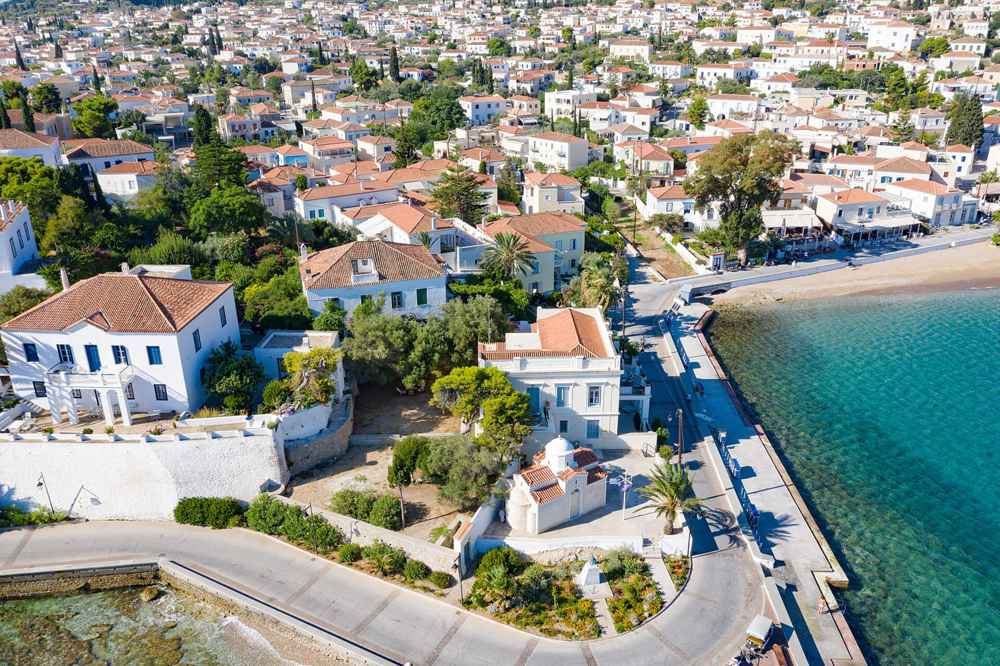
Spetses with kids works beautifully because the island is car-free, and families quickly discover that the biggest risk on the waterfront is a passing bicycle rather than a speeding vehicle. My Greece Tours treats Spetses as one of the gentlest Greek islands for young children, with horse-drawn carriages, shallow organised beaches and short boat trips that turn every day into a small, safe adventure.
Once families settle into the island’s rhythm, the practical worries of a holiday with children fall away. Distances are short, the flat quay is easy for prams and small legs, and the sea at the sheltered coves stays shallow and calm. Parents can pace the day around the midday heat, letting the children swim in the morning, rest through the hottest hours, and explore the harbour as the evening cools.
Is Spetses a good island for a family holiday with young children?
Spetses ranks among the easiest Greek islands for a family holiday, because private cars are banned in most of the island, distances are short, and the safe, traffic-free waterfront lets children roam far more freely than on the mainland.
The car-free rule is the single fact that shapes a family holiday on Spetses, and it changes everything about how parents relax. With private vehicles restricted across the island, the waterfront and the town lanes carry bicycles. Pedestrians and horse-drawn carriages instead of fast traffic. The constant roadside vigilance that wears parents down elsewhere simply lifts. Children can walk beside you along the quay without being pulled back from a kerb every steps. The pace of the whole place is gentle, set by hooves and bells rather than engines, and that calm quickly spreads to the family.
Many parents arrive braced for the usual holiday stress and find, within a day, that the island has quietly removed most of the hazards they were worried about.
Scale is the second great advantage for families, because nothing on Spetses is truly far. The main town clusters tightly around the Dapia quay. A walk from your room to a bakery, a beach or a carriage stand takes minutes rather than a draining trek. Short distances suit small legs and short attention spans, letting you head back for a nap or a change of clothes without abandoning the day. When somewhere lies a little further, a water taxi, a bicycle or a carriage covers the gap easily. This compactness means a family can pack swimming, ice cream. A museum and a harbour stroll into one gentle day.
Still keep everyone rested rather than marching tired children from one distant sight to the next.
The island also offers the kind of variety that keeps children engaged across a longer stay. A morning might mean a swim at a shallow, organised beach, an afternoon a slow carriage ride, and an evening a walk around the Old Harbour to watch the boats. Between these sit simple pleasures that delight children: feeding a friendly cat, choosing an ice cream on the Dapia, or spotting fish from a jetty. The Spetses beaches range from calm town coves to pine-backed bays reached by boat, so the swimming never grows dull. This blend of gentle adventure and genuine rest is exactly what younger travellers need.
It lets parents build days that feel full without ever tipping into the exhaustion that spoils so many family trips abroad.
Weighing all this together, Spetses suits families who want a calm, self-contained base rather than a packed itinerary of sights. The absence of cars, the short distances and the sheltered beaches combine to lower the stress that so often shadows travelling with children. Older kids gain a rare freedom to cycle and explore safely, while toddlers are happy on the flat quay with a pram. Reviewing things to do in Spetses before you arrive helps you match the island to your children’s ages and interests. For most families the verdict is clear: this is a place that rewards a slower, gentler kind of holiday.
Where the island itself does much of the work of keeping everyone safe, occupied and content.
Which Spetses beaches are best for young children?
Agia Marina, Ligoneri and Agioi Anargyroi rank as the best Spetses beaches for young children, because all three shelve gently into calm, shallow water and keep sunbeds, shade and a taverna close at hand.
Agia Marina beach is the closest organised beach to the town and a natural first choice for families with small children. Lying a short walk or an easy carriage ride from the Dapia, it means you can reach the sea without any long journey, which matters when toddlers tire quickly. The water shelves gently, staying shallow for a good distance out, so young swimmers can paddle safely under a watchful eye. Sunbeds and umbrellas line the sand, and a taverna sits close for lunch, drinks and a shaded break from the sun.
You can head back easily for a nap or a change of clothes, making Agia Marina the kind of low-effort beach day that families with the youngest children come to rely on.
Ligoneri beach lies just west of the town and offers families shade, calm water and an easy approach along the flat coast road. Tall trees behind the pebbles provide welcome cover from the midday sun, which parents of small children value as much as the swimming itself. The bay stays sheltered and generally calm, so the sea is gentle for paddling, and a beach taverna supplies food, drinks and a place to regroup. Because it sits so close to town, Ligoneri is easily reached on foot, by bicycle or by a short carriage ride. Even the youngest cyclists can pedal there along the level waterfront.
This combination of shade, calm water and a very short journey makes it one of the most practical family beaches on the island for a relaxed, unhurried day.
Agioi Anargyroi beach is the island’s largest organised beach and a firm favourite for families ready to venture a little further. Set on the western shore and backed by pine, it is a broad sweep of clear. Shallow water that stays calm enough for children to swim and snorkel close to shore. The beach is well served, with sunbeds, umbrellas, watersports and tavernas, so a family can settle in for a whole day without wanting for anything. Reaching it takes a slightly longer trip by bicycle, water taxi or a seasonal beach boat from the Dapia, which turns the journey itself into part of the outing.
Older children enjoy the space to swim out and explore the rocks, while the gentle shallows keep the youngest safe closer in, suiting mixed-age families particularly well.
A habits keep any beach day with children safe and easy on Spetses. Organised beaches with sunbeds, shade and a taverna are worth favouring over remote coves. Since they let you shelter small children from the strong sun and reach food and water without a long walk. Arriving in the morning secures the best shade and the calmest sea, before the day-boats and the heat build. Bring plenty of water, high-factor sunscreen, hats and beach shoes, as much of the shoreline is pebbly rather than sandy. Keep the youngest within arm’s reach in the water even where it is shallow, and note that some quieter beaches lack shade or services entirely.
Chosen with these points in mind, the island’s family beaches deliver calm, safe swimming that suits every age from toddlers to teenagers.
Do children enjoy the horse-drawn carriage rides on Spetses?
Children delight in the horse-drawn carriages of Spetses, which serve as real transport on the car-free island and turn an ordinary trip across town into a gentle, memorable ride behind a decorated horse.
One of the simplest joys for children here is a ride in one of the horse carriages of Spetses, which still work as genuine transport rather than a mere tourist novelty. Because private cars are banned, these open carriages, often brightly painted and their horses decorated with bells and pompoms, carry people and luggage around the town and along the coast road. For a child, climbing aboard and clip-clopping past the mansions and the harbour is pure adventure. The slow. Open ride lets them see far more than they would from inside a vehicle. Carriages wait at stands near the Dapia. Finding one is easy.
And a short trip across town or out to a nearby beach quickly becomes one of the trip’s most talked-about moments.
Beyond the fun, a carriage is genuinely useful for families juggling luggage and tired children. Arriving on the ferry with bags, a pram and small children in tow. You can load everything into a carriage at the Dapia and be delivered close to your accommodation without hauling suitcases through the lanes. The same service helps at the end of a long beach day, when little legs have given out and the walk home feels too far. Carriages take short town transfers and gentle coastal trips in their stride, and the driver knows the island intimately. For parents, this means the practical friction of moving around with young children eases considerably.
What starts as a simple lift becomes a treat the children ask to repeat again and again throughout the stay.
Teaching children how to behave around the horses keeps the experience safe and kind for everyone. These are working animals, so children should approach quietly, avoid sudden movements and never run up behind a horse. Whether riding in a carriage or simply passing one in the street. On a bicycle, families should give any carriage a wide, calm berth and slow right down, since a startled horse can be unpredictable. Inside the carriage, keeping younger children seated and holding on matters, as the open sides have no doors. Drivers are experienced and the pace is slow, so incidents are rare, but a quick word to the children about respecting the animals sets the right tone.
Handled with a little care, a carriage ride is both a safe way to travel and a small lesson in gentleness.
Fitting a carriage ride into your plans needs only a little thought. Fares are agreed with the driver rather than fixed on a meter. It is sensible to settle the price before you set off. And rates rise for longer trips or in the busy evening hours. Treat any figure as a starting point that shifts with distance and season. A short, gentle trip is often the best introduction for young children, saving a longer coastal ride for a calm, cooler part of the day. Carriages are easy to find at the Dapia and around the main square, and drivers are used to families with prams and luggage.
Combining a carriage with walking, cycling and the occasional water taxi gives children variety and spares parents the strain of carrying tired little ones home after a full day out.
Is the Bekiris Cave a good adventure for children?
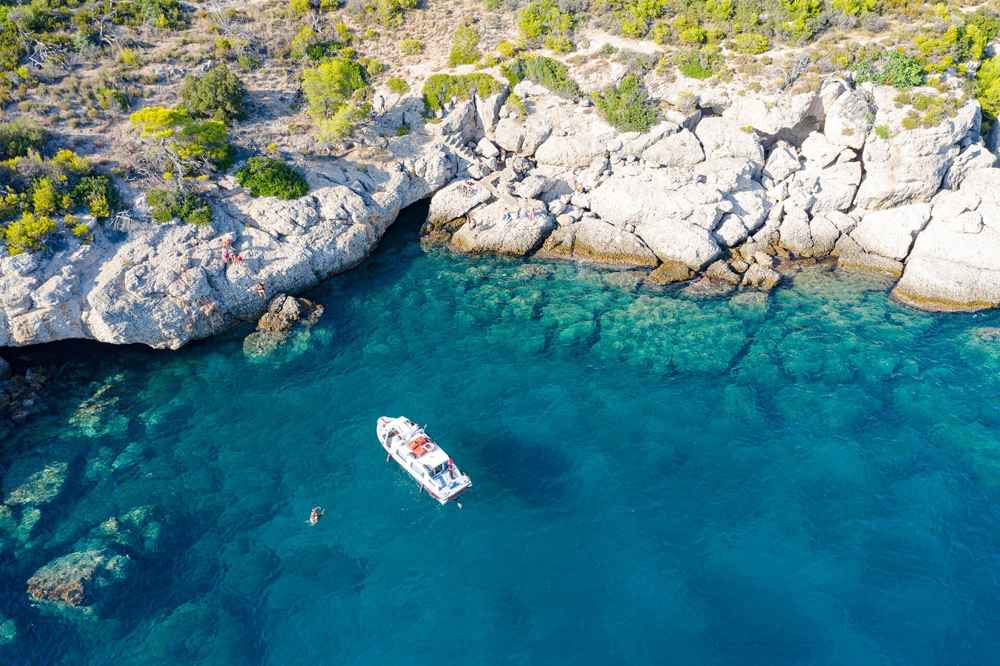
Bekiris Cave is a genuine adventure for older children, a sea cave near Agia Paraskevi that you swim or wade into, though the slippery rocks and open water make it better suited to confident young swimmers.
Bekiris Cave is one of the island’s small legends, a sea cave on the southwestern coast near Agia Paraskevi that has fired children’s imaginations for generations. Local lore tells that islanders hid here during the struggles of the past, and that story alone makes the visit feel like an expedition rather than a simple swim. The cave opens to the sea, so reaching its inner chamber means swimming or wading through a narrow entrance into a cool, shadowy space where light filters through the water. For an adventurous child, the mix of history, darkness and a hidden pool is thrilling, and emerging back into the sunlight feels like a genuine discovery.
It is exactly the sort of place that turns a beach afternoon into a story the children retell long after the holiday ends.
Getting to the cave is part of the adventure and shapes how you plan the day. It sits by Agia Paraskevi beach on the southwestern shore, which families reach by water taxi. By a seasonal beach boat from the town, or by bicycle along the coastal road. Many visitors combine the two, spending the morning swimming and playing on Agia Paraskevi’s organised beach before exploring the cave when the sea is calm. From the beach, the entrance is a short swim or a careful scramble over rocks, so it helps to arrive with the whole family already in swimwear and beach shoes. Timing the visit for a still. Calm sea makes the approach far easier and safer.
Pairing the cave with a relaxed beach day gives younger siblings somewhere gentle to stay while the braver ones explore.
Judging whether the cave suits your children is important, because it is an adventure with real hazards rather than a tame attraction. The rocks around the entrance are slippery, the water is open sea rather than a shallow. Sheltered pool. The inner chamber is dark, so confident swimming and a calm temperament matter. It suits older children and strong young swimmers far better than toddlers or nervous paddlers, who are happier left playing on the beach. Beach shoes protect small feet on the sharp rocks, and an adult should stay close in the water throughout.
Choosing a day when the sea is flat and calm removes much of the risk, while a rough or windy day is reason to skip the swim entirely. Treated with sensible caution, the cave rewards adventurous families without exposing anyone to needless danger.
The cave slots neatly into a wider day on the water, which is often the easiest way for families to see it. Several Spetses boat tours cruise the coastline and pause at the prettier coves, giving children the fun of a boat ride alongside the cave visit without a long cycle in the heat. A round-the-island trip lets you swim at two or three beaches, spot the pine-clad shore from the sea, and reach spots that are awkward to get to by land. For families, the boat removes the effort of transport and turns the whole outing into an event, with the cave as its highlight.
Booking a calmer, shorter cruise suits younger children, while older ones relish a fuller day afloat, making the sea trip a flexible centrepiece for a family day out.
How do families get around Spetses without a car?
Families get around Spetses on foot, by bicycle, in horse-drawn carriages and by water taxi, since the car-free island keeps distances short and offers several gentle, child-friendly ways to move between the town and the beaches.
Moving around with children is refreshingly simple on Spetses, and getting around Spetses rarely involves anything more stressful than a walk along the flat waterfront. Because private cars are banned, the quay and the town lanes are safe enough for children to walk, scoot or toddle beside a pram. The compact centre puts shops, beaches and cafes within easy reach. For longer hops there are bicycles, horse-drawn carriages, water taxis and, in season, small beach boats, so no family is ever stuck for a way to reach the next cove. This mix of gentle options means you can match the transport to the moment: a walk for the town. A carriage for luggage, a bicycle for a beach.
A boat for the far shore, all without a single engine to worry about.
Water taxis are the family’s secret weapon on Spetses, ferrying parents and children quickly between the town and the beaches when legs are tired or the day is hot. Operating on demand rather than a fixed timetable. They run from the harbour and can be called from beaches. You agree the fare and hop aboard for a short, breezy crossing. For children, the boat ride is a treat in itself, with the pine-clad coast sliding past and the chance to trail a hand in the water. A water taxi rescues many a family afternoon, sparing everyone a long, hot walk back from a distant cove and carrying prams and beach bags with ease.
Combined with a bicycle out and a boat home, it lets you reach the best coves without ever overtaxing small legs in the heat.
The flat waterfront is a real bonus for families pushing a pram or wheeling luggage. Along the Dapia and the harbour front the ground is largely level and easy to roll a buggy over. Parents of babies and toddlers can stroll the promenade. Pause for a coffee and watch the boats without wrestling with steps or steep hills. Away from the seafront, the older lanes grow narrower and can turn cobbled or stepped. A lightweight. Foldable pram is easier than a heavy pushchair, and a sling or carrier helps in the tighter alleys.
Reaching the town in the first place is straightforward too, and understanding how to get to Spetses from Piraeus or the mainland ports lets you plan the journey with a pram and small children firmly in mind from the very start.
In practice, families mix these options through the day, and that flexibility is what makes the island so manageable with children. A typical day might begin with a walk to the bakery. Continue with a carriage ride to a beach. End with a water taxi home when everyone is tired and sun-warmed. Nobody has to commit to a single mode of transport, and there is always a gentler alternative when small legs give out. Because the island is small and the choices overlap, you can adapt on the spot, swapping a planned cycle for a boat if the heat climbs. This patchwork of walking, pedalling, riding and boating keeps children entertained by the sheer variety.
Sparing parents the exhaustion of hauling them everywhere on foot. It is one of the quiet joys of a family stay here.
Where should families stay in Spetses with children?
Families should stay near the Dapia and the town waterfront in Spetses, where accommodation sits within a short, flat walk of beaches, bakeries and carriage stands, keeping distances easy for prams and tired young children.
Choosing the right base matters more with children than without them, and thinking about where to stay in Spetses repays a little care. A central location near the Dapia and the main waterfront keeps you within a short, flat walk of the bakeries, cafes. Carriage stands and the nearest beaches, which is exactly what you want when a toddler needs a nap or a change of clothes at short notice. Staying close to the harbour also means you arrive by ferry only minutes from your door, sparing you a long trek with luggage and children in tow.
For families prioritising ease over seclusion, the town and its immediate fringes strike the best balance, putting almost everything a young family needs within easy, stroller-friendly reach of the room.
The kind of accommodation you choose shapes a family stay as much as its location. Self-catering apartments and studios suit families well, giving you a kitchen for children’s meals. Space to spread out. The freedom to eat breakfast at your own pace rather than to a hotel schedule. Larger hotels along the waterfront offer pools, which many children treasure as a calm alternative to a pebbly beach, along with the reassurance of staff and easy dining. Small guesthouses and traditional houses in the lanes have huge charm, though steps and narrow entrances can challenge a pram, so check access before booking. Whatever the style, asking in advance about cots, high chairs.
Family rooms and whether bicycles or a pushchair can be lent smooths the stay and helps you match the room to your children’s ages.
Families craving quiet can look beyond the centre, but the trade-off is worth weighing carefully. Properties along the coastal road toward Ligoneri or Kounoupitsa put you closer to a swimmable shore and offer a calmer setting away from the evening bustle of the Dapia. Which can suit families with early-to-bed toddlers. The compromise is distance: you rely more on bicycles. Carriages or water taxis to reach the shops and the livelier beaches. A spur-of-the-moment dash back for a forgotten swimsuit takes longer. For a stay of a week or more, a slightly out-of-town base with a garden or a pool can be idyllic for children. Provided you are happy to build a little transport into each day.
Balancing peace against convenience is the key decision, and it depends largely on your children’s ages and your own appetite for movement.
Booking early and asking the right questions makes all the difference for a family. Spetses is busy in high summer and over the September Armata weekend. Family rooms, apartments with kitchens and ground-floor units with easy access fill quickly and reward booking well ahead. Before you commit, confirm the practical details that matter with children: how far the property sits from the nearest beach and the Dapia, whether the approach involves steps or steep lanes. Whether cots, high chairs or a washing machine are available. Ask, too, whether the hosts can arrange a carriage transfer for your arrival, which spares you dragging luggage and tired children from the port.
A little groundwork before you travel means you arrive to a base that fits family life, rather than discovering awkward steps or a long, hot walk on arrival.
Are Spetses tavernas and restaurants family-friendly?
Spetses tavernas are thoroughly family-friendly, serving simple grilled dishes, pasta and fresh fish that children happily eat, often at relaxed waterfront tables where young ones can move about while the car-free lanes stay safe.
Greek tavernas are naturally suited to families, and the Spetses restaurants welcome children as a matter of course rather than tolerating them grudgingly. Menus lean on simple, familiar dishes that fussy young eaters accept readily: grilled chicken and lamb chops, fried potatoes, pasta, cheese pies, salads and plenty of bread. Fresh fish and seafood appear everywhere, so parents can eat well while children stick to plainer plates. Portions are generous and easy to share, which suits toddlers who pick rather than order a full meal of their own. The relaxed, unhurried Greek approach to dining means nobody minds a child leaving the table or eating late. The whole atmosphere is warm and forgiving.
Exactly what parents need after a long, sun-filled day on the beach with hungry, tired children in tow.
The setting of tavernas suits families as much as the food does. Because cars are banned, you can eat at waterfront and harbourside tables without the worry of traffic just beyond the kerb. Children have a little freedom to wander to the water’s edge or watch the boats while the adults finish a meal. The Old Harbour and the Dapia are lined with places to eat where the passing scene, fishing boats, cats, carriages, keeps children entertained between courses. Eating early suits younger families, before the tables fill with later Greek diners, and kitchens are happy to bring children’s plates quickly.
This combination of safe surroundings, easy food and a lively but unthreatening scene turns dinner from a nightly ordeal into one of the pleasures of a family stay on the island.
Beyond sit-down meals, the island makes feeding children between beach trips easy. Bakeries near the Dapia turn out cheese pies, spinach pies, fresh bread and sweet pastries that make perfect, cheap snacks for a picnic or a hungry moment on the sand. Small supermarkets and grocers stock fruit, yoghurt, water and the everyday basics a self-catering family needs, so you can keep a cool bag topped up for the beach. Ice cream shops and cafes on the waterfront give children a reliable treat at the end of a hot afternoon, and a cold drink in the shade revives everyone.
For families in an apartment, buying fresh supplies each morning and eating a relaxed breakfast on your own balcony sidesteps the rush of a hotel dining room. Letting the day start at the children’s own gentle pace.
A habits make eating out with children smoother still. Dining early, around when the tavernas open for the evening, means quieter rooms, faster service and a table before overtired children melt down. Choosing a waterfront or harbourside spot gives them something to watch and a little room to move. While a table set back from the water suits families with a toddler prone to bolting. It pays to carry a small snack for the wait, since even quick kitchens take time, and to ask for children’s portions or a shared plate rather than over-ordering. Many places will happily adapt a dish to a fussy eater.
With these simple tactics, meals become a relaxed, sociable part of the day rather than a battle. The tavernas’ easygoing welcome does much of the work of keeping everyone content.
Can you cycle together as a family on Spetses?
Families can cycle together easily on Spetses, since the car-free coast road stays flat and quiet, rental shops carry children’s bikes, seats and trailers, and short rides to nearby beaches suit even young or nervous riders.
Cycling as a family is one of the signature pleasures of Spetses, and cycling Spetses is far safer here than almost anywhere on the mainland. Because private cars are banned, the flat coastal road and the town waterfront belong to bicycles rather than traffic. Parents who would never let their children ride on a busy road at home can relax and let them pedal. Rental shops near the Dapia hire out not just adult bikes but children’s models, tandems, child seats and trailers. Every age can join the ride and nobody is left behind. Many hotels lend bicycles too, sometimes putting the whole family on wheels without a trip to a shop.
This easy access to the right machines is what makes family cycling here so straightforward from the very first day.
For families, the trick is to match the ride to the youngest and least confident rider rather than the fittest. The flat promenade and the short, level run out to Ligoneri give children a gentle. Traffic-free introduction. Because the beaches follow the coast in sequence, you can turn back the moment small legs tire. The full ring road circles the island in about twenty-four to twenty-six kilometres. No family need attempt the whole loop with young children. A short out-and-back to a nearby cove is plenty. Keeping the group together, riding at the pace of the slowest, and choosing a calm, cool morning all help.
An e-bike for a parent lets an adult tow a trailer or shadow a tiring child without strain. The family can range a little further while staying comfortably within everyone’s limits.
A few sensible rules keep family cycling safe in the busier parts of town. Although traffic is not the danger it is elsewhere, the narrow central lanes fill with pedestrians. Horse-drawn carriages share the same roads, so children should slow right down through the crowds and give any working horse a wide, calm berth. Teaching them to ride single file past walkers, to use a bell politely, and to dismount in the most crowded alleys keeps everyone comfortable. Beyond the town the open coast road is far quieter and easier. Though it pays to watch for the occasional scooter and to keep younger children on the inside, away from the drop to the sea.
Fitting helmets, setting off early to beat the heat, and carrying water turn the ride into the safe, happy outing the island is built for.
Cycling need not be all-or-nothing, and the best family days weave it together with swimming, boats and rests. A common pattern is to pedal gently to a nearby beach in the cool morning, swim and play through the middle of the day under an umbrella. Then ride home, or catch a water taxi with the bikes if the children have wilted in the heat. The flat coast links beach after beach, so a ride becomes a self-guided beach crawl at whatever pace suits your family. Carrying water, sunscreen, hats and a little cash lets you stop wherever the sea looks inviting, while a boat back spares tired legs the return.
Treated as one gentle strand of a varied day rather than an endurance test, cycling becomes the centrepiece of a relaxed, active family holiday on the island.
When is the best time to visit Spetses with kids?
Late spring and early autumn are the best times to visit Spetses with kids, offering warm but gentle weather, calm seas and thinner crowds, while high-summer families should ride out the fierce midday heat indoors.
Choosing when to visit shapes a family holiday on Spetses more than almost any other decision, and weighing the best time to visit Spetses with children in mind pays off. The shoulder months of late spring, roughly May into June. Early autumn, in September, bring warm. Settled weather and a sea that is pleasant for swimming, without the fierce heat and heavy crowds of high summer. In these periods the beaches are calmer, the tavernas quieter, and the whole island moves at a gentler pace that suits young children well. Days are long enough for beach time and exploring, yet the temperatures rarely climb to the point where midday becomes unbearable.
For families with any freedom over dates, these shoulder weeks offer the easiest, most comfortable conditions the island provides.
Whenever you visit, planning the day around the midday heat is the single most useful habit with children. From roughly late morning until mid-afternoon in summer the sun is fierce and shade grows scarce, so this is the time to be out of it, not exploring in it. Wise families front-load the day, hitting the beach early when the sea is calm and the sand cool. Then retreating for lunch, a nap or quiet play through the hottest hours. The cooler late afternoon and early evening open a second window for swimming, a carriage ride or a harbour stroll. Keeping children hydrated, well covered in sunscreen and hatted.
Out of the direct sun between noon and four does far more to keep them happy than any single attraction. And it matches the island’s own unhurried rhythm.
The August peak deserves special thought for families, because it brings both the greatest heat and the largest crowds. Through the height of summer, and especially around the mid-August holiday, Spetses fills with Greek and international visitors, the beaches and tavernas grow busy, and accommodation is scarcest and dearest. For families this means more competition for shade, longer waits at restaurants, and a livelier, later-night buzz in town that can clash with early bedtimes. None of this makes August impossible. The sea and sunshine are reliably glorious, but it does reward planning: book accommodation and any carriage transfers well ahead. Arrive at beaches early, and lean on the quieter coves and organised beaches with shade.
Families who can avoid the peak, or who choose a calmer, out-of-town base, sidestep much of the crush while still enjoying the summer sea.
Balancing weather, crowds and what is open helps you land on the right dates. The shoulder months give the easiest all-round conditions. A few beach tavernas, water-sports operators and seasonal boats may not yet be running in early spring or may wind down by mid-autumn. So a high-summer visit guarantees everything is open even as it brings the heat and the crowds. Winter is quiet and cool, with services closed, and suits only families after a very low-key, off-season stay. For most, the sweet spot is June or September, when the sea is warm, the island lively but not overwhelmed, and the days comfortable for children.
Whatever dates you choose, working with the climate, swimming and exploring in the cool hours and resting through the heat, is the key to a happy family visit.
Frequently Asked Questions
Is Spetses suitable for a holiday with a baby or toddler?
Spetses suits babies and toddlers well, largely because the car-free streets remove the constant traffic worry that makes travelling with little ones so stressful elsewhere. The flat waterfront around the Dapia and the harbour is easy to push a pram along. Everything you need day to day. Bakeries, cafes, pharmacies and small shops, sits within a short, level walk. The organised beaches closest to town, such as Agia Marina and Ligoneri, shelve gently into shallow, calm water and keep shade and a taverna nearby, which suits the very youngest. The main things to plan for are the strong summer sun, the pebbly rather than sandy shore at beaches. The older lanes.
Which can be cobbled or stepped and awkward for a heavy pushchair. A lightweight, foldable pram or a sling, plenty of shade and sun protection, and a central base solve most of these. With that groundwork, the island is a gentle, manageable place for a family with a baby.
What should you pack for a family holiday on Spetses?
Packing for a family holiday on Spetses centres on sun protection, beach kit and comfortable footwear. Since the island is hot in summer and much of the shoreline is pebbly rather than sandy. High-factor sunscreen, sun hats, sunglasses and light, breathable clothing top the list, along with a rash vest or two for children who spend hours in the water. Beach shoes matter, as they protect small feet on pebbles and rocks and make the swim into spots like Bekiris Cave far easier. Bring a couple of refillable water bottles, a light cool bag for picnics, and a compact beach umbrella or sunshade if you have space.
For babies and toddlers, a lightweight foldable pram or a sling copes better with cobbled lanes than a heavy pushchair. Add any medicines you rely on, a basic first-aid kit and plenty of swimwear. Because the island has shops and pharmacies, you can top up on essentials, but the sun and beach gear are worth bringing from home.
Are there sandy beaches for children on Spetses?
Most Spetses beaches are pebbly or shingle rather than broad stretches of soft sand, which is worth knowing before you travel with children who love to dig and build. The organised beaches near town, including Agia Marina and Ligoneri, mix fine pebbles with patches of coarse sand and shelve gently into clear. Shallow water. They remain very swimmable and comfortable for young children, especially with beach shoes. Agioi Anargyroi, the largest organised beach, has a similar pebble-and-sand character with calm, clear water ideal for paddling and snorkelling. Genuine wide-sand beaches are scarce on the island, so families set on classic sandcastles should temper expectations and pack beach shoes for the pebbles.
The trade-off is that the pebbly seabed keeps the water strikingly clear, which children enjoy for spotting fish. Bringing water shoes, a bucket that works with pebbles. A shaded base turns any of these beaches into an easy, happy day for children despite the lack of deep sand.
How do you get to Spetses with young children?
Getting to Spetses with young children is straightforward, since fast ferries and hydrofoils link the island directly to the mainland. Most families travel from the port of Piraeus near Athens. Where high-speed catamarans and hydrofoils reach Spetses in roughly two hours to two and a half hours, gliding down the Saronic coast. An alternative, handy if you are coming by car and want a shorter crossing, is to drive to Kosta or Porto Heli on the Peloponnese. Directly opposite the island. Take a short water-taxi or small-boat hop across the narrow channel.
You leave any hire car on the mainland and arrive as foot passengers, so travelling light and using a compact, foldable pram makes the transfers easier. On arrival at the Dapia you can load luggage and tired children into a horse-drawn carriage to reach your accommodation. Booking ferry tickets ahead in high summer is wise, as popular sailings fill quickly during the peak season.
Is Spetses expensive for a family?
Spetses has a reputation as one of the smarter Saronic islands, so a family can spend freely if they choose, but it need not be an expensive holiday. Accommodation is the biggest cost and rises sharply in high summer and over the September Armata weekend. Booking early and considering a self-catering apartment rather than a waterfront hotel helps a family budget stretch further. Eating is where families save most: simple taverna dishes, shared plates. Cheap. Filling snacks from the bakeries keep food costs modest, while a kitchen lets you prepare children’s breakfasts and picnics yourself.
Transport is inexpensive, since the island is small, walking is free, and bicycles cost little; carriage fares and water taxis add up only if you use them often. Beaches are free to reach, with sunbeds an optional extra. Travelling in the shoulder months, self-catering. Eating like the locals rather than at the priciest waterfront tables all keep a family trip to Spetses reasonable without feeling like a compromise.
What is there for children to do on Spetses besides the beach?
Beyond the beaches, Spetses gives children plenty to enjoy, starting with the horse-drawn carriages that double as transport and treat. A slow clip-clop ride past the old mansions and along the harbour is a highlight for most young visitors. The Old Harbour, or Baltiza, rewards a stroll to watch traditional wooden boats being built and repaired, and the fishing boats, cats and comings and goings keep children entertained. Cycling the flat, car-free coast road is an adventure in itself, as is a boat trip around the island to swim at hidden coves and explore Bekiris Cave. In town, children can choose ice cream on the Dapia, feed the friendly cats, and watch the evening promenade.
The Bouboulina Museum tells the story of the island’s seafaring heroine in a way older children often find gripping. Simple pleasures such as spotting fish from a jetty fill the gaps. Between beach, boat, bike and carriage, few children run short of things to do here.
How days should a family spend on Spetses?
Most families find three to five days on Spetses about right, long enough to settle into the island’s gentle rhythm without running out of things to do. A short stay of two or three days lets you swim at the town beaches, take a carriage ride. Cycle a stretch of the coast and eat by the harbour, covering the essentials at a relaxed pace. Stretching to four or five days adds room for a boat trip around the island, a visit to Bekiris Cave. A longer cycle to the western coves. The kind of slow, unhurried beach days that suit young children best.
A full week suits families who want to truly unwind, mixing beach mornings, midday rests and evening strolls without any pressure to rush. Because the island is small and calm, it rewards a slower holiday rather than a packed itinerary. Err toward giving children time to rest between outings rather than cramming every day with activity.