
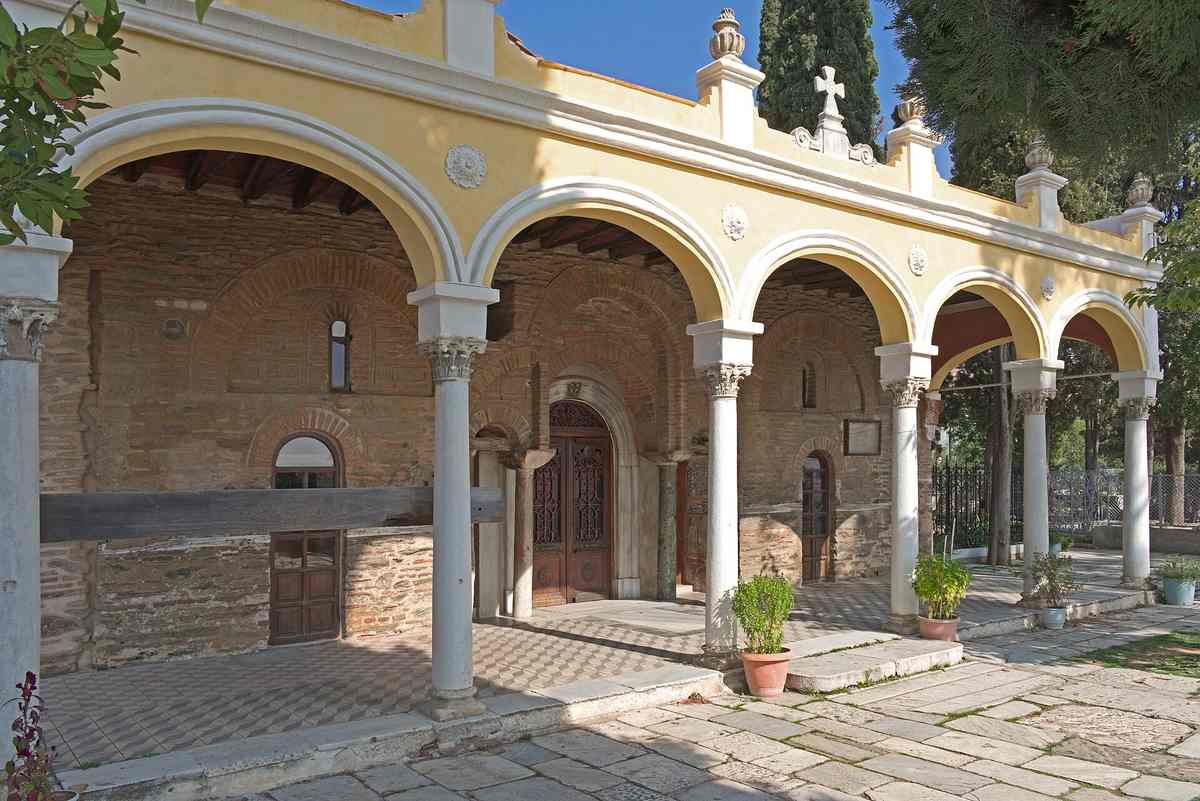
Vlatadon Monastery, perched high in Thessaloniki’s upper town, offers a unique blend of history and spirituality. Founded in the fourteenth century, it is closely linked with the theologian Gregory Palamas. The monastery holds an important place in the city’s religious and cultural landscape. As a UNESCO-listed site, it showcases remarkable Palaiologan wall paintings within its katholikon. Visitors can enjoy the serene atmosphere, enhanced by the presence of peacocks roaming the grounds, and a terrace providing stunning views over the city and the Thermaic Gulf. This active religious community invites respectful exploration of its open areas, with My Greece Tours.
The Vlatadon Monastery stands as a testament to Thessaloniki’s rich Byzantine legacy. It houses both a significant library and the Patriarchal Institute for Patristic Studies. The sections below cover its historical significance, architectural features, and the cultural experiences it offers today. Visitors can explore this spiritual haven while enjoying panoramic views. For a comprehensive understanding of the area, consider the Thessaloniki tours, which provide in-depth insights into the city’s past and present. Embrace the opportunity to delve into the heart of Thessaloniki’s heritage.
What is the historical significance of Vlatadon Monastery?
Vlatadon Monastery holds historical significance as a fourteenth-century Byzantine site linked to Gregory Palamas. It reflects Thessaloniki’s religious and cultural heritage.
Vlatadon Monastery is deeply rooted in the historical and religious fabric of Thessaloniki. Established in the fourteenth century by the Vlattades brothers, it became a centre for theological study and practice. The monastery’s connection to Gregory Palamas, a prominent theologian of the time, further elevates its historical importance. As part of the UNESCO Palaeochristian and Byzantine Monuments of Thessaloniki, it represents the enduring legacy of Byzantine architecture and spirituality in the region. This historical context makes it a vital destination for those interested in exploring the rich tapestry of Thessaloniki’s past.
The monastery’s location in the upper town, just below the acropolis and the Heptapyrgion, adds to its historical allure. This area has been a significant part of Thessaloniki’s defensive and religious history. Visitors to the monastery can also explore Ano Poli, the old town area known for its traditional architecture and narrow streets. The intertwining of these historical sites provides a comprehensive understanding of the city’s development over the centuries. The monastery’s significance is further highlighted by its role in preserving the teachings and traditions of early Christianity in the region.
Tradition links the site of Vlatadon Monastery to the place where the Apostle Paul preached to the Thessalonians, adding a layer of biblical significance. This connection attracts pilgrims and visitors alike, interested in the early spread of Christianity. The monastery continues to function as an active religious community, offering a living link to its storied past. Visitors are encouraged to respect the sanctity of the space while exploring the open areas that reflect both its historical and spiritual importance. This makes the monastery a unique blend of historical exploration and religious devotion.
How can you explore the architecture of Vlatadon Monastery?
Exploring Vlatadon Monastery’s architecture involves observing its Byzantine design, Palaiologan wall paintings, and the serene layout of its grounds.
The architecture of Vlatadon Monastery is a splendid example of Byzantine design. Its katholikon, the main church, features intricate Palaiologan wall paintings that capture the artistic achievements of the era. These paintings provide insights into the religious iconography and artistic styles prevalent during the Byzantine period. The monastery’s construction reflects the architectural techniques of the time, with its robust walls and strategic location offering both defence and spiritual sanctuary. This blend of art and architecture makes it a fascinating study for visitors interested in the Byzantine era.
Visitors to Vlatadon Monastery can appreciate the harmonious layout of its grounds. The walled enclosure creates a peaceful environment, enhanced by the presence of roaming peacocks that add to the serene atmosphere. A terrace within the monastery offers expansive views over Thessaloniki and the Thermaic Gulf, allowing visitors to take in both the natural beauty and the urban landscape. This vantage point provides a unique perspective on the city’s geographical and cultural setting, highlighting the monastery’s strategic placement within the upper town.
The architectural significance of Vlatadon Monastery extends beyond its walls. It houses the Patriarchal Institute for Patristic Studies, a centre dedicated to the research and study of early Christian texts. This institute further underscores the monastery’s role as a hub of theological learning and discourse. As visitors explore the monastery, they are encouraged to reflect on its dual function as both a historical site and a living religious community. The architecture serves not only as a testament to the past but also as a foundation for ongoing spiritual and academic pursuits.
What cultural experiences does Vlatadon Monastery offer visitors?
Vlatadon Monastery offers cultural experiences through its historical tours, religious ceremonies, and serene natural surroundings.
Cultural experiences at Vlatadon Monastery are deeply intertwined with its historical and religious significance. Visitors can participate in guided tours that provide detailed insights into the monastery’s history, architecture, and role in the religious life of Thessaloniki. These tours often include visits to the katholikon, where the Palaiologan wall paintings offer a glimpse into Byzantine artistry and spirituality. The monastery’s serene setting and rich history make it a unique cultural destination for those interested in exploring the intersection of religion, art, and history.
Religious ceremonies at Vlatadon Monastery offer another layer of cultural experience. As an active religious community, the monastery hosts various liturgical events that visitors can attend, providing an authentic glimpse into Greek Orthodox practices. These ceremonies are conducted in the historic setting of the monastery, adding to the spiritual and cultural ambiance. Participating in or observing these events allows visitors to connect with the living traditions that have been preserved at Vlatadon Monastery for centuries. This makes the monastery not just a historical site but a vibrant centre of religious life.
The natural surroundings of Vlatadon Monastery contribute significantly to the cultural experience. The monastery’s grounds, with their roaming peacocks and panoramic views, offer a tranquil retreat from the bustling city below. Visitors can take leisurely walks around the walled garden, enjoying the peaceful atmosphere and the stunning vistas of Thessaloniki and the Thermaic Gulf. This blend of natural beauty and historical significance provides a holistic cultural experience that appeals to both the senses and the intellect. The monastery’s setting invites reflection and appreciation of the harmonious balance between nature and spirituality.
What can you learn from the library at Vlatadon Monastery?
The library at Vlatadon Monastery offers insights into theological studies and Byzantine history through its extensive collection of texts.
The library at Vlatadon Monastery is a treasure trove of theological and historical knowledge. It houses an extensive collection of manuscripts and texts that focus on Byzantine history and early Christian theology. Scholars and visitors can explore writings that delve into the teachings of Gregory Palamas and other significant theological figures. This rich repository of knowledge provides a unique opportunity for those interested in deepening their understanding of the theological and historical context of the Byzantine era. The library serves as a bridge between the past and present, preserving valuable insights for future generations.
Visitors to the library can gain a deeper appreciation of the intellectual pursuits that have been a part of Vlatadon Monastery’s legacy. The collection includes works on patristic studies, offering insights into the early Church Fathers and their contributions to Christian thought. This focus on patristic theology aligns with the monastery’s role as the location of the Patriarchal Institute for Patristic Studies. The library’s resources support ongoing research and learning, making it an invaluable asset for theologians, historians, and students of Byzantine culture.
The library’s role extends beyond being a repository of texts; it is a centre for academic discourse and study. Researchers and scholars often visit to access its unique collection, contributing to the global understanding of Byzantine and Christian studies. The library’s presence within the monastery underscores the significance of intellectual and spiritual pursuits coexisting in this historic setting. Visitors interested in exploring the library’s offerings are encouraged to engage with the materials and reflect on the enduring legacy of Vlatadon Monastery as a centre of learning and spiritual growth.
How does Vlatadon Monastery contribute to Thessaloniki’s modern cultural landscape?
Vlatadon Monastery enhances Thessaloniki’s cultural landscape by preserving Byzantine traditions and providing a venue for religious and historical education.
Vlatadon Monastery plays a vital role in shaping Thessaloniki’s modern cultural landscape by preserving and promoting Byzantine traditions. As an active religious community, it continues to uphold the liturgical practices and theological teachings that have been integral to the city’s identity for centuries. The monastery’s presence in Thessaloniki serves as a living reminder of the city’s rich Byzantine heritage, attracting both locals and tourists who seek to explore and understand this aspect of Greek culture. Its ongoing activities and ceremonies contribute to the vibrant cultural tapestry of Thessaloniki.
The monastery’s educational initiatives further enrich Thessaloniki’s cultural scene. By housing the Patriarchal Institute for Patristic Studies, Vlatadon Monastery provides a platform for academic research and discourse on early Christian theology. This institute attracts scholars from around the world, fostering a global exchange of ideas and enhancing the city’s reputation as a centre for theological and historical studies. Visitors and locals alike benefit from the monastery’s commitment to education, as it offers opportunities for learning and engagement with the rich cultural heritage of Thessaloniki.
Vlatadon Monastery also serves as a cultural venue for visitors exploring Thessaloniki. Its strategic location in the upper town offers a unique perspective on the city’s historical and geographical context. The monastery’s grounds provide a tranquil setting for reflection and appreciation of the natural beauty surrounding Thessaloniki. This combination of historical significance, educational initiatives, and serene environment makes Vlatadon Monastery a key contributor to the city’s modern cultural landscape. Visitors can explore the monastery as part of a broader itinerary that includes other historical sites like Byzantine churches of Thessaloniki.
What role does Vlatadon Monastery play in religious life today?
Vlatadon Monastery plays a vital role in religious life by hosting services and maintaining its status as an active monastic community.
Vlatadon Monastery continues to be a significant centre for religious life in Thessaloniki, maintaining its status as an active monastic community. The monastery hosts regular liturgical services and religious events that draw both the faithful and visitors interested in experiencing Greek Orthodox traditions. These services provide an authentic glimpse into the spiritual practices that have been preserved over the centuries. The monastery’s role as a living religious institution underscores its importance in the spiritual landscape of Thessaloniki, offering a place for worship, reflection, and community engagement.
The monastery’s religious activities are complemented by its educational and cultural initiatives. As home to the Patriarchal Institute for Patristic Studies, Vlatadon Monastery promotes theological research and discourse, contributing to the broader understanding of Christian theology and history. This dual focus on religious practice and academic study reinforces the monastery’s role as a centre for spiritual and intellectual growth. Visitors and scholars alike are welcomed to engage with the monastery’s offerings, deepening their understanding of the intersection between faith and scholarship.
Vlatadon Monastery’s contribution to religious life extends beyond its walls, influencing the broader community of Thessaloniki. The monastery’s commitment to preserving and promoting Orthodox traditions resonates with both locals and visitors, fostering a sense of continuity and connection to the past. As a place of pilgrimage and spiritual reflection, Vlatadon Monastery attracts those seeking to explore the rich tapestry of Greek Orthodox faith. Its ongoing activities and initiatives ensure that it remains a vital and vibrant part of the religious landscape in Thessaloniki, offering a sanctuary for worship and contemplation.
How does the location of Vlatadon Monastery enhance its appeal?
The location of Vlatadon Monastery enhances its appeal by offering panoramic views and proximity to historical landmarks.
Vlatadon Monastery’s location in the upper town of Thessaloniki significantly enhances its appeal to visitors. Perched just below the acropolis and the Heptapyrgion, the monastery offers breathtaking panoramic views over the city and the Thermaic Gulf. This strategic position not only provides a stunning backdrop for exploration but also offers a unique perspective on Thessaloniki’s geographical and historical context. The monastery’s placement within the upper town makes it a convenient starting point for exploring other nearby historical sites, enriching the visitor experience with a comprehensive understanding of the area’s heritage.
The proximity of Vlatadon Monastery to significant historical landmarks further adds to its allure. Visitors can easily explore the Eptapyrgio, a Byzantine fortress that stands as a testament to Thessaloniki’s defensive history. The monastery’s location allows for a seamless integration of these historical sites into a broader itinerary, offering a cohesive narrative of the city’s past. This interconnectedness of sites provides a deeper appreciation of Thessaloniki’s cultural and historical layers, making the monastery a key highlight for those interested in exploring the city’s rich heritage.
The natural beauty surrounding Vlatadon Monastery also contributes to its appeal. The walled grounds, with their lush greenery and roaming peacocks, offer a tranquil retreat from the bustling city below. This serene environment provides an ideal setting for reflection and appreciation of the harmonious balance between nature and spirituality. Visitors can enjoy leisurely walks around the monastery’s grounds, taking in the peaceful atmosphere and the stunning vistas. The combination of natural beauty and historical significance makes Vlatadon Monastery a must-visit destination for those seeking a holistic cultural experience in Thessaloniki.
Frequently Asked Questions
Is Vlatadon Monastery open to the public?
Vlatadon Monastery is open to the public, but as an active religious community, visitors are encouraged to respect its sacred nature. Public areas are accessible for exploration, while certain parts remain reserved for the monastic community. The serene environment and historical significance make it a popular destination for those interested in Byzantine heritage and spirituality.
What can visitors expect to see at Vlatadon Monastery?
Visitors to Vlatadon Monastery can expect to see the Palaiologan wall paintings in the katholikon, the tranquil monastery grounds with roaming peacocks, and panoramic views of Thessaloniki and the Thermaic Gulf. The monastery’s historical and religious significance, combined with its serene setting, offers a unique cultural experience.
Are there guided tours available at Vlatadon Monastery?
Guided tours are available at Vlatadon Monastery, providing visitors with detailed insights into its history, architecture, and religious significance. These tours often include visits to the katholikon and explanations of the Palaiologan wall paintings. It’s advisable to check availability and tour schedules in advance when planning a visit.
What is the significance of the Apostle Paul in relation to Vlatadon Monastery?
Tradition holds that the site of Vlatadon Monastery is linked to the Apostle Paul, who is believed to have preached to the Thessalonians in this area. This connection adds a layer of biblical significance to the monastery, attracting pilgrims and visitors interested in early Christian history and the spread of Christianity in the region.
Can visitors access the library at Vlatadon Monastery?
The library at Vlatadon Monastery is an important resource for scholars and those interested in theological studies. While access may be limited to researchers, visitors can learn about its significant collection and the role of the Patriarchal Institute for Patristic Studies in promoting Byzantine and Christian scholarship.
What other historical sites are near Vlatadon Monastery?
Vlatadon Monastery is near several historical sites, including the acropolis and the walls of Thessaloniki. Visitors can also explore the Thessaloniki walking tour to discover more about the city’s rich history and cultural landmarks. These nearby attractions provide a comprehensive insight into Thessaloniki’s past and its Byzantine heritage.