
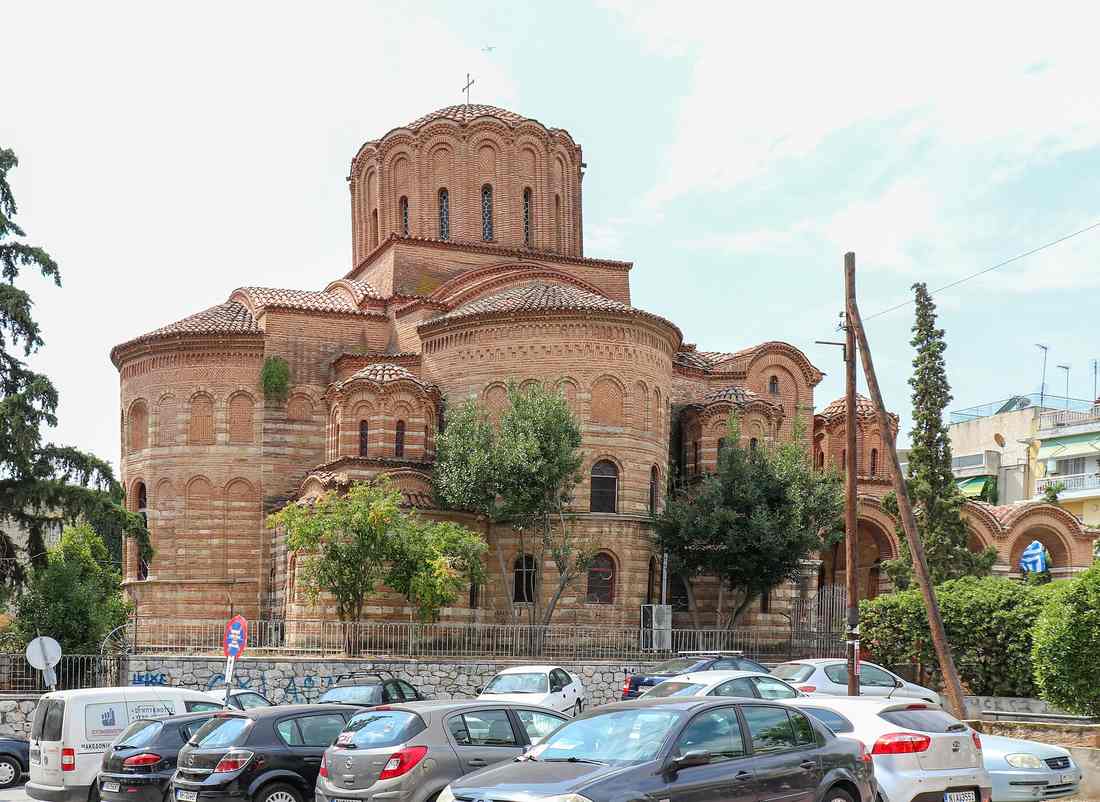
The Church of Profitis Ilias, a late-Byzantine architectural marvel, stands proudly in the upper town of Thessaloniki. Built on the Athonite triconch plan, it features a central nave flanked by two semicircular apses. This fourteenth-century structure, associated with the Nea Moni monastery, showcases exquisite banded brick-and-stone masonry and a towering central dome. Recognised as a UNESCO Palaeochristian and Byzantine Monument, it provides a glimpse into Thessaloniki’s rich ecclesiastical history. Once converted into the Sarayli mosque during Ottoman rule, fragments of its original Palaiologan frescoes still survive. Nestled among the lanes of Ano Poli, this church is a must-visit for history enthusiasts and architectural admirers, with My Greece Tours.
Profitis Ilias in Thessaloniki is a testament to Byzantine architectural prowess. Known for its Athonite triconch design and historical significance, it offers unique insights into the Palaiologan period. The sections below cover its cultural importance, architectural features, and historical transitions. Visitors can explore its stunning masonry and fresco remnants, all while enjoying the vibrant neighbourhood of Ano Poli. This site is an essential stop on Thessaloniki tours. Discover more about its fascinating past and how it fits into the broader tapestry of Byzantine and Ottoman history.
What is the historical significance of Profitis Ilias?
Profitis Ilias holds significant historical value as a late-Byzantine church, representing the ecclesiastical architecture of the Palaiologan period in Thessaloniki.
Profitis Ilias serves as a remarkable example of late-Byzantine architecture in Thessaloniki. Constructed in the fourteenth century, it reflects the religious and cultural developments during the Palaiologan era. This period was marked by a resurgence in Byzantine art and architecture, an influence that is evident in the church’s design and decoration. As the katholikon of the Nea Moni monastery, it played a crucial role in the spiritual life of the community. The church’s historical significance is further highlighted by its inclusion in the UNESCO Palaeochristian and Byzantine Monuments of Thessaloniki, underscoring its importance in the region’s ecclesiastical heritage.
The church’s transformation during the Ottoman era adds another layer to its historical narrative. Converted into the Sarayli mosque, the building’s Christian frescoes were covered, altering its original purpose and appearance. This conversion is a testament to the cultural shifts that Thessaloniki experienced under Ottoman rule. Despite these changes, the church retained its architectural essence, providing insight into the adaptive reuse of religious structures in historical contexts. Today, the surviving Palaiologan frescoes offer a glimpse into the artistic expressions of the Byzantine period, making Profitis Ilias a vital link to Thessaloniki’s multilayered past.
Situated in the historic Ano Poli, Profitis Ilias stands amidst a backdrop of narrow lanes and traditional houses. This location enhances its historical allure, inviting visitors to explore the rich tapestry of Thessaloniki’s old town. The proximity to the eastern walls, a remnant of the city’s fortifications, further contextualises its historical setting. As part of the Ano Poli neighbourhood, the church contributes to the area’s charm, offering a serene retreat from the bustling city below. Its enduring presence in this historic quarter underscores the lasting legacy of Byzantine architecture in Thessaloniki.
What architectural features define Profitis Ilias?
Profitis Ilias is defined by its Athonite triconch plan, banded masonry, blind arches, and a prominent central dome, typical of Byzantine architecture.
The architectural design of Profitis Ilias is a testament to the ingenuity of Byzantine builders. The church is constructed on the Athonite triconch plan, a layout characterised by a central nave flanked by two semicircular side apses, known as choroi. This plan was commonly used in the monasteries of Mount Athos, reflecting the influence of monastic architecture on ecclesiastical structures in Thessaloniki. The central nave serves as the focal point of the church, drawing the eye upwards to the impressive dome that crowns the structure. This architectural feature not only enhances the building’s aesthetic appeal but also symbolises the heavens, a common theme in Byzantine church design.
Banded brick-and-stone masonry is another defining feature of Profitis Ilias. This technique, involving alternating layers of brick and stone, creates a visually striking pattern on the church’s exterior walls. The use of this masonry style is typical of Byzantine architecture, showcasing the builders’ expertise in combining durability with decorative elements. Blind arches adorn the exterior, adding depth and texture to the walls. These arches, although not functional, contribute to the overall harmony of the design, demonstrating the aesthetic principles that guided Byzantine architects. The interplay of light and shadow on these surfaces further enhances the visual impact of the church.
The tall central dome of Profitis Ilias is a focal point both externally and internally. Its height and prominence are emblematic of Byzantine church architecture, designed to draw the viewer’s gaze heavenward. Internally, the dome creates a sense of spaciousness, enhancing the spiritual atmosphere of the church. The surviving fragments of Palaiologan frescoes within the dome and other areas offer a glimpse into the artistic achievements of the era. These frescoes, with their intricate details and vivid colours, reflect the religious themes and iconography prevalent during the Palaiologan period. Together, these architectural elements make Profitis Ilias an outstanding example of Byzantine ecclesiastical design, inviting exploration and appreciation from visitors and scholars alike.
How did Profitis Ilias change during the Ottoman period?
During the Ottoman period, Profitis Ilias was converted into the Sarayli mosque, and its Christian frescoes were covered.
The Ottoman period marked a significant transformation for Profitis Ilias. Converted into the Sarayli mosque, the church underwent changes to accommodate Islamic worship practices. This conversion involved the covering of its original Christian frescoes and the possible addition of Islamic architectural elements, such as a mihrab, to indicate the direction of Mecca. These alterations reflect the broader cultural and religious shifts that Thessaloniki experienced under Ottoman rule. Despite these changes, the church retained much of its original architectural integrity, providing a historical record of its dual religious function over the centuries.
The conversion of churches into mosques was a common practice during the Ottoman era, as it allowed for the reuse of existing religious buildings. This practice highlights the adaptability of Ottoman architectural approaches and their ability to incorporate diverse cultural influences. In the case of Profitis Ilias, the building’s robust Byzantine construction enabled it to withstand these modifications, preserving its core structural elements. The church’s transformation into a mosque is a testament to its historical resilience and the layered religious history of Thessaloniki. Today, the remnants of its frescoes offer a poignant reminder of its original purpose, providing insight into the artistic expressions of the Palaiologan period.
The reversion of Profitis Ilias back to a church after the end of Ottoman rule marked another chapter in its storied history. This transition involved the restoration of its Christian elements, although many of the original frescoes remained hidden beneath layers of plaster. The surviving fragments of frescoes, however, continue to draw interest from historians and visitors alike, eager to uncover the artistic legacy of the Byzantine era. The church’s dual identity as both a mosque and a church over time underscores its importance as a cultural landmark in Thessaloniki. Its enduring presence in the city’s architectural landscape reflects the complex interplay of religious and cultural influences that have shaped Thessaloniki’s history.
What can visitors expect to see at Profitis Ilias?
Visitors can expect to see the church’s Byzantine architecture, banded masonry, blind arches, and fragments of original Palaiologan frescoes.
Visitors to Profitis Ilias can immerse themselves in the rich tapestry of Byzantine architecture that defines the church. The exterior of the building, with its banded brick-and-stone masonry, offers a striking visual experience, setting the stage for the architectural wonders within. The church’s Athonite triconch plan is a highlight, providing insight into the design principles that guided Byzantine ecclesiastical architecture. The harmonious proportions and meticulous craftsmanship evident in the church’s structure invite admiration and reflection, making it a compelling destination for those interested in architectural history.
Inside the church, the tall central dome captures the attention of visitors, drawing their gaze upward to the heavens. The dome’s grandeur is complemented by the surviving fragments of Palaiologan frescoes that adorn the interior walls. These frescoes, with their intricate details and vivid colours, offer a glimpse into the artistic achievements of the Byzantine era. Although many of the original frescoes were covered during the church’s conversion to a mosque, the remaining fragments provide valuable insight into the religious themes and iconography of the period. This combination of architectural and artistic elements makes Profitis Ilias a must-visit for art enthusiasts and history buffs alike.
The church’s location in Ano Poli further enhances the visitor experience. Nestled among the narrow lanes and historic buildings of Thessaloniki’s upper town, Profitis Ilias offers a serene retreat from the bustling city below. The surrounding area, with its traditional houses and charming streets, invites exploration and discovery. Visitors can enjoy a leisurely stroll through the neighbourhood, taking in the unique blend of history and culture that characterises Ano Poli. The proximity to the walls of Thessaloniki adds to the historical allure of the area, providing context for the church’s enduring presence in this vibrant city.
Why is Profitis Ilias part of UNESCO’s list?
Profitis Ilias is part of UNESCO’s list due to its architectural significance and its representation of Byzantine ecclesiastical heritage.
Profitis Ilias was designated as part of UNESCO’s Palaeochristian and Byzantine Monuments of Thessaloniki due to its outstanding architectural and cultural significance. The church exemplifies the artistic and architectural achievements of the Byzantine period, particularly the Palaiologan era. Its inclusion in the UNESCO list highlights its importance as a cultural treasure, contributing to the understanding of Byzantine ecclesiastical architecture. The recognition by UNESCO underscores the church’s role in preserving the architectural heritage of Thessaloniki and its influence on the development of religious structures in the region.
The church’s architectural features, such as the Athonite triconch plan and the banded masonry, reflect the innovative design principles that characterised Byzantine architecture. These elements, combined with the surviving frescoes, offer valuable insights into the artistic expressions and religious themes of the Palaiologan period. The church’s ability to withstand the test of time, including its transformation during the Ottoman era, further emphasises its historical and cultural significance. As a UNESCO site, Profitis Ilias serves as a symbol of Thessaloniki’s rich Byzantine heritage, attracting visitors and scholars interested in exploring the city’s architectural past.
UNESCO’s recognition of Profitis Ilias also highlights the broader cultural landscape of Thessaloniki. As part of the Palaeochristian and Byzantine Monuments of Thessaloniki, the church contributes to the city’s reputation as a hub of Byzantine art and architecture. This designation has helped to raise awareness of the need to preserve and protect Thessaloniki’s historical sites, ensuring that future generations can appreciate the city’s rich cultural legacy. The church’s inclusion in this prestigious list serves as a reminder of the enduring influence of Byzantine culture on the architectural and artistic heritage of the region, making Profitis Ilias a vital part of Thessaloniki’s historical narrative.
What makes Profitis Ilias unique among Thessaloniki’s churches?
Profitis Ilias is unique due to its Athonite triconch plan, Palaiologan frescoes, and its transformation from church to mosque and back.
Profitis Ilias stands out among Thessaloniki’s churches for its distinctive Athonite triconch plan, a design that was primarily used in the monasteries of Mount Athos. This architectural feature sets it apart from other Byzantine churches in the city, highlighting the influence of monastic architecture on ecclesiastical structures during the Palaiologan period. The church’s harmonious proportions and intricate design elements reflect the architectural innovation and artistic expression that characterised this era. The Athonite triconch plan not only enhances the church’s aesthetic appeal but also underscores its historical significance as a testament to the architectural achievements of the Byzantine period.
The presence of Palaiologan frescoes within Profitis Ilias further distinguishes it from other churches in Thessaloniki. These frescoes, with their vibrant colours and intricate details, offer a glimpse into the artistic practices and religious iconography of the Byzantine era. Although many of the original frescoes were covered during the church’s conversion to a mosque, the surviving fragments provide valuable insights into the artistic legacy of the Palaiologan period. The combination of these frescoes with the church’s unique architectural features makes Profitis Ilias a compelling destination for those interested in Byzantine art and architecture.
Profitis Ilias’s transformation from a church to a mosque and back to a church adds another layer to its uniqueness. This dual identity reflects the complex interplay of religious and cultural influences that have shaped Thessaloniki’s history over the centuries. The church’s ability to adapt to these changes, while retaining its core architectural elements, underscores its resilience and historical significance. Its enduring presence in Thessaloniki’s architectural landscape serves as a reminder of the city’s rich cultural heritage and the lasting impact of Byzantine architecture on the region. As part of the Byzantine churches of Thessaloniki, Profitis Ilias offers a unique perspective on the city’s ecclesiastical history.
How does Profitis Ilias fit into a Thessaloniki itinerary?
Profitis Ilias fits into a Thessaloniki itinerary as a key historical and architectural site, ideal for exploring Byzantine heritage and Ano Poli.
Profitis Ilias is an essential stop on any Thessaloniki itinerary, offering visitors a unique opportunity to explore the city’s rich Byzantine heritage. The church’s architectural and historical significance make it a must-visit for those interested in understanding the cultural developments of the Palaiologan period. Its inclusion in the UNESCO Palaeochristian and Byzantine Monuments of Thessaloniki highlights its importance and ensures that it is a key attraction for history enthusiasts and architectural admirers alike. As part of a comprehensive exploration of Thessaloniki, Profitis Ilias provides a fascinating insight into the city’s ecclesiastical history and its enduring cultural legacy.
Situated in the historic neighbourhood of Ano Poli, Profitis Ilias offers visitors the chance to explore one of Thessaloniki’s most charming areas. The narrow lanes and traditional houses of Ano Poli provide a picturesque backdrop for the church, enhancing the overall visitor experience. As part of a leisurely stroll through this historic quarter, visitors can enjoy the unique blend of history and culture that characterises Ano Poli. The proximity to other attractions in the area, such as the city’s ancient walls, offers additional opportunities for exploration and discovery, making Profitis Ilias a central component of any itinerary.
Exploring Profitis Ilias can be complemented by a visit to nearby historical sites, such as the Museum of Byzantine Culture. This museum provides further context for the architectural and artistic achievements of the Byzantine period, enhancing the understanding of Profitis Ilias and its significance. The combination of these attractions creates a well-rounded itinerary that showcases the best of Thessaloniki’s Byzantine heritage. Whether as part of a guided tour or an independent exploration, Profitis Ilias offers a captivating journey into the city’s past, making it an integral part of any Thessaloniki itinerary.
Frequently Asked Questions
What is the architectural style of Profitis Ilias?
Profitis Ilias is designed in the late-Byzantine architectural style, featuring the Athonite triconch plan. This design includes a central nave flanked by two semicircular side apses and is characterised by banded brick-and-stone masonry and a prominent central dome.
What historical changes has Profitis Ilias undergone?
Originally a Byzantine church, Profitis Ilias was converted into the Sarayli mosque during Ottoman rule, with its Christian frescoes covered. After the end of Ottoman influence, it was restored as a church, revealing some of its original frescoes.
What can I see inside Profitis Ilias?
Inside Profitis Ilias, visitors can admire the tall central dome and surviving fragments of Palaiologan frescoes. These frescoes, despite being partially covered during its time as a mosque, offer insights into the artistic expressions of the Byzantine era.
Why is Profitis Ilias a UNESCO site?
Profitis Ilias is a UNESCO World Heritage Site due to its architectural and cultural significance. It exemplifies the artistic and architectural achievements of the Byzantine period and contributes to the understanding of Byzantine ecclesiastical heritage in Thessaloniki.
Where is Profitis Ilias located?
Profitis Ilias is located in the upper town of Thessaloniki, in the historic neighbourhood of Ano Poli. This area is known for its narrow lanes and traditional houses, providing a picturesque setting for the church.
How can Profitis Ilias be included in a visit to Thessaloniki?
Profitis Ilias can be included in a visit to Thessaloniki as part of a broader exploration of the city’s Byzantine heritage. Its location in Ano Poli makes it easily accessible, and it can be combined with visits to nearby attractions such as the city’s ancient walls.