
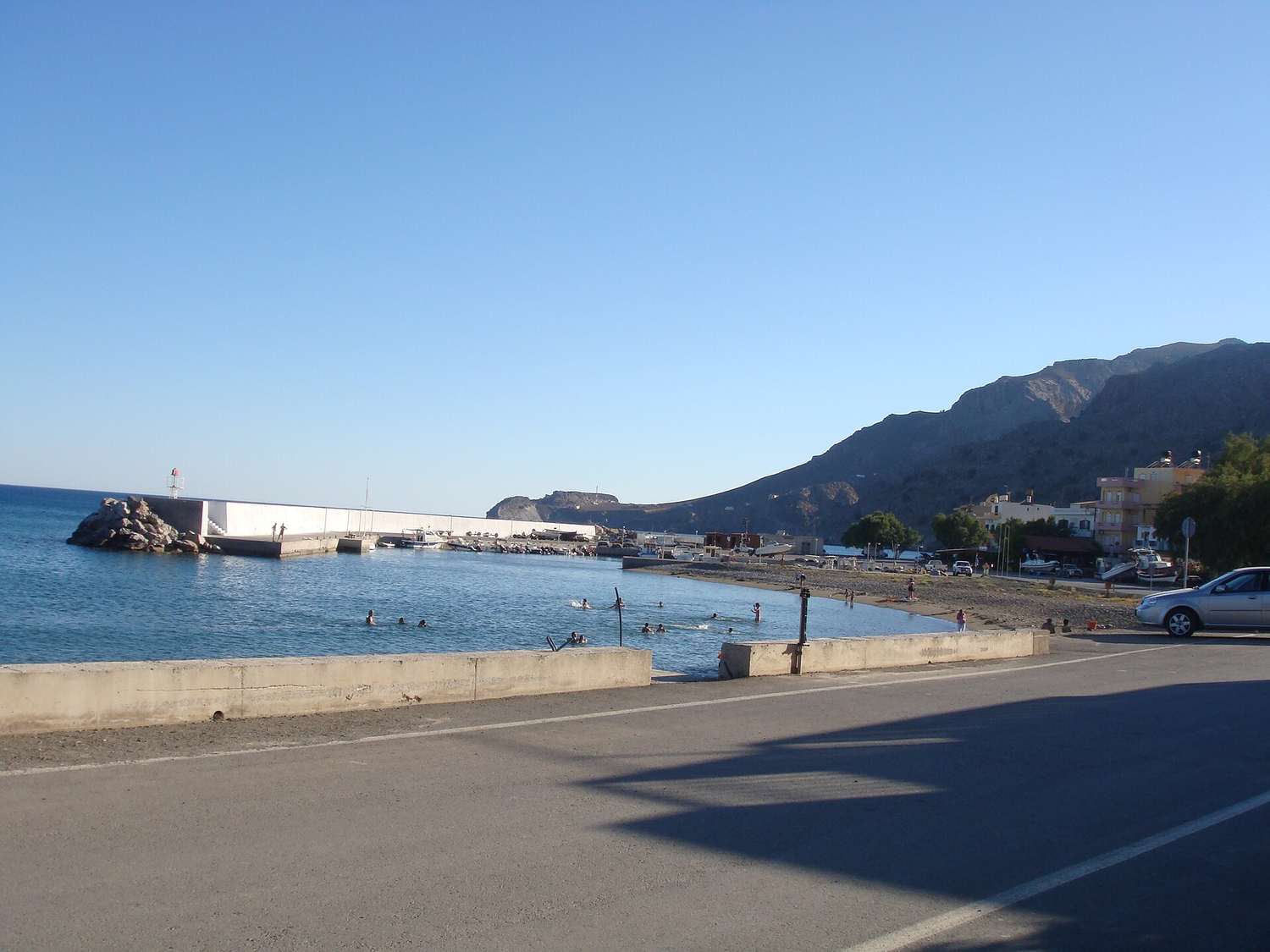
Tsoutsouros sits at the end of a winding mountain road on the remote south coast of Crete, far from the crowds and resorts that line the northern shore. This quiet fishing village rests below the Asterousia mountains at the mouth of a gorge, where a long curve of pebble and grey sand beach meets clear water. Tavernas, simple rooms and cafes line the waterfront, serving fresh seafood to the handful of visitors who make the descent from the Messara plain. The journey rewards those seeking solitude, unspoilt coastline and a glimpse of traditional island life with My Greece Tours.
The village sits within reach of ancient cave sanctuaries, mountain hamlets and other isolated coves along the Asterousia coast. Tsoutsouros offers an end-of-the-road atmosphere that appeals to travellers tired of tourist infrastructure and eager for authentic encounters with the sea, the mountains and the rhythms of a working fishing harbour. The sections below cover the beach, the ancient connections, the journey to reach the village, nearby exploration and practical advice for visitors. Our Crete travel guide provides broader context for planning your southern coast adventure.
What makes Tsoutsouros beach and harbour distinctive on Crete’s south coast?
The beach curves along the bay in a long sweep of pebbles and grey sand, backed by a small fishing harbour and a line of tavernas. Clear water and an unspoilt setting reward the long drive in.
The shoreline stretches in a gentle arc, offering ample space for swimming and sunbathing despite the village’s modest size. Pebbles dominate the beach composition, interspersed with patches of grey sand that darken near the waterline. The sea remains clear and inviting, drawing swimmers into its cool embrace throughout the warmer months. Fishing boats bob in the small harbour, their presence a reminder that Tsoutsouros remains a working village rather than a purpose-built resort. Tavernas and cafes occupy the buildings facing the water, their tables shaded by awnings and their menus centred on the day’s catch. The absence of sunbeds, beach bars and jet skis preserves the tranquil character that defines the south coast experience.
Visitors spread towels on the stones, wade into the shallows and settle into the unhurried pace that the remote location naturally encourages.
The harbour serves the local fishing fleet, providing a focal point for village life and a source of the seafood that appears on nearby tables each evening. Nets dry in the sun, and fishermen mend equipment or prepare for the next outing, their routines unchanged by the modest tourist presence. The waterfront promenade remains simple, without the polished infrastructure found in northern resorts, and this simplicity forms part of the appeal for those exploring Crete beaches beyond the mainstream. Rooms and small guesthouses occupy buildings just back from the front, offering basic but comfortable accommodation for overnight stays.
The village rewards visitors who value authenticity over amenities, solitude over entertainment and the raw beauty of the Asterousia coastline over the convenience of developed beach resorts.
How does the ancient history of Tsoutsouros and Inatos connect to Crete’s past?
Caves in the cliffs behind the village were inhabited from antiquity, and the site links to the ancient town of Inatos, which hosted a sanctuary dedicated to Eileithyia, the birth goddess of Greek tradition.
The caves carved into the rocky slopes above Tsoutsouros bear witness to human occupation stretching back through the centuries, their dark recesses once sheltering inhabitants and pilgrims drawn to this isolated stretch of coast. The ancient settlement of Inatos occupied the area, its name preserved in historical records and its ruins scattered across the landscape. Eileithyia, revered as the goddess presiding over childbirth, received worship at a sanctuary here, attracting devotees from across the island who sought her favour and protection. The choice of location reflects the ancient Greek practice of siting sacred spaces in dramatic natural settings, where the meeting of mountain, gorge and sea created a landscape charged with spiritual significance.
Fragments of walls, pottery and other archaeological traces remain visible to those who explore the hillsides, though the site lacks the monumental preservation found at more famous Cretan ruins.
The connection to Eileithyia places Tsoutsouros within the broader network of sacred sites that dotted ancient Crete, linking it to the island’s rich mythological and religious traditions. Pilgrims would have made the journey to this remote sanctuary, their devotion overcoming the challenges of the terrain just as modern visitors navigate the winding descent from the mountains. The caves themselves continue to intrigue explorers, their cool interiors offering respite from the summer heat and a tangible link to the past.
This historical depth adds a layer of meaning to a visit, transforming a simple beach stop into an encounter with the enduring human presence on the Cretan coast and enriching the experience for those interested in hidden gems in Crete.
What is the journey to Tsoutsouros like from the Messara plain?
Reaching Tsoutsouros requires a long, winding mountain road that descends from the Messara plain through the Asterousia range. The drive keeps crowds away and delivers an end-of-the-road atmosphere that defines the village character.
The road departs from the fertile Messara plain and begins its serpentine climb into the Asterousia range, switchbacks carving through the mountainous terrain as the landscape shifts from cultivated fields to wild, rocky slopes. Hairpin bends demand careful driving, and the narrow width of the asphalt leaves little room for error or for passing oncoming vehicles. Views open across the southern horizon, revealing glimpses of the Libyan Sea far below and the rugged contours of the coast that await at journey’s end. The descent from the high passes to sea level unfolds gradually, the road clinging to the mountainside as it drops through gorges and past isolated chapels.
Vegetation thins in the harsher southern climate, replaced by scrub, herbs and the occasional olive grove clinging to terraced slopes. The journey itself becomes part of the experience, filtering out casual visitors and rewarding those committed to reaching the remote shore with a sense of accomplishment and anticipation.
The isolation created by this challenging access road preserves Tsoutsouros from the development pressures that have transformed more accessible coastal villages into bustling resorts. Travellers arrive with a heightened appreciation for the destination, their effort to navigate the mountains deepening their connection to the place. The drive also offers access to the broader Asterousia mountains, where traditional villages, hiking trails and further exploration opportunities await those with time and curiosity. The end-of-the-road feeling that pervades Tsoutsouros stems directly from this geographic reality, the village occupying a cul-de-sac position where the mountains meet the sea and the asphalt simply stops.
This remoteness appeals to travellers seeking escape from the crowds and a taste of the Crete that exists beyond the well-trodden tourist circuits.
What other destinations and experiences lie within reach of Tsoutsouros in Crete?
The village sits within reach of other remote southern coves along the Asterousia coast and the mountain villages that dot the inland slopes, offering exploration opportunities for those with transport and curiosity.
The Asterousia coastline stretches east and west from Tsoutsouros, its length punctuated by isolated beaches, tiny harbours and coves accessible only by rough tracks or on foot. Adventurous travellers with sturdy vehicles can seek out these hidden shores, each offering its own variation on the theme of solitude and unspoilt beauty. Mountain villages cling to the inland slopes, their stone houses and narrow lanes preserving traditional architecture and ways of life that have largely vanished from more developed regions. Kapetaniana, Paranymfi and other settlements offer glimpses into rural Cretan culture, their tavernas serving local dishes and their inhabitants maintaining customs passed down through generations.
The landscape itself invites exploration, with gorges cutting through the mountains, footpaths linking villages and viewpoints revealing panoramas that stretch from the peaks to the sea. The region remains lightly visited compared to northern Crete, rewarding those who venture here with authentic encounters and memorable scenery.
The drive back north across the Messara plain connects to the broader network of southern Heraklion attractions, including archaeological sites, wineries and the coastal town of Ierapetra further east. Tsoutsouros functions well as a base for multi-day exploration of the south coast, its quiet character providing a restful counterpoint to days spent driving, hiking or beach-hopping. The village also suits those content to simply settle in, alternating between swims, meals and lazy hours watching the fishing boats and the play of light on the water.
This flexibility makes it appealing for different travel styles, from active explorers ticking off things to do in Crete to those seeking nothing more than a peaceful retreat from the demands of modern life and the pressures of conventional tourism.
Who should consider visiting Tsoutsouros and what should they expect?
Tsoutsouros suits travellers seeking solitude, swimming and simple seafood far from northern resorts. Expect basic facilities, authentic village atmosphere and the rewards of reaching a genuinely remote destination on the Cretan south coast.
The village appeals most strongly to independent travellers who value authenticity over comfort, quiet over entertainment and natural beauty over polished infrastructure. Families seeking sandy beaches with shallow water, couples wanting romantic sunsets with cocktail service and groups looking for nightlife will find better options elsewhere on the island. Tsoutsouros delivers instead the pleasure of a genuine fishing village where tourism remains secondary to the rhythms of the sea and the seasons. Accommodation consists of simple rooms and small guesthouses rather than hotels with pools and spas, and dining centres on tavernas serving grilled fish, Greek salads and local wine rather than international menus.
The beach offers swimming and sunbathing without the apparatus of organized tourism, and the village provides a window into traditional coastal life without the staged performances found in more commercial destinations. Visitors should arrive with realistic expectations, understanding that remoteness brings both rewards and limitations.
The journey to reach Tsoutsouros requires a rental car and confidence navigating mountain roads, ruling out those relying solely on public transport or uncomfortable with challenging driving conditions. The village works well for travellers exploring the south coast more broadly, fitting into itineraries that include other Asterousia destinations and providing a contrast to busier towns and developed resorts. Overnight stays allow time to appreciate the slower pace, enjoy evening meals by the harbour and wake to the sounds of the fishing fleet heading out at dawn. Day visitors can combine Tsoutsouros with nearby beaches and mountain villages, creating a full day of exploration.
Those considering where to stay in Crete should weigh the appeal of this remote location against their priorities for amenities, accessibility and the balance between solitude and convenience that shapes their ideal island experience.
Frequently Asked Questions
How long does it take to drive to Tsoutsouros from Heraklion?
The drive from Heraklion to Tsoutsouros typically takes between ninety minutes and two hours, depending on your route, driving speed and comfort level with mountain roads. Most visitors drive south through the Messara plain, passing through or near villages like Agia Varvara and Gergeri before beginning the descent through the Asterousia range. The final section of winding mountain road requires careful attention, particularly on the tight hairpin bends and narrow sections where oncoming traffic demands patience. The journey covers roughly seventy to eighty kilometres, but the challenging terrain means that distance translates to longer travel time than equivalent mileage on coastal highways.
The drive itself offers scenic rewards, with mountain vistas and glimpses of the southern coast building anticipation for arrival. Plan for a leisurely pace rather than rushing, and consider combining the trip with stops at other Messara or Asterousia attractions to make the most of the journey.
Are there shops and services in Tsoutsouros village?
Tsoutsouros offers basic services suited to a small fishing village rather than the comprehensive facilities found in larger towns or tourist resorts. Tavernas and cafes line the waterfront, providing meals, drinks and simple refreshments throughout the day and evening during the warmer months. Small shops sell essentials like bottled water, snacks and basic provisions, but the selection remains limited compared to supermarkets in bigger settlements. Accommodation consists of rooms and small guesthouses, bookable in advance or sometimes available on arrival during quieter periods. The village lacks banks, pharmacies, medical facilities and fuel stations, so visitors should arrive prepared with cash, any necessary medications and a full tank of petrol.
The nearest larger town with comprehensive services sits back across the mountains in the Messara plain or along the northern coast. This simplicity forms part of the village character, appealing to those who value authenticity and are comfortable with basic amenities in exchange for the rewards of remoteness and unspoilt coastal beauty.
When is the best time to visit Tsoutsouros?
Late spring and early autumn offer ideal conditions for visiting Tsoutsouros, with warm weather, calm seas and fewer visitors than the peak summer months. May, June, September and early October deliver comfortable temperatures for swimming, exploring the surrounding mountains and enjoying outdoor meals without the intense heat of July and August. The south coast generally experiences warmer, drier conditions than northern Crete, making the shoulder seasons particularly pleasant for active exploration. Summer brings the warmest water temperatures and the longest days, but also the highest visitor numbers and the most intense sun, which can make the exposed beach and the drive through the mountains more challenging.
Winter sees cooler weather, rougher seas and reduced services, with some tavernas and guesthouses closing until spring. The village takes on a particularly quiet character during the cooler months, appealing to those seeking complete solitude but offering limited facilities. The timing of your visit should align with your priorities for weather, water temperature, crowd levels and the availability of accommodation and dining options in this remote location.