
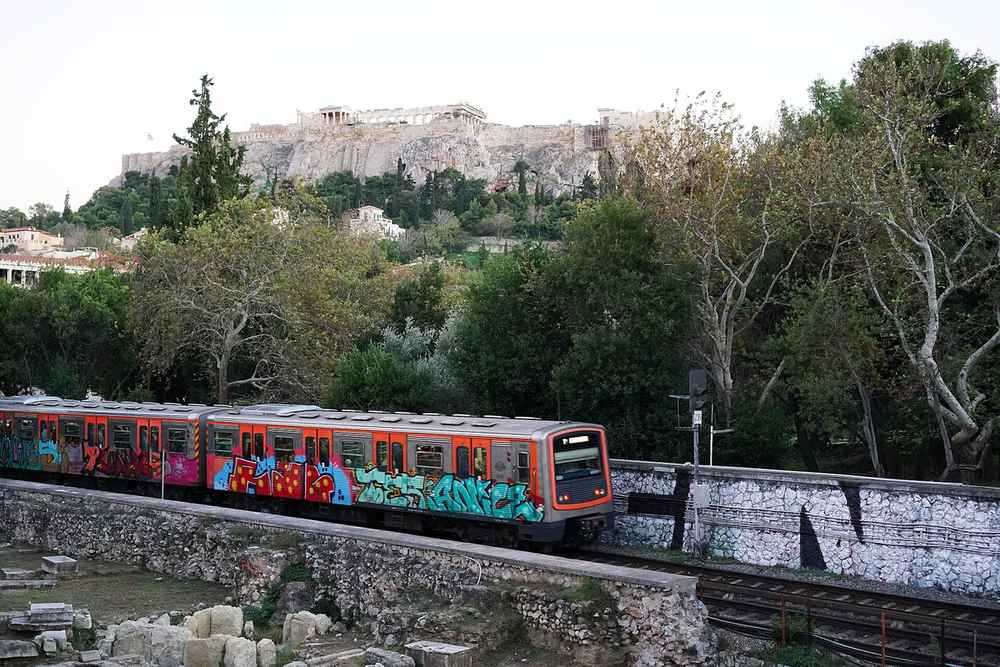
Thissio is a relaxed, bohemian Athens neighbourhood below the Acropolis, famed for its car-free Apostolou Pavlou promenade, postcard Acropolis views and an open-air summer cinema. Pair a stroll here with skip-the-line tickets and guided walks of the ancient sites from My Greece Tours for the best of the old city.
This walkable quarter is a highlight of the Athens travel guide. The sections below cover what it is, what to do, the promenade walk, food and nightlife, and how to visit.
What is Thissio in Athens?
Thissio is a relaxed, well-situated neighbourhood just west of the Acropolis, blending the grandeur of ancient Athens with a laid-back, bohemian atmosphere. Set between the Ancient Agora, the wooded Hill of the Nymphs and Philopappos Hill, it is best known for the pedestrianised Apostolou Pavlou promenade, its superb Acropolis views, cafés and easy access to the archaeological sites.
Few districts capture the appeal of Athens as completely as this leafy quarter on the western flank of the Acropolis. Thissio takes its name from the beautifully preserved ancient Temple of Hephaestus, long mistakenly called the “Theseion”, which crowns the edge of the nearby Ancient Agora. Today it is among the most sought-after and pleasantly located neighbourhoods in the city, effortlessly combining classical splendour with a calm, slightly bohemian mood. It sits cradled between three great green spaces and historic sites: the Ancient Agora to the north-east, the wooded Hill of the Nymphs with its National Observatory, and the slopes of Philopappos Hill to the south.
The defining feature is the broad, traffic-free promenade that sweeps along its edge beneath the Acropolis, lined with cafés and offering some of the finest views of the ancient citadel in all of Athens. Step a few streets back from this showpiece walkway and you enter a genuine, calm middle-class Athenian neighbourhood full of small tavernas, galleries and quiet corners. The result is a district that feels both monumental and human-scaled. It connects directly to the ruins covered in the Ancient Agora of Athens guide. Its attractions reward an unhurried visit.
What can you do in Thissio?
In Thissio you can walk the Apostolou Pavlou promenade for unbeatable Acropolis views, explore the adjacent Ancient Agora and Temple of Hephaestus, climb the Hill of the Nymphs and Pnyx, watch a film at the open-air Cine Thission, and relax in cafés and tavernas. It is also one of the best spots in Athens for sunset.
This compact neighbourhood packs in a remarkable range of things to see and do, most of them outdoors and free. The centrepiece is a walk along the wide marble-and-cobble promenade of Apostolou Pavlou, which curves beneath the Acropolis and ranks among the most beautiful strolls in the city. From the neighbourhood you step straight into the Ancient Agora, the civic heart of classical Athens, where the magnificently preserved Temple of Hephaestus stands almost complete. For a quieter climb, footpaths lead up behind the little church of Agia Marina past the National Observatory to the Hill of the Nymphs and the Pnyx, the very hill where the citizens’ assembly of ancient Athens met and democracy was practised, rewarding you with a sweeping view over the whole ancient city.
In summer, the historic open-air Cine Thission screens films beneath the stars with the floodlit Acropolis as a backdrop, a magical only-in-Athens experience. The promenade and surrounding hills are also celebrated sunset spots, when the marble of the Parthenon glows gold. Together these make Thissio a place to wander, climb and linger. The citadel above is detailed in the guide to Acropolis history. The great promenade deserves its own walk.
What is the Apostolou Pavlou promenade?
Apostolou Pavlou is a wide, cobbled, pedestrianised walkway that skirts the Ancient Agora and links Thissio with Dionysiou Areopagitou and the main archaeological sites. Part of Athens’s grand unification of the archaeological sites, it offers continuous Acropolis views, café terraces and street performers, and forms one of the longest and most scenic car-free walks in the city.
The promenade is the soul of the neighbourhood and one of the great urban achievements of modern Athens. Apostolou Pavlou, named after the Apostle Paul, is a generous, gently curving pedestrian avenue paved in stone that runs along the western edge of the Ancient Agora directly beneath the Acropolis. It forms a key stretch of the celebrated “Grand Promenade”, the early-2000s project that joined the city’s major ancient sites into a single continuous, traffic-free walking route; at its southern end it flows seamlessly into Dionysiou Areopagitou street, which passes the Theatre of Dionysus and the Acropolis Museum. Walking it, you enjoy an almost unbroken view up to the Parthenon, the Temple of Hephaestus on one side and the wooded hills on the other, while café and restaurant terraces line the route and street musicians and artists set up along the way.
It is busy yet relaxed, equally suited to a morning coffee stroll, an afternoon site-hopping walk or an evening passeggiata at sunset. For visitors, it is the easiest and most beautiful way to connect Thissio, Monastiraki, the Agora and the Acropolis on foot. It leads straight to the foot of the citadel covered in the Acropolis Museum guide. The local food scene completes the picture.
Where do you eat and drink in Thissio?
Thissio offers café terraces with Acropolis views along Apostolou Pavlou, traditional tavernas in the quieter back streets, and a relaxed bar scene that comes alive at sunset and after dark. Just south, the neighbouring district of Petralona adds authentic, well-priced tavernas, making the area a favourite for both a scenic coffee and an honest Greek meal.
Eating and drinking in Thissio ranges from scenic and lively to local and authentic, often within a few steps of each other. Along the Apostolou Pavlou promenade, a row of cafés and bars makes the most of the view, their terraces angled toward the Acropolis so you can nurse a frappé or a cocktail with the Parthenon in sight, especially memorable at sunset when the rock turns golden and the bars fill up. Walk a few doors back from the main drag, however, and you find the real neighbourhood: calm streets dotted with traditional tavernas, mezedopoleia and ouzeri serving classic Greek dishes at fairer prices than the view-side terraces.
The adjacent district of Petralona, just to the south, is especially prized by Athenians for its genuine, family-run tavernas and its unpretentious local atmosphere, and is well worth the short walk for dinner. The mix means you can choose a postcard-view coffee or a tucked-away taverna meal depending on your mood and budget. After dinner, the promenade bars carry the evening on in a relaxed key. For a broader survey of where to eat, see the best restaurants in Athens. The neighbourhood is also wonderfully easy to reach.
How do you get to Thissio?
Thissio has its own metro station, Thissio, on line 1, placing you at the start of the Apostolou Pavlou promenade. It is also a short walk of 5 to 10 minutes from Monastiraki, 10 to 15 minutes from Plaka and 15 to 20 minutes from the Acropolis, so most visitors simply stroll there along the pedestrianised route.
Getting to Thissio is exceptionally easy, which is part of why it makes such a good base for exploring ancient Athens on foot. The neighbourhood is served directly by its own station, Thissio, on metro line 1, the green line, which deposits you right at the northern end of the Apostolou Pavlou promenade and within a couple of minutes of the Ancient Agora entrance. Because the district sits at the heart of the city’s car-free archaeological zone, many visitors never need the metro at all and simply walk in: Monastiraki is only five to ten minutes away on foot, Plaka around ten to fifteen minutes, and the main Acropolis entrance roughly fifteen to twenty minutes along the connected promenades.
This walkability means Thissio slots naturally into any day spent visiting the Acropolis, the Agora and the old town, and you can drift between them all without ever boarding transport. Comfortable shoes and a little time to linger are all you really need. Once there, everything of interest lies within an easy stroll. The full network is explained in the guide to getting around Athens. The questions below cover the points visitors ask most.
What is the Temple of Hephaestus beside Thissio?
The Temple of Hephaestus, on the edge of the Ancient Agora beside Thissio, is the best-preserved ancient Greek temple in the world. Built around 450 BC and dedicated to Hephaestus, god of metalworking, and Athena, this Doric temple gave the neighbourhood its name, as it was long mistakenly called the Theseion. It stands almost complete, with its columns, friezes and roof intact.
The monument that gives Thissio its very name deserves a closer look on any visit. Standing on a low hill at the western edge of the Ancient Agora, just below the neighbourhood, the Temple of Hephaestus is widely regarded as the best-preserved ancient Greek temple anywhere, having survived almost intact for nearly 2,500 years. It was built around 450 to 415 BC, during the golden age of Pericles, and dedicated jointly to Hephaestus, the god of fire and metalworking, and Athena, patron of crafts, reflecting the metal foundries and workshops that once surrounded it. For centuries it was popularly but wrongly identified as the Theseion, the supposed tomb of the hero Theseus, and it is from this old name that the surrounding district of Thissio derives.
Its remarkable preservation owes much to its conversion into a Christian church in the Byzantine era, which kept it roofed and maintained. Today you can admire its complete colonnade of Doric columns, its sculpted friezes depicting the labours of Heracles and Theseus, and its intact entablature, all set among greenery with the Acropolis rising beyond. Seeing it is one of the highlights of the area. The full Agora site is covered in the Ancient Agora of Athens guide. The questions below cover the points visitors ask most.
Frequently Asked Questions
What is Thissio known for in Athens?
Thissio is known for its pedestrianised Apostolou Pavlou promenade with superb Acropolis views, its relaxed bohemian atmosphere, and its closeness to the Ancient Agora and Temple of Hephaestus. It is also famous for the open-air Cine Thission summer cinema and as one of the best sunset spots in the city.
Is Thissio a good place to stay in Athens?
Yes, Thissio is a good base, as it is calm, walkable and right beside the major ancient sites, with the Acropolis, Agora and Plaka all reachable on foot. It has its own metro station on line 1 and plenty of cafés and tavernas, while feeling quieter than busier Monastiraki nearby.
How do you get from Monastiraki to Thissio?
Thissio is just a 5 to 10 minute walk from Monastiraki along the pedestrianised promenade, or one stop on metro line 1. Most visitors simply stroll, following the car-free route past the edge of the Ancient Agora, which offers continuous views up to the Acropolis along the way.