
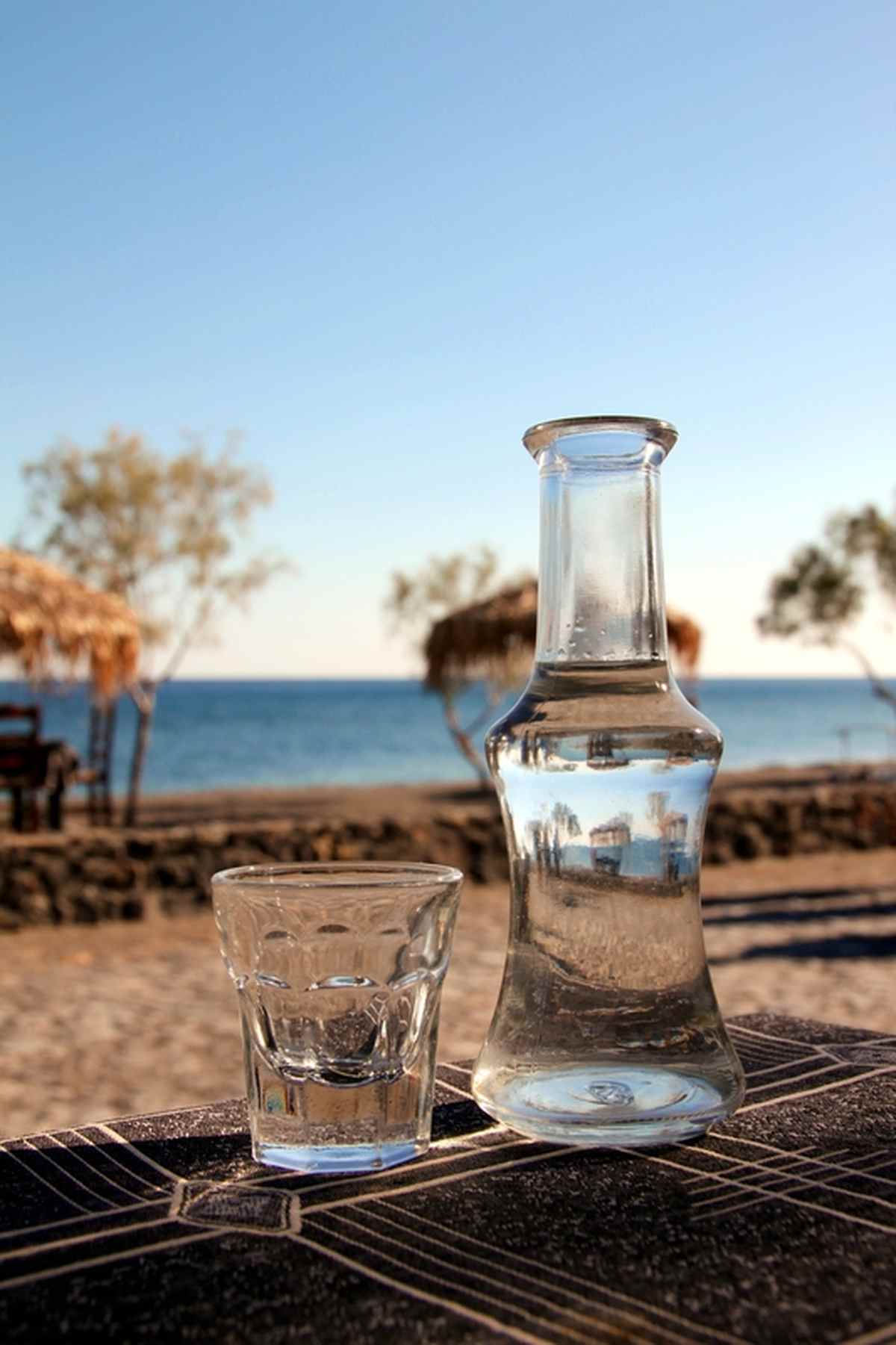
Tsipouro is the clear grape spirit that rules the tables of Thessaloniki, poured in small bottles across the tavernas the city calls tsipouradika. The drink comes from the pomace left after the grape harvest, distilled into a spirit that carries the northern Greek habit of eating and drinking in slow rounds. A tsipouradiko sets the pace, since each carafe brings a fresh plate of mezedes, and the evening unfolds across the courses rather than a single meal. Read the drink, the food, and the ritual that binds them, and fold a tsipouro night into a wider trip with My Greece Tours.
The culture rewards a slow seat and a shared table rather than a quick glass at the bar. Its rounds, its mezedes, and its neighbourhoods carry a way of drinking that sets the north apart from the ouzo south and the raki of Crete. The sections below cover what tsipouro is, how a tsipouradiko works, how the spirit differs from ouzo and tsikoudia, what food arrives with each round, where the tavernas cluster, and how to drink the northern Greek way. A guided walk of the food quarters ties the drink to the markets and the lanes on the Thessaloniki tours.
What is tsipouro?
Tsipouro is a distilled spirit made from grape pomace, the skins, seeds, and stems left after winemaking. Producers across northern Greece and Thessaly ferment and distil this residue into a strong clear drink, served with or without anise.
The raw material of tsipouro is the marc that a winery sets aside once the grapes give up their juice. Skins, pips, and stalks hold sugar and aroma that the press cannot reach, and distillers turn that residue to account rather than waste. Fermentation frees the last sugars into alcohol, and a copper still then concentrates the wash into a spirit that runs clear from the spout. The strength lands high, near the mark of other grape spirits of the Mediterranean. The character of the drink follows the grape and the ground behind it, so a tsipouro from the vineyards of Macedonia tastes of its own hills. The spirit stands as the northern cousin of a family of pomace drinks made across southern Europe.
The craft belongs to a long tradition rooted in the monasteries and villages of the north. Monks of Mount Athos are held to have refined the distilling of pomace many centuries ago, and the practice spread through Thessaly, Epirus, and Macedonia. Households and small wineries kept their own stills, firing them after the vintage to turn the marc of the year into a spirit for the winter. That home craft gave tsipouro its place at the heart of village hospitality, a drink offered to a guest at the door. The spirit later moved from the farm to the taverna, where the tsipouradiko grew around the ritual of the rounds. The roots in the countryside still colour the drink as a mark of the north.
The drink reaches the glass in two chief forms, one plain and one scented with anise. Plain tsipouro shows the grape without a mask, a dry spirit that carries the aroma of the pomace it came from. The anise version takes a measure of glykaniso in the still, which lends the sweet, liquorice note that turns the spirit cloudy when water hits it. Drinkers of the north tend to hold a firm preference for one or the other, and a tsipouradiko keeps both behind the counter. The plain style leads in much of Macedonia, while the anise style wins a wider following toward the south. A first taste of each marks the fork in the road that every tsipouro drinker eventually picks.
What is a tsipouradiko and how do the rounds work?
A tsipouradiko is a taverna built around ordering tsipouro in successive rounds. Each small bottle or carafe arrives with a fresh plate of mezedes, so the meal unfolds course by course as the drinking slowly continues.
The order at a tsipouradiko runs by the round rather than by the dish. A guest asks for a first tsipouro, and the kitchen answers with a small plate to match, its choice often left to the house. The empty carafe signals the next round, and a second drink brings a second meze, then a third, and on through the evening. The food and the drink advance in step, each glass earning its plate, so the table fills by degrees rather than all at once. This rhythm turns a night out into a long, unhurried procession of small tastes. The kitchen leads the pairing, which frees the guest to sit back and let the meal find its own order.
The pace of the rounds sets the tsipouradiko apart from an ordinary meal out. A table settles in for hours, the talk running as long as the plates keep coming and the carafes keep emptying. No single main course anchors the night, and the pleasure lies in the sum of the small dishes and the company that shares them. Groups thrive in this format, since a spread of mezedes rewards a crowd that reaches across the table. The drink stays a partner to the food rather than the point of the night, sipped slowly to hold the head clear through the courses. The result reads less as a dinner than as a shared evening measured out in rounds.
The tsipouro itself arrives in a small bottle or a little carafe rather than a full-sized glass. That measure suits the format, since a round means a modest pour meant to last until the plate is cleared. A table orders by the round, and the tally of empty bottles at the end sets the reckoning as much as the food does. Ice and water sit ready for those who cut the strength, a common move with the anise style that clouds at the touch of water. The small format keeps the drinking gentle across a long sitting, a deliberate brake against the strength of the spirit. The rhythm of small pours and steady plates defines the northern night.
How does tsipouro differ from ouzo and tsikoudia?
Tsipouro is a pomace spirit of the north, sometimes plain and sometimes anised. Ouzo is always anise-forward and built on a neutral base, while Cretan tsikoudia, or raki, is an unflavoured pomace spirit of the south.
The line between tsipouro and ouzo runs through both the base and the anise. Ouzo builds on a neutral spirit and takes its whole identity from anise, which gives it the sweet, cloudy character that defines the drink across the south. Tsipouro starts from grape pomace, so the spirit of the grape stays present even in the anised style, and the plain style carries no anise at all. Ouzo also leans to the islands and the southern mainland, where the ouzeri fills the role the tsipouradiko holds in the north. A drinker who knows only ouzo meets in tsipouro a drier, grapier spirit with a firmer link to the vineyard. The two share a table setting yet part on flavour and base.
The kinship with Cretan tsikoudia runs closer, since both spring from grape pomace and the same act of distilling the marc. Crete calls its spirit tsikoudia, or raki in local speech, and pours it plain, without the anise that some northern makers add. The southern island drink tends to close a meal as a digestif, offered freely at the end of a table rather than poured through the courses. Tsipouro instead paces a whole evening in the north, each round tied to a plate in the tsipouradiko rhythm. The spirits are cousins in the still yet diverge in the table custom that carries them. A traveller who has met Cretan raki already knows the base of tsipouro, if not its northern ritual.
The deepest difference lies less in the bottle than in the ritual around it. Ouzo and raki both tend to a looser custom, a glass raised with a few nibbles or a toast to close a meal. Tsipouro in Thessaloniki carries a stricter form, the meal marching through set rounds of drink and food in a fixed step. That structure makes the northern spirit a frame for a whole night rather than a single toast. The tsipouradiko turns the drink into an occasion, a table booked for the long procession of carafes and plates. Grasping that ritual matters more to a first visit than parsing the fine chemistry that sets the three spirits apart.
What mezedes come with tsipouro in Thessaloniki?
Tsipouro rounds bring small savoury mezedes chosen to match the spirit. Grilled octopus, fried small fish, salty cheeses, cured meats, pickles, and seafood lead the plates, their brine and their fat set to balance the strength of the drink.
Seafood leads the classic run of plates that a tsipouradiko sends out with the rounds. Grilled octopus, charred until tender and dressed with oil and vinegar, stands as the emblem of the northern table. Small fish fried whole, from anchovies to smelt, arrive crisp and salty and eaten by the handful. Mussels, shrimp, marinated anchovies, and cured roe fill out the maritime spread that the gulf and the northern seas supply. The brine of the sea in these plates cuts the heat of the spirit and pulls the two into balance. A seat by the water sharpens the pairing, though the seafood travels well to the inland tables of the market lanes too.
The land supplies the second half of the meze table, from the dairy of the mountains to the cured meats of the north. Salty cheeses, grilled or fried, spread across the plates in the forms the villages of Macedonia keep. Cured pork and spiced sausage carry the smoke and the fat that stand up to a strong pour. Pickled vegetables, roasted peppers, and small salads lend the sharp, bright notes that reset the palate between richer bites. Legumes and dips round the spread for the table that leans away from meat. The range lets a group build a meal from many small tastes, the plates chosen to keep every round paired with something fresh.
The logic of the pairing rests on the tug between the strength of the drink and the salt and fat of the food. A high-proof spirit needs a savoury, oily, or briny plate to soften its edge and stretch the round. Each meze earns its carafe, and the kitchen leans on this balance when it picks the plate to send with the next pour. The habit shapes the wider food scene of the city, where the mezedes of the tsipouradiko blur into the small plates served across the Thessaloniki restaurants. A guided Thessaloniki food tour threads the same flavours through the markets, the bakeries, and the meze tables in one afternoon.
Where are Thessaloniki’s tsipouradika?
Thessaloniki’s tsipouradika cluster in a handful of central quarters. Ladadika, the Valaoritou district, the square of Athonos, and the lanes of the Modiano and Kapani markets hold the densest run of tavernas built for the rounds.
Ladadika holds the best-known cluster of tsipouradika in the heart of the old port district. The quarter takes its name from the oil merchants who once stored their goods in its warehouses, and those brick shells now house tavernas and mezedopoleia along the paved lanes. Tables spill into the pedestrian streets through the warm months, and the rounds of tsipouro run late under the strings of lights. The district sits a short walk from the waterfront and the main square, which draws both locals and visitors to its tables. A night in Ladadika stands as the classic introduction to the northern ritual for a first-time guest. The old warehouses set a fitting stage for the slow procession of carafes and plates.
The Valaoritou district draws a younger, looser crowd to its converted workshops and arcades. Old textile stores and small factories along its lanes have turned into bars and tsipouradika that fill after dark. The mix of grit and revival gives the quarter an edge that pulls the city’s students and its night owls. Athonos square, a little to the east, keeps an older and more traditional face around its market of spice and craft shops. Tavernas ring the square and set their tables under the trees, where the tsipouro flows beside plates from the stalls nearby. The two quarters bracket the range of the scene, one modern and restless, the other rooted in the market trade.
The lanes of the Modiano and Kapani markets hold the most atmospheric tsipouradika of all, wedged among the stalls. Kapani, the older open market, and Modiano, the covered hall of iron and glass, sell the fish, the cheese, and the produce that the meze plates draw on. Tavernas tucked between the stalls pour tsipouro amid the trade of the day, the freshest catch a few steps from the table. The market tables blur the line between shopping and eating, a rhythm the city keeps through the day and into the night. That same daytime pulse carries into the Thessaloniki coffee culture of the surrounding cafés, where the morning coffee and the evening tsipouro bracket the local day.
How do you drink tsipouro the northern Greek way?
Drink tsipouro slowly, one round at a time, and let the mezedes lead. Order by the round rather than the bottle, share every plate, cut the anise style with water if wished, and settle in for a long, sociable evening.
The northern way asks a drinker to slow down and let the evening stretch. A round means a small pour meant to last through the plate it comes with, not a glass to drain and refill at speed. The table shares the mezedes freely, forks reaching across for a taste of each dish as the plates land. Talk carries the night as much as the drink, and the empty carafe waits until the plate is cleared before the next round begins. The measure of a good tsipouro night lies in its length, not its count. A guest who paces the rounds against the food keeps a clear head through a table that can run for hours.
The choice of plain or anise sets the first fork, and the water settles the second. Plain tsipouro takes ice or a splash of water to open its grape aroma and soften the strength. The anise style clouds to a milky white the moment water touches it, a change that cools and lengthens the pour. A drinker matches the plate to the glass by instinct, a briny octopus against a dry spirit, a fried fish against an anised one. Neither style asks for a rush, and both reward a slow sip beside the food. The kitchen leads the pairing, yet a guest soon learns which meze best carries the round in hand.
The timing of a tsipouro night leans late, since the tables fill well after the early evening. A group does well to settle in once the light drops, when the tavernas hit their stride and the plates come thick. Weekends pack the quarters of Ladadika and Valaoritou, so a table booked ahead spares a long wait at the door. The rounds can run past midnight, and the night often flows onward into the wider Thessaloniki nightlife of the bars and the waterfront. A traveller who gives the evening its due time meets the drink as the city means it, a long, shared, unhurried night measured out in tsipouro and mezedes.
Frequently Asked Questions
What is tsipouro made from?
Tsipouro is made from grape pomace, the skins, seeds, and stems left after the grapes are pressed for wine. Distillers ferment and distil this residue into a strong clear spirit, poured plain or scented with anise across northern Greece and Thessaly.
What is a tsipouradiko?
A tsipouradiko is a taverna built around ordering tsipouro in rounds. Each small carafe arrives with a fresh plate of mezedes, so the meal advances course by course through the evening, the food and the drink paired at every step.
Is tsipouro the same as ouzo?
No. Ouzo builds on a neutral base and always leads with anise, while tsipouro comes from grape pomace and pours either plain or anised. Tsipouro keeps the flavour of the grape, and it rules the north where ouzo leans to the south.
How is tsipouro different from Cretan raki?
Both come from grape pomace, yet the custom differs. Cretan tsikoudia, or raki, pours plain and usually closes a meal as a digestif. Tsipouro paces a whole northern evening in rounds, each carafe tied to a plate in the tsipouradiko rhythm.
Where can you drink tsipouro in Thessaloniki?
The tsipouradika cluster in the central quarters of Ladadika, the Valaoritou district, Athonos square, and the lanes of the Modiano and Kapani markets. These districts hold the densest run of tavernas built for the rounds of drink and mezedes.
How do you drink tsipouro properly?
Drink it slowly, one round at a time, and let the mezedes lead. Order by the round, share every plate, and cut the anise style with water if you wish. The night rewards a long, sociable pace rather than a quick glass.