
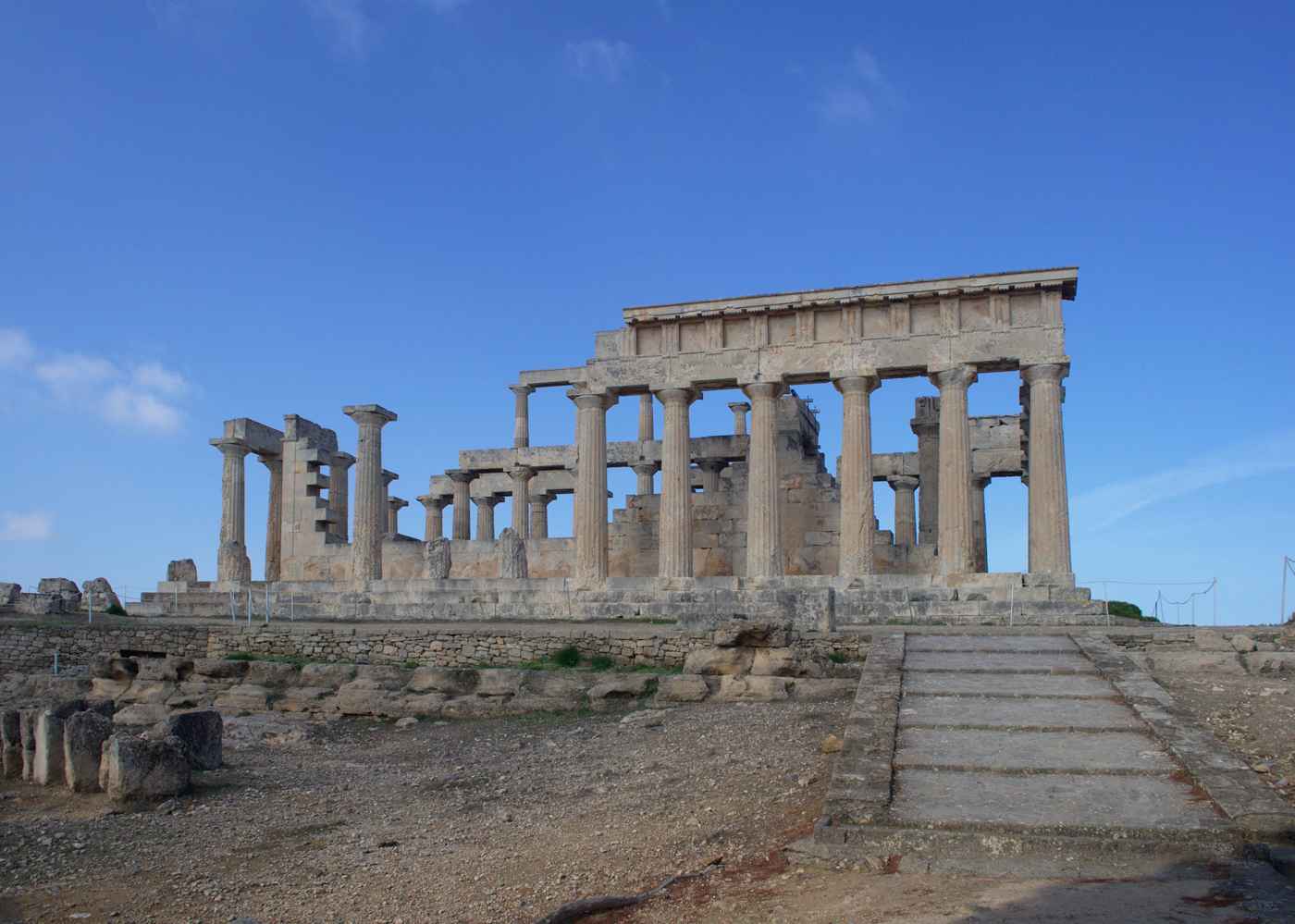
The Temple of Aphaia is the crowning glory of Aegina and one of the best-preserved ancient Greek temples anywhere. A graceful Doric sanctuary standing on a pine-clad hill in the north-east of the island. Built around 500 BC, it survives with many of its columns still upright. It is celebrated both for the beauty of its architecture and for its famous position within a so-called sacred triangle linking it to the Parthenon in Athens and the Temple of Poseidon at Sounion. Set high above the Saronic Gulf and surrounded by pines, it offers a deep dive into ancient history and a serene. Wind-washed escape less than an hour from Athens, combining ancient history with sublime natural beauty. Plan the whole trip with Greece Tours.
Dedicated to a local goddess later identified with Athena, the temple was a major sanctuary of the ancient Aegina that rivalled Athens as a sea power. This guide covers what the Temple of Aphaia is, the goddess it honoured, its long history, the legend of the sacred triangle, its famous pediment sculptures, what you can see at the site and its museum today, its setting and views. How to get there, when to visit, how to combine it with the island’s other sights. Practical tips, so you can make the most of a visit to one of the finest and best-preserved ancient monuments anywhere in Greece.
What is the Temple of Aphaia?
The Temple of Aphaia is an ancient Doric temple on the Greek island of Aegina, built around 500 BC and dedicated to the goddess Aphaia.
The Temple of Aphaia is the greatest ancient monument of Aegina and one of the finest surviving temples of the ancient Greek world. Built in the late sixth to early fifth century BC, around 500 BC, in the sturdy and elegant Doric style from local limestone. It stands on a wooded hill about 160 metres high in the north-eastern part of the island, surrounded by Aleppo pines and open to the sea and sky on every side.
What makes the temple so special is its remarkable state of preservation: many of its columns still stand, complete with parts of the entablature above. Giving a vivid sense of how a complete ancient Greek temple once looked, something that is surprisingly rare even among the most famous ruins in Greece. It is widely considered a masterpiece of late Archaic temple architecture, admired for the balance. Harmony and refinement of its elegant design, which influenced the great temples that followed, including those on the Acropolis of Athens.
For visitors, the Temple of Aphaia offers both a profound encounter with ancient Greece and a beautiful, peaceful setting far from the crowds of the mainland sites. Compact and easy to explore in an hour or two, it richly rewards the short journey from Athens with one of the most complete and atmospheric ancient temples in the whole country. Standing in a sublime and peaceful hilltop location high above the sparkling sea.
Who was the goddess Aphaia?
Aphaia was a local goddess worshipped on Aegina, associated with fertility, nature and the protection of the island, and later identified with the goddess Athena.
The temple takes its name from Aphaia, an ancient goddess particularly associated with Aegina, where her cult was centred on this hilltop sanctuary. She was a local deity linked to fertility, nature and the protection of the island and its people. Her worship on the site is very old. Predating the standing temple by centuries. In time she came to be identified and merged with Athena, the great goddess of the wider Greek world.
According to myth, Aphaia was connected with the figure of Britomartis, a Cretan nymph and goddess who, fleeing unwanted pursuit. Was said to have vanished, her name being linked to the idea of the invisible or the one who disappears. Such legends tied the goddess to the island and gave her sanctuary a special local character, distinct from the more famous Olympian deities worshipped elsewhere.
Understanding Aphaia helps make sense of the temple as more than a beautiful ruin: it was a living centre of devotion for the ancient islanders. A place of worship, offerings and festivals dedicated to the goddess who watched over Aegina. The long continuity of her cult on this spot, from early shrines to the grand temple, reflects the deep importance of the sanctuary to the island’s identity.
What is the history of the Temple of Aphaia?
The hilltop was sacred long before the present Temple of Aphaia was built around 500 BC.
Worship on the hill of Aphaia goes back long before the temple that stands today. An important earlier temple occupied the site in the sixth century BC, but it is believed to have been destroyed by fire toward the end of that century. The Aeginetans then cleared the damaged structure, keeping elements such as the great altar. Built a new and finer temple in its place. The one whose columns still stand, around 500 to 490 BC.
This was the golden age of ancient Aegina, when the island was a wealthy and powerful maritime and trading state that rivalled Athens itself and struck some of the earliest coins in Greece. The grand new temple, adorned with celebrated sculptures. Was a proud expression of that prosperity and of the skill of the local Aeginetan school of sculpture, whose work was admired across the Greek world.
The sanctuary’s importance faded as Athens came to dominate Aegina from the middle of the fifth century BC, subduing its old rival. Although repairs were made in later centuries, the site was gradually abandoned in antiquity, and its ruins slumbered on the pine-clad hill for centuries. Its rediscovery and study in the modern era restored the Temple of Aphaia to fame as one of the treasures of ancient Greek architecture. You can read more about the island’s story in our guide to the history of Aegina.
What is the sacred triangle of the Temple of Aphaia?
The sacred triangle is the striking alignment by which the Temple of Aphaia forms an almost perfect triangle with two other great sanctuaries: the Parthenon on the Acropolis of Athens and the Temple of Poseidon at Cape Sounion.
One of the most intriguing things about the Temple of Aphaia is its place in the so-called sacred triangle, or holy triangle, of antiquity. If you draw lines on a map connecting the temple with the Parthenon on the Acropolis of Athens and the Temple of Poseidon at Cape Sounion, the three great sanctuaries form an almost perfect equilateral triangle across the landscape of Attica and the Saronic Gulf.
This remarkable geometric relationship has fascinated visitors and scholars. While it be a coincidence rather than a deliberate act of ancient planning. It adds a powerful sense of connection between three of the most important religious sites of the classical world. From the hill of Aphaia on a clear day, you can look out across the sea toward the mainland and the sites at the other points of the triangle.
Whether or not the ancients intended it, the idea of the sacred triangle enriches a visit to the Temple of Aphaia. Linking this island sanctuary to the mighty Parthenon and the dramatic temple at Sounion. It reminds visitors that Aegina, so often seen today as a quiet day trip, was once a major player in the sacred and political landscape of ancient Greece. Its great temple standing proudly alongside the most famous monuments of the classical age, a reminder of the island’s lost power and prestige.
What can you see at the Temple of Aphaia today?
You can see the well-preserved Doric temple with many of its columns still standing, the remains of the altar and sanctuary buildings, and a small site museum.
The highlight of a visit is of course the temple itself, whose surviving columns and superstructure make it one of the most complete ancient temples you can see in Greece. You can walk around the sanctuary and take in the elegant proportions of the Doric building. The remains of the ramp and altar in front of it. The traces of other structures within the sacred precinct, all set on the pine-covered hilltop.
A small museum at the site helps bring the sanctuary to life, with information and finds that explain its history, architecture and the cult of Aphaia. It is worth a look to understand what you are seeing and to appreciate the artistry of the Aeginetan sculptors who once adorned the temple, though the collection is modest in scale.
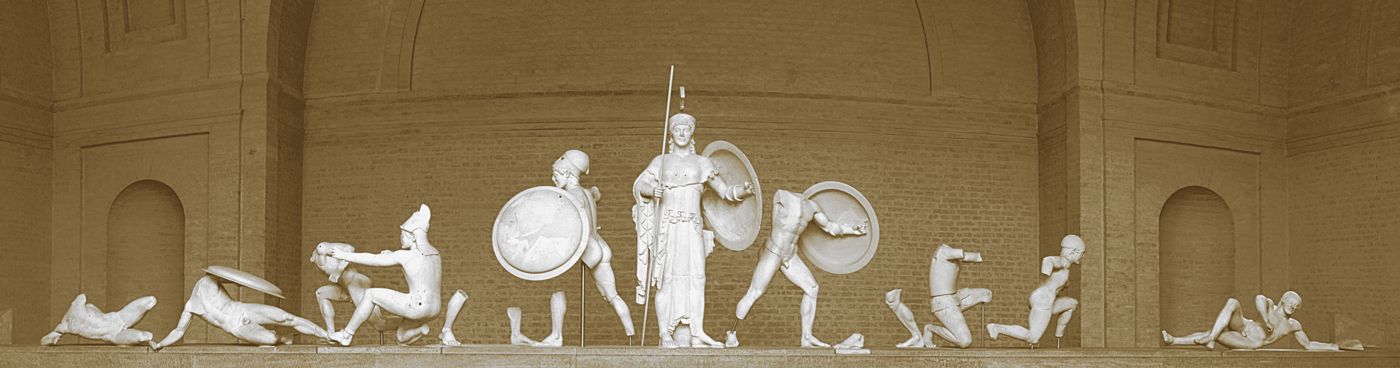
One thing you will not see at the site is the temple’s celebrated pediment sculptures, which depicted scenes from the Trojan War and were masterpieces of late Archaic art. These were removed from the island in the early nineteenth century and are now among the treasures of the Glyptothek museum in Munich, where they are displayed. Knowing this adds poignancy to a visit, as you stand before the temple they once crowned.
What are the setting and views like at the Temple of Aphaia?
The Temple of Aphaia enjoys a magnificent setting on a pine-clad hill about 160 metres high in the north-east of Aegina, with panoramic views over the Saronic Gulf toward the mainland and, on clear days, toward Athens and Cape Sounion.
Much of the magic of the Temple of Aphaia lies in its position. Standing on a hill among Aleppo pines, high above the east coast of the island near the resort of Agia Marina, the sanctuary commands sweeping. Uninterrupted views over the blue Saronic Gulf in almost every direction, with the sea, the pines and the honey-coloured stone all combining in a scene of quite exceptional beauty and serenity.
On a clear day the panorama stretches far across the water toward the mainland. It is possible to make out the direction of the other great sanctuaries linked to it in the sacred triangle. This lofty, wind-washed setting gives the temple a serene, almost otherworldly atmosphere. A world away from the bustle of the town and the mainland. Helps explain why the ancients chose this spot for their goddess.
The setting also makes the temple wonderfully photogenic, and the quality of the light changes beautifully through the day. The pines provide a little shade and frame the ancient stone, while the surrounding hillside is peaceful and green. For visitors, the combination of a superbly preserved ancient temple with such a sublime and tranquil natural setting. High on its pine-clad hill above the shimmering blue of the Saronic Gulf, is what makes the Temple of Aphaia so unforgettable and so different from the crowded sites of the mainland.
How do you get to the Temple of Aphaia?
You reach the Temple of Aphaia from Aegina Town in about fifteen minutes by car or twenty-five by bus, and in only about ten minutes from the resort of Agia Marina just below it.
The Temple of Aphaia is easy to reach on the compact island of Aegina. From Aegina Town, the drive across to the temple takes around fifteen minutes by car, scooter or taxi, while the local bus, which serves the temple on its way to or from Agia Marina, takes roughly twenty-five minutes. From the beach resort of Agia Marina, directly below the temple hill, it is only about ten minutes away.
For those without their own transport, the bus is a convenient option, though it is worth checking the timetable in advance, as services are less frequent out of season. Planning your visit around the return bus. Many visitors combine the temple with a swim at Agia Marina and a stop at the great Monastery of Saint Nektarios, which lies on the same road. Making an easy and rewarding half-day circuit that packs several of the island’s finest sights into a short and enjoyable outing.
The more energetic can even walk to the temple from Aegina Town, a scenic hike of around an hour through the island’s countryside. Arriving on foot as ancient pilgrims once did, a memorable way to approach the sanctuary for those with the time and energy to spare. However you come, the ease of reaching the temple, combined with the short ferry crossing from Athens, is part of what makes it such a popular and accessible ancient site, and one of the essential things to do in Aegina.
When is the best time to visit the Temple of Aphaia?
The best time to visit the Temple of Aphaia is in the softer light of the morning or the late afternoon, avoiding the midday heat and the peak of the tour crowds.
Exposed hilltop with little shade, timing your visit for the cooler, gentler parts of the day makes it far more enjoyable. Early morning, soon after the site opens. The late afternoon toward closing are the best times, when the light is soft and golden on the ancient stone. The views are at their clearest, and you avoid both the fierce midday sun and the busiest arrival of tour groups.
The seasons of spring and autumn are especially rewarding for a visit, offering warm but comfortable temperatures. Green or golden surroundings and crisp, clear air ideal for appreciating the panoramic views. Summer visits are best made early or late in the day to escape the heat, while even winter can be beautiful on a clear, calm day, with the site quiet and atmospheric.
The Temple of Aphaia is an archaeological site with set opening hours and a modest entrance fee. It is worth checking the current times before you go. Particularly out of season when hours be shorter. Bringing a hat, water and sun protection is wise given the exposed setting. Allowing an hour or two lets you explore the temple. The museum and the views at a relaxed pace.
What are the pediment sculptures of the Temple of Aphaia?
The pediment sculptures of the Temple of Aphaia were marble figures depicting battles from the Trojan War that once filled the triangular gables at each end of the temple.
Among the most important features of the Temple of Aphaia were the sculptures that once filled its two pediments, the triangular gables at the front and back of the temple. These marble figures depicted scenes of combat from the Trojan War, in which heroes associated with Aegina played a part, arranged dramatically around the central figure of the goddess. They were among the finest achievements of the celebrated Aeginetan school of sculpture.
The sculptures are especially prized by art historians because they capture a pivotal moment of transition in Greek art. From the stiffer, more formal Archaic style to the naturalism of the Classical age. The figures from the two pediments differ subtly in style, showing this evolution. Their quality and historical importance make them treasures of ancient sculpture. Studied and admired around the world and ranked among the very finest surviving works of their era.
Removed from the island in the early nineteenth century, the pediment sculptures were restored and installed in the Glyptothek in Munich, where they remain a centrepiece of the collection. This means that the temple you see on its hilltop today, though beautifully preserved architecturally, has lost its original sculptural crown. Understanding the story and importance of these figures greatly enriches a visit, even though you must travel to Munich to see the sculptures themselves.
Can you combine the Temple of Aphaia with other sights on Aegina?
Yes, the Temple of Aphaia is easily combined with other highlights of Aegina, above all the great Monastery of Saint Nektarios on the same road and the beach resort of Agia Marina directly below the temple hill, making a classic.
One of the joys of visiting the Temple of Aphaia is how naturally it fits into a wider day out on the island. The temple lies on the road that crosses the island between Aegina Town and the east coast. Along this same route stands the enormous Monastery of Saint Nektarios. One of the most visited pilgrimage sites in Greece, so the two great sights, one ancient and pagan, the other modern and Christian, are very easily seen together.
Directly below the temple hill, on the east coast, lies the popular sandy beach resort of Agia Marina, only about ten minutes away. This makes it simple to pair a morning of sightseeing at the temple and monastery with an afternoon swim and a seafront lunch. A perfect balance of culture and relaxation that shows off the variety of the island in a single, easy day.
A classic itinerary takes the morning ferry from Athens, visits the Temple of Aphaia early before the heat and crowds. Stops at the Monastery of Saint Nektarios on the way. Finishes with a swim and lunch at Agia Marina before the return boat. With your own transport you can add the medieval ruins of Paleochora nearby, or the harbour of Aegina Town. Making the temple the centrepiece of a wonderfully full and varied day among the island’s finest sights and beaches.
What tips help for visiting the Temple of Aphaia?
To visit the Temple of Aphaia, come early or late to avoid the midday heat and crowds, wear a hat and sturdy shoes and bring water, as the hilltop is exposed with little shade.
A little preparation makes a visit to the Temple of Aphaia far more enjoyable. Because the site sits on an open, exposed hilltop with only the surrounding pines for shade, it can be hot and bright in the middle of the day. It is best to visit in the cooler morning or late afternoon, bringing a hat, sunglasses, sun cream and plenty of water, and wearing comfortable, sturdy shoes for the uneven ancient ground.
The temple is a fenced archaeological site with set opening hours and a modest entrance fee. A small museum is included, so it is worth checking the current times before you set out. Especially out of season when hours are shorter, and planning around them and around your bus or ferry if you are on a day trip. Allowing an hour or two gives time to explore the temple, the museum and the views without rushing.
Finally, take time simply to enjoy the setting: walk around the temple to appreciate it from different angles. Take in the sweeping views over the Saronic Gulf. Imagine the sanctuary as it once was, crowned with its famous sculptures and alive with worshippers. With sensible timing and a little planning, a visit to the Temple of Aphaia is a highlight not just of Aegina but of any trip to Greece.
Frequently Asked Questions
Why is the Temple of Aphaia famous?
The Temple of Aphaia is famous for reasons. First, it is one of the best-preserved ancient Greek temples anywhere, with many of its Doric columns still standing. Giving a vivid impression of a complete classical temple and making it a masterpiece of late Archaic architecture. Second, it is celebrated for its place in the so-called sacred triangle, forming an almost perfect triangle with the Parthenon in Athens and the Temple of Poseidon at Cape Sounion. Third, it was once adorned with superb pediment sculptures of scenes from the Trojan War, masterpieces of ancient art that are now displayed in the Glyptothek in Munich.
Finally, its magnificent setting on a pine-clad hilltop above the Saronic Gulf, less than an hour from Athens, makes it both historically important and beautiful to visit. Together these qualities make it the undisputed star attraction of Aegina and one of the finest ancient monuments anywhere in Greece.
How old is the Temple of Aphaia?
The Temple of Aphaia that stands today was built around 500 to 490 BC. Making it roughly two and a half thousand years old. It dates from the late Archaic period of ancient Greek art, just before the classical age of the Parthenon. However, worship on the hilltop is much older still: an earlier temple stood on the same spot in the sixth century BC and is thought to have been destroyed by fire, after which the surviving temple was built. The cult of the goddess Aphaia on the site goes back centuries earlier again.
The sacred history of the place is older still, reflecting the long importance of the sanctuary to the ancient islanders. This great age, combined with the temple’s remarkable preservation, is part of what makes standing among its columns such a powerful experience.
Where are the sculptures from the Temple of Aphaia?
The famous pediment sculptures from the Temple of Aphaia, which depicted scenes from the Trojan War and are considered masterpieces of late Archaic Greek art. Are today displayed in the Glyptothek museum in Munich, Germany. They were removed from the temple in the early nineteenth century. During the era when many ancient sculptures left Greece for the museums of northern Europe. Were restored and installed in Munich, where they remain a highlight of the collection. This means that while you can admire the architecture of the temple itself on Aegina, its original sculptural decoration must be seen abroad.
A small museum at the site on Aegina helps explain the temple and its art, but visitors hoping to see the celebrated pediment figures themselves visit Munich. Knowing the story of the sculptures adds an extra dimension to a visit to the temple where they once stood.
Is the Temple of Aphaia worth visiting?
Yes, the Temple of Aphaia is very much worth visiting and is the single most important thing to do on Aegina. As one of the best-preserved ancient Greek temples anywhere, set in a sublime location on a pine-clad hilltop with panoramic views over the Saronic Gulf, it offers a genuinely moving encounter with ancient Greece. Its famous links to the Parthenon and the Temple of Poseidon at Sounion through the sacred triangle only add to its fascination. It is also compact and easy to explore in an hour or two. Simple to reach from Athens on a short ferry crossing plus a quick bus or drive, so it makes an ideal day trip.
Combined with the great Monastery of Saint Nektarios and a swim at the beach of Agia Marina just below. The temple anchors one of the most rewarding and popular day trips from the Greek capital. It is quite simply unmissable for anyone with the slightest interest in ancient history, classical architecture or beautiful places.
What are the opening hours and entrance fee for the Temple of Aphaia?
The Temple of Aphaia is an organised archaeological site with set opening hours and a modest entrance fee, which also includes the small on-site museum. Like most Greek archaeological sites, it generally opens daily during the day. With longer hours in the summer tourist season and shorter hours in winter. It close earlier or on certain public holidays. Because these times and prices can change from year to year and season to season, it is always best to check the current opening hours and admission fee shortly before your visit rather than relying on old information, particularly if you are visiting out of season or planning around bus and ferry times on a day trip.
Reduced or free admission is sometimes available for certain visitors, such as children, students or on special free-entry days. Given how much history and beauty the site offers. The entrance fee is very reasonable. The temple is well worth the modest cost for one of the finest ancient monuments in Greece.