
The best things to do in Aegina pack an extraordinary variety of experiences into a small island less than an hour from Athens. In a single visit you can stand before one of Greece’s finest ancient temples, pay your respects at one of the country’s most visited monasteries. Wander medieval ruins, swim from sandy beaches, sail to a wildlife islet, feast on fresh seafood and taste the world-famous pistachios that carry the island’s name. Add a lively harbour capital that was once the first capital of modern Greece, along with charming inland villages and a beautiful pine-clad countryside. Aegina rewards visitors with far more than its modest size suggests. Plan the whole trip with Greece Tours.
Whether you come for a quick day trip from the city or a longer, more relaxed island stay.
This guide brings together the very best things to do in Aegina, from its headline ancient and religious sites to its beaches. Boat trips, food and villages. You can plan a day or several around what interests you most. Because the island is compact and easy to get around, you can combine several of these highlights in a single visit. Below we cover the Temple of Aphaia, the Monastery of Saint Nektarios, the Kolona site, medieval Paleochora, the beaches, boat trips. Pistachios, the harbour town, the fishing village of Perdika and the island’s outdoor activities, along with practical tips.
What are the best things to do in Aegina?
The best things to do in Aegina are visiting the ancient Temple of Aphaia, the Monastery of Saint Nektarios and the Kolona site, exploring medieval Paleochora, relaxing on beaches like Agia Marina, taking a boat trip to Moni, tasting the.
For such a small island, Aegina offers a remarkable range of things to do, blending ancient history, religion, beaches, boat trips and food. The undisputed highlights are its great monuments: the beautifully preserved Doric Temple of Aphaia on its pine-clad hill. The vast and much-loved Monastery of Saint Nektarios. The seafront ruins of Kolona with their landmark ancient column. These three great monuments alone more than justify the short trip across from Athens.
Beyond the big sights, the island invites you to slow down and enjoy its gentler pleasures. You can swim at sandy beaches such as Agia Marina, sail across to the little island of Moni to swim in crystal water among peacocks and deer. Wander the atmospheric medieval ghost town of Paleochora. Taste the celebrated Aegina pistachios straight from the growers. The harbour capital and the fishing village of Perdika add lively dining and beautiful sunsets.
The joy of Aegina is that all these experiences sit within a short distance of one another, so you can easily combine several in a day. A classic outing pairs the Temple of Aphaia and the Monastery of Saint Nektarios with lunch by the sea and a stroll around the town, while a longer stay lets you add beaches, boat trips and villages at a relaxed pace. Whatever you choose, the best things to do in Aegina deliver an unusually rich island experience close to the capital.
Why visit the Temple of Aphaia in Aegina?
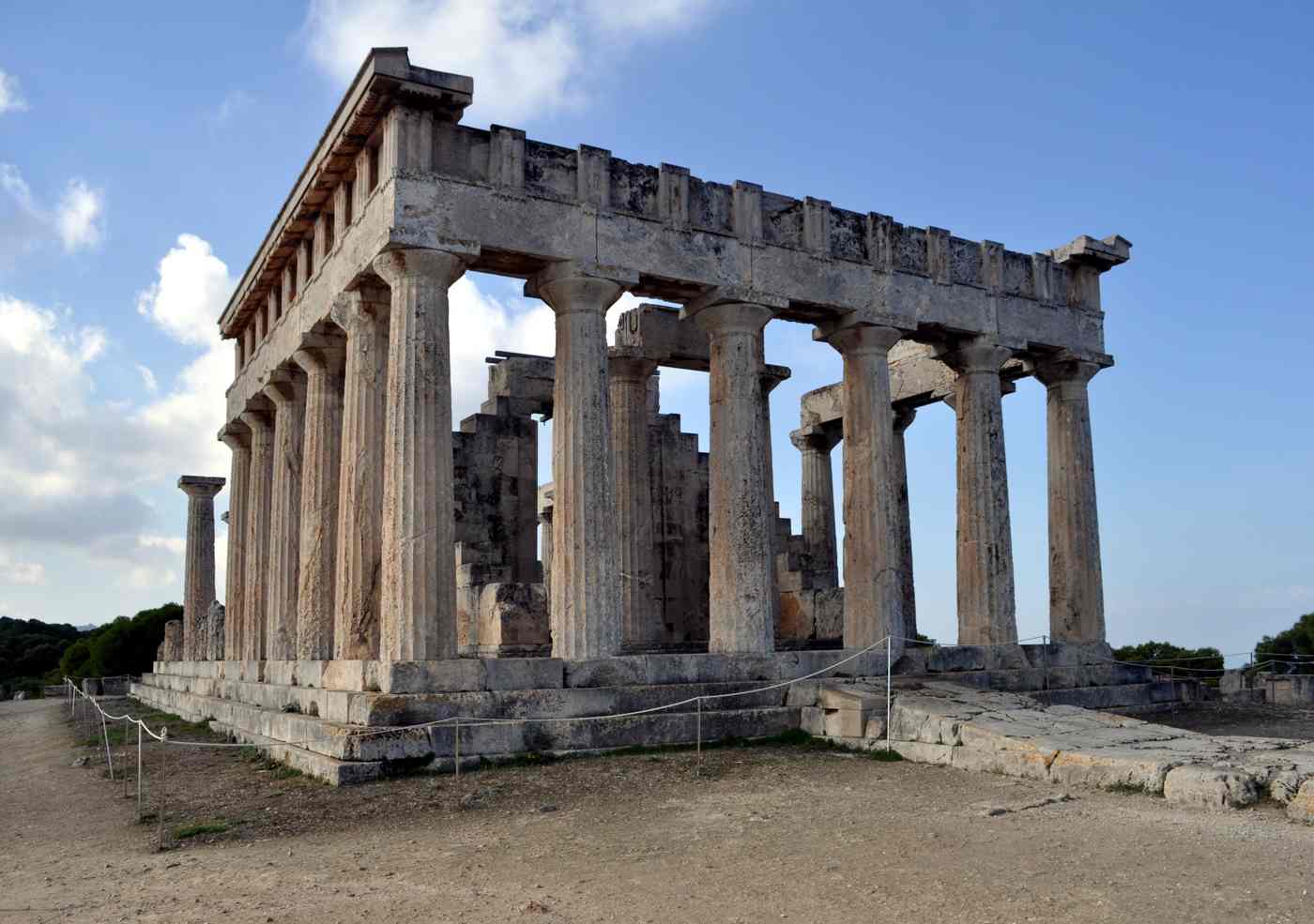
The Temple of Aphaia is the star attraction of Aegina, one of the best-preserved ancient Greek temples anywhere, a graceful Doric temple set on a pine-covered hill in the east of the island with superb views.
Standing proud on a hilltop above the east coast. The Temple of Aphaia is the single most important of all the things to do in Aegina and one of the finest ancient temples in Greece. Built of local limestone in the Doric style around the early fifth century BC, it survives in remarkable condition. With many of its columns still standing. It is celebrated for the beauty and completeness of its design, which influenced later temple architecture.
Part of the temple’s fame lies in its position within a so-called sacred triangle: it aligns with the Parthenon on the Acropolis of Athens and the Temple of Poseidon at Cape Sounion. Three great sanctuaries forming an almost perfect triangle across the landscape. Whether or not this was intentional, the setting is sublime, with the temple framed by Aleppo pines and commanding sweeping views over the Saronic Gulf toward the mainland.
Visiting is easy and rewarding. The site sits a short drive or bus ride from the town, near the resort of Agia Marina, and a small museum on site helps bring its history to life. It is best seen in the softer light of morning or late afternoon, before or after the tour buses, when the honey-coloured stone glows and the views are at their clearest. For anyone interested in ancient Greece, the Temple of Aphaia is an unmissable highlight of the island.
Why visit the Monastery of Saint Nektarios?
The Monastery of Saint Nektarios is one of the largest and most visited pilgrimage sites in Greece, dedicated to a beloved modern saint who lived on Aegina.
The Monastery of Saint Nektarios, or Agios Nektarios, is among the most important religious sites in Greece and a highlight of any visit to Aegina. It honours Saint Nektarios, a much-loved bishop and healer who founded and lived at the convent here in the early twentieth century and was later recognised as one of the Orthodox Church’s most beloved modern saints. His tomb and relics draw a steady stream of pilgrims, and for visitors the monastery is the emotional heart of the island.
The site is dominated by an enormous modern basilica, one of the largest Orthodox churches in the Balkans. Whose great dome rises above the pines and is visible from far around. Alongside it stand the older, more intimate convent buildings and a small church associated with the saint, set in tranquil, well-kept grounds. Even for those who are not religious, the scale, atmosphere and devotion of the place make it a striking and memorable stop.
The monastery lies on the road between the town and the Temple of Aphaia. It is easy to combine the two in a single outing. And buses serve it from Aegina Town. As it is an active place of worship and pilgrimage, modest dress is required, with shoulders and knees covered. Visiting the Monastery of Saint Nektarios offers a powerful contrast to the island’s ancient and secular sights and is one of the essential things to do in Aegina.
What can you see at the Kolona archaeological site?
Kolona, on a low hill beside the harbour of Aegina Town, is the site of an ancient temple of Apollo whose single surviving column gives it its name.
Right beside the harbour of the capital, on a low headland just north of the ferry quay. Lies the Kolona archaeological site, one of the most accessible and convenient of all the things to do in Aegina. Its name, meaning column, comes from the solitary standing column that is all that remains upright of an ancient temple of Apollo. A landmark long used by sailors to navigate toward the island. The solitary column standing tall against the blue of the sea is one of Aegina’s most iconic and photographed images.
Kolona is far more than a single column, however. The hill was the acropolis of ancient and prehistoric Aegina. Excavations have revealed layers of settlement stretching back thousands of years. Including fortifications, houses and sanctuaries from the island’s long and powerful past as a maritime trading state. Wandering the site gives a real sense of the depth of history here, with the sea on almost every side.
An archaeological museum beside the site displays finds from Kolona and across the island, helping to make sense of the ruins and the island’s ancient wealth. Because it sits right by the town and port, Kolona is the easiest major site to visit, ideal to explore on foot before or after a ferry, or to combine with a stroll around the harbour. It is a rewarding and convenient stop that connects you directly to Aegina’s remarkable history.
What is there to do in the medieval town of Paleochora?
Paleochora is Aegina’s atmospheric medieval ghost town, a hillside dotted with dozens of little Byzantine churches that was the island’s fortified capital for centuries.
Hidden in the hills a short way inland lies Paleochora, the haunting medieval capital of Aegina and one of the most atmospheric things to do on the island. For centuries the islanders lived here, away from the coast, to shelter from the pirate raids that plagued the Aegean, building a hidden town crowned by a castle. Today the houses have crumbled away, but the site remains studded with dozens of little churches and chapels, earning it comparisons to a miniature Mystras.
Exploring Paleochora feels like stepping into a lost world. You can climb the hillside among the ruins, stepping into tiny stone chapels where faded Byzantine frescoes still glow in the dim light. Imagine the once-thriving town that sheltered here. Many of the churches survive from the dozens that once served the population, and the sense of history and abandonment is powerful and moving, all set against beautiful island views.
Paleochora sits just above and behind the great Monastery of Saint Nektarios. The two are naturally visited together. Making an easy and rewarding half-day that combines medieval and modern religious heritage. Wear sturdy shoes for the rough paths and steps, bring water, and allow time to seek out the little painted churches. Quiet, beautiful and steeped in history, Paleochora is one of the most rewarding and unusual things to do in Aegina.
What are the best beaches to enjoy in Aegina?
Aegina’s best beaches for a swim include Agia Marina, the main sandy resort beach on the east coast, the family-friendly sands of Marathonas near the town, sheltered Aeginitissa, and the pretty coves around Perdika, all with calm, shallow, clear Saronic.
Enjoying the beaches is one of the most relaxing things to do in Aegina, and the island has a good choice for its size. The most popular is Agia Marina on the east coast, a long stretch of sand below the hill of the Temple of Aphaia, well organised with sunbeds and tavernas and blessed with shallow, gently shelving water that is perfect for families. Its resort setting makes it the natural choice for a full beach day.
Closer to the capital, Marathonas is the nearest sandy beach to Aegina Town, an easy and laid-back spot with tavernas at the water’s edge, while the small, pine-backed cove of Aeginitissa just beyond offers sheltered, turquoise water in a quieter setting. To the south, around the fishing village of Perdika, lie further lovely coves and the jumping-off point for the beautiful swimming across the strait on Moni.
Clean and shallow, its beaches are especially safe and easy for children and casual swimmers. None is far from a taverna for lunch. Whether you want an organised resort beach, a quiet cove or a swim off a boat, there is something to suit, and our full guide to the beaches of Aegina covers each one in detail for planning your day by the sea.
Can you take a boat trip from Aegina?
Yes, popular boat trips from Aegina include the short hop across to the islet of Moni, a nature reserve with crystal water, peacocks and deer, and cruises to neighbouring Agistri.
Getting out on the water is one of the most enjoyable things to do in Aegina, and there are options. The easiest and most popular is the short boat trip from the fishing village of Perdika across the narrow strait to the little island of Moni. An unspoilt nature reserve where you can swim in beautifully clear water and wander among the pines to meet the resident peacocks, deer and wild goats. It makes a delightful half-day escape.
Just across the water lies the small, green island of Agistri. Easily reached by frequent boats from Aegina and worth a trip for its pine-fringed beaches and quiet coves, giving a taste of an even smaller and sleepier island. Local operators also run cruises and swimming excursions around Aegina’s own coast in season, letting you reach beaches and inlets that are harder to get to by land.
Aegina is also a classic stop on the popular full-day Saronic Gulf cruise from Athens, which combines it with the islands of Poros and Hydra in a single outing, a convenient way for visitors based in the capital to sample three islands at once. Whether a short swim across to Moni or a longer island-hopping cruise, a boat trip adds a notable dimension to a visit.
Where can you try Aegina’s famous pistachios?
You can try Aegina’s world-famous pistachios all over the island, especially from the growers and shops along the harbour of Aegina Town, and on pistachio farm tours.
Tasting the pistachios is one of the most delicious things to do in Aegina, an island so identified with the nut that it holds an annual pistachio festival. Aegina’s pistachios enjoy protected designation of origin status and are widely regarded as among the finest in the world. Thanks to the island’s volcanic soil and dry climate, which give them an intense, sweet flavour. Sampling them is an essential part of any visit.
The easiest place to try and buy them is along the waterfront of Aegina Town, where growers and shops sell freshly roasted and salted pistachios straight from the source. Along with a tempting array of pistachio products: nougat and other sweets, pistachio butter, ice cream and even a local pistachio liqueur. A bag of them makes an ideal, tasty souvenir to take home, bought directly from the people who grow them.
For a deeper experience, you can visit one of the island’s pistachio farms, especially around harvest time in late summer. To see how the nuts are grown and processed and to taste them at their freshest. Whether you simply snack on a bag by the harbour or take a farm tour. Enjoying Aegina’s celebrated pistachios connects you to the island’s proud agricultural identity and is a highlight for food lovers.
What is there to do in Aegina Town?
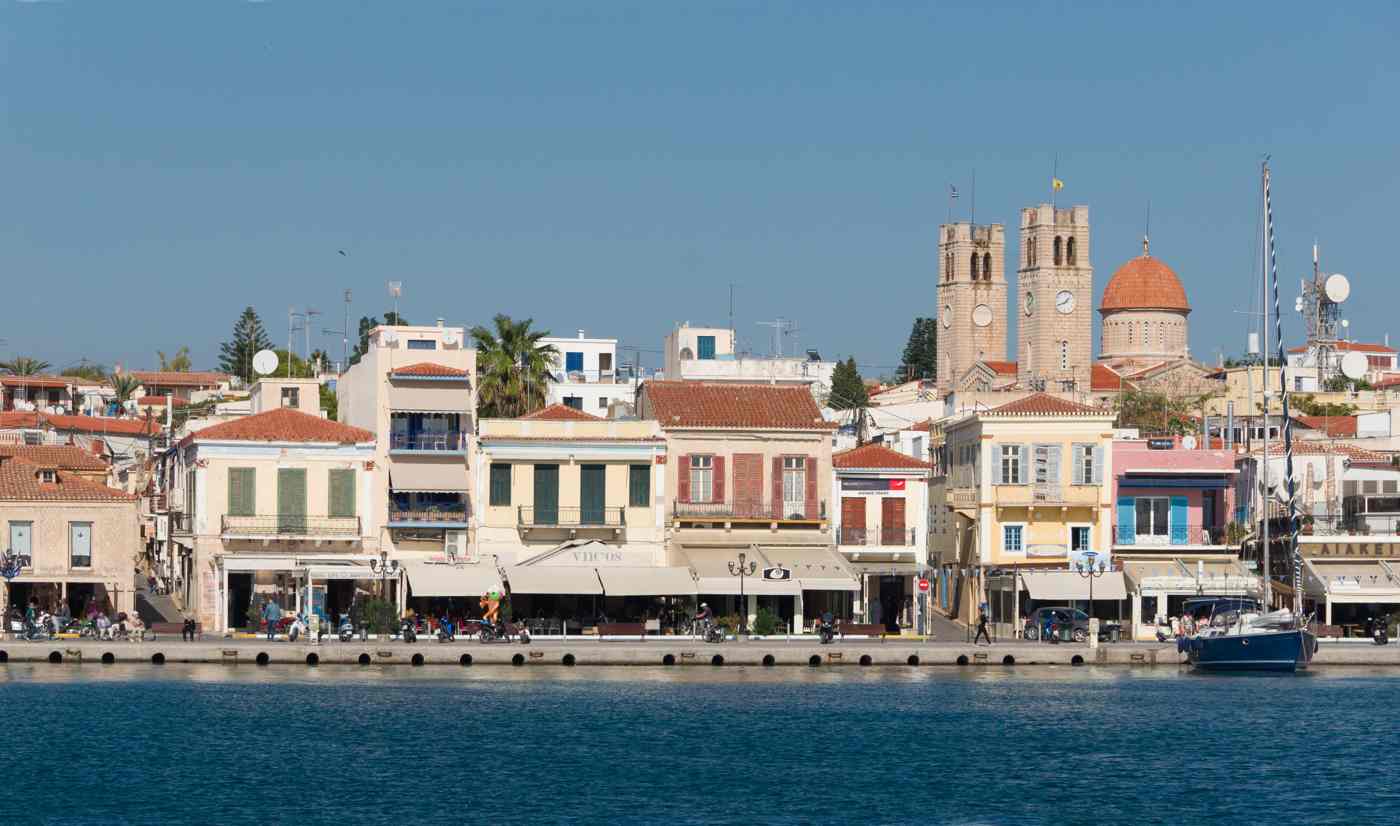
In Aegina Town you can stroll the lively harbour lined with cafes, fish tavernas and pistachio sellers, admire neoclassical mansions, visit the Kolona site and museums, and soak up the atmosphere of a town that was briefly the first capital.
The island’s capital and port, Aegina Town, is a destination in itself and one of the most enjoyable things to do in Aegina. Its curving waterfront is among the prettiest in the Saronic Gulf, lively with fishing boats. The famous floating produce caiques, horse-drawn carriages and a promenade of cafes, ouzeries and fish tavernas. Simply strolling the harbour, coffee or ouzo in hand, watching the boats and the passing life, is a pleasure in itself.
Behind the waterfront, the town rewards wandering with streets of elegant neoclassical houses. A legacy of its brief but important role as the first capital of the newly independent Greek state. Landmarks include the little harbour church of Agios Nikolaos. The Markellos Tower associated with the island’s revolutionary past. Small museums that tell the story of Aegina’s history and folklore, along with the great Kolona site on its edge.
The town is also the island’s hub for shopping and dining. The best place to buy pistachios and to eat fresh seafood by the water, especially in the evening when the harbour comes alive. Easy to explore on foot, it makes an ideal base or a rewarding half-day in its own right. Our guide to Aegina Town covers its sights and atmosphere in more detail.
Why visit the fishing village of Perdika?
Perdika is a charming fishing village on Aegina’s south coast, famous for its row of excellent seafront seafood tavernas, its relaxed atmosphere and its beautiful sunsets.
At the southern tip of the island. The fishing village of Perdika is one of the most rewarding things to do in Aegina for those seeking a relaxed, authentic taste of island life. Built around a small harbour, it retains the easy charm of a working fishing village. With colourful boats bobbing at the quay and a laid-back atmosphere that draws visitors down from the busier capital, especially in the evening.
Perdika is above all a place to eat. Its waterfront is lined with some of the best seafood tavernas on the island. Where you can feast on the freshest fish and seafood at tables almost on the water, watching the sun set over the sea and the islet of Moni just offshore. Dining here as the light fades is a quintessential Aegina experience and reason enough to make the trip south.
The village is also the jumping-off point for the short boat hop across to Moni. The little nature reserve island with its crystal-clear swimming and roaming peacocks and deer, making Perdika an ideal base for a lazy afternoon of swimming and seafood. Quiet, pretty and delicious, it is a perfect complement to the island’s grander sights and one of the loveliest spots on Aegina.
What outdoor activities can you do in Aegina?
Beyond the sights, Aegina offers outdoor activities including cycling along its flat coastal roads, hiking to viewpoints and around Paleochora, swimming and snorkelling in the calm sea, and boat excursions.
For active visitors, Aegina offers plenty to do beyond its monuments. The island’s relatively flat coastal roads make it excellent for cycling. Hiring a bike is a notable way to explore the shoreline. Reach quieter beaches and take in the scenery at your own pace. Walkers can enjoy gentle hikes to viewpoints, around the atmospheric ruins of Paleochora, and along country lanes through the pistachio groves and pine woods of the interior.
The calm, clear and shallow Saronic sea makes swimming and snorkelling a pleasure all around the coast. Whether from the organised beaches, the coves near Perdika or the crystal water of Moni. Boat trips, as well as being sightseeing outings, open up secluded swimming spots, and in season there are opportunities for simple watersports at the busier beaches such as Agia Marina.
These activities are accessible to most visitors and easy to combine with sightseeing and relaxing. A morning temple visit, an afternoon cycle to a beach and an evening seafood dinner in Perdika is the kind of varied, active day that Aegina does so well. For those who like to keep moving, the island’s outdoor pleasures are among the most enjoyable things to do in Aegina.
Can you visit the Christos Kapralos Museum in Aegina?
Yes, the Christos Kapralos Museum on the coast near Aegina Town is the seaside house and studio of one of Greece’s most important modern sculptors, now a museum displaying his powerful works.
Among the more unexpected things to do in Aegina is a visit to the Christos Kapralos Museum. A tribute to one of the leading Greek sculptors of the modern era, who made the island his summer home and workplace. Housed in his former seaside residence and studio just outside the town. The museum preserves the atmosphere of the place where he worked and displays a striking collection of his sculptures and paintings.
The setting is part of the appeal, with the artist’s monumental works shown in the very studio and grounds where they were created, looking out to the sea. Among the highlights are his large-scale sculptural compositions, whose scale and emotional power make a strong impression even on visitors new to his name. It is a peaceful, atmospheric spot that connects the island to the flourishing artistic life of modern Greece.
Quieter than the island’s major sights, the museum offers a rewarding change of pace and a glimpse of Aegina’s cultural side beyond its ancient temples and monasteries. For art lovers, or simply for those seeking a calm, beautiful and less crowded thing to do. It is a worthwhile addition to a day on the island, easily combined with a walk along the nearby coast.
What festivals and events take place in Aegina?
Aegina’s best-known event is its lively autumn pistachio festival, the Fistiki Fest, celebrating the island’s famous nut with music, food and stalls.
Timing a visit to coincide with a local celebration adds to the things to do in Aegina. The island’s signature event is the Fistiki Fest, an annual pistachio festival held in the town in the autumn. Which celebrates the harvest of Aegina’s world-famous nut with concerts, food stalls, tastings and a festive harbour atmosphere. It is a joyful, delicious occasion that draws visitors from Athens and beyond.
The island’s greatest religious event is the feast of Saint Nektarios, celebrated each November, when enormous crowds of pilgrims descend on his monastery to honour one of Greece’s most beloved modern saints. The scenes of devotion are extraordinary. The whole island takes on a special atmosphere, though it is also the busiest the monastery ever gets, so pilgrims and curious visitors alike plan ahead.
Throughout the summer, as across Greece, smaller religious feasts, cultural events and local celebrations bring music and life to the villages and the harbour. While none is essential to enjoying the island, catching a festival or feast day gives a memorable glimpse of Aegina’s living traditions. The pistachio festival in particular is a highlight well worth planning a trip around for food and culture lovers.
What is a good one-day itinerary for Aegina?
A great one-day Aegina itinerary takes the morning ferry from Piraeus, then visits the Temple of Aphaia and the Monastery of Saint Nektarios by bus or car, followed by lunch and a swim near Agia Marina, and an afternoon exploring.
A single day can be wonderfully full. A classic plan is to catch an early ferry from Piraeus, then head straight out to the Temple of Aphaia before the tour buses arrive. Enjoying the temple and its views in the cooler morning light. From there it is a short hop to the great Monastery of Saint Nektarios on the road back toward the town.
By midday you can be at the east-coast resort of Agia Marina, below the temple hill. For a relaxed lunch at a seafront taverna and a swim in the shallow, family-friendly sea, or return toward the town for lunch by the harbour. This balance of culture in the morning and sea in the early afternoon makes the most of the day while avoiding the midday heat at the exposed ancient sites.
Spend the later afternoon back in Aegina Town, strolling the lovely harbour, exploring the Kolona site on its edge and browsing the shops for pistachios and sweets to take home, before an early seafood dinner or an ice cream on the waterfront and the evening ferry back to Athens. It is a perfect, varied day. With a car or scooter you can add a quiet beach or the ruins of Paleochora. With an overnight stay you can slow the whole thing down.
What villages and countryside are worth exploring in Aegina?
Beyond the town and the coast, Aegina’s inland villages and countryside reward exploration, from the pottery village of Mesagros and the green pistachio groves to the north-coast spa village of Souvala and quiet hilltop chapels, offering a peaceful, authentic side.
For those with a little more time, exploring Aegina’s interior and lesser-known villages is among the more rewarding things to do on the island. The countryside is a gentle patchwork of pistachio groves, olive trees and pine-clad hills, dotted with traditional villages that see tourists. Driving or cycling the quiet lanes between them gives a real sense of everyday island life and some lovely, unhurried scenery.
Among the villages, Mesagros is known for its long tradition of pottery and ceramics, a craft rooted in the island’s clay, while the north-coast village of Souvala is a low-key seaside spot with its own beaches and thermal springs long valued for their healing waters. Scattered across the hills are countless little chapels and monasteries, and viewpoints that open up across the Saronic Gulf toward the neighbouring islands and the mainland.
This quieter, rural Aegina is easy to reach yet a world away from the busy harbour and the tour-bus sights. Making it perfect for a relaxed afternoon drive, a bike ride or a gentle walk. Pausing for a coffee or a meal in a village taverna. Buying pistachios or pottery direct from the makers. Simply enjoying the peaceful countryside round out a visit and reveal the authentic character that makes Aegina so much more than a day-trip checklist.
Frequently Asked Questions
What is the top thing to do in Aegina?
The top thing to do in Aegina is to visit the Temple of Aphaia, the island’s star attraction and one of the best-preserved ancient Greek temples anywhere. Set on a pine-clad hill in the east of the island with sweeping views over the Saronic Gulf. This graceful Doric temple is famous both for its remarkable state of preservation and for forming a legendary sacred triangle with the Parthenon in Athens and the Temple of Poseidon at Sounion. A very close second is the vast and deeply revered Monastery of Saint Nektarios. One of the most visited pilgrimage sites in all of Greece, which lies on the same road and is easily combined with the temple.
Together these two sites, one ancient and one modern and religious, are the essential highlights. The beaches. The boat trip to Moni, the pistachios and the harbour town all make Aegina far more than a one-sight island.
Is Aegina worth visiting?
Yes, Aegina is very much worth visiting, and it is one of the most rewarding day trips or short breaks from Athens. Despite its small size and its closeness to the capital, it offers an unusually rich mix of things to do: a world-class ancient temple, one of Greece’s most important monasteries. An atmospheric medieval ghost town, sandy beaches, boat trips to a wildlife islet, a lively harbour capital, superb seafood and the world-famous pistachios that bear its name. This variety, combined with a genuine, unspoilt island atmosphere and an easy, short ferry crossing, makes it a firm favourite with both first-time and returning visitors.
Whether you come for a single packed day or linger for a few relaxed nights. Aegina delivers far more than its modest size suggests. It richly repays the short trip from Athens.
How days do you need in Aegina?
You can enjoy the main highlights of Aegina in a single well-planned day trip from Athens, taking in the Temple of Aphaia. The Monastery of Saint Nektarios and the harbour town with lunch by the sea, which is exactly what visitors do. However, staying one to three nights lets you experience the island far more fully and at a relaxed pace, adding time for the beaches, a boat trip across to Moni, the medieval ruins of Paleochora. Long seafood dinners in the fishing village of Perdika. A two or three-night stay is ideal for combining sightseeing with genuine relaxation.
It lets you enjoy the island in the quieter mornings and evenings before and after the day-trippers come and go. Whether you have a day or a long weekend, there are enough things to do in Aegina to fill your time enjoyably.
Is Aegina good for families with children?
Yes, Aegina is an excellent destination for families with children, which is one reason it is such a popular escape from Athens. The short, easy ferry crossing suits young travellers. The island’s calm, shallow and clean beaches. Especially the sandy, gently shelving Agia Marina, are ideal and safe for children to swim and play. Families also love the boat trip across to the little island of Moni, where children can swim in crystal water and meet the resident peacocks. Deer and wild goats in the pine woods, a real adventure for young visitors.
The pistachio treats, ice cream, harbour life with its horse-drawn carriages, and easy sightseeing all add to the appeal, while the compact size of the island keeps journeys short. With its blend of beaches, nature, gentle culture and tasty food, Aegina offers plenty of family-friendly things to do.
When is the best time to visit Aegina?
The best time to visit Aegina is from late spring to early autumn, roughly May to October, when the weather is warm, the sea is good for swimming and everything is open. May, June and September are especially pleasant, offering warm days and pleasant sea without the peak-summer crowds and heat of July and August, when the island is busiest with Athenian day-trippers and holidaymakers. Autumn has the added draw of the pistachio harvest and the Fistiki Fest, while spring brings wildflowers and comfortable temperatures ideal for exploring the ancient sites and hiking around Paleochora. Even in winter the island is quietly charming and only a short ferry ride from Athens, though some tourist facilities reduce their hours.
For the widest choice of things to do in Aegina, with warm weather and full services, the late spring to early autumn window is ideal.