
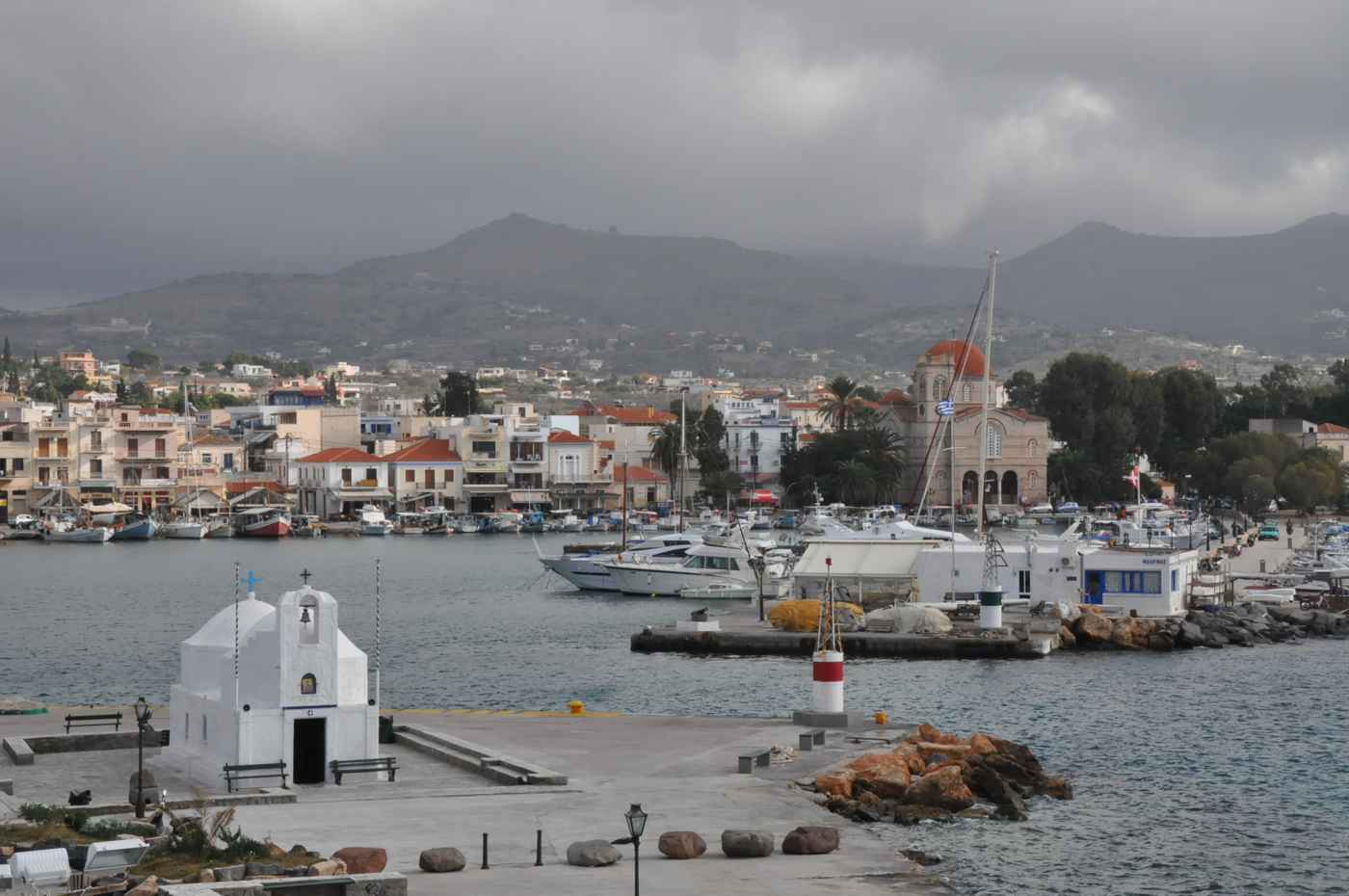
Aegina Town is the lively, elegant capital and main port of the island, and for visitors the first and most memorable taste of Aegina. Strung along a curving waterfront on the west coast, it combines a picturesque working harbour full of fishing boats with graceful neoclassical mansions. A legacy of its brief time as the first capital of modern Greece. Cafes, fish tavernas and pistachio sellers line the quay, horse-drawn carriages wait for passengers, and the lone ancient column of the Kolona site rises just beyond the harbour. Easy to explore on foot and full of character, Aegina Town is a delight to wander and an ideal base for a visit. Plan the whole trip with Greece Tours.
This guide covers what Aegina Town is, its beautiful harbour and waterfront, its historical sights including the Kolona column and the archaeological museum. Its role as the first capital of Greece, where to eat and shop. Practical tips for exploring. Compact, atmospheric and steeped in history, the town rewards a leisurely stroll and makes a rewarding half-day in its own right, as well as the natural gateway to the rest of the island. It is well worth exploring properly rather than simply passing through on the way to the beaches and ancient sites.
What is Aegina Town?
Aegina Town is the capital and main port of the island of Aegina, on its west coast.
Aegina Town is the capital and principal harbour of Aegina, set on the sheltered west coast of the island where the ferries dock. It is a genuine working port and the island’s main centre of life. Also one of the most attractive and characterful small towns anywhere in the Saronic Gulf. Its long waterfront curving gracefully around the harbour and backed by handsome buildings, cafes and shops.
The town’s special character comes from the blend of a lively fishing port with the elegance of its neoclassical architecture. A legacy of the brief period when it served as the first capital of the newly independent Greek state. Colourful fishing boats bob in the harbour, horse-drawn carriages clip along the quay. The whole scene has a friendly. Picturesque and unmistakably Greek atmosphere that charms visitors as soon as they step off the boat and sets the tone for the whole island.
What is the harbour and waterfront of Aegina Town like?
The harbour of Aegina Town is a long, curving waterfront lined with cafes, fish tavernas and shops, busy with fishing boats and the famous floating produce boats.
The heart of Aegina Town is its beautiful harbour, one of the prettiest and liveliest in the Saronic Gulf. The long quayside is lined with cafes, ouzeries and fish tavernas where you can sit and watch the comings and goings over a coffee, an ouzo or a plate of seafood, while colourful fishing boats and yachts fill the water and the floating fruit-and-vegetable boats, a local institution, sell their produce straight from the deck.
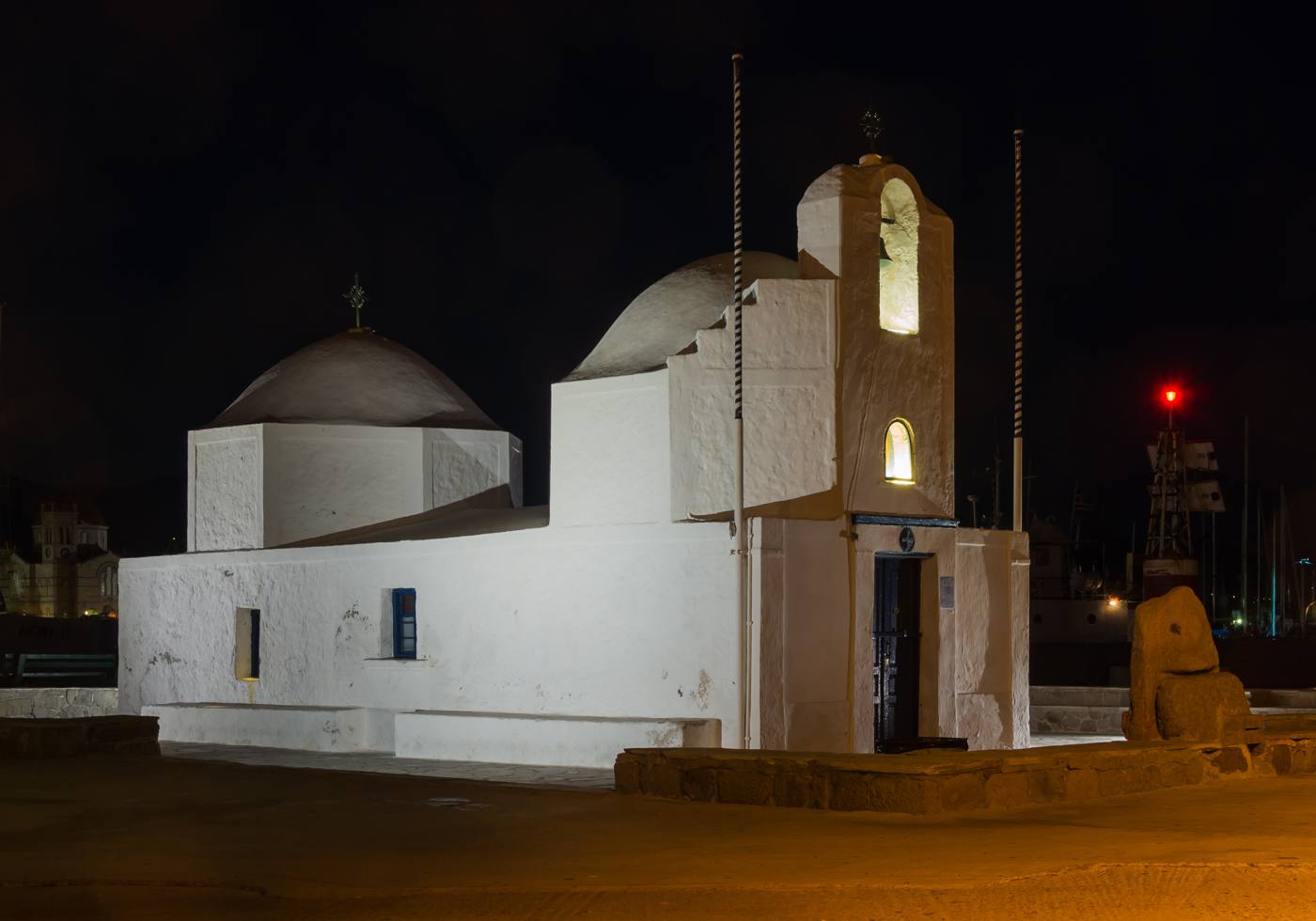
Guarding the entrance to the harbour stands the little white church of Agios Nikolaos, one of the town’s landmarks and a favourite subject for photographs. Along the front, horse-drawn carriages wait to take visitors on a gentle ride. The promenade is at its most magical in the evening, when the lights come on and locals and visitors alike stroll the waterfront. Simply wandering the harbour and soaking up the atmosphere is one of the great pleasures of a visit to Aegina Town.
What historical sights can you see in Aegina Town?
In Aegina Town you can see the Kolona archaeological site with its lone ancient column of a temple of Apollo, the excellent archaeological museum, the Markellos Tower from the revolutionary era, and elegant neoclassical mansions dating from the town’s time.
For its size, Aegina Town is rich in history. Just north of the harbour rises the Kolona archaeological site, the ancient acropolis of the island. Named after the single standing column of an ancient temple of Apollo that has long served as a landmark for sailors. The hill preserves layers of settlement going back thousands of years. A sandy beach lies just below it, so a swim and a walk among the ruins can be easily combined.
In the town itself, the Markellos Tower is a striking fortified mansion associated with the leaders of the Greek War of Independence and the island’s brief life as national capital, while the streets behind the harbour are full of elegant neoclassical houses from that same era. The town also preserves churches and the traces of its long past, making a simple wander a journey through the island’s remarkable history.
What is the Archaeological Museum of Aegina?
The Archaeological Museum of Aegina, housed in a neoclassical building near the harbour, is one of the oldest museums in Greece.
Set in a small neoclassical building near the main square by the harbour. The Archaeological Museum of Aegina holds a special place in Greek cultural history as one of the very first museums established in the country, founded not long after independence. Compact but rewarding, it gathers finds from across the island and helps make sense of Aegina’s extraordinary ancient story.
The collection includes prehistoric and Bronze Age material excavated from the Kolona hill just outside. Along with fine examples of the ancient Aeginetan pottery and sculpture for which the island was renowned. Other artefacts spanning its long history. For anyone interested in the island’s past, especially after visiting the Kolona site right beside it or the Temple of Aphaia across the island. The museum is a worthwhile and enriching stop in the heart of the town.
Why was Aegina Town the first capital of Greece?
Aegina Town was chosen as the first capital of newly independent Greece in 1828 under the first governor, Ioannis Kapodistrias, thanks to its safe, central Saronic location.
Aegina Town’s greatest modern claim to fame is its role at the birth of the modern Greek nation. When independence was won, the island was chosen in 1828 as the first capital of the new state under Ioannis Kapodistrias, the first governor of Greece, who based the fledgling government in the town at a time when the mainland was still unsettled and the safe, central island offered security.
This brief but hugely significant period transformed the town, which was laid out with fine neoclassical public buildings and mansions befitting a capital, many of which still line its streets today. Walking among them, it is easy to imagine the little harbour town as the seat of a newborn nation. This heritage gives Aegina Town a dignity and elegance beyond that of a simple island port.
Where can you eat and shop in Aegina Town?
In Aegina Town you can eat at the harbour fish tavernas and the ouzeries around the fish market, famous for fresh seafood, and shop for the island’s world-famous pistachios sold along the waterfront, as well as souvenirs, sweets and local.
Aegina Town is the island’s hub for eating and shopping, and doing both by the harbour is a pleasure. The waterfront tavernas serve fresh fish and seafood with a view of the boats. For the most authentic food many head to the little ouzeries around the fish market just off the harbour. Where the local fishermen themselves eat and the seafood mezes are superb, authentic and excellent value.
For shopping, the town is above all the place to buy Aegina’s celebrated pistachios, sold fresh and roasted by growers and shops all along the harbour. Together with pistachio sweets, butter and other treats that make delicious souvenirs. The streets behind the waterfront hold further shops selling ceramics, sweets. Gifts and local products. A stroll through the town easily combines sightseeing with tasting and buying the best of the island.
What tips help for visiting Aegina Town?
To enjoy Aegina Town, explore the harbour and back streets on foot, visit the Kolona site and museum together, come in the evening for the liveliest atmosphere, and use the town as a base or transport hub for buses and.
Aegina Town is compact and best explored slowly on foot, wandering the harbour front and the atmospheric back streets with their neoclassical houses, shops and churches. It makes sense to combine the Kolona archaeological site and the archaeological museum. Which sit close together at the edge of the town. To leave time simply to sit at a cafe and watch the harbour life go by, which is truly half the pleasure of visiting the place.
The town is at its most magical in the early evening, when the light softens. The waterfront fills with strollers and the tavernas come alive. It is a lovely time to arrive or to linger. As the island’s main port and transport hub, Aegina Town is also the natural base for a stay and the starting point for buses and boats to the beaches, the Temple of Aphaia and the other things to do on the island, making it both a destination and a gateway.
Frequently Asked Questions
Is Aegina Town worth visiting?
Yes, Aegina Town is well worth visiting and is one of the highlights of the island in its own right, not just a ferry port to pass through. Its long, curving harbour is among the prettiest in the Saronic Gulf, lively with fishing boats, cafes. Fish tavernas and the famous floating produce boats. Backed by elegant neoclassical mansions that recall its brief but important role as the first capital of modern Greece. Beyond the waterfront, you can visit the ancient Kolona site with its landmark column, one of the oldest archaeological museums in Greece. Atmospheric back streets full of history.
And it is the best place on the island to eat fresh seafood and buy the celebrated Aegina pistachios. Compact, characterful and easy to explore on foot. The town rewards a leisurely visit and makes an ideal base. It is much more than simply the gateway to the rest of Aegina.
What is there to do in Aegina Town?
There is plenty to do in Aegina Town for such a compact place. You can stroll the beautiful harbour and waterfront, watching the fishing boats and the floating produce boats and stopping at the cafes and tavernas. Visit the Kolona archaeological site just north of the port. With its lone ancient column and a sandy beach below. And explore the neighbouring archaeological museum, one of the oldest in Greece. The town’s back streets reward wandering, with their neoclassical mansions, the Markellos Tower from the revolutionary era, churches and small shops.
Aegina Town is also the island’s best place to eat fresh seafood, especially around the little fish market, and to buy the famous local pistachios and sweets along the harbour. In the evening the waterfront comes alive and is perfect for a stroll and a meal. With sightseeing, dining, shopping and people-watching all on offer, the town easily fills a rewarding half-day or more.
How do you get to Aegina Town?
Aegina Town is reached by ferry from the port of Piraeus, the main port of Athens. On a short and frequent crossing that takes as little as around forty minutes on the fast boats, arriving right in the heart of the town at its harbour. Because Aegina is one of the closest islands to Athens, there are many daily sailings, especially in the summer season, making the town very easy to visit as a day trip or the start of a longer stay. Once there, everything in the town is within easy walking distance of the ferry quay. The town is also the island’s transport hub.
With buses departing from the main square by the harbour to Agia Marina, the Temple of Aphaia, Perdika and other parts of the island, as well as taxis and car, scooter and bike rental. This makes Aegina Town both the easiest place to reach and the natural base for exploring the rest of the island.
Can you stay in Aegina Town?
Yes, Aegina Town is the most popular and convenient place to stay on the island, with the widest choice of accommodation. From boutique hotels and guesthouses to rooms and apartments to rent, many along or near the harbour. Staying in the town puts you right beside the ferry quay and within easy walking distance of the cafes, tavernas, shops. The Kolona site and nearby beaches, as well as at the hub of the island’s bus network for reaching the Temple of Aphaia, Agia Marina and Perdika. It is an ideal base for those who want convenience, lively harbour atmosphere. Plenty of dining choice and easy transport.
It suits a short stay or a day trip particularly well, as there is more than enough in the town itself to keep you occupied. Those seeking a quieter, more beach-focused holiday sometimes prefer to stay at Agia Marina or in the fishing village of Perdika instead. For centrality and character. Aegina Town is hard to beat.