
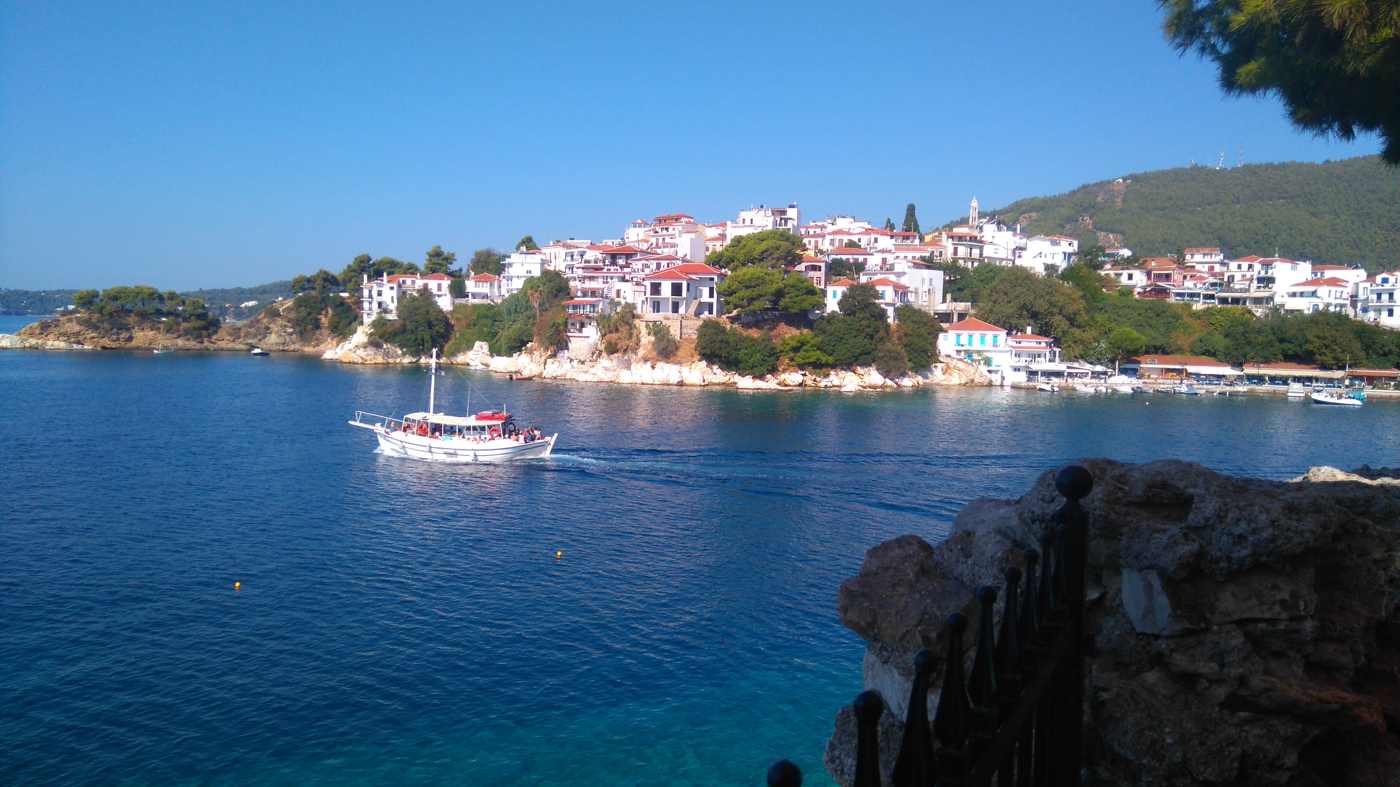
Skiathos restaurants concentrate in three zones: the fish tavernas of the old port. The lanes of Skiathos Town behind Papadiamantis Street. The beach tavernas strung along the 12 km south-coast road. This guide maps each dining area, names the dishes worth ordering, and explains how the island’s eating rhythm shifts from spring to high summer. Plan the whole trip with Greece Tours.
The island feeds visitors well for a place of about 48 square kilometres. Fresh Aegean fish lands at the harbour, slow-baked lamb comes out of village ovens, and honey-drizzled cheese pies follow the Sporades tradition. Waterfront tables watch the Bourtzi, courtyard tables hide under bougainvillea, and beach tables stand steps from the sand.
Where do fish tavernas cluster in Skiathos Town?
Fish tavernas cluster along the old port of Skiathos Town, west of the Bourtzi peninsula, where excursion caiques moor. Tables line the quay, menus lead with the day’s catch, and diners watch boats return through the harbour channel.
The old port forms the western arm of the harbour on Skiathos, separated from the ferry quay by the pine-covered Bourtzi peninsula. Fish tavernas occupy the ground floors of the stone houses facing the water, and their tables spread across the quay under canvas awnings. Excursion boats to Lalaria and the sea caves tie up a step away, so lunch here comes with constant harbour movement. Octopus dries on lines outside the kitchens through the morning. The row runs for about 200 metres, ending near the steps that climb toward the Agios Nikolaos clock tower.
Walkers reach the old port in about five minutes from the bus station at the new port, passing the Bourtzi gardens on the way. Evening diners arrive from around eight, when the quay lights come on.
Menus at the old-port tavernas open with the day’s catch, displayed on ice inside chilled counters near the kitchen door. Red mullet, sea bream, sardines and grouper appear whole, sold by weight and grilled over charcoal with lemon and olive oil. Fried calamari, grilled octopus and mussels in tomato sauce fill the starter pages, alongside taramosalata and fava. Fish soup, built on scorpionfish and vegetables, anchors the cooler months of the season. Staff walk diners to the counter, weigh the chosen fish and quote the kilo rate before cooking. Portions arrive with lemon wedges, boiled greens and bread. Local white wine and ouzo carafes accompany the fish at almost every table, following the standard island pairing.
Squid stuffed with rice and herbs appears on the longer menus in midsummer.
Lunch service at the old port starts around noon, when the morning boat trips return and the quay fills within half an hour. Dinner runs later, with tables turning from about eight until midnight in July and August. Sunset light hits the Bourtzi pines first, then the whole quay glows orange before the harbour lamps take over. Cats patrol the tables, a fixture of every Greek port, and waiters shoo them between courses. The atmosphere stays casual: paper tablecloths, carafe wine and children running along the quay while adults finish coffee. Reserving a front-row table matters on peak evenings, since the water-edge line seats about 30 parties across the whole row.
Back-row tables against the houses free up faster. Morning coffee and yoghurt with honey occupy the same tables before the fish arrives.
The new port side, east of the Bourtzi, serves a different crowd: cafe-bars, gyros shops and pizzerias face the ferry quay and the airport road. Fast food here suits travellers waiting for a hydrofoil rather than diners planning a long evening. Quality fish stays concentrated on the old-port row, where kitchens buy directly from the island boats each morning. A short walk separates the two halves, about 300 metres around the Bourtzi base. The small fishing-boat basin between them supplies the visual proof of freshness that the tavernas advertise. Diners comparing the two sides usually eat fish in the west and drink coffee in the east.
The pattern holds through the whole season, from the first spring boats to the last October tables. Bakeries on the connecting street sell cheese pies for the boat queues.
What dishes define local cooking on Skiathos?
Local cooking on Skiathos centres on grilled Aegean fish, slow-baked lamb, horiatiki salad with island olive oil, and honey-drizzled cheese pies in the Sporades style. Bakeries add tyropita variations, and monastery wine appears on traditional menus.
The honey-drizzled cheese pie stands as the signature Sporades plate, a coiled spiral of thin dough filled with local white cheese, fried until crisp and finished with thyme honey. Skopelos next door claims the most famous version, and Skiathos kitchens serve the same coil across town tavernas and beach restaurants alike. Cooks fry the spiral in olive oil until the edges blister, then pour the honey while the pastry still crackles. The plate works as a starter, a dessert or a mid-afternoon order with cold white wine. Bakeries sell a portable rectangular cousin from the morning trays.
Travellers comparing islands treat the pie as a benchmark, ordering it at each stop across the Sporades chain and judging the dough thickness. Honey from island hives carries pine notes from the forest slopes.
Slow-baked lamb anchors the meat side of island menus, cooked with lemon, oregano and olive oil until it separates from the bone. Kleftiko-style parcels, goat in tomato sauce and rooster with hilopites noodles appear at the traditional tavernas in the lanes and the inland yards. Moussaka, pastitsio and stuffed tomatoes fill the oven-dish counters at lunchtime, cooked in the morning and served at room temperature in the Greek manner. Pork souvlaki and gyros dominate the quick-meal shops near the new port. Grilled lamb chops, sold by the kilo like fish, feed larger tables at the family tavernas.
Winter dishes such as bean soup shrink to a corner of the menu once the summer crowd arrives and demand shifts toward the grill. Local butchers supply the tavernas from the mainland market boats.
Horiatiki salad arrives at nearly every table: tomatoes, cucumber, onion, olives, capers and a slab of feta under dried oregano and island olive oil. Olive groves cover the lower slopes of Skiathos, and the oil they yield reaches the taverna kitchens each autumn pressing. Dakos-style rusk salads, grilled vegetables and stuffed vine leaves round out the vegetable pages. Wild greens, boiled and dressed with lemon, accompany fish as horta in the standard pairing. Courgette fritters and tomato fritters lead the fried starters, alongside tzatziki and fava purée. Summer produce comes from island gardens and the daily boats from Volos, the market city on the facing mainland coast.
Menus shift with the harvest rather than with printed seasons, so the vegetable list changes week by week. Caper bushes grow wild on the harbour walls.
Monastery wine gives the island a drink of its own: the Evangelistria monastery presses grapes from its vineyards and sells the bottles at its shop, and a tasting stop there ranks among the classic things to do in Skiathos. Tavernas pour bulk wine from the mainland in half-kilo and kilo carafes, the standard budget order. Ouzo and tsipouro accompany fish at the old port, served with ice and a water glass. Greek craft beers share fridge space with the national lagers at the beach bars. Freddo espresso rules the daytime cafe scene along the waterfront.
Retsina appears at the older tavernas, and dessert arrives with a complimentary spoon sweet or a shot of local liqueur at family-run kitchens. Wine lists at the modern restaurants add bottles from Greek island vineyards and mainland estates.
Which lanes of Skiathos Town hold the best dinner tables?
The lanes east and west of Papadiamantis Street hold the densest dinner concentration in Skiathos Town, with courtyard tavernas, modern Greek kitchens and rooftop terraces climbing toward the Agios Nikolaos clock tower and its harbour view.
Papadiamantis Street runs as the pedestrian spine of Skiathos Town, from the harbour front to the ring road, and the dining lanes branch off it on both sides. The street itself carries cafes, bakeries and gelato counters rather than full restaurants. Serious kitchens sit one or two turns deeper, where rents drop and courtyards open behind the whitewashed facades. Signboards at the lane mouths list the night’s dishes, and staff stand at the corners guiding diners inward. The grid stays compact: no table in the old quarter lies more than about 400 metres from the waterfront. Evening walkers cover the whole dining quarter in about 15 minutes, reading menus before committing to a courtyard.
Bougainvillea and vine canopies shade the deepest courtyards, and candlelight replaces street lamps after dark.
The clock-tower hill above the old port carries the town’s view tables. Stone steps climb from the quay to the Agios Nikolaos church, and terraces along the way face west over the harbour, the Bourtzi and the evening ferry lights. Kitchens up here lean modern: Greek plates reworked with slow-cooked meats, seafood pastas and composed desserts. Tables on the upper terraces book out first in July and August because the sunset angle clears the rooftops. The climb takes about five minutes at an easy pace, with handrails on the steeper flights. Diners with limited mobility choose the lower lanes instead, since the hill route involves about 100 steps.
The reward at the top is the widest dinner view on the island. Reservations for the view terraces open days ahead in peak weeks.
Courtyard tavernas fill the flat lanes between Papadiamantis Street and the ring road, set in the gardens of old family houses. Menus here read traditional: oven dishes, grilled meats, island pies and daily specials chalked on boards. Whole families run the service, with the cook visible through the kitchen window and grandparents shelling beans at a side table in the afternoon. Prices sit below the waterfront level because the view premium disappears one lane inland. Live Greek music surfaces at two or three of these yards on summer weekends, guitar and bouzouki rather than amplified sets. Portions run large, built for sharing across the table.
Regular visitors return to the same courtyard nightly, and the waiters remember orders by the second evening. Ceiling vines drop grapes over the tables in late summer.
Choosing between the lanes rewards a simple method: walk the full grid once before sitting down. Menus hang at every entrance with dishes and kilo rates listed, so comparison takes minutes. Kitchens displaying the day’s fish on ice signal a seafood focus; chalkboards with oven dishes signal a traditional yard. Crowded courtyards of Greek families mark reliable kitchens, a stronger signal than any sign. The quarter stays safe and lit until the last tables close after midnight in peak season. Streets carry no car traffic inside the pedestrian zone, so children roam freely between courses. Lane names matter little in practice; locals navigate by church, square and bakery, and directions come as landmarks rather than addresses.
Google-map pins lag behind reality here, since courtyards change hands between seasons.
Where do beach tavernas serve lunch along the Skiathos south coast?
Beach tavernas serve lunch along the full 12 km south-coast road, from Megali Ammos at the town edge through Vassilias, Achladies, Kanapitsa, Vromolimnos and Troulos to Koukounaries at the final bus stop.
The south-coast bus line, with stops numbered roughly 1 to 26, strings the lunch tavernas together like beads. Megali Ammos sits within walking distance of town at the first stops, its tavernas built directly onto the sand. Vassilias and Achladies follow, quieter strips where hotel restaurants open to outside diners. Kanapitsa and Vromolimnos on the Kolios headland pair lunch with water-sports stations. Troulos holds a family cluster at stop 20, and Koukounaries closes the line at stop 26 with tavernas behind the pine belt. The pattern repeats along the most visited Skiathos beaches: sunbeds in front, kitchen behind, and a lunch menu that peaks between one and four in the afternoon.
Water taxis from the old port drop swimmers at the same coves, linking town mornings to beach lunches without a car.
Beach-taverna menus favour speed and salt: grilled sardines, calamari, Greek salads, fried potatoes, tzatziki and cold beer carried to the sunbeds. Kitchens post shorter lists than the town restaurants because turnover matters at midday. Fresh fish still appears at the stronger kitchens, displayed on ice and grilled to order for tables under the tamarisks. Sunbed service extends the dining room onto the sand: staff take orders at the umbrella and deliver trays down ramped walkways. Ice-cream freezers and frappe machines handle the mid-afternoon gap between lunch and the evening return to town. Dress codes apply nowhere on the sand; swimwear and a shirt suffice at every beach table.
Bills arrive with fruit or a spoon sweet at the family-run strips. Shade under the tamarisk rows fills first, from about noon onward.
Koukounaries anchors the western end of the lunch coast. Tavernas and canteens stand behind the protected pine forest, set back from the 1,200-metre sand crescent because the reserve rules keep buildings off the beachfront. Walkers cross boardwalk paths from the sunbeds to the kitchens in about three minutes. Banana beach over the headland runs its own beach bars with DJ sets and burger-led menus for a younger crowd. Agia Eleni, facing west, serves quieter tables with sunset views toward the Pelion peninsula. Troulos and Maratha fill the family middle ground with high chairs and shallow-water tables.
Lunch at this end pairs with the number 26 bus or the beach car parks, and the last kitchens close when the final sunbeds empty around sunset. Strofilia lagoon walks fill the gap between lunch and the ride back.
The north coast tells the opposite story: Lalaria has no taverna, no kiosk and no shade, so boat-trip passengers carry water and fruit from town. Aselinos backs its dark sand with a single seasonal taverna at the end of the dirt track through the pines. Mandraki and Elia keep small canteens near the dunes in high season. Kastro beach below the medieval rock serves boat-trip swimmers with a summer canteen at the anchorage. Drivers heading north pack picnics from the town bakeries as backup, since kitchens this side open on shorter seasons and shorter hours. The contrast defines island dining geography: organised lunch south, provisions-in-a-bag north.
Return drives reach the town tavernas in under 30 minutes from every northern cove. Sunset diners time the drive back for the harbour tables.
How does seafood culture shape restaurant menus on Skiathos?
Seafood culture on Skiathos starts at the harbour: island boats land the catch each morning, tavernas buy directly on the quay, and menus change daily around red mullet, bream, octopus, squid and lobster pasta.
Fishing boats work the channel between Skiathos, Skopelos and the Pelion coast, landing the catch at the old-port basin before the tavernas open. Kitchens display whole fish on crushed ice, tagged by type, and sell by weight with the raw fish shown to the table before grilling. Red mullet, sea bream, sea bass, sardines and scorpionfish appear most often; grouper and dentex mark the stronger hauls. Lobster goes into pasta, the celebration plate of the Sporades, cooked with tomato and served over linguine for two. Frozen substitutes appear on menus with a legally required asterisk, so the label separates fresh from imported at a glance.
Reading the counter beats reading the menu: the ice display states what the boats actually brought in. Morning walkers watch the unloading beside the excursion caiques.
Octopus defines the island’s small-plate ritual. Cooks beat the catch on the harbour stones, hang it to dry on lines in the morning sun, then char it over coals and dress it with vinegar and oregano. Ouzo meze culture pairs the octopus with tsipouro or ouzo, olives, grilled bread and salted anchovies at the water’s edge. Marinated gavros, sea-urchin salad and smoked mackerel extend the cold seafood list at the fish-focused kitchens. Mussels arrive saganaki-style in tomato and feta or steamed in wine. Squid splits two ways: fried rings for the beach crowd, whole grills stuffed with cheese and herbs for the evening tables.
The meze format turns a drink into a meal, plate by plate, without a main course ever landing. Sunset ouzo hours run longest at the old-port rail.
Seasons steer the seafood list. Spring brings squid and cuttlefish inshore. Early summer loads the counters with sardines and anchovies at their fattest. Late summer favours the larger bream and the lobster pasta season. Autumn returns the trawl species as the meltemi fades. Rough north winds thin the catch for a day or two, and menus shrink honestly when the boats stay in. August full moons pull calamari boats out at night, their lamps visible from the waterfront tables. Fish prices track scarcity through the season, which is why tavernas quote by the kilo instead of printing fixed plates.
Diners chasing the widest choice eat fish early in the week, before weekend demand empties the ice counters at the strongest kitchens. Grilled sardines stay the reliable constant from June through September.
Ordering fish follows a fixed sequence at the traditional kitchens. Diners walk to the ice counter, point at the fish, watch the weighing and hear the kilo rate before confirming. Smaller fish such as sardines and mullet come priced per portion and skip the scale. Grilling stays the default treatment, with salt, lemon and olive oil the entire seasoning. Requests for fillets mark the tourist; islanders eat fish whole and work around the bones. Fish soup requires a call ahead at the quieter kitchens because the broth cooks for hours. Leftover bread mops the oil-and-lemon pool, the accepted final step.
The ritual repeats identically at the harbour, the beach strips and the courtyard tavernas, one standard across the island. Sharing one large fish between two plates costs less than two portions and eats better.
What separates traditional tavernas from modern restaurants on Skiathos?
Traditional tavernas on Skiathos serve family recipes, carafe wine and kilo-priced fish on paper tablecloths, while modern restaurants plate composed dishes, pour bottled Greek labels and take reservations for terrace seatings above the harbour.
The taverna model runs on family labour and repetition. One kitchen cooks the same 20 to 30 dishes across decades, the recipes inherited rather than developed, and the dining room belongs to the same family as the stove. Menus arrive laminated, wine arrives in metal carafes, and bread lands with the cutlery whether ordered or not. Oven trays cook in the morning, so moussaka and stuffed tomatoes reach the afternoon tables at Greek room temperature by design. Service moves at the family’s pace, and the bill stays handwritten at the older yards. Tavernas dominate the courtyard lanes, the beach strips and the inland crossroads.
The format survives because it feeds four people generously without ceremony, night after night, season after season. Regulars order without menus by the second visit.
Modern Greek restaurants cluster on the clock-tower hill, along the upper lanes and at the marina end of the waterfront. Chefs rework the island canon: lamb cooked for hours and pulled over smoked aubergine, octopus with fava and caper leaves, cheese pie deconstructed into a dessert. Plates arrive composed and portioned for one, a break from the shared-tray taverna habit. Wine lists run to pages, led by Greek grape varieties such as Assyrtiko, Malagousia and Xinomavro. Staff describe dishes table-side and pace the courses. Terraces book out days ahead in July and August, and dinner stretches past two hours by design.
The modern rooms charge more per head and answer a different question: dinner as the evening’s event rather than its fuel. Cocktail pairings open the meal at the newest terraces.
International kitchens fill the gaps between the two Greek poles. Italian restaurants hold the strongest foreign presence, with wood-oven pizza and fresh pasta rooms near the waterfront and along the ring road. Burger bars, sushi counters and Asian-fusion kitchens open around the new port and the club strip, feeding the late crowd. Gyros and souvlaki shops stay the budget baseline, wrapping pork or chicken with tzatziki and fries for a walking dinner. Breakfast cafes serve English plates and pancakes for the charter-flight market alongside Greek yoghurt bowls. Gelato counters punctuate Papadiamantis Street from morning to midnight. The mix tracks the island’s visitor base, and the Greek kitchens still outnumber the foreign ones by a wide margin across town.
Crepe stands join the gelato counters on the evening walk.
Mixing the formats builds the strongest eating week. Taverna lunches after the beach keep costs level and portions honest; one or two modern dinners mark the celebration nights; harbour fish fills the middle evenings. Families lean taverna because children roam courtyards and menus carry pasta and chips without fuss. Couples lean terrace because the view tables seat two by design. Groups split the difference at the meze houses, ordering across the table until the plates cover it. Repeat visitors report the same pattern each season: the tavernas hold the memories, the modern rooms hold the photographs. Budgets stretch further at lunch, when the same kitchens sell smaller plates at day rates.
The island rewards diners who move between all three registers instead of camping in one.
Which vegetarian dishes appear on Skiathos menus?
Vegetarian eating works easily on Skiathos: horiatiki salad, gemista stuffed vegetables, fried courgette, fava purée, gigantes beans, spanakopita, cheese pies and grilled halloumi appear on standard taverna menus across the island without special requests.
Greek taverna cooking carries a deep meat-free layer built on fasting traditions. Gemista — tomatoes and peppers stuffed with rice and herbs — cooks in olive oil, not stock, and counts as a complete plate. Gigantes, the giant baked beans in tomato sauce, deliver the protein course. Briam layers potatoes, courgette and aubergine in the oven tray beside the moussaka. Fava purée from yellow split peas arrives under raw onion and capers. Dolmades wrap rice in vine leaves, though diners confirm the meatless version since kitchens make both. Fried courgette and aubergine chips with tzatziki open most vegetarian orders. The pattern means vegetarians order from the standard menu at every taverna instead of hunting a specialist restaurant.
Cheese pies and saganaki extend the list for lacto-vegetarians at every kitchen on the island.
Vegan diners navigate with two questions: cheese and butter. Most vegetable plates cook in olive oil by default, so gemista, briam, gigantes, fava, dolmades and horta arrive vegan as standard. Feta tops the horiatiki unless the order says otherwise, and the kitchens drop it without complaint. Fasting periods in the Orthodox calendar keep the vegan repertoire alive year-round, since the same dishes feed observant locals. Bread comes oil-based at the bakeries. Dessert narrows to halva, seasonal fruit and spoon sweets. Gluten-free diners lean on grilled fish, salads and rice dishes, and the larger kitchens recognise the request in English. Allergy vocabulary works best written down; waiters pass notes straight to the cook.
Supermarkets in town stock plant milks and tofu for self-catering apartments, filling the breakfast gap.
Courtyard tavernas serve the widest vegetable range because the oven trays change daily with the market. Beach tavernas trim the list to salads, fritters, cheese pies and pasta at midday. Modern restaurants plate dedicated vegetarian mains and mark them on the card, with mushroom orzo and stuffed aubergine as recurring examples. Bakeries on Papadiamantis Street back everything up with spanakopita, tyropita and olive bread from the morning trays. The Evangelistria monastery shop adds honey, preserves and its own wine for apartment breakfasts. Greengrocers near the ring road sell island tomatoes, cucumbers and figs in season. Vegetarians eating across a full week repeat no plate: the rotation of trays, pies and salads covers 14 meals without strain.
Lunch options widen further at the kitchens feeding local workers.
Ordering vegetarian at a taverna follows the meze logic: three or four plates for two people, arriving as the kitchen finishes them. A standard round pairs one salad, one fried plate, one oven tray and one dip with bread. Portions run large, so four plates feed two adults with leftovers. Waiters answer ingredient questions directly and steer orders toward the day’s freshest tray when asked. Children’s defaults — pasta with cheese, chips, fried cheese — appear everywhere without a children’s menu. Breakfast leans on yoghurt with island honey and walnuts at the cafes. The vegetarian bill lands below the fish bill at the same table because vegetable plates skip the kilo scale.
Eating meat-free on the island costs less and sacrifices nothing. Tap water arrives free on request beside the bottled default.
What do bakeries and sweet shops sell on Skiathos?
Bakeries on Skiathos sell tyropita and spanakopita from morning trays, sesame bread rings, olive loaves and honey pastries, while sweet shops add loukoumades, baklava, galaktoboureko, gelato and the almond sweets of the Sporades.
Bakeries open before the cafes, filling Papadiamantis Street and the ring road with the smell of sesame and butter from early morning. Trays of tyropita, spanakopita and sausage rolls come out in rotation until noon, sold by the piece and eaten walking. Koulouri bread rings hang by the till for the cheapest breakfast on the island. Village loaves, olive bread and hard paximadi rusks stock the shelves for beach picnics and apartment kitchens. Bougatsa — custard between filo sheets under icing sugar — draws the longest morning queue. Ferry passengers and boat-trip crowds strip the trays before the nine o’clock departures.
The bakeries stay the island’s budget anchor: a full hand-held breakfast for the price of a coffee elsewhere. Afternoon batches restock the pies for the beach-return crowd around six.
Sweet shops and zacharoplasteia counters carry the syrup classics: baklava layered with walnuts, kataifi in shredded pastry. Galaktoboureko with warm custard. Loukoumades fried to order and drowned in honey and cinnamon. Amygdalota, the almond sweets of the island tradition, sell boxed for gifts alongside candied fruit and spoon sweets in jars. Gelato counters line the pedestrian street with Greek yoghurt, mastiha and pistachio flavours beside the Italian standards. Halva made from semolina appears at the tavernas as the free farewell dessert. Rizogalo rice pudding under cinnamon fills the fridge cabinets. Waffles and crepes feed the late-night walk back from the bars. Ice-cream freezers at every beach canteen extend the sugar supply line to the last bus stop.
Thyme honey from island hives sweetens half the counter.
Edible souvenirs concentrate in the food shops off the main street. Thyme and pine honey from island and Pelion hives fills the shelves in kilo jars. Olive oil from the island groves sells in tins beside mainland labels. The Evangelistria monastery shop, about 4 km north of town, bottles its own wine and packages preserves, herbs and honey from the monastic land. Dried oregano, mountain tea and capers travel well and weigh nothing. Amygdalota boxes survive a flight home where syrup sweets do not. Supermarkets stock the same categories at lower rates for self-caterers. Shops wrap glass for luggage on request.
The strongest food gift from the island pairs a honey jar with a bottle of the monastery wine. Airport security allows sealed jars in checked bags only.
Coffee culture frames the sweet stops. Freddo espresso and freddo cappuccino rule the summer counters, shaken over ice and carried to the harbour benches. Greek coffee, boiled in a briki and served with a water glass, holds the morning slot at the traditional kafeneia where older islanders play backgammon. Cafe terraces along the waterfront charge for the view and stay full from breakfast to midnight. Loukoumades pair with coffee as the standard afternoon order. Frappe, the instant-coffee original, survives at the beach canteens. Cafes double as bars after dark, switching menus at sunset without moving a chair. A coffee-and-pie circuit — bakery, bench, harbour — costs less than any sit-down breakfast and delivers the island’s best people-watching.
Iced-coffee cups outnumber beer glasses on the quay until early evening, when the ratio flips.
How does the evening dining scene unfold in Skiathos Town?
Evening dining in Skiathos Town starts with sunset drinks above the old port around seven, moves to dinner tables between eight and ten, and hands over to the bar lanes and club strip after midnight.
The evening opens with the volta, the Greek promenade, along the waterfront from the new port to the Bourtzi. Cafe-bars on the steps above the old port pour the sunset round, their terraces facing west over the harbour mouth. Aircraft descending toward the runway cross the view at eye level, the island’s signature aperitif entertainment. Shops on Papadiamantis Street stay open through the walk, so browsing and drinking interleave until dinner. The Bourtzi peninsula itself offers free benches under the pines for travellers skipping the terrace bill. Light holds until well after nine in midsummer, stretching the pre-dinner hour.
Dinner reservations at the view terraces anchor to sunset, and the earliest tables fill with families before the couples arrive. Street musicians work the harbour corners through the peak weeks.
Dinner runs late by northern standards. Greek families sit down between nine and ten, and kitchens serve past midnight in July and August. Visitors eating at seven find empty rooms and the fastest service of the night. The old-port fish row, the courtyard lanes and the clock-tower terraces all peak in the same ten-to-eleven window, when the whole town eats at once. Tables turn slowly because Greek dinners stretch: starters, mains, wine and the free dessert unfold across two hours. Waiters never bring the bill unasked; the table belongs to the diners until they signal. Children stay up with the adults, asleep in strollers beside the last courses. The rhythm resets nightly for the whole season.
Booking apps cover a fraction of the kitchens; phone calls and walk-ups still fill the town.
Dinner hands over to Skiathos nightlife in stages. Cocktail bars in the lanes absorb the first wave after eleven, mixing drinks under the bougainvillea two doors from the dinner tables. The steps above the old port hold the conversation crowd until the early hours. Club energy concentrates along the airport ring road toward Ammoudia, where the music venues run until sunrise in peak weeks. Bar streets and dinner lanes overlap physically, so the town never splits into separate zones. Tavernas close their kitchens around midnight and clear tables as the bars fill. Late eaters land at the gyros counters near the new port, the only kitchens serving after two.
The circuit ends where the evening began, back on the waterfront with the harbour lights. Taxis queue at the new port through the changeover.
Quieter evenings exist alongside the party circuit. The upper town above the clock tower holds residential lanes where courtyard tavernas serve at conversation volume. Megali Ammos, a 15-minute walk west, lines its sand with dinner tables that face the town lights across the bay. The Bourtzi cultural venue stages summer performances on the water with the harbour as backdrop. Early diners at six share the rooms with the staff meal and eat in near silence. June and September evenings drop the volume across the whole town while keeping every kitchen open. Couples seeking the quietest tables walk five minutes uphill from the harbour; noise fades with elevation, and the view improves with every step.
The town serves both temperaments simultaneously every night of the season. Gelato closes the quiet route home.
How does the restaurant season change on Skiathos from spring to autumn?
The restaurant season on Skiathos builds from a spring opening around Easter, peaks in July and August when booking ahead matters, and winds down through October as beach kitchens close before the town tavernas.
Spring opens the season gently. Town tavernas unshutter around Orthodox Easter, repaint their chairs and serve the first lamb of the year to returning islanders. Beach kitchens follow through May as the sunbed licences activate along the south coast. Menus run short in the early weeks while suppliers restart the boat deliveries from Volos. Tables sit half-empty, service runs unhurried, and cooks talk to diners between courses. Spring produce — artichokes, broad beans, wild greens — reaches the trays before the tourist standards crowd them out. Walkers coming off the island trails fill the lunch rooms.
The whole dining map operates by late May at reduced intensity: every area open, no queue anywhere, and the year’s most relaxed service on both coasts. Hotel restaurants open last, tied to the charter-flight calendar.
July and August flip the equation. Every kitchen on the island runs at capacity, staff double, and the old-port fish row seats by reservation on the peak evenings. Walk-up diners wait at the popular courtyards from nine onward, so the workaround is eating early or booking a day ahead. Beach tavernas ration sunbed service at the height of lunch. Kitchens hold quality under pressure unevenly: the family-run rooms keep their standards, while the seasonal pop-ups cut corners at full volume. Heat pushes dinner later, with the ten o’clock seating the most contested of the night. Prices reach their annual high across categories. The meltemi cools the terrace evenings without emptying them.
The crowd thins abruptly in the final August week as Greek holidays end. Reservations matter most at the view terraces.
September delivers the connoisseur’s dining month. Sea temperature holds, kitchens stay fully staffed, and the reservation pressure evaporates within the first two weeks. Fish counters stay loaded as the meltemi fades and the boats work longer. October begins the shutdown from the beaches inward: Koukounaries and the west-end canteens close first, the mid-coast strips follow, and the town keeps serving until the month’s end. The final weeks bring shortened menus, closing-down generosity and the staff eating at the front tables. Charter flights stop, and the dining map contracts to the year-round core in Skiathos Town. Winter leaves a skeleton of tavernas, grills and bakeries feeding the resident population through the rain. The cycle restarts with the Easter whitewash.
Autumn diners get summer menus at spring pace.
Season-matching sharpens a food-focused trip. Diners chasing atmosphere and the full menu range book July; diners chasing quality-to-effort ratio book June or September; diners chasing empty courtyards and cook conversations book May or October. Boat-trip lunches at Tsougria and the north-coast canteens require the June-to-September core, since the water taxis and seasonal kitchens bracket their season tightly. Festival plates appear around the Panagia feast in mid-August, when the whole island eats at once and unbooked tables vanish. Easter delivers the year’s single strongest food day: lamb on spits, red eggs and open doors across the town. Every month serves the bakeries and the year-round grills regardless. The kitchen calendar rewards planning more than the beach calendar ever does.
Ferry-only winter visits still find hot food at the harbour grills.
Frequently Asked Questions
Do Skiathos restaurants require reservations in high summer?
Reservations matter at three kinds of table in July and August: the clock-tower view terraces, the front row of the old-port fish tavernas, and the modern restaurants with tasting-style menus. These book out one to three days ahead on peak evenings. The rest of the island seats walk-ups all season: courtyard tavernas hold big floors and turn tables continuously. Beach tavernas run on sunbed traffic. The gyros and pizza counters never take bookings at all. Timing substitutes for booking — tables at eight sit far emptier than tables at ten, since Greek diners eat late. Groups of six or more phone ahead everywhere, because large tables are the scarce resource, not seats.
June and September drop the pressure to zero across every category, and spring diners walk into any room on the island. Booking platforms cover only a slice of the kitchens; a phone call or an afternoon walk-past secures most tables. Hotel desks make the call for guests without Greek.
What fish do Skiathos tavernas serve fresh from the boats?
Red mullet, sea bream, sea bass, sardines and scorpionfish lead the fresh counters, landed by boats working the channel between Skiathos, Skopelos and the Pelion coast. Grouper and dentex appear on the stronger days and sell first. Sardines and anchovies give the cheapest fresh order, grilled by the portion rather than weighed. Octopus and squid come off the same boats and anchor the meze lists. Lobster goes into the celebration pasta, cooked with tomato and priced by weight for two. Scorpionfish disappears into fish soup at the traditional kitchens. The reliable test is the ice counter: fresh fish lies whole on crushed ice with clear eyes and red gills.
Staff show the raw fish to the table before cooking. Menus mark frozen items with an asterisk under Greek labelling rules, so the card itself separates the boat catch from the imports. Whatever the counter holds beats whatever the menu promises, on any day of the season.
Is the honey cheese pie from Skiathos or Skopelos?
Skopelos owns the famous name. The twisted. Fried cheese pie is documented as a Skopelos tradition. And Skiathos serves the same spiral across its own tavernas as a shared Sporades inheritance. The pie wraps local white cheese in a thin dough coil, fries it in olive oil until the ridges crisp. Finishes it with thyme honey poured over the hot pastry. Kitchens on both islands argue lineage; the dough, the frying and the honey stay identical across the strait. On Skiathos the pie appears as a starter at the courtyard tavernas, a dessert at the fish rooms and a boxed rectangle at the bakeries.
Day-trippers on the Skopelos boat tours taste both versions in a single day and return with a verdict of their own. Ordering it twice — once fried to order in a taverna, once from a bakery tray — shows the full range. The honey matters most: island thyme honey turns the plate from pastry into the Sporades signature.
How much does eating out on Skiathos cost?
Costs on Skiathos scale by zone rather than by dish. Bakeries and gyros counters form the budget floor, feeding one person a full meal for the price of a waterfront coffee. Courtyard tavernas occupy the middle: shared starters, oven dishes and carafe wine keep a two-person dinner moderate by Greek-island standards. Fresh fish sets the ceiling, priced by the kilo at rates that shift with the day’s catch, and a whole large fish for two costs more than any land-based main. View terraces and modern tasting rooms add a location and labour premium on top. The same kitchen charges less at lunch than at dinner for smaller day plates.
July and August mark the annual price peak; June and September trim it; spring and autumn trim it further. Skiathos runs costlier than Skopelos next door and cheaper than the headline Cyclades islands. Asking the kilo rate before the fish hits the grill prevents every common bill surprise.
What time do restaurants serve dinner on Skiathos?
Kitchens open for dinner around seven and serve past midnight in July and August, with the Greek peak landing between nine-thirty and eleven. Diners arriving at seven or eight find quiet rooms, immediate seating and the fastest kitchen times of the night. Families with children use that early window across the island. The old-port fish row, the courtyard lanes and the clock-tower terraces all crest in the same late window, when the whole town eats simultaneously and service slows to the Greek rhythm. Lunch runs from about noon to four at the beach tavernas and town kitchens, followed by a genuine afternoon lull when kitchens rest even if terraces keep pouring coffee.
Gyros counters near the new port bridge every gap, serving from midday until after two in the morning at peak season. Shoulder months compress the schedule: last orders move toward eleven in June and September and toward ten in the spring and autumn margins.
Are Skiathos restaurants good for families with children?
Families fit the island’s dining culture without adjustment. Greek tavernas treat children as default guests: courtyards give them room to move, kitchens serve pasta. Chips, meatballs and fried cheese from the standard menu. Waiters bring child portions on request. High chairs stand ready at the family strips of Troulos, Achladies and Vassilias, where beach tavernas feed swimsuited children steps from shallow water. The early dinner window at seven suits small children and meets empty, fast-serving rooms. Strollers roll flat along the whole waterfront and through the pedestrian spine, though the clock-tower steps block wheels on the view-terrace route. Greek families keep their own children at the table past eleven, so late-dining visitors draw no attention.
Ice cream from the street counters resolves every negotiation on the walk home. The only true child-hostile territory is the club strip after midnight; every other table on the island expects and absorbs children as a matter of course. Water-taxi rides to beach lunches double as the day’s entertainment.
Where do locals eat on Skiathos?
Locals eat away from the front row. Year-round grills and tavernas near the ring road, the upper town and the inland crossroads feed the resident population, identifiable by Greek-only chatter, handwritten bills and televisions showing football. The old kafeneia hold the morning crowd over Greek coffee and backgammon. Workers lunch at the oven-tray kitchens that cook one daily menu and sell out by three. Sunday lunch pulls island families to the village-style yards outside town, where whole tables share grilled meats for hours. In winter the dining map shrinks to exactly these rooms, which is the strongest proof of their standing.
Visitors find them by walking one street past the last English-language menu and choosing the room with Greek families inside. The kitchens charge less, portion larger and change dishes with the market rather than the tourist calendar. Fish stays the exception: locals buy it from the boats and grill it at home, leaving the taverna fish rows to the visitors.