
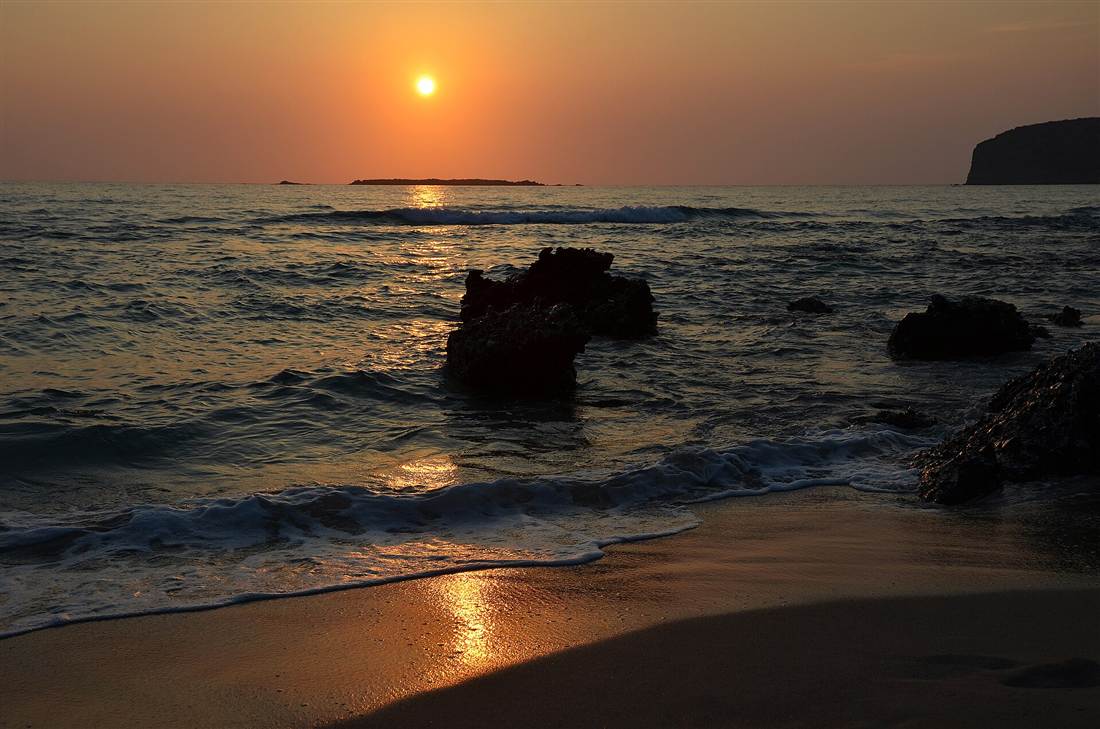
Sfinari beach is a quiet grey-pebble beach below Sfinari village on the far west coast of Chania, about 55 kilometres west of Chania in Crete, tamarisk-shaded and famous for its sunsets and its family fish tavernas on the sand. Plan the whole trip with Greece Tours.
This guide covers Sfinari beach in full: what and where it is, the long grey-pebble shore and clear water, why it draws sunset lovers, whether it is organised or wild, the beachfront tavernas, whether it suits families and peace-seekers, the nearby Falassarna and the Gramvousa peninsula, how to reach it from Chania, the best time, and whether Sfinari beach is worth visiting.
What is Sfinari beach in Crete?
Sfinari beach is the quiet grey-pebble shore below Sfinari village on the far west coast of the Chania region, about 55 km west of Chania town. Tamarisk trees shade its back edge, and it faces the open Libyan-Cretan sea for a famous sunset.
Sfinari sits at the foot of a broad open bay on the seldom-travelled western edge of Crete, in the Kissamos district of the wider Chania region. The village of Sfinari climbs the hillside above; the beach lies at the bottom of the valley where the road meets the water. Grey pebbles, coarse sand and a screen of tamarisk trees define the shore.
The bay draws travellers who want space and calm rather than sunbed rows and loud bars. A short line of family tavernas stands on the sand at the northern end, and the rest of the shore runs wild and empty toward the cliffs. The water deepens fast and stays clear, and the west-facing horizon turns the whole beach gold at dusk.
Where is Sfinari and how far is it from Chania?
Sfinari lies on the west coast of Crete, about 55 km west of Chania town, below the village of Kambos. The drive runs west past Kissamos and climbs into the mountains before the winding descent to the shore, and it takes about 75 minutes by car.
From Chania the route heads west along the north coast toward Kissamos, then turns south onto the mountain road that traces the wild western edge of the island. The road passes through Platanos and Kambos, both perched high above the sea, before it drops in tight bends to the Sfinari valley floor.
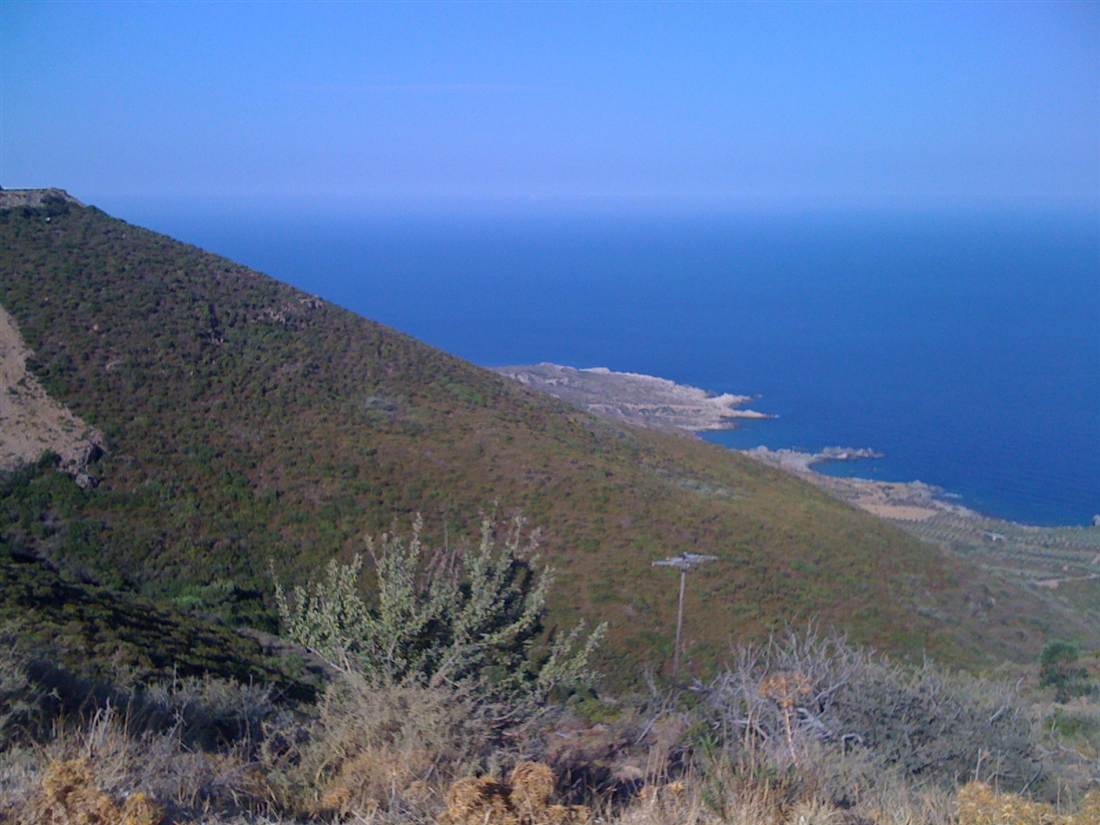
The final descent delivers wide views over the bay and the open water beyond. Sfinari marks one of the last inhabited stretches before the coastline breaks into the cliffs and gorges of Crete’s south-western corner. The distance and the mountain drive keep the crowds away and reward the journey with a beach that stays quiet through the day.
What is Sfinari beach like?
Sfinari is a long open shore of grey pebbles and coarse sand, backed by tamarisk trees and edged by clear deep water. The bay lies exposed to the west, so the sea sparkles bright by day and the mood stays wild, calm and uncrowded.
The shoreline stretches for a good distance along the bay, wide enough that visitors spread out and keep their own patch of sand. The pebbles give way to sand in places at the waterline, and the entry drops off within a few steps, so the water turns deep blue close to shore. Snorkellers find rock and clear sightlines at the bay’s edges.
Tamarisk trees line the back of the beach and throw natural shade over the pebbles through the hottest hours. Away from the tavernas at the north end, the shore runs bare and untouched, with driftwood, rock and the sound of the swell. The exposed position brings afternoon breeze and, on windier days, real waves, so the sea shifts its character with the weather.
Why is Sfinari famous for sunsets?
Sfinari faces due west across open sea, so the sun drops straight into the water in front of the beach. The golden hour floods the pebbles and the tamarisks with warm light, and the beachfront tavernas serve dinner on the sand as the sky burns orange and red.
Few beaches in Crete look out over unbroken sea to the west the way Sfinari does. No headland or island blocks the horizon, so the full arc of the setting sun plays out over the water and reflects across the whole bay. The light warms the grey pebbles to bronze in the last hour of the day.
The tavernas time their evenings to the sunset. Tables sit on the sand a few steps from the waterline, and diners eat fresh fish and Cretan dishes while the sky turns. This ritual of a slow sunset dinner on the beach draws travellers who drive the mountain road specifically to end the day here.
Is Sfinari beach organised or wild?
Sfinari is mostly wild, with one organised pocket. The northern end carries a short line of beach tavernas that set out sunbeds and umbrellas, while the long stretch of shore beyond runs untouched, with only tamarisk shade, pebbles and open sea.
At the north end, where the road meets the sand, the family tavernas provide sunbeds, umbrellas and easy access to food, water and shade. This compact organised zone suits visitors who want a lounger and a lunch within reach. It stays modest in scale and never spreads into the rows of a resort beach.
Walk south from the tavernas and the beach empties out. The shore turns wild, backed by tamarisks and open to the sea, with no facilities and no crowds. This split gives Sfinari its balance: a small comfortable base at one end and a long stretch of raw west-coast coastline for anyone who wants solitude.
Where do you eat at Sfinari beach?
The family fish tavernas on the sand at the north end of Sfinari serve the day’s catch, grilled goat and Cretan mountain food. Tables stand a few steps from the water, and the kitchens cook fresh fish, horta, salads and local dishes for lunch and the sunset dinner.
Sfinari’s tavernas belong to families rooted in the village, and they cook from the sea and the surrounding land. Fishermen land fresh fish and octopus for the grill, and the menus carry Cretan staples: wild greens, tomato salad with local cheese, slow-cooked goat and lamb, and village bread with olive oil pressed nearby.
Dining sits at the heart of a Sfinari visit. Guests settle at tables on the sand, order the catch of the day, and stay through the golden hour into dusk. The pace is slow and the setting plain and honest, and the food carries the flavour of the western mountains and the sea in front of the table.
Is Sfinari good for families or peace-seekers?
Sfinari suits families and peace-seekers alike. The calm quiet bay, the tamarisk shade and the tavernas at the north end give families food and comfort, while the long wild shore beyond delivers the solitude that travellers who want an empty beach come for.
Families find the north end welcoming: sunbeds, umbrellas, taverna kitchens and shade sit close together, and the water at the shore stays clear for a swim. The deep entry means young children need watching in the sea, but the sheltered corner near the tavernas gives a calm base for a family day.
Peace-seekers head for the wild stretches south of the tavernas, where the beach empties and the only sounds are the swell and the wind in the tamarisks. The remote setting, the mountain drive and the small scale of the place keep numbers low, so Sfinari stays a refuge for anyone escaping the busy north-coast resorts.
What is near Sfinari to visit?
Kambos village sits directly above Sfinari on the mountain road. North lies Falassarna with its wide golden sand, and the Gramvousa peninsula with its lagoon. South stand the Chrysoskalitissa monastery and the pink-sand islet of Elafonisi, all within reach for a day of exploring the west coast.
Kambos crowns the hillside above the beach and offers views back over the bay and its own quiet cove below. To the north, the west-coast road leads to Falassarna beach, a broad sweep of golden sand famous for its own sunsets, and on to the Gramvousa peninsula with its Venetian fort and turquoise Balos lagoon.
South of Sfinari the coastline runs toward the whitewashed Chrysoskalitissa monastery, perched on its rock above the sea, and the celebrated pink-and-white sands of Elafonisi at Crete’s south-western tip. Together these sights turn Sfinari into a natural base for touring the wild west of the island, and the full run of shoreline appears on the guide to Chania beaches.
How do you get to Sfinari from Chania?
You reach Sfinari by car on the roughly 55 km west-coast route from Chania. The drive runs west past Kissamos, then climbs the mountain road through Platanos and Kambos before the winding descent to the beach. A car is essential, and the trip takes about 75 minutes.
From Chania the road heads west toward Kissamos, then turns onto the coastal mountain road that hugs the western edge of the island. The route climbs high above the sea through Platanos and Kambos, with long views over the water, before it drops in tight switchbacks to the Sfinari valley and the shore.
Public transport to this remote corner runs thin, so a hire car or a private transfer is the practical way to arrive. The winding descent demands care but rewards the driver with sweeping views of the bay. Fuel up in Kissamos before the mountain stretch, since services grow scarce along the western coast.
When is the best time to visit Sfinari?
Summer delivers the classic Sfinari experience: a warm sunset dinner on the sand and calm mornings for a swim. The shoulder months of late spring and early autumn bring softer heat, emptier shores and the same golden sunsets, and they suit travellers who want the beach almost to themselves.
In high summer the sea sits warm and the tavernas run full through the golden hour, so an evening arrival for a sunset dinner defines the visit. Mornings stay calm before the afternoon breeze picks up, which makes the early hours the time for a quiet swim in clear water and a stretch of shade under the tamarisks.
Late spring and early autumn strip away the crowds while the light stays golden and the sea stays swimmable. The exposed bay catches afternoon wind, so a check of the forecast steers the timing: calm days bring flat clear water, and windy days bring waves and a wilder mood to the shore.
What is the swimming and water like at Sfinari?
The water at Sfinari runs clear and turns deep blue within a few steps of the pebble shore. The bay drops off fast, so strong swimmers get depth close in, while the sheltered corner by the tavernas gives calmer water for a gentle swim.
The pebble-and-sand bottom keeps the sea transparent, and the quick drop to depth suits confident swimmers who want to strike out from the shore. Rocks at the bay’s edges hold small fish and give snorkellers clear sightlines through the blue water.
The open west-facing position means the sea answers to the wind. On calm mornings the water lies flat and glassy for an easy swim; on breezy afternoons the swell builds and the shore turns lively, so timing the swim to the wind brings the best of the bay.
Is Sfinari beach worth visiting?
Yes. Sfinari rewards the drive with a quiet, wild west-coast beach, a screen of tamarisk shade, clear deep water and one of the finest sunset dinners in Crete. Travellers who want space, honest food and an unspoilt shore find all of it here, 55 km west of Chania.
The remote setting and the mountain drive turn away the crowds that fill the north-coast resorts, and that is the point of Sfinari. The reward is a long open shore where visitors spread out, a small line of family tavernas that cook the day’s catch, and a horizon built for the sunset.
For a day that ends with grilled fish on the sand as the sun drops into the sea, Sfinari stands among the west coast’s finest choices. Pair it with Falassarna, Elafonisi or the Gramvousa peninsula for a full tour of wild western Crete, and let the quiet grey-pebble bay close the day in gold.
Frequently Asked Questions
What is Sfinari beach in Crete?
Sfinari beach is a quiet grey-pebble-and-sand beach below Sfinari village on the far west coast of Crete, about 55 kilometres west of Chania. Tamarisk trees shade the shore, family fish tavernas sit on the sand, and the west-facing open sea makes it a sunset favourite.
Why is Sfinari famous for sunsets?
Sfinari faces the open sea to the west, so the sun sets straight over the water beyond the beach. Diners linger at the tavernas on the sand for the golden hour, one of the finest sunset spots on the west coast of Crete.
How do you get to Sfinari from Chania?
Sfinari lies about 55 kilometres west of Chania, beyond Kambos on the west-coast road, a drive of over an hour with a winding descent to the shore. A hire car reaches it best, as buses to the far west are sparse.