
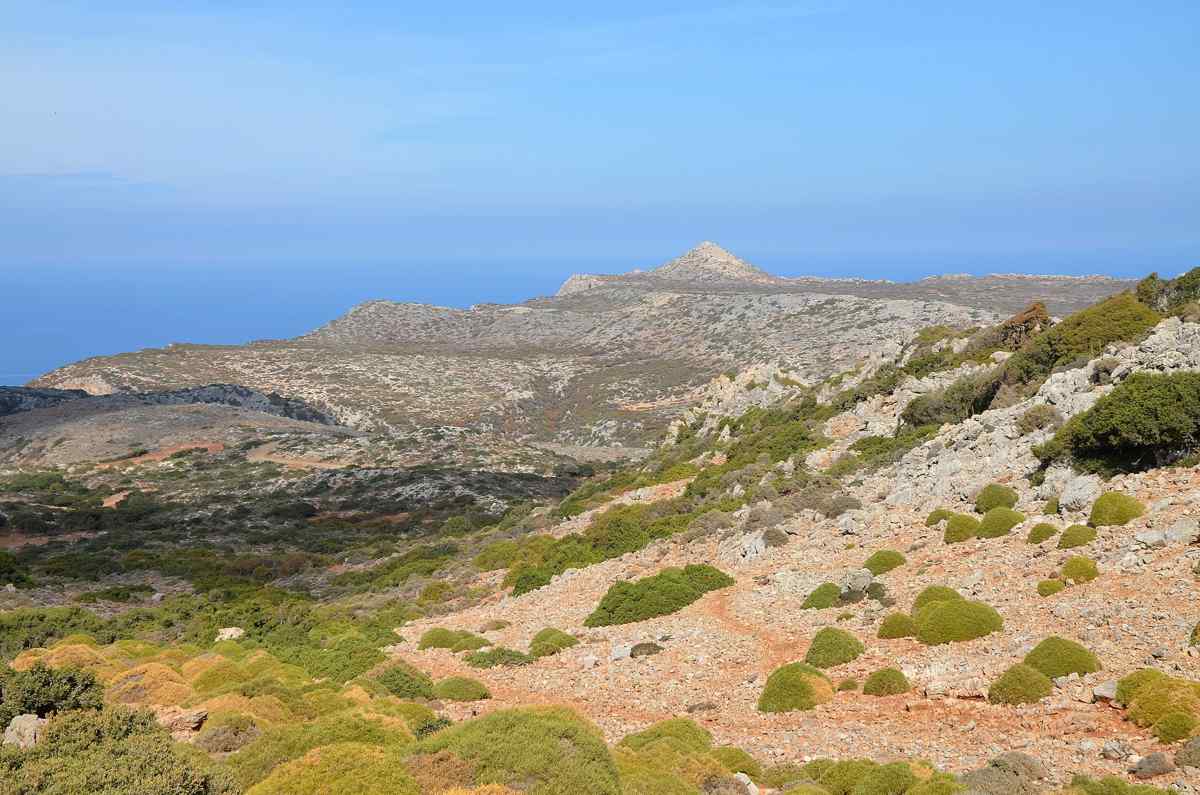
The Rodopou Peninsula stretches north into the Cretan Sea like a wild, barren finger of rock and scrub, untouched by the tourism that defines much of the island’s coast. This remote cape west of Chania offers no tavernas, no beaches with sunbeds, no paved roads leading to picture-perfect coves. Instead, rough tracks wind through treeless hills grazed by sheep, past Byzantine chapels and towards the ancient sanctuary of Diktynna at the northern tip. Travellers who venture here find true wilderness, solitude, and a glimpse of Crete as it was before the modern world arrived. Discover this forgotten corner with My Greece Tours.
Reaching Rodopou demands preparation: four-wheel-drive vehicles, sturdy boots, ample water, and respect for the unforgiving terrain. The peninsula rewards the effort with archaeological treasures, pilgrimage sites, and landscapes unchanged for centuries. The sections below cover the sanctuary at the cape’s tip, the interior tracks and chapels, practical access advice, and how this remote finger of land fits into the wider region. Our Crete travel guide offers context for exploring the island’s lesser-known corners beyond the usual itineraries.
What makes the Diktynna sanctuary significant in Crete?
Diktynna was a major temple dedicated to a Cretan goddess, positioned at the peninsula’s northern tip. The sanctuary drew worshippers in antiquity and remains accessible by rough track or boat, standing as testament to pre-Roman religious life.
The sanctuary of Diktynna occupies a dramatic clifftop position where the peninsula meets the open sea, surrounded by nothing but rock, wind, and waves. Ancient pilgrims travelled overland or arrived by boat to worship the goddess associated with hunting and mountains, a deity whose cult predated the classical Greek pantheon. Ruins visible today include temple foundations, terraces, and cisterns carved into the living rock, evidence of the site’s importance over centuries. The location itself inspires awe: sheer drops to turquoise water below, views across to the Gramvousa islets, and absolute isolation.
Reaching Diktynna requires either a bone-rattling drive along the peninsula’s spine or a boat trip from coastal villages, making every visit an expedition rather than a casual stop on a sightseeing circuit.
The goddess Diktynna appears in Cretan mythology as a nymph who leapt into the sea to escape pursuit, saved by fishermen’s nets, her name deriving from the word for net. Her sanctuary became a pilgrimage destination and later attracted Roman attention, with the site continuing in use into early Christian centuries. Today the ruins stand largely unguarded and uninterpreted, offering visitors the rare chance to explore an ancient sacred site without crowds or commercialisation. The journey to Diktynna ranks among the most adventurous things to do in Crete, combining archaeology, wilderness, and the satisfaction of reaching a place that remains genuinely remote despite the island’s popularity with travellers seeking easier pleasures along the northern coast.
How do you navigate the interior tracks and chapels of Rodopou in Crete?
Rough, mostly unpaved tracks cross the empty interior, passable only with four-wheel-drive vehicles or on foot. Stone chapels dot the landscape, including Agios Ioannis Gionis, which hosts a major pilgrimage each August despite the peninsula’s isolation and lack of facilities.
The main track running north from the peninsula’s base climbs through hills stripped of trees by wind, salt spray, and centuries of grazing. Sheep wander freely across the landscape, their bells the only sound breaking the silence. Stone chapels appear at intervals, whitewashed against the grey-brown hillsides, built by shepherds and villagers over generations. The chapel of Agios Ioannis Gionis lies deep in the interior, a simple structure that draws hundreds of pilgrims each August for its feast day, transforming the deserted peninsula into a temporary community. Reaching these chapels requires navigation by landmarks rather than signposts, with tracks branching and rejoining in patterns that make sense only to locals who know every fold of the terrain.
Walkers tackle the peninsula on foot, carrying all water and supplies for journeys that can stretch to eight or ten hours return from Kolymbari at the base. The treeless landscape offers no shade, making early starts essential in summer months when temperatures soar and the sun reflects mercilessly off pale rock. Four-wheel-drive vehicles manage the worst sections of track, though even they struggle after winter rains turn the route into a boulder field. The peninsula’s emptiness becomes its greatest appeal: no facilities means no crowds, no development, no compromise with the wilderness that defines this finger of land jutting into the sea north of Chania and the gentler coastline to east and west.
What coastal features exist around the Rodopou Peninsula?
The village of Afrata on the peninsula’s eastern shore offers a small pebble cove, the only real beach access. Kolymbari sits at the base where the cape meets the mainland, serving as the gateway settlement for expeditions north into the wilderness.
Afrata clings to the peninsula’s eastern flank, a tiny settlement with a handful of houses and a modest pebble beach tucked into a cove. The village serves as a reminder that people have wrested a living from this harsh landscape for generations, fishing the waters and grazing animals on the sparse vegetation inland. The cove offers swimming in clear water but no amenities, no tavernas, no organised facilities of any kind. Kolymbari, by contrast, functions as a proper village at the peninsula’s southern base, with shops, accommodation, and the infrastructure needed by travellers preparing to venture north. The monastery of Gonia stands just outside Kolymbari, its fortified walls and museum providing cultural context before the wilderness begins.
The peninsula’s western coast drops steeply to the sea with few landing points, while the eastern shore facing Kissamos Bay offers slightly gentler topography but remains largely inaccessible by road. Boat trips occasionally round the cape, allowing views of Diktynna from the water and access to coves unreachable overland. The contrast with nearby Balos lagoon and Falassarna beach could hardly be sharper: where those destinations draw thousands with their beauty and accessibility, Rodopou repels casual visitors with its difficulty and emptiness, preserving a landscape that belongs to shepherds, pilgrims, and the truly determined rather than the beach-going majority who define Cretan tourism along the developed northern coast.
Who should attempt visiting the Rodopou Peninsula?
The peninsula suits four-wheel-drive owners, experienced hikers, and travellers seeking genuine wilderness. It demands self-sufficiency: no facilities, little shade, no reliable water sources. Casual visitors expecting easy access and amenities should look elsewhere along Crete’s more developed coastline.
Rodopou attracts a specific type of traveller: those who value solitude over comfort, who find satisfaction in reaching difficult places, who understand that wilderness means accepting risk and discomfort. Four-wheel-drive enthusiasts relish the challenge of the rough tracks, testing their vehicles and navigation skills on terrain that defeats ordinary cars within the first few kilometres. Hikers with experience in waterless environments pack sufficient supplies and start early, knowing that retreat becomes harder with every kilometre north. Photographers seek the stark beauty of treeless hills meeting blue sea, the play of light on ancient stones at Diktynna, the geometry of whitewashed chapels against barren slopes.
The peninsula offers none of the easy pleasures that define mainstream tourism: no cold drinks at convenient intervals, no shaded rest stops, no rescue if things go wrong.
Families with young children, elderly travellers, and those expecting facilities should absolutely avoid Rodopou in favour of the island’s accessible attractions. The peninsula’s appeal lies precisely in its difficulty and emptiness, qualities that make it one of the genuine hidden gems in Crete for those equipped to appreciate such places. Mobile phone coverage disappears beyond the first few kilometres, GPS becomes essential for navigation, and the nearest help lies hours away by foot or rough track. This isolation, forbidding to most, becomes the peninsula’s greatest asset for those who understand that true wilderness requires respect, preparation, and acceptance that nature owes visitors nothing in the way of comfort or convenience on this wild finger of land.
How does Rodopou fit into exploring western Crete?
The peninsula offers a wilderness counterpoint to the region’s popular beaches and towns. It lies within reach of Chania and Kissamos but demands a full day’s commitment, rewarding those who balance easier coastal pleasures with this challenging inland expedition.
Western Crete presents extraordinary variety within a compact area: the elegant Venetian harbour of Chania, the pink sands of Balos, the long beach at Falassarna, the Samaria Gorge, and the quieter villages of the Kissamos region. Rodopou adds a dimension missing from this list: genuine wilderness, a place where human presence remains minimal and the landscape unchanged by tourism. Travellers basing themselves in Chania or Kissamos can tackle the peninsula as a day expedition, departing early with full supplies and returning exhausted but satisfied.
The contrast with a day spent at a beach taverna or exploring a picturesque village makes the effort worthwhile, providing perspective on how rare true emptiness has become on an island that welcomes millions annually.
The peninsula also offers historical depth, connecting ancient sanctuary worship, Byzantine chapel building, and continuing pilgrimage traditions into a narrative that spans millennia. This layering of human activity across time, all within a landscape that resists permanent settlement, creates a sense of continuity rare in modern Crete. Visitors who allocate time for Rodopou alongside the region’s easier attractions gain a more complete picture of the island’s character: not just beaches and archaeology and mountain villages, but also the wild places that remain beyond the reach of development, where sheep still outnumber people and the journey matters as much as the destination at the northern tip where ancient stones meet the open sea.
Frequently Asked Questions
Can you drive to Diktynna sanctuary or must you hike?
Four-wheel-drive vehicles can reach Diktynna via the rough track that runs the length of the peninsula, though the journey tests both vehicle and driver with rocks, ruts, and steep sections that become impassable after rain. The drive takes two to three hours one way from Kolymbari, depending on conditions and how often you stop to check the route. Ordinary cars will suffer damage within the first few kilometres and should not attempt the journey. Hiking remains the alternative, a full-day expedition of eight to ten hours return that requires fitness, navigation skills, and sufficient water for the treeless, shadeless route.
Boat trips from coastal villages offer a third option, weather permitting, delivering visitors directly to the sanctuary’s clifftop position without the overland struggle. Each approach has merit: driving allows flexibility and carrying supplies, hiking provides intimacy with the landscape, and boats offer dramatic sea-level perspectives of the cliffs and ruins that landlubbers miss entirely.
Is there any accommodation or food available on the Rodopou Peninsula?
The peninsula offers absolutely no commercial facilities: no hotels, no rooms to rent, no tavernas, no shops, no cafes, no water sources you can rely upon. Afrata has a few houses but no tourist infrastructure, and the interior remains completely uninhabited except for shepherds who move through seasonally. Travellers must carry all food, water, and supplies from Kolymbari or other base villages, planning for self-sufficiency throughout their visit. This absence of facilities defines the peninsula’s character and preserves its wilderness quality, but it also means that inadequate preparation can turn dangerous quickly under the Mediterranean sun.
Kolymbari at the peninsula’s base provides the last chance to stock up, with supermarkets, bakeries, and tavernas serving as staging points for expeditions north. The monastery of Gonia near Kolymbari sometimes offers hospitality to pilgrims, though this cannot be assumed. The lack of amenities keeps visitor numbers low and ensures that those who do venture onto Rodopou come prepared for genuine wilderness rather than expecting the comforts available elsewhere on the island.
What is the best time of year to visit the Rodopou Peninsula?
Spring months from April through early June offer ideal conditions: moderate temperatures, wildflowers colouring the otherwise barren hills, and tracks dry enough for four-wheel-drive access but not yet baked into dust. Autumn, particularly October and early November, provides similar advantages with the added benefit of summer heat dissipating and the sea still warm for swimming at Afrata’s cove. Summer months from July through September bring punishing heat with no shade across the treeless landscape, making early starts essential and midday travel genuinely dangerous for hikers. Winter sees cooler temperatures that suit walking, but rain can render tracks impassable and turn the journey to Diktynna into a muddy ordeal even for capable vehicles.
The August pilgrimage to Agios Ioannis Gionis draws crowds unusual for the peninsula, transforming the emptiness temporarily but also providing a chance to witness continuing religious traditions. Avoid visiting during strong north winds, which batter the exposed peninsula and make the clifftop sanctuary at Diktynna an uncomfortable and potentially hazardous destination regardless of season.