
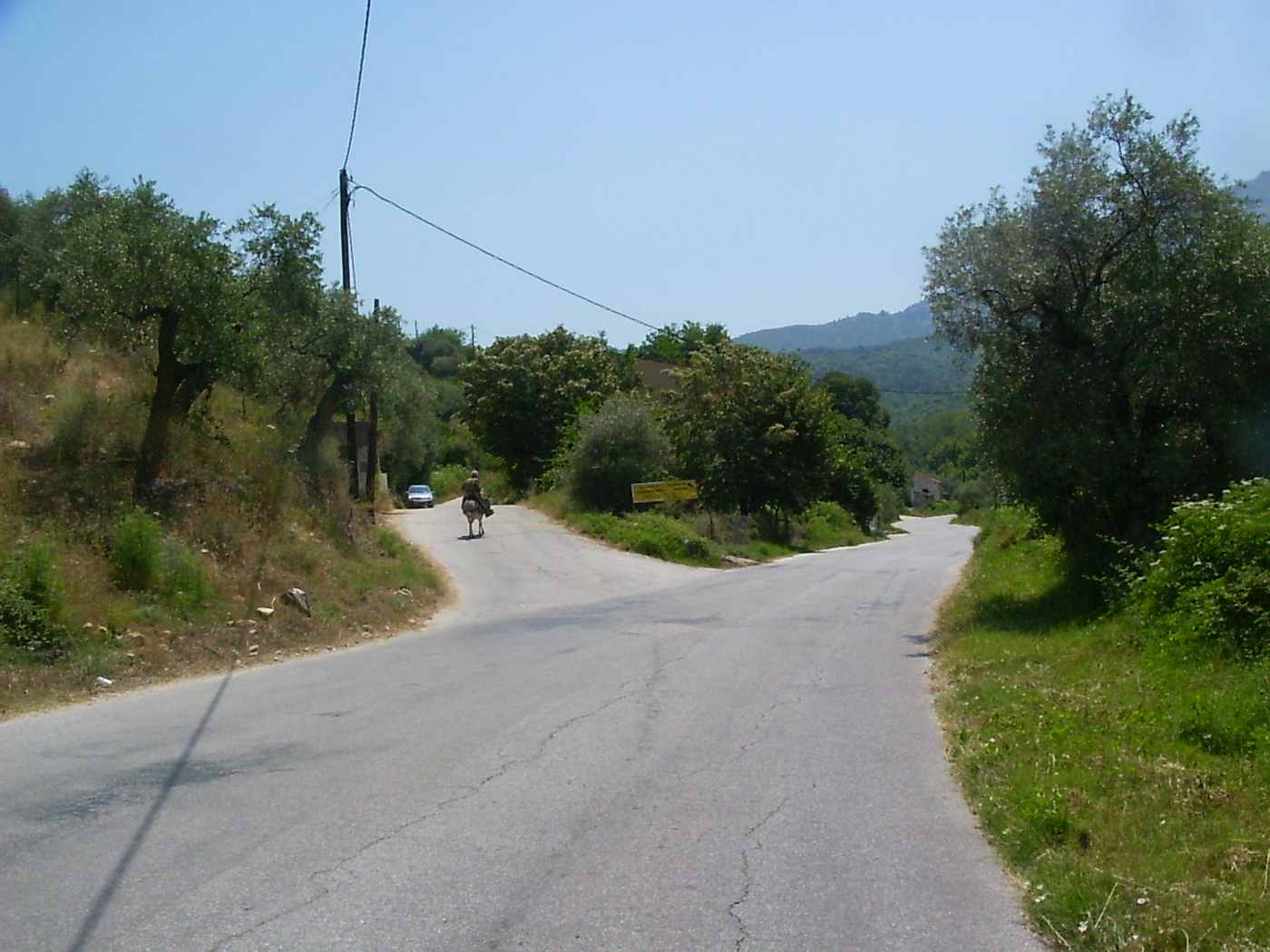
Rachoni is a traditional inland village on the north side of Thassos, set in the wooded hills roughly four kilometres above the coast. Stone houses climb the slopes around a shaded plane-tree square where villagers gather for coffee and evening meals. The settlement grew as the mountain home of families who farmed olives, kept bees, and fished the northern sea. Around four hundred residents still live here, working the terraced groves that surround the village on every side. A single quiet road winds up from the shore through olive country to reach the square. Rachoni keeps the older, authentic face of the island, far from the beach crowds. The village rewards travellers who want a genuine base rooted in farming, honey, and slow village life.
Rachoni pairs with its coastal sister settlement, Skala Rachoni, which carries the beach and harbour down on the shore. The inland village holds the square, the tavernas, and the honey and olive traditions instead. Regular Thassos tours connect the village with the wider island, from mountain lanes to the northern beaches. The sections below cover the location and how to reach it, the look of the stone village, the life of the plane-tree square, and the tavernas and food. Further sections set out the olive and honey country, the case for staying here, and the walks and sights nearby. Each section answers one clear question and points to what matters on the ground for a real visit.
Where is Rachoni village on Thassos and how do you reach it?
Rachoni sits in the north-side hills of Thassos, about four kilometres inland and uphill from the coast at Skala Rachoni. A drive from Limenas, the island capital, reaches the village in around twenty minutes along the ring road and a mountain lane.
Rachoni occupies a fold of the wooded hills on the northern side of Thassos, well above the coastal plain. The village lies roughly four kilometres inland from the shore, reached by a road that climbs steadily through terraced olive groves. Its elevated setting once gave farming families cooler air and safety from coastal raids. Limenas (Thassos Town), the capital and main ferry port, sits about twelve kilometres to the east along the ring road. A drive from the port to the village takes around twenty minutes on quiet roads. The hillside position places Rachoni within easy reach of the northern coast yet keeps it apart from the beach resorts. This inland perch defines the whole character of the village and its people.
Roads to Rachoni branch off the coastal ring that circles the whole of Thassos. Drivers turn inland at Skala Rachoni and follow a winding lane up through terraced olive country. The climb gains height quickly, opening views back over the bay and the northern sea. Signposts mark the turn from the shore toward the older village above. Parking near the plane-tree square stays simple outside the busiest festival evenings. Car hire from Limenas or the mainland ferries at Kavala gives the freedom to reach the village and its neighbours. Buses along the ring road stop at the coast, leaving a short uphill walk or drive to the square. This easy access keeps the mountain village well connected despite its quiet, tucked-away setting.
Rachoni forms the upland half of a two-part settlement on the north coast of Thassos. The mountain village holds the square, the churches, and the farming traditions of the area. Its shore settlement, Skala Rachoni, carries the sandy beach, the harbour, and most of the tourist facilities. The two share a single name and a long history rooted in olives and fishing. A drive of a few minutes links the square above with the beach below. Visitors often sleep in the quiet village and drive down to swim on the coast. The pairing gives the area both a working mountain settlement and an easy beach day. This layered geography sets Rachoni apart from the purpose-built resort strips of the east.
Distances from Rachoni to the island’s highlights stay short and manageable throughout a stay. A drive east reaches Limenas and its ancient ruins within about twenty minutes. A drive west along the coast leads toward Prinos village and the western shore. The mountain lanes behind the village climb toward the pine forests of the interior. Day trips fan out in every direction from this central northern position. The ferry port at Limenas connects the island to the mainland at Kavala and Keramoti. Fuel stations and shops line the coastal road a short drive below the square. Short travel times keep a week of exploring relaxed rather than rushed. This connectivity makes the quiet village a practical anchor for a full island holiday.
What does the village of Rachoni look like?
Rachoni presents a cluster of old stone houses climbing the hillside around a shaded plane-tree square. Whitewashed walls, tiled roofs, narrow lanes, and small churches give the village its traditional Thassian character, framed on every side by terraced olive groves and pine woods.
Stone houses form the heart of Rachoni, stacked up the slope in the old island manner. Thick walls of local stone keep the rooms cool through the long summer heat. Tiled roofs and small shuttered windows mark the traditional building style of northern Thassos. Many homes carry the marble touches that the island’s ancient quarries have always supplied. Narrow lanes thread between the houses, too tight in places for a car to pass. Flowers and climbing vines spill from courtyards and balconies along the quiet streets. Older houses cluster tightly around the square, while newer homes spread down the lower slopes. Cats doze on warm stone steps through the heat of the afternoon. This dense stone core gives the village its timeless, weathered character.
Churches punctuate the lanes of Rachoni, small and whitewashed in the island tradition. Blue-painted doors and simple bell towers mark the chapels tucked between the houses. Icons and oil lamps fill the cool interiors, cared for by the village families. Feast days bring the whole community to these chapels through the year. Marble thresholds and carved lintels show the craft of the local stoneworkers. The main church anchors the square, its courtyard shaded by the great plane tree. Older residents keep the chapels swept, lit, and dressed for the saints’ days. Wildflowers and herbs grow along the walls and the worn stone steps nearby. Bells from the towers mark the hours across the rooftops. These quiet churches give the village its spiritual and social heart.
Lanes in Rachoni wind steeply between the stone houses, paved with worn slabs and cobbles. Steps and slopes replace straight streets across much of the hillside village. Vines trained on wooden frames throw shade over the narrowest passages. Doorways open straight onto the lanes, close enough for neighbours to talk across them. Pots of basil and geraniums brighten the thresholds and the window ledges. Washing lines and grapevines crisscross the gaps between the roofs. Walkers wander the maze on foot, since cars cannot reach the highest houses. Every turn frames a view of the groves or the sea far below. Old fountains and cisterns still stand at the corners of the lanes. These winding streets reward slow exploration on foot far more than any drive.
Olive terraces wrap the village of Rachoni on every side, climbing the slopes in stone-walled steps. Silver-green trees fill the terraces, some of them centuries old and thick-trunked. The groves press right up to the edge of the houses at the village fringe. Footpaths lead out from the lanes into the surrounding farmland and pine woods. Cypress trees rise here and there among the olives like dark green spires. The hillside setting frames the stone village against a backdrop of forest and sea. Springs and small streams water the gardens and orchards on the lower slopes. Views from the upper houses stretch across the bay toward the northern horizon. This green frame ties the village firmly to the land that feeds it.
What is the plane-tree square and village life like in Rachoni?
The plane-tree square forms the social centre of Rachoni, shaded by a broad old plane and ringed by a kafeneio and tavernas. Villagers gather here for coffee, conversation, and evening meals, and the square hosts the lively summer festivals.
Plane-tree shade cools the central square of Rachoni through the hottest hours of the day. The broad old tree spreads its canopy over the tables and the worn stone paving. Villagers gather beneath it for morning coffee and slow afternoon conversation. The kafeneio on the square serves strong Greek coffee, ouzo, and cold drinks. Old men play cards and backgammon at the shaded tables for hours on end. Children weave between the chairs while their parents talk over the day. The square works as the living room of the whole village. Cool air drifts down from the hills to settle under the plane. Fountains nearby keep the corner damp and green through the heat. This shaded gathering place holds the social life of Rachoni together.
Tavernas and a kafeneio ring the square of Rachoni, filling it with the smell of grilled food each evening. Family kitchens set their tables out under the plane tree through the warm months. Diners eat slowly over local wine, olive oil, and dishes cooked from the village gardens. The kafeneio doubles as a meeting point, a card room, and a news exchange. Regulars claim the same chairs each day across the seasons. Visitors settle easily into the unhurried rhythm of the square. Waiters carry plates the few steps from kitchen to table beneath the leaves. Evening light filters through the canopy onto the diners below. Cats and dogs weave hopefully between the table legs. This ring of tavernas keeps the square busy from morning coffee to late supper.
Festivals bring the square of Rachoni to life on the saints’ days of summer. Villagers string lights through the plane tree and set out long communal tables. Musicians play the clarinet and lute while dancers circle late into the night. Grilled meat, local wine, and village bread feed the whole community and its guests. The panigiri draws families home from the towns and from abroad each year. Visitors staying nearby join the dancing and share in the food and wine. The celebrations mark the church calendar and the turning of the farming year. Smoke from the grills drifts across the square under the strung lights. Older women serve spoon sweets and coffee to the seated guests. These festivals show the village at its warmest and most welcoming.
Mornings in the square of Rachoni open slowly with coffee and quiet talk. Farmers pass through on their way to the groves and the beehives above. Shopkeepers open their shutters as the light climbs over the hills. Midday empties the square as the village retreats indoors from the heat. Afternoons bring the men back to the kafeneio for cards and cold drinks. Evenings fill the tables again as families gather for supper under the tree. Church bells mark the hours across the stone rooftops. Swallows wheel overhead as the light softens toward sunset. The pace stays gentle, tied to the sun and the seasons rather than the clock. This daily rhythm gives visitors a true taste of mountain village life.
What food and tavernas will you find in Rachoni village?
Rachoni tavernas serve traditional Thassian cooking built on local olive oil, garden vegetables, grilled meat, and honey. The village women are renowned for spoon sweets made from olives, honey, olive oil, and walnut, served to guests with coffee and a glass of water.
Tavernas in Rachoni cook the honest mountain food of northern Thassos. Kitchens dress their dishes with the village’s own green olive oil. Slow-baked goat, grilled lamb, and rich stews fill the seasonal menus. Vegetables come straight from the gardens on the terraces below the houses. Bread bakes fresh in wood ovens for the tables under the plane tree. Wild greens gathered on the hillsides appear as simple, dressed salads. Local wine from the island’s vines washes down the long evening meals. Grilled fish arrives fresh from the harbour down at the coast. Prices in the village stay fair, matched to the quality on the plate. This grove-to-table cooking gives Rachoni tavernas their honest, satisfying character.
Spoon sweets stand among the proudest traditions of Rachoni village. Cooks simmer olives, walnut, and fruit slowly with fragrant flower Thassos honey until they set into a rich preserve. Households serve the sweets to guests with coffee and a glass of cold water. The recipes pass from mother to daughter across the generations here. Each spoonful captures the flavours of the surrounding groves and hives. Green walnut, bitter orange, and grape feature among the village favourites. The custom turns the village’s own produce into a treasured local delicacy. Jars of spoon sweets sell from the tavernas and the village shops. Guests carry the jars home as an edible souvenir of the north. This sweet craft ties the kitchens of Rachoni to the land around them.
Olive oil flavours nearly every dish that leaves a Rachoni kitchen. The green oil pressed from the surrounding groves dresses salads and fries the fresh fish. Thassos olive oil earns a strong name across Greece for its taste and quality. Cooks pour it over grilled vegetables, beans, and the village’s slow-baked dishes. Bread dipped in fresh oil and salt opens many a taverna meal. The oil also preserves cheeses, olives, and sun-dried tomatoes through the winter. Bottles and tins sell from the tavernas for visitors to carry home. The short journey from grove to press to table keeps the oil fresh. Diners taste the difference in every dressed salad and grilled plate. This olive tradition sits at the heart of the village’s cooking.
Diners in Rachoni eat under the plane tree or in small family courtyards. Tavernas set their tables on the square and along the quiet lanes. Meals stretch long into the evening in the cool mountain air. Owners often cook, serve, and chat with the guests themselves. Fresh honey drizzled over thick yogurt rounds off many a supper. Cheese, olives, and village bread arrive before the main dishes without asking. Local wine and ouzo keep the tables lively into the night. The pace stays slow, matched to the unhurried rhythm of the village. Regulars and visitors share the tables under the strung lights. This warm, personal welcome keeps travellers coming back to the same kitchens.
What role do olives and honey play around Rachoni?
Olives and honey drive the working life of Rachoni. Terraced groves around the village produce prized Thassos olive oil, while hives among the trees and hillside scrub yield fragrant pine and flower honey sold across the island.
Olive groves define the working landscape around Rachoni village. Families tend the silver-green trees through the year, from spring pruning to the winter harvest. Stone-walled terraces hold the soil across the steep hillside slopes. Presses near the coast turn the ripe fruit into the prized oil of northern Thassos. Thassos olive oil earns a strong name for its taste and quality across Greece. The harvest gathers the whole family into the groves through the cold months. Nets spread beneath the trees catch the falling fruit for the press. Bottles and tins of the new oil sell from village shops and roadside stalls. Old trees here yield a fruity, low-acid oil prized by cooks. This olive tradition anchors the village firmly to its own fertile soil.
Beekeeping ranks among the proudest crafts of Rachoni village. Hives sit among the olive groves and the flowering hillside scrub above the houses. Bees draw their flavour from pine, thyme, herbs, and wildflowers across the land. Thassos honey carries the scent of these northern hills in every jar. Beekeepers sell their honey alongside the oil in village shops and roadside stalls. The prized flower honey also feeds the village’s celebrated spoon sweets. Families pass their hive skills down through the generations here. Pine honey, darker and richer, fills the jars through the late summer. Beekeepers move their hives to follow the flowering seasons across the hills. This apiculture gives Rachoni a sweet share of the island’s produce.
Farming shapes the calendar of Rachoni across the whole year. Spring brings pruning, planting, and the first work among the hives. Summer turns to the gardens, the vines, and the tending of the bees. Autumn gathers the grapes and prepares the groves for the coming harvest. Winter fills the presses as the olive crop comes down from the terraces. Villagers work the land much as their families have for generations. Goats and sheep graze the higher slopes above the cultivated ground. The seasons dictate the rhythm of the square and the tavernas alike. Vegetable gardens on the terraces feed the village kitchens through the summer. This farming year keeps the old working traditions of the village alive.
Produce from Rachoni fills the shelves of village shops and roadside stalls. Green olive oil, pine honey, and flower honey lead the local range. Jars of spoon sweets, olives, and herbs sit alongside the oil and honey. Visitors carry the produce home as a lasting taste of northern Thassos. The goods come straight from the groves, hives, and gardens around the village. Small producers sell direct, so the money stays within the community. Bottles, tins, and jars travel well for the journey back from the island. Labels often name the very grove or hive behind each product. Herbs such as thyme, oregano, and sage dry in bunches for sale. This direct trade links the traveller straight to the working village.
Why choose Rachoni as a quiet base for your Thassos stay?
Rachoni suits travellers who want a quiet, authentic base away from the beach crowds. Stone rooms and small guesthouses in the village pair with easy access to the coast, making it ideal for a slow, traditional Thassos holiday.
Rachoni earns its place as a calm, traditional base on the north of Thassos. The village pairs an authentic mountain setting with quick access to the northern beaches. Travellers who value quiet over nightlife find the pace here well suited. Guides to where to stay in Thassos often list the inland villages for this balance. Stone houses and small guesthouses offer rooms among the groves and quiet lanes. Nights stay peaceful, broken only by cicadas and distant church bells. The square keeps tavernas and a kafeneio within a short stroll of any room. Cool hillside air makes for restful sleep even in the high summer. Prices tend to undercut the busy resorts down on the shore. This restful setting draws visitors seeking a slower island rhythm.
Accommodation in Rachoni spreads through the stone houses and small guesthouses of the village. Traditional rooms sit among the lanes, often set in restored old homes. Studios with simple kitchens suit families cooking for themselves on a longer stay. Balconies and courtyards catch the hillside breeze and the views over the groves. The choice stays small and personal, far from the large hotel blocks of the coast. Owners frequently live on site and share tips on the village and island. Prices tend to undercut the busy beach resorts down on the shore. Booking early secures the best rooms for the peak summer weeks. Quiet lanes keep even the closest rooms restful through the night. This intimate lodging matches the quiet character of the mountain village.
Rachoni suits couples, families, and older travellers seeking calm and character. The village offers rest, tradition, and a genuine welcome away from the crowds. A short drive down to Skala Rachoni reaches the sandy beach and harbour within minutes. Guests swim on the coast by day and return to the quiet square by night. The pairing gives a holiday both a beach and a real village at once. Walkers and food lovers find the setting especially rewarding. The slow pace suits anyone tired of the noise of the busy resorts. Evenings pass gently over dinner under the plane tree. Children roam the safe lanes while parents linger at the tables. This balance of quiet and access makes Rachoni an easy place to settle.
Rachoni sits at a useful point for touring the whole of Thassos. A short drive east reaches Limenas, the capital, with its harbour and museum. A drive west along the coast leads toward Prinos and the western beaches. The mountain lanes behind the village climb toward the forests of the interior. Day trips fan out in every direction from this central northern position. The ferry at Limenas adds the mainland to the list of easy excursions. Fuel, shops, and services line the coastal road a short drive below. Travellers reach beaches, ruins, and hill villages within short, scenic drives. A hire car opens the whole island from this central northern base. This connectivity makes the quiet village a practical anchor for a full holiday.
What is there to see and do near Rachoni village?
Rachoni offers walks through olive groves and pine forest, visits to the plane-tree square and old churches, and a short drive down to the beach at Skala Rachoni. Nearby villages such as Prinos add markets, tavernas, and the western coast.
Walking trails climb the hills behind Rachoni into cool, green country. Paths wind through the olive groves and pine woods above the village square. Walkers gain wide views over the northern bay and the coast below. Springs and shaded lanes reward the climb on the warmer days. The routes link the village to the forests and higher pastures of the interior. Wildflowers and herbs scent the hillsides through spring and early summer. A morning walk pairs well with a swim down at the coast. Sturdy shoes and water make the climb comfortable in the heat. Old shepherds’ paths connect the village to its neighbours across the hills. This upland walking adds real variety to a village stay.
Village sights in Rachoni centre on the plane-tree square and its small churches. Visitors wander the stone lanes, photographing the old houses and the shaded courtyards. The chapels tucked between the homes open onto quiet, icon-filled interiors. The kafeneio on the square offers a front-row seat on village life. Craft and produce shops sell honey, oil, and spoon sweets to carry home. Feast days fill the square with music, dancing, and communal tables. Slow mornings over coffee reveal the true pace of the place. Old marble thresholds and carved doorways reward a closer look. Fountains and cisterns hint at the village’s long farming past. This gentle sightseeing suits travellers happy to explore on foot.
Beach days lie a short drive below Rachoni at its coastal sister settlement. Skala Rachoni carries a long sandy beach shaded by pine trees along the shore. Swimmers reach the calm, shallow water within minutes of the village square. The harbour there runs coastal boat trips and fishing outings through the summer. Families settle on the gentle sand while the village stays quiet above. The drive down winds through the olive groves to the sea in a few minutes. Tavernas behind the beach serve the day’s catch beside the water. Guests swim by day and climb back to the cool square by night. Snorkellers explore the rocky edges between the sheltered coves. This easy beach access rounds out a stay in the mountain village.
Nearby villages add depth to a stay based in Rachoni. Prinos village lies a short drive west along the coast, with its market and tavernas. The mountain settlements of the interior climb the slopes toward the island’s peaks. Limenas to the east holds the capital’s ruins, museum, and busy harbour. Each village keeps its own square, churches, and farming traditions. Short drives link the settlements along the coastal ring and the mountain lanes. Travellers piece together a tour of northern Thassos from this central base. Markets and festivals in the neighbours fill the days beyond the village. Wine, cheese, and honey vary from one village to the next. This cluster of villages rewards a week of unhurried exploring.
Frequently Asked Questions
Where is Rachoni village located on Thassos?
Rachoni village sits in the wooded hills on the northern side of Thassos, roughly four kilometres inland and uphill from the coast. The island capital, Limenas, lies about twelve kilometres to the east, a drive of around twenty minutes along the coastal ring road and a short mountain lane. The village occupies an elevated position above its coastal sister settlement, Skala Rachoni, which holds the beach and harbour down on the shore. A single winding road climbs from the coast through terraced olive groves to reach the plane-tree square at the heart of the village. The hillside setting once gave farming families cooler air and shelter from coastal raids. Rachoni keeps its distance from the busy beach resorts, sitting instead among the groves and pine woods of the interior.
Is Rachoni the same as Skala Rachoni?
Rachoni and Skala Rachoni share a name and a history but sit apart as two connected settlements. Rachoni is the older inland village, set roughly four kilometres uphill in the hills on the northern side of Thassos. Skala Rachoni is its shore settlement, carrying the sandy beach, the small fishing harbour, and most of the tourist facilities down on the coast. The word skala means landing or harbour, marking the coastal half of the pairing. Rachoni holds the plane-tree square, the stone houses, the churches, and the olive and honey traditions of the area. Visitors often sleep in the quiet village and drive the few minutes down to swim on the coast. This pairing of upland village and coastal skala is common across Thassos.
How do you get to Rachoni village?
Rachoni village lies a short drive from Limenas, the capital and main ferry port of Thassos. Drivers follow the coastal ring road west for about twelve kilometres, then turn inland at Skala Rachoni and climb a winding lane through the olive groves. The whole journey takes around twenty minutes on quiet roads. Car hire from Limenas or from the mainland ferries at Kavala and Keramoti gives the freedom to reach the village and its neighbours. Buses run along the coastal ring and stop near Skala Rachoni, leaving a short uphill walk or taxi ride to the square. A hire car makes exploring the village and the wider north coast far easier than relying on buses alone.
What is Rachoni village known for?
Rachoni village is known for its olive oil, its honey, and the traditional spoon sweets made by its women. Terraced groves around the village produce prized Thassos olive oil, pressed from silver-green trees that cover the surrounding hillsides. Hives set among the olives and the flowering scrub yield fragrant pine and flower honey sold across the island. The village women are renowned for spoon sweets, slow-cooked preserves of olives, walnut, and fruit set with flower honey and served to guests with coffee. Beyond its produce, Rachoni is known for its shaded plane-tree square, its old stone houses, and its quiet character away from the beach crowds. This blend of farming tradition and village life gives Rachoni its lasting name on northern Thassos.
Is Rachoni a good place to stay on Thassos?
Rachoni makes a strong choice for travellers who want a quiet, authentic base rather than a busy beach resort. Stone houses and small guesthouses offer rooms among the lanes and olive groves, often in restored traditional homes. The plane-tree square keeps tavernas and a kafeneio within a short stroll, and the cool hillside air makes for restful sleep even in high summer. Guests swim by day at nearby Skala Rachoni, a few minutes down the hill, and return to the peaceful square by night. The setting suits couples, families, and older travellers seeking calm, tradition, and a genuine welcome. Rachoni also sits at a useful point for touring the north of the island, with Limenas, Prinos, and the western beaches all within short, scenic drives.
What is there to do in Rachoni village?
Rachoni village offers walks, village sightseeing, local food, and easy access to the coast. Walking trails climb the hills behind the village through olive groves and pine woods, opening wide views over the northern bay. Visitors wander the stone lanes, photograph the old houses, and step into the small icon-filled churches tucked between the homes. The plane-tree square invites long, slow coffees at the kafeneio and traditional meals at the tavernas under the tree. A short drive down to Skala Rachoni reaches a sandy beach, a fishing harbour, and coastal boat trips. Nearby villages such as Prinos add markets and tavernas within an easy drive. This mix of walking, food, and quiet exploring defines a stay in the village.