
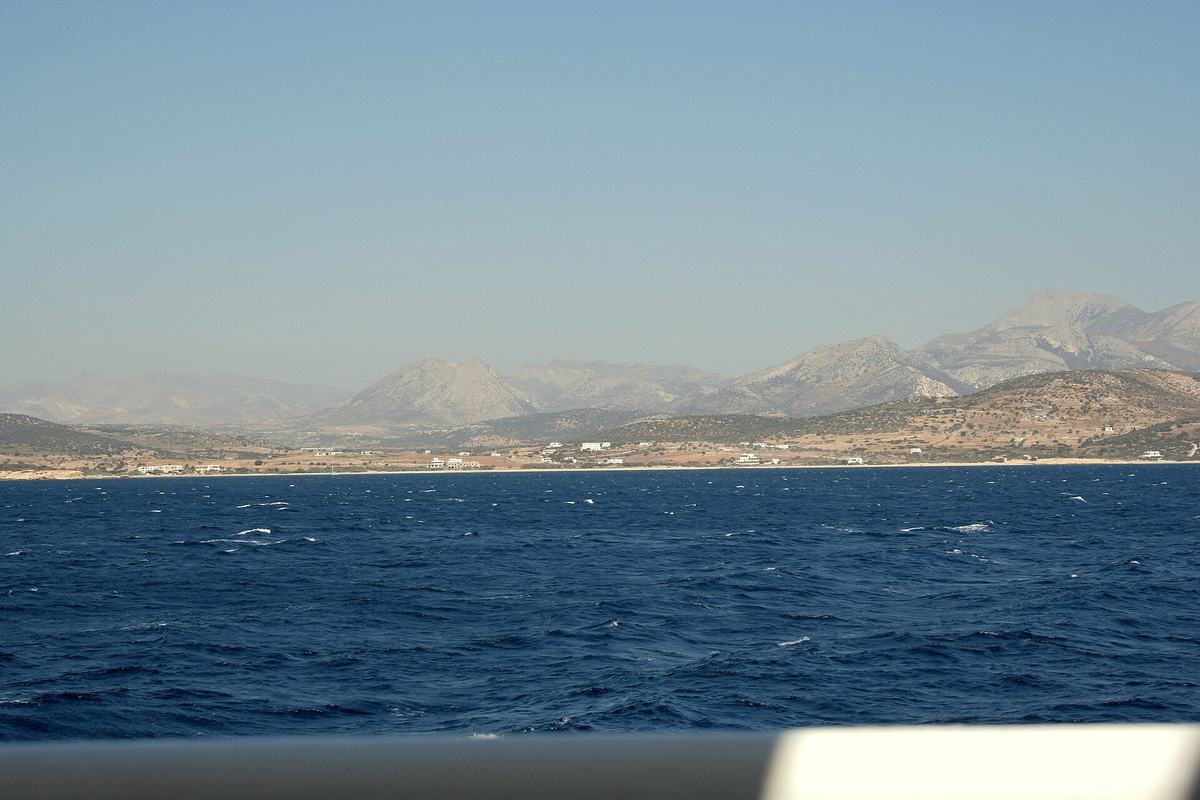
Pyrgaki Beach sits at the tranquil southern tip of the west coast of Naxos, where the paved road finally runs out and the crowds thin to almost nothing. It is a wide, gentle curve of soft pale sand meeting water so clear and shallow that the seabed stays visible far from shore. Low hills and pockets of cedar shelter the bay, and only a taverna or two interrupts the quiet. Families, swimmers who love calm sea, and travellers seeking stillness all find their place here. You can explore Pyrgaki and the wider island on a guided tour with My Greece Tours if you would rather let someone else handle the logistics.
This page gathers everything a first-time visitor needs to know about Pyrgaki, and it forms part of our wider Naxos travel guide covering the whole island. The sections below cover what Pyrgaki beach actually is, what the sand and water are like, how quiet and natural the setting remains, where the beach sits and what lies nearby, and the practical details of how you visit it.
What is Pyrgaki beach?
Pyrgaki is one of the southernmost and quietest beaches on the west coast of Naxos.
Pyrgaki lies at the far southwestern corner of Naxos, the largest of the Cyclades islands. The famous west-coast run of sandy beaches begins near Naxos Town with Agios Georgios, then flows south through Agios Prokopios, Agia Anna and long Plaka before reaching Mikri Vigla, Kastraki and Alyko. Pyrgaki is the last major beach in that chain, tucked below the headland where the developed coast finally gives way to open, near-empty shore. It never gathers the same numbers, so even in high summer you can usually find a wide stretch of sand to yourself because it sits so far from the main resorts.
Its position at the tail of the beaches of Naxos gives it a distinctly end-of-the-island feel that shapes everything about the sand and sea you find there.
Understanding this location helps explain the beach’s character. Pyrgaki faces roughly southwest, so it catches long afternoon and evening light and is partly sheltered from the strong summer meltemi wind that can whip the more exposed central beaches. The bay is broad and shallow, framed by rolling low hills rather than dramatic cliffs. Dotted with clumps of cedar and low scrub that run almost down to the sand. There is no resort strip, no line of hotels and no busy beach-bar culture here. What you get instead is a simple, natural setting where the landscape, not the infrastructure, defines the visit.
That natural, uncrowded quality is felt most strongly in the sand underfoot and the water just offshore, which are worth looking at closely.
What is the sand and water like?
Pyrgaki has soft, pale, fine sand that slopes very gently into the sea. The water is calm, shallow and exceptionally clear, shifting through pale turquoise and deeper blue, staying warm and gentle close to shore and ideal for relaxed swimming.
The sand at Pyrgaki is one of its defining pleasures. It is fine and pale, soft enough to walk barefoot across comfortably. It forms a broad, level apron that makes laying out a towel easy almost anywhere along the bay. The beach shelves so gradually that the water stays shallow for a long way out. This is part of why the sea looks the way it does: light passes straight through to the sandy bottom and reflects back as a luminous turquoise near the shore, deepening to richer blue further out. On a calm morning the surface can be almost mirror-still, and you can see your own shadow on the sand beneath tens of metres of water.
This gentle profile continues the calm, swimmable character that runs through the far southern beaches.
The water’s clarity and calm make Pyrgaki especially suited to certain kinds of visitors. It is reassuring for families with young children and for anyone who prefers to wade and float rather than dive into deep water because the sea stays shallow and settled close in. Snorkellers enjoy the visibility, drifting over ripples of clean sand and the occasional patch of seagrass. The lack of strong currents in the sheltered part of the bay adds to the sense of safety. As always in open Cycladic waters it pays to keep an eye on conditions when the wind rises. The overall impression is of a soft, unhurried beach where the sea invites you to linger.
That easy, low-key atmosphere connects directly to how quiet and undeveloped the whole place feels.
How quiet and natural is it?
Pyrgaki is one of the most peaceful, near-undeveloped beaches on Naxos. There is no resort strip, only a taverna or two and simple facilities. As the end of the coastal road, it stays quiet, natural and uncommercial, with hills and cedar for a backdrop.
Quietness is Pyrgaki’s signature quality. Unlike the busy central beaches with their sunbed rows, watersports and beach bars, Pyrgaki keeps things minimal. You will typically find only a taverna or two set back from the sand, offering shade, cold drinks and a simple meal, but no sprawling commercial scene. A great deal of the beach is left entirely natural. If you walk a little from the main access point you can often stake out a stretch of sand with no one else in sight. The backdrop of low hills, dry scrub and scattered cedar reinforces the feeling of being somewhere gentle and untouched, a place where the loudest sounds are the wind and the water.
This near-wild character is precisely what draws people who want to escape the crowds. It also connects to where Pyrgaki sits geographically, at the very edge of the island’s developed coast.
Pyrgaki has an unmistakable sense of arrival at the island’s quiet frontier because it marks the end of the road. There is little passing traffic, and most people who reach it have come deliberately rather than by chance. Facilities are limited, which is part of the appeal but also something to plan for: you should not expect a full range of services, shops or organised amenities. A portion of visitors bring their own umbrella and supplies to settle in for the day, treating the taverna as a welcome bonus rather than a base. This simplicity keeps Pyrgaki feeling authentic and unspoiled, closer to how dozens of Cycladic beaches once were before large-scale tourism arrived.
To make the most of that atmosphere, it helps to understand exactly where the beach lies and what surrounds it.
Where does Pyrgaki sit and what is nearby?
Pyrgaki sits at the southern end of the west coast, beyond Alyko, where the road runs out.
Pyrgaki occupies the southernmost stretch of the Naxos west coast, just beyond the Alyko area. Immediately to its north lies Alyko Beach, famous for its dunes and its striking grove of cedar trees that grow right down toward the sand, one of the most distinctive natural landscapes on the island. Around this southern corner the coastline breaks into a series of small coves and quieter bays, of which Pyrgaki is the largest and most accessible. The cedar and low vegetation that make Alyko special continue in patches around Pyrgaki, giving the whole area a soft green fringe unusual for the often bare Cyclades.
This cluster of southern beaches rewards slow exploration, and each one flows naturally into the next as you move up the coast.
A little further north sits Plaka Beach, one of the longest and most beloved sandy beaches on Naxos, with a broader range of tavernas, beach bars and accommodation. A host of travellers pair the two, spending part of the day in the lively stretch of Plaka and then driving south to Pyrgaki for a calmer, more solitary swim in the late afternoon. The whole southern coast, from Mikri Vigla down through Alyko to Pyrgaki, is easy to explore in a single relaxed day by car or scooter. Knowing how these beaches connect makes it simple to plan a route.
Brings us to the practical question of actually getting to Pyrgaki and making the most of your time there.
How do you visit Pyrgaki?
Reach Pyrgaki by driving to the far southwest of Naxos, following the west-coast road past Alyko to where it ends. A car or scooter is the easiest option, bus service is limited, and because facilities are minimal you should bring water, food and shade.
The simplest way to reach Pyrgaki is by car or scooter from Naxos Town, following the main coastal road south for roughly twenty to thirty minutes past the string of west-coast beaches until you approach the Alyko and Pyrgaki area at the end of the route. The road is paved for most of the way, with the final approach to the beach becoming quieter and more rural. Public bus service does run down the west coast in high season. It is far less frequent than to the central resorts, so check timetables carefully if you do not have your own vehicle.
Renting a scooter, quad or small car gives you the freedom to combine Pyrgaki with the nearby beaches of Plaka and Alyko and to leave whenever you like. This flexibility is especially valuable given how little there is at the beach itself.
A little preparation goes a long way because Pyrgaki is deliberately undeveloped. Bring ample drinking water, snacks or a picnic, sun protection and ideally your own umbrella, since natural shade is limited and the taverna’s sunbeds, where available, are limited. Aim to arrive earlier in the day for the calmest sea and the pick of the sand, or later in the afternoon to enjoy the long southwest-facing light. Sturdy sandals help on the walk from parking to the water, and it is wise to leave the beach as clean as you found it to protect its natural charm. With supplies packed and a route in mind, Pyrgaki makes a rewarding, peaceful finale to any west-coast beach day.
Plan your visit and tours through our Naxos travel guide.
Frequently Asked Questions
Is Pyrgaki beach suitable for families with children?
Yes, Pyrgaki is well suited to families with young children, largely because of the shape of the bay and the nature of the water. The sea shelves very gently, so it stays shallow for a considerable distance from the shore, letting children wade and play safely without suddenly dropping into deep water. On calm days the water is settled and clear, with no strong currents in the sheltered part of the bay, which reassures parents keeping watch. The sand is soft and fine, comfortable for bare feet and easy to sit and build on.
The main things to plan for are the limited facilities and shade: since there is only a taverna or two and little natural cover, families should bring their own umbrella, no shortage of water and snacks, and sun protection. Arriving earlier in the day usually means the calmest sea and the quietest, most spacious stretch of sand for setting up a comfortable family base.
Are there sunbeds, tavernas or facilities at Pyrgaki?
Pyrgaki keeps facilities to a minimum, which is a large part of its appeal. You will usually find only a taverna or two set back from the beach, where you can buy cold drinks, coffee and a simple meal. There may be a small number of sunbeds and umbrellas near them, though not the extensive organised rows found on the busier central beaches. A great deal of the shore is left completely natural, without commercial development. You should not rely on being able to rent equipment or buy supplies on the spot because of this. The sensible approach is to treat Pyrgaki as a bring-your-own beach: pack drinking water, food, sun cream and your own shade.
Regard the taverna as a pleasant bonus rather than a guaranteed base. This simplicity is exactly what a host of visitors are looking for, since it keeps the beach quiet, uncommercial and close to how the Cyclades felt before large-scale tourism. It does call for a little advance preparation on your part.
How does Pyrgaki compare to other beaches on Naxos?
Pyrgaki stands out as one of the quietest and most natural beaches on the Naxos west coast, which sets it apart from the island’s busier, more developed shores. Central beaches such as Agios Prokopios, Agia Anna and most of Plaka offer no shortage of tavernas, beach bars, watersports and sunbeds, making them lively and convenient but often crowded in high season. Pyrgaki sits at the opposite end of that spectrum: it is peaceful, near-undeveloped and remote, with soft pale sand, calm shallow turquoise water and only a taverna or two. It is best compared with its immediate neighbours around the southern tip, especially cedar-fringed Alyko, which shares the same wild, uncrowded character.
The central beaches may suit you better; if you want stillness, clear gentle water and a genuine escape at the end of the road, Pyrgaki is one of the finest choices on the island if your priority is convenience and facilities. A wide range of visitors enjoy both, mixing a lively central beach with a calm afternoon at Pyrgaki.