
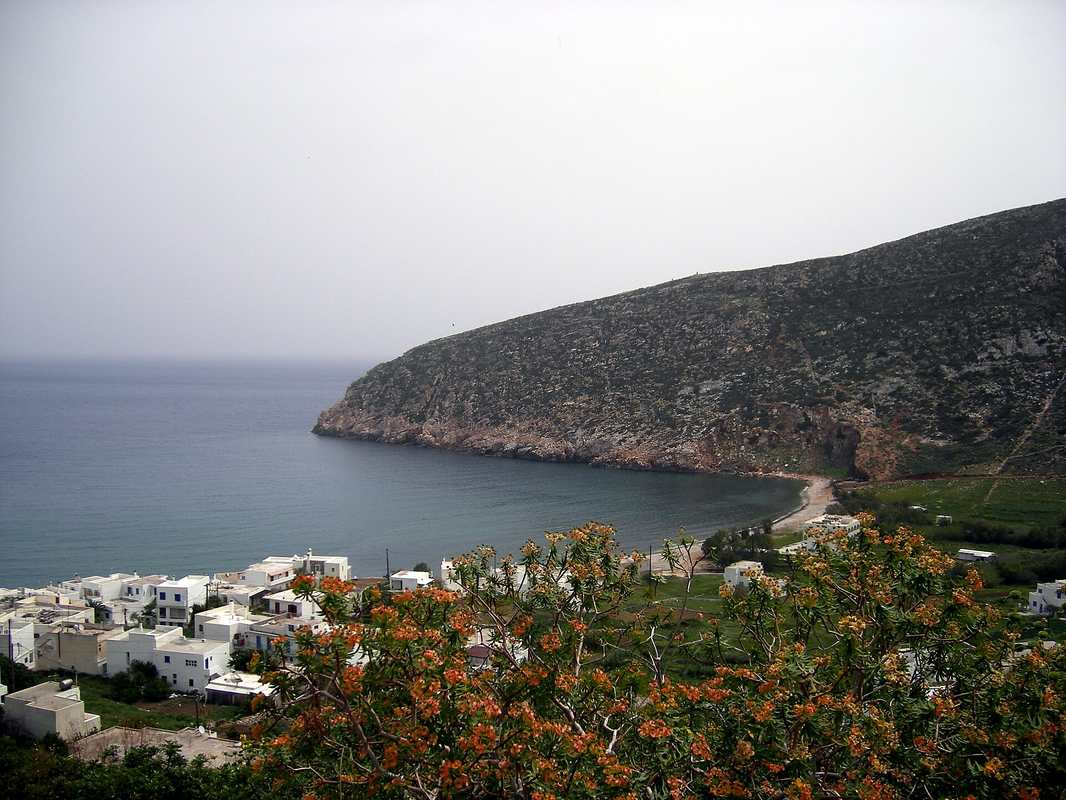
Apollonas sits at the far northern tip of Naxos, a former fishing village that grew into a small, easygoing resort without losing its quiet character. It faces a sheltered bay of soft sand and smooth pebbles, wrapped by low hills and the wild coastline of northern Naxos. Fishing boats still bob in the little harbour, seafront tavernas serve the daily catch, and a giant unfinished ancient statue lies in the marble quarry on the slope above the houses. The winding drive to reach it is part of the reward, opening long views over the Aegean at every bend. A wealth of travellers discover this corner on a north-coast day out with My Greece Tours.
This page explains what makes Apollonas worth the journey and how to fit it into a wider trip across the island using our Naxos travel guide. You will find practical detail on the village, its beach and harbour, the famous Kouros, its food and slow atmosphere, and the routes that lead there. The sections below cover what Apollonas is, what the beach and harbour are like, the giant Kouros above the village, the food and atmosphere on the seafront, and how you actually get to Apollonas.
What is Apollonas on Naxos?
Apollonas is a small former fishing village turned low-key resort on the far north coast of Naxos, the largest Cycladic island. It keeps a working harbour, a sheltered beach, family tavernas and an unhurried pace far from the busier southern resorts.
Apollonas lies at the northernmost point of Naxos, roughly a two-hour drive from Naxos Town depending on the route you take. For generations it was purely a fishing settlement. That heritage still shapes daily life: boats leave at dawn, nets dry along the quay, and the day’s rhythm follows the sea rather than the tour schedule. Tourism arrived gradually and gently, adding a handful of rooms to rent, small hotels and seasonal tavernas rather than large resort complexes. The result is a village that feels lived-in and genuine, where the permanent community and visitors share the same short seafront. Its distance from the island’s main hubs has protected that character, keeping crowds thin even in high summer.
Apollonas rewards travellers who want calm over convenience because it sits so far from Naxos Town. The surrounding landscape is dramatic and largely undeveloped, with bare hillsides, terraced slopes and emery-mining history in the mountains behind. Dozens of people combine the village with the nearby quarry and the mountain villages inland, making a full day of it rather than a quick stop. Sunsets here are memorable, since the bay catches soft evening light across the water toward neighbouring islands. A long lunch and a slow wander rather than a packed itinerary, Apollonas fits perfectly if your idea of a good day is a swim.
That same relaxed feeling carries straight down to the water, where the beach and little harbour set the tone.
What is the beach and harbour like?
Apollonas beach is a sheltered crescent of coarse sand and smooth pebbles beside the harbour, with calm, clear water that stays shallow near the shore. Fishing boats moor a handful of steps away, and tavernas line the seafront right behind the sand.
The bay curves gently and faces away from the strongest summer winds, so the water is usually calm and easy for swimming, even when other Naxos beaches are choppy. The shoreline mixes soft sand with rounded pebbles, and the sea is strikingly clear, shading from pale turquoise near the edge to deeper blue further out. It is an unpretentious beach rather than an organised one: you will find certain sunbeds and umbrellas near the tavernas, but no shortage of open space to lay a towel. Families like it because children can paddle safely in the shallows, and the whole strand is small enough that nothing feels far away.
A short walk brings you from the sand to a coffee, a meal or a shady terrace.
The harbour is the heart of the village and gives the beach its working-port charm. Small fishing boats and a couple of pleasure craft rest against the quay, and watching the catch come in remains part of the daily scene. A stone jetty shelters the moorings and doubles as a spot for an evening stroll, with the giant Kouros visible on the hillside above. The atmosphere is social and easy rather than resort-slick: fishermen, families and travellers mingle along the same waterfront because the beach and harbour sit side by side. The combination of safe swimming, honest food a handful of metres away and boats bobbing in front of you is exactly what draws people north.
Just above all of this, on the slope behind the village, lies Apollonas’s most famous sight.
What is the famous Kouros above the village?
The Kouros of Apollonas is a giant unfinished ancient marble statue, over ten metres long, lying abandoned in an old quarry on the hillside just above the village. It was carved but never completed or moved, and remains where the sculptors left it.
The statue is one of the largest surviving kouroi from antiquity and lies flat in the slope of the quarry, still partly attached to the bedrock it was cut from. The surface is roughly worked rather than polished, which lets you see how ancient sculptors shaped such enormous figures directly in the marble source because it was never finished. It is thought to represent a male figure, possibly a god or Dionysos, though its exact identity is debated. The likely reason it was abandoned is a crack or flaw that appeared during carving, making the huge block unusable and not worth the immense effort of transporting it.
You can read more about its history and how to visit on our dedicated Kouros of Apollonas page.
Reaching the Kouros is easy and free: a short signposted path leads up from the road just before you enter the village, ending at a viewing area beside the reclining figure. Standing next to something so large and so old, left exactly where it was made, is genuinely striking. It gives context to the marble tradition that made Naxos famous across the ancient Aegean. Early morning or late afternoon are the best times to visit, both for softer light and to avoid the midday heat on the exposed hillside. Comfortable shoes help on the stony path, and there is little shade at the top.
Most visitors head back down to the seafront, where the village’s tavernas and slow atmosphere reward the walk after taking in the statue. The harbour still shelters working caiques, and visitors can join local Naxos fishing trips from this coast.
What food and atmosphere does Apollonas offer?
Apollonas offers relaxed, traditional dining focused on fresh fish and seafood, served at simple tavernas along the seafront. The mood is quiet and unhurried, with tables by the water, friendly family service and none of the noise of the larger southern resorts.
Eating here is one of the main pleasures, and the emphasis is firmly on the sea. Tavernas serve whatever the local boats bring in, from grilled fish and octopus to small fried catches, alongside Greek staples like salads, dips and slow-cooked dishes. Prices are generally fair and portions generous, reflecting a place that still caters as considerable to locals and returning regulars as to passing visitors. A wealth of tables sit right at the water’s edge, so you can watch the harbour and the fishing boats while you eat. A couple of cafes and bars round out the offering for a morning coffee or an evening drink, but this is not a nightlife destination.
That is precisely the appeal for most people who come.
The overall atmosphere is calm, genuine and a little timeless. Days move slowly: a swim, a long lunch, an afternoon in the shade and a sunset drink before a quiet dinner. Evenings are peaceful, with the sound of the sea and low conversation rather than loud music because the village stays small and relatively remote. It suits couples, families and anyone looking to decompress away from crowds. Staying overnight lets you experience the village once the day visitors leave, when Apollonas feels almost entirely its own again. Whether you come for a meal or a longer stay, the practical question is simply how to reach this far northern corner of the island.
How do you get to Apollonas?
Apollonas is reached by car or bus from Naxos Town, about a two-hour drive north. Two main routes exist: a scenic coastal road up the west and north shore, and an inland mountain road through the villages. Both are winding but rewarding.
The coastal route follows the northwest shore, hugging cliffs and bays with sweeping sea views before curving around to Apollonas at the top of the island. The inland route climbs through the mountainous heart of Naxos and links a handful of traditional settlements, making it easy to combine your trip with the historic villages of Naxos. A popular plan is to drive one way and return by the other, turning the journey into a full north-island loop. Along the mountain road, the stone village of Koronos makes an excellent stop for coffee and a stretch, tucked into a steep green ravine.
Both roads are paved but narrow and full of bends, so allow more time than the distance suggests and drive carefully.
Seasonal buses connect Naxos Town with Apollonas, though services are limited and best checked in advance, and the ride is long if you prefer not to drive. Renting a car or scooter gives far more freedom to explore the north at your own pace and to stop at viewpoints, beaches and villages along the way. Fill up on fuel before leaving Naxos Town, as options in the north are sparse, and carry water and sun protection for the exposed drive. Start early to enjoy the village, the beach and the Kouros without rushing the return. Plan your visit and tours through our Naxos travel guide.
Frequently Asked Questions
Is Apollonas worth visiting on a trip to Naxos?
Apollonas is well worth visiting if you enjoy quiet, authentic villages over busy resorts. Its distance from Naxos Town keeps crowds thin, so you get a genuinely relaxed day: a sheltered beach with calm, clear water, seafront tavernas serving the daily catch. The famous giant Kouros lying in the quarry just above the houses. The journey itself is part of the appeal, with a long, scenic drive through the mountains or along the coast that reveals part of the island’s finest landscapes. A host of travellers make it a full day out, combining the village with the ancient statue and the traditional settlements inland.
But for swimming, a long seafood lunch and a slow, unhurried atmosphere it is one of the most rewarding corners of the island if your priority is convenience and lively nightlife it may feel remote. Overnight stays let you enjoy the village at its calmest, once the day visitors have gone.
How long does it take to drive from Naxos Town to Apollonas?
The drive from Naxos Town to Apollonas takes roughly two hours each way, though the exact time depends on the route and how often you stop. There are two main options. The coastal road follows the northwest shore with cliff-top views over the Aegean before rounding the top of the island. The inland road climbs through the mountainous centre and passes a cluster of traditional villages, including Koronos, which makes a good rest stop. Both roads are paved but narrow and winding, with dozens of tight bends, so it is wise to allow extra time and drive at a relaxed pace.
A common approach is to travel up by one route and return by the other, turning the outing into a scenic north-island loop. Fill the tank before you leave and carry water, especially in summer because fuel stations and services are limited in the north. Starting early gives you the most time to enjoy the beach, tavernas and the Kouros.
What is the Kouros of Apollonas and can you visit it?
The Kouros of Apollonas is a colossal unfinished ancient statue, over ten metres long, that lies in an old marble quarry on the hillside just above the village. It was carved directly into the rock but never completed or removed, most likely because a flaw or crack appeared in the marble, making the huge figure impossible to use and too heavy to transport once damaged. It is one of the largest surviving kouroi from antiquity and is often linked to a male figure or god. Yes, you can visit it easily and free of charge: a short, signposted path leads up from the road just before the village to a viewing area beside the reclining statue.
Comfortable shoes help on the stony trail, and early morning or late afternoon are the best times, offering softer light and cooler temperatures on the exposed slope. Seeing something so large left exactly where ancient sculptors worked it is a memorable highlight of any visit to northern Naxos.