
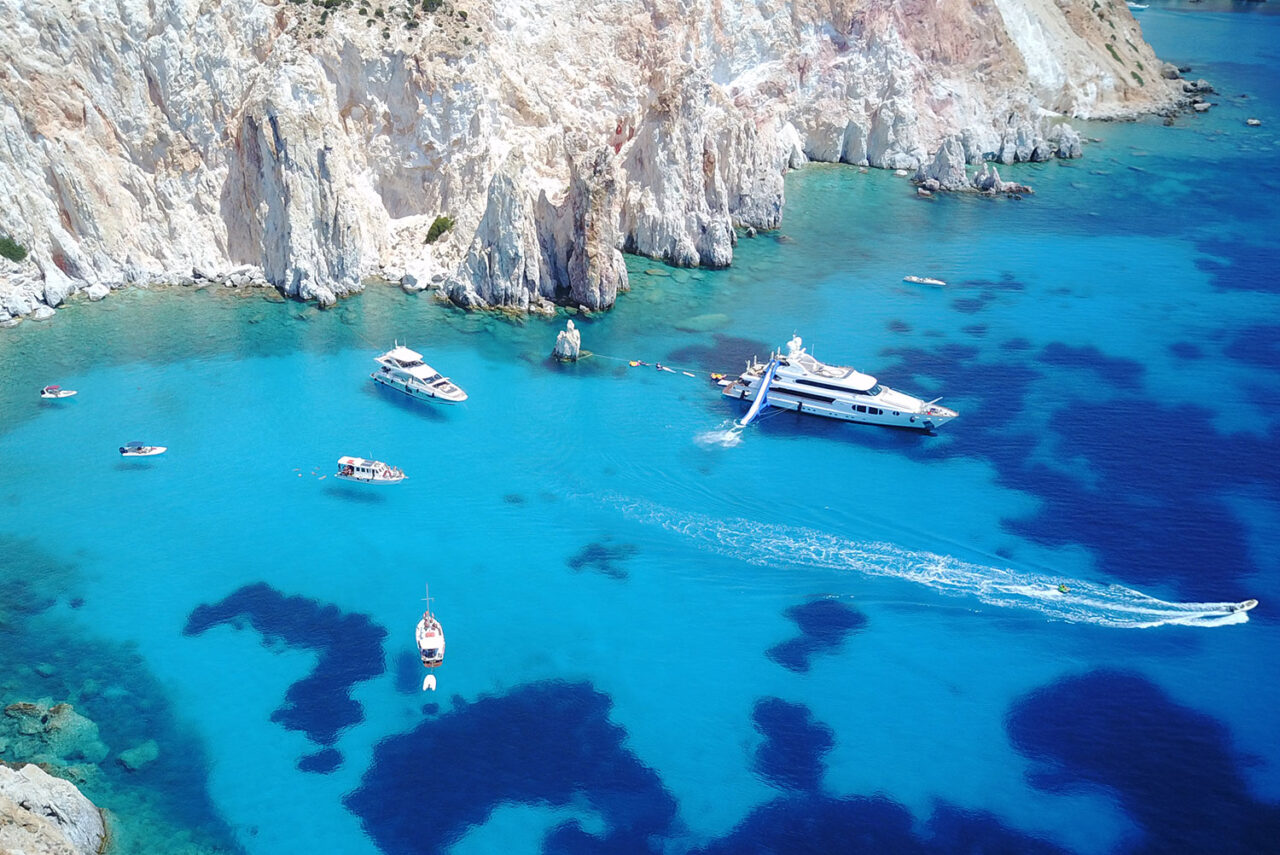
Explore Polyaigos Island, Greece, with our expert travel guide featuring serene beaches, wildlife, boat trips, and a full-day itinerary for an unforgettable Aegean escape.
The tours below sail to Polyaigos from Milos, Pollonia and Kimolos.
Polyaigos Travel Guide: Discover Greece’s Wild, Sandy Gem — Day Trips, Beaches, And Practical Tips
Polyaigos is the kind of island that makes you rethink what an Aegean escape can be. Largely uninhabited, covered in silvery scrub and dramatic dunes, and fringed by vast, translucent bays, it’s become a quiet obsession for sailors, day-trippers from Milos and Kimolos, and anyone who wants beaches with real elbow room. Polyaigos remains refreshingly off-grid: no hotels, no tavernas, no paved roads, just raw coast, rare wildlife, and sand so fine it squeaks underfoot. In this guide, Greece Tours will show why the island deserves a spot on your itinerary, how to get there safely, the best places to swim and anchor, what wildlife you’re likely to see, and a practical day-trip plan with packing tips. We speak from recent crossings and boots-on-sand experience, so you’ll get realistic, up-to-date advice for an unforgettable day (or overnight boat stop) on Greece’s wild, sandy gem.
Why Visit Polyaigos
Polyaigos is compelling for a short list of very strong reasons: solitude, scenery, swimming, and a touch of adventure. Unlike nearby islands that have cafés, rental shops, and organized tours, Polyaigos remains almost entirely free of built infrastructure. That’s its main attraction. Increasing tourist numbers across the Cyclades have pushed curious travelers to seek quieter alternatives: Polyaigos answers that call.
First, the beaches. Psili Ammos and several other coves offer wide stretches of soft, pale sand that look and feel different from the pebbly or packed-sand shores common elsewhere in Greece. The sand’s texture and the shallow, turquoise shallows make for long, comfortable swims and winning photos.
Second, wildlife and landscape. Polyaigos’s isolation has helped preserve scrubland, nesting seabirds, and pockets of native flora. You’ll see dramatic contrasts: windswept ridgelines dropping to sheltered bays, cliffs that catch late-afternoon light, and dunes that shift subtly with the seasons.
Third, the freedom to explore. With no roads and no human bustle, we can wander, snorkel from boulder to boulder, or simply lie on the sand without feeling cramped. For sailors, the island’s indented coastline presents numerous anchoring options, though that freedom comes with responsibility (see the safety section).
Finally, it’s close. Polyaigos sits between Kimolos and Milos, so it’s easy to add as a day trip if you’re based on either island. In short: if you want beaches that feel private, a true sense of wilderness, and a simple, low-tech day of swimming and hiking, Polyaigos is an excellent choice.
Where is Polyaigos, and how is the island shaped?
Polyaigos lies 1.1 nautical miles southeast of Kimolos and 3.8 nautical miles east of Milos in the Western Cyclades. The island covers about 18 square kilometres, runs 6 kilometres along its long axis, and rises to 370 metres at Psilo Vouno.
Polyaigos also sits 8.8 nautical miles southwest of Sifnos and 11.5 nautical miles northwest of Folegandros. Kimolos, about 2 kilometres away, is the nearest inhabited island. The sea lane between Kimolos and Polyaigos carries the name Pyrgi strait. A lighthouse on the islet of Agios Efstathios, also called Ai-Ftathis or Pyrgi, serves ships in that passage.
The area of Polyaigos is given as 18.146 square kilometres, half the size of Kimolos. Kimolos, the seat of the municipality, covers 36 square kilometres and counted 810 residents at its last census, while the whole municipality spans 53.251 square kilometres. Polyaigos measures 4.3 kilometres across its narrowest width. Published figures for the coastline range from 22 to 27 kilometres. Two summits stand above the rest of the land: Stroggylo at 330 metres and Psilo Vouno at 370 metres. A small plain opens at the centre of the island, and the ground around it is rough.
Polyaigos is built mainly of volcanic rock, like its neighbours Kimolos and Milos. The three islands belong to the Aegean volcanic arc. The Ephorate of Antiquities of the Cyclades describes Polyaigos as waterless, with good natural harbours only on its western shores. The named beaches include Panagia, Upper and Lower Mersini, and Ammoura, also known as Lighthouse beach.
- Manolonisi: a rocky islet off the west coast of Polyaigos, called “Manolis’s island” on Kimolos and listed with Pollonia bay, Voudia and Psathi among the well-protected anchorages of the area.
- Kalogeroi: uninhabited rocky islets south of Polyaigos, with deep blue water over a seabed of white sand.
- Kasseles and Agios Georgios: two more rocky islets that lie between Milos and Polyaigos, along with Manolonisi and Agios Efstathios.
- Administration: the Municipality of Kimolos, part of the Milos regional unit, governs Polyaigos, Agios Efstathios and Agios Georgios.
- Ownership: the Ioannis Stavrou Logothetis Bequest of the Church of Odigitria on Kimolos holds about 90% of the land.
Polyaigos is the largest uninhabited island in the Aegean, and the Municipality of Kimolos ranks it among the largest in the Mediterranean. In 1951 the island had 14 residents, and older accounts mention 170 people. Later censuses recorded it as empty and then as home to two livestock farmers, and no permanent resident remains today. Grazing goats keep the land barren, and it serves mainly as pasture. The owners lease plots to herders from Milos and Kimolos. Crossing routes and times appear on the page about the Polyaigos day trip from Milos.
What is the history of Polyaigos?
Polyaigos means “island with a lot of goats”. Kimolos won the island from Melos in an ancient lawsuit, judged by Argive judges shortly after 338/7 BC. Later traces include a monastery church founded in 1622, two trachyte quarries and a lighthouse in service since 1898.
The geographers Ptolemy, Pliny the Elder and Pomponius Mela all mention Polyaigos, and its Latin name is Polyaegus. The island has been a desert island, nesos eremos in Greek, since the time of the geographer Claudius Ptolemy in the 2nd century AD. Later names for the island include Polyvos, Nipolyvos and Ypolivos.
An inscription, now lost, recorded how Melos and Kimolos fought over Polyaigos in court. The text was found at Smyrna and dates to shortly after 338/7 BC. Judges from Argos, acting for the Council of the Greeks, heard the case and ruled for the Kimolians. The inscription names the island Polyaiga. The same verdict gave Kimolos two smaller islets, Eteireia and Libeia, which the Ephorate tentatively identifies with Agios Georgios and Agios Efstathios. The Municipality of Kimolos dates the start of the case to 416 BC.
The quarrel had a practical cause. The rich subsoil and the farmland of Polyaigos were vital to the survival of the neighbouring islands. A similar dispute broke out again in more recent times. From antiquity to the present day, Polyaigos has stayed under the administration of Kimolos.
Literary sources describe the island as uninhabited in antiquity, yet surface finds on Polyaigos point to centuries of human activity and seasonal settlement. The Municipality of Kimolos reports signs of occupation from the Mesolithic or Neolithic period.
- Pano Mersini: on the west coast, where two small bays form safe anchorages, surveys found obsidian, flint and pottery from prehistoric to Byzantine times.
- Monastery: ruins of the Monastery of the Dormition of the Theotokos stand in the northwest of Polyaigos; its domed basilica church was founded in 1622.
- Quarries: two quarries in the same northwest area produced trachyte for millstones.
- Mining: the Silver Minerals and Barite Company worked the silver-bearing barite of the island.
- Lighthouse: the light on Cape Maskoula, on the east side at 138 metres above sea level, has operated since 1898 and now runs automatically.
- Settlement: a small hamlet of stockbreeders, now abandoned and in ruins, once housed the stockbreeders who lived on Polyaigos.
Polyaigos also played a part in the Second World War. In August 1941 Aikaterini Logotheti sheltered five Englishmen and two Greeks who had taken refuge on Kimolos, and she hid ammunition with them on Polyaigos. On 21 April 1942 she founded a resistance group named after her code name, Melissaki. It had one cell of six members on Kimolos and one of 13 members in Attica.
Polyaigos draws private yacht owners every summer. The Municipality of Kimolos records that government members of the last 15 to 20 years have come by boat, along with foreign officials such as Members of the European Parliament and George Bush senior.
Which rare species live in the sea caves, cliffs and hills of Polyaigos?
The sea caves of Polyaigos shelter the Mediterranean monk seal, Monachus monachus, which gives birth on the island. Polyaigos is also a Special Protection Area for Eleonora’s falcon, and its land holds the Milos viper, the Milos wall lizard and 32 endemic, rare or endangered plants.
MOm, the Hellenic Society for the Study and Protection of the Monk Seal, calls the species the rarest seal in the world. Between 800 and 1,000 animals survive across the Mediterranean and the northeastern Atlantic. About 300 live in Greek waters, with the Northern Sporades, Kimolos and Karpathos as core areas. The sea-surface caves of Polyaigos give refuge to this shrinking population.
Until the 20th century, monk seals gathered, gave birth and sheltered on open beaches. In more recent times they have left that habitat and now rest and give birth only in sea caves. Pregnant females choose caves that people and predators cannot easily reach, and the entrances frequently lie under water. These caves carry their own risk: storm waves that strike them are a major cause of death among pups. In Greece the pupping season runs from August to December.
A newborn monk seal measures about 80 centimetres and weighs 15 to 18 kilograms. Pups first touch the water two weeks after birth and are weaned at around 18 weeks. Gestation lasts close to a year; females start breeding at four years of age and males at six. Adults grow to an average length of 2.4 metres and weigh 240 to 400 kilograms. They hunt octopus, squid, lobster, mullet and eels, eat up to 3 kilograms a day, and forage as deep as 250 metres.
MOm holds long-term monitoring data on the seals of Kimolos. Its research and its national rescue network showed that the Kimolos and Polyaigos island group is a key breeding area, alongside Gyaros in the Cyclades and Karpathos, Saria and the Astakida islets in the Dodecanese. MOm has submitted a technical study and proposals to declare the Kimolos and Polyaigos group a national marine park.
- Monk seal status: the IUCN moved the species from endangered to vulnerable after small population increases in its subpopulations.
- Eleonora’s falcon: 75% of the world population lives on Aegean islands; the falcon nests on coastal cliffs, breeds in late summer, feeds its chicks on small migrating birds and winters in Madagascar.
- Bonelli’s eagle: Hieraaetus fasciatus, a large bird of prey that the Municipality of Kimolos lists among the fauna of Polyaigos.
- Milos viper: Macrovipera schweizeri lives only on Milos, Kimolos, Sifnos and Polyaigos; the IUCN classes it as endangered, with fewer than 4,000 adults in the wild.
- Milos wall lizard: Podarcis milensis, an endemic blue lizard; males carry black flanks with white, yellow, blue or light green spots.
- Plants and goats: 32 endemic, rare or endangered plant species grow on the island, alongside herds of wild goats.
The Municipality of Kimolos describes Polyaigos as the best-preserved island in the Mediterranean in environmental terms. Visitors who arrive on Milos boat tours share the coast with these seal caves. Disturbance matters here: irresponsible dive trips scare seals away from caves that suit them as homes.
Eleonora’s falcon takes its name from Eleanor of Arborea, a Sardinian ruler and national heroine who in 1392 became the first ruler in history to protect hawk and falcon nests from illegal hunters. The bird measures 36 to 42 centimetres, with a wingspan of 87 to 104 centimetres. It belongs to a small group of falcons that breed in colonies, and it times its nesting to the autumn passage of small migrating birds through the Mediterranean islands. Satellite tracking shows an inland migration route through Africa of up to 9,000 kilometres one way.
The Milos viper averages 50 to 70 centimetres in length, with a recorded maximum of 98.5 centimetres. Adults feed on passerine birds, while young vipers under 35 centimetres hunt Milos wall lizards and European copper skinks. The Berne Convention lists the snake as strictly protected. Medical centres on Kimolos record bites from this species about once a year, and no deaths are on record.
Getting There — Ferries, Charters, And Timetables
There are three practical ways to reach Polyaigos: join an organized boat from Milos or Kimolos, hire a private charter, or approach independently if we’re sailing our own boat. Permanent ferry service to Polyaigos doesn’t exist because the island is uninhabited: instead, seasonal day-boat trips and private charters do the work.
Scheduled day trips: In summer months (June–September), several operators on Milos and Kimolos run half-day or full-day excursions that include Polyaigos as a stop. These trips often combine multiple beaches and islands; a typical route might be Milos → Polyaigos → Kimolos. Timetables change year to year, so we recommend checking the local ticket offices and websites the day before travel. Booking online can secure a spot on busier summer weekends, but many smaller operators still prefer walk-up bookings.
Private charters: Hiring a small boat with a skipper is the most flexible option. Charter prices vary by season and vessel size: expect higher demand and slightly increased rates compared with a few years ago. Half-day charters from Milos or Kimolos are common: a full-day gives us time to linger at Psili Ammos and explore northern coves. If we’re a group of four to six, private charters can be surprisingly good value, and they allow us to customize anchoring and swim times.
Sailing there: For those with experience, Polyaigos is a rewarding stop on a Cyclades circuit. The island offers protected bays, but wind and swell patterns, especially strong meltemi in July and August, affect which coves are viable. Nautical charts and local guidance (from Milos or Kimolos marinas) are essential. Be aware: there are submerged rocks around certain headlands; approach slowly and ask locals about safe bearings.
Timing and seasonality: The window for best conditions runs from May through late September. Late spring and early autumn offer calmer seas and fewer day-trippers. July and August bring the meltemi and more visitors: if we want solitude, target June or September.
Practical tip: If you’re relying on a day-boat, confirm the pickup/drop-off points and times. Some tours pick up at ports a short drive from town centers, and return times can shift by an hour or two depending on sea conditions.
Practical Tips For Boat Travel
Plan for sea conditions: The Aegean can change quickly. We check the local marine forecast (wind speed and direction) the morning of departure and dress in layers. Sun, wind, and sea spray demand a hat, sunscreen, and a windbreaker even on warm days.
Bring water and snacks: On most day trips, there are no facilities on Polyaigos. Carry at least 1.5–2 liters of water per person for a half-day, more for full days. Energy-rich, non-perishable snacks are ideal.
Protect your gear: Use dry bags or waterproof cases for phones, cameras, and wallets. A floating, brightly colored strap for keys is a small investment that prevents disappointment.
Shoes and landing: Many landings are onto sand or low boulders. Reef shoes or sturdy sandals with grip make stepping in and out of small tenders easier. If the operator offers a ladder or inflatable dinghy, use it: avoid jumping from the boat unless directed.
Respect the schedule: Day-boat operators have tight plans. If we want extra time ashore, negotiate it up front; otherwise, be prepared to reboard at the agreed time.
Tipping and local customs: Tipping skippers and crew is appreciated but not obligatory. A small cash tip after a great day is common. Be polite and flexible, crews often know the best, lesser-known coves, and may adjust stops for groups if conditions allow.
Top Beaches And Bays
Polyaigos’s coast is long and varied, with sandy beaches, sheltered bays, and low cliffs. We’ll highlight the most notable spots you’re likely to visit on a day trip.
Psili Ammos (the island’s signature beach) is a broad, pale-sand arc with shallow entry and crystalline water. It’s the postcard image of Polyaigos, and worth spending an hour or two here for swimming and relaxing.
Kalogeros Bay, sheltered and often quieter than Psili Ammos, this bay has a mix of sand and pebbles, with excellent snorkel opportunities around scattered rock formations.
Northern coves, the island’s north side holds a chain of smaller coves and sandy stretches with exceptional privacy. These are ideal for small boats to drop anchor and for snorkelers exploring underwater rock gardens.
South-east beaches, this stretch faces more open sea and can be windier, but on calm days it provides superb long swims and unique views back towards Milos.
Hidden inlets, numerous lesser-known indentations reveal themselves only to those who explore by dinghy or small craft. Part of the joy of Polyaigos is finding a little cove with only a handful of other people, or none at all.
Because Polyaigos is uninhabited, none of these beaches has formal services. Shade is rare, so on hotter days we look for rocky outcrops or bring our own beach umbrella.
Psili Ammos And The Best Swim Spots
Psili Ammos is the island’s headline act. The beach is broad, more room than most Cycladic beaches, and the sand is often described as ‘powdery.’ The entry is gradual, so it’s ideal for families and less-confident swimmers. Water visibility is excellent on most days, which makes snorkeling from shore enjoyable.
Best swim practices: Swim parallel to shore if conditions are choppy and stay within sight of your group. Buoys and marked swim lanes are absent, so we keep a conservative distance from anchoring boats and follow crew directions when on a tour.
Snorkel highlights: Around the headlands flanking Psili Ammos, you’ll find small rock outcrops that host fish, octopus, and patches of posidonia (seagrass). Posidonia beds are important ecosystems: swim gently above them and avoid standing on the seafloor.
For photographers: The late-afternoon light softens the sand and produces rich turquoise gradients. If we time our visit for the golden hour (late afternoon), the colors and remote mood photograph beautifully, but remember to leave before dusk unless we’ve prearranged an overnight anchorage.
Crowd management: Psili Ammos attracts the most visitors. If we want more space, aim for early-morning arrivals (if our boat allows) or mid-to-late afternoon when day-boat rotations thin out. Alternatively, the northern coves often feel like private beaches even at midday.
Anchoring, Landing, And Safety On An Uninhabited Island
Polyaigos is uninhabited for a reason: it’s wild and requires thoughtful handling from visitors. Anchoring and landing safely are essential to protect both ourselves and the island’s fragile environment.
Anchoring zones: Many bays offer sandy bottoms suitable for anchoring; sandy seabeds provide good holding for anchor gear. Avoid dropping anchor on visible seagrass (Posidonia) as it’s a protected habitat. If unsure, ask the crew or consult recent nautical notes about the bottom type.
Landing boats: Landings are typically done from a small tender or the mother-ship using a shallow approach. Low-tide sandbars and shifting shoals can appear, so approach slowly and be prepared to latch onto a bow line or step from a dinghy. When disembarking, pick a stable place and help less steady passengers.
Fire and camping rules: Officially, Polyaigos has strict rules to protect nesting birds and prevent wildfires. Lighting open fires is strongly discouraged and often prohibited: check current regulations before attempting any overnight stay. If camping is allowed in a limited way, use portable stoves and follow leave-no-trace protocols.
Emergency considerations: There are no medical facilities on the island. For any significant injury or sudden illness, we depend on the vessel and quick transport to Milos or Kimolos. Carry a basic first-aid kit, seasickness remedies, and any personal medications. A VHF radio or reliable phone signal (which can be spotty) is important: discuss contingency plans with your skipper.
Weather and swell: The meltemi (northern summer wind) can make anchoring uncomfortable on exposed coasts. Choose bays that face away from prevailing winds, and re-check anchor security if winds pick up. If we’re sailing, always file a float plan or let someone onshore know our intended route and expected return.
Hiking, Wildlife, And What To Expect
Exploring Polyaigos on foot reveals a rugged interior of low scrub, rocky ridges, and wildflowers in spring. There are no marked trails like on developed islands, so hikes are informal and best done with a sense of adventure and caution.
Hiking basics: Wear sturdy, closed-toe shoes and bring plenty of water, sun protection, and a lightweight map or GPS. Many of the walking routes are short ridge traverses and coastal loops, expect uneven ground and loose scree in places. We avoid venturing far inland alone: the terrain can be disorienting under bright sun.
Wildlife encounters: The island hosts seabirds (including gulls and terns), small reptiles, and endemic plants adapted to the dry, saline environment. On shore, keep an eye out for lizards sunning on rocks and migratory birds in spring and autumn. Marine life in surrounding waters includes the usual Mediterranean suspects: wrasses, bream, and occasionally octopus and cuttlefish.
Seasonal differences: Spring brings carpets of wildflowers, with aromatic herbs and striking seasonal blooms; it’s arguably the most beautiful time for walking. Summer is drier and hotter: we stick to coastal strolls in the morning and late afternoon. Autumn can be pleasantly warm with clearer seas, and winter visits are rare but offer dramatic, windswept vistas.
Cultural traces: Although uninhabited today, you may spot old walls or shepherds’ enclosures, small human traces that speak to past, intermittent use. Respect these features and avoid disturbing any ruins or archaeological remains.
Protected Species, Nesting Birds, And Leave-No-Trace Rules
Polyaigos is part of the Natura 2000 network, and several areas are protected for their ecological value. That protection affects how we behave as visitors.
Nesting birds: Certain bays and cliffs are important nesting sites for seabirds. During the breeding season (spring through mid-summer), avoid disturbing cliff ledges and reduce noise near nesting areas. If you see signs or temporary fencing placed by conservationists, follow instructions; these measures are there to ensure birds can breed successfully.
Flora and fauna protection: The island’s plant communities, including dwarf shrubs and endemic herbs, are fragile. Trampling can damage plants that take years to recover. Stick to firm ground where possible and avoid creating new paths.
Leave-no-trace practices: Pack out everything you bring in. There are no waste services on Polyaigos. That includes organic waste, food scraps, which attract gulls and can alter local ecology. Use reusable containers and take rubbish back to Milos or Kimolos for proper disposal.
Anchoring and seagrass: As mentioned, avoid anchoring on Posidonia meadows. Seagrass beds are vital breeding and feeding grounds for fish and invertebrates and play a role in carbon sequestration. If you spot an extensive seagrass patch, choose another anchoring spot and anchor in sandy pockets instead.
Reporting issues: If we see illegal activity such as poaching, unauthorized fires, or large-scale disturbance, report it to local authorities or conservation NGOs. Responsible visitation helps keep the island wild for everyone.
Sample Day-Trip Itinerary And What To Pack
A well-planned day trip maximizes time on the sand and minimizes stress. Below is a realistic full-day plan we use when based in Milos (adjust times if you’re launching from Kimolos or a private charter):
Sample itinerary (full-day):
- 08:30, Depart Milos port after a quick briefing and safety check.
- 09:15, Arrive at a northern cove for early swimming and snorkeling. Less wind in the morning makes visibility excellent.
- 11:00, Short cruise to Psili Ammos. Anchor and spend a relaxed couple of hours swimming, snorkeling, and beachcombing.
- 13:30, Picnic lunch on the sand (bring shade) or return to the boat for cooler seating. If we’re on a charter with lunch provided, enjoy locally made fare.
- 15:00, Explore Kalogeros Bay or a smaller southern bay for snorkeling and photos.
- 16:30, Leisurely steam back toward Milos with optional detour for sunset shots if weather permits.
- 18:00, Arrive back in Milos.
What to pack (essentials):
- 2+ liters of water per person and electrolyte sachets for hot days.
- Reef shoes or sturdy sandals for rocky landings.
- Lightweight sun shelter or compact umbrella for shade (no trees or built shade on Polyaigos).
- Reef-safe sunscreen and a lip balm with SPF.
- Dry bag, waterproof phone case, and a floating key strap.
- Basic first-aid kit and any prescription meds.
- Snacks and a packed lunch if your charter doesn’t provide food.
- Lightweight towel or microfibre towel (dries quickly).
- Snorkel gear if you prefer your own: many charters supply basic equipment.
- A camera with a polarizing filter for deeper blues and a protective case.
- Small cash for tips and incidental purchases back on the home island.
Optional but useful: binoculars for birding, a small folding chair if you value comfort on sand, and a portable charger for electronics. Keep your packing light; storage space on day boats is limited.
Conclusion
Polyaigos rewards those who value quiet beaches, clear water, and an unvarnished sense of place. It remains a top choice for visitors seeking a low-impact, high-reward experience in the central Aegean. With careful planning, choosing the right boat option, packing thoughtfully, and respecting protected habitats, we can enjoy its beaches, swim in pristine waters, and leave the island as undisturbed as we found it. Treat Polyaigos as you would any fragile wild place: arrive curious, act responsibly, and depart with memories (and photos) rather than footprints and litter.
Polyaigos Travel Guide FAQs
What makes Polyaigos Island a unique travel destination?
Polyaigos offers solitude, beautiful pale sand beaches, rare wildlife, and no built infrastructure. It’s ideal for travelers seeking quiet, unspoiled nature, with wide sandy shores, snorkeling, and hiking opportunities away from crowds.
How can I reach Polyaigos Island from nearby islands?
You can get to Polyaigos by joining seasonal organized day trips from Milos or Kimolos, hiring a private boat charter, or sailing there independently if experienced. There is no permanent ferry service due to the island’s uninhabited status.
What are the best beaches to visit on Polyaigos for swimming and snorkeling?
Psili Ammos is the signature wide sandy beach with calm, clear waters ideal for swimming and snorkeling. Kalogeros Bay and northern coves also offer excellent snorkeling opportunities over rock formations and posidonia seagrass beds.
What essential items should I pack for a day trip to Polyaigos?
Bring at least 2 liters of water, sun protection, reef-safe sunscreen, sturdy sandals or reef shoes, a dry bag for valuables, snacks or lunch if not provided, snorkeling gear, a basic first-aid kit, and a lightweight sun shelter because shade is rare on the island.
Why is it important to avoid anchoring on seagrass beds around Polyaigos?
Seagrass meadows like Posidonia are vital ecosystems that support marine life and help absorb carbon. Anchoring on these beds damages the habitat, so visitors should anchor on sandy seabeds to protect the environment.
What wildlife might I see while exploring Polyaigos?
Visitors can encounter nesting seabirds such as gulls and terns, small reptiles, endemic plants, and marine species like wrasse, bream, octopus, and cuttlefish in the surrounding waters. Spring is ideal for birdwatching and wildflowers.
Find more experiences in My Greece Tours: