
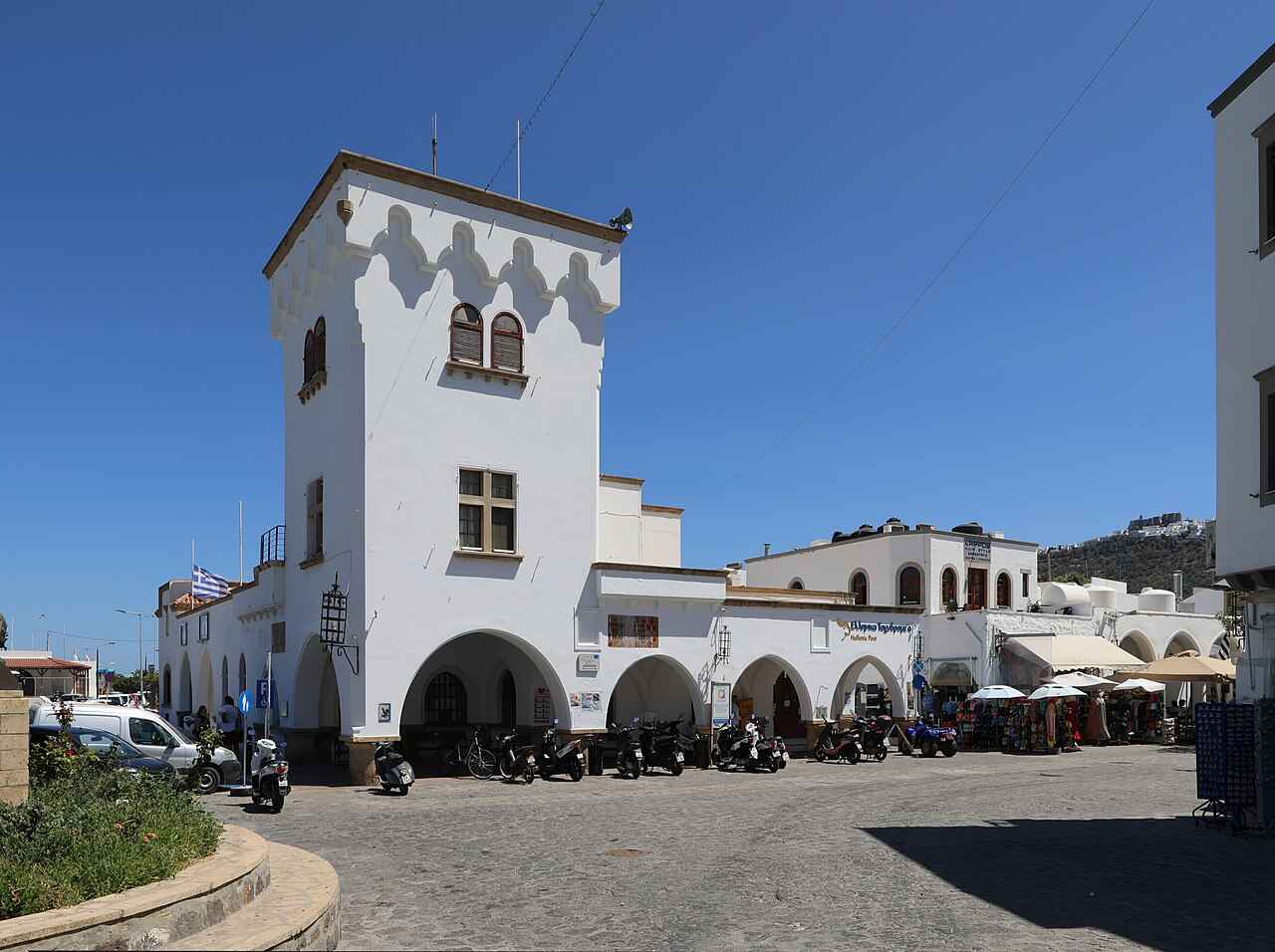
Skala is the port and main town of Patmos, the lively, low-rise hub where every ferry and cruise tender arrives. Set around a sheltered natural harbour beneath the hill of Kastelli. Comfortable, central and welcoming, it is where most visitors are based, with the widest choice of hotels. Tavernas and shops on the island and the boats, buses and beaches all within easy reach. Plan the whole trip with Greece Tours.
This guide covers Skala, Patmos: its history and waterfront, the sights of the town. The things to do, the nearby beaches, where to eat and stay. How to reach Chora and get around. Read it beside the full Patmos travel guide, the guide to hilltop Chora, and the guide to getting to Patmos.
What is Skala, the port of Patmos?
Skala is the port and largest town of Patmos, set around a sheltered natural harbour below the hill of Kastelli, about 4 kilometres from the capital Chora.
Skala spreads around a fine natural harbour on the central-east coast of Patmos, at the foot of the Kastelli hill and about 4 kilometres below the hilltop capital of Chora. It is the island’s main port, where every ferry docks and where cruise ships anchor to tender their passengers ashore. Over the years it has grown into the effective town of Patmos. Offering the most in the way of shops, services and accommodation.
By local custom no building in Skala rises higher than the great monastery on the hill above. The town keeps a low. Harmonious skyline of whitewashed houses that blend traditional Cycladic and Dodecanese forms with a touch of Italian influence from the interwar years. The waterfront, lined with cafes, tavernas, shops and travel agencies, is the heart of town life and a pleasant place to sit and watch the boats.
Comfortable, central and welcoming rather than grand, Skala is where most visitors to Patmos are based. Especially on a first or short visit, thanks to its convenience and its choice of accommodation. It makes an easy hub from which to reach the whole of this small island, as the wider Patmos travel guide describes. It is the natural gateway to everything else.
What is the history of Skala?
Skala grew as the harbour of Patmos, becoming an important commercial port around the 16th and 17th centuries.
For much of its history Skala was primarily a harbour rather than a town, because the threat of piracy in the medieval and later centuries led the islanders to live up in the safety of fortified Chora. Around the great monastery, coming down to the port only to trade and fish. Around the 16th and 17th centuries, as Patmos prospered through seafaring, Skala grew into an important commercial port handling the island’s trade across the Aegean.
Only as the seas became safer and piracy faded did people begin to settle permanently down by the harbour. Skala as a full town is largely a creation of more modern. Settled times, which is why it feels less ancient than the medieval capital above. During the Italian occupation of the Dodecanese in the earlier twentieth century, a number of public buildings were added, lending parts of the town a distinctive Italian-influenced character.
Skala wears its history lightly, in the old chapels and monasteries dotted around the town, the ruins of the ancient acropolis on the Kastelli hill above. The graceful early-twentieth-century buildings along the waterfront. This layered past, harbour, trading port and modern town, sits quietly beneath the busy, welcoming settlement that greets visitors as they step off the ferry.
What is there to see in Skala?
In Skala you can see the lively waterfront, the 17th-century chapel of Agia Paraskevi, the ruins of the ancient acropolis on Kastelli hill, and the monasteries of Zoodochos Pigi and Panagia Koumana.
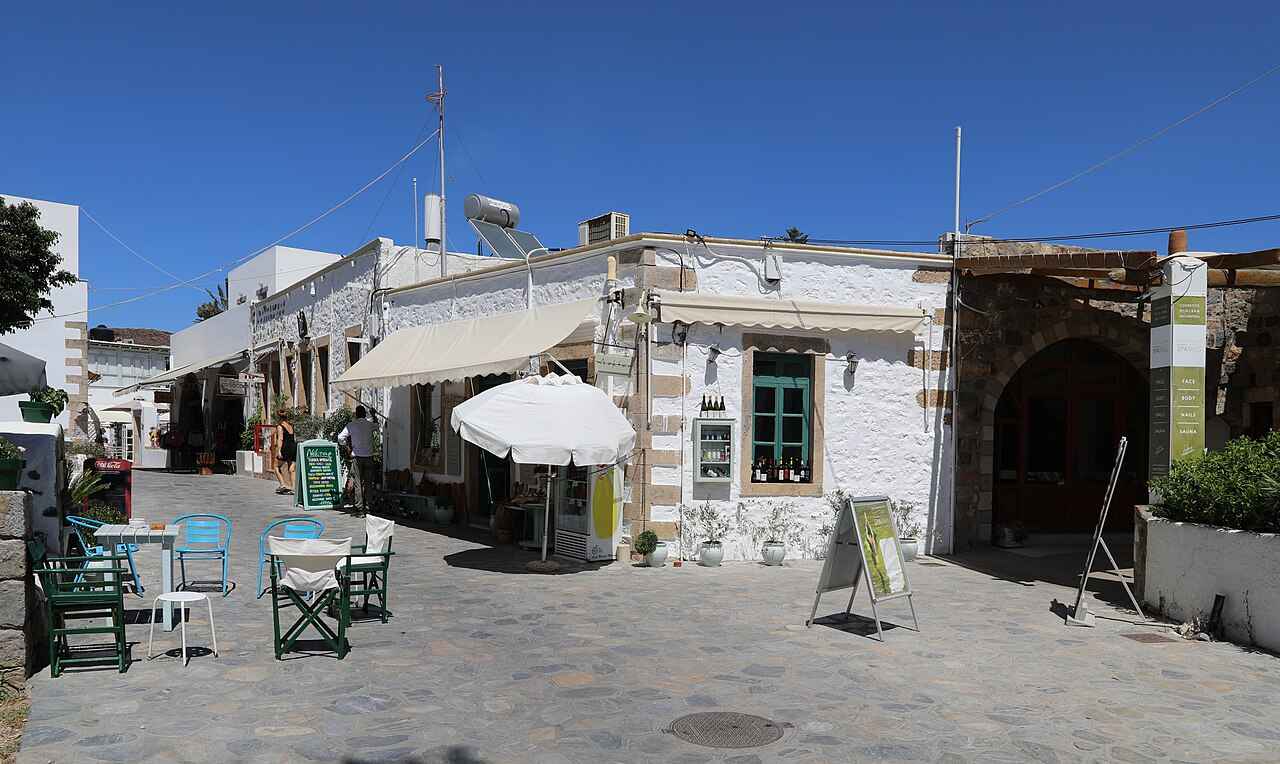
The first sight of Skala is its waterfront, a curving quay lined with cafes, tavernas and shops that is the focus of the town and a fine place to begin. Behind it, a delightful maze of narrow whitewashed lanes rewards a wander. Gracefully mixing traditional island architecture with the Italian-influenced public buildings of the early twentieth century. Dotted with small churches and chapels, among them the pretty 17th-century chapel of Agia Paraskevi.
Rising directly behind the town is the Kastelli hill, where the scant remains of the ancient acropolis of Patmos. Walls and foundations from the classical and Hellenistic town, reward a short uphill walk with sweeping views over the harbour, the bay and the boats below. It is an easy way to add a little ancient history and a fine viewpoint to a stay otherwise focused on the Byzantine monuments up in Chora.
Around the town and its edges stand religious sites worth seeking out, including the monasteries of Zoodochos Pigi and Panagia Koumana. Whose whitewashed chapels and quiet courtyards offer a peaceful contrast to the busy waterfront. Together these modest sights give Skala more to explore than a first glance suggests, beyond its role as the island’s arrival point and hub.
What can you do in Skala?
In Skala you can stroll the waterfront and join the evening volta, eat fresh fish at seaside tavernas, browse the shops, arrange boat trips, car hire and excursions, climb Kastelli hill for the views, and swim at the nearby beaches.
Life in Skala revolves around its harbour. The simplest pleasure is to stroll the waterfront. Watch the ferries and fishing boats come and go, and settle at a cafe or taverna to people-watch over a coffee or an ouzo. Each evening, locals and visitors join the volta, the unhurried stroll along the quay, before sitting down to dinner. The town’s gentle. Sociable buzz makes it the liveliest, if still low-key, place on the island after dark.
Skala is also where you organise the rest of your visit, as this is the base for booking boat trips, sunset cruises and taxi-boats to remote beaches. For renting a car or scooter. For arranging guided excursions up to the monastery and Chora, all easily done along the waterfront. Browsing the town’s shops, from gift shops and boutiques to bakeries and delis selling local honey and cheese, fills an easy hour or two.
Beyond the town itself, you can climb the Kastelli hill for the ancient acropolis and the views. Swim at the beaches near the port, or use Skala as the starting point for exploring the whole island. With everything from services to nightlife of the gentle island kind gathered here, Skala offers plenty to do, as the guide to things to do in Patmos describes.
What beaches are near Skala?
Near Skala you can swim at the town’s own beach and, a short walk or ride away, the sandy beaches of Meloi, Agriolivado and Hohlakas, plus little Agios Theologos close to the port.
Skala has convenient swimming close at hand, making it easy to combine town life with beach time. The town’s own beach, a stretch of grey pebble and shingle along the edge of the settlement, is handy for a quick dip with cafes and tavernas steps away, while the small sandy beach of Agios Theologos, about 200 metres from the port, is a popular local spot for a quick refreshing swim.
A short walk, bus ride or drive to the north brings you to the better sandy beaches of Meloi and Agriolivado, both with calm, shallow. Tree-shaded water, tavernas behind them and an easygoing feel that suits families, while the pebbly cove of Hohlakas lies within reach too. These nearby beaches are the easiest on the island to reach from a Skala base, especially for visitors without a car, as the guide to beaches in Patmos describes.
For the island’s finest and most remote beaches, such as sandy Psili Ammos in the wild south. The taxi-boats that leave Skala harbour in summer are the answer, ferrying swimmers out in the morning and collecting them later in the day. Between the town beaches, the nearby sandy bays and the boat connections. Skala makes a practical base for beach days as well as sightseeing. The pebbly cove of Hohlakas is another easy, uncrowded option within short reach of the town.
Where you eat and drink in Skala?
In Skala you can eat fresh fish and seafood at the waterfront tavernas, traditional Greek dishes at family-run restaurants in the lanes, and sweets and coffee at cafes and bakeries, then drink at relaxed seaside bars.
Skala has the widest and most varied choice of places to eat and drink on Patmos, most of them gathered along the waterfront and in the lanes just behind it. Seaside tavernas serve fresh fish and seafood landed that morning, alongside grilled meats. Salads and Greek classics. Eating with your feet almost in the water as the boats bob in the harbour is one of the simple pleasures of a stay in the port.
Back in the whitewashed lanes, small family-run restaurants and ouzeries serve traditional home cooking and local Patmian specialities in a quieter setting, while bakeries, cafes and sweet shops offer breakfast, coffee, pastries and the island’s honey-and-cheese treats through the day. Whatever your budget or mood, Skala has an option close at hand, from a casual souvlaki to a long seafood dinner by the sea.
In the evening, Skala offers the liveliest, if still gentle, scene on the island, with relaxed seaside bars. A few cocktail spots and cafes where locals and visitors linger late over drinks and conversation. There are no big clubs, in keeping with the island’s calm character. For a sociable evening meal and an easy drink afterwards. The port is the natural place to be on Patmos.
Where you stay in Skala?
Skala offers the widest choice of accommodation on Patmos, from practical hotels and comfortable rooms to studios and apartments, most within easy walking distance of the harbour, restaurants and services.
Skala has by far the greatest concentration of accommodation on Patmos, ranging from comfortable hotels and small family-run pensions to rooms. Studios and apartments, most of them within easy walking distance of the harbour, the tavernas, the shops and the bus stop. This choice and convenience make the port the most practical place to stay on the island, particularly for first-time visitors and for those travelling without their own transport.
Staying in Skala puts the ferries, taxi-boats and boat trips on your doorstep. Gives easy access to the local bus and to car and scooter hire. Places you at the centre of the island’s dining and gentle nightlife, so nothing requires much effort to reach. It is comfortable and central, if less atmospheric than the medieval capital of Chora or the beachfront bays of Grikos and Kampos.
For visitors weighing up where to stay, Skala is the sensible, convenient default, especially on a first or short visit, while those seeking more character or a beach setting look to Chora or the coast. Many split their stay, basing themselves in Skala for convenience and adding a night or two elsewhere, as the guide to where to stay in Patmos sets out.
How do you get from Skala to Chora and around Patmos?
From Skala you reach Chora, about 4 kilometres uphill, by local bus, taxi, hire car or scooter in around 15 minutes, or on foot up the old path in 30 to 40 minutes.
Skala is the transport hub of Patmos, so getting from the port to the rest of the island is straightforward. The capital of Chora, with the Monastery of Saint John and the Cave of the Apocalypse, lies about 4 kilometres uphill, reached by the local bus, by taxi. Or by a hire car or scooter in around fifteen minutes, while the fit can walk up the old cobbled path past the cave in thirty to forty minutes for a scenic, traditional approach.
The island’s modest bus network radiates from Skala, linking the port with Chora and the main beaches such as Grikos and Kampos on a daily schedule. Taxis are available at the harbour. Offering fixed fares on popular routes though limited in number, so booking ahead helps for evenings. For full freedom, car and scooter hire is easily arranged in the town, opening up the beaches, villages and viewpoints across the island.
From the harbour, taxi-boats and excursion boats also head out to remote beaches and neighbouring islets. Making Skala the starting point for exploring Patmos by sea as well as by road. Because the island is small and Skala is central, nowhere is far from the port. Wherever you are staying you can reach the sights and beaches easily from this hub.
Is Skala worth staying in or visiting?
Yes. Skala is worth staying in for its convenience, choice of accommodation, dining and central position, and worth exploring for its lively waterfront, whitewashed lanes, chapels, the Kastelli acropolis and nearby beaches.
For most visitors, Skala is well worth staying in, offering the greatest convenience on the island, with the widest choice of hotels and restaurants. The ferries and boat trips on the doorstep, easy transport to the sights and beaches. The liveliest, if still gentle, evening scene on Patmos. As a practical, comfortable and central base, especially on a first or short visit, it is hard to beat, and it suits travellers without their own transport particularly well.
Even for those staying elsewhere, Skala rewards time spent exploring. From a stroll along the harbour and through the whitewashed lanes to a climb up Kastelli for the ancient acropolis and the views, a swim at a nearby beach. A long meal at a waterfront taverna. Its mix of everyday island life. Gentle sights and easy amenities gives it more appeal than a mere arrival point. An evening spent on its waterfront is a pleasure in its own right.
Skala is comfortable and welcoming rather than picture-perfect in the way of hilltop Chora. Those seeking atmosphere or a beach setting prefer to stay elsewhere and visit the port for its practicalities and its harbour life. Either way, as the gateway and hub of the island, Skala is central to any visit to Patmos, and almost every traveller passes through it on arrival and departure, whatever their chosen base, as the full Patmos travel guide makes clear.
Frequently Asked Questions
What is Skala in Patmos?
Skala is the port and largest town of Patmos, set around a sheltered natural harbour on the central-east coast, about 4 kilometres below the hilltop capital of Chora. It is the island’s commercial and social hub, where every ferry docks and cruise ships tender their passengers ashore. It has the greatest concentration of hotels. Restaurants, shops, services and gentle nightlife on the island. Comfortable, central and welcoming rather than grand. Skala is where most visitors are based. It makes an easy gateway from which to explore the whole of this small island by road and by sea. Its low, whitewashed skyline, kept deliberately below the height of the monastery on the hill above.
Its blend of traditional island and Italian-era architecture give it a pleasant character of its own. Beyond its role as the island’s arrival point and practical hub.
What is there to do in Skala, Patmos?
In Skala you can stroll the lively waterfront and join the evening volta. Eat fresh fish at seaside tavernas, browse the shops and bakeries. Settle at a cafe to watch the harbour. The town has a pretty maze of whitewashed lanes, the 17th-century chapel of Agia Paraskevi. The ruins of the ancient acropolis on Kastelli hill. Reached by a short walk that rewards you with fine views. Skala is also the base for boat trips, sunset cruises, car hire and excursions. For swimming at nearby beaches such as Agios Theologos. Meloi and Agriolivado, making it a practical and sociable hub.
In the evening, the waterfront comes gently to life with the volta, the seaside tavernas and a few relaxed bars, giving Skala the liveliest, though still low-key, night-time atmosphere on the island, without the clubs or crowds of the busier Greek islands.
How far is Skala from Chora in Patmos?
Skala lies about 4 kilometres from Chora, the hilltop capital of Patmos, which rises directly above the port. You can travel between them by local bus, by taxi, or by hire car or scooter in around fifteen minutes along a winding. Scenic road, or walk up the old cobbled path, passing the Cave of the Apocalypse, in roughly thirty to forty minutes. Because the two are so close, visitors base themselves in Skala for its convenience and simply pop up to Chora for the Monastery of Saint John, the sunset and dinner, or split their stay between the port and the atmospheric capital. The old cobbled path between them, passing the Cave of the Apocalypse.
Is a rewarding walk in its own right and the way pilgrims have traditionally climbed to the monastery for centuries. Because the road up is short and served by frequent buses and taxis, the two towns work well together. It is easy to sleep down in convenient Skala yet spend the golden evening hours up in Chora for the sunset and dinner before heading back down.
Are there beaches in Skala, Patmos?
Yes, though the best beaches lie a little way from the town. Skala has its own beach, a stretch of grey pebble and shingle along the edge of the settlement. Handy for a quick swim. The small sandy beach of Agios Theologos about 200 metres from the port. A short walk, bus ride or drive north reaches the better sandy beaches of Meloi and Agriolivado, with calm, shallow. Tree-shaded water and tavernas behind them, while taxi-boats from Skala harbour reach remoter beaches such as Psili Ammos in the wild south. So while Skala is a working port rather than a beach resort, good swimming is easily within reach.
For a base that combines town amenities with nearby beaches it is one of the most practical choices on the island, particularly for visitors relying on the bus and boats rather than a car.