
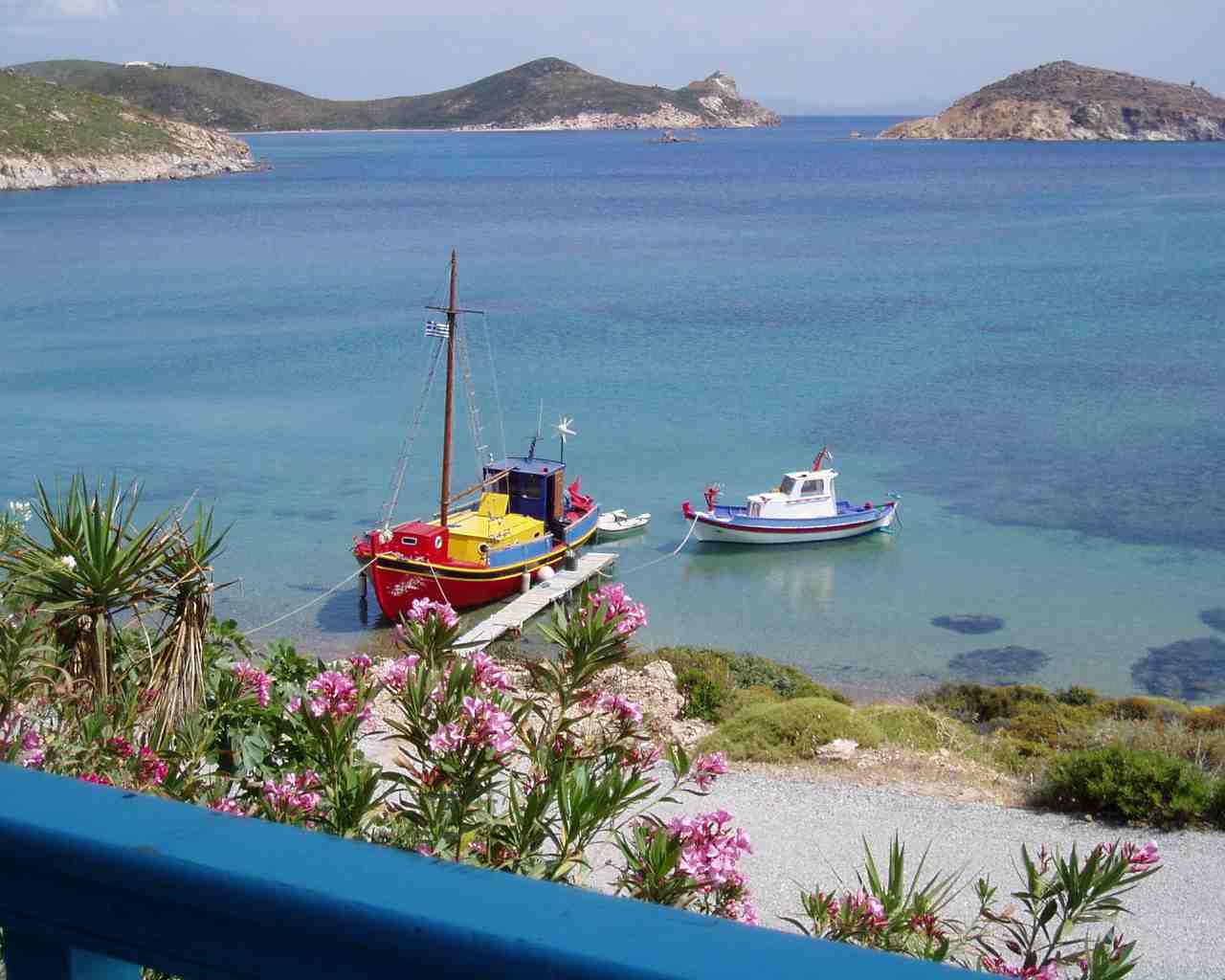
Patmos be famous for its monastery and holy cave, but its coastline is a quiet delight of clear water and small, uncrowded beaches. In just 34 square kilometres, the island packs in sandy bays like Psili Ammos and Grikos, the colourful pebbles of Lambi. Family-friendly Kambos. A string of northern coves and hidden southern inlets reached only by boat or a short hike. Plan the whole trip with Greece Tours.
This guide covers the best beaches in Patmos one by one, from the busy town beaches near Skala to the wild coves of the far south. Along with practical advice on which suit families, snorkelling and windy days. How to reach them. Read it beside the full Patmos travel guide and the guide to the best things to do in Patmos.
What are the best beaches in Patmos?
The best beaches in Patmos are sandy Psili Ammos in the south, family-friendly Grikos and Kambos, colourful-pebbled Lambi in the north, and the sandy bays of Agriolivado and Meloi near Skala, plus quiet northern coves like Vagia and Livadi Geranou.
Patmos has a remarkable variety of beaches for so small an island, ranging from fully organised bays with sunbeds. Tavernas and watersports to wild, empty coves with nothing but sand and clear sea. Most lie on the more sheltered eastern and southern coasts, strung along the island’s deeply indented shoreline. None are the huge. Developed resort beaches of the bigger islands, which is exactly their appeal for travellers who like their swimming quiet.
The water clarity across the island is consistently excellent. Turning even the humbler pebble beaches into fine places to swim and snorkel. Because Patmos never drew mass tourism you rarely have to fight for space on the sand. The busier, easy-to-reach beaches cluster around the port of Skala and the resort bay of Grikos, while solitude-seekers head north to the coves beyond Kambos or south toward Psili Ammos and the remote inlets past it.
The sections below take each of the island’s best beaches in turn. From the sandy town beaches to the colourful pebbles of Lambi and the hidden southern coves. Then cover which are best for families, snorkelling and windy days, and how to reach them. Whether you want a sunbed and a frappé or a lonely swim off a boat, there is a Patmos beach to match.
What is Psili Ammos beach in Patmos like?
Psili Ammos is the most famous beach in Patmos, a sandy bay in the wild south backed by tamarisk trees with soft golden sand and clear turquoise water.
Psili Ammos, whose name means fine sand, is widely regarded as the finest beach on Patmos and the one most worth the effort of reaching. Set in a remote bay on the wild southern coast, it is a broad crescent of soft, pale sand, unusual on an island of pebble shores, lapped by shallow. Brilliantly clear turquoise water and backed by a grove of tamarisk trees that throw natural shade over part of the beach through the day.
Getting there is part of the experience, since no proper road reaches the bay. Most visitors either drive to the end of the track and walk the last 20 to 30 minutes over the headland on a marked path. Or take one of the small taxi-boats that run from Skala harbour in summer, dropping swimmers on the sand and collecting them later in the afternoon. Either way, the mild barrier to entry keeps the crowds down and preserves the beach’s away-from-it-all feel.
A single seasonal taverna behind the sand serves fish, snacks and cold drinks. You can spend a whole day here. But there is little else, so bring water, sun protection and anything else you need. Exposed to the open sea, Psili Ammos is glorious on a calm day but can pick up waves when the southerly wind blows. It rewards checking the forecast before committing to the trip out.
What is Grikos beach and the Kallikatsou rock like?
Grikos is a sheltered, family-friendly sandy and shingle bay on the east coast of Patmos, with tavernas, watersports and calm, shallow water.
Grikos, kilometres south of Skala and Chora, is the closest Patmos comes to a resort beach, though it remains low-key and relaxed. The bay curves around calm, sheltered water that shelves gently into the sea, making it safe and comfortable for children. The mix of soft sand and fine shingle is backed by tavernas. Cafes and small hotels, so lunch, a coffee or an ice cream are never far from your towel. Sunbeds, umbrellas and watersports operators complete the easy, organised feel.
The bay’s landmark is the Kallikatsou rock, a vast, sculptural monolith that rises straight from the sea at its southern end. Pocked with caves and ancient carved niches once used by hermits. Snorkelling around its base, where the water is deep and clear. Is one of the small pleasures of a day at Grikos. The rock makes a dramatic backdrop for photographs, especially in the low light of late afternoon.
Just beyond Kallikatsou lies Petra beach, a quieter stretch of sand and pebbles reached on foot from Grikos. Which offers more solitude while keeping the same clear water and sheltered setting. Together, Grikos and Petra make one of the most rewarding beach areas on the island, combining easy facilities, safe swimming and a striking natural monument in a single sheltered bay.
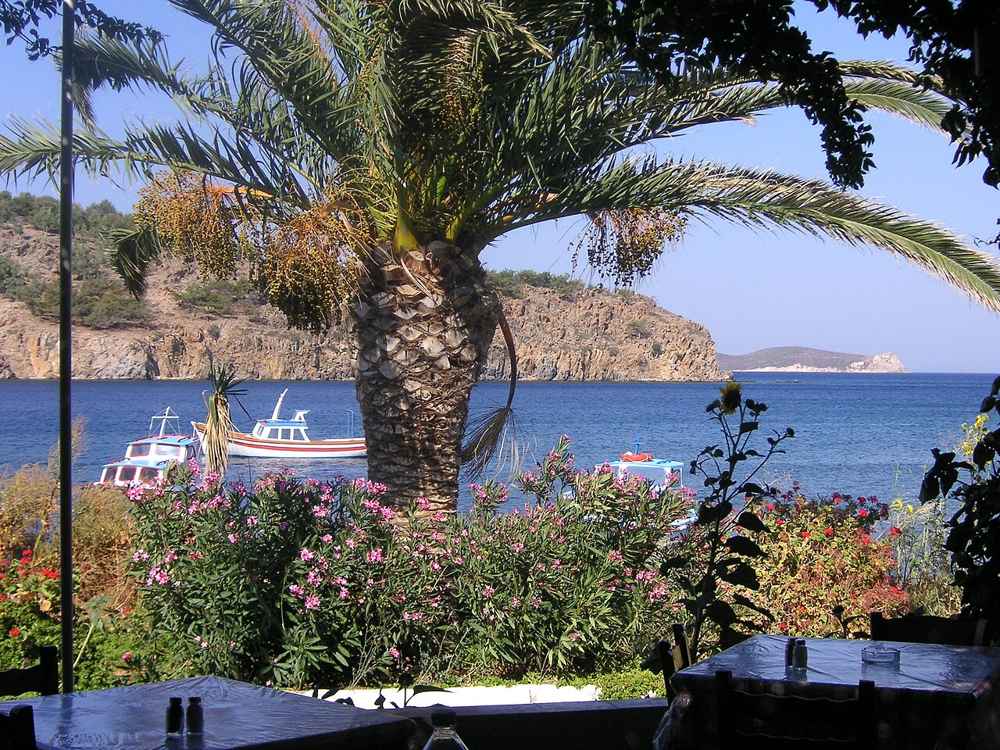
What are Agriolivado and Meloi beaches near Skala like?
Agriolivado and Meloi are two easy sandy beaches just north of Skala, both with calm, shallow water, tamarisk shade and tavernas.
Only a short drive or a pleasant walk north of the port. Agriolivado and Meloi are the most convenient beaches on Patmos and a good choice when you want an easy swim without a long journey. Agriolivado sits in a sheltered bay of soft sand and calm, shallow water. With a couple of tavernas behind it serving fresh fish and mezedes. It is a favourite for a lazy afternoon dip and a long lunch by the sea, especially for those based in or near Skala.
Meloi, a little closer to the port, is a longer beach backed by tamarisk trees that provide welcome shade, with clean, gently shelving water that suits families and children. It is home to the island’s organised campsite, set among the trees just behind the sand. Which gives it a slightly livelier, sociable feel. A good taverna makes it easy to stay all day. Both beaches are partly organised with sunbeds in high season.
These two beaches fill a little more than the remoter coves. They are still relaxed by any wider standard, and their calm, sheltered water makes them a reliable choice on all but the windiest days. For visitors without a car, they are the easiest beaches to reach on foot or by a short bus or taxi ride from the port.
What is Kambos beach and is it good for families?
Kambos is the most organised and family-friendly beach in Patmos, a sheltered sandy bay in the north with shallow water, tavernas, sunbeds and watersports.
Set on a broad, sheltered bay in the north of the island. Kambos is the liveliest and best-equipped beach on Patmos. The natural choice for families who want facilities close at hand. The wide stretch of sand shelves gently into calm, shallow water that is safe for young children. Behind it a cluster of tavernas and cafes serves everything from a quick frappé to a full seafood lunch. With sunbeds and umbrellas lining the shore through the summer.
Kambos is also the island’s watersports hub, with operators offering pedalos, kayaks, paddleboards, waterskiing and other activities from the beach, giving older children and teenagers plenty to do beyond swimming. Its sheltered position keeps the water calm on most days. The combination of easy parking. Shade and amenities makes it the most practical family beach on the island for a full day out.
Notably, Kambos is one of the beaches in Greece fitted with a Seatrac system, a solar-powered ramp that allows people with reduced mobility to enter the sea independently. Which, together with the shallow, calm water and good facilities, makes it the most accessible beach on Patmos. For families with a range of ages and abilities, it is hard to beat as an all-round beach base.
What is Lambi beach known for?
Lambi is a beach in the far north of Patmos famous for its multicoloured volcanic pebbles, smooth stones of red, grey, green and white polished by the sea.
Lambi, tucked into a bay at the northern tip of the island, is one of the most distinctive beaches on Patmos, celebrated not for sand but for its extraordinary pebbles. The shore is covered in smooth, rounded volcanic stones in a remarkable range of colours, reds, greens, greys, blacks and whites, streaked and patterned. That have long fascinated visitors and were once eagerly collected until signs went up asking people to leave them in place so the beach keeps its character.
Beyond the pebbles, Lambi is a beautiful, tranquil spot. Its clear water excellent for swimming and snorkelling among the colourful stones on the seabed. The beach is partly shaded by trees behind the shore. It sees fewer visitors than the beaches nearer Skala. Thanks to its distance. It rewards those with a car or scooter willing to make the drive to the northern end of the island.
Lambi is also known for its long-established fish taverna, one of the best-regarded on the island. Which makes the beach a fine destination for a leisurely seafood lunch as much as for a swim. Combining a morning on the colourful pebbles with a long lunch here. a visit to the quiet coves nearby, makes a rewarding day out in the north of Patmos.
What are the quiet northern beaches of Vagia and Livadi Geranou like?
Vagia and Livadi Geranou are quiet, scenic beaches in the north of Patmos.
The northern coast beyond Kambos hides some of the island’s most peaceful beaches, reached by winding roads through terraced hills. Vagia is a small, pretty cove of fine pebbles and clear water, backed by greenery and known above all for its charming hillside cafe. Famous for homemade cakes and sweets, which draws visitors up for the view and the atmosphere as much as for the swim. It is a quiet, restful spot, well away from the busier southern beaches.
A little further on, Livadi Geranou is a lovely sand-and-pebble beach shaded by tamarisk trees. Looking out across the water to the tiny green islet of Agios Georgios, with its little chapel, which strong swimmers sometimes swim out to. The water here is beautifully clear and calm. A taverna behind the beach serves fresh fish and local dishes. The shade and shallow water make it a rewarding, uncrowded choice for a relaxed day.
Both beaches reward the drive north with tranquillity and clear water, and they pair naturally with a visit to Lambi and the colourful pebbles nearby. For travellers with a car or scooter who want to escape even the modest crowds of the island’s main beaches. This quiet northern corner of Patmos is the place to head, ideally with a picnic or a taverna lunch built into the day.
What beaches are within walking distance of Skala?
Within easy reach of Skala are the town’s own pebble beach, plus sandy Meloi and Agriolivado a short walk or bus ride north, and the small coves around the port.
Skala is where most visitors are based, and it has serviceable swimming close at hand for those without their own transport. Skala’s own beach, a stretch of grey pebble and shingle along the edge of town, is not the island’s prettiest but is handy for a quick dip. With shade from trees behind it and all the cafes, tavernas and shops of the waterfront within steps, making it an easy spot for a cooling swim between other activities.
For something better, the sandy beaches of Meloi and Agriolivado lie only a short walk. Bus ride or taxi hop to the north. Are the obvious choice for a proper beach day from a Skala base. Both have calm, shallow, tree-shaded water and tavernas behind them. The gentle walk out along the coast is pleasant in the cooler parts of the day, so many car-free visitors simply stroll between them.
Small coves and rocky swimming spots also dot the shoreline around the bay of Skala. Rewarding a little exploration on foot. The harbour is the departure point for the taxi-boats that reach the finer, remoter beaches such as Psili Ammos. For anyone staying in the port without a vehicle, this cluster of nearby beaches and the boat connections make beach days easy to arrange.
Which are the best quiet and hidden beaches in Patmos?
The best quiet and hidden beaches in Patmos are the remote southern coves beyond Psili Ammos, small inlets on the east and southeast coasts, and secluded northern spots, most reached only by boat, a chartered trip, or a walk.
Beyond the organised beaches, Patmos rewards those willing to seek out its wilder, emptier shores. The far south of the island, past Psili Ammos, hides a scatter of remote coves and inlets. Some little more than a slip of sand or shingle beneath the cliffs, reachable only on foot along rough tracks or, more easily, by boat. The southeast and eastern coasts hold further small, secluded swimming spots where you can often have the water entirely to yourself, even in high summer.
The surest way to reach these hidden beaches is by sea, either on a group boat trip that anchors at coves for swimming and snorkelling. Or on a private charter or taxi-boat that lets you choose your own bays. Skippers who know the coast can drop you at inlets no road comes near. Where the water is glass-clear over pale sand and rock. The only sounds are the sea and the cicadas, which is Patmos beach-going at its most idyllic.
Sunbeds or shade, they demand a little preparation: bring water, food, sun protection and snorkelling gear. Take all your rubbish away with you to keep them pristine. For travellers who value solitude and clear water over facilities. These are the most memorable beaches on the island. A chartered day exploring them is one of the finest experiences Patmos offers.
Which Patmos beaches are best for snorkelling and clear water?
The clearest water for snorkelling in Patmos is around the Kallikatsou rock at Grikos, the colourful stones of Lambi, the islet off Livadi Geranou, and the hidden southern and eastern coves reached by boat, where rocky seabeds and excellent visibility.
Patmos is a fine island for snorkelling, thanks to consistently clear, clean water and a coastline of rocky points, small reefs and pebble seabeds that shelter plenty of marine life. Grikos is a rewarding starting point, where snorkelling around the deep, clear water at the base of the Kallikatsou monolith reveals rocks. Fish and the occasional carved niche, all within an easy, sheltered bay that suits beginners and children as well as confident swimmers.
In the north, the colourful pebbles of Lambi make a beautiful underwater scene. The clear bay off Livadi Geranou. With its little offshore islet, is another excellent spot to drift with a mask and fins over rock and sand. The water off the quieter northern coves is calm and transparent, ideal for spotting bream, wrasse. Small octopus and the shimmer of fish over the seabed. Needs no more equipment than a basic snorkel set.
The very best snorkelling, though, is off the hidden coves reached by boat, where deep. Gin-clear water over rocky drop-offs teems with life and visibility often exceeds fifteen or twenty metres in summer. Bringing your own mask and fins means you can jump in wherever a boat trip anchors, and pairing a coastal boat trip with snorkelling stops is the ideal way to experience the underwater side of Patmos, as the guide to things to do in Patmos describes.
How do you get to the beaches in Patmos?
You can reach the main Patmos beaches by hire car or scooter, by the local bus from Skala to Grikos, Kambos and Meloi, by taxi, or by taxi-boat from Skala harbour to Psili Ammos and hidden coves.
A hire car or scooter is the most flexible way to explore the beaches of Patmos, letting you reach the scattered northern coves around Lambi. Vagia and Livadi Geranou and the southern beaches at your own pace, along roads that are generally paved and well kept but narrow and winding in places. Renting wheels for even a couple of days opens up far more of the coast than public transport can. Is the approach most beach-focused visitors choose, as the wider Patmos travel guide explains.
Without a car, the local bus links Skala with the main beaches of Grikos, Kambos and Meloi on a modest daily schedule, which covers the needs of visitors, while taxis fill the gaps, particularly for evening returns, though they are limited in number so it pays to book ahead. Between them, buses and taxis make the easy, organised beaches perfectly reachable for those staying in the port.
For the finest beaches that no road serves, the taxi-boats that leave Skala harbour in summer are the answer. Ferrying swimmers to Psili Ammos and other coves in the morning and collecting them later in the day for a modest fare. Group boat trips and private charters go further still. Reaching the hidden southern and eastern inlets. Combining wheels on land with a boat by sea unlocks every beach on the island.
What watersports and beach activities can you do in Patmos?
At Patmos beaches you can try kayaking, paddleboarding, windsurfing, pedalos and waterskiing, mainly at organised Kambos and Grikos, snorkel in clear coves across the island, join boat trips from Skala, and dive with local operators on reefs and caves off.
Low-key island rather than an action-sports destination, its beaches still offer plenty to do beyond swimming and sunbathing. The main watersports hub is Kambos in the north, where operators on the sand hire out pedalos, kayaks, stand-up paddleboards and other craft and run activities such as waterskiing in the sheltered bay. Giving families and active travellers an easy way to get out on the calm water for an hour or a whole morning.
Grikos, the resort bay on the east coast, also offers watersports and boat hire in season. Its sheltered water suits paddleboarding and kayaking along the shore toward the Kallikatsou rock. Renting a kayak or paddleboard at either beach is one of the most enjoyable and inexpensive ways to explore the coast under your own power. Slipping into small coves and along rocky shores that you never reach on foot. It suits all but the youngest visitors.
Beyond the organised beaches, snorkelling is possible almost anywhere thanks to the clear water. The island’s dive operators run guided dives and courses to reefs. Drop-offs and small caves for certified divers and beginners alike. Boat trips and taxi-boats from Skala add another dimension, combining swimming and snorkelling stops at hidden coves, so the beaches of Patmos double as launch points for a good range of gentle sea activities, as the guide to things to do in Patmos describes.
Are there naturist or secluded beaches in Patmos?
Yes. Patmos has several secluded coves where naturism is quietly tolerated, mostly at the far ends of quieter beaches and remote inlets on the southern and eastern coasts reached by boat or on foot.
Patmos is a relaxed, traditional island. While it has no official naturist beach, the quieter and more remote coves have long attracted swimmers who prefer to bathe without a swimsuit. Generally at the secluded far ends of beaches and at the hidden inlets that see visitors. The wild coves of the south and southeast, reached only by boat or a walk on rough tracks. Are where solitude is easiest to find and where discreet naturism is most common and accepted.
By contrast, the organised, family-oriented beaches such as Kambos, Grikos, Meloi and Agriolivado are conventional. Sociable places where swimwear is the norm. Those seeking privacy head instead for the emptier northern and southern shores. As always on the Greek islands, discretion and respect for others are expected, and it is wise to keep to the more isolated spots well away from families and tavernas.
For anyone wanting a truly private swim, the surest approach is to charter a boat or take a taxi-boat to one of the remote coves that no road reaches. Where you can often have a whole inlet to yourself even in high summer. These hidden beaches, with their clear water and complete solitude, are the natural choice for naturists and for anyone else who simply values peace and privacy over facilities.
Which Patmos beaches have the best tavernas and food?
The best beach tavernas in Patmos are the long-established fish taverna at Lambi, the popular hillside cafe above Vagia famous for homemade sweets, and the seafood tavernas behind Grikos, Agriolivado, Meloi and Livadi Geranou, all serving fresh fish and traditional.
Part of the pleasure of a Patmos beach day is a long. Unhurried lunch at a taverna beside the sea. Several of the island’s beaches are as well known for their food as for their swimming. Lambi, at the northern tip, has one of the most celebrated fish tavernas on the island. A long-established family place where you can eat fresh-caught fish and local dishes right behind the colourful pebble shore, making the beach a destination for a leisurely meal as much as a swim.
Above the pebble cove of Vagia, a charming hillside cafe is famous across the island for its homemade cakes. Pies and sweets. Draws visitors up for the view over the bay and a slice of something sweet after a swim. The resort bay of Grikos and the sandy beaches of Agriolivado and Meloi near Skala all have relaxed seafood tavernas right behind the sand. Ideal for a plate of grilled fish, a salad and a chilled ouzo without leaving the beach.
Even the quieter beaches often have a simple taverna or kantina in season, such as the one behind Livadi Geranou in the north, though the remotest coves have nothing at all. You must bring your own food and water there. Combining a swim with a meal at one of the beach tavernas is one of the small. Reliable joys of the island. A good reason to build your beach days around these food-friendly shores.
What you bring and know before a beach day in Patmos?
For a Patmos beach day, bring water, sun protection, shade and cash, since beaches have few or no facilities and tavernas are cash-only.
Facility-free coves, a little preparation makes for a better day. Only the busier beaches such as Kambos, Grikos, Meloi and Agriolivado have sunbeds, tavernas and shade on tap. For the quieter northern and southern beaches. And especially the hidden coves, you carry plenty of water, sun cream, a hat and your own shade, along with enough food for the day, as there be nowhere to buy anything nearby.
Cash is worth carrying, since the small beach tavernas and kantinas are often cash-only and ATMs exist only in Skala. A pair of water shoes is genuinely useful given how many of the island’s beaches are pebble or shingle rather than sand. Protecting your feet on the stones and around the rocky snorkelling spots. Basic snorkelling gear is well worth packing too, as the clear water rewards it almost everywhere.
Finally, keep an eye on the wind, since the summer meltemi can turn the exposed beaches choppy and make coves unreachable by small boat. Plan flexible days and favour sheltered bays when it blows. If you are heading to a beach served only by taxi-boat, such as Psili Ammos, check the departure and return times from Skala harbour in advance. Always take your rubbish home to help keep these beautiful, low-key beaches as clean and unspoilt as you find them for the visitors who come after you.
When is the best time to visit the beaches of Patmos?
The best time for the beaches of Patmos is late May to early October, when the sea is warm enough to swim. July and August are hottest and busiest, while June and September bring warm water and fewer people.
The Patmos beach season runs through the warm months from late spring to early autumn, roughly late May to early October, when the sea is comfortable for swimming and the beach tavernas and taxi-boats are running. The water is at its warmest from July into September. The height of summer brings reliably hot, sunny beach weather, though it is also when the island is busiest and its most popular beaches, such as Grikos and Kambos, see the most visitors.
For the ideal balance of warm water and quiet sand, the shoulder weeks of June and September are hard to beat. With the sea already or still warm, long sunny days. Noticeably fewer people on the beaches. May and October are cooler and quieter again, fine for hardier swimmers and lovely for walking the coast, though some beach tavernas and boat services wind down outside the peak months. A facilities be closed.
Whatever the month, the summer meltemi wind can blow strongly from the north on days. Whipping up the exposed beaches. On windy days it pays to head for the sheltered east- and south-facing bays like Grikos, or to take a boat to a protected cove, rather than battling the waves on an open shore. Checking the wind forecast is the simplest way to pick the right beach for the day on Patmos.
Frequently Asked Questions
What is the best beach in Patmos?
Psili Ammos is widely regarded as the best beach in Patmos, a remote sandy bay on the wild southern coast with soft golden sand. Clear turquoise water and tamarisk shade, reached by a 20 to 30 minute walk or a taxi-boat from Skala. For families and easier access, Grikos and Kambos are the best choices, with sheltered, shallow water, tavernas and watersports. Kambos even has a Seatrac ramp for visitors with reduced mobility. For scenery, the colourful volcanic pebbles of Lambi in the north are unique. The right best beach really depends on whether you prioritise sand, facilities, solitude or ease of access.
Many visitors combine two or three in a stay, an easy town beach near Skala for a quick swim. A family day at Kambos or Grikos. One special trip out to Psili Ammos or a hidden southern cove by boat for the most memorable swimming of all.
Does Patmos have sandy beaches?
Yes. Although Patmos beaches are pebble or mixed sand and shingle, the island has several genuinely sandy beaches. Psili Ammos in the south is the finest, a broad crescent of soft golden sand, while Grikos, Agriolivado. Meloi and Kambos all offer sand or sand-and-shingle shores with calm, shallow water that is good for families. Livadi Geranou in the north is a pleasant sand-and-pebble beach, and the town beach at Skala is mostly grey pebble. So while Patmos is not an island of endless golden sand, there is more than enough for a varied beach holiday, especially around Grikos, Kambos and the sandy bays near Skala.
The sandiest and most family-friendly stretches lie on the sheltered eastern and northern coasts, while the pebble beaches, though less soft underfoot, often have the clearest water of all. Packing a pair of water shoes lets you enjoy the whole range without discomfort.
Can you reach Patmos beaches without a car?
Yes. Visitors without a car can still enjoy Patmos beaches. The local bus links Skala with the popular beaches of Grikos. Kambos and Meloi on a daily summer schedule. Taxis fill the gaps, though they be booked ahead for evenings. Skala’s own beach and nearby Meloi and Agriolivado are within walking or short-ride distance of the port. For the finest remote beach, Psili Ammos, taxi-boats run from Skala harbour in summer and drop swimmers on the sand, returning later in the day. Only the wildest southern coves genuinely require a boat charter or a walk on rough tracks to reach. Renting a scooter for even a single day, however.
Greatly widens the beaches within easy reach and is inexpensive. Many car-free visitors hire one for their beach days and rely on buses and boats the rest of the time.
Which Patmos beaches are best for families with children?
The best family beaches in Patmos are Kambos and Grikos, both sheltered bays with calm, shallow water, sunbeds, tavernas and watersports close at hand. Kambos is the most family-oriented of all, with a wide sandy shore, easy parking, watersports and a Seatrac access ramp for visitors with reduced mobility, while Grikos offers safe, gentle water, facilities and the fun landmark of the Kallikatsou rock to snorkel around. Meloi and Agriolivado near Skala are also excellent for families, with tree shade and calm, shallow water. Meloi has the island’s shady campsite just behind it. Making all four of these beaches reliable, low-stress choices for a relaxed family beach day.