
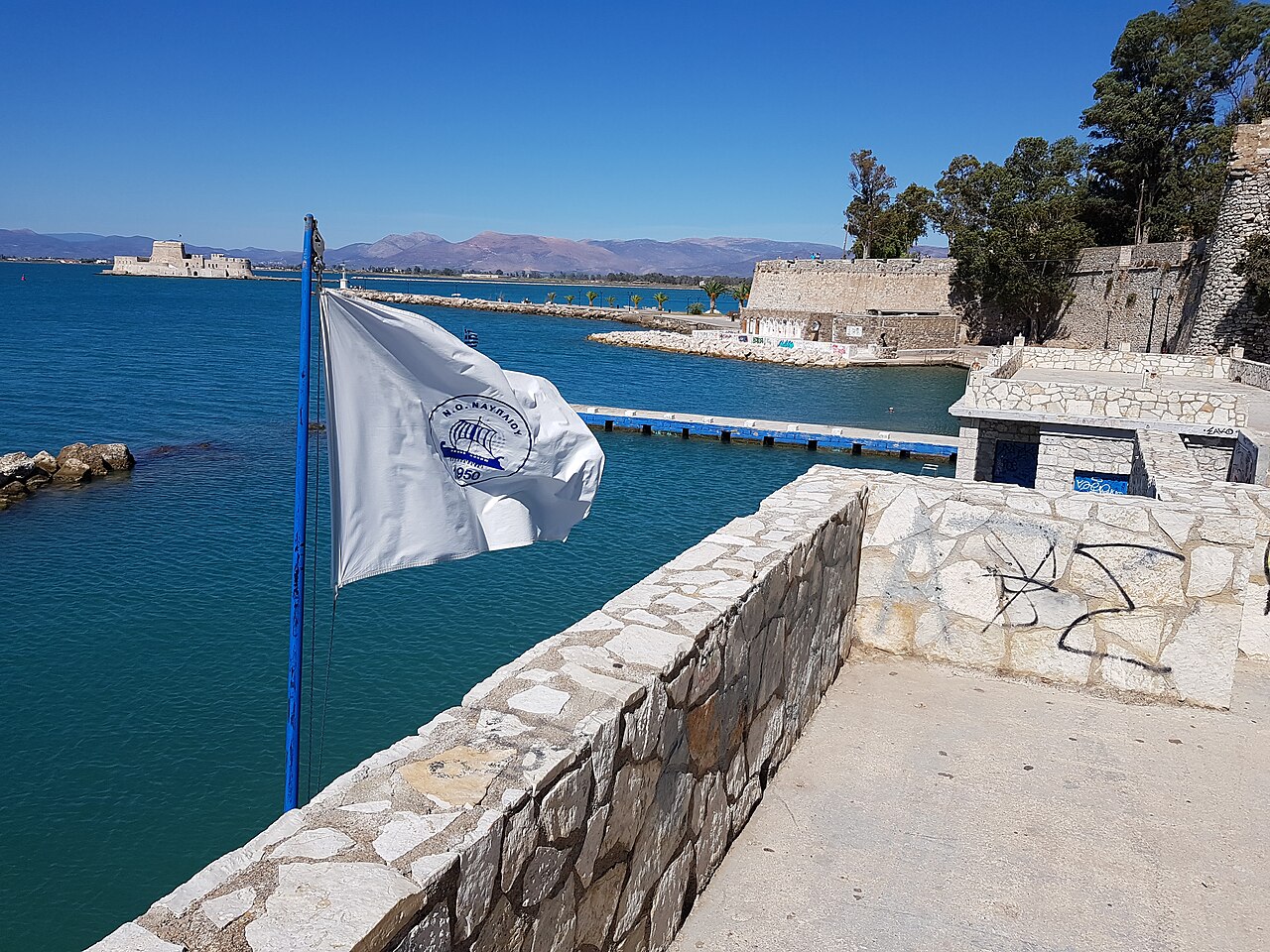
The old town of Nafplio is the most beautiful historic quarter in Greece, a maze of marble-paved streets, Venetian and neoclassical houses, and squares gathered beneath the fortresses on a headland by the sea. As the first capital of the modern Greek state, it holds the buildings where the young nation took shape, from the square with the first parliament to the church where the first governor was assassinated. It is a place to wander on foot, discovering churches, courtyards and cafes at every turn, with the best food, shopping and atmosphere in the town. This guide covers the old town in full, street by street and sight by sight.
This guide covers Nafplio old town: Syntagma Square and its buildings, the main streets, the churches, the Land Gate, the architecture and history, the shops and tavernas, the waterfront, and how to explore it on foot. Read it beside the full Nafplio travel guide, the guide to the best things to do in Nafplio and the guide on where to stay in Nafplio.
What is Nafplio old town?
Nafplio old town is the historic heart of the town, a grid of marble-paved streets and Venetian and neoclassical houses on a headland beneath the fortresses. Largely pedestrian, it holds Syntagma Square, the first Greek parliament, the churches, the museums and the best food and shopping in Nafplio.
It is the historic core. The old town is the original heart of Nafplio, built on the headland below the Acronafplia ridge and beside the harbour, so it is where the town’s history, architecture and life are concentrated, the essential part for any visitor.
It is made for walking. Paved in marble and closed to most traffic, the old town is a maze of narrow streets, squares and courtyards, so the pleasure of it is wandering on foot, discovering its churches, houses and cafes at every turn.
It holds the town’s treasures. From Syntagma Square and the first parliament to the churches, museums, shops and tavernas, the old town gathers the sights and pleasures of Nafplio, so it is where visitors spend most of their time, as the full Nafplio travel guide describes.
What is Syntagma Square in Nafplio?
Syntagma Square, or Constitution Square, is the grand central square of the old town, paved in marble and ringed by historic buildings. It holds the Archaeological Museum in the old Venetian barracks, the Trianon former mosque and the Vouleftiko first parliament nearby, and it is the social heart of Nafplio.
It is the heart of the old town. The wide, marble-paved Syntagma Square is the centrepiece of Nafplio, framed by handsome buildings and lined with cafes under the arcades, so it is the social hub where the life of the town gathers, especially in the evening.
Its buildings tell the story. Around the square stand the Venetian barracks that now house the Archaeological Museum, the Trianon that was once an Ottoman mosque, and nearby the Vouleftiko where the first Greek parliament met, so the square is a lesson in the town’s history.
It was once Platanos Square. The square was originally known for a great plane tree, the platanos, under which revolutionary generals once plotted, so it has been a gathering place through the town’s history, from Ottoman times to the birth of modern Greece.
What is the Trianon in Nafplio?
The Trianon is an elegant old building on Syntagma Square, originally an Ottoman mosque and one of the oldest to survive in Nafplio. With its domed roof and Byzantine-influenced design, it has served over the centuries as a mosque, a Catholic church and now a cultural and concert venue.
It began as a mosque. The Trianon was built as an Ottoman mosque, believed to be one of the oldest surviving from the early period of Turkish rule in Nafplio, so it is a rare and important survival of the town’s Ottoman past on the main square.
It has changed with the town. Over the centuries the Trianon was converted from a mosque to a Catholic church and later to a concert and cultural venue, so its changing uses mirror the passing of Nafplio through Ottoman, Venetian and Greek hands.
It stands on Syntagma Square. The domed building sits prominently on the main square, so it is easily seen on any walk through the old town, one of the landmarks that give Syntagma Square its historic character.
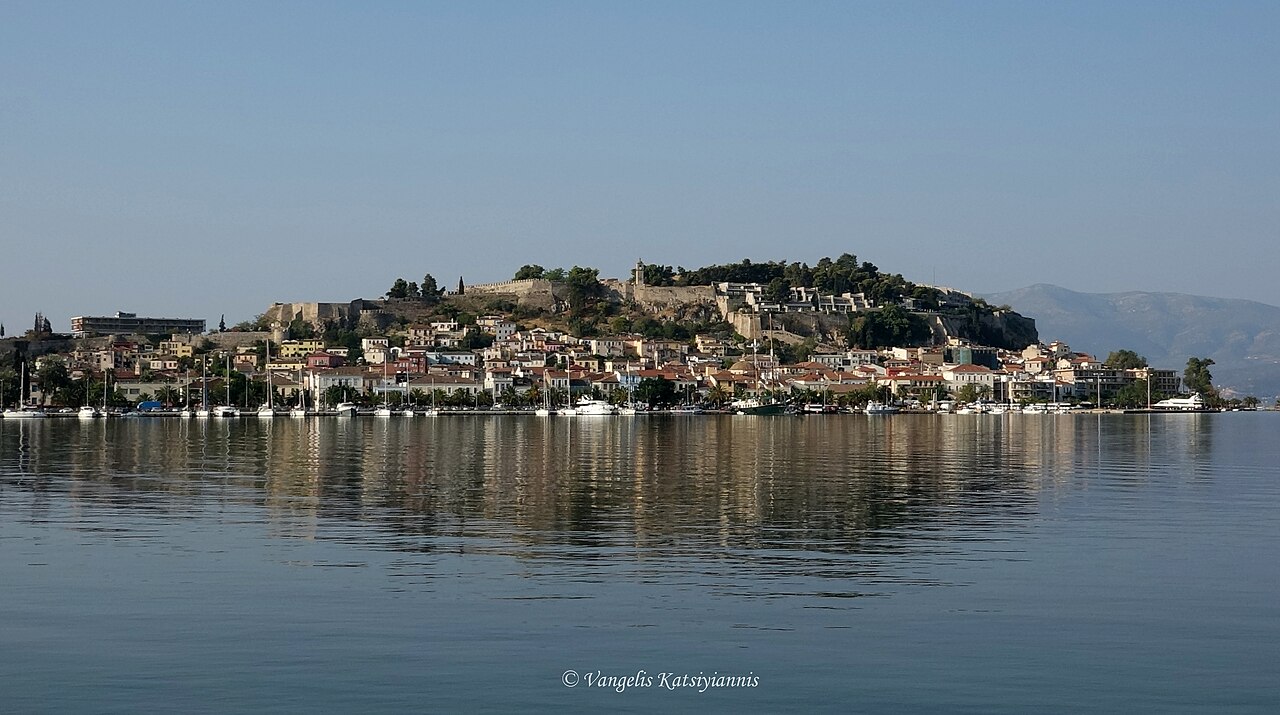
What is the Vouleftiko, the first Greek parliament?
The Vouleftiko is the building near Syntagma Square where the first parliament of independent Greece met. Originally an Ottoman mosque, it became the seat of the Greek Revolutionary Parliament in the 1820s when Nafplio was the capital, and it stands as one of the founding monuments of modern Greece.
It was Greece’s first parliament house. When Nafplio served as the capital of the newly independent Greece, the old mosque near the square was converted into the chamber of the National Assembly, the Vouleftiko, where the deputies of the young nation met.
It began as a mosque. Like the Trianon, the Vouleftiko was raised as an Ottoman mosque during the centuries of Turkish rule, so its conversion into the first Greek parliament is a vivid symbol of the change from Ottoman province to independent nation that Nafplio witnessed.
It anchors the town’s history. Together with the buildings of Syntagma Square, the Vouleftiko makes the old town an open-air record of the birth of modern Greece, so it is a fixed point on any walk through the historic quarter, as the guide to the things to do in Nafplio notes.
What are the main streets of Nafplio old town?
The main streets of Nafplio old town run from Syntagma Square: Vasileos Konstantinou, the main pedestrian shopping street, Staikopoulou, lined with tavernas and gelaterias, and Stadiou, the commercial artery to the waterfront. Between them a maze of marble lanes fills the historic quarter.
Vasileos Konstantinou is the main street. Running from Syntagma Square, Vasileos Konstantinou is the principal pedestrian shopping street of the old town, lined with shops and cafes, so it is the busy spine of the quarter, thronged with strollers in the evening.
Staikopoulou is for eating. A few steps away, the picturesque Staikopoulou street is lined with traditional tavernas and gelaterias, so it is the place to eat in the old town, its tables spilling into the narrow lane beneath the balconied houses.
Stadiou leads to the sea. Stadiou street serves as a commercial artery, lined with shops, cafes and restaurants in historic buildings, connecting Syntagma Square with the waterfront, so it links the heart of the old town to the harbour and the Bourtzi view.
What churches are in Nafplio old town?
The churches of Nafplio old town include Agios Spyridon, where the first governor Kapodistrias was assassinated, Agios Georgios, which holds the throne of King Otto, and the Catholic church of the Metamorphosis, a former mosque with a Philhellene memorial. Each carries a piece of the town’s layered history.
Agios Spyridon is the most storied. This small church is where Ioannis Kapodistrias, the first head of state of independent Greece, was shot dead in 1831, and the mark of the assassin’s bullet is still shown, a poignant relic of the young nation’s birth.
Agios Georgios holds a royal throne. The church of Agios Georgios, much converted between church and mosque over the centuries, welcomed Otto, the first King of Greece, whose throne remains inside, so it links the old town to the founding of the Greek monarchy.
The Catholic church honours the Philhellenes. The Catholic church of the Metamorphosis, once an Ottoman mosque, contains a memorial to the foreign Philhellenes who died for Greek independence, so it recalls the international support for the Greek cause.
What is the church of Agios Spyridon?
Agios Spyridon is a small church in the old town of Nafplio, famous as the place where Ioannis Kapodistrias, the first governor of independent Greece, was assassinated in 1831. The mark of the assassin’s bullet is preserved in the wall by the door, making it one of the town’s most poignant sights.
It witnessed a founding tragedy. On a Sunday morning in 1831, Kapodistrias, the first head of state of modern Greece, was shot and stabbed as he entered Agios Spyridon for the service, so the little church is tied to one of the darkest moments of the young nation.
The bullet mark survives. The mark left by the assassin’s bullet is preserved and framed in the wall by the entrance, so visitors can still see the trace of the killing, a tangible link to the events that shaped modern Greece.
It stands among the lanes. The modest church sits in the narrow streets of the old town, so it is easily found on a walk through the quarter, a small building carrying a large weight of history.
What is the church of Agios Georgios?
Agios Georgios is a historic church on its own square in the old town of Nafplio, much converted over the centuries between Catholic church, mosque and Orthodox church as the town changed hands. It holds the throne of Otto, the first King of Greece, and fine frescoes, one of the town’s main churches.
It changed with every ruler. Built as a Catholic church during Venetian rule, converted to a mosque under the Ottomans, back to a church when the Venetians returned, and finally made Orthodox when the Greeks took the town, Agios Georgios embodies the changing fortunes of Nafplio.
It holds a royal throne. The church welcomed Otto, the first King of Greece, and his throne remains inside to this day, so Agios Georgios links the old town to the founding of the Greek kingdom after independence.
It is worth stepping inside. With its frescoes and its long history, the church rewards a look within, so it is more than a landmark on its square, a place where the layered history of Nafplio is written in stone and paint.
What is the Land Gate of Nafplio old town?
The Land Gate, or Porta Sagredo, was the main gate through the Venetian land walls of Nafplio, once the only entrance to the town from the mainland. Reached by a drawbridge over a moat and bearing the lion of Saint Mark, its restored arch stands at the eastern edge of the old town.
It was the only land entrance. Because Nafplio was walled and half surrounded by sea, the Land Gate was the single point at which travellers entered from the mainland, closed each night with a drawbridge over a moat, so everyone who came by land passed through it.
The Venetians built it grandly. The surviving gate was raised during Venetian rule, a handsome stone arch bearing the lion of Saint Mark and named for the Venetian governor Sagredo, so it is one of the finest pieces of Venetian civil architecture in the town.
It marks the old town’s edge. The restored Land Gate stands where the old walls once ran, at the eastern approach below the Palamidi steps, so it makes a natural point to begin or end a walk through the old town, a reminder of the days when Nafplio was a sealed fortress.
What is the architecture of Nafplio old town like?
The architecture of Nafplio old town blends Venetian, Ottoman and neoclassical styles, an unmatched mix in Greece. Venetian fortifications and fountains, Ottoman mosques and fountains, and elegant neoclassical mansions with iron balconies line the marble streets, giving the town its distinctive and beautiful character.
Venetian and Ottoman layers remain. The town keeps Venetian walls, gates and fountains alongside Ottoman mosques and fountains, so its architecture records the centuries when Nafplio was fought over by Venice and the Ottoman Empire, a layered inheritance.
Neoclassical mansions define it. After independence, when Nafplio was the capital, elegant neoclassical houses were built, with iron balconies, tall shuttered windows and pastel facades, so the old town has the refined look of the early modern Greek state.
The blend is unique. The mix of Venetian, Ottoman and neoclassical influences, all in marble-paved streets, creates an architectural character unmatched anywhere else in Greece, so the beauty of the old town lies as much in its buildings as in any single monument.
Why was Nafplio the first capital of Greece?
Nafplio was the first capital of the modern Greek state after the War of Independence, from the 1820s until the capital moved to Athens in 1834. Strongly fortified and centrally placed, it was where the first government under Kapodistrias sat and where the young nation took shape.
It was the cradle of modern Greece. When the Greek War of Independence succeeded, Nafplio became the first capital of the new state, so the founding institutions of modern Greece, its parliament and government, took shape in its streets and squares.
Its fortresses made it secure. Guarded by Palamidi, Acronafplia and the island castle of Bourtzi, Nafplio was one of the most strongly fortified towns in Greece, so it was a natural choice for the capital of a nation still fighting for its survival.
The capital later moved. After the arrival of King Otto the capital was moved to Athens in 1834, so Nafplio’s time as capital was brief, but the old town preserves the buildings and the memory of those founding years, giving it a historical depth beyond its beauty.
Where do you shop in Nafplio old town?
You shop in Nafplio old town along Vasileos Konstantinou, the main pedestrian street, and the surrounding lanes, where shops sell worry beads and handmade komboloi, olive oil, honey, ceramics, jewellery, leather and local wine. The old town is one of the best places in Greece for shopping.
Worry beads are the signature buy. Alongside the Komboloi museum, the old town has shops devoted to handmade worry beads in amber, coral and bone, so a komboloi is the classic souvenir of Nafplio, a small and personal keepsake of the town.
Food and drink make fine gifts. The shops of the old town sell Peloponnesian olive oil, honey, herbs and the red wine of Nemea, along with sweets and spoon preserves, so the town is a good place to buy the flavours of the region to take home.
Craft and design fill the lanes. Ceramics, jewellery, leather goods and the work of local artists line the marble streets, and browsing them is part of the pleasure of the old town, so Nafplio rewards an afternoon of wandering its shops as much as its monuments.
Where do you eat in Nafplio old town?
You eat in Nafplio old town in the tavernas and ouzeries of the lanes and squares, above all on Staikopoulou street, and drink coffee under the arcades of Syntagma Square. The famous Antica Gelateria di Roma serves the best gelato in Greece, so the old town is a pleasure for food as well as sights.
Staikopoulou is the taverna street. Lined with traditional tavernas and gelaterias, Staikopoulou street is the heart of eating in the old town, its tables spilling into the lane, so it is the place to sit down to Peloponnesian cooking and local wine.
The squares are for coffee. The cafes under the arcades of Syntagma Square and the smaller squares are made for a Greek coffee or an evening drink, so the old town is as much about lingering over a coffee as about dining.
The gelato is famous. The Antica Gelateria di Roma, run by an Italian family in the old town, makes gelato regarded as the best in Greece, so a cone is a fixture of any visit, as the guide to Nafplio food describes.
What is the waterfront of Nafplio old town?
The waterfront of Nafplio old town, along Akti Miaouli, is a broad seafront promenade lined with cafes and restaurants, looking out over the harbour to the island castle of Bourtzi. It is the place for a sunset drink and the finest views in the town, at the edge of the historic quarter.
It runs along the harbour. Akti Miaouli, the seafront of the old town, stretches along the harbour, so it is a broad and pleasant promenade for a stroll, lined with cafes and restaurants facing the water.
Bourtzi is the view. From the waterfront the little island castle of Bourtzi sits out in the harbour, framed by the town and the hills, so the seafront gives the classic view of Nafplio, at its finest when the fortress is lit at sunset.
It is the place for the evening. As the sun goes down, the waterfront is where the town gathers for a drink and a stroll, so an early-evening walk along Akti Miaouli is one of the simple pleasures of the old town.
How do you explore Nafplio old town on foot?
You explore Nafplio old town on foot, as it is small, flat and largely pedestrian. Start at Syntagma Square, wander the marble streets and lanes, see the churches and the Land Gate, and end on the waterfront, allowing about one and a half to two and a half hours at an easy pace with stops.
Start at Syntagma Square. The main square is the natural starting point, so from there a walk can take in the buildings around it before setting off into the surrounding lanes to discover the churches, shops and courtyards of the quarter.
Wander the marble streets. Because the old town is flat and closed to most traffic, it is easily walked, so the pleasure is in wandering the marble streets and lanes without a fixed route, discovering the town at every turn.
Allow a couple of hours. A walk through the old town, with time for photos, a museum, the churches and a coffee, takes about one and a half to two and a half hours at an easy pace, so a morning or an afternoon covers it comfortably.
What are the squares of Nafplio old town?
The squares of Nafplio old town include the grand Syntagma Square at its heart, the smaller square of Agios Georgios by the church, and other little platies scattered through the lanes. Paved in marble and ringed by cafes and historic buildings, the squares are the gathering places of the quarter.
Syntagma Square leads. The great marble square at the centre of the old town is the finest and busiest, so it is the main gathering place, ringed by the museum, the Trianon and the cafes under the arcades.
Smaller squares dot the quarter. Around the church of Agios Georgios and through the lanes lie smaller squares, quieter and shaded, so wandering the old town reveals a series of little platies, each with its own character and often a cafe or a church.
They are the town’s living rooms. The squares of the old town are where people sit, meet and pass the evening, so they are the social heart of the quarter, at their liveliest in the cool of the evening when the town comes out to stroll.
What is Nafplio old town like in the evening?
Nafplio old town is at its most magical in the evening, when the day visitors have left and the marble streets and squares fill with people taking the evening stroll. The lamplit lanes, the sunset over Bourtzi from the waterfront and the tavernas coming to life make the evening the finest time in the town.
The town comes out to stroll. In the cool of the evening the streets and squares of the old town fill with locals and visitors taking the volta, the evening stroll, so the quarter is at its liveliest and most atmospheric once the sun goes down.
The light is the finest. The sunset over the harbour and Bourtzi, seen from the waterfront, and the lamplit marble lanes give the old town a magical quality in the evening, so it is the time photographers and romantics wait for.
The tavernas fill. As night falls the tavernas and ouzeries of the lanes and squares fill with diners, so the evening is when the old town is best enjoyed over a long dinner and a stroll, the reason it rewards an overnight stay over a day trip.
What is near Nafplio old town?
Near the old town rise the three castles of Nafplio: the great fortress of Palamidi above, the ancient Acronafplia on the ridge behind, and the island castle of Bourtzi in the harbour. The Arvanitia promenade and cove lie at the foot of the ridge, all within a short walk of the quarter.
The fortresses surround it. Palamidi rises above the old town, reached by the famous steps, Acronafplia sits on the ridge directly behind, and Bourtzi stands in the harbour, so all three of Nafplio’s castles are within reach of the quarter.
The promenade and cove are close. The Arvanitia promenade round the base of the Acronafplia, leading to the swimming cove, begins at the edge of the old town, so a walk from the quarter can take in the seafront and a swim.
Everything is on foot. Because the old town, the fortresses, the harbour and the promenade all lie close together, the whole of Nafplio is explored on foot from the quarter, so the old town is the base from which the town’s sights radiate, as the guide to the things to do in Nafplio sets out.
Where are the best photo spots in the old town?
The best photo spots in Nafplio old town are the marble lanes with their bougainvillea and balconies, Syntagma Square with its arcades, the steps and alleys climbing towards Acronafplia, and the waterfront of Akti Miaouli framing the island castle of Bourtzi, especially at sunset.
The lanes are the classic shot. The narrow marble streets, draped with bougainvillea and lined with balconied neoclassical houses, are the signature image of the old town, so they are the favourite spots for photographers wandering the quarter.
The steps and squares add drama. The stepped alleys climbing towards Acronafplia and the arcaded corners of Syntagma Square give striking compositions, so the upper lanes and the main square reward a careful eye and the soft light of morning or evening.
The waterfront frames Bourtzi. From Akti Miaouli the island castle of Bourtzi sits in the harbour against the hills, so the seafront is the place for the classic Nafplio photograph, at its finest when the fortress is lit at sunset.
What is the little tourist train of the old town?
A little tourist train tours Nafplio old town, running through the marble streets and up towards the fortresses, giving an easy overview of the quarter and its sights. Popular with families and those who want a rest from walking, it is a fun and gentle way to see the old town.
It tours the quarter. The small road train runs a circuit through the old town and up towards the fortresses, so it gives an easy overview of the streets, squares and sights without walking, a gentle introduction to the quarter.
It suits families and tired legs. The train is popular with families and with visitors who want a rest from the marble streets, so it gives children a fun ride and older visitors an easy way to see the old town.
It is a relaxed way to see it. Because it covers the main sights at a gentle pace, the little train is a relaxed way to get your bearings before exploring on foot, so many visitors take it early in a stay.
What is Nafplio old town known for?
Nafplio old town is known for being the most beautiful historic quarter in Greece and the first capital of the modern state, famous for its marble streets, Venetian and neoclassical architecture, Syntagma Square and the first parliament, its churches, its worry-bead shops and gelato, and its romantic evening atmosphere.
It is famed for its beauty. The old town is celebrated as the most beautiful in mainland Greece, so its marble streets, balconied houses and squares are what it is best known for, drawing visitors for the atmosphere as much as the sights.
It is the first capital. As the first capital of independent Greece, the old town is known for its founding history, from the first parliament to the assassination of the first governor, so it carries a historical fame beyond its beauty.
It is a romantic favourite. The old town is known as the most romantic town in Greece, famous for its evening stroll, its sunset over Bourtzi and its intimate lanes, so it draws couples and travellers seeking charm and authenticity, as the guide to the things to do in Nafplio describes.
What are the fountains of Nafplio old town?
Nafplio old town keeps several old fountains, most from the Ottoman period, set into walls and corners of the lanes. Once the water supply of the town, these carved stone fountains, some with Turkish inscriptions, are among the quieter historic details that reward a close look on a walk through the quarter.
They were the town’s water supply. Before modern plumbing, the fountains of the old town supplied its water, so they were central to daily life, and their carved basins survive in walls and corners throughout the quarter.
Most are Ottoman. Many of the fountains date from the Ottoman period, some carrying Turkish inscriptions and fine carving, so they are among the clearest survivals of the town’s Ottoman past, tucked into the marble lanes.
They reward a close look. Easy to pass by, the old fountains are among the quieter details of the old town, so seeking them out adds depth to a walk, revealing the everyday history of the quarter beyond its grand monuments.
How do you get to and park near the old town?
You reach Nafplio old town on foot, as it is largely pedestrian; drivers park in car parks and streets at its edge, near the Staikopoulos park and along the waterfront, since the marble lanes are closed to most traffic. The bus terminal and the New Town lie a short walk away.
The old town is pedestrian. Because the marble streets of the old town are closed to most traffic, driving within it is difficult, so visitors leave a car at the edge and explore the quarter on foot.
Parking is at the edge. Car parks and street parking lie around the fringe of the old town, near the Staikopoulos park below Acronafplia and along the waterfront, so drivers park there and walk in, a short and easy approach.
The town is walked from there. From the parking, the bus terminal or a hotel in the New Town, the old town is reached on foot in a few minutes, so once you arrive the whole quarter is explored on foot, as the guide on how to get to Nafplio explains.
What is the difference between the old town and the new town?
The old town of Nafplio is the historic, pedestrian quarter of marble streets and Venetian and neoclassical houses on the headland, while the New Town, the area of Pronia inland, is the modern part with ordinary streets, cheaper hotels and easier parking. Visitors come for the old town.
The old town is the historic heart. The old town is the marble-paved, largely pedestrian quarter with the squares, churches, museums and the best food and shopping, so it is where visitors spend their time and where the beauty and history of Nafplio lie.
The New Town is modern and practical. The New Town, spreading inland around Pronia, is the ordinary modern part of Nafplio, with wider streets, cheaper hotels and easier parking, so it is more practical for drivers but lacks the charm of the old quarter.
Most stay or visit in the old town. Because the old town holds the sights and atmosphere, most visitors base themselves there or in easy reach, using the New Town mainly for parking and value, as the guide on where to stay in Nafplio sets out.
What are the best views of the old town?
The best views of Nafplio old town are from above and from the water: from the ramparts of Palamidi and the ridge of Acronafplia, which look down on the marble roofs and squares, and from the boat to Bourtzi and the waterfront, which frame the town against the fortresses and the gulf.
Palamidi looks down on it. From the great fortress of Palamidi high above, the whole old town is spread out below, its red roofs, squares and waterfront clearly laid out, so the climb or drive up gives the finest overview of the quarter.
Acronafplia is closer above. The ridge of Acronafplia rises directly behind the old town, so its walls give a closer view down over the marble streets and the harbour, an easy climb or lift ride for a fine vantage point.
The water frames it. From the boat to Bourtzi and from the waterfront, the old town is seen against the backdrop of Palamidi and Acronafplia, so the sea gives the classic postcard view of Nafplio, at its best at sunset.
What is the atmosphere of the old town?
The atmosphere of Nafplio old town is elegant, romantic and relaxed, a blend of history, beauty and everyday Greek life. Marble streets and neoclassical houses, cafes under the arcades, the scent of jasmine and the evening stroll give the quarter a charm that draws couples and travellers seeking authenticity.
It is elegant and romantic. The refined neoclassical houses, the marble squares and the intimate lanes give the old town an elegance and romance that few Greek towns match, so it is a favourite for couples and a byword for the most romantic town in Greece.
It is relaxed and lived-in. Despite its beauty, the old town is a real, lived-in place, so it keeps the everyday rhythm of Greek life, from the morning coffee to the evening stroll, giving it an authenticity that visitors feel.
It rewards slowing down. The charm of the old town lies in its atmosphere as much as its sights, so the best way to enjoy it is to slow down, wander without a plan and sit over a coffee, letting the quarter reveal itself, as the full Nafplio travel guide describes.
What is the history of Nafplio old town?
Nafplio old town grew from an ancient settlement into a fortified medieval and Venetian port, held in turn by Byzantines, Franks, Venetians and Ottomans, before becoming the first capital of independent Greece. Each ruler left its mark, giving the old town its layered walls, mosques, churches and mansions.
It began in antiquity. Nafplio was settled in ancient times on the headland below Acronafplia, so the old town sits on ground inhabited for thousands of years, its deepest layers reaching back before the medieval port.
It was a fortified Venetian port. Through the medieval and early modern centuries the town was fought over by Venice and the Ottomans, who fortified it and built its mosques, walls and fountains, so the old town is a record of that long contest for the harbour.
It became the first capital. After the War of Independence Nafplio was made the first capital of the new Greek state, so neoclassical mansions and the buildings of government rose in the old town, adding the final layer to its architecture.
What is the Archaeological Museum of Nafplio?
The Archaeological Museum of Nafplio stands on Syntagma Square in the handsome old Venetian barracks, and displays finds from across the Argolid, including Mycenaean pottery, bronze armour and a boar’s-tusk helmet. It is one of the finest museums in the region, at the heart of the old town.
It fills the Venetian barracks. The museum occupies the grand stone building of the Venetian barracks on Syntagma Square, so the setting is itself a monument, one of the finest Venetian buildings in the town.
It holds Mycenaean treasures. Among its displays are finds from Mycenae and Tiryns, including the famous bronze armour and a helmet made of boar’s tusks, so the museum is a rich complement to the ancient sites of the Argolid.
It is central and easy. Because it stands on the main square, the museum is easily combined with a walk through the old town, so it is a natural stop, bringing the deep past of the region to life a few steps from the cafes.
What is the Komboloi museum in the old town?
The Komboloi museum in Nafplio old town is a small museum devoted to worry beads, the komboloi that Greek men traditionally handle to pass the time. It displays a collection of beads and prayer ropes from across the eastern Mediterranean, one of the town’s most distinctive and unusual attractions.
It celebrates the worry bead. The komboloi, a loop of beads slipped through the fingers, is a familiar part of Greek life, and the museum is devoted entirely to it, tracing the custom and displaying beads of amber, coral, bone and other materials.
Its collection reaches far. The museum gathers prayer and worry beads from across the eastern Mediterranean, the Islamic world and Asia, so it shows how the handling of beads appears in many cultures, an unusual window onto a shared human habit.
It is uniquely Nafplio. Few towns have a museum given over to worry beads, so the Komboloi museum, with a shop selling handmade sets, is one of the quirks that give the old town its character, an easy and memorable stop.
What is the Peloponnese Folklore Foundation museum?
The Peloponnese Folklore Foundation museum in Nafplio old town is an award-winning museum of Greek costume, textiles and daily life, laid out over several floors of a town house. Covering the traditional culture of the region, it is one of the finest folk museums in Greece, a rewarding stop in the quarter.
It shows traditional life. The museum displays Greek costume, textiles, jewellery and objects of daily life, so it gives a rich picture of the traditional culture of the Peloponnese, beyond the town’s ancient and medieval monuments.
It is award-winning. The Peloponnese Folklore Foundation has won European recognition for its collection and displays, so it ranks among the best folk museums in the country, well worth the visit.
It sits in the old town. Housed in a town house in the historic quarter, the museum is easily added to a walk through the old town, so it complements the Archaeological and Komboloi museums nearby.
What is the Catholic church of the Metamorphosis?
The Catholic church of the Metamorphosis, in the upper old town of Nafplio, was originally an Ottoman mosque given to the Catholic community. It holds a monument to the foreign Philhellenes who died fighting for Greek independence, including a memorial arch recording their names, a moving corner of the quarter.
It began as a mosque. The church was built as an Ottoman mosque and later given to the Catholic community of Nafplio, so it is another of the town’s buildings that passed between faiths as the town changed hands.
It honours the Philhellenes. Inside is a memorial to the foreign Philhellenes who died for Greek independence, with an arch recording their names, so the church recalls the international volunteers who fought for the Greek cause.
It stands in the upper town. The church sits in the higher lanes of the old town below Acronafplia, so it is reached by a short climb through the quarter, a quieter corner rewarding those who seek it out.
What is the story of Kapodistrias in the old town?
Ioannis Kapodistrias was the first head of state of independent Greece, governing from Nafplio when it was the capital. On a Sunday in 1831 he was assassinated at the church of Agios Spyridon in the old town by members of a rival family, an event that marks one of the darkest moments of the young nation.
He governed from Nafplio. As the first Governor of Greece, Kapodistrias made Nafplio the capital and set about building the institutions of the new state, so the old town was the seat of government at the very beginning of modern Greece.
He was killed at the church door. On a Sunday morning in 1831 Kapodistrias was shot and stabbed as he arrived at Agios Spyridon by members of the Mavromichalis family, with whom he had quarrelled, and the spot is marked to this day.
His death shaped the nation. The assassination plunged the young state into crisis and led, within a few years, to the arrival of King Otto and the move of the capital to Athens, so the old town witnessed both the founding and a turning point of modern Greece.
What is the Bavarian Lion of Nafplio?
The Bavarian Lion, or Lion of the Bavarians, is a large stone lion carved into a rock face on the edge of the old town, a monument to the Bavarian soldiers of King Otto who died of an epidemic in Nafplio. Reclining and mournful, it is one of the town’s more unusual and moving sights.
It honours Bavarian soldiers. The lion was carved to commemorate the Bavarian soldiers who came to Greece with the young King Otto and died of an epidemic in Nafplio, so it is a memorial to a little-known chapter of the town’s history.
It is carved from the rock. The large reclining lion is hewn directly into a rock face, in the manner of the famous Lion of Lucerne, so it is a striking piece of sculpture on the edge of the old town.
It lies on the town’s edge. The monument stands a short walk from the historic quarter, so it can be added to a walk through the old town, a quiet and unusual sight away from the busy streets.
What is the best walking route through the old town?
The best walking route through Nafplio old town starts at Syntagma Square, follows Vasileos Konstantinou and the shopping lanes, visits the churches of Agios Spyridon and Agios Georgios, climbs to the Catholic church for the Philhellene memorial, and ends on the waterfront of Akti Miaouli for the Bourtzi view.
Begin at the square. Start at Syntagma Square, taking in the museum, the Trianon and the Vouleftiko, so the walk begins at the historic heart of the town before setting off into the lanes.
Weave through the churches and shops. Follow the shopping street of Vasileos Konstantinou and the lanes to the churches of Agios Spyridon and Agios Georgios, climbing to the Catholic church above, so the route takes in the main sights and the atmosphere of the quarter.
End on the waterfront. Finish the walk on Akti Miaouli, the seafront promenade, with its view of the island castle of Bourtzi, so the route ends with the classic view of Nafplio, ideal for a coffee or a sunset drink.
Where do you stay in the old town?
You stay in the old town of Nafplio in boutique guesthouses and small hotels set in restored Venetian and neoclassical houses, many with roof terraces looking to the fortress. Staying in the quarter puts the squares, tavernas and waterfront on the doorstep, the most atmospheric base in the town.
The guesthouses have great charm. Accommodation in the old town is dominated by small boutique guesthouses in restored historic houses, with stone walls, wooden ceilings and roof terraces, so the rooms are part of the pleasure of a stay.
Everything is on the doorstep. Staying in the quarter puts the sights, tavernas, shops and waterfront within a short walk, so an old-town base makes the most of a visit, immersing you in the atmosphere of the town.
It is best for the evening. Because the old town is at its finest in the evening, staying there means being present for the quiet, magical hour after the day visitors leave, so it rewards an overnight over a day trip, as the guide on where to stay in Nafplio describes.
When is the best time to visit the old town?
The best time to visit Nafplio old town is spring and autumn for mild weather and thinner crowds, and the evening in any season, when the streets fill for the stroll and the waterfront glows at sunset. The flat, shaded lanes make the old town pleasant even in the summer heat.
The shoulder seasons are ideal. In spring and autumn the weather is mild and the town lively but not overwhelmed, so April to June and September to October are the finest months to wander the old town in comfort.
The evening is the finest hour. Whatever the season, the old town is at its best in the evening, when the marble streets fill with strollers and the waterfront glows at sunset, so timing a visit for the evening is always rewarding.
Summer is bearable in the lanes. Because the old town is flat and its narrow streets shaded, it is walkable even in the summer heat, especially in the morning and evening, so the quarter can be enjoyed year-round, as the guide to the best time to visit Nafplio notes.
What is the old town like for families and photography?
Nafplio old town is excellent for families and for photography: the flat, traffic-free streets are safe and easy for children, the gelaterias and the boat to Bourtzi delight them, and the marble lanes, balconied houses, squares and sunset views make the quarter one of the most photogenic in Greece.
It suits families. The flat, largely traffic-free streets are safe for children to wander, and the gelato, the little tourist train and the boat to Bourtzi are family pleasures, so the old town is relaxed and easy with children.
It rewards the camera. The marble lanes, the bougainvillea-draped houses, the squares and the sunset over Bourtzi make the old town wonderfully photogenic, so it is a favourite of photographers, at its best in the soft light of morning and evening.
It is easy to enjoy. Because everything lies close together and on the flat, families and photographers alike can explore the old town at an easy pace, so it rewards a slow wander as much as a set itinerary.
Frequently Asked Questions
What is there to see in Nafplio old town?
Nafplio old town is packed with sights within a small, walkable area. At its heart is Syntagma Square, the grand marble-paved central square, ringed by the Archaeological Museum in the old Venetian barracks, the Trianon former mosque, and the cafes under the arcades, with the Vouleftiko, the first Greek parliament, close by. The churches are a highlight: Agios Spyridon, where the first governor Kapodistrias was assassinated in 1831 with the bullet mark still shown, Agios Georgios, which holds the throne of King Otto, and the Catholic church with its Philhellene memorial. The old town also holds the Komboloi worry-bead museum, the Land Gate or Porta Sagredo with its Venetian lion, the main shopping street of Vasileos Konstantinou, the taverna-lined Staikopoulou, and the waterfront of Akti Miaouli with its view of the island castle of Bourtzi. Above and behind rise the fortresses of Palamidi and Acronafplia. The pleasure is as much in wandering the marble streets and neoclassical architecture as in any single monument.
How long do you need in Nafplio old town?
You need about half a day to see Nafplio old town properly, though it rewards longer. A walk through the quarter, taking in Syntagma Square and its buildings, the churches of Agios Spyridon and Agios Georgios, the Land Gate, the main streets and the waterfront, takes about one and a half to two and a half hours at an easy pace, with stops for photos, a museum and a coffee. Adding the Archaeological Museum or the Komboloi museum, some shopping and a leisurely lunch easily fills a half-day or more. Because the old town is flat and largely pedestrian, it is easily explored on foot, and much of its charm lies in wandering without a fixed route. The old town is also best enjoyed in the evening, when the day visitors leave and the marble streets fill for the evening stroll, so an overnight stay lets you see it at its most magical, over a sunset drink on the waterfront and a dinner in the lanes.
Is Nafplio old town walkable and flat?
Yes, the heart of Nafplio old town is largely flat and very walkable, one of the reasons it is such a pleasure to explore. The main streets and squares, from Syntagma Square along Vasileos Konstantinou and Staikopoulou to the waterfront of Akti Miaouli, run on level, marble-paved ground closed to most traffic, so walking is easy and safe, even for families with children and for older visitors. There are cobbles and some gentle inclines, and the lanes climbing towards the Catholic church and the Acronafplia ridge get steeper, but the core of the quarter is flat and compact. Most visitors explore it entirely on foot, allowing about one and a half to two and a half hours at an easy pace with stops. Only the fortress of Palamidi, reached by its famous stairway or by road, and the upper reaches towards Acronafplia involve a real climb, and even Acronafplia can be reached by a lift from the old town, so the quarter itself is accessible to almost everyone.
Is Nafplio old town worth visiting?
Yes, Nafplio old town is one of the most beautiful and rewarding historic quarters in Greece, and the essential heart of any visit to the town. As the first capital of the modern Greek state, it holds a remarkable concentration of history, from Syntagma Square and the first Greek parliament to the church where the first governor was assassinated and the one that holds a royal throne. Its architecture is a unique blend of Venetian, Ottoman and neoclassical styles, all in marble-paved, largely pedestrian streets, so it is simply beautiful to walk. Beyond the sights, the old town holds the best food, shopping and atmosphere in Nafplio, from the tavernas of Staikopoulou and the famous gelato to the worry-bead shops and the cafes of the squares, and the waterfront gives the classic view of the island castle of Bourtzi. At its finest in the evening, when the streets fill for the stroll, the old town rewards not just a visit but an overnight stay, and it is the base from which all of Nafplio’s sights are explored.