
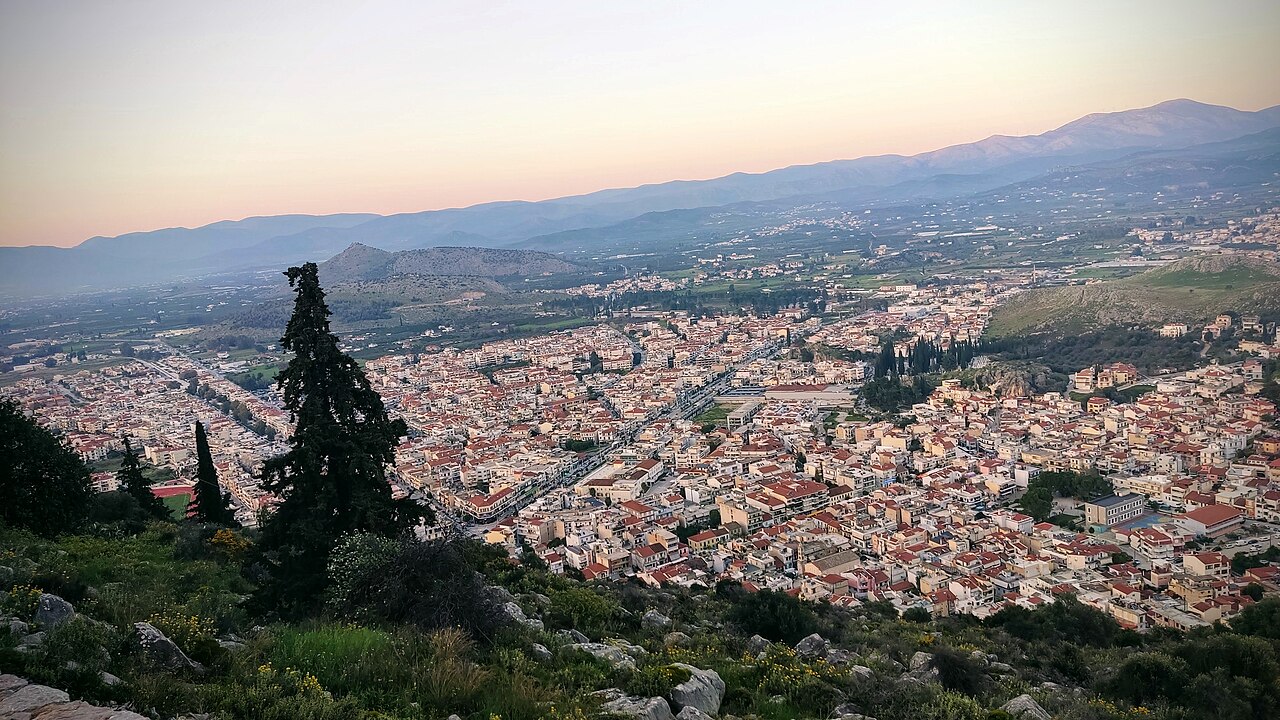
Nafplio is the most beautiful town in the Peloponnese and the first capital of modern Greece, a place of three fortresses, marble streets and a harbour crowned by an island castle. It packs an extraordinary amount into a small space: the great Venetian fortress of Palamidi on the hill, the island fort of Bourtzi in the bay, the Acronafplia citadel on the ridge, an old town of Venetian and neoclassical houses, the square where the first Greek parliament sat, museums of archaeology and worry beads, seafront promenades to swimming coves, and a ring of ancient sites within an easy drive.
This guide covers everything to do in Nafplio: the three fortresses, the old town and Syntagma Square, the museums, the beaches, the food, the churches and the story of Greece’s first governor, and the best day trips into the Argolid. Read it beside the full Nafplio travel guide, the guide to Palamidi fortress and the guide to Bourtzi castle.
What are the best things to do in Nafplio?
The best things to do in Nafplio are climbing the fortress of Palamidi, crossing to the island castle of Bourtzi, walking the marble old town and Syntagma Square, visiting the museums, swimming at Arvanitia and Karathona, eating in the tavernas, and taking day trips to Mycenae and Epidaurus.
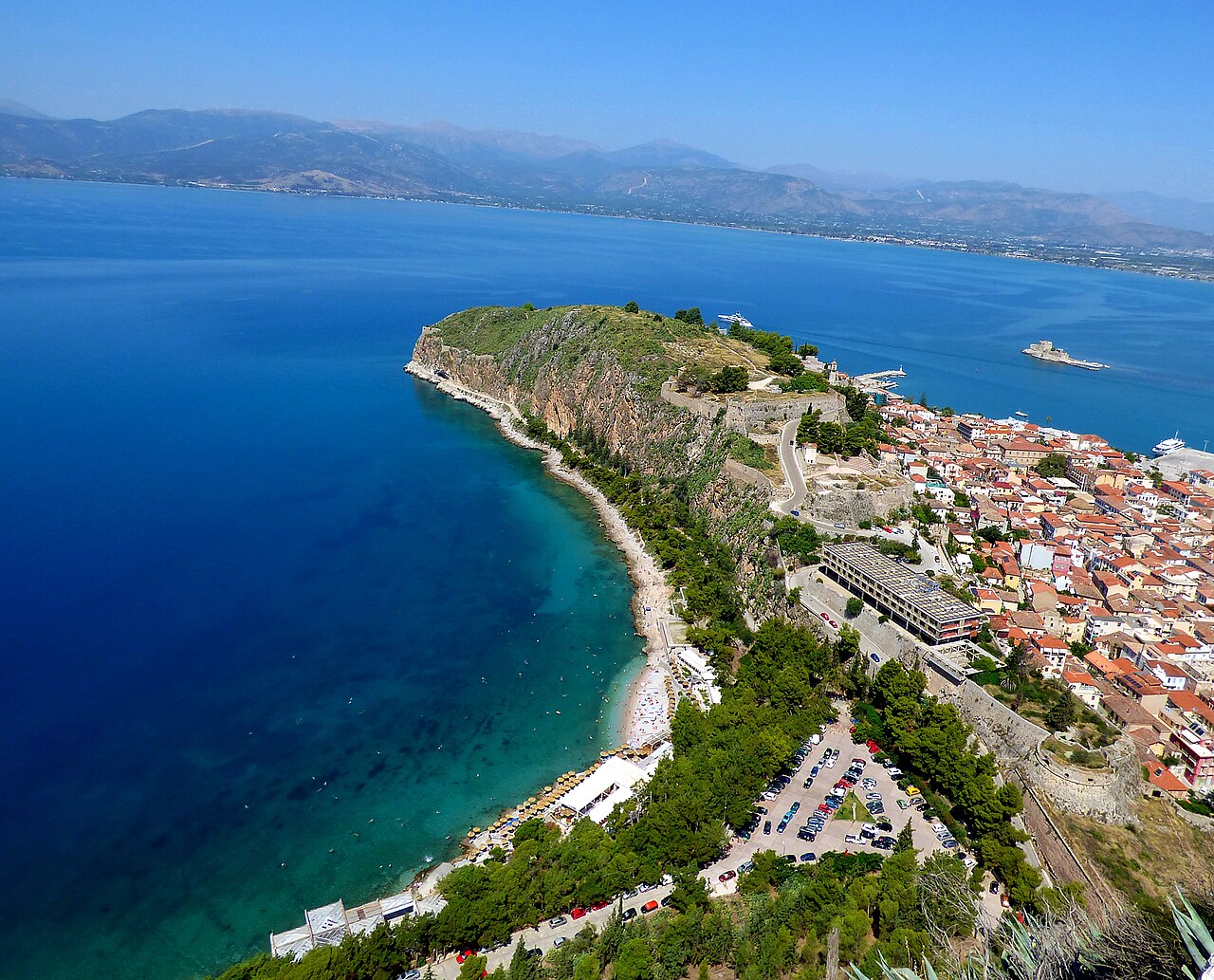
The fortresses come first. Nafplio has three, the great land fortress of Palamidi on its hill, the island castle of Bourtzi in the harbour and the older Acronafplia citadel on the ridge between them, and together they tell the story of the town and give it its unmistakable skyline, the essential sights of any visit.
The old town is a pleasure in itself. Below the fortresses, the old town of Nafplio is a grid of marble-paved streets, Venetian and neoclassical houses, squares, churches and tavernas, made for wandering on foot, and it holds the museums, the first parliament of Greece and the best of the town’s food and shopping.
The sea and the Argolid complete it. A seafront promenade leads round the headland to swimming coves, longer beaches lie just outside the town, and Nafplio is the perfect base for the ancient sites of the Argolid, from Mycenae and Tiryns to the theatre of Epidaurus, all within an easy drive, as the full Nafplio travel guide sets out.
What are the three fortresses of Nafplio?
Nafplio has three fortresses: Palamidi, the vast Venetian stronghold of eight bastions on the hill above the town; Bourtzi, the small island castle in the harbour; and Acronafplia, the older citadel on the ridge between them. Together they made Nafplio one of the strongest fortified towns in Greece.
Palamidi is the greatest of the three. Built by the Venetians between 1711 and 1714 on a rock 200 metres above the town, it is a complex of eight self-contained bastions linked by walls and stairways, reached by a stairway famous for its nearly a thousand steps, and it is the defining landmark of Nafplio.
Bourtzi guards the harbour. The little island castle was built by the Venetians in 1473 on the islet of Agioi Theodoroi to command the entrance to the port, once joined to the shore by a great chain, and it is reached today by a short boat trip across the bay from the waterfront.
Acronafplia is the oldest. The citadel on the long ridge between Palamidi and the sea was the original fortified core of Nafplio, occupied since ancient times and rebuilt by Byzantines, Franks, Venetians and Ottomans, so the three fortresses together span more than two thousand years of the town’s defence.
Why is Palamidi fortress worth the climb?
You climb Palamidi for the finest views in Nafplio and one of the best-preserved Venetian fortresses in Greece. Its eight bastions, gates, reservoirs and the church of Agios Andreas fill a whole hilltop, and from the ramparts the town, the Bourtzi and the Argolic Gulf lie spread out below.
The climb is a rite of passage. A stone stairway said to have 999 steps, though the real count is closer to 857, zigzags up from the old town near the church of Agia Sofia to the fortress gate, a steep half-hour ascent, and reaching the top on foot is the classic Nafplio experience, best made early or late in the day.
The fortress rewards exploration. Palamidi is not one castle but eight independent bastions, each able to hold out alone, linked by walls and stairways, with the chapel of Agios Andreas, the vaulted chambers, the water reservoirs and the bastion where the revolutionary hero Kolokotronis was later imprisoned, so it deserves two to three hours.
You do not have to walk. A road climbs the landward side of the hill to a car park near the entrance, so those who prefer not to tackle the steps in the summer heat reach the top by car or taxi, as the full Palamidi guide explains.
How do you visit Bourtzi castle?
You visit Bourtzi by boat from Nafplio’s harbour on Akti Miaouli. Small boats make the ten-to-fifteen-minute crossing throughout the day, roughly every half hour in season, and a return trip costs around 7 euros with a further entrance fee of about 7 euros. Most visitors spend thirty to sixty minutes on the islet.
The boat is the only way across. Because Bourtzi sits on its own rocky islet in the middle of the harbour, small passenger boats shuttle out to it from the quay along the waterfront near the old town, and the short voyage, with the town and Palamidi rising behind, is part of the pleasure of the visit.
The castle has a remarkable story. Built to guard the harbour with a chain strung to the shore, Bourtzi later served for seventy years, from 1865 onward, as the residence of the town executioner, then as a hotel, and it was restored and reopened as a monument in recent years, hosting concerts on its rock in summer.
The views back are unmatched. From the walls of Bourtzi the whole of Nafplio is laid out across the water, the waterfront, the Acronafplia on its ridge and Palamidi crowning the hill, a panorama seen from no other point, as the full Bourtzi guide describes.
What is Acronafplia?
Acronafplia is the oldest fortress of Nafplio, a long fortified ridge above the old town between Palamidi and the sea. Occupied since ancient times and rebuilt by Byzantines, Franks, Venetians and Ottomans, it is reached on foot or by a lift from the town, and it offers wide views for free.
It is the original town. Acronafplia was the fortified core of Nafplio long before Palamidi was built, a citadel on the ridge that has been occupied since antiquity, so its walls carry the marks of every people who held the town, from the ancient Greeks and Byzantines to the Franks, Venetians and Ottomans.
It is easy to reach. Acronafplia rises directly above the old town, reached by a walk up through the streets or by a lift cut into the rock from Syntagma Square, and unlike Palamidi it is open without a ticket, so it makes an easy addition to a walk through the town.
It offers wide views. From the ridge the old town lies below on one side and the Argolic Gulf on the other, with Palamidi above and Bourtzi out in the harbour, so Acronafplia gives a sweeping view of the whole town for the price of a short climb, especially fine at sunset.
What is there to see in Nafplio old town?
Nafplio’s old town is a grid of marble-paved streets and Venetian and neoclassical houses, holding Syntagma Square and the first Greek parliament, the archaeological and worry-bead museums, the churches of Agios Spyridon and Agios Georgios, the old mosque, and the best tavernas, cafes and shops in the town.
The streets are made for walking. The old town of Nafplio is a compact grid below the Acronafplia, paved in marble and lined with balconied houses in Venetian and neoclassical style, closed to most traffic, so the pleasure of it is wandering the lanes on foot, discovering squares, churches and courtyards at every turn.
It is full of history. Around Syntagma Square stand the buildings of Greece’s first capital, from the Venetian barracks that now hold the Archaeological Museum to the Vouleftiko where the first parliament met, and narrow lanes lead to the churches where the modern nation’s founding was played out.
It is the heart of the town’s life. The old town holds the best of Nafplio’s tavernas, ouzeries, cafes and shops, from waterfront restaurants along Akti Miaouli to the famous gelato of the Antica Gelateria di Roma, so it is as much a place to eat, drink and shop as it is to sightsee, as the full Nafplio travel guide notes.
What is Syntagma Square?
Syntagma Square, or Constitution Square, is the grand central square of Nafplio’s old town, paved in marble and lined with the buildings of Greece’s first capital. It holds the Archaeological Museum in the Venetian barracks, the old mosque, and cafes under the arcades, and it is the heart of the town.
It is the finest square in the Peloponnese. Wide, marble-paved and framed by handsome buildings, Syntagma Square is the centrepiece of the old town, a place to sit at a cafe under the arcades and watch the life of Nafplio pass, and the natural starting point for any walk through the streets.
Its buildings tell the town’s story. On the square stand the Venetian barracks that now house the Archaeological Museum, a former Ottoman mosque that served as the first parliament chamber, and other buildings from the years when Nafplio was the capital of the newborn Greek state, so the square is a history lesson in stone.
It is the hub of the old town. Every walk through Nafplio passes through Syntagma Square, and from it lanes lead to the churches, the museums, the waterfront and the lift up to Acronafplia, so it is both the geographic and the social centre of the town, busiest in the early evening.
What is the Vouleftiko, the first Greek parliament?
The Vouleftiko is the building on Syntagma Square where the first parliament of independent Greece met. Originally an Ottoman mosque, it became the seat of the National Assembly in the 1820s when Nafplio was the capital, and it stands as one of the founding monuments of the modern Greek state.
It was Greece’s first parliament house. When Nafplio served as the capital of the newly independent Greece, the old mosque on Syntagma Square was converted into the chamber of the National Assembly, the Vouleftiko, where the deputies of the young nation met, making it one of the most important buildings in modern Greek history.
It began as a mosque. The building was raised as an Ottoman mosque during the centuries of Turkish rule, and its conversion into the seat of the first Greek parliament is a vivid symbol of the change from Ottoman province to independent nation that Nafplio witnessed at first hand.
It anchors the old town’s history. Together with the nearby Trianon, another former mosque, and the buildings around Syntagma Square, the Vouleftiko makes the old town of Nafplio an open-air record of the birth of modern Greece, and it is a fixed point on any walking tour of the capital.
What museums are in Nafplio?
Nafplio’s main museums are the Archaeological Museum on Syntagma Square, the Peloponnese Folklore Foundation museum, the Komboloi worry-bead museum, and the War Museum. Between them they cover the prehistoric Argolid, Greek folk life and costume, the worry beads of the eastern Mediterranean, and the wars of the modern state.
The Archaeological Museum leads. Housed in the handsome Venetian barracks on Syntagma Square, the Archaeological Museum of Nafplio holds finds from across the Argolid, including material from Mycenae and Tiryns and the famous bronze armour and boar’s-tusk helmet of the Mycenaean age, a fine complement to the ancient sites nearby.
The Folklore museum is award-winning. The Peloponnese Folklore Foundation runs a museum of Greek costume, textiles and daily life that has won European recognition, laid out over several floors of a town house, and it gives a rich picture of the traditional culture of the region beyond its ancient and medieval monuments.
The smaller museums add character. The Komboloi museum tells the story of worry beads, the War Museum covers the conflicts of the modern Greek state in a former military school, and together the town’s museums cover archaeology, folk life and history in a compact and walkable set, as the full Nafplio travel guide lists.
What is the Komboloi museum?
The Komboloi museum in Nafplio is a small museum devoted to worry beads, the komboloi that Greek men traditionally handle to pass the time. It displays a collection of beads and prayer ropes from across the eastern Mediterranean and beyond, and it is one of the town’s most distinctive attractions.
Worry beads are a Greek institution. The komboloi, a loop of beads slipped through the fingers to relax and pass the time, is a familiar sight in Greece, and the museum in Nafplio is devoted entirely to it, tracing the custom and displaying beads made of amber, coral, bone and other materials.
The collection reaches far and wide. The museum gathers prayer beads and worry beads from across the eastern Mediterranean, the Islamic world and Asia, showing how the handling of a string of beads appears in many cultures, so it is a small but unusual window onto a shared human habit.
It is uniquely Nafplio. Few towns have a museum given over to worry beads, and the Komboloi museum, with a shop selling handmade sets, is one of the quirks that give Nafplio its character, an easy and memorable stop on a walk through the old town.
What are the churches of Nafplio?
The churches to see in Nafplio are Agios Spyridon, where the first governor Kapodistrias was assassinated in 1831, the Catholic church of the Metamorphosis, a former mosque that honours the Philhellenes, and the church of Agios Georgios. Each carries a piece of the town’s layered history.
Agios Spyridon is the most storied. This small church in the old town is where Ioannis Kapodistrias, the first head of state of independent Greece, was shot dead in 1831 as he entered for the Sunday service, and the mark of the assassin’s bullet is still shown in the wall, a poignant relic of the young nation’s turbulent birth.
The Catholic church honours the Philhellenes. The church of the Metamorphosis, originally an Ottoman mosque given to the Catholic community, contains a monument to the foreign Philhellenes who died fighting for Greek independence, including a memorial recording their names, a reminder of the international support for the Greek cause.
The town’s churches span its rulers. From Byzantine and Venetian foundations to former mosques converted after independence, the churches of Nafplio trace the passage of the town through Greek, Frankish, Venetian and Ottoman hands, so a walk between them is a walk through the whole history of the place.
What is the story of Kapodistrias in Nafplio?
Ioannis Kapodistrias was the first head of state of independent Greece, governing from Nafplio when it was the capital. On 27 September 1831 he was assassinated at the church of Agios Spyridon by members of a rival family, a killing that marks one of the darkest moments of the young nation’s history.
He governed from Nafplio. As the first Governor of Greece, Kapodistrias made Nafplio the capital of the newly independent state and set about building its institutions, so the town was the seat of government at the very beginning of modern Greece, and his presence shaped its brief years as capital.
He was assassinated at the church door. On a Sunday morning in 1831 Kapodistrias was shot and stabbed as he arrived at the church of Agios Spyridon in the old town by members of the Mavromichalis family of the Mani, with whom he had quarrelled, and the spot is marked to this day.
His death shaped the nation. The assassination of Greece’s first governor plunged the young state into crisis and led, within a few years, to the arrival of King Otto and the move of the capital to Athens, so Nafplio witnessed both the founding and a turning point of modern Greece.
Where are the best beaches in Nafplio?
The best beaches near Nafplio are Arvanitia, a small pebble cove just below the old town reached by the seafront promenade, and Karathona, a longer sandy bay a short drive or walk beyond the headland. Both give easy swimming close to the town, with Karathona the better for families.
Arvanitia is the town’s swimming cove. Tucked under the Acronafplia ridge just beyond the old town, Arvanitia is a small pebble beach reached on foot by the seafront promenade in a few minutes, so a swim here fits easily between sightseeing, with rocks, clear water and a couple of seasonal cafes.
Karathona is the family beach. A longer sandy bay lies beyond the Palamidi headland, a short drive or a walk along the coast from the town, with shallow water, sunbeds and tavernas, so Karathona is the choice for a longer beach day or for families with children who want sand rather than pebbles.
The promenade links them to the town. The Arvanitia promenade, a paved path cut round the base of the Acronafplia between the old town and the cove, is one of the great walks of Nafplio, and it continues on towards Karathona, so the beaches are joined to the town by a scenic seafront route.
What is the Arvanitia promenade?
The Arvanitia promenade is a paved seafront path that runs round the base of the Acronafplia ridge from the old town of Nafplio to the swimming cove of Arvanitia. Level and scenic, with the Argolic Gulf on one side and the cliffs above, it is the town’s favourite walk, fine at sunset.
It hugs the sea below the citadel. The promenade is cut into the rock at the foot of the Acronafplia, running just above the water from the edge of the old town round the headland to the cove of Arvanitia, a level and easy walk of some ten to fifteen minutes with the gulf always in view.
It is the local evening stroll. In the cool of the late afternoon and at sunset the promenade fills with people of Nafplio walking, jogging and taking the air, so it is as much a piece of the town’s daily life as a scenic route, and one of the simplest pleasures of a stay.
It continues beyond Arvanitia. The path carries on past the cove towards Karathona and the pine woods of the headland, so walkers can extend the stroll into a longer coastal walk, and the whole route round the base of the Acronafplia is a highlight of any visit to the town.
Where can you eat in Nafplio?
Nafplio is one of the best towns in the Peloponnese for food. Its old town holds tavernas, ouzeries and modern Greek restaurants, the waterfront on Akti Miaouli is lined with cafes and seafood, and the Antica Gelateria di Roma serves the finest Italian gelato in Greece.
The old town is full of tavernas. The lanes of Nafplio are lined with tavernas and ouzeries serving Peloponnesian cooking, from grilled meats and slow-cooked stews to meze and local Nemea wine, and the marble squares fill with tables in the evening, so dinner in the old town is one of the pleasures of a stay.
The waterfront is for cafes and seafood. Along Akti Miaouli, the seafront promenade, cafes and restaurants look out over the harbour to Bourtzi, a fine place for a coffee or a fish lunch, and the sunset over the island castle makes an early-evening drink here a highlight of the day.
The gelato is famous. The Antica Gelateria di Roma, run by an Italian family in the old town, makes gelato regarded as the best in Greece, and no visit to Nafplio is complete without a cone, so the town rewards a sweet tooth as much as it does lovers of Greek cooking.
What can you do with kids in Nafplio?
Nafplio suits families well. Children enjoy the boat trip to Bourtzi, the climb or drive up to Palamidi, the sandy beach at Karathona, the little train that tours the old town, the gelato of the Antica Gelateria di Roma, and the traffic-free streets that make the town easy and safe to explore.
The fortresses are an adventure. Crossing to the island castle of Bourtzi by boat and exploring the ramparts of Palamidi are exciting for children, and the road up to Palamidi means younger families reach the top without the long climb, so the town’s great sights work for all ages.
The beaches and the little train help. The sandy, shallow bay of Karathona is ideal for children, and a small tourist train tours the old town and up towards the fortresses, giving young legs a rest and a fun way to see the sights, while the gelateria is always a hit.
The old town is safe to roam. Because the heart of Nafplio is paved and closed to most traffic, families can wander the streets and squares without worrying about cars, so the town is relaxed and easy with children, one of the most family-friendly destinations in the Peloponnese.
What are the best day trips from Nafplio?
The best day trips from Nafplio are the citadel of Mycenae, the theatre of Epidaurus, the palace of Tiryns, and the sites of Ancient Corinth, Nemea and Argos. All lie within an easy drive in the Argolid, so Nafplio is the ideal base for the great ancient sites of the northeast Peloponnese.
Mycenae is the greatest. The citadel of Mycenae, with its Lion Gate and beehive tombs, was the seat of Agamemnon and the centre of the Bronze Age world that Homer sang, and it lies about half an hour from Nafplio, making it the essential day trip and often paired with the nearer palace of Tiryns.
Epidaurus has the finest theatre. The ancient theatre of Epidaurus, famous for its perfect acoustics and still used for summer performances, sits in a sanctuary of the healing god Asklepios about forty minutes from the town, and it is the other unmissable site of the Argolid, at its best in the morning light.
Corinth, Nemea and Argos complete the circle. Ancient Corinth with its temple of Apollo and the towering Acrocorinth, the sanctuary and stadium of Nemea in its wine country, and the ancient theatre of Argos are all within reach, so Nafplio opens the whole ancient Argolid, as the full Nafplio travel guide describes.
How many days do you need in Nafplio?
You need two to three days in Nafplio to see it properly. One day covers Palamidi, Bourtzi and the old town, a second adds the museums, the beaches and the Arvanitia promenade, and a third gives time for day trips to Mycenae, Epidaurus and the other ancient sites of the Argolid.
One day sees the highlights. A single full day in Nafplio takes in the climb or drive up to Palamidi, the boat trip out to Bourtzi and a walk through the marble old town and Syntagma Square, so even a short visit covers the three defining sights of the town.
Two days let you slow down. A second day adds the museums, a swim at Arvanitia or Karathona, the seafront promenade at sunset and a leisurely dinner in the old town, so two days give the relaxed pace that suits Nafplio and leave time to enjoy its cafes and squares.
Three days reach the Argolid. With a third day, or more, Nafplio becomes the base for day trips to Mycenae, Epidaurus, Tiryns, Corinth and Nemea, so a stay of three days or longer combines the town itself with the great ancient sites that surround it, the ideal length for the region.
When is the best time to visit Nafplio?
The best time to visit Nafplio is spring and autumn, from April to June and September to October, for warm days, comfortable sightseeing and thinner crowds. Summer is hot and busy but good for swimming, while winter is quiet and mild, and Nafplio is a popular weekend escape all year round.
The shoulder seasons are ideal. In spring and autumn the weather is warm without the fierce heat of high summer, perfect for climbing Palamidi and walking the old town, the sea is warm enough to swim in early autumn, and the town is lively but not overwhelmed, so these are the finest months to visit.
Summer is hot and lively. July and August bring heat and crowds, and Nafplio is at its busiest, but the beaches and the boat trip to Bourtzi are at their best, and early mornings and evenings are made for the promenade and the squares, so summer rewards those who time their sightseeing well.
Winter is quiet and mild. Out of season Nafplio is calm and its mild climate makes it a favourite winter weekend escape for Athenians, with the cafes and tavernas still open, so even in the cooler months the town is a rewarding and atmospheric place to visit.
How do you get to Nafplio?
Nafplio is about two hours from Athens by road, reached by car on the national road through Corinth or by direct KTEL bus from the Kifissos terminal. There is no train or airport, so most visitors come from Athens or its airport by car, bus or organised tour.
Athens is the gateway. Nafplio lies some 140 kilometres southwest of Athens, about two hours by road through the Corinth Canal and across the Argolid, so most visitors reach it from the capital, either as a day trip or, better, as the base for a longer stay in the Peloponnese.
The bus is frequent and cheap. Direct KTEL buses run from the Kifissos terminal in Athens to Nafplio several times a day, taking around two and a half hours, so the town is easy to reach without a car, though a car makes the day trips to the ancient sites of the Argolid far simpler.
A car opens the region. Hiring a car in Athens or at the airport gives the freedom to explore Mycenae, Epidaurus, Nemea and the coast at will, and the drive down through Corinth is straightforward, so a car is the ideal way to make the most of Nafplio and the Argolid, as the full Nafplio travel guide advises.
What is the Land Gate of Nafplio?
The Land Gate, or Porta Sagredo, was the main gate through the Venetian land walls of Nafplio, the only entrance to the town from the mainland. Once reached by a drawbridge over a moat, it was rebuilt in the seventeenth century, and its restored arch survives on the eastern edge of the old town.
It was the town’s only land entrance. Because Nafplio was walled and half surrounded by sea, the Land Gate was the single point at which travellers entered from the mainland, closed each night with a drawbridge over a moat, so everyone who came to the town by land passed through this one fortified arch.
The Venetians built it grandly. The gate that survives was raised during the Venetian rule of the seventeenth century, a handsome stone arch bearing the lion of Saint Mark, and it took its name, Porta Sagredo, from the Venetian governor of the day, one of the finest pieces of Venetian civil architecture in the town.
It marks the edge of the old town. The restored Land Gate stands where the old walls once ran, at the eastern approach below the Palamidi steps, so it makes a natural point to begin or end a walk through the old town, a reminder of the days when Nafplio was a sealed fortress by the sea.
Where can you watch the sunset in Nafplio?
The best places to watch the sunset in Nafplio are the ramparts of Palamidi, the ridge of Acronafplia and the waterfront on Akti Miaouli looking out to Bourtzi. As the sun goes down the town, the island castle and the Argolic Gulf glow in the low light, one of the great sights of the Peloponnese.
Palamidi gives the widest view. From the ramparts of the great fortress the whole town, the harbour, the Bourtzi and the gulf spread out below, and the low evening sun flatters the scene, so timing the climb for late afternoon rewards visitors with both an easier ascent and the finest sunset in the town.
Acronafplia is easier to reach. The ridge above the old town, open without a ticket and reached by a short walk or the lift from Syntagma Square, looks west over the Argolic Gulf, so it is the simplest place to catch the sunset, a favourite of visitors and locals alike at the end of the day.
The waterfront frames Bourtzi. Along Akti Miaouli the cafes and the promenade look out over the harbour to the island castle, and as the sun sets Bourtzi is lit against the darkening water, so an early-evening drink or stroll on the seafront gives the classic Nafplio sunset, framed by the little fortress on its rock.
What ancient site is Tiryns and can you visit it?
Tiryns is a Mycenaean citadel just outside Nafplio, a UNESCO World Heritage site famous for its massive Cyclopean walls of huge unworked stones. Only about four kilometres from the town, it is the easiest ancient site to reach, often combined with Mycenae, and it takes about an hour to visit.
It is the nearest ancient site. Tiryns lies barely four kilometres from Nafplio on the road towards Argos, closer than any other of the great ancient sites, so it is the easiest day trip of all, reachable in minutes by car or even by bus, and it makes a natural pairing with the greater citadel of Mycenae.
Its walls are astonishing. Tiryns is renowned for its Cyclopean walls, built of stones so vast that later Greeks believed only the giant Cyclopes had the strength to raise them, and the galleries and ramparts of the Bronze Age palace survive to a remarkable height, making the site one of the finest examples of Mycenaean fortification.
It rewards a short visit. Smaller and quieter than Mycenae, Tiryns takes about an hour to explore, and its listing alongside Mycenae as a UNESCO World Heritage site marks its importance, so it deserves a stop on any tour of the ancient Argolid from Nafplio, as the full Nafplio travel guide notes.
What wine is the Nafplio region known for?
The Nafplio region is known for the wines of Nemea, the largest wine appellation in Greece, made from the red Agiorgitiko grape. The vineyards of Nemea lie about an hour from the town, and many wineries welcome visitors for tastings, so a wine day trip pairs naturally with a stay in Nafplio.
Nemea is Greece’s great red-wine country. The valleys around Nemea, an hour north of Nafplio, form the largest appellation in the country, planted with the native Agiorgitiko grape that yields deep, smooth red wines, so the region is the heart of Peloponnesian wine and a rewarding excursion for anyone who enjoys it.
The wineries welcome visitors. Many estates around Nemea open their doors for tours and tastings, from small family cellars to larger modern wineries, so a day among the vineyards combines the wine with the scenery of the hills and the nearby ancient sanctuary and stadium of Nemea, where the Nemean Games were held.
The wine is on every table in Nafplio. Even without a trip to the vineyards, the red wines of Nemea appear in the tavernas of the old town, so a dinner in Nafplio is the simplest way to taste the region’s wine, and the vineyards make an easy and pleasant day trip for those who want more.
What can you buy in Nafplio?
Nafplio is one of the best towns in Greece for shopping. Its old town is full of shops selling worry beads and handmade komboloi, olive oil and honey, ceramics and jewellery, leather and local wine, so the marble lanes reward browsing as much as sightseeing, with craft and food shops at every turn.
Worry beads are the signature buy. Alongside the Komboloi museum, the old town has shops devoted to handmade worry beads in amber, coral and bone, so a komboloi is the classic souvenir of Nafplio, a small and personal keepsake that carries the character of the town.
Food and drink make fine gifts. The shops of the old town sell Peloponnesian olive oil, honey, herbs and the red wine of Nemea, along with sweets and spoon preserves, so the town is a good place to buy the flavours of the region to take home.
Craft and design fill the lanes. Ceramics, jewellery, leather goods and the work of local artists line the marble streets, and browsing them is part of the pleasure of the old town, so Nafplio rewards an afternoon of wandering its shops as much as an afternoon among its monuments.
Is Nafplio good for couples and a romantic break?
Nafplio is one of the most romantic towns in Greece, a favourite for couples and weekend breaks. Its marble old town, harbour sunsets over Bourtzi, candlelit tavernas and boutique hotels in Venetian houses make it ideal for a romantic escape, close enough to Athens for a short trip yet worlds apart in mood.
The setting is made for romance. The marble-paved lanes, the balconied houses draped in bougainvillea, the squares lit at night and the harbour crowned by the island castle give Nafplio an atmosphere few Greek towns match, so it draws couples for anniversaries, proposals and quiet weekends away from the city.
The evenings are the highlight. A sunset drink on the waterfront looking out to Bourtzi, followed by dinner at a candlelit table in the old town and a stroll through the lamplit squares, makes for a perfect romantic evening, and the seafront promenade at dusk is a walk made for two.
It is an easy escape from Athens. Just two hours from the capital yet entirely different in pace and mood, Nafplio is the classic weekend retreat for Athenian couples, and its boutique hotels in restored Venetian and neoclassical houses give a stay the intimacy and character that make the town a favourite for a romantic break.
What is the little train and how do you get around Nafplio?
You get around Nafplio on foot, as the old town is compact and closed to most traffic. A little tourist train tours the streets and climbs towards the fortresses, taxis and a road serve Palamidi, and boats run to Bourtzi, so the whole town and its sights are reached without a car.
The old town is walked. The heart of Nafplio is small, paved in marble and largely free of cars, so walking is both the easiest and the most pleasant way to see it, and the main sights, the squares, the museums, the churches and the waterfront, all lie within a few minutes of one another on foot.
The little train helps young and tired legs. A small tourist train tours the old town and climbs partway towards the fortresses, giving an easy circuit of the sights and a rest for children and older visitors, so it is a popular way to get an overview of the town before exploring on foot.
The sights beyond the centre are easily reached. A road and taxis run up to Palamidi, boats cross to Bourtzi from the harbour, and the seafront promenade leads to the beaches, so even the sights outside the old town are reached without a hire car, which is needed only for the day trips into the Argolid.
Frequently Asked Questions
What are the top things to do in Nafplio?
The top things to do in Nafplio are climbing or driving up to the great Venetian fortress of Palamidi for the finest views in the town, crossing by boat to the island castle of Bourtzi in the harbour, and walking the marble old town with its Syntagma Square, the first Greek parliament and its museums. Beyond these three essentials, visitors swim at the cove of Arvanitia or the sandy beach of Karathona, walk the seafront promenade round the base of the Acronafplia, eat in the tavernas of the old town and try the famous gelato, and use Nafplio as a base for day trips to the ancient sites of Mycenae, Epidaurus, Tiryns, Corinth and Nemea. Two to three days let you combine the town itself with the surrounding Argolid.
Is Nafplio worth visiting?
Yes, Nafplio is one of the most rewarding towns in Greece and well worth visiting. As the first capital of the modern Greek state it carries a rich history, from the three fortresses of Palamidi, Bourtzi and Acronafplia to the square where the first parliament sat and the church where the first governor was assassinated. It is also simply beautiful, with a marble-paved old town of Venetian and neoclassical houses, a harbour crowned by an island castle, seafront promenades and swimming coves, and some of the best food in the Peloponnese. Add its position as the perfect base for the ancient sites of the Argolid, and Nafplio offers history, beauty, sea and cuisine in one compact and walkable town, which is why it is a favourite of Greeks and foreign visitors alike.
How long is a visit to Nafplio?
Most visitors find two to three days is the ideal length for Nafplio. A single full day covers the three defining sights, the fortress of Palamidi, the island castle of Bourtzi and the marble old town with Syntagma Square, but this leaves little time to enjoy the town’s slower pleasures. A second day adds the museums, a swim at Arvanitia or Karathona, the seafront promenade at sunset and a relaxed dinner in the old town. A third day, or more, turns Nafplio into a base for day trips to the great ancient sites of the Argolid, such as Mycenae, Epidaurus, Tiryns and Nemea, all within an easy drive. Nafplio also makes a rewarding weekend escape in its own right, and its mild winters mean it is a fine destination in any season.
What is Nafplio famous for?
Nafplio is famous for being the first capital of modern Greece and for its extraordinary concentration of sights in a small and beautiful town. It is known for its three fortresses, the vast Venetian stronghold of Palamidi with its stairway of nearly a thousand steps, the little island castle of Bourtzi in the harbour, and the ancient citadel of Acronafplia. It is famous too for its marble-paved old town of Venetian and neoclassical houses, its Syntagma Square with the first Greek parliament, and its role in the founding of the modern state, including the assassination of the first governor Kapodistrias. Beyond the history, Nafplio is celebrated for its beauty, its food and gelato, its seafront promenade and its position as the gateway to the ancient Argolid, the region of Mycenae and Epidaurus, as the full Nafplio travel guide explains.