
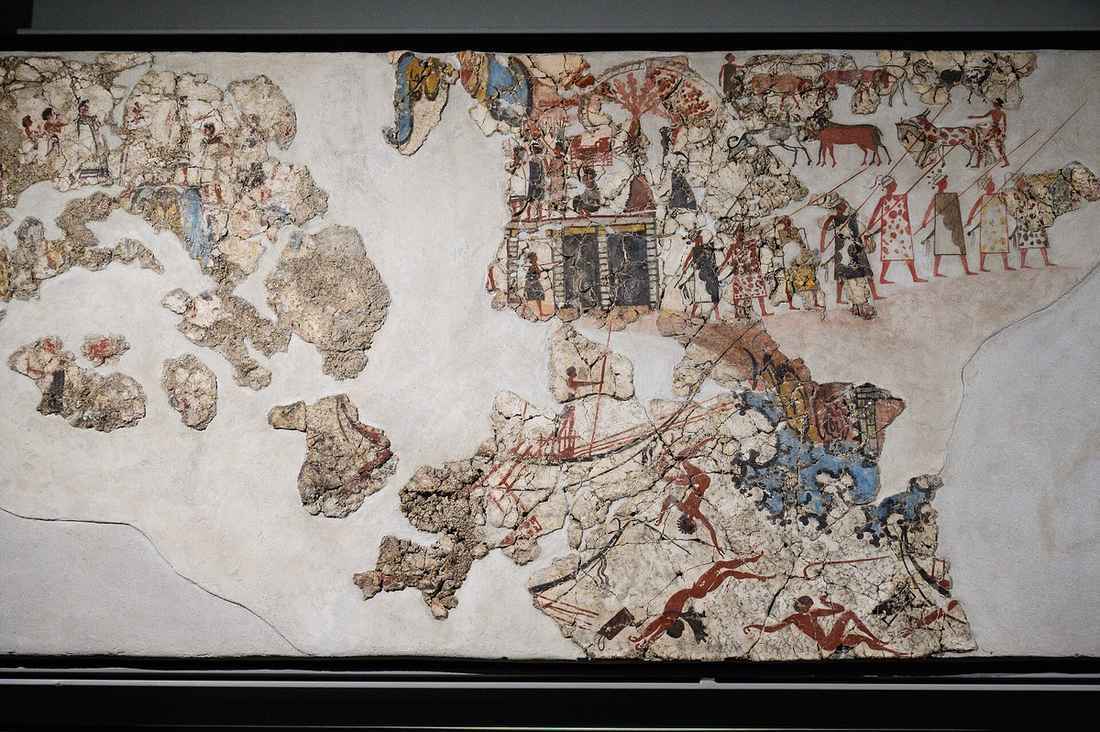
The Museum of Prehistoric Thera in Fira displays the stunning Minoan frescoes and finds excavated from the Bronze Age town of Akrotiri, including the famous Spring Fresco and the monkeys wall painting. It is the essential companion to a visit to Akrotiri. This guide covers the frescoes, the collection, tickets and how to visit.
The museum brings the buried city of Akrotiri to life, a cultural highlight of the wider Santorini travel guide. It stands in central Fira. The sections below cover the museum.
What is the Museum of Prehistoric Thera?
The Museum of Prehistoric Thera is an archaeological museum in Fira displaying the finds from the Bronze Age Minoan town of Akrotiri, including its famous wall frescoes, pottery, tools and art. It is the key place to understand ancient Santorini and the perfect complement to the Akrotiri site.
The Museum of Prehistoric Thera is one of Santorini’s most rewarding indoor attractions. Founded to display the extraordinary discoveries from the excavations at Akrotiri, it offers a fascinating window into the Minoan civilisation that flourished on the island in the Bronze Age before the great eruption. Set in the heart of the capital, Fira, it gathers the finest frescoes, pottery, statues, tools and everyday objects recovered from the buried town, presenting them over two levels. Visiting it alongside the Akrotiri archaeological site gives the full picture of this remarkable lost world, set within the wider Akrotiri. The frescoes are the star attraction.
What are the frescoes like?
The frescoes are the museum’s glory: vivid Minoan wall paintings from Akrotiri depicting nature and daily life, including the famous Spring Fresco of lilies and swallows, the Wall Paintings of the Monkeys and of the House of the Ladies. A exhibition displays them as they were arranged in the buildings.
The wall paintings are among the finest from the entire ancient Aegean. Removed from the houses of Akrotiri to preserve them, the frescoes are remarkable for their freshness, colour and humanity, portraying landscapes, animals and scenes of everyday Minoan life. Highlights include the celebrated Spring Fresco, a joyful image of blossoming red lilies and darting swallows, the playful Wall Paintings of the Monkeys, and the elegant figures of the House of the Ladies. Since an exhibition opened on the upper floor, the frescoes are displayed for the first time according to their original iconographic programmes, as they were arranged in the rooms of the prehistoric town, set out alongside the guide to the island’s history. The wider collection is rich too.
What else is in the collection?
Beyond the frescoes, the museum displays pottery and vases, statues, clay bathtubs, bronze tools and intricately carved seals and gold jewellery from Akrotiri. These everyday and luxury objects reveal the sophistication, comforts and far-reaching trade connections of the Bronze Age town.
The museum’s wider collection deepens the picture of life at Akrotiri. Alongside the frescoes, displays over two floors hold elegant decorated pottery and vases, statues and figurines, and revealing everyday items such as clay bathtubs that speak to the comforts the townsfolk enjoyed. Bronze tools demonstrate their mastery of metalwork, while intricately carved seals and pieces of gold jewellery show both artistic skill and the town’s connections to the wider Minoan world of Crete and beyond. Together these objects bring a vanished, sophisticated society vividly to life, making the museum a fascinating and cool indoor escape from the Santorini sun, set out alongside the guide to Fira. Visiting is easy.
How do you visit the museum?
The museum is in central Fira, a short walk from the bus station, open roughly 8.30am to 3.30pm and closed Tuesdays. Entry is around 6 euros, or a 15-euro combined ticket also covers Akrotiri and Ancient Thera. Allow about an hour, and visit it with the Akrotiri site for full context.
The museum is simple to fit into a day in the capital. It stands in central Fira, only a short walk from the main bus station, so it is easily reached from Oia, Kamari, Perissa and the rest of the island by the frequent buses. It opens roughly 8.30am to 3.30pm and closes on Tuesdays, so check the day. Entry costs around 6 euros, while the excellent-value combined ticket of about 15 euros also admits you to the archaeological sites of Akrotiri and Ancient Thera over three days. Allowing about an hour does it justice, and seeing it together with the Akrotiri site, where the frescoes were found, gives the richest understanding, set out alongside the guides to a Santorini itinerary and Ancient Thera. The questions below cover the points travellers ask most.
Frequently Asked Questions
What is in the Museum of Prehistoric Thera?
The museum in Fira displays the finds from the Bronze Age Minoan town of Akrotiri, above all its famous wall frescoes such as the Spring Fresco and the monkeys painting, plus pottery, statues, clay bathtubs, bronze tools and gold jewellery, revealing ancient Santorini.
Where are the Akrotiri frescoes displayed?
The Akrotiri frescoes are displayed in the Museum of Prehistoric Thera in Fira, where they were moved to preserve them, with some masterpieces also in the National Archaeological Museum in Athens. Seeing the museum alongside the Akrotiri site gives the full picture.
How much does the Museum of Prehistoric Thera cost?
Entry is around 6 euros, or a 15-euro combined ticket valid three days also covers the archaeological sites of Akrotiri and Ancient Thera. The museum is in central Fira, open roughly 8.30am to 3.30pm, and closed on Tuesdays. Allow about an hour for a visit.