
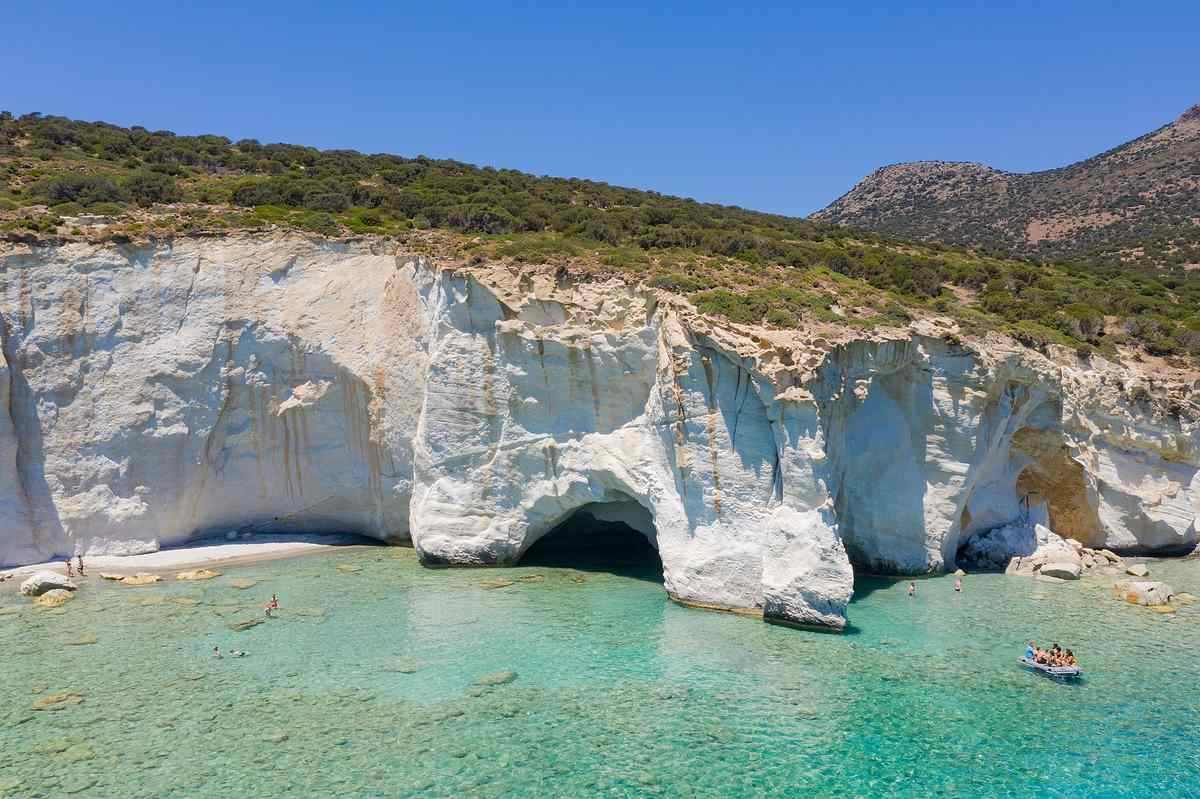
Choosing between Milos and Thassos pits volcanic Cycladic coves against the green mountains and marble bays of the north Aegean. Plan island tours and tickets through My Greece Tours.
This comparison is a common question in the Milos travel guide. The sections below compare the landscapes, the beaches, the vibe, the access and which island suits you best.
Which is better, Milos or Thassos?
Milos is better for dramatic volcanic beaches, sea caves and Cycladic scenery, while Thassos is better for green mountains, forests and white-sand bays. Choose Milos for colour and geology, Thassos for lush nature, easy access and family-friendly sands.
Each island offers a different Greece. Milos leans volcanic and bare. Thassos leans green and forested. The choice turns on taste.
Pick Milos for colour. Coloured cliffs and caves define it. Sarakiniko glows white. The boat trips dazzle.
Pick Thassos for green. Pine mountains rise high. Marble sands gleam white. The forests cool the air.
Both stay relaxed and Greek. Neither overruns with crowds. Both reward the calm seeker. Geology splits them.
Milos and Thassos showcase two very different faces of Greece. Milos, in the western Cyclades, is a volcanic island of bare, sun-baked hills, coloured cliffs and a coast carved into more than 70 dramatic coves, from the white moonscape of Sarakiniko to the sea caves of Kleftiko. Its appeal lies in stark geology, vivid rock and clear water, the classic Cycladic spectacle in its most colourful form.
Thassos, in the north Aegean close to the mainland, is a green, mountainous island cloaked in pine forest and known for its white marble and sandy beaches. It is lush where Milos is bare, easy to reach where Milos is remote, and gentle where Milos is dramatic. The choice comes down to landscape and mood: choose Milos for volcanic colour, moonscapes and boat-trip adventure, and Thassos for green mountains, forests and family-friendly white-sand bays. The next section compares the landscapes.
How do the landscapes of Milos and Thassos compare?
Milos has a dry, volcanic landscape of coloured cliffs, white rock and bare hills, while Thassos is green and mountainous, cloaked in pine forest with white marble outcrops. One is a sculpted Cycladic moonscape, the other a lush, forested north Aegean island.
The two landscapes diverge sharply. Milos runs bare and bright. Thassos runs green and high. Nature drives the gap.
Milos owes its look to fire. Volcanic rock paints the coast. Cliffs glow red and white. Hot springs warm the shore.
Thassos owes its look to forest. Pine cloaks the mountains. Marble streaks the slopes. Streams feed the green.
The contrast shapes the trip. Milos dazzles with rock. Thassos soothes with woodland. Both stun the eye.
The landscapes of these islands sit at opposite ends of the Greek spectrum. Milos is shaped by its volcanic origins, with ancient eruptions and hydrothermal activity that stained its coast in remarkable colours and carved it into white moonscapes, coloured cliffs and sea caves. The hills are largely bare and the light is sharp, so the drama lies in the rock and the otherworldly forms that define the western Cyclades.
Thassos turns the scene green and tall. Often called the emerald isle of the Aegean, it rises into pine-clad mountains threaded with streams and waterfalls, with gleaming white marble outcrops and a forested interior that runs down to the coast. It is lush and shaded where Milos is bare and exposed. A traveller drawn to coloured geology and lunar rock will warm to Milos, while one who loves green mountains, forest and waterfalls will lean toward Thassos. The next section compares the beaches.
Which has better beaches, Milos or Thassos?
Milos has better beaches for drama and variety, with over 70 colourful volcanic coves and sea caves, while Thassos has gorgeous white-sand and marble bays with shallow water. Milos wins for scenery and boat trips, Thassos for easy, family-friendly sandy swimming.
The beaches split by character. Milos sells colour and caves. Thassos sells white sand. Both run clear and blue.
Milos wins on variety. Over 70 coves line the coast. Each shows a different shade. The boat-only ones amaze.
Thassos wins on sand. Marble bays gleam white. The shallows stay gentle. Families settle in.
The choice depends on taste. Milos craves the camera. Thassos craves the toddler. Both reward the swimmer.
On beaches, Milos offers unmatched variety and spectacle. The island spreads over more than 70 coves in a striking range of colours and forms, from the lunar shelf of Sarakiniko to the rust-red cliffs of Paleochori and the cave-riddled rock of Kleftiko, a good share reachable only by boat. For a traveller who treats beaches as the main event and loves dramatic, photogenic swimming, Milos is hard to beat anywhere in the Aegean.
Thassos counters with some of the prettiest sandy beaches in northern Greece. Its bays, such as Golden Beach, Marble Beach and Paradise Beach, pair white or marble-pebble shores with shallow, clear turquoise water and a backdrop of green hills, making them gentle and welcoming, especially for families. Where Milos dazzles with colour and rock, Thassos charms with soft sand and easy swimming. Choose Milos for variety and drama, Thassos for relaxed, family-friendly sands. The next section compares the vibe.
How do the vibe and atmosphere of Milos and Thassos compare?
Milos has a chic, scenery-led Cycladic vibe with a foodie scene and boat-trip energy, while Thassos feels green, laid-back and family-oriented. Milos is more stylish and remote, Thassos more easygoing and accessible.
Both islands keep a relaxed mood. Neither chases loud nightlife. Both reward the calm traveller. The accents differ.
Milos carries a chic buzz. Whitewashed villages charm. The food scene shines. The boat trips draw a crowd.
Thassos feels green and easy. Forest wraps the resorts. Families fill the bays. The pace stays gentle.
Access shapes the feel. Milos sits remote and stylish. Thassos sits near and accessible. Both stay welcoming.
In atmosphere, the two islands share a relaxed character but appeal to different crowds. Milos has become a chic yet unpretentious Cycladic destination, with whitewashed villages like Plaka, a celebrated food scene and a quietly stylish crowd drawn by the beaches and boat trips. Its remoteness gives it a sense of discovery, and its mood is active and varied, built around exploring a coast full of colour without the noise of the party islands.
Thassos is greener, more laid-back and notably family-oriented. Close to the northern mainland, it is a favourite summer escape for Greek and Balkan holidaymakers, with easygoing resorts tucked among the pines, sandy bays for children and a gentle, unhurried pace. Where Milos offers stylish Cycladic energy and beach adventure, Thassos offers shaded forest calm and accessible family fun. The next section helps you choose between them.
Should you choose Milos or Thassos?
Choose Milos for volcanic beaches, sea caves, boat trips and a chic Cycladic scene, and Thassos for green mountains, white-sand bays, forest and an easygoing, family-friendly pace. They lie far apart, so most travellers pick one as a focus.
The verdict rests on landscape. Milos sells colour and caves. Thassos sells green and sand. One island wins the trip.
Choose Milos for the coast. Volcanic beaches headline it. Boat trips seal the deal. The food rewards the night.
Choose Thassos for the green. Pine mountains define it. Sandy bays charm families. The pace slows down.
They sit far apart. Milos anchors the Cyclades. Thassos anchors the north Aegean. One trip rarely fits both.
The decision turns on the island you want. Choose Milos for a volcanic coast of more than 70 coloured coves, sea caves, hot springs and boat trips, paired with a chic but relaxed Cycladic scene and a strong food culture. It rewards travellers who chase dramatic scenery, varied beaches and a sense of discovery across a remote, sun-baked island of striking geology.
Choose Thassos for a green, mountainous island of pine forest, waterfalls, white marble and gentle sandy bays, with an easygoing, family-friendly atmosphere and easy access from the northern mainland. The two lie far apart in different seas, Milos in the western Cyclades and Thassos in the north Aegean, so they do not combine on one trip, and most travellers choose one as a focus. Plan your route through our things to do in Milos guide once you decide.
Size and getting around separate the two as well. Milos is compact enough to explore from a single base, with short drives between beaches, though the best coves often need a quad or a boat to reach. Thassos is larger and circled by a single ring road, so a hire car and a relaxed loop of the island is the usual way to take in its mountain villages, waterfalls and string of sandy bays. Milos rewards a beach-by-beach, boat-trip rhythm on a small, dramatic island, while Thassos suits a touring holiday around a green, mountainous coast, a difference in pace and scale that shapes how each trip feels day to day.
The compact size of Milos keeps the beaches close together, while the ring road of Thassos invites a slower circuit, with a different mountain village or sandy bay to discover each day of a touring holiday.
How do dining and food compare on Milos and Thassos?
Milos serves a compact, seafood-led island food scene of harbour tavernas and Cycladic cooking, while Thassos offers a green-island cuisine built on olive oil, honey, walnuts and its own sweets from the forested hills.
Milos concentrates its kitchens around Adamas and Pollonia, where tavernas grill the day’s catch and plate octopus, caper-leaf salads and Cycladic cheese pies. The volcanic soil grows capers and tomatoes that anchor the table, and dinner leans on the short distance between the boat and the plate.
Thassos draws its food from a fertile, forested island. The hills produce olive oil, honey and walnuts that appear across the menus, and the local walnut sweet in syrup is a well-known island treat. Mountain villages such as Panagia and Theologos serve slow-cooked meat and pies, while the coast plates fresh fish, giving the island a broad land-and-sea table.
The gap reflects the two landscapes. Milos rewards a traveller who wants island seafood within walking distance of the harbour. Thassos rewards one who wants the produce of a green island, from the honey and walnuts to hearty village cooking in the pine-clad interior.
Which has more to do beyond the beach, Milos or Thassos?
Milos offers boat trips, hot springs, an ancient theatre and catacombs, while Thassos offers ancient ruins at Limenas, mountain villages, forest waterfalls and the marble quarries that shaped its history.
Milos keeps its activities close to the coast. The boat trip to Kleftiko headlines the itinerary, the Roman theatre and the early Christian catacombs add culture, and the site of the Venus de Milo draws visitors to Tripiti. Kayaking, snorkelling and the thermal springs fill a beach-led week.
Thassos spreads its interest across the island. The capital of Limenas preserves an ancient agora, theatre and acropolis from its classical past, mountain villages sit among the pines, and forest trails reach waterfalls near Maries. The white marble that the island has quarried since antiquity still marks the landscape and the local churches.
The two suit different days. Milos rewards a traveller who wants coves, boat trips and a dose of ancient history in a compact space. Thassos rewards one who wants to drive a green ring road linking ancient ruins, mountain villages and forest walks between the beaches.
How do access and getting around compare for Milos and Thassos?
Milos is reached by ferry from Piraeus or a short flight into its airport, while Thassos is reached by a short ferry from Keramoti or Kavala on the northern mainland, making it easy to combine with a road trip.
Milos sits in the western Cyclades, linked to Piraeus by ferry and to Athens by a short domestic flight into its small airport. The island stays compact, so a rental car or scooter reaches the coves within short drives, and boat trips cover the caves that roads cannot.
Thassos lies close to the northern mainland, reached by a short ferry from Keramoti or Kavala rather than a long Aegean crossing. Kavala’s airport connects it to Athens and beyond, and the drive-on ferry lets travellers bring a car. A ring road circles the island, so a rental car easily links the beaches, mountain villages and ancient sites.
The practical takeaway favours different trips. Milos suits a traveller who wants a sail or flight out to the Cyclades and a single relaxed base. Thassos suits one touring northern Greece who wants a short hop to a green island reached by car.
Is Milos or Thassos cheaper for a holiday?
Thassos is usually cheaper, with lower northern-Greece room and dining prices and a short drive-on ferry, while Milos carries higher Cycladic premiums in peak summer for accommodation, boat trips and the crossing out.
Milos prices track the wider Cyclades, where summer demand lifts the cost of rooms, ferry tickets and popular boat trips. Spring and autumn ease the rates, yet July and August place the island in the mid-to-upper tier, with the ferry or flight adding to the spend.
Thassos keeps costs lower across the board, since a northern-Greece island prices its hotels, tavernas and car hire below Cycladic levels and the short ferry from Keramoti costs little. The island draws a domestic and Balkan crowd that keeps prices grounded, so a family week stretches further than on a headline Cyclades island.
The value verdict follows the trip style. Thassos offers an economical, green-island stay reached by a short hop. Milos costs more for a dramatic volcanic coast and its boat trips, and the premium buys spectacle rather than easy, affordable access.
Frequently Asked Questions
Is Milos or Thassos better for beaches?
Milos is better for beach variety and drama, with more than 70 volcanic coves, sea caves and moonscapes in a remarkable range of colours, a good share reachable only by boat. Thassos is better for soft, family-friendly sands, with white-sand and marble bays such as Golden Beach and Marble Beach backed by green hills and shallow turquoise water. Choose Milos for spectacular, photogenic swimming and boat-trip coves like Kleftiko, and Thassos for gentle, easy sandy beaches ideal for children.
Is Thassos easier to reach than Milos?
Yes, Thassos is generally easier to reach than Milos for visitors arriving overland in northern Greece. Thassos sits close to the mainland and is reached by a short ferry from Keramoti or Kavala, the latter served by an airport. Milos lies in the western Cyclades, reached by a longer ferry from Piraeus near Athens or by a domestic flight. For travellers based around Athens, Milos is the natural choice, while Thassos suits those exploring northern Greece or arriving via Thessaloniki and Kavala.
Is Milos or Thassos better for families?
Thassos is often the easier choice for families, thanks to its soft, shallow sandy beaches, green shaded surroundings, easygoing resorts and short ferry access from the mainland. Milos is also rewarding with children, with sandy family beaches like Provatas and the warm shallows of Paleochori, but its highlights are more spread out and some of the best coves need a boat or a quad. For relaxed, accessible beach days choose Thassos, and for a more adventurous, scenery-led family trip choose Milos.
Is Milos or Thassos better for families?
Both suit families, in different ways. Thassos works well for a relaxed family week, with long white-sand beaches, shallow shaded coves, an easy ferry and a ring road that keeps drives simple. Milos suits families ready for a beach-led island holiday, with sheltered coves for swimming, a boat trip as the highlight and short drives between beaches. A family after easy sandy bays and green scenery will lean to Thassos, while one after dramatic coves and boat days will get more from Milos.
How many days do you need for Milos versus Thassos?
Milos rewards four to six days, enough to reach the main coves, take a boat trip to Kleftiko and settle into the island rhythm from one base. Thassos suits five to seven days, enough to circle the ring road, reach the ancient ruins at Limenas and enjoy the sandy beaches and mountain villages. Both work as a focused island week, though Thassos pairs naturally with a road trip through northern Greece, while Milos links into a western-Cyclades hopping route.
When is the best time to visit Milos or Thassos?
Late spring and early autumn suit both islands best, with warm water, settled weather and thinner crowds than the height of summer. Milos peaks in July and August, when the boat trips run daily and the coves fill, so June and September reward travellers who want the sea warm and the beaches calmer. Thassos draws its busiest crowds in high summer too, yet its forests and sandy bays stay comfortable across the shoulder months, and the short ferry keeps access easy. A trip outside the peak weeks brings the best of either island, with reliable connections and prices below the August high.