
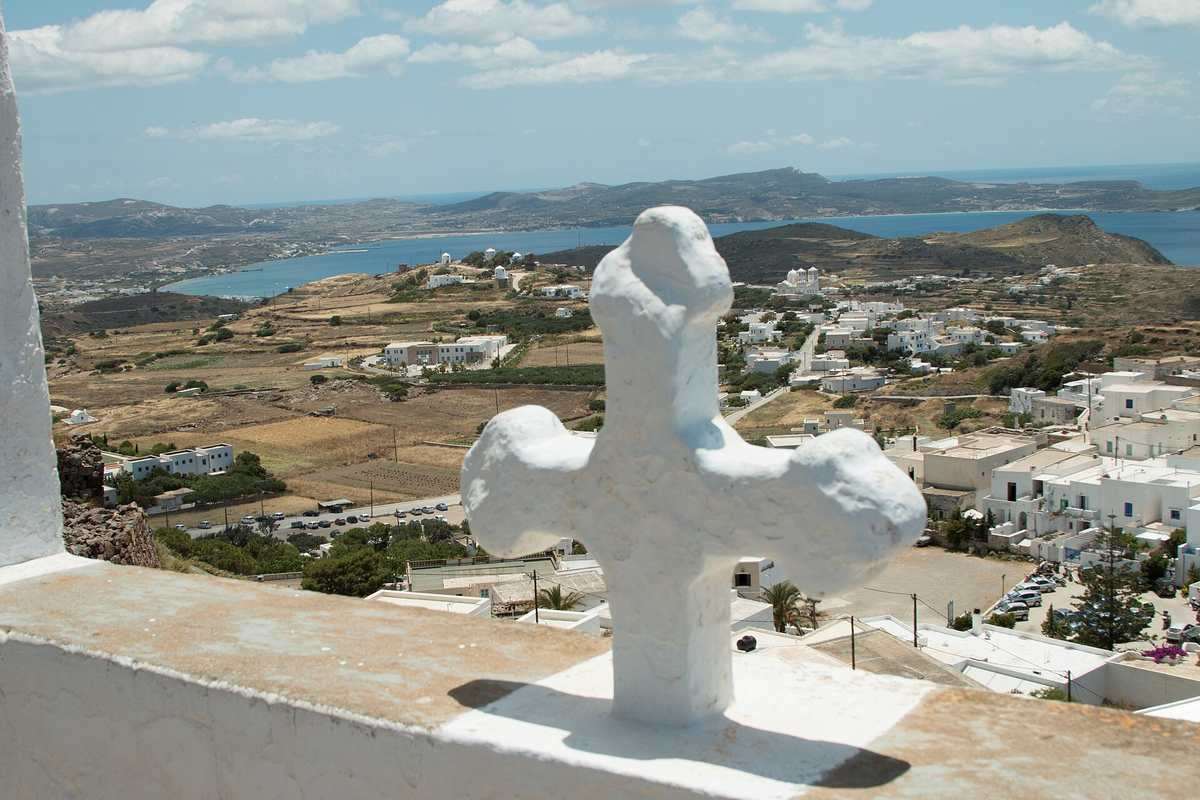
Choosing between Milos and Halkidiki pits a volcanic Cycladic island against the green peninsulas and sandy resorts of the northern mainland. Plan island tours and tickets through My Greece Tours.
This comparison is a common question in the Milos travel guide. The sections below compare the landscapes, the beaches, the vibe, the access and which destination suits you best.
Which is better, Milos or Halkidiki?
Milos is better for dramatic volcanic beaches, sea caves and a remote island feel, while Halkidiki is better for long sandy beaches, pine forests, resorts and easy mainland access. Choose Milos for Cycladic colour and adventure, Halkidiki for forested coast and convenient family resorts.
Each destination offers a different Greece. Milos is a remote island. Halkidiki is a mainland coast. The choice turns on style.
Pick Milos for drama. Volcanic coves and caves define it. Sarakiniko glows white. The boat trips dazzle.
Pick Halkidiki for ease. Forested peninsulas stretch out. Sandy resorts line them. The drive replaces the ferry.
Both reward the beach lover. Milos sells colour. Halkidiki sells convenience. The scenery splits them.
Milos and Halkidiki offer two contrasting versions of a Greek beach holiday. Milos, in the western Cyclades, is a remote volcanic island of bare hills, coloured cliffs and a coast carved into more than 70 dramatic coves, from the lunar white of Sarakiniko to the sea caves of Kleftiko. Reaching it takes a ferry or flight, and the reward is striking geology, vivid rock and a real island atmosphere.
Halkidiki is not an island at all but a green, three-fingered peninsula in northern Greece, reached by road from Thessaloniki. It is known for long sandy beaches, pine and olive forests running down to the sea, and a wide spread of resorts and hotels. Where Milos is remote, sculpted and Cycladic, Halkidiki is accessible, forested and resort-led. Choose Milos for volcanic colour and island adventure, Halkidiki for convenient sandy beaches and a green mainland coast. The next section compares the landscapes.
How do the landscapes of Milos and Halkidiki compare?
Milos has a dry, volcanic island landscape of coloured cliffs, white rock and bare hills, while Halkidiki is a green mainland peninsula of pine forests, olive groves and gentle hills. One is a sculpted Cycladic moonscape, the other a lush, forested coast.
The two landscapes contrast sharply. Milos runs bare and bright. Halkidiki runs green and forested. Setting drives the gap.
Milos owes its look to fire. Volcanic rock paints the coast. Cliffs glow red and white. Hot springs warm the shore.
Halkidiki owes its look to forest. Pine and olive cloak the hills. Green meets the sandy bays. Mount Athos crowns the east.
The contrast shapes the trip. Milos dazzles with rock. Halkidiki soothes with woodland. Both edge clear seas.
The landscapes here divide between island drama and mainland green. Milos is the work of its volcanic past, with eruptions and hydrothermal activity that stained its coast in remarkable colours and carved it into white moonscapes, coloured cliffs and sea caves. The hills are bare and sun-baked, the light is sharp, and the spectacle lies in the rock itself, the otherworldly geology that defines the western Cyclades.
Halkidiki spreads out in three forested peninsulas, Kassandra, Sithonia and the monastic Athos, cloaked in pine and olive that run down to long sandy beaches and turquoise coves. It is lush, gentle and green, with the holy mountain of Athos rising at its eastern edge, a soft and verdant scene rather than a stark and sculpted one. A traveller drawn to coloured geology and lunar rock will warm to Milos, while one who loves forested coast and sandy bays will lean toward Halkidiki. The next section compares the beaches.
Which has better beaches, Milos or Halkidiki?
Milos has more dramatic and varied beaches, with over 70 colourful volcanic coves and sea caves, while Halkidiki has long, sandy, organised beaches with shallow water and pine backdrops. Milos wins for scenery and boat trips, Halkidiki for accessible, family-friendly sandy resorts.
The beaches split by character. Milos sells colour and caves. Halkidiki sells long sand. Both run clear and blue.
Milos wins on drama. Over 70 coves line the coast. Each shows a different hue. The boat-only ones amaze.
Halkidiki wins on convenience. Sandy beaches stretch long. Resorts back the shore. Families settle in.
The choice depends on taste. Milos craves the camera. Halkidiki craves the lounger. Both reward the swimmer.
On beaches, Milos delivers variety and spectacle that the mainland cannot match. The island ranges over more than 70 coves in a striking spread of colours and forms, from the lunar shelf of Sarakiniko to the rust-red cliffs of Paleochori and the cave-riddled rock of Kleftiko, a large share reachable only by boat. For a traveller who treats beaches as the main event and loves dramatic, photogenic swimming, Milos stands out across all of Greece.
Halkidiki answers with quantity, sand and convenience. Its peninsulas are lined with long, organised sandy beaches, shallow turquoise water and pine forest running to the shore, especially on Sithonia and Kassandra, with sunbeds, beach bars and resorts close at hand. The swimming is gentle and family-friendly, the access easy. Where Milos dazzles with colour and rock, Halkidiki offers easy, sandy, well-served beach days. Choose Milos for drama and variety, Halkidiki for accessible sandy comfort. The next section compares the vibe.
How do the vibe and atmosphere of Milos and Halkidiki compare?
Milos has a chic, remote Cycladic vibe with a foodie scene and boat-trip energy, while Halkidiki is a lively mainland resort coast of busy beach bars and quiet forested coves. Milos feels like an island escape, Halkidiki an accessible coast.
The two moods differ in feel. Milos feels like an island. Halkidiki feels like a coast. Access shapes both.
Milos carries a chic buzz. Whitewashed villages charm. The food scene shines. The boat trips draw a crowd.
Halkidiki spans the range. Busy resorts pulse with bars. Quiet coves hide on Sithonia. The choice runs wide.
Distance defines the gap. Milos sits remote at sea. Halkidiki sits near a city. Both stay welcoming.
In atmosphere, the two could hardly be more different in feel despite a shared love of the beach. Milos offers the romance of a remote Cycladic island, with whitewashed villages like Plaka, a celebrated food scene and a quietly stylish crowd drawn by the coves and boat trips. The sense of being on a real island, reached by ferry or plane, gives it an escapist charm, and its mood is calm, scenic and built around exploring the coast.
Halkidiki is a mainland holiday coast with a broader range of energy. As the summer playground of Thessaloniki and a magnet for Balkan visitors, Kassandra buzzes with beach bars, nightlife and big resorts, while Sithonia is quieter and greener and Athos is reserved for pilgrims. It is lively, accessible and varied rather than remote and uniform. Where Milos delivers a stylish island escape, Halkidiki delivers a convenient, resort-rich coast with something for every pace. The next section helps you choose.
Should you choose Milos or Halkidiki?
Choose Milos for volcanic beaches, sea caves, boat trips and a chic, remote island escape, and Halkidiki for long sandy beaches, pine forests, resorts and easy access from Thessaloniki. One is a Cycladic island, the other a mainland peninsula.
The verdict rests on the kind of trip. Milos sells island drama. Halkidiki sells mainland ease. One wins your holiday.
Choose Milos for the coast. Volcanic beaches headline it. Boat trips seal the deal. The island feel rewards.
Choose Halkidiki for convenience. Sandy resorts define it. The drive replaces the ferry. Families settle in.
They sit far apart. Milos floats in the Cyclades. Halkidiki juts from the north. One trip rarely fits both.
The decision depends on whether you want an island or a mainland coast. Choose Milos for a volcanic island of more than 70 coloured coves, sea caves, hot springs and boat trips, paired with a chic but relaxed Cycladic scene, a strong food culture and the romance of a remote escape reached by ferry or flight. It rewards travellers chasing dramatic scenery and a real island atmosphere.
Choose Halkidiki for a green mainland peninsula of long sandy beaches, pine forests and resorts, with easy road access from Thessaloniki and a lively, family-friendly coast that ranges from busy to quiet. The two lie far apart, Milos in the western Cyclades and Halkidiki in northern Greece, so they suit separate trips rather than one itinerary. Plan your island route through our things to do in Milos guide once you decide.
Trip length and combinations are worth weighing too. Halkidiki pairs naturally with a wider tour of northern Greece, easily added to a stay in Thessaloniki or a road trip through Macedonia, with no ferry required. Milos fits a Cycladic island-hopping route, linking by boat to neighbours such as Sifnos, Serifos, Folegandros and Santorini for a multi-island adventure from Athens. So the choice also reflects the shape of your wider holiday: choose Halkidiki to anchor a mainland trip in the north, and Milos to anchor an island-hopping trip in the south Aegean. Each slots into a different kind of Greek itinerary, which often settles the decision as much as the beaches themselves.
How does dining compare on Milos and Halkidiki?
Milos serves Cycladic seaside tavernas built on fresh fish and island produce, while Halkidiki plates northern-Greek cooking, resort restaurants and beach bars shaped by Thessaloniki nearby. One is island fishing fare, the other a mainland table.
Dining on Milos centres on small seaside tavernas in Pollonia, Adamas and the fishing hamlet of Klima, where the day’s catch reaches the plate hours after the boats return. Grilled fish, sun-dried octopus, capers gathered from the volcanic hillsides and local cheese anchor the menus, matched to island wine and views over the water. The cooking stays simple and rooted in the sea, reflecting a remote island that feeds its kitchens from its own coast. Meals run long and unhurried, and the waterline setting carries much of the appeal. A traveller who values fresh fish and a Cycladic table will find Milos rewarding.
Halkidiki draws on the food culture of northern Greece and the gastronomic reputation of Thessaloniki a short drive away. The peninsulas grow olives, honey and herbs, and the tavernas plate Macedonian dishes, grilled meats, mezze and seafood alongside the flavours the region is known for. Resort restaurants and beach bars line the organised sandy bays of Kassandra and Sithonia, from casual loungers to full menus by the sea. The mainland setting brings wider choice than a small island can hold. A visitor who enjoys northern-Greek flavours will lean toward Halkidiki.
The two dining scenes reflect their geography rather than any gap in quality. Milos offers intimacy, sea-to-table fish and the atmosphere of a working island, a table shaped by boats and a volcanic coast. Halkidiki offers breadth, Thessaloniki-influenced cooking and resort dining reachable by road. A traveller chasing quiet fishing tavernas belongs on Milos, and one after resort restaurants and northern-Greek cuisine belongs in Halkidiki. The next section weighs family against couple travel.
Which island suits families and which suits couples?
Halkidiki suits families with organised sandy resort beaches, hotels and easy driving, while Milos suits couples and explorers drawn to boat trips, quads and hidden coves. One is a resort peninsula, the other a Cycladic island to roam.
Halkidiki leans toward the family resort holiday. Its long organised sandy beaches shelve gently into shallow turquoise water, the hotels and resorts sit close to the shore, and the road access from Thessaloniki means no ferry queues with young children or luggage. Kassandra pairs family beaches with lively nightlife and beach bars, giving parents and teenagers separate reasons to stay, while Sithonia offers quieter pine-backed bays. A family after relaxed sandy days will settle into Halkidiki.
Milos rewards couples and independent explorers who treat the coast as an adventure. The sandy beaches at Provatas and the warm shallows of Paleochori sit alongside boat-only wonders like Kleftiko, reached on a day cruise around the volcanic shore. Renting a quad or car to hunt out coves and dining at a waterline taverna suit travellers who want to discover rather than settle. The whitewashed villages, the food scene and the romance of a remote island give couples a scenic escape. A pair chasing dramatic swimming and boat trips will find Milos ideal.
The split follows the shape of each place. Halkidiki, a mainland peninsula reached by road, delivers the ease that family holidays reward, with hotels, shallow sand and short drives replacing any crossing. Milos, a Cycladic island reached by ferry or flight, delivers the exploration that couples prize, with boat trips and quad rides opening the coast. The next section weighs how long to stay.
How long should you spend on Milos versus Halkidiki?
Milos rewards four to seven days as a Cycladic island of coves and boat trips, while Halkidiki works as a week-long mainland resort base easily paired with Thessaloniki. One is an island stay, the other a northern-Greece anchor.
Milos deserves four to seven days to do the island justice. The coast holds more than 70 coves in a spread of colours, and reaching the best of them, the boat-only caves of Kleftiko, the lunar shelf of Sarakiniko, the rust cliffs of Paleochori, takes a day cruise and a rented car. Adding the hilltop village of Plaka, the ancient theatre and long taverna dinners fills a week. A shorter stay of three nights covers the headline beaches but leaves the quieter coves unseen. The crossing to the island argues for a longer stay.
Halkidiki works as a week-long base for a mainland holiday in the north. A resort on Kassandra or Sithonia gives a settled beach stay, with organised sand, hotels and easy driving to fill the days, and a week suits a family who wants to unpack once and relax. The road access opens the region, so the same trip pairs a Halkidiki beach week with a night or two in Thessaloniki for its food and waterfront. Drives inland to forested villages or the viewpoints over Mount Athos add variety without a crossing. The peninsula rewards a full week as the anchor of a northern-Greece itinerary.
The length of stay reflects how each destination fits a wider route. Milos, a Cycladic island reached by sea or air, slots into an island-hopping trip from Athens, linking by boat to Sifnos, Serifos and Santorini, so four to seven days sit within a longer Aegean adventure. Halkidiki, a mainland peninsula reached by road, anchors a northern circuit around Thessaloniki, so a beach week pairs with a city break and inland drives.
Frequently Asked Questions
Is Milos or Halkidiki better for beaches?
Milos is better for beach variety and drama, with more than 70 volcanic coves, sea caves and moonscapes in a remarkable range of colours, a good share reachable only by boat. Halkidiki is better for long, sandy, organised beaches with shallow water, pine backdrops and easy access, especially on the Sithonia and Kassandra peninsulas. Choose Milos for spectacular, photogenic swimming and boat-trip coves like Kleftiko, and Halkidiki for accessible, family-friendly sandy beaches with resorts and facilities close at hand.
Is Milos harder to reach than Halkidiki?
Yes, Milos is harder to reach than Halkidiki for most visitors. Milos is an island in the western Cyclades, reached by a ferry of several hours from Piraeus near Athens or by a domestic flight. Halkidiki is a mainland peninsula reached by a short drive from Thessaloniki, which has an international airport, so no ferry or flight to an island is needed. For travellers flying into Thessaloniki or touring northern Greece, Halkidiki is far more convenient, while Milos suits a dedicated island trip from Athens.
Is Halkidiki or Milos better for a family holiday?
Halkidiki is often the easier family choice, with long shallow sandy beaches, forested resorts, plenty of facilities and convenient road access from Thessaloniki, avoiding ferries with young children. Milos is rewarding for families too, with sandy beaches like Provatas and warm shallows at Paleochori, but its best coves are spread out and some need a boat or a quad. For relaxed, accessible beach days choose Halkidiki, and for a more adventurous, scenery-led island holiday with older children choose Milos.
Is Milos or Halkidiki better for a beach-focused holiday?
Milos wins a beach-led holiday for scenery and variety, with more than 70 volcanic coves in vivid colours, sea caves at Kleftiko and the white moonscape of Sarakiniko, a good share reached only by boat. The swimming is dramatic and photogenic for travellers who treat the coast as the main event. Halkidiki wins for accessible sandy days, with long organised beaches, shallow turquoise water and pine forest at the shore on Sithonia and Kassandra, backed by sunbeds and resorts. Choose Milos for boat-trip coves and coloured rock, and Halkidiki for gentle sandy beaches with facilities close at hand.
Is Milos or Halkidiki easier to reach?
Halkidiki is easier to reach for most visitors because it is a mainland peninsula, not an island. Travellers fly into Thessaloniki, which has an international airport, then drive to a resort on Kassandra or Sithonia, with no ferry or island flight involved. Milos is a Cycladic island reached by a ferry of several hours from Piraeus near Athens or by a domestic flight to its small airport, so the journey needs more planning. Anyone flying into Thessaloniki or touring northern Greece will find Halkidiki far more convenient, while Milos suits a dedicated island trip from Athens.