
Milos’s best experiences range from the lunar beach of Sarakiniko and boat trips to the sea caves of Kleftiko to the colourful village of Klima and the clifftop capital Plaka. Plan it all with guided tours, boat trips and tickets from My Greece Tours.
This overview is the starting point of the Milos travel guide. The sections below cover the top things to do, the beaches and natural sights, the boat trips, the villages and culture, and when to visit with practical tips.
What are the top things to do in Milos?
The top things to do in Milos are exploring its 70-plus beaches, especially the surreal white moonscape of Sarakiniko. Taking a boat trip to the sea caves and cliffs of Kleftiko, reachable only by sea.
Wandering the colourful fishing village of Klima with its syrmata boat houses. Visiting the hilltop capital Plaka with its Venetian castle and views, and discovering the island’s volcanic scenery, hot springs and ancient sites. Milos blends beaches, boating, villages and history with far fewer crowds than Santorini or Mykonos. Milos is one of the rising stars of the Cyclades, a volcanic island in the southwest Aegean with more than seventy beaches and dramatic rock formations. Colourful fishing villages and a relaxed, authentic atmosphere define the island, all with a fraction of the crowds of its famous neighbours. The result is an island packed with things to do that reward both the active and the easygoing.
The headline experiences are clear. Marvel at the otherworldly white rockscape of Sarakiniko, the island’s most iconic sight. Take to the water on a boat trip to the caves, arches and cliffs of Kleftiko, which you reach only by sea. Photograph the fishing village of Klima with its rainbow-coloured boat houses, and climb to the hilltop capital of Plaka for its castle, sunsets and labyrinth of whitewashed lanes. Around these run a wealth of further pleasures. Swim at dozens of distinct beaches, soak in natural hot springs, explore ancient ruins and eat fresh seafood in Pollonia.
Milos offers an authentic Greek island experience that combines natural beauty, culture and tranquillity, which is exactly why it has become so beloved.
What beaches and natural sights can you see?
The must-see natural sights of Milos are Sarakiniko, a dazzling white volcanic moonscape on the north coast. The colourful cliffs and sandy sweep of Firiplaka and the hidden cove of Tsigrado in the south.
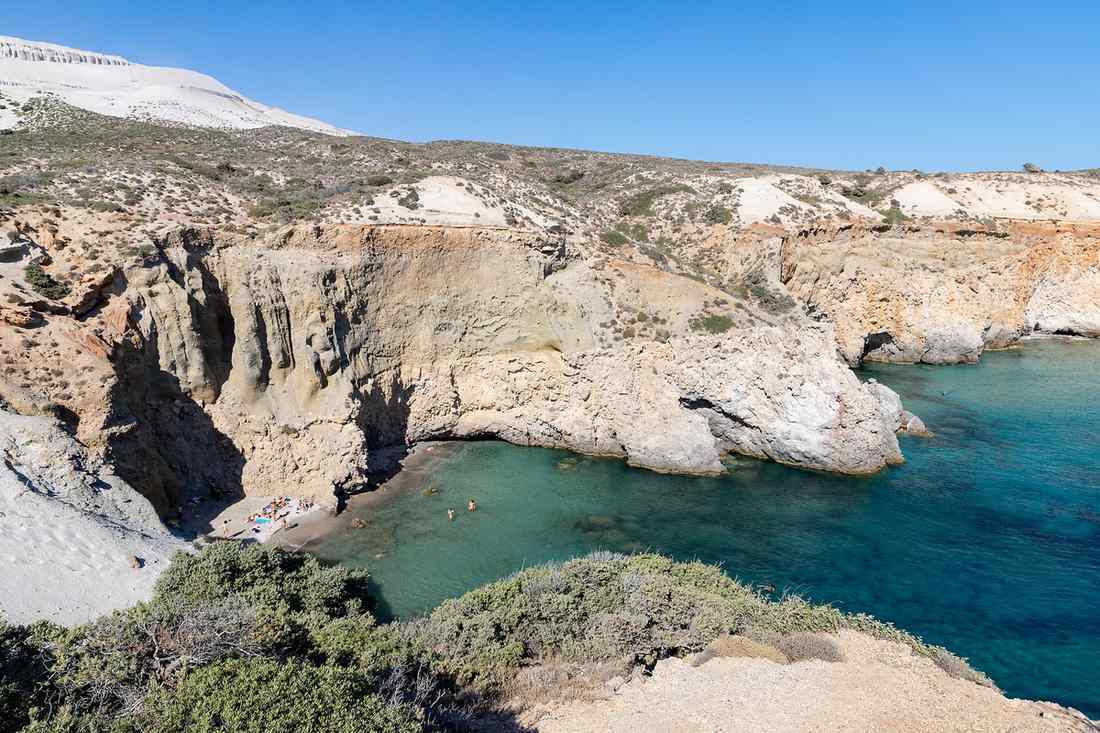
The Papafragas caves form a narrow sea inlet between rock walls, and Kleftiko’s sea caves await by boat. Milos counts over 70 beaches in white, gold, red and grey, shaped by the island’s volcanic past. Milos holds one of the most varied and beautiful coastlines in Greece, from organised family sands to remote, wild coves. Nature is the great draw of Milos, and its volcanic geology has produced a coastline of astonishing variety and beauty. The unmissable sight is Sarakiniko on the north coast, a surreal expanse of smooth, brilliant-white rock sculpted by wind and sea into curves and ridges that resemble the surface of the moon, plunging into deep blue water. No photograph quite prepares you for it.
The south coast holds more treasures. The long sandy beach of Firiplaka sits backed by cliffs streaked red, orange and pink by minerals. The tiny hidden cove of Tsigrado waits at the foot of a scramble down ropes and ladders. Paleochori adds volcanic heat, with steam and warm sand from geothermal activity beneath the shore. The Papafragas caves form a narrow channel of turquoise water squeezed between towering rock walls, once a pirate harbour. The far southwest hides the boat-only sea caves of Kleftiko.
Milos counts more than seventy beaches in shades of white, gold, red, grey and black. The island offers a different swim every day, from easy organised beaches with sunbeds and bars to wild, undeveloped coves you can have almost to yourself. That range makes the island a paradise for beach lovers and photographers alike. Compare them side by side in the guide to the Milos beaches before you pick a base.
Why take a boat trip around Milos?
A boat trip is essential in Milos because the finest of its spectacular spots, above all Kleftiko, stay inaccessible by land and reveal themselves only from the sea.
Kleftiko is a cluster of white cliffs, sea caves, tunnels and arches, once a pirate hideout, where boat tours stop to swim and snorkel in clear turquoise water. Tours from the port of Adamas range from half-day to full-day cruises, taking in the Sykia cave and other hidden coves. A boat day is the highlight of most visits to Milos. One experience stands above the rest, and it is a boat trip, because the island’s wild, colourful and contorted coastline stays impossible to appreciate from land. The most breathtaking places on Milos reach no other way.
Chief among them is Kleftiko, on the remote southwestern tip. Soaring white cliffs, sea caves, tunnels and rock arches rise from clear turquoise water, where pirates once hid their ships. Book a Kleftiko cruise early in high season, as the departures fill fast.
Boat tours depart from the main port of Adamas and range from shorter half-day trips to full-day cruises lasting six to eight hours. They anchor among the cliffs so you can swim and snorkel through the caves and arches. The route takes in other highlights such as the roofless Sykia sea cave and quiet coves like Gerontas along the way. You can choose a catamaran for lounging and lunch, a sailing boat for a classic day on the water, or a smaller speedboat that gets closer to the caves. Gliding beneath the white cliffs and swimming in the clear water of Kleftiko is the single most memorable thing to do on Milos. It tops almost every visitor’s list, so it is worth booking ahead.
What villages and culture can you explore?
Milos rewards culture lovers with the colourful fishing village of Klima, whose two-storey syrmata boat houses with vividly painted doors are the island’s emblem. The hilltop capital Plaka, with its whitewashed lanes, Archaeological Museum and a Venetian castle (Kastro) crowning the views.
The lively port of Adamas and the laid-back fishing village of Pollonia round out the list, and Pollonia is known for seafood. Ancient sites include the early Christian catacombs and a Roman theatre near Trypiti, where the Venus de Milo statue was found. Beyond its beaches and boat trips, Milos holds a rich seam of villages and history to explore. The most photographed is Klima, a tiny fishing village on the water. Rows of traditional syrmata, two-storey boat houses with the boat stored below and living quarters above, line the shore behind a riot of brightly painted doors and balconies, the very emblem of the island.
The cultural heart is Plaka, the inland capital, a classic Cycladic town of whitewashed houses and labyrinthine lanes climbing a hilltop. The town is home to the island’s Archaeological Museum and crowned by the Venetian Kastro, a steep climb rewarded with sweeping views and famous sunsets. The port town of Adamas offers waterfront tavernas, shops and the boat-tour quays. The relaxed fishing village of Pollonia on the northeast coast is celebrated for its seafood restaurants and calm beach. History runs deep here too. Near the village of Trypiti you can visit early Christian catacombs, among the most important in Greece.
The remains of an ancient Roman theatre sit close to the spot where the Venus de Milo statue, now in the Louvre, was discovered. Together these give Milos genuine cultural depth alongside its natural beauty. Wander the lanes of Plaka at dusk to pair the museum, the Kastro and the sunset in one evening.
When can you visit and what tips help?
The best time to visit Milos is from late April to the end of September, with the warmest sea and liveliest atmosphere in June to September. In winter the island is windy and largely closed.
Renting a car, quad or scooter is almost essential to reach the scattered beaches, and a boat tour is a must for Kleftiko. Bring water, sun protection and sturdy shoes, as the wild beaches lack shade and facilities. Watch the summer meltemi wind, which stirs up exposed beaches and boat trips. A little planning makes the most of Milos. The season runs from late April to the end of September, with warm weather, a swimmable sea and open tavernas, hotels and boat tours. The shoulder months of May, June and September offer pleasant weather with fewer people. July and August are the warmest and busiest.
Milos turns windy and quiet in winter, with most of it closed for the season, so it is firmly a spring-to-autumn destination.
Getting around is the key practical point. The island’s beaches and villages spread out and public transport stays limited, so a rented car, quad bike or scooter is almost essential to explore freely. A boat tour from Adamas is the only way to reach Kleftiko and other sea caves. Come prepared for the wild side of Milos by bringing ample water, strong sun protection, an umbrella for shade and sturdy footwear. The best beaches sit remote and undeveloped, without sunbeds or facilities. Map the route in advance with a ready-made Milos itinerary.
Keep an eye on the wind, as the summer meltemi can whip up the exposed north-coast beaches and occasionally cancel boat trips. Head to the sheltered south on those days. Plan around these factors and Milos rewards you with one of the most beautiful and authentic island experiences in Greece. The questions below cover what visitors ask most.
What villages should you visit on Milos?
The villages to visit on Milos are Plaka the capital, Klima with its syrmata boat houses, Pollonia for seafood, Trypiti above the catacombs, Adamas the port, and the fishing hamlets of Mandrakia and Firopotamos.
Plaka crowns the island as its capital, a maze of whitewashed lanes climbing to the Venetian Kastro and the Archaeological Museum. Klima lines the water below Trypiti, its two-storey syrmata boat houses painted in reds, blues and greens, the single most photographed scene on Milos. Trypiti itself sits on the ridge above, a windmill village that overlooks the Roman theatre and the catacombs. These three form the historic core of the island and pair well in one afternoon on foot.
Adamas anchors the coast as the main port, home to the ferry quay, the boat-tour departures and a waterfront of tavernas and shops. Pollonia sits on the northeast tip, a calm fishing village celebrated for its seafood restaurants and its ferry link to Kimolos. Mandrakia and Firopotamos add two smaller fishing hamlets, each a cluster of syrmata around a sheltered cove, quieter than Klima and ideal for a lunch by the water. Mandrakia keeps a well-known fish taverna on the quay, and Firopotamos hides a small swimming beach and a whitewashed chapel on the point. Together the villages carry the character of Milos beyond its famous beaches.
The villages also spread across the island, so a rented car ties them into a single loop. Plaka, Trypiti and Klima cluster on the west side above the Bay of Milos. Adamas sits at the head of that bay, and Pollonia lies twenty minutes northeast by road. Mandrakia and Firopotamos branch off the north-coast lanes near Sarakiniko. A half-day drive links the western core, and a second morning reaches Pollonia and the northern hamlets, which leaves the afternoons free for the beaches.
What can you do on Milos beyond the beaches?
Beyond the beaches on Milos you can tour the Archaeological and Mining museums, walk the Roman theatre and catacombs, explore the old sulphur mines, sea kayak the coast, watch the sunset from Plaka’s Kastro and taste local dishes.
Culture fills the gaps between swims. The Archaeological Museum in Plaka holds finds from the ancient city, including a cast of the Venus de Milo. The Mining Museum in Adamas traces the island’s volcanic wealth, from obsidian traded in the Neolithic to the sulphur, bentonite and perlite mined into modern times. The Roman theatre near Trypiti still faces the sea, and the early Christian catacombs nearby rank among the most important in Greece. These sites give a rainy or windy day a clear plan.
The active side of Milos runs just as deep. Sea kayaking traces the coloured cliffs and sea caves at water level, reaching coves that boats skip. The abandoned sulphur mines on the east coast leave rusting machinery and a mineral-streaked shore that draws photographers. The sunset from Plaka’s Kastro closes the day over the whole west coast. Local dishes finish it, from pitarakia, small cheese pies fried until golden, to koufeto, a wedding sweet of pumpkin and honey. Tastes and views like these make the island reward a slow pace.
What day trips can you take from Milos?
The day trips from Milos are a short ferry to quiet Kimolos across the strait, a full-day cruise to the uninhabited Polyaigos with its clear water, and boat outings to hidden coves along the Milos coastline.
Kimolos lies a short hop across the strait from Pollonia, a small ferry crossing that opens a quieter island of chalk-white cliffs, a single hilltop village and unhurried beaches. The chapel-topped rock of Skiadi and the sea-cave beach of Skiadi reward walkers, and the tavernas of Chorio serve island cooking with almost no crowds. A day on Kimolos gives the calmest contrast to busy Milos.
Polyaigos sits beyond Kimolos, the largest uninhabited island in the Aegean and a protected refuge for the Mediterranean monk seal. Full-day cruises anchor in its bays, where white cliffs meet water so clear the boat seems to float on air. Shorter boat outings stay closer to Milos, threading the hidden coves of the south and west coasts that road travel cannot reach. Each trip trades the crowds for space and clear water.
Timing shapes the day-trip choice. The Pollonia-to-Kimolos ferry runs several crossings a day in summer and takes under thirty minutes, so Kimolos works even on a tight schedule. Polyaigos carries no port and no road, so a full-day cruise from Adamas or Pollonia is the only route, and the boats build in swim stops along the way. The meltemi wind can trim the schedule on the exposed north side, which makes an early booking and a flexible day the safest plan for either island.
How many days do you need for the things to do in Milos?
You need three to four days for the highlights of Milos, covering a Kleftiko boat trip, Sarakiniko and the main villages. Allow five to seven days to slow down and reach the quieter beaches.
A three-to-four-day visit fits the essentials without a rush. One day goes to the boat trip to Kleftiko, one to the north-coast sights of Sarakiniko and Papafragas, and one to the villages of Plaka, Klima and Pollonia with the museums and the Roman theatre. That frame captures the sights that define the island and still leaves an evening for a sunset from the Kastro.
Five to seven days let the pace drop. The extra time reaches the scattered south-coast beaches of Firiplaka, Paleochori, Tsigrado and Provatas by car, adds a ferry day to Kimolos or a cruise to Polyaigos, and leaves room to return to a favourite cove. Milos rewards the longer stay through the sheer range of its seventy-plus beaches and coves. Plan the sequence with a ready-made Milos itinerary.
To build these highlights into a trip, see the full guide to the Milos beaches, book a Milos boat tour to Kleftiko. Visit Sarakiniko beach and the hilltop capital of Plaka, and follow a ready-made Milos itinerary.
Frequently Asked Questions
What is Milos famous for?
Milos is famous for its extraordinary beaches and volcanic scenery, above all Sarakiniko, a dazzling white moonscape, and Kleftiko, a cluster of sea caves and cliffs reached only by boat. It is also known for the colourful fishing village of Klima with its syrmata boat houses, the hilltop capital Plaka and its castle, over 70 varied beaches. As the place where the ancient Venus de Milo statue was found. It offers beauty and authenticity with fewer crowds than Santorini or Mykonos.
How many days do you need in Milos?
You need at least three to four days in Milos to enjoy the highlights without rushing. Allow a day for a boat trip to Kleftiko, a day or two exploring the seventy-plus beaches by car, and time for the villages of Plaka, Klima and Pollonia and the island’s culture. Five to seven days let you discover the quieter beaches and relax at the island’s unhurried pace. Milos rewards a longer stay thanks to its sheer variety of beaches and coves.
Is Milos worth visiting?
Yes, Milos is well worth visiting and is one of the most beautiful and rewarding islands in the Cyclades. It offers over 70 varied beaches, the moonscape of Sarakiniko, boat trips to the sea caves of Kleftiko, colourful villages like Klima, and genuine Greek culture and cuisine, all with far fewer crowds than Santorini or Mykonos. For natural beauty, boating and authenticity, Milos is among the finest island choices in Greece.
What is the top thing to do in Milos?
The top thing to do in Milos is the boat trip to Kleftiko, a cluster of white cliffs, sea caves, tunnels and arches on the southwest tip that you reach only by sea. The second is Sarakiniko, the white volcanic moonscape on the north coast. These two sights top almost every visitor’s list and define the island. Pair the boat day with a swim at Sarakiniko for the two signature experiences of Milos.
Do you need a boat trip in Milos?
Yes, you need a boat trip in Milos, because Kleftiko and several of the island’s sea caves, arches and coves reach no other way than by sea. Boat tours leave the port of Adamas as half-day and full-day cruises, stopping to swim and snorkel among the white cliffs. Road travel covers the beaches and villages, but only a boat opens the wild southwest coast. Book ahead in July and August, as departures fill fast.