
Milos has around 75 beaches of extraordinary variety, from the lunar white rocks of Sarakiniko to the boat-only sea caves of Kleftiko and the turquoise coves of the south. Plan them alongside guided tours, boat trips and skip-the-line tickets from My Greece Tours.
The beaches are the heart of the Milos travel guide. The sections below cover how a host of beaches Milos has, the famous Sarakiniko, how to visit Kleftiko by boat, the southern coves, and tips for choosing the right beach.
How a host of beaches does Milos have?
Milos has around 75 beaches, an exceptional number for a small Cycladic island, and they are famous for their variety.
Shaped by the island’s volcanic past, the sands and rocks range from brilliant white through grey and golden to red and black, set against clear turquoise water. Certain beaches are long, sandy and organised with facilities; others are tiny hidden coves reached on foot or only by boat. This diversity, from lunar rockscapes to family sands, makes Milos one of the great beach islands of Greece. Milos is, above all, a beach island, and its coastline is astonishingly rich for somewhere so compact, with roughly seventy-five beaches ringing the island. Few places in the Cyclades, or anywhere in Greece, offer such a concentration and variety of places to swim.
The reason lies in geology. Milos is a volcanic island, and its dramatic past has painted the coast in an extraordinary palette: beaches of brilliant white volcanic rock, soft golden sand, grey pebbles. Even red and black shores stained by minerals, all washed by exceptionally clear, vivid blue and turquoise water. The range of experiences matches the range of colours. Certain beaches are broad, sandy and well organised, with sunbeds, beach bars and easy parking, ideal for families. Others are wild, remote coves tucked beneath cliffs, reached only by a scramble down a rope or by boat.
This sheer diversity is the defining pleasure of Milos, where you can visit a different and completely distinct beach every day of a holiday. It is what draws beach lovers back to the island again and again.
What is Sarakiniko beach?
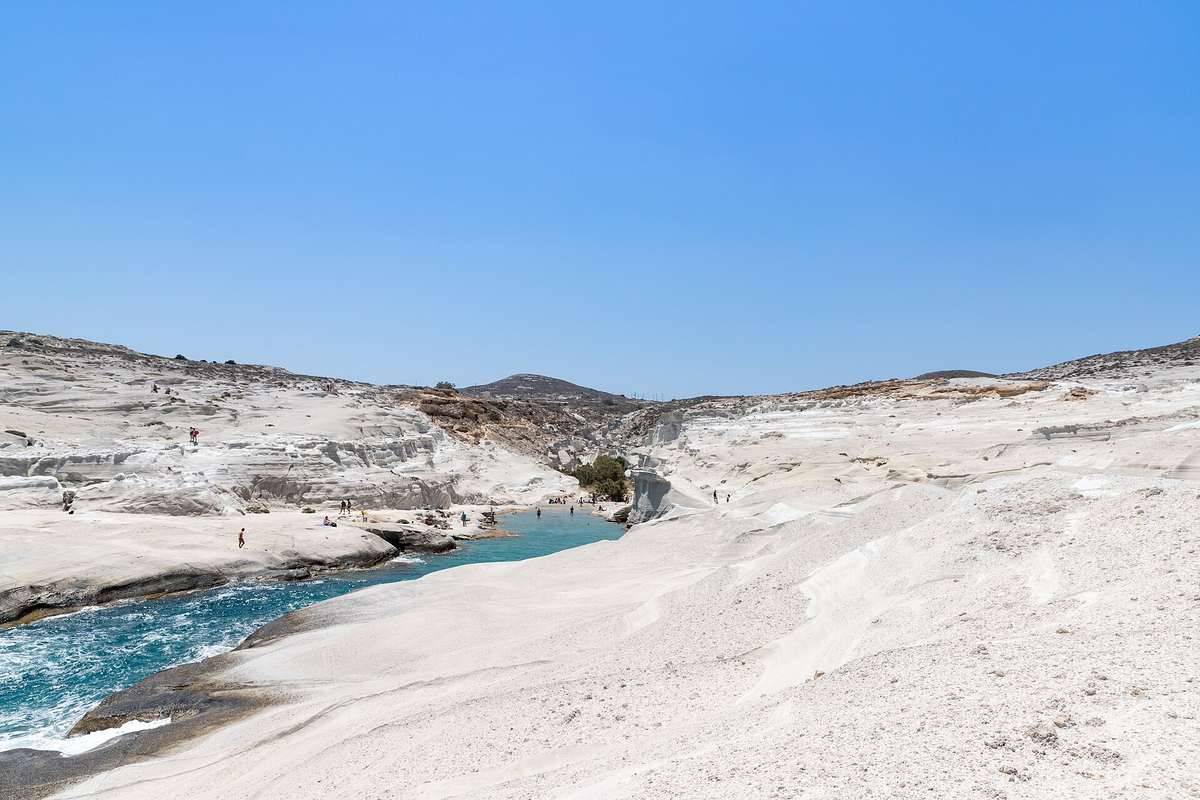
Sarakiniko is the most famous beach on Milos and one of the most striking in Greece. A surreal moonscape of smooth, brilliant-white volcanic rock sculpted by wind and waves into curves and ridges.
Lying about 4 km east of Plaka on the north coast, it has little sand but small inlets of deep blue water amid the white, perfect for swimming and cliff-jumping. Exposed to the wind, it is best on a calm day and stunning at sunrise or sunset. Sarakiniko is the signature image of Milos. If Milos has one iconic beach, it is Sarakiniko. An otherworldly landscape that appears on every postcard of the island and ranks among the most impressive beaches in all of Greece. Set on the north coast about four kilometres east of the hilltop capital Plaka, it is less a conventional beach than a sculpture park carved by nature.
Here, smooth volcanic rock of dazzling white has been eroded by the wind and sea into soft, rounded curves, ridges and hollows that stretch down to the water. So bright against the deep blue of the Aegean that the whole place is often compared to the surface of the moon. There is little actual sand, but small inlets and a narrow fjord-like channel of clear, deep water cut into the white rock. Giving sheltered spots to swim, snorkel and dive from the ledges, popular with cliff-jumpers. Because it is open and unprotected, Sarakiniko catches the wind, so it is best enjoyed on a calm day.
It is at its most magical in the soft light of early morning or at sunset, when the white rock glows. No visit to Milos is complete without seeing it.
How do you visit Kleftiko?
Kleftiko, on the remote southwestern tip of Milos, is the island’s most spectacular spot: a cluster of towering white sea cliffs. Caves, tunnels and natural arches rising from brilliant turquoise water, once a hideout for pirates.
It has no road access and can only be reached by boat. On a half-day or full-day excursion from the main port of Adamas, or by experienced hikers on a difficult trail. Boat tours let you swim and snorkel among the caves and arches, making Kleftiko the highlight of any trip to Milos. The single most breathtaking place on Milos is Kleftiko, set on the wild southwestern tip of the island. A stretch of soaring white cliffs, sea caves, tunnels and natural rock arches rising straight out of impossibly clear turquoise water.
Once a refuge for pirates who hid their ships among its coves, it still feels remote and untouched, a natural cathedral of white stone and blue sea.
The defining fact about Kleftiko is that it cannot be reached by road; there is no driving here. The only practical way to visit is by sea, on one of the boat excursions that run from the island’s main port of Adamas. Ranging from short half-day trips to full-day cruises of six to eight hours. Often combined with other stops such as the Sykia sea cave and the calm waters of Gerontas Bay. A rough hiking path does exist but is recommended only for experienced walkers, as the descent is very difficult.
On a boat tour you anchor among the cliffs and swim or snorkel through the caves and arches in the clear water. An unforgettable experience and the undisputed highlight of Milos, which is why a Kleftiko boat trip tops almost every visitor’s list. Book ahead, as the popular tours fill up.
What are the southern beaches like?
The south coast of Milos holds certain of its most beautiful beaches. Tsigrado is a tiny, hidden turquoise cove reached by a thrilling descent down ladders and ropes between cliffs.
Neighbouring Firiplaka is a long, easily accessible sandy beach backed by colourful red, orange and pink volcanic cliffs, with shallow water, a beach bar and facilities ideal for families. Nearby Paleochori is famous for geothermal hot springs that warm the sand and sea. Provatas and Gerontas add further sandy, sheltered options. The southern coast of Milos is where most of the island’s loveliest swimming spots are found, sheltered from the prevailing north winds and backed by dramatic volcanic cliffs. Two neighbours capture the contrast that makes Milos special.
Tsigrado is a tiny, secret cove of turquoise water hidden between towering cliffs. Reached by a short but genuinely thrilling scramble down wooden ladders and knotted ropes, an adventure that rewards the bold with a near-private paradise.
Just along the coast, Firiplaka could hardly be more different: a long. Sandy and easily accessible beach backed by extraordinary cliffs splashed with red, orange and pink from the mineral deposits in the volcanic rock.. With shallow, clear water that is superb for families and paddleboarding, plus a beach bar, loungers and parking nearby. Close by, Paleochori is one of the island’s most famous beaches, celebrated for the geothermal activity beneath it. Where volcanic heat warms the sand and the shallows so most that a local taverna famously cooks food in the hot ground. Add the sheltered sands of Provatas and the scenic bay of Gerontas.
The south coast alone offers a remarkable spread, from heart-pounding hidden coves to relaxed family beaches and naturally heated sands.
Which beach can you choose and what tips help?
Choose your Milos beach by what you want: Sarakiniko for the iconic landscape, Kleftiko (by boat) for the ultimate adventure. Firiplaka or Provatas for easy family sand, Tsigrado for a thrill, Paleochori for hot springs.
Note the wind: north-coast beaches like Sarakiniko are exposed, so head south when the meltemi blows in summer. A host of remote beaches lack shade and facilities, so bring water, food and sun protection, and a car or boat tour helps. Check tour cancellations in windy weather. With so a host of beaches, the key to enjoying Milos is matching the beach to your mood and the day’s conditions. For sheer spectacle, Sarakiniko is unmissable; for the trip of a lifetime, take a boat to Kleftiko. For an easy day with children, the sandy, organised beaches of Firiplaka, Provatas or Achivadolimni suit best.
For adventure, brave the ladders at Tsigrado; and for something unique, feel the warm geothermal sands at Paleochori.
The single most important practical factor on Milos is the wind. In summer the strong northerly meltemi can whip up the exposed north-coast beaches like Sarakiniko, so on windy days head to the sheltered south coast instead. Check whether boat tours to Kleftiko are running, as they are sometimes cancelled for safety when the sea is rough. Most of the best beaches are remote and undeveloped.. With little or no shade, no sunbeds and no facilities, so come prepared with ample water, snacks, an umbrella and strong sun protection. Renting a car or quad gives the freedom to reach the scattered beaches, while a boat tour opens up the inaccessible coves of the southwest.
Plan around the wind, come equipped, and Milos rewards you with certain of the most beautiful and varied beaches in all of Greece.
Whether you spend your days chasing hidden coves by car or cruising the southwest cliffs by boat, the island’s beaches alone are reason enough to visit. A host of travellers return year after year simply to swim a different stretch of its remarkable coast. The questions below cover what visitors ask most.
What are the north-coast beaches of Milos?
The north coast holds the volcanic showpieces of Milos, from the white rock of Sarakiniko to the sea caves of Papafragas and the sheltered coves of Firopotamos and Plathiena, most within a short drive of Plaka and Pollonia.
Papafragas sits about seven kilometres northeast of Plaka, near the ancient ruins of Phylakopi. Three narrow sea inlets cut into white cliffs form a set of natural swimming pools, reached by a short and steep path down the rock. The water runs deep and clear, and the enclosed channels give shelter from the open sea. The setting rewards a stop even for travellers who prefer to look rather than swim.
Firopotamos is a small fishing hamlet with a compact sandy beach and a row of white-and-blue boat garages called syrmata. The bay faces north yet stays fairly calm behind a rocky headland topped by a white chapel. Plathiena lies west of Plaka and gives a broad crescent of soft sand backed by tamarisk trees, one of the best places on the island for a family swim near the capital. The two beaches pair well with a late-afternoon walk through Plaka and its Venetian castle.
Mandrakia adds a third fishing settlement to the north-coast circuit, prized for its taverna and its painted syrmata rather than its narrow shore. The whole northern shore repays an unhurried day by car, moving from swim to cove to village along a compact stretch of coast.
How do you reach the beaches of Milos?
Milos rewards a rental car, ATV or scooter, since its beaches spread across a coastline with limited bus service. Boat tours from Adamas open the southwestern coves at Kleftiko and Sykia that no road can reach.
The island measures about twenty-three kilometres east to west, and its best beaches lie scattered around the edges. A rental vehicle from Adamas or the airport turns a full circuit into an easy day, with most drives between beaches lasting ten to twenty-five minutes. The public bus links Adamas, Plaka, Pollonia and a handful of southern beaches in summer, yet the timetable thins out for the remote coves, so a car gives far more freedom.
The southwestern shore forms the exception no wheels can solve. Kleftiko, Sykia and the caves near Gerontas face open water with no coastal road, so a boat trip from Adamas is the only practical route. Half-day and full-day cruises leave the main port through the morning, and the sea stays calmest before midday. A car for the accessible beaches plus one boat day for the hidden southwest covers the full range of the Milos coast.
When is the best time to visit the beaches of Milos?
The beach season on Milos runs from late spring to early autumn, with warm, settled water from June to September and thinner crowds in May, early June and late September.
The sea grows swimmable from late May and holds its warmth into October, while the peak months of July and August bring the hottest days and the largest numbers of visitors. The trade-off in high summer is the meltemi, the strong north wind that can churn the exposed north-coast beaches for days at a time. On windy stretches the sheltered south coast at Firiplaka, Provatas and Paleochori stays calm and swimmable.
The shoulder weeks of May, early June and the second half of September give the finest balance for a beach trip: warm water, gentler winds, lower prices and quieter sands. Boat tours to Kleftiko run through this whole window, though early and late in the season a rough sea can cancel a departure, so a flexible day or two helps. Planning the visit around the wind, rather than the calendar alone, is the surest way to enjoy the coast.
Why does Milos have geothermal beaches?
Milos sits on an active volcanic system, and its geothermal heat warms the sand and shallow water at beaches such as Paleochori, Alogomandra and parts of Adamas bay, where hot springs rise through the seabed.
The island grew from ancient volcanic eruptions, and that heat still lingers underground. At Paleochori on the south coast, steam vents warm the sand so much in places that a local taverna cooks food in the ground, and pockets of the shallows feel noticeably hot underfoot. Swimmers who wade a little further out reach cooler water, while the warm shallows suit a gentle soak. The coloured cliffs above the beach, streaked orange, red and grey by minerals, come from the same volcanic chemistry.
Alogomandra near Pollonia adds a quieter geothermal spot with a sandy cove and a sea cave, and warm currents surface near the shore. The mineral springs at Adamas, close to the port, feed a small thermal bathing tradition that dates back to antiquity. The volcanic past that shaped the white rock of Sarakiniko and the coloured cliffs of the south also heats these springs, tying the geology of Milos directly to the way its beaches feel.
What should you bring to the beaches of Milos?
Pack water, sun protection, sturdy shoes and snorkelling gear for the beaches of Milos, since a good number are remote coves with no shade, no sunbeds and no facilities beyond the organised south-coast sands.
Water rocks, jagged volcanic ledges and steep access paths make sturdy sandals or water shoes worthwhile, above all at Tsigrado, where ladders and ropes lead down to the cove, and at Papafragas, where the descent runs over rock. The undeveloped beaches carry no kiosk or taverna, so ample water, snacks and a sun umbrella matter on hot days when shade is scarce. A hat, high-factor sunscreen and a rash top guard against the strong Aegean sun.
The clear water rewards a snorkel and mask, since the volcanic rock hides caves, arches and fish along the coast at Sarakiniko, Kleftiko and Firopotamos. A dry bag protects a phone and keys on the boat trips and the wet scrambles. The organised beaches at Firiplaka and Provatas rent loungers and sell drinks, so a lighter kit works there. A light windbreaker helps on the open north coast when the meltemi blows. Matching the packing list to the beach, wild cove or organised sand, keeps a day on the coast of Milos comfortable.
To plan around the island’s coast, pair the beaches with a Milos boat tour to the caves of Kleftiko, the lunar moonscape of Sarakiniko beach. The wider list of things to do in Milos. A rental car or ATV makes the scattered beaches easy to reach.
Frequently Asked Questions
What is the most famous beach in Milos?
The most famous beach in Milos is Sarakiniko, a surreal moonscape of smooth, brilliant-white volcanic rock on the north coast, about 4 km east of Plaka. Sculpted by wind and waves into soft curves and ridges.. With inlets of deep blue water for swimming and cliff-jumping, it is one of the most photographed and striking beaches in Greece. Kleftiko, a cluster of sea caves reached only by boat, is the other signature highlight of the island.
How do you get to Kleftiko beach in Milos?
You can only reach Kleftiko by boat, as it has no road access. Boat excursions run from the main port of Adamas, ranging from half-day trips to full-day cruises of six to eight hours. Often stopping at other caves and bays along the way. On the tour you swim and snorkel among the white cliffs, caves and arches. A difficult hiking trail also exists but is only for experienced walkers. Book boat tours in advance, and check for weather cancellations.
How a host of beaches does Milos have?
Milos has around 75 beaches, a remarkable number for a small Cycladic island, and they are famous for their variety. Shaped by the island’s volcanic geology, they range in colour from brilliant white and golden to grey, red and black, set against clear turquoise water. Certain are long, sandy and organised with facilities; others are tiny hidden coves reached on foot or only by boat, giving Milos one of the most diverse coastlines in Greece.
Which Milos beaches are best for families?
The best family beaches on Milos lie on the sheltered south and east coasts, where the water stays shallow and calm. Firiplaka offers a long sandy shore with a beach bar, loungers and parking, backed by coloured cliffs. Provatas gives a quiet sandy cove with easy access, and Achivadolimni near Adamas is the longest beach on the island. Pollonia beach in the northeast adds tamarisk shade and tavernas a few steps from the sand, so children swim safely while parents rest nearby. Papikinou beach beside Adamas gives another shallow, shaded option within walking distance of the port, handy for a first or last swim on the day of a ferry.
Are the beaches on Milos sandy or pebbly?
Milos has both, and the mix reflects its volcanic geology. The organised south-coast beaches such as Firiplaka, Provatas and Paleochori are broadly sandy, while Achivadolimni near Adamas blends dark sand with fine shingle. Sarakiniko on the north coast has almost no sand, offering white rock ledges and deep inlets instead. Kleftiko in the southwest is a cluster of cliffs and sea caves with no beach at all, reached by boat for swimming in open water.
Do you need a boat to see the best beaches in Milos?
A boat is essential for the southwestern coast, where Kleftiko, Sykia and the coves near Gerontas have no road access. A half-day or full-day cruise from Adamas is the only practical way to swim among those white cliffs and sea caves. A rental car or ATV, though, reaches every accessible beach on the north, east and south coasts, so most of the island’s coastline opens up without a boat. The ideal beach trip combines a car for the road-accessible sands with one boat day for the hidden southwest.
What is the best time of year for beaches in Milos?
The beach season on Milos runs from late May to early October, with the warmest and most settled water from June through September. July and August bring the hottest days and the biggest crowds, along with the strong north wind called the meltemi, which can stir up the exposed north-coast beaches. The shoulder weeks of May, early June and late September give warmer prices, gentler winds and quieter sands. On windy summer days the sheltered south coast at Firiplaka, Provatas and Paleochori stays calm.