
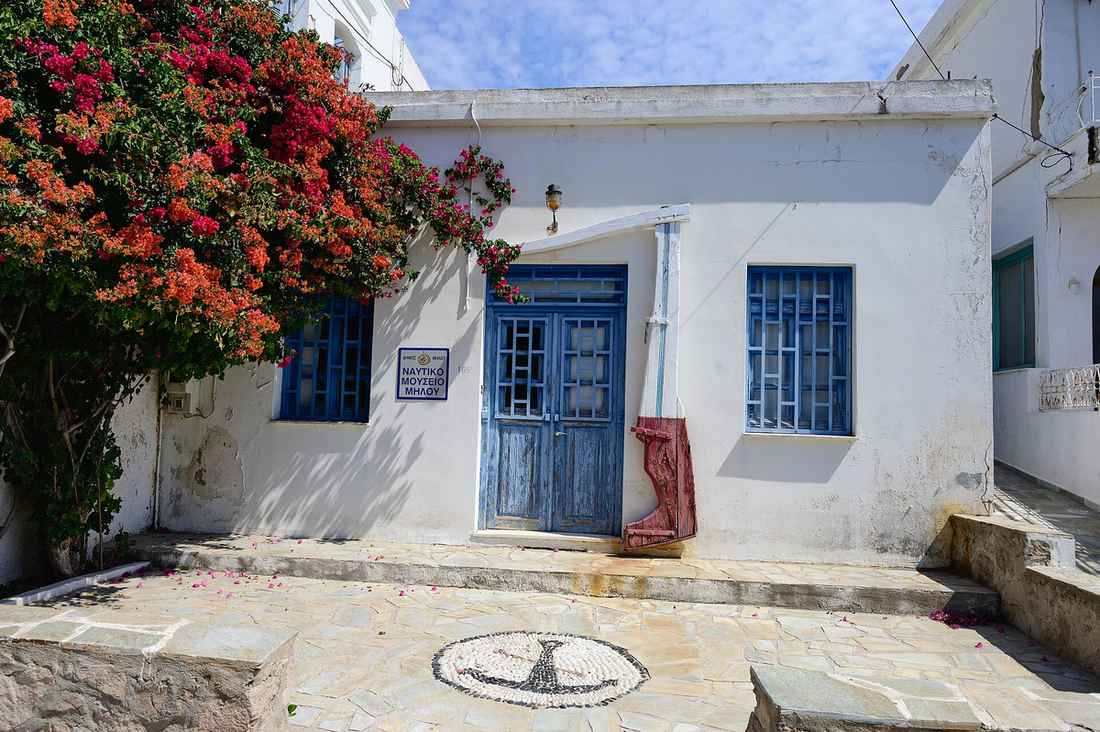
The Milos Mining Museum in Adamas tells the geological and mining story of the island across two floors of minerals, maps, tools and photographs. Plan museum visits, tours and tickets with My Greece Tours.
The museum is a fine rainy-day stop in the Milos travel guide. The sections below cover what the museum is, why Milos has one, what you see inside, the location and hours, and whether it is worth your time.
What is the Milos Mining Museum?
The Milos Mining Museum is a museum in Adamas devoted to the geological and mining history of the island. It honours the workers who developed the island’s mineral wealth and displays minerals, tools, maps and photographs.
The museum has a clear mission. It promotes the rich geological and mining heritage of Milos and pays tribute to the people who worked the mines. The collection traces how the island built its wealth from the rock beneath it. The tone is informative rather than grand.
The building is compact and well laid out. It holds two main floors and a basement. The two upper floors carry the core exhibitions, while the basement houses the auxiliary rooms. A visit takes about an hour, which fits easily into a day in the port.
The museum stands in Adamas, the main harbour. That central spot makes it simple to reach on foot from the waterfront. It offers a focused, indoor stop between beaches and boat trips. The Milos Mining Museum suits anyone curious about the volcanic story behind the island. The next section covers why it exists.
The museum gives the island’s volcanic story a clear shape. Photographs trace the mines from the early days to the modern quarries. Paintings and models show how crews cut and hauled the rock. Old maps chart the seams across the island. Authentic tools line the cases, from hand picks to survey instruments. The displays carry labels in Greek and English. A visit runs about an hour, which fits any day in the port. The compact, well-ordered rooms suit a quick, focused stop. The Milos Mining Museum turns the geology beneath the beaches into a story you can follow room by room.
Why does Milos have a mining museum?
Milos has a mining museum because mining shaped the island for thousands of years. The volcanic rock yields obsidian, bentonite, perlite and other minerals, and quarrying remains a core part of the island’s economy today.
Mining runs deep in the island’s past. In antiquity Milos was famed across the Aegean for obsidian, the sharp volcanic glass traded for tools and blades. That early industry made the island a hub of the prehistoric world. The volcanic ground has supplied raw materials ever since.
The work continues in the modern era. Milos quarries bentonite, perlite and other industrial minerals that ship around the world. Mining stands beside tourism as a pillar of the local economy. Few Greek islands keep such an active link to their geology.
The museum captures that long story. It connects the obsidian trade of the ancient world to the working quarries of today. It also honours the miners whose labour built the island’s wealth. That heritage explains why a small island devotes a whole museum to its rock. The next section covers the exhibits.
The deep mining past explains why the island built a museum to it. In antiquity Milos was famed across the Aegean for obsidian, the sharp volcanic glass. Traders shipped the prized stone for blades and tools long before the classical age. That early industry made the island a hub of the prehistoric world. The volcanic ground has yielded raw materials ever since. The museum links that ancient trade to the modern quarrying of bentonite and perlite. Few Greek islands keep such an active bond with their geology. The exhibits honour the miners whose work built the island’s wealth over millennia.
The mining story still shapes daily life on the island. Quarries on Milos ship bentonite and perlite around the world today. The industry employs islanders alongside the summer tourism trade. Trucks and processing plants sit near the coast away from the resorts. That working present gives the museum a living context, not just a historic one. The exhibits link the ancient obsidian trade to the modern quarry. Visitors leave understanding why Milos is called a mining island. The museum honours both the old miners and the crews who work the seams now. Few small islands keep such an active bond with the rock beneath them.
What can you see inside the Milos Mining Museum?
Inside you see mining history on the ground floor through photographs, models, paintings, maps and old tools, and the island’s mineral wealth on the first floor, with mineral samples in display cases and notes on their uses.
The ground floor sets the scene. It introduces the mining history of Milos through photographs, scale models and paintings of the work over the ages. Old and new geological and topographical maps line the walls. Authentic tools and instruments show how the miners cut and moved the rock.
The first floor displays the minerals themselves. Glass cases hold samples of the minerals that drive the island’s current quarrying. Each sits beside photographs and notes on how it is processed and used. The display turns abstract geology into something you can study up close.
The basement supports the main rooms. It holds auxiliary spaces that round out the visit. The layout flows from history to mineral science across the two floors. The clear, well-labelled exhibits make the museum easy for families and a worthwhile stop on a things to do in Milos list. The next section covers location and hours.
The exhibits move clearly from history to mineral science. The ground floor sets the scene with photographs, paintings and old maps. Scale models and authentic tools show the daily work of the mines. The first floor turns to the minerals themselves. Glass cases hold samples of the rocks that drive today’s quarrying. Notes and photographs explain how each is processed and used. The basement holds auxiliary rooms that round out the visit. The flow suits families and curious first-timers alike. By the end you understand both the human story and the science behind the colourful coast of Milos.
Where is the Milos Mining Museum and what are the hours?
The Milos Mining Museum stands on the waterfront of Adamas, the main port. It opens daily in summer, usually from 10am to 2pm and again in the evening, with shorter hours in spring and autumn and a Monday closing day off-season.
The location is central and easy. The museum sits on the seafront at Adamas, a short walk from the ferry quay and the village centre. You can fold a visit into the time around a boat trip or a meal in the port.
The hours follow the season. In the peak summer months the museum opens daily, from 10am to 2pm and again in the evening until late. The morning slot runs through the shoulder months, when the museum closes on Mondays. Evening hours shrink as the season winds down.
A quick check saves a wasted trip. Hours shift year to year, so confirm the current times before you go. The museum lists its schedule and contact details online for each season. Pairing the visit with a stroll around Adamas makes a relaxed half-day. The next section covers whether it is worth it.
The central location makes the museum easy to reach. It stands on the seafront at Adamas, a short walk from the ferry quay. You can fold a visit into the time around a boat trip or a meal. The hours follow the season closely. Peak summer brings daily opening, morning and evening, until late. The shoulder months keep the morning slot and close on Mondays. Evening hours shrink as the season winds down. A quick check of the current schedule avoids a wasted trip. The seafront setting lets you pair the museum with a stroll around the lively port.
Is the Milos Mining Museum worth visiting?
Yes, the Milos Mining Museum is worth an hour for anyone curious about the island’s volcanic geology. It explains why the beaches glow with colour, makes a fine rainy or windy-day stop, and works well for families.
The museum adds depth to the island. Once you learn how the volcano shaped the rock, the colours of Firiplaka and Sarakiniko make sense. The geology behind the famous beaches comes alive in the display cases. The visit changes how you see the coast.
The timing suits a flexible day. The indoor rooms give shelter when the meltemi blows hard or a rare shower falls. An hour here fits neatly before lunch in the port. The central location means no long drive to reach it.
The museum also engages younger visitors. Children enjoy the bright mineral samples and the old tools. It pairs well with the moonscape of Sarakiniko beach on a Milos itinerary, and it slots easily into a day planned for Milos with kids.
The visit adds real depth to a Milos holiday. Once you grasp the volcanic geology, the colours of Firiplaka and Sarakiniko make sense. The indoor rooms give welcome shelter on a windy or rainy day. An hour here fits neatly before lunch in the port. Children enjoy the bright mineral samples and the old tools. The central spot means no long drive to reach it. The museum pairs naturally with the moonscape of Sarakiniko on a touring day. For travellers curious about how the island took shape, the Milos Mining Museum is an hour well spent.
The museum slots into a flexible day in the port. An hour here fits neatly before or after lunch in Adamas. The indoor rooms shelter you when the meltemi blows hard outside. The central seafront spot means no long drive to reach it. Children stay engaged by the bright minerals and the old tools. The visit deepens every later stop, from Sarakiniko to Firiplaka. Pairing it with a stroll along the lively waterfront makes a relaxed half-day. For travellers curious about how the island took shape, the Milos Mining Museum repays a short, easy visit many times over across the rest of the trip.
Frequently Asked Questions
Where is the Milos Mining Museum?
The Milos Mining Museum stands on the waterfront of Adamas, the main port of Milos. It sits a short walk from the ferry quay and the village centre, so you can reach it on foot from anywhere in the port. The central location makes it easy to fold into the time around a boat trip, a meal or a stroll along the Adamas seafront.
What are the opening hours of the Milos Mining Museum?
The Milos Mining Museum opens daily in peak summer, usually from 10am to 2pm and again in the evening. The morning slot runs through the shoulder months of spring and autumn, when the museum closes on Mondays, and the evening hours shorten as the season winds down. Hours shift from year to year, so it is best to confirm the current schedule before you visit.
Is the Milos Mining Museum good for kids?
Yes. The Milos Mining Museum works well for families. Children enjoy the bright mineral samples in the display cases and the old mining tools and models. The visit takes about an hour, short enough to hold young attention, and the central location in Adamas makes it an easy stop. It also offers welcome shelter on a windy or rainy day when the beaches are less inviting.