
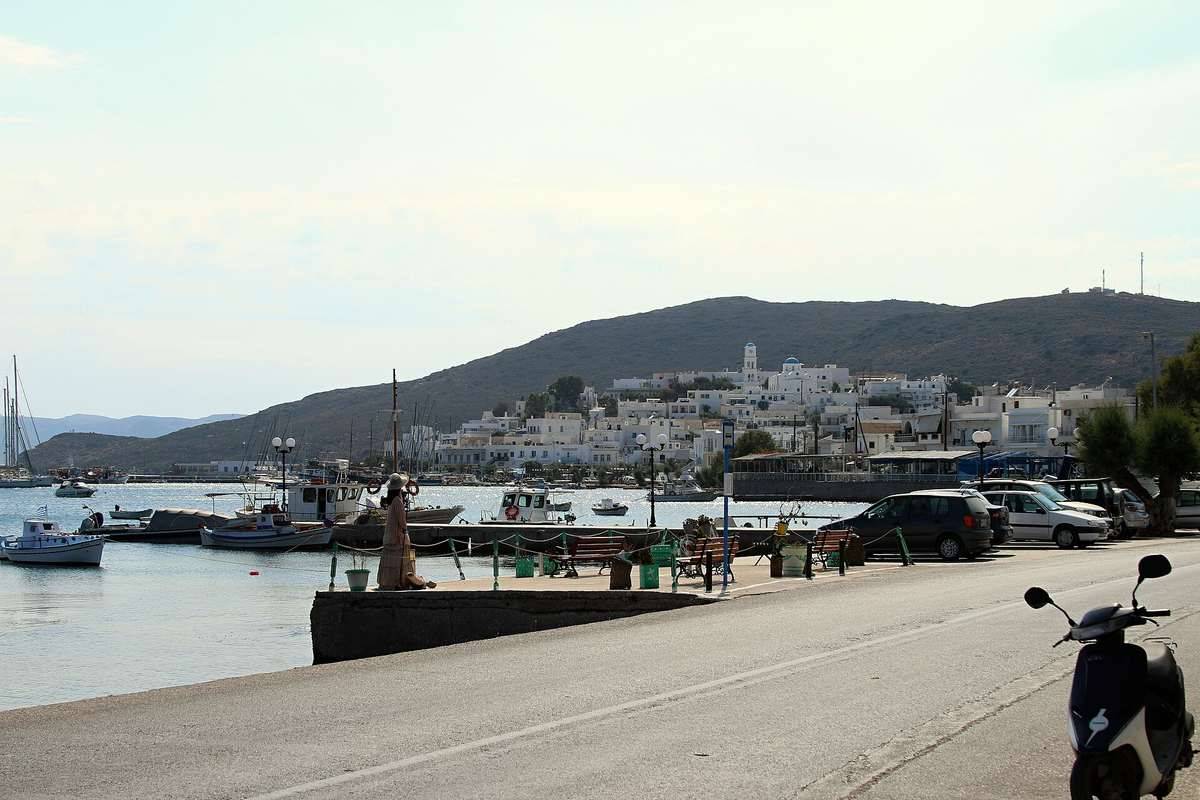
Milos accessible travel is possible with planning, though the volcanic terrain and remote beaches pose real challenges for reduced mobility. Plan an accessible trip and tours through My Greece Tours.
Accessibility is an important part of the Milos travel guide. The sections below cover how accessible Milos is, getting to the island, the accessible beaches, getting around and finding suitable accommodation.
How accessible is Milos for reduced mobility?
Milos is moderately accessible with careful planning, but its volcanic landscape, hilly villages and remote, rough-access beaches make it more challenging than flatter islands.
Milos demands honest planning. The terrain runs rugged. The villages climb steeply. The coves hide off tracks.
Adamas eases the stay. The port town stays flatter. The seafront aids walking. The base suits best.
Hilltop villages challenge wheels. Plaka climbs in steps. Cobbles test the chair. The lanes turn narrow.
Remote beaches stay hard. Dirt tracks guard them. Steep paths block access. The wild coast resists.
Milos is a moderately accessible island, but its very nature presents real challenges for travellers with reduced mobility, and honest planning is essential. The island is volcanic and hilly, with traditional villages that climb steep slopes on cobbled, stepped lanes, and a coastline whose most beautiful coves are reached by rough dirt tracks, steep paths or boat. This terrain makes it more demanding than flatter, more developed islands.
That said, a rewarding trip is achievable with the right base and expectations. The main town and port of Adamas is the most manageable area, being relatively flat along its seafront with accessible services, accommodation and dining, and a good choice for a base. The key is to focus on the accessible parts of the island, accept that the wildest beaches and hilltop villages may be difficult or impossible, and plan transport and accommodation carefully. Our Milos travel tips guide covers practicalities, and the next section covers getting to the island.
Should you fly or take the ferry to Milos with reduced mobility?
Flying suits travellers who want speed and a short journey, taking around 30 to 40 minutes from Athens. The ferry suits those needing step-free vehicle access, more room and a cabin, at the cost of a much longer sailing.
The choice turns on your priorities. The flight from Athens lasts around 30 to 40 minutes, so it minimises time in transit and the strain of a long trip. The aircraft is small and the airport compact, meaning the walk to the plane is short but boarding may involve steps rather than an air bridge. Requesting airline assistance in advance secures help onto the aircraft and with luggage.
The ferry from Piraeus trades speed for space and step-free access. Vehicles drive straight onto the car deck, so a traveller can stay in an adapted car or transfer with room to spare, and a booked cabin allows rest on the longer crossing. Confirm the accessible seating, lift access between decks and cabin details with the ferry company before you travel. Combining an outbound flight with a return ferry, or the reverse, lets you match each leg to the day’s needs and energy.
How do you get to Milos with reduced mobility?
You reach Milos with reduced mobility by ferry from Piraeus or by domestic flight from Athens. The flight is quicker and simpler, while ferries offer step-free vehicle access and more space.
Two routes reach the island. A flight links Athens fast. A ferry sails from Piraeus. Each suits different needs.
The flight saves time. The hop lasts under an hour. The small airport stays simple. Assistance needs booking.
The ferry offers space. Vehicles roll on board. The deck gives room. The journey runs longer.
Assistance must be arranged. Airlines and ferries provide it. Advance notice secures it. The transfer needs planning.
There are two ways to reach Milos with reduced mobility, each with advantages. The domestic flight from Athens is the quickest and often simplest, taking only around 30 to 40 minutes, though the small aircraft and compact airport mean assistance with boarding should be arranged in advance with the airline. The ferry from Piraeus takes much longer but offers step-free roll-on vehicle access, more room to move around and the option of a cabin.
Whichever route you choose, the key is to arrange assistance ahead of time. Airlines and ferry companies can provide help with boarding and disembarking if notified in advance, and it is wise to confirm the specifics of accessible seating, cabins or vehicle decks. Equally important is planning the onward transfer from the airport or port to your accommodation, ideally with an accessible vehicle booked in advance, as taxis are limited. Our guide to how to get to Milos covers the routes, and the next section covers accessible beaches.
Are there accessible beaches on Milos?
A handful of Milos beaches are more accessible, particularly organised south-coast and bay beaches like Provatas, Achivadolimni and Papikinou, which have flatter access, parking and facilities.
Accessible beaches do exist. The organised ones lead. Flat access helps. Parking sits close.
Provatas eases the visit. A paved road reaches it. Parking waits by the sand. Facilities stand near.
Papikinou suits gentle access. The town backs the beach. The walk stays flat. The shade comforts.
Remote coves stay out of reach. Tracks and steps block them. Boats grant the only way. The wild coast resists.
Most of the famous Milos coves are challenging to reach, yet a handful of beaches are far more accessible and make the coast enjoyable for travellers with reduced mobility. The organised beaches on paved roads with parking and facilities are the best options, including Provatas on the sheltered south coast, with its flat access and amenities, the long bay beach of Achivadolimni, and Papikinou on the flat edge of Adamas, an easy walk from town.
These beaches offer the combination that matters: relatively level access, nearby parking, soft sand or gentle entries, and facilities such as sunbeds, shade and tavernas close by. By contrast, the dramatic remote coves reached by rough dirt track, steep cliffside path or ladder, and the boat-only beaches like Kleftiko, are largely out of reach for those with serious mobility limitations. Focusing on the accessible organised beaches still gives a rewarding taste of the island’s clear water. Our Milos beaches guide covers them, and the next section covers getting around.
Why are Sarakiniko and Kleftiko hard to reach with reduced mobility?
Sarakiniko and Kleftiko sit on wild, undeveloped stretches of coast. Sarakiniko is a moonscape of rock reached over uneven ground, and Kleftiko has no road at all and is accessed only by boat, which makes both difficult for reduced mobility.
Sarakiniko beach draws visitors to its white volcanic rock, yet that same rock is the barrier. The car park sits above the shore, and the way down crosses smooth but uneven stone with no path, railing or steps in places, and no soft sand at the water’s edge. Walkers with limited mobility can view the landscape from the top, but reaching the water safely is hard.
Kleftiko lies on the roadless south-west coast, framed by sea caves and stacks that rise from deep water. No road reaches it, so the only way in is by boat, and most trips involve a swim or a transfer from a larger vessel to a smaller one. This makes Kleftiko one of the least accessible sights on the island. Booking a private boat with a stable deck and a crew briefed on your needs gives the best chance of enjoying the setting from the water rather than the shore.
How do you get around Milos with reduced mobility?
Getting around Milos with reduced mobility is easiest with a pre-arranged accessible vehicle or private transfers, as public transport and taxis are limited and not adapted. Hand-controlled rentals are scarce, so booking accessible transport in advance is the most reliable approach.
Transport needs forward planning. Public buses stay limited. Taxis are few. Private hire wins.
An accessible vehicle helps most. Pre-booking secures it. The freedom follows. The island opens up.
Adapted rentals stay scarce. Hand controls are rare. Early enquiry matters. Options need confirming.
Transfers fill the gaps. A driver eases the day. Accessible vans help. Advance booking secures them.
Getting around Milos with reduced mobility takes planning, as the island’s public transport is limited and not designed for accessibility. The local buses are infrequent and not adapted, taxis are few in number and rarely wheelchair-accessible, and the standard rental cars, quads and ATVs may not suit everyone. This makes independent travel harder than on larger, more developed destinations.
The most reliable approach is to arrange accessible transport in advance. Pre-booking private transfers or an accessible vehicle with a driver covers the airport or port pickup and day trips to the more manageable beaches and sights, while travellers who can drive may be able to source an adapted rental if they enquire early, though hand-controlled vehicles are scarce. Building the trip around a pre-arranged vehicle and the flatter areas of the island makes exploring far smoother. Our Milos car rental guide covers the options, and the next section covers accommodation.
Is there accessible accommodation on Milos?
Milos has a limited but growing range of accessible accommodation, mostly in and around the flatter town of Adamas. Step-free rooms with adapted bathrooms are not widespread, so it is essential to confirm specific accessibility features directly with each property before booking.
Accessible stays exist but are limited. Adamas holds the best. Flatter ground helps. Confirming ahead matters.
Adamas suits the search. The seafront stays level. Services cluster close. The base works well.
Adapted rooms stay scarce. Step-free access varies. Roll-in showers are rare. Details need checking.
Direct contact clarifies. A message confirms features. The host details access. The booking firms up.
Accessible accommodation on Milos is limited but improving, and the best options are concentrated in and around Adamas, the flattest and most central part of the island. Being relatively level along its seafront and close to services, the port town is the easiest base for travellers with reduced mobility, and a number of its hotels and apartments offer ground-floor or step-free rooms, though fully adapted facilities are not yet widespread.
Accessibility features vary widely and are not always accurately described in listings, so the essential step is to contact each property directly before booking and confirm the specifics you need, whether that is step-free entry, lift access, room and bathroom dimensions, grab rails or a roll-in shower. Booking well ahead also helps secure the limited suitable rooms in peak season. With careful checking, a comfortable, well-located base is achievable. Our where to stay in Milos guide covers the areas to focus on for an accessible trip.
The overarching lesson for accessible travel on Milos is that careful preparation makes all the difference. The island will never be as easy as a flat, purpose-built resort, but by basing yourself in Adamas, arranging accessible transport and transfers in advance, focusing on the manageable beaches and confirming every detail with accommodation before booking, a genuinely enjoyable trip is well within reach. Realistic expectations about the hilltop villages and remote coves prevent disappointment, while the accessible parts of the island still deliver clear water, warm hospitality, good food and the relaxed Cycladic atmosphere. With the groundwork done, Milos rewards travellers of all mobility levels with a memorable Aegean escape.
How do you plan airport transfers and taxis on Milos?
Pre-booking is the reliable way to handle transfers on Milos, because the taxi fleet is small and rarely adapted. Arranging an accessible private transfer or a driver in advance covers the airport or port pickup and avoids waiting for a scarce taxi on arrival.
The Milos taxi fleet numbers only a handful of cars, and none is guaranteed to be wheelchair-adapted, so relying on finding one at the airport or port on arrival is a risk. The airport sits a short drive from Adamas, and the port at Adamas is central, yet even these short hops need a vehicle waiting. Contacting a transfer operator ahead of time lets you state your requirements, such as a low step, boot space for a wheelchair or a driver who can assist.
For the smoothest arrival, give the operator your flight or ferry details and confirm the pickup point in writing. Booking the return transfer at the same time removes a second worry on departure day. Travellers who plan day trips can arrange the same driver for the whole stay, which builds familiarity with the route and needs and keeps the flatter beaches and Adamas services within easy reach.
What practical planning tips help an accessible Milos trip?
The most useful tips are to base yourself in flat Adamas, book accessible transport and rooms months ahead, confirm every detail directly with providers, and match the itinerary to the accessible beaches and sights rather than the roughest coves.
Timing shapes the trip. Late spring and early autumn bring gentler heat than high summer, which makes moving around and time on the beach more comfortable. Booking flights, ferries, accessible rooms and transfers well ahead secures the limited adapted options before they fill. Packing spare parts, medication and any personal mobility equipment matters, as specialist supplies are hard to source on a small island.
Building a realistic day plan protects the experience. Grouping the flatter sights near Adamas, keeping the pace unhurried and leaving buffer time for rest turns a demanding destination into a relaxed one. Writing down the specific access questions for each hotel, transfer and boat trip, then confirming the answers before you pay, removes surprises. Careful groundwork lets the accessible parts of Milos deliver clear water, warm food and calm Cycladic days.
Frequently Asked Questions
Is Milos wheelchair accessible?
Milos is partially wheelchair accessible with careful planning, but its volcanic terrain makes it more challenging than flatter islands. The main town of Adamas is the most manageable area, relatively flat along its seafront with accessible services, and a few organised beaches such as Provatas, Achivadolimni and Papikinou have flatter access, parking and facilities. However, the hilltop villages with their cobbled, stepped lanes and the remote coves reached by dirt track, steep path or boat are largely inaccessible for wheelchair users. Focusing on Adamas and the accessible beaches, with pre-arranged accessible transport, makes a rewarding visit possible.
Which Milos beaches are easiest to access?
The easiest Milos beaches to access for reduced mobility are the organised beaches on paved roads with parking and facilities. Provatas on the sheltered south coast has flat access, soft sand and amenities, Achivadolimni is a long bay beach on a clear road, and Papikinou sits on the flat edge of Adamas within an easy walk of the town. These beaches combine relatively level access, nearby parking and facilities such as sunbeds and tavernas. By contrast, the dramatic remote coves reached by rough dirt tracks, steep paths or boat, including Kleftiko, are largely out of reach for those with serious mobility limitations.
Can you rent a car with hand controls on Milos?
Hand-controlled rental cars are scarce on Milos, so a driver who needs one should enquire with rental companies months in advance rather than assume availability. The standard fleet of cars, quads and ATVs is not adapted, and adapted vehicles are not held in stock on a small island. Confirming a specific hand-controlled car in writing before travelling is the only reliable route, and bringing the request early gives the best chance of a match. Travellers who cannot secure an adapted rental usually find a pre-booked private transfer or a driver with an accessible vehicle the more dependable option for reaching the flatter beaches and Adamas services.
Where should you stay on Milos for accessibility?
Adamas is the best base for accessibility on Milos, as the port town is the flattest and most central part of the island, level along its seafront and close to services, dining and the port. Ground-floor or step-free rooms are found there more readily than in the hilltop villages, though fully adapted bathrooms remain uncommon, so confirming step-free entry, room dimensions, grab rails and roll-in showers directly with each property is essential. Basing yourself in Adamas keeps Papikinou beach, tavernas and transfer pickups within an easy, level reach. Booking well ahead secures the limited suitable rooms in the busy season.
Can you visit Milos with limited mobility?
Yes, you can visit Milos with limited mobility, but it requires careful planning and realistic expectations because of the island’s rugged volcanic terrain. The keys are basing yourself in the flatter town of Adamas, arranging accessible transport such as private transfers or an adapted vehicle in advance, focusing on the accessible organised beaches like Provatas and Achivadolimni, and confirming accessibility features directly with accommodation before booking. The hilltop villages and remote coves may be difficult or impossible, but the accessible parts of the island still offer clear water, good food and a relaxed atmosphere. Planning ahead is the difference between a frustrating and a rewarding trip.