
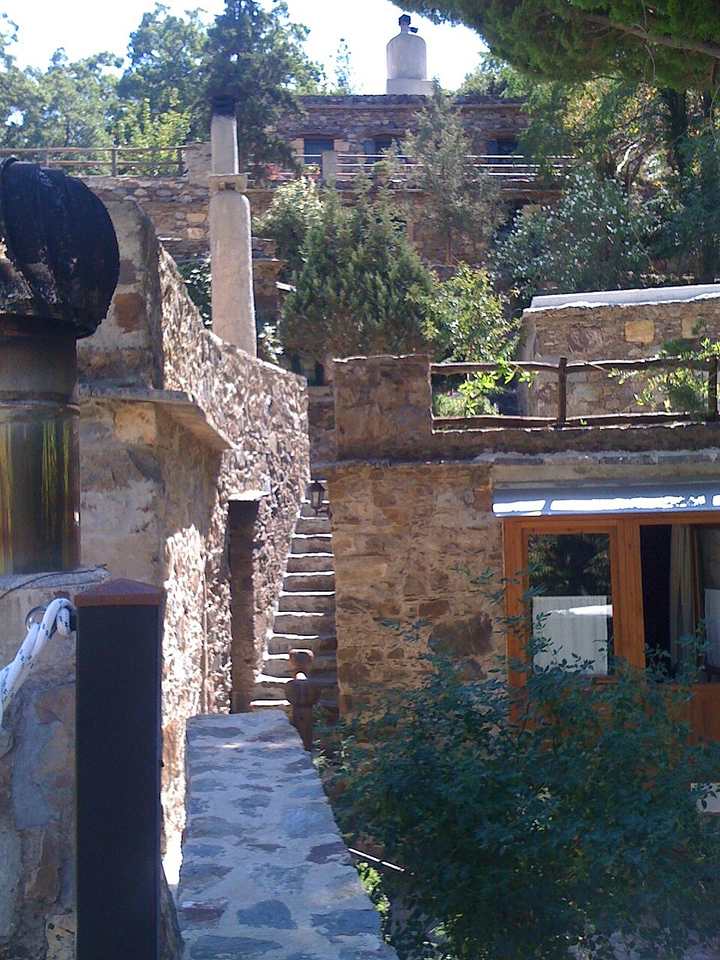
Tucked into the forested mountains of western Crete’s Kissamos district, Milia Mountain Retreat occupies a restored medieval hamlet where stone cottages glow by candlelight and solar panels replace the grid. Abandoned for decades, the settlement was rebuilt as a pioneering agrotourism project that draws walkers, families, and travellers seeking quiet rhythms far from coastal resorts. Rough tracks wind through chestnut and oak forest to reach the hamlet, where patchy phone signals and the absence of televisions encourage genuine disconnection. Organic vegetables, herbs, and livestock raised on the estate supply the communal kitchen, and old terraced paths lead into the surrounding wilderness. Plan your escape with My Greece Tours.
Milia sits within easy reach of the Topolia gorge, Elafonisi’s pink sands, and the dramatic western coastline, yet feels worlds apart from the busy beach strips. Springs bubble near the hamlet, and the long-distance E4 trail passes close by, connecting walkers to wider mountain networks. The sections below cover the history of the settlement, what to expect from the off-grid experience, the food philosophy, nearby trails and natural landmarks, and practical advice for reaching and staying in this remote corner of Crete. For broader island context, consult our Crete travel guide.
What is the history behind Milia Mountain Retreat in Crete?
Milia began as a medieval hamlet in the Kissamos mountains, later abandoned as rural populations migrated coastward. A pioneering agrotourism project restored the stone houses, preserving traditional architecture while introducing sustainable energy and organic farming practices.
The original settlement clung to terraced slopes where springs provided reliable water and chestnut forests offered timber and food. Families cultivated small plots, kept livestock, and traded with coastal villages along mule paths that stitched the mountains together. Depopulation in the mid-twentieth century left the houses roofless and the terraces overgrown, a pattern repeated across rural Crete as younger generations sought work in towns and tourism hubs. The ruins sat silent for decades until a group committed to ecological restoration and cultural preservation acquired the site, envisioning a model that could revive mountain livelihoods without sacrificing environmental integrity or architectural heritage.
Reconstruction used salvaged stone, traditional lime mortar, and timber joinery techniques passed down through generations of Cretan builders. Modern interventions remained minimal: solar panels for limited electricity, rainwater collection systems, and composting toilets that eliminate the need for septic infrastructure. The project earned recognition as one of the island’s earliest examples of sustainable tourism, proving that remote hamlets could attract visitors through authenticity rather than luxury amenities. Today Milia stands as both guesthouse and working farm, demonstrating that heritage and ecology can underpin viable rural enterprise in the twenty-first century.
What makes the off-grid experience at Milia unique in Crete?
Guests sleep in candlelit stone cottages without televisions, relying on solar power for minimal lighting. Patchy phone signals and the absence of Wi-Fi encourage digital detox, while the forest setting and communal meals foster slower rhythms uncommon in coastal resorts.
Each cottage retains its original layout—thick walls, small windows, wooden ceilings—and furnishings stay deliberately simple: handwoven textiles, iron bedsteads, ceramic washbasins. Candles provide evening light, casting warm shadows that shift with the flame and inviting early nights under heavy quilts. Solar panels generate enough electricity for reading lamps and charging essential devices, but the system cannot support hairdryers, kettles, or other high-draw appliances. Shared bathrooms use rainwater heated by solar collectors, and composting toilets return nutrients to the land. The lack of modern distractions sharpens attention to immediate surroundings: birdsong at dawn, the scent of woodsmoke, the creak of timber settling in the cool mountain air.
Meals unfold in a communal stone hall where long tables encourage conversation among guests from different countries and backgrounds. The kitchen prepares dishes from estate-grown vegetables, free-range eggs, goat cheese, and foraged greens, embodying the principles of Cretan food traditions. Evenings pass without screens, filled instead with storytelling, card games, or simply watching stars emerge over the ridgeline. The experience suits travellers weary of hyperconnectivity and resort uniformity, offering a rare chance to inhabit a slower, more tactile version of island life that has largely vanished from the coast.
What food and farming practices define Milia’s kitchen?
The kitchen cooks organic produce grown on terraced plots and raised on the estate: vegetables, herbs, eggs, cheese, and occasional meat. Menus change with the seasons, reflecting harvest cycles and traditional Cretan recipes that prioritize simplicity and flavor over elaboration.
Terraces below the hamlet grow tomatoes, courgettes, beans, aubergines, and leafy greens, irrigated by spring water channeled through stone conduits rebuilt along ancient lines. Fruit trees—figs, pomegranates, quinces—punctuate the plots, and chickens forage freely, their eggs collected each morning for breakfast omelettes and baked goods. Goats graze higher slopes, providing milk for cheese and yogurt, while olive groves on lower terraces yield oil pressed in nearby mills. The farm avoids synthetic fertilizers and pesticides, relying instead on compost, crop rotation, and companion planting to maintain soil health and deter pests. This closed-loop system minimizes external inputs and waste, aligning production with ecological limits.
Cooks prepare dishes that honor village traditions: slow-baked lamb with wild greens, chickpea stews scented with rosemary, fresh cheese drizzled with thyme honey, rustic pies wrapped in handmade phyllo. Bread emerges daily from a wood-fired oven, its crust crackling as it cools on racks. Breakfast spreads feature homemade jams, thick yogurt, and seasonal fruit, while dinners conclude with spoon sweets or nut cakes paired with mountain tea. The menu’s rhythm mirrors the agricultural calendar, celebrating abundance in summer and embracing the austerity of winter stores, a practice that connects guests to the land’s productive cycles in ways impossible at buffet-laden resorts.
What hiking and natural attractions surround Milia in western Crete?
The E4 long-distance trail passes near Milia, linking to mountain paths through chestnut and oak forest. Topolia Gorge, Elafonisi’s pink sands, and the rugged western coast lie within driving distance, offering day-trip variety for active visitors.
Old mule paths radiate from the hamlet, descending through forest to abandoned chapels, springs, and viewpoints over the Kissamos plain and the Libyan Sea beyond. The E4 trail, which traverses Crete from east to west, runs close enough for walkers to join it for a day or longer section hike, experiencing hiking in Crete at its most remote. Chestnut groves shade the upper slopes, their canopy filtering sunlight into dappled patterns, while lower elevations transition to scrubby maquis dotted with kermes oak and wild herbs. Spring brings wildflowers—orchids, anemones, cyclamens—and autumn colors the forest in gold and rust. Birdwatchers spot griffon vultures soaring on thermals, and patient observers may glimpse Cretan wildcats or badgers at dusk.
Day excursions reach Topolia Gorge, where a paved road threads between sheer limestone walls and a cave chapel clings to the rock face, or continue to Elafonisi beach, where shallow turquoise lagoons and pink-tinged sand create a tropical contrast to the mountain’s austerity. The western coast offers secluded coves, clifftop monasteries, and fishing hamlets untouched by mass tourism, making Milia an ideal base for exploring hidden gems in Crete that reward the effort required to reach them. Guests balance active days with quiet evenings back at the hamlet, where the forest’s stillness restores energy depleted by sun and trail.
How do you reach Milia and what should visitors expect?
A rough unpaved track climbs through forest from the nearest paved road, requiring careful driving and a vehicle with decent clearance. Visitors should pack layers for cool mountain nights, sturdy shoes for trails, and realistic expectations about off-grid simplicity.
The final approach to Milia tests nerves and suspension alike: the track narrows, ruts deepen, and overhanging branches scrape roof racks as the route gains elevation. Standard hire cars manage the journey in dry conditions, but four-wheel drive provides greater confidence, especially after rain when mud and loose stones make traction unpredictable. Signage appears sporadically, and mobile coverage fades as the forest thickens, so downloading offline maps beforehand proves wise. The drive takes roughly an hour from Kissamos town, longer if caution or wrong turns intervene. Guests arriving after dark face additional challenge, as the track lacks lighting and landmarks blur into shadow, so afternoon arrival is strongly advised.
Packing should prioritize practicality over fashion: fleece or wool for evenings when mountain air turns crisp, hiking boots with ankle support for rocky trails, a headlamp for navigating between cottages after dark, and a reusable water bottle to refill from springs. The hamlet stocks basic toiletries, but bringing personal favorites avoids disappointment. Expectations matter as much as gear: Milia offers authenticity, not pampering, and guests who thrive here embrace the trade-offs inherent in off-grid living. The experience ranks among the most distinctive things to do in Crete, rewarding those willing to swap convenience for connection to landscape, tradition, and a slower cadence of days measured by sun and season rather than screens and schedules.
Frequently Asked Questions
Is Milia suitable for families with young children?
Milia welcomes families and provides a safe, car-free environment where children can explore freely within the hamlet’s boundaries. The absence of televisions and digital distractions encourages outdoor play, and the farm animals—chickens, goats—captivate younger guests. Cottages accommodate families, though parents should note that candlelight requires supervision and the rough access track demands careful driving. The communal dining setup introduces children to shared meals and new foods, often sparking curiosity about where ingredients come from. Trails around the hamlet vary in difficulty, with gentle paths suitable for short legs and steeper routes for older children. The experience teaches self-sufficiency and environmental awareness in ways beach resorts cannot match, though families accustomed to constant entertainment may find the quiet challenging.
Overall, Milia suits families seeking immersive nature experiences and willing to adapt routines to off-grid rhythms, offering memories that outlast typical holiday snapshots.
What is the best season to visit Milia Mountain Retreat?
Spring and autumn offer ideal conditions: mild temperatures, blooming wildflowers or autumn colors, and comfortable hiking weather. Spring, from April through early June, brings lush greenery, flowing springs, and moderate warmth, perfect for exploring trails without summer’s heat. Autumn, September through November, delivers golden light, grape and olive harvests, and fewer visitors, creating a contemplative atmosphere. Summer attracts families during school holidays, but midday heat can make hiking strenuous, and the forest provides welcome shade when coastal plains bake. Winter sees occasional rain and cooler nights requiring extra blankets, yet the hamlet remains open and offers solitude for those unbothered by shorter days and the possibility of muddy tracks.
Each season reveals different facets of the landscape and farm cycle, so the best time depends on personal priorities: wildflower walks, harvest participation, family availability, or the desire for near-total seclusion in the off-season months when the mountains belong to those willing to embrace their quiet intensity.
Can you visit Milia for a meal without staying overnight?
Milia welcomes day visitors for lunch, allowing non-guests to experience the kitchen’s organic, estate-grown cuisine and explore the hamlet’s architecture and surroundings. Reservations are essential, as the kitchen prepares meals based on expected numbers and ingredient availability, and walk-ins risk disappointment. Lunch typically features seasonal dishes—vegetable stews, fresh salads, grilled cheese, homemade bread—served in the communal dining hall where the stone walls and timber ceilings evoke the settlement’s history. Day visitors can wander the terraces, photograph the restored cottages, and walk nearby trails, gaining a taste of the off-grid ethos without committing to an overnight stay.
The rough access track remains the same challenge for lunch guests as for overnight visitors, so the journey requires the same preparation and vehicle capability. Combining a Milia lunch with visits to Topolia Gorge or western coast beaches creates a full day exploring the region’s contrasts: mountain austerity and coastal beauty, traditional agriculture and wild landscapes, slow food and the rush of discovery.