
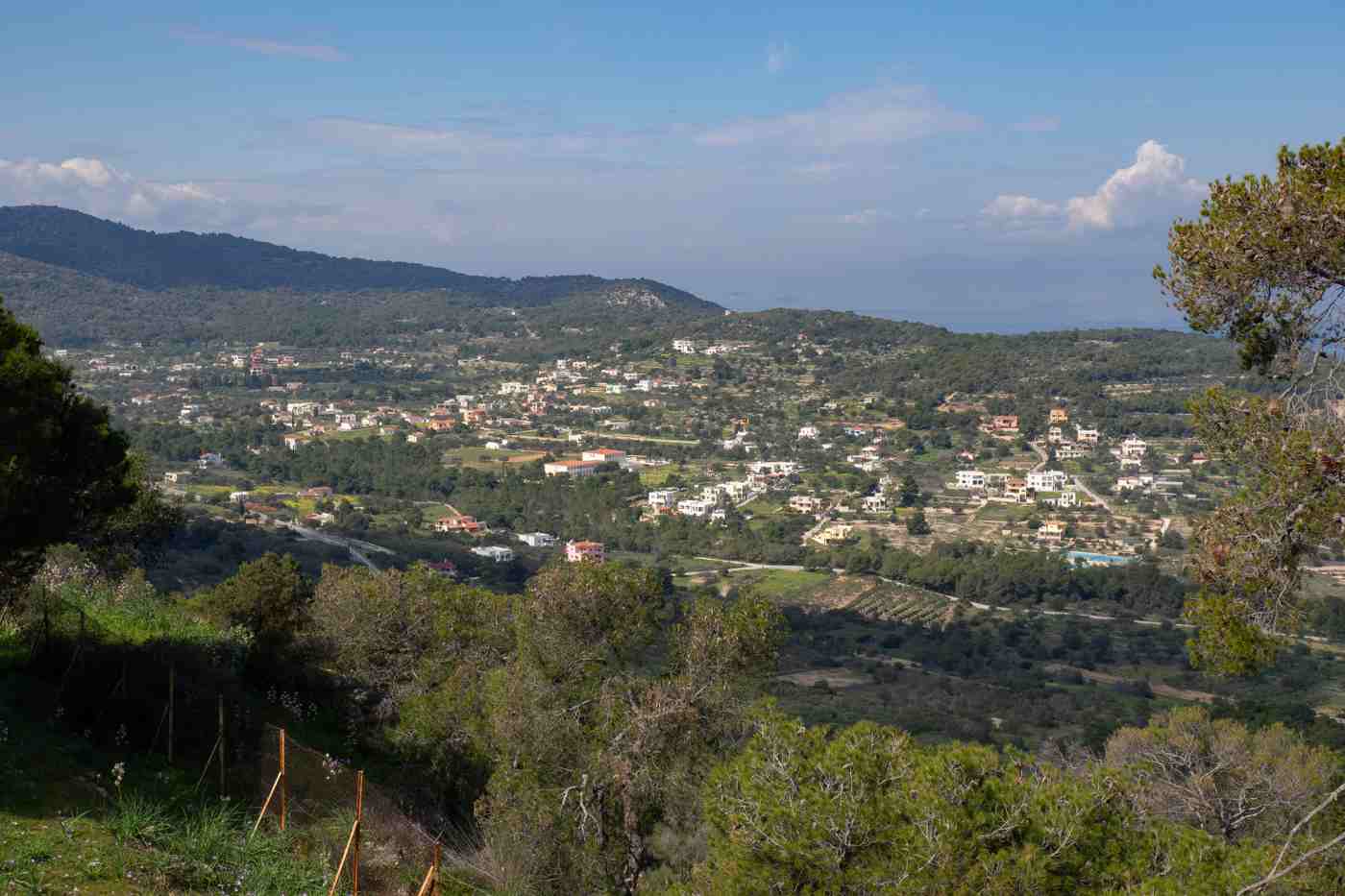
Mesagros is a traditional inland village on Aegina, famous above all for its long tradition of pottery. Lying about ten kilometres east of Aegina Town, on the road that leads to the Temple of Aphaia. It has been a centre of ceramic craft since ancient times, thanks to the fine clay of the surrounding hills. The village is best known for its Mesagritic jugs, prized for keeping water cool even in the heat of summer. Its pottery workshops still sell their wares directly to visitors. With its old churches and authentic, unhurried atmosphere, Mesagros offers a glimpse of the island’s traditional rural life and craftsmanship. Plan the whole trip with Greece Tours.
This guide covers Mesagros on Aegina: where it is, its famous pottery tradition and clay jugs. Visiting the workshops, its historic churches, its character as a traditional village. How to get there.
Where is Mesagros on Aegina?
Mesagros is an inland village on Aegina, about ten kilometres east of Aegina Town, on the road towards Agia Marina and the Temple of Aphaia. It sits among the hills in the interior of the island, away from the coast.
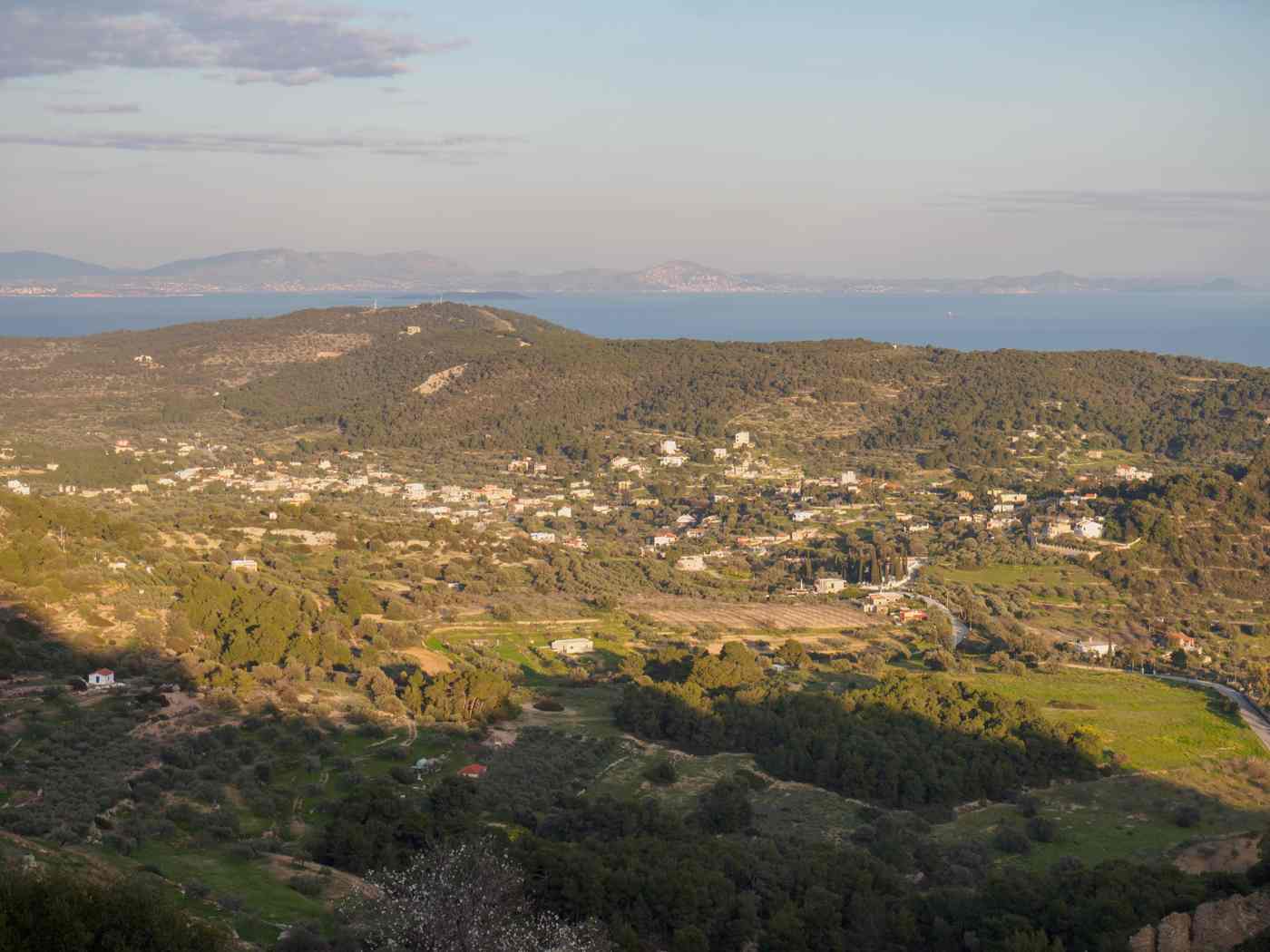
Mesagros lies in the interior of Aegina, roughly ten kilometres east of the main town, on the cross-island road that runs towards Agia Marina and the ancient Temple of Aphaia. Set among the hills, it is a traditional rural village rather than a coastal resort.
Its position on the way to the Temple of Aphaia makes it easy to combine a stop in the village with a visit to the temple and the other sights of the island’s eastern side, giving a taste of Aegina’s inland countryside and crafts.
What is Mesagros known for?
Mesagros is known above all for its pottery.
The name of Mesagros is synonymous with pottery on Aegina. The village grew up around this craft, which the fine clay from the surrounding mountains made possible. It has been a centre for potters since ancient times. Producing everyday vessels, utensils and decorative pieces.
This deep tradition of ceramic-making is what gives Mesagros its identity and its appeal to visitors. Even today the craft continues in and around the village. Keeping alive a skill that has been practised here for thousands of years and forms a distinctive part of the island’s heritage.
What are the famous Mesagritic jugs?
The Mesagritic jugs are the clay water jugs traditionally made in Mesagros, famous for keeping drinking water cool even in the summer heat without any modern technology.
The most celebrated products of Mesagros are its clay water jugs, known as Mesagritic jugs. Their remarkable feature is their ability to keep water cool and fresh even during the hottest summer months. Entirely through the natural properties of the porous clay, without any modern cooling.
This made them highly coveted, and until the middle of the last century they were widely used and valued across the region for keeping drinking water cool. Today these jugs remain a proud symbol of the village’s craftsmanship and a distinctive, practical souvenir of Aegina’s pottery tradition.
Can you visit pottery workshops in Mesagros?
Yes, there are several pottery workshops in and around Mesagros, and they often sell their wares directly to visitors.
Pottery is still very much a living craft in Mesagros, and there are workshops in and around the village where the potters make and sell their wares. Many sell directly to passers-by, so you can watch something of the craft, browse the ceramics and buy a piece to take home.
From traditional water jugs to decorative pottery, the workshops offer a chance to buy an authentic, locally made souvenir straight from the maker. This direct connection to the craft is part of what makes a stop in Mesagros so rewarding for those interested in the island’s traditions.
What else is there to see in Mesagros?
Beyond its pottery, Mesagros has historic churches worth seeing, including the old church of Politissa, linked to families who fled Constantinople, and the parish church of Agios Konstantinos, which holds a large annual celebration each spring.
The village has churches of interest. In the old centre stands the historic church of Politissa, associated with families who fled Constantinople in 1453, giving it a poignant link to that momentous period of Greek history.
The main parish church of the village is that of Agios Konstantinos. Where a large annual festival is held on the twenty-first of May, one of the highlights of the local calendar. Together with the pottery workshops and the traditional houses, these churches add to the village’s authentic, historic character.
What is Mesagros village like to visit?
Mesagros is a quiet, traditional inland village with an authentic, unhurried atmosphere.
Visiting Mesagros feels a world away from the busier coast, offering a genuine taste of traditional inland Aegina. The village retains an authentic, everyday character, with its craftsmen, churches and simple rhythms of rural life largely untouched by mass tourism.
For visitors interested in local culture, crafts and history, a stop here is a rewarding contrast to the beaches. Combining the chance to see and buy traditional pottery with the quiet charm of an old Greek village. It pairs naturally with a visit to the nearby Temple of Aphaia.
How do you get to Mesagros?
Mesagros is reached from Aegina Town by car, scooter or the local bus towards Agia Marina, which passes through the village, about ten kilometres east on the cross-island road.
You can get to Mesagros easily from Aegina Town, around ten kilometres away, by car, scooter or taxi. Or on the local bus heading to Agia Marina, which passes through the village via the Monastery of Agios Nektarios. This makes it simple to reach even without your own transport.
Mesagros fits naturally into a day exploring that side of the island, and is one of the more distinctive of the island’s cultural things to do.
Frequently Asked Questions
Why is Mesagros famous for pottery?
Mesagros is famous for pottery because of the fine clay found in the hills surrounding the village, which since ancient times has made it an ideal place for making ceramics. This natural resource allowed a tradition of pottery to develop and flourish over thousands of years, with local craftsmen producing water jugs, everyday utensils and decorative wares. The village became especially known for its clay water jugs, called Mesagritic jugs. Which have the remarkable ability to keep drinking water cool even in the height of summer through the natural properties of the porous clay, without any modern technology. These jugs were highly prized and widely used until the middle of the last century.
Pottery remains a living craft in and around Mesagros, with workshops that make and sell their wares directly to visitors, keeping alive a skill practised in the village since antiquity and making it one of the most distinctive traditional crafts on Aegina.
Can you buy pottery in Mesagros?
Yes, you can buy pottery in Mesagros directly from the workshops in and around the village, which is one of the main reasons visitors make the trip. Pottery is still a living craft here. Several workshops make and sell their ceramics on the spot, often selling directly to passers-by, so you can browse the wares, see something of how they are made, and buy a piece straight from the maker. The range includes traditional clay water jugs, for which the village is famous, as well as other utensils and decorative pottery, all making authentic, locally crafted souvenirs of Aegina.
Buying here supports the local craftsmen and gives you a genuine piece of the island’s heritage, far more meaningful than a mass-produced souvenir. Combined with the village’s historic churches and traditional atmosphere. Its handy location on the road to the Temple of Aphaia. This makes Mesagros a rewarding stop for anyone interested in the crafts and culture of the island.
Is Mesagros worth visiting on Aegina?
Yes, Mesagros is worth visiting, particularly for travellers interested in traditional crafts, culture and authentic village life rather than only beaches. As Aegina’s pottery village, it offers the chance to see a craft practised here since ancient times, to visit workshops still making the famous Mesagritic clay jugs and other ceramics. To buy a genuine, locally made souvenir directly from the potters. Beyond the pottery, the village has historic churches, including the old church of Politissa linked to families who fled Constantinople. The parish church of Agios Konstantinos with its big annual festival, as well as a quiet, unhurried atmosphere that gives a real sense of inland rural Aegina.
Its location about ten kilometres east of Aegina Town, on the road to the Temple of Aphaia. Makes it easy to include in a day exploring that side of the island by car, scooter or bus. For a rewarding cultural contrast to the coast, Mesagros is well worth a stop.