
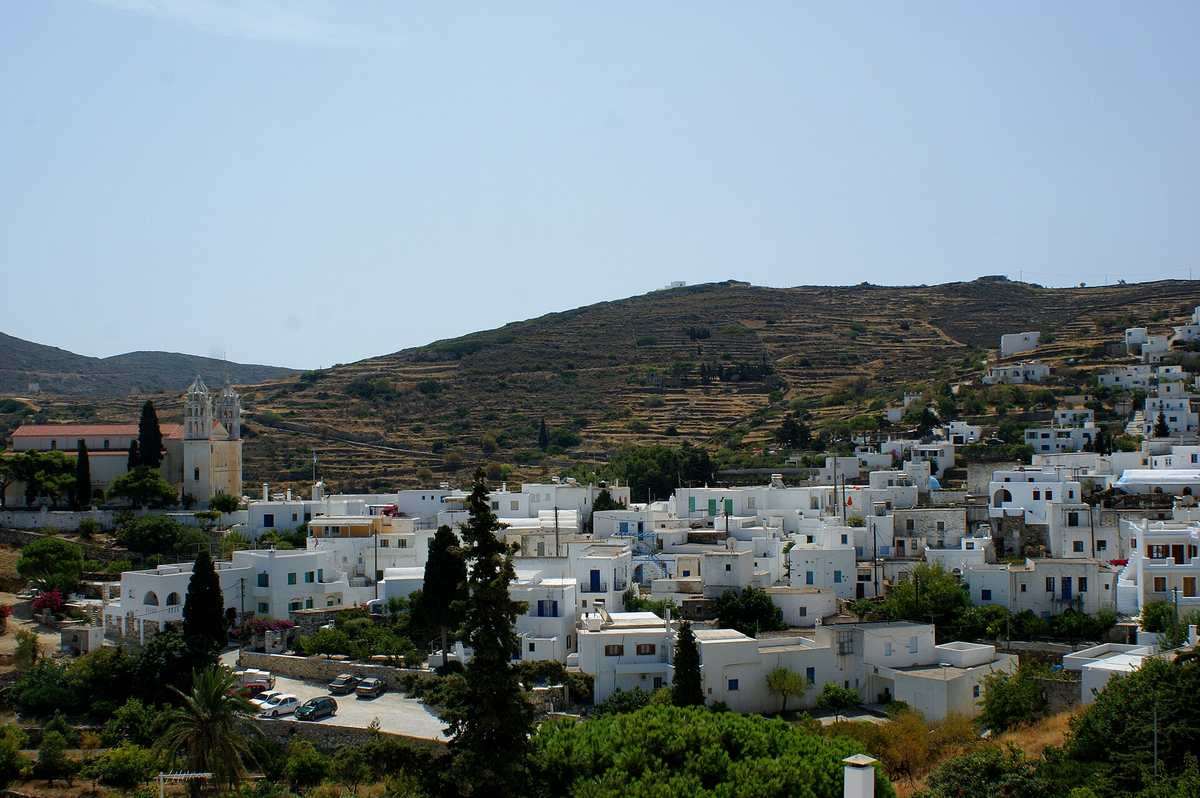
Marpissa Paros is a picturesque hillside village on the east of the island, built amphitheatrically with labyrinthine marble lanes, four landmark windmills, a fine sculpture museum and the Kefalos castle hill above. It pairs traditional Cycladic charm with sweeping views and easy access to the best east-coast beaches. This guide covers what to see, the highlights, how to get there and when to visit. Plan the whole trip with Greece Tours.
The village is one of the loveliest in the island’s interior, a key entry in the guide to Paros villages. It sits in the hills above the east coast. The sections below cover the visit.
What is the village like?
The village is a traditional Cycladic settlement built up a hillside, with whitewashed houses, narrow marble lanes, flowering courtyards and chapels. Its amphitheatrical layout gives panoramic views over the Aegean and the surrounding countryside.
The village is a picture of unhurried island life. Built up the slopes of a hill on the island’s east side, its whitewashed cube houses, labyrinthine marble lanes and bougainvillea-draped courtyards rise to viewpoints over the sea and the green valleys below. Small chapels and squares punctuate the alleys, and the pace is slow and authentic, far from the busy coast. Marpissa Paros rewards an unhurried wander as much as any sight, set out alongside the guide to things to do in Paros. Its landmarks make it more than just pretty.
What are the main sights?
The main sights are the four windmills on the main square, the large Byzantine church of the Metamorphosis, and the Nikos Perantinos Sculpture Museum. Together they give the village real cultural depth beyond its lanes and views.
The village holds some of the island’s most distinctive landmarks. Four old windmills stand on the main square, one of the most characteristic images of the island, while the grand Byzantine church of the Metamorphosis anchors the village. The Nikos Perantinos Sculpture Museum, set in a beautifully restored neoclassical building with five halls, honours the renowned Parian sculptor and ranks among the Cyclades’ most captivating museums. These sights reflect the island’s deep marble and sculpture heritage, set out in the guide to Parian marble. The hill above adds history and views.
What is the Kefalos hill?
The Kefalos hill rises above the village, crowned by the ruins of a medieval Venetian castle and the Monastery of Agios Antonios. A short climb rewards walkers with the historic monastery, castle remains and some of the finest views on the east coast.
The hill of Kefalos is the village’s crowning excursion. A walking path climbs from the village to the flat summit, where the ruins of a Venetian-era castle and the well-preserved Monastery of Agios Antonios, dedicated to Saint Antoine, sit amid sweeping views over the east coast and the sea toward Naxos. The site played a part in the island’s medieval history, and the climb makes a rewarding short hike combined with a village wander. It pairs naturally with the marble road and other island walks, set out in the guide to Paros hiking. The village is close to fine beaches.
Which beaches are nearby?
The nearest beaches are Piso Livadi and Logaras, just a few minutes away, with Molos, Kalogeros, Golden Beach and Drios a short drive south. The east-coast location puts a string of sandy beaches within easy reach of the village.
The village makes a fine base for the east-coast beaches. The fishing harbour and sandy beach of Piso Livadi and the gentle bay of Logaras lie just two to ten minutes away by car, while Molos, Kalogeros, the windsurfing sands of Golden Beach and the cove-dotted Drios are a short drive south. This run of beaches, from family-friendly bays to windsurfing hotspots, is one of the village’s great advantages, set out in the guides to Golden Beach Paros and Paros beaches. Reaching the village is an easy drive.
How do you get there?
You get there by car or scooter in about 25 minutes from Parikia, on a scenic inland route through valleys and villages, or by bus. The village centre is best explored on foot, with parking on its edge.
The village is an easy and scenic drive from the capital. By car or scooter it lies about 25 minutes from Parikia, on a pretty inland route winding through valleys and past other villages, with parking on the village edge. Buses also serve the east-coast villages from the Parikia hub. As with the island’s other hill villages, the marble-paved centre is explored on foot. A car makes it easy to combine Marpissa Paros with neighbouring Prodromos, Lefkes and the east-coast beaches, set out in the guide to how to get to Paros. Timing a visit improves it.
When is the best time to visit?
The best time to visit is late May, June, September or early October, when the village feels lively yet uncrowded, the sea is warm for swimming and parking comes easily. Summer evenings are lovely, while July and August are busier with harder parking.
The village rewards the shoulder months and the cooler hours. Late May, June, September and early October bring a lively but uncrowded village, warm seas for the nearby beaches and far easier parking than the July and August peak. In high summer, the early evening is the best time to wander the lanes and dine, when the heat eases and the windmills catch the light. The village hosts a celebrated summer arts festival that animates its lanes, set out alongside the guide to the best time to visit Paros. The questions below cover the points travellers ask most.
Frequently Asked Questions
What is Marpissa in Paros known for?
Marpissa is known as a picturesque hillside village with marble lanes, four landmark windmills, the Byzantine church of the Metamorphosis and the Nikos Perantinos Sculpture Museum. The Kefalos castle hill and nearby east-coast beaches add to its appeal.
What is there to do in Marpissa?
In Marpissa you can wander the marble lanes, see the four windmills and the Metamorphosis church, visit the sculpture museum, and climb the Kefalos hill to its castle ruins and monastery. The east-coast beaches lie a few minutes away.
How do you get to Marpissa in Paros?
You reach Marpissa by car or scooter in about 25 minutes from Parikia, on a scenic inland route through valleys and villages, or by bus. The marble-paved centre is best explored on foot, with parking on the village edge.