
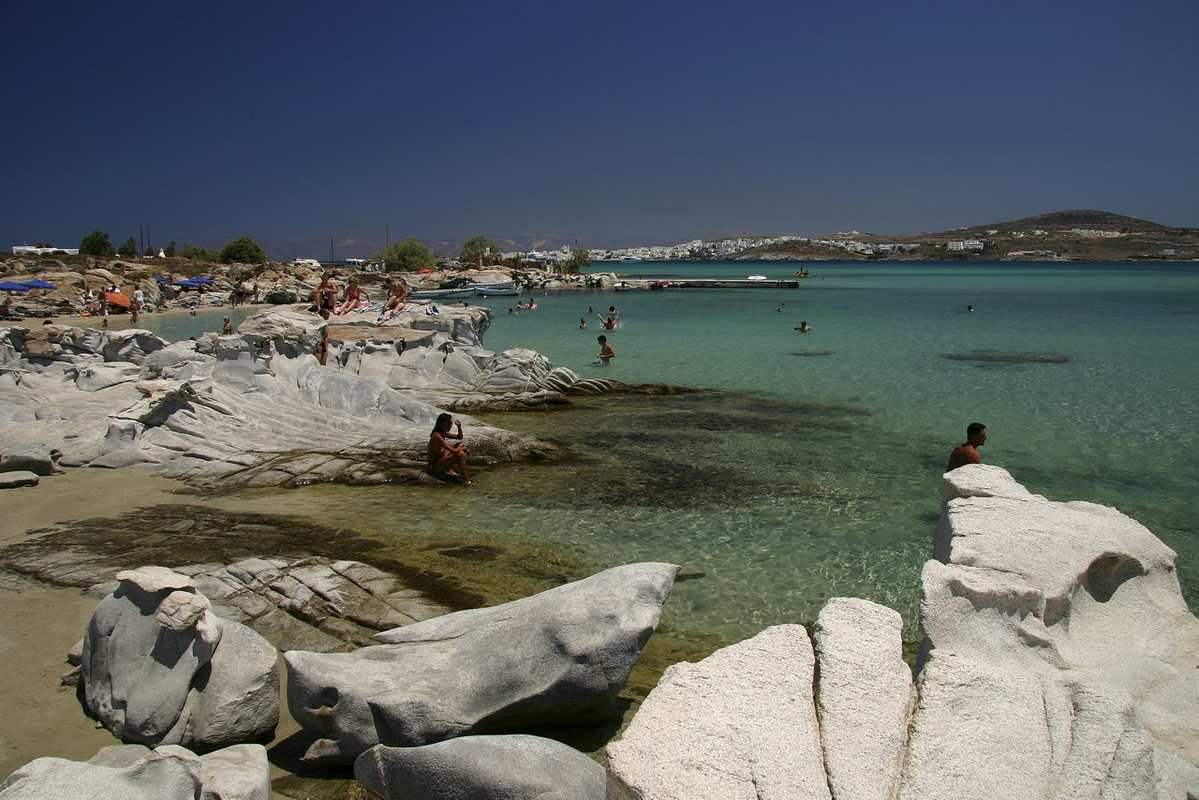
Paros beaches span the sculpted rock pools of Kolymbithres, the windsurfing sands of Golden Beach, family-friendly Santa Maria and dozens of quiet coves around the island. The Cycladic island holds some of the finest sands in Greece, for swimmers, watersports and beach-bar days alike. This guide covers the best beaches and which to pick for the day you want. Plan the whole trip with Greece Tours.
The coast is one of the island’s main draws, a core part of the wider Paros travel guide. The beaches spread around every side of the island. The sections below cover the standouts and how to choose.
What is the most famous beach?
The most famous beach is Kolymbithres, near Naoussa, known for smooth granite boulders sculpted into natural pools over centuries of erosion. Its name means “bathtubs”, and the turquoise water between the rocks makes it the island’s signature swim.
One beach defines the island’s image. Kolymbithres, across the bay from Naoussa, is famous for its bulbous granite rocks worn smooth into coves and natural basins, with clear turquoise water between them. The sculpted formations create sheltered pools ideal for an easy swim, and beach bars and sunbeds serve the main stretch. Reachable by road or a short boat hop from Naoussa, it is the island’s most photographed beach. Its beauty makes it a must, though the windsurfing sands draw a different crowd.
Where do you go for windsurfing?
For windsurfing you go to Golden Beach and New Golden Beach on the south-east coast, plus Pounda. These long sandy bays catch the summer meltemi and host international windsurfing and kitesurfing competitions, with schools and rentals on the sand.
The east coast is the island’s watersports heartland. Golden Beach, or Chrysi Akti, and the adjacent New Golden Beach are long stretches of soft sand exposed to the meltemi, giving world-class conditions that have hosted Windsurfing World Cup events. Pounda, on the west coast, adds another top spot. Schools rent gear and teach beginners, while the bars and tavernas keep non-surfers happy. These beaches suit an active day, a contrast to the calmer family sands. Other beaches balance the picture.
Which beaches suit families and beach-bar days?
Santa Maria suits families and beach-bar days, with golden sand, shallow turquoise water, sunbeds and a view across to Naxos. Faragas, Livadia and Krios are other organised, sheltered sands good for relaxed days with children.
Several beaches are made for an easy day. Santa Maria, in Plastira Bay on the north-east coast, is the island’s second most popular beach after Kolymbithres, with golden sand, clear shallow water, beach bars and watersports, plus a view toward Naxos. Faragas in the south and Livadia near Parikia offer organised, sheltered swimming, and Krios sits a short boat ride from the port. These calmer sands suit families and slow afternoons. The quiet coves reward those who explore further.
Where can you find quiet coves?
You can find quiet coves at Monastiri near Kolymbithres, at Lageri and Tserdakia on the north coast, and at smaller beaches reached by boat or a short walk. These offer calmer, less developed swimming away from the busiest sands.
Beyond the famous names lie quieter shores. Monastiri, tucked beside Kolymbithres in a marine park, offers calm, clear water and a relaxed beach club. Lageri and Tserdakia, reached on foot or by boat from Naoussa, are less developed strips for a peaceful swim. Many of the prettiest small coves around the north and east coasts are easiest to reach by boat, as the guide to Paros boat tours describes. Choosing the right beach depends on the day. Getting there shapes the plan.
How do you get to the beaches?
You get to the beaches by bus from Parikia and Naoussa, by rental car or scooter, or by boat from the harbours. A car gives the most freedom to reach the scattered coves, while buses serve the main organised beaches.
Reaching the beaches is straightforward with a little planning. Buses from Parikia and Naoussa serve the main organised sands such as Kolymbithres, Golden Beach and Santa Maria, while a rental car or scooter opens up the quieter coves around the island. Small boats and water taxis cross from Naoussa and Parikia to beaches like Monastiri and Lageri in minutes. The choice of base affects which beaches are closest, as the guide to where to stay in Paros sets out. The wind is worth checking before you go. The questions below cover the points travellers ask most.
Which beaches are near Parikia?
Near Parikia, Livadia is a short walk north of the port with shallow water, while Krios and Marcello sit a quick boat ride or drive across the bay. Parasporos and Agia Irini lie just south, offering sandy, sheltered swimming close to the capital.
The capital has plenty of beaches within easy reach. Livadia, a flat ten-minute walk along the promenade, mixes soft sand and fine pebbles with a shallow entry, good for families, while Krios and Marcello face it across the bay, reached by water taxi or a short drive. To the south, Parasporos and Agia Irini offer organised, sandy stretches with calm water and beach bars. These suit travellers based in Parikia without a car, set out in the guide to Parikia Paros. Knowing the setup helps you choose.
Are the beaches organised or free?
The beaches range from fully organised stretches with sunbeds, umbrellas and beach bars to free, natural sands where you drop your own towel. Popular beaches such as Kolymbithres and Santa Maria mix both, with organised zones beside quieter open sand.
The island offers a beach for every preference. The busy, well-known beaches have organised sections with sunbeds, umbrellas, beach bars and watersports, easy for a comfortable day, while long stretches of free sand sit alongside for those who prefer to lay out a towel. Quieter coves and the smaller north-coast beaches stay largely natural, with few or no facilities. Bringing water and shade is wise for the free beaches, complementing the wider guide to things to do in Paros. The wind shapes which side to choose.
How does the meltemi wind affect the beaches?
The meltemi blows from the north in summer, so the exposed north and east beaches can be windy and choppy, while the sheltered south and west coasts stay calmer. On windy days, head to Parasporos, Aliki or the protected bays for easier swimming.
The wind is the key to picking a beach in summer. The meltemi sweeps in from the north, especially from mid-July to mid-August, churning the exposed north and east coasts, which thrills windsurfers but unsettles swimmers. On those days, the south and west coast beaches such as Parasporos, Aliki and the sheltered bays stay calm and comfortable. Checking the daily forecast and matching the coast to the wind makes for a better beach day, as the guide to the best time to visit Paros notes. A few essentials complete the day.
What should you bring to the beach?
You should bring water, reef-safe sunscreen, a hat and sunglasses, plus water shoes for pebbly entries and a windproof layer for breezy days. For the free and quiet beaches, add your own shade, snacks and a beach mat, since facilities are limited.
A little preparation makes a beach day easy. The strong Aegean sun and reflected glare call for reef-safe sunscreen, a hat and sunglasses, and plenty of water, while water shoes help on the pebblier entries. A light windproof layer is useful when the meltemi blows, and a dry bag protects phones on boat-access coves. For the unorganised beaches, bringing shade, snacks and a mat is wise, since there are no bars or sunbeds. With the right kit, every beach is comfortable, set within the wider Paros with kids guide. The questions below cover the points travellers ask most.
Frequently Asked Questions
What is the best beach in Paros?
The best-known beach is Kolymbithres near Naoussa, famous for its smooth granite rock pools and turquoise water. For windsurfing, Golden Beach is the top choice, and for a family beach-bar day, Santa Maria is hard to beat.
Which Paros beach is best for windsurfing?
Golden Beach and New Golden Beach on the south-east coast are the best for windsurfing, with long sands exposed to the meltemi and world-class conditions that have hosted international competitions. Pounda on the west coast is another top spot.
Are there quiet beaches in Paros?
There are many quiet beaches in Paros, including Monastiri, Lageri and Tserdakia on the north coast and small coves reached by boat or a short walk. They offer calmer, less developed swimming away from the busiest organised sands.