
Parikia Paros is the island’s capital and main port, a lively town of marble lanes, a Venetian Kastro, the great Church of 100 Doors and nearby beaches. Often overlooked for Naoussa, it is the practical heart of the island and rich in history. This guide covers what to do and see, the old town, the beaches and how to get around. Plan the whole trip with Greece Tours.
The capital is where most visitors arrive, a key entry in the guide to Paros villages. It wraps around the island’s main harbour. The sections below cover the visit.
What is the old town like?
The old town is a compact maze of whitewashed cubic houses, marble lanes and small squares behind the port, crowned by the Kastro. Boutiques, centuries-old churches and the ruins of a Frankish castle fill the walkable centre.
The old town is the town’s charming core. Behind the busy waterfront, narrow marble-paved lanes wind between whitewashed houses with wooden doors, opening onto small squares and tiny chapels. At its heart stands the Kastro, the old quarter built around a Venetian castle, with boutiques, galleries and centuries-old churches tucked among the alleys. It is compact and easily covered on foot in a few hours, making a half-day the natural minimum. The old town rewards a slow wander. Its monuments add depth to a visit.
What are the main sights?
The main sights are the Church of 100 Doors, the Venetian Kastro built from ancient temple marble, and the Archaeological Museum with its Parian sculpture. Together they trace the island’s Byzantine, Venetian and ancient past in a small area.
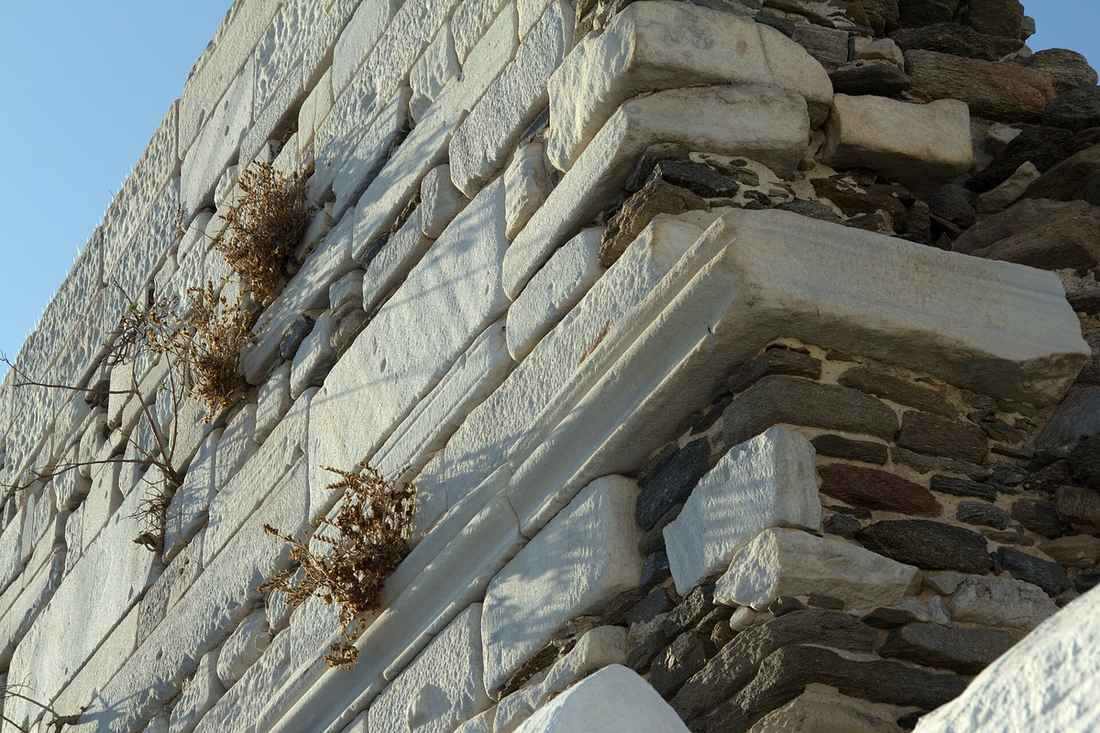
The town packs in remarkable history. Its landmark is the Panagia Ekatontapyliani, the fourth-century Church of 100 Doors and one of Greece’s oldest Byzantine monuments, set out in the guide to Panagia Ekatontapyliani. The 13th-century Venetian Kastro famously reuses marble blocks from ancient temples, visible in its walls, and makes a fine sunset spot. The compact Archaeological Museum displays Parian marble sculpture, pottery and inscriptions in under an hour. These sights sit within a short walk of each other. The waterfront and beaches add to the day.
Are there beaches and a waterfront?
Yes, Livadia beach sits a flat 10-to-15-minute walk along the promenade from the port, with soft sand, fine pebbles and shallow water. The seafront promenade is lined with cafés and tavernas, ideal for an evening stroll.
The town has its own beach and a lively seafront. Livadia, a short flat walk north of the port along the promenade, has soft golden sand scattered with fine pebbles and a shallow, easy entry, good for families. The promenade itself leads from the port quay around to Livadia, edged with cafés and tavernas, stroller-friendly and perfect for an unhurried evening walk. More beaches lie a short drive or bus ride away around the island, set out in the guide to Paros beaches. The waterfront is the town’s social spine. Dining is a highlight too.
Where do you eat in the town?
You eat across the town’s range, from traditional tavernas in the old-town courtyards to waterfront tables with sea views and modern cafés and cocktail bars. Prices are generally reasonable compared with islands like Mykonos.
The town offers a wide choice of places to eat. In the old town, small courtyards and narrow lanes are lined with taverna tables, while along the waterfront larger tavernas and bars serve seafood with direct sea views. Modern cafés and cocktail bars add variety, and many visitors note the good food at fairer prices than some other Cycladic islands. The dining suits both a quick meze and a long evening, complementing the guide to Paros food and wine. Getting around from the town is simple. The questions below cover the points travellers ask most.
How do you get around from the town?
You get around easily from the town, since the KTEL bus hub sits by the port with routes to Naoussa, Lefkes, Piso Livadi and Aliki. Car and scooter rentals are available at the port, and the old town is fully walkable.
The town is the island’s transport hub. The central bus terminal by the port runs frequent services to Naoussa, the mountain village of Lefkes, the eastern harbour of Piso Livadi and the southern village of Aliki, making it easy to explore without a car. Car, scooter and ATV rentals at the port add freedom for the scattered beaches and villages, and the compact old town is covered entirely on foot. This central convenience is the town’s great strength, set out in the guide to how to get to Paros. The questions below cover the points travellers ask most.
What is the Kastro?
The Kastro is the old quarter of Parikia, built around a 13th-century Venetian castle that famously reuses marble blocks from ancient temples. Visible columns and slabs sit in its walls, and it makes a fine spot to watch the sunset over the sea.
The Kastro is the town’s most atmospheric corner. Raised by the Venetians in the 13th century, the castle was built from spolia, the marble columns and blocks of earlier ancient temples, which can still be spotted set into its walls and the surrounding houses. The whitewashed lanes of the quarter wind up to the ruins and the little church of St Constantine, a favourite sunset viewpoint over the Aegean. Wandering the Kastro links the town’s ancient and Venetian past, set within the wider Parian marble story. The town rewards a visit more than its reputation suggests.
Is Parikia worth visiting?
Parikia is well worth visiting, despite often being overlooked for Naoussa. Its marble old town, the great Church of 100 Doors, the Kastro and the seafront offer plenty to see, with a lively local feel and gentler prices than the chic harbour town.
Parikia Paros is underrated. Many travellers pass straight through on arrival, but the town rewards those who linger, with a maze of marble lanes, the fourth-century Church of 100 Doors, the Venetian Kastro and a museum of Parian sculpture, all within a short walk. The seafront promenade, the old-town tavernas and the nearby beaches add to the appeal, and prices run lower than in Naoussa. It offers an authentic, lived-in feel alongside its history, set out in the guide to Paros villages. Families find it easy too.
Is the town good for families?
The town is good for families, with the flat, shallow Livadia beach a short walk away, a stroller-friendly seafront and easy bus links. The compact old town is safe to explore on foot, and ice-cream shops and casual tavernas line the lanes.
Parikia Paros suits a family stay well. The family beach at Livadia sits a flat ten-minute walk from the port along a stroller-friendly promenade lined with cafés, while the old town is compact and safe to wander, with ice-cream shops and relaxed tavernas. The central bus hub reaches the other beaches and villages without a car, useful for families travelling light. Its value and convenience make it a practical base, set out in the guide to Paros with kids. Timing a visit helps.
When is the best time to visit the town?
The best time to visit is the late afternoon and evening, when the old town and seafront come alive, or the shoulder months of June and September for a calmer feel. The Kastro at sunset and the promenade after dark are highlights.
The town is at its best in the cooler hours. Late afternoon brings golden light to the marble lanes and the Kastro, a fine time for the sunset viewpoint at St Constantine, while the evening fills the seafront promenade and old-town tavernas with diners and strollers. June and September offer warm weather with thinner crowds than the July and August peak, when the ferry port is busiest. Mornings are quiet and good for the church and museum, as the guide to the best time to visit Paros notes. The questions below cover the points travellers ask most.
Frequently Asked Questions
What is Parikia in Paros known for?
Parikia is the island’s capital and main port, known for its marble old town, the Venetian Kastro built from ancient temple stone, and the Church of 100 Doors. It is the practical, historic heart of Paros and its transport hub.
What are the best things to do in Parikia?
The best things to do in Parikia are exploring the old town and Kastro, visiting the Church of 100 Doors and the Archaeological Museum, walking the seafront to Livadia beach, and dining in the old-town courtyards and along the waterfront.
Is Parikia a good base in Paros?
Parikia is a good base for value and convenience, with the island’s bus hub, the port, cheaper dining and easy access everywhere. It suits first-timers and those without a car, while Naoussa is the more upscale alternative.