
Loutraki Kayak Tour
A Loutraki kayak tour is a guided sea-kayak outing on the Corinthian Gulf that follows the rocky Perachora coast near Loutraki to sea caves, quiet coves and the Melagavi lighthouse. Among the outdoor days listed on Greece Tours, a Loutraki kayak tour is the one built around beaches and caves that only a boat reaches.
Two routes lead the choice. The lake-to-sea route starts on Lake Vouliagmeni of Perachora and passes the Heraion, while the seal cave route starts at Alkyona beach and heads for a cave with a sea entrance. Each Loutraki kayak tour below is set out by route, by the caves and coves on the way, and by the kit and instruction the guides supply.
What is a Loutraki kayak tour?
A Loutraki kayak tour is a guided sea-kayak trip along the Perachora peninsula coast of the Corinthian Gulf, with a certified guide, all paddling equipment, swim stops and landings at beaches and caves that are reachable only from the water.
Loutraki sits at the eastern end of the Corinthian Gulf, at the base of the Perachora peninsula that pushes west into open water. The peninsula shore is steep and green, with pine-covered capes, rock walls and small pebble beaches that no road reaches. A Loutraki kayak tour uses that coastline as its route. The group paddles close to the cliffs, pulls up on secluded beaches to swim and rest, and then carries on along the shore. The day is spent on the water, between the rock and the shade of the pines.
The format is a guided group paddle, with private departures listed alongside group ones. A certified kayak guide leads each outing, sets the pace and chooses the line along the coast. The town itself, with its thermal spa and seafront, is covered in our Loutraki day trip from Athens page. A Loutraki kayak tour keeps to the wild side of the peninsula instead, away from the promenade, the motorboats and the busy town beach.
Which Loutraki kayak tours can you book?
Two Loutraki kayak tours are on sale: the Loutraki sea kayak from lake to sea, which launches on Lake Vouliagmeni of Perachora, and the Alkyonides guided sea kayaking tour with caves on the Corinthian Gulf. Both run with a guide and supplied equipment.
The lake-to-sea Loutraki kayak tour begins on the calm water of Lake Vouliagmeni, paddles through the narrow channel into the Corinthian Gulf and follows the coast past the Heraion and the Melagavi lighthouse. A full-day version of the same route adds transfers and a seaside taverna lunch of salad, tzatziki, fried potatoes and calamari, with a glass of wine, ouzo or a soft drink. Meeting points, start times and trip length differ between departures, so check the tour listing before booking.
The Alkyonides Loutraki kayak tour works the coast of the Perachora peninsula that faces the eastern arm of the gulf, where sea caves and pebble coves line the water. A related outing on this shore starts from Alkyona beach and heads for the Seal Cave, with swim stops on the way. Both routes keep the group together behind the guide from launch to landing. For other guided days across the wider region, see our full list of Peloponnese tours.
How does the lake-to-sea route start on Lake Vouliagmeni?
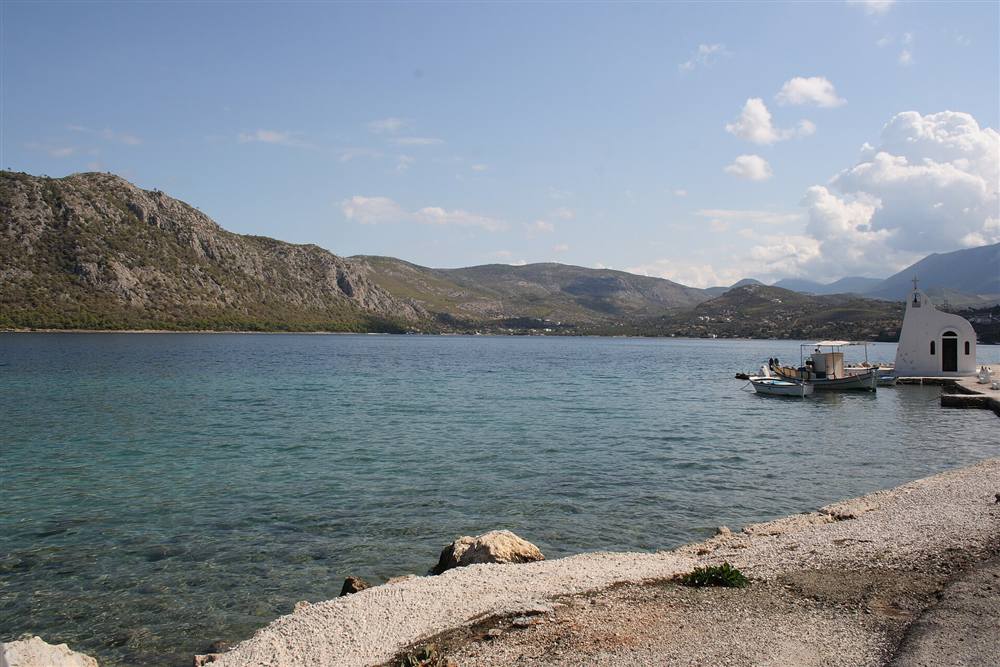
The lake-to-sea route starts on the sheltered water of Lake Vouliagmeni of Perachora, near Loutraki, where the group settles into the kayaks on this Loutraki kayak tour, then paddles through a narrow channel that links the lake to the open Corinthian Gulf.
This Lake Vouliagmeni lies on the Perachora peninsula west of Loutraki, close to the western tip and the Heraion. It is not the lake of the same name on the Athens coast; sea paddling near the capital is covered in our Athens kayak tour page. The Perachora lake is enclosed and calm, so the first strokes of a Loutraki kayak tour happen on flat water with no swell. That gives each pair of paddlers time to find a shared rhythm in the double kayak before the sea opens up.
From the launch area the group crosses the lake toward its seaward edge, where a narrow cut joins the lake to the Corinthian Gulf. The kayaks pass through the channel behind the guide, and the water changes from still lake to open sea at the channel mouth. On the far side the route turns along the rocky shore toward the western tip of the peninsula. The start of this Loutraki kayak tour is a gradual step from sheltered water to the gulf.
What does a Loutraki kayak tour pass at the Heraion and the Melagavi lighthouse?
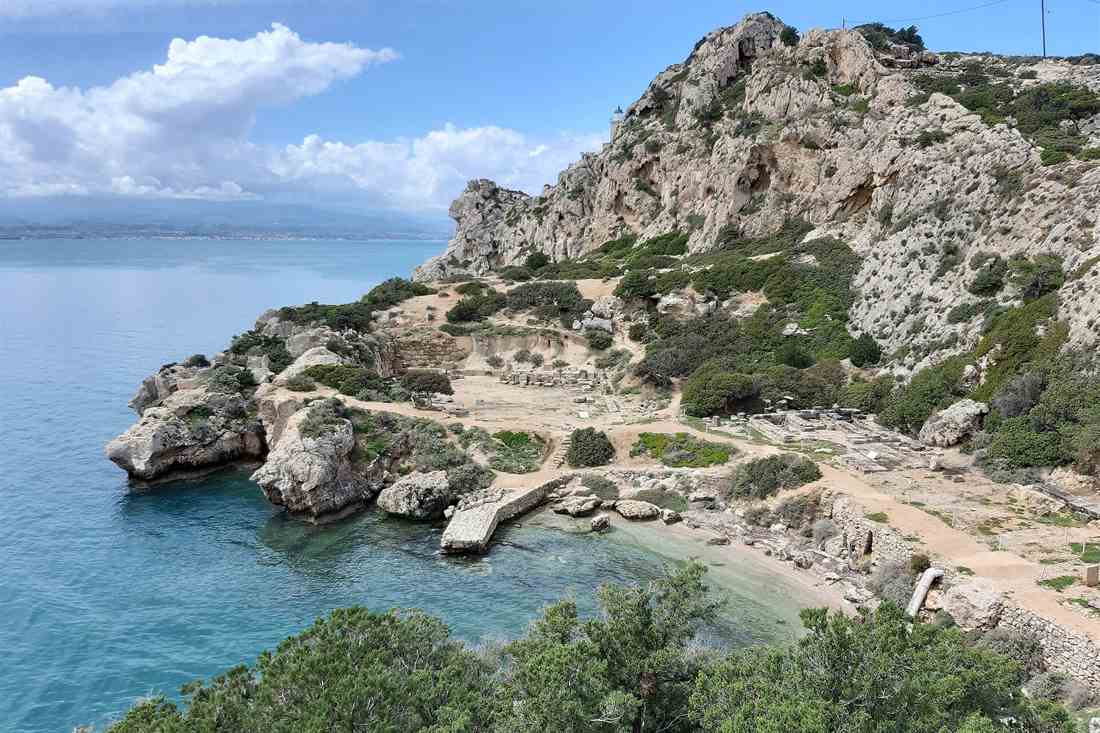
Past the channel, a Loutraki kayak tour follows the rocks of the Heraion, stops for a swim beside the remains of the Temple of Hera and paddles beneath the Melagavi lighthouse on the western tip of the Perachora peninsula.
The route passes the narrow neck of land and the rocks of the Heraion at the end of the peninsula. The site was a sanctuary of Hera in ancient times, and its story is told on our Ancient Corinth page. From the water, a Loutraki kayak tour sees the ruins at sea level, with the clear water of the cove in front of them. The guide brings the group into the cove for a swim stop beside the temple remains.
Beyond the Heraion the route rounds the cape to the Melagavi lighthouse, which stands on the rocks above the water at the western point of the peninsula. The kayaks pass beneath the lighthouse, close under the cliff, with the open Corinthian Gulf stretching west. At the open cape the guide sets the line and the pace for the group. The finishing point and the return leg of each Loutraki kayak tour differ between departures, so check the tour listing for the exact plan of the day.
What is the seal cave route on a Loutraki kayak tour?
The seal cave route is a Loutraki kayak tour that launches from Alkyona beach, follows the coast past sea caves and hidden beaches such as Lefki, and reaches the Seal Cave, a rock formation with a sea entrance, before returning to the start.
The day opens on Alkyona beach, where the guide introduces the equipment and the basic sea-kayak technique before launch. The group then paddles along the shore under pine-covered capes and past rock formations in clear Corinthian Gulf water. The first landings are hidden beaches such as Lefki, which a Loutraki kayak tour reaches only from the sea. Sea caves open along this stretch of coast, and the group explores them from the kayaks, with stops to swim and rest at points that no path reaches.
The goal of the route is the Seal Cave, a natural formation with an unusual rock shape and an entrance that opens straight from the sea. Paddlers stop here to swim, and the cave is the turning point of this Loutraki kayak tour. The return leg follows the same coast back to Alkyona beach. One listing for this route gives a sea distance of about 10 km, and another gives a total of about four to four and a half hours with swim and rest stops, so check the tour listing for the exact plan.
- Alkyona beach – equipment briefing, basic technique and launch.
- Lefki beach – a hidden beach reached only by kayak, with a swim stop.
- Sea caves – openings along the rocky shore, explored from the water.
- Seal Cave – the turning point, with a swim at the sea entrance.
Which caves and coves line the Corinthian Gulf near the Alkyonides?
The Alkyonides coast near Loutraki is lined with sea caves, rock walls, pine-covered headlands and small pebble coves, plus the Seal Cave with its sea entrance. A Loutraki kayak tour reaches these spots from the water, as most have no road access.
The Alkyonides shore sits on the north coast of the Perachora peninsula and looks onto the eastern arm of the Corinthian Gulf. Its shore is rocky, with cliffs and caves cut into the base of the rock. The guided Alkyonides sea kayaking tour is built around these caves, and a Loutraki kayak tour on this coast moves from one cave mouth to the next with the group close together. The Seal Cave is the best-known cave on the coast, with a distinct rock shape and an opening that paddlers enter from the sea.
Between the caves the shore breaks into coves: small pebble beaches, some with white stones, backed by pines that grow down to the waterline. These coves have no road access, so they stay quiet, and each one serves as a swim and rest stop on a Loutraki kayak tour. Lefki is one of them. Some coves have a rocky entry with sea urchins on the stones, so paddlers land where the guide points. Stone arches and tall rock walls fill the coastline between the landings.
What equipment and instruction does a Loutraki kayak tour provide?
A Loutraki kayak tour provides the kayak, paddle, life jacket and all other paddling equipment, plus a certified kayak guide who explains the gear and the basic strokes on the beach before launch and leads the group on the water.
The standard boat is a double sit-in sea kayak. Two paddlers share each hull, and the stable design suits first-timers and experienced paddlers alike. Before launch the guide fits each person with a life jacket and a paddle, introduces the equipment and runs through the basic strokes for moving forward and turning. On a Loutraki kayak tour no previous kayak experience is required, because the beach briefing covers what the route demands.
Other kit depends on the outing. One Loutraki kayak tour format uses inflatable two-seat or three-seat kayaks with inflatable seats, pumped up on the beach with an electric pump. A waterproof bag keeps keys, phones and documents dry, and snorkelling masks come out on that format for the swim stops. A support boat with a first-aid kit follows that outing, and one listing includes civil liability insurance. The exact kit list for each departure sits on its tour page, so check the tour listing before the day.
- Kayak – a double sit-in sea kayak, or an inflatable two-seat or three-seat kayak.
- Paddle and life jacket – issued to every paddler and fitted before launch.
- Dry bag – a waterproof bag for keys, phones and documents.
- Guide – a certified kayak guide who briefs the group and leads the route.
Who can join a Loutraki kayak tour?
A Loutraki kayak tour is open to beginners with no earlier paddling experience and basic fitness. Children join from age 10 on some listings and from age 12 with a parent or guardian on others, so the exact age rule sits in each tour listing.
The guided routes suit first-time paddlers as well as people who want to try a new activity on the sea. The only physical requirement on the listings is basic fitness, because a Loutraki kayak tour splits the paddling with stops for swimming and rest. One local service counts 1 to 1.5 hours of active paddling inside a total outing of 3 to 5 hours. Guides on one listing work in English, German and Greek, so visitors from abroad follow every briefing without a translator.
Kayak makers set weight and height limits for each boat type, and the operators follow them to keep the boats stable. One listing caps each paddler at 100 kg and 1.95 m in height. Travellers above either figure contact the operator before booking, and the operator matches them with a suitable boat or format. Families with children aged 10 and over find child-size life jackets on at least one service, and a private format exists for couples and groups that want a guide to themselves.
When is the best season for a Loutraki kayak tour?
Summer is the main season for a Loutraki kayak tour, because every route includes swim stops in the Corinthian Gulf. Morning departures avoid the midday heat, and guides launch only when the forecast shows light wind and a calm sea.
The listings present sea kayaking at Loutraki as a summer activity close to Athens, and each half-day route builds in stops for swimming at beaches and sea caves. On calm mornings the gulf lies flat and clear, which makes the landings and swim stops easy. One service runs its guided trips from 10:00 to 13:30, when the heat stays lower and the light suits photos. A second slot from 16:00 to 20:30 opens an evening window for a Loutraki kayak tour on long summer days.
Wind shapes the day more than the calendar does. One operator sets out only when the forecast wind stays at or below 4 m/s, and paddling speed on each leg changes with the direction and strength of the wind. Guides choose between set routes within a 45-minute drive of Loutraki and match the route to the forecast and the group. When the wind rises, the trip moves to another date instead of launching into rough water, and paddlers confirm the forecast with the operator the day before.
How do you reach a Loutraki kayak tour from Athens?
A Loutraki kayak tour starts about 84 km west of Athens, reached by car along the motorway to the Isthmus of Corinth. The full-day version includes a transfer from Athens, Corinth or Loutraki, while half-day routes meet at the launch beach or lake.
Drivers head west from Athens on the motorway toward Corinth, cross the Isthmus and follow the signs to Loutraki and the Perachora peninsula beyond it. The seal cave route meets at 10:00 on Alkyona beach, and the lake-to-sea route launches from Lake Vouliagmeni of Perachora. On one service the guide drives to the start in a separate car, so each party arrives in its own vehicle. Reaching the meeting point before the set time leaves room to change and load bags before the Loutraki kayak tour briefing.
Transport depends on the format. The full-day Loutraki kayak tour collects guests in Athens, Corinth or Loutraki and brings them back at the end of the day. The half-day seal cave route leaves the ride to the meeting point to the traveller, and the operator confirms on request whether a transfer runs on a given date. Alkyona beach is unorganised, with no sunbeds, umbrellas, shower or toilet, so water and snacks come from town. Other road trips from the capital sit on the day trips from Athens page.
What do you wear and bring on a Loutraki kayak tour?
For a Loutraki kayak tour, wear quick-drying clothes over swimwear, with water shoes or flip-flops on the feet. Bring eco-friendly sunscreen, a hat, polarised sunglasses and a refillable water bottle; the operator supplies the boat, paddle and life jacket.
Paddling at sea puts water on the skin from the first stroke. Drops fall from the paddle blade, spray lifts off small waves and the wind carries salt across the deck, so every layer gets wet. Clothes that dry fast and handle salt water work best, worn over a swimsuit for the swim stops. Footwear matters at the landings: some wild coves on a Loutraki kayak tour have rocky entries and sea urchins, and water shoes or firm flip-flops protect the feet on the way in.
Sun protection covers the rest of the kit. A hat and sunglasses with polarised lenses cut the glare off the water, and a high-SPF sunscreen that does not harm marine life goes on before launch. Each guest carries a personal water bottle, because one operator works to cut single-use plastic on its trips. Phones, keys and documents ride in a waterproof bag on at least one service. A printed or digital copy of the booking confirmation speeds up check-in at the start of the Loutraki kayak tour.
- Clothing – quick-drying layers over a swimsuit.
- Footwear – water shoes or flip-flops for rocky coves.
- Sun kit – a hat, polarised sunglasses and eco-friendly sunscreen.
- Drinks – a refillable water bottle and a snack.
How do guides keep a Loutraki kayak tour safe?
Guides keep a Loutraki kayak tour safe with certified leaders, a life jacket on every paddler, stable sea kayaks and strict weather rules. Groups launch only in calm conditions, and each boat carries paddlers within the maker’s weight and height limits.
Every guided group heads out with certified, experienced kayak guides, and one listing adds civil liability insurance to each booking. Each paddler wears a life jacket from launch to landing, and the guide sets the pace and the line along the shore. Before launch, the group learns the equipment and the basic strokes on the beach, so the first strokes at sea feel familiar. On one service a support boat stays with the kayaks and carries a first-aid kit for the whole Loutraki kayak tour.
Weather rules carry the most weight. The operators move or cancel a Loutraki kayak tour when conditions turn poor, and one service keeps its kayaks ashore whenever the wind climbs past its set limit. A trip cancelled by the operator for weather returns the full booking amount or moves to a new date. The maker’s weight and height limits exist for stability, so a boat loaded within them sits steady in small waves and responds to the paddle as designed.
- Guides – certified and experienced kayak leaders.
- Buoyancy – a life jacket on every paddler.
- Weather – launch only in light wind and calm seas.
- First aid – a kit on the support boat of one service.
- Cover – civil liability insurance on one listing.
What can you add to a Loutraki kayak tour on the same day?
A Loutraki kayak tour leaves the afternoon free for a Corinth Canal boat crossing, an afternoon hike to the Heraion, canyoning at Pisia or a soak at the Loutraki thermal spa. The full-day version already adds a seaside tavern lunch.
The morning half-day routes finish in the early afternoon, which leaves time for a second stop on the same drive. The Corinth Canal sits a few minutes south of Loutraki, and boat crossings by catamaran or glass-bottom boat run through the cut; the Corinth Canal day trip from Athens covers that outing. Ancient Corinth lies a short drive south-west of the Isthmus, and the Loutraki thermal spa rounds off the day after a Loutraki kayak tour.
Active travellers stack a second outdoor session. Local outfitters run canyoning at Pisia with a hike and a swim at the seal cave, and an afternoon hike to the ancient Heraion that follows a morning paddle. Travellers with a second day in Corinthia add the old trails of Loutraki to the Melagkavi lighthouse, or a hike to the Rock of Nemea and the Polyfengos castle. The evening kayak slot from 16:00 to 20:30 flips the order, with sightseeing in the morning and the Loutraki kayak tour in the late afternoon.
How does a Loutraki kayak tour compare with kayaking near Athens?
A Loutraki kayak tour trades a short hop to the Athens coast for a longer drive to the Corinthian Gulf, where routes follow pine-covered headlands, sea caves and coves reachable only from the water, and the full-day format adds a transfer and lunch.
The two lakes named Vouliagmeni cause confusion. Lake Vouliagmeni on the Athens Riviera sits beside the Saronic Gulf on the south coast of the city, while Lake Vouliagmeni of Perachora, the launch point of the lake-to-sea Loutraki kayak tour, lies on the Corinthian Gulf beyond Loutraki. The Saronic coast keeps travel time short for a paddle inside Athens, while Loutraki asks for about 84 km of driving each way. In return, the Corinthian Gulf routes pass cliffs, caves and quiet beaches with no road access.
Other paddling spots within reach of Athens appear on the same booking platforms, including a sea kayak rental at Saranti in Boeotia and a guided trip to the Corinthian Gulf islets of Strongylo, Diporto and Fonias. Island kayaking asks for more travel, since a Milos kayak tour needs a ferry or a flight from Athens to the Cyclades first. A Loutraki kayak tour stays a day trip, with the return transfer to Athens built into the full-day format.
Frequently Asked Questions
Do you need kayak experience for a Loutraki kayak tour?
No earlier kayak experience is needed for a Loutraki kayak tour. The guided routes accept complete beginners with basic fitness, and a certified guide leads the group from the first briefing on the beach to the final landing at the starting point.
Can you swim during the paddle?
Yes. Every Loutraki kayak tour builds in stops for swimming and rest at beaches and sea caves that only boats reach. The full-day lake-to-sea version adds a swim beside the ancient Temple of Hera, so a swimsuit under the paddling clothes saves time.
Are the kayaks single or double?
Guided Loutraki kayak tour groups on one listing paddle double sit-in sea kayaks, which stay stable for beginners and suit experienced paddlers too. A local self-guided rental offers two-seat and three-seat inflatable kayaks, so the boat type depends on the booking.
What happens when the weather turns bad?
The operator moves the Loutraki kayak tour to another date or cancels it for safety when the weather turns. One service launches only with wind at or below 4 m/s, and a weather cancellation by the operator brings a full refund of the booking.
Is lunch part of the day?
The full-day version ends with lunch at a seaside tavern: seasonal salad, tzatziki, fried potatoes, calamari, bread and bottled water, plus a glass of wine, ouzo or a soft drink. One local guided service packs a beach picnic, and other half-day routes leave snacks to the paddlers.