
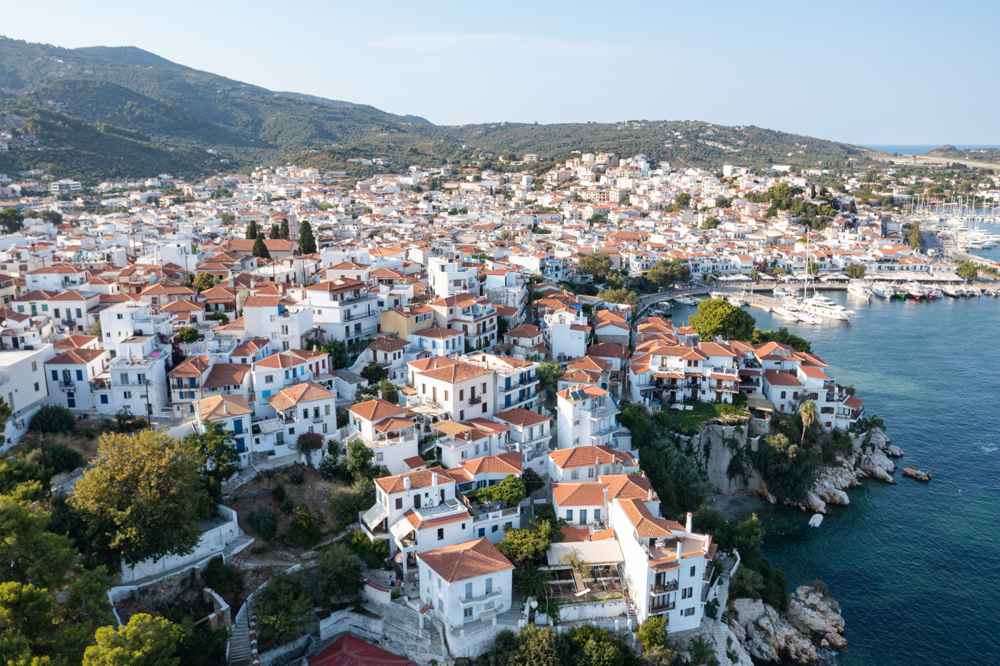
Ligaries beach ranks among the calmer swimming spots on the west coast of Skiathos. The sheltered cove pairs soft sand with fine pebbles, clear water, and shade from the pines behind the shore. Plan the whole trip with Greece Tours.
This guide covers where Ligaries sits, how the cove and its water behave, the tree shade at the back. The quiet mood away from the south-coast resorts. The seasonal facilities you find on the sand.
Where is Ligaries beach on Skiathos?
Ligaries beach sits on the west coast of Skiathos, reached on the road that drops from the Troulos junction toward Kounistra and Aselinos. Cars and scooters follow this quiet inland route down to the cove.
Ligaries lies west of Skiathos Town, past the resort of Troulos on the island’s quieter flank. The turning leaves the main south-coast road at the Troulos junction, climbs inland, then drops toward the water. Drivers reach the cove in about 20 minutes from the port, following signs for Kounistra and Aselinos along a narrow surfaced lane. The bus serves the Troulos junction on the coastal route, so walkers cover the final stretch on foot from there. This west-facing position sets Ligaries apart from the crowded southern bays and puts it within a short drive of the Kounistra monastery and Aselinos. Anyone touring Skiathos by car finds the approach straightforward.
The road passes olive groves and pine slopes on the final gentle descent to the shore.
The drive to Ligaries follows the same road that leads to the Kounistra monastery, so the two pair naturally on a half-day out. From the Troulos junction the lane climbs through pine woods before the sea reappears on the descent. Parking sits on rough ground just above the sand, with room for a modest number of cars in season. Scooters handle the narrow bends easily and slip into gaps the cars cannot use. Walkers who leave the bus at Troulos follow the surfaced lane downhill, a steady stretch that rewards the effort with an uncrowded shore. Signposts for Aselinos and Kounistra mark the turns, so the route stays clear even on a first visit.
The final approach opens onto the cove between the trees and the water below.
Ligaries works well as one stop on a loop around the western side of Skiathos. Drivers often combine it with a walk to the Panagia Kounistra chapel, set a short distance inland among the pines. Others carry on to the two Aselinos beaches, which lie further along the same network of lanes. The compact distances mean a single morning covers the cove, the monastery, and a meal without a long drive between them. Because the road stays quiet outside the main junction, cycling the route also works for stronger riders. This inland cluster gives Ligaries a role beyond a single swim, tying it to the monastery and the neighbouring bays.
Visitors treating the west coast as a day out find the beach a natural anchor for the whole trip.
Reaching Ligaries rewards a little planning, since the cove hides below the main coastal road rather than beside it. Drivers watch for the Troulos junction, then follow the inland signs rather than continuing along the shore toward Koukounaries. The surfaced lane narrows in places, so oncoming cars slow and edge past on the wider bends. Early arrivals claim the shaded parking and the best patches of sand under the trees before the midday heat builds. The last stretch on foot takes about two minutes from the parking area down to the water. This slight effort filters out casual passing traffic and keeps the cove calmer than the roadside beaches nearer town.
The reward is a quiet west-coast shore that still sits within easy reach of the port.
What is Ligaries beach like for swimming?
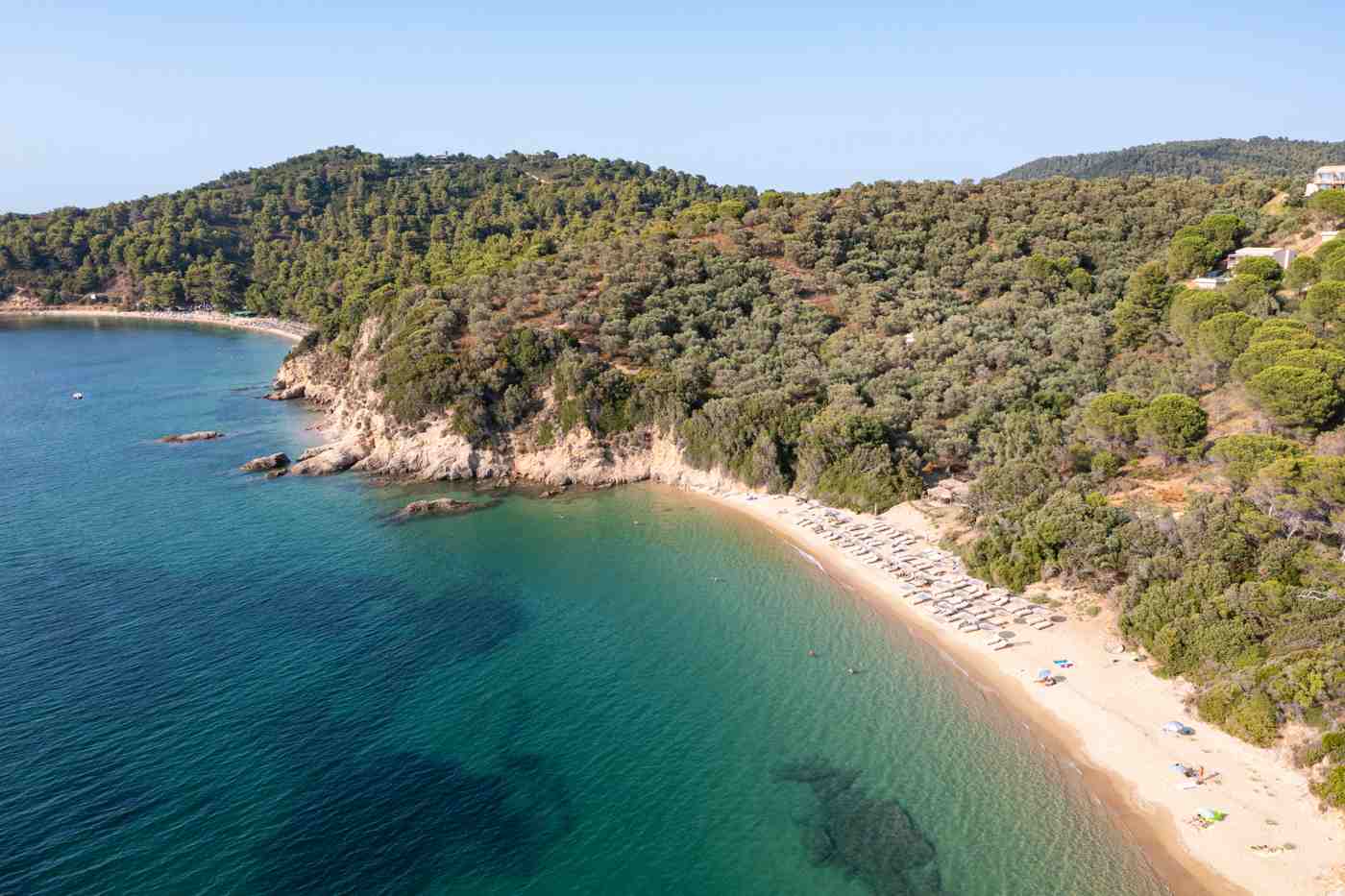
Ligaries forms a small, sheltered cove of soft sand mixed with fine pebbles, backed by low hills. The west-facing bay holds calm, clear water that deepens gently, so the swimming stays easy and settled through summer.
The cove at Ligaries curves in a shallow arc between two low headlands that block the open swell. Sand covers most of the shoreline, with bands of smooth pebbles near the waterline and underfoot in the shallows. The seabed shelves slowly, giving a wide stretch of waist-deep water before it drops away. Water clarity stays high here because the bay faces west, away from the harbour traffic and the busier southern currents. Swimmers see the bottom clearly across the near shallows, and the calm surface suits children and slower swimmers. The compact scale keeps everyone within a short walk of the shade at the back of the sand.
Compared with the exposed north coast, Ligaries reads as one of the gentler west-coast bays on the island of Skiathos.
Ligaries belongs to a run of quieter inlets along the western shore, each reached down its own side lane off the Kounistra road. The bay stays protected on days when the meltemi wind churns the north and east coasts, since the surrounding land shields the water. Swimmers who track conditions across the island’s Skiathos beaches often shift west when the north wind rises. The pebble bands keep the water washing clear rather than clouding with stirred sand. Around the edges of the cove, low rocks give snorkellers a little structure to follow. The bay rarely produces strong currents, so the swimming stays contained within the arc.
This combination of shelter and clarity explains why Ligaries holds its water quality through the hottest weeks of the year.
Swimming at Ligaries suits different visitors because the water stays shallow and even for a long distance out. The sandy patches give a soft entry, while the pebble bands keep the shallows from clouding as feet stir the bottom. On calm mornings the surface sits almost flat, mirroring the pines along the shore. Light afternoon breezes ripple the bay without building the chop seen on the exposed coasts. Snorkellers follow the rocky edges at either headland, where small fish gather around the stone. The gentle gradient means non-swimmers wade comfortably in the shallows while stronger swimmers reach deeper water within the arc of the cove.
This balance of shallow sand and clear, protected water defines the swimming that draws people back to Ligaries each summer.
The west-facing angle shapes the whole character of the water at Ligaries. Through the afternoon the sun tracks over the bay and lights the shallows. The sea reads pale green over sand and darker over the pebble banks. The surrounding hills cut the northerly wind that unsettles beaches on the far side of the island. As a result the cove often stays swimmable on days when Lalaria or the northern shore turn rough. The water warms steadily through summer in the sheltered arc, holding a comfortable temperature into the evening. Sunset falls directly across the bay, drawing swimmers who stay late for the light on the water.
These conditions make Ligaries a dependable choice whenever the meltemi closes down the exposed coasts of the island.
Does Ligaries beach have natural shade?
Pines and tamarisk trees crowd the back of Ligaries, throwing broad shade across the rear of the sand. The green fringe reaches close to the water, so bathers rest under branches without renting cover through the hottest hours.
A thick band of pines runs along the back of Ligaries, standing close enough to cast shade over the rear of the sand. Tamarisk trees fill the gaps nearer the water, their low, spreading branches reaching almost to the shoreline. Together they form a green wall that shelters bathers from the midday sun without any need for hired cover. The ground beneath stays cooler than the open sand, giving a comfortable base for towels and bags. Cicadas sound through the branches across the hottest hours, part of the still, wooded feel of the cove. The trees also anchor the sand and screen the parking from the shore, so the beach keeps its natural edge.
This ready shade counts among the main reasons families settle at Ligaries for a full day.
The tree cover changes how a day at Ligaries unfolds compared with an open, treeless beach. Visitors arrive without hauling large umbrellas, since the pines and tamarisks already break the sun along the back of the sand. Morning shade falls toward the water as the sun climbs, then shifts behind the trees through the afternoon. This movement lets bathers follow the shade around the cove rather than staying fixed to one spot. Children play in the cooler, tree-backed sand while swimmers reach the water within a step or two. The canopy also softens the wind on breezier days, keeping loose sand from drifting across the shore.
The free tree shade makes Ligaries appeal to travellers who prefer a natural beach over a fully organised one with rented rows.
Shade governs where people settle on the sand at Ligaries through the course of the day. Early arrivals take the tree line at the back, where the pines hold the deepest cover from first light. As the sun climbs, the shaded band widens toward the water and then retreats behind the canopy in the afternoon. This shifting pattern lets bathers move a short step at a time rather than pack up and leave. The tamarisks nearer the shore give lighter, dappled cover for those who want sun and shade together. Families with young children favour the cool, tree-backed sand a couple of paces from the calm shallows.
Ligaries lets visitors stay comfortably from morning to late afternoon.
The wooded backdrop gives Ligaries a different look from the open, sun-baked beaches on the south coast. Pines rise behind the sand and climb the low hills that ring the cove, framing the water in green. The tamarisks lean toward the shore, their fine foliage softening the line between beach and trees. This green edge keeps the sand cooler and the air fresher than a treeless bay in the same heat. Birds move through the branches across the day, adding to the quiet, natural feel of the spot. The trees also shelter the parking and the canteen, tucking the small facilities out of the direct summer sun.
For visitors who value shade and greenery, this tree-lined setting clearly stands out among the quiet west-coast coves of Skiathos.
Is Ligaries beach quiet compared with the rest of Skiathos?
Ligaries keeps a low-key, quiet feel well away from the busy south-coast strip. The cove draws far smaller crowds than Koukounaries or Banana, so the sand stays calm even across the peak weeks of the season.
Ligaries sits apart from the resort belt that runs along the southern shore of Skiathos. The big-name beaches near Koukounaries fill with sunbeds, watersports, and beach bars through the season, drawing steady crowds by car and bus. Ligaries stays smaller and simpler, with only a modest strip of sand and a single seasonal outlet for food and drink. The bay draws day-trippers on the Kounistra loop rather than a fixed resort crowd, so numbers rise and fall through the day. Even in the peak weeks the cove rarely feels packed, since the parking and the sand both stay limited. This scale keeps the noise low and the pace slow, closer to a village beach than a resort strip.
Visitors seeking quiet over amenities find Ligaries fits the brief.
The contrast with the south coast becomes clear on the short drive in from the main road. Troulos beach sits down on the coastal strip with its hotels and organised sand, while Ligaries hides inland and above the next bay along. The two make an easy pairing, since the Ligaries turning leaves the road just past Troulos. Travellers can start the day on the busier organised beach, then move up to the quiet cove for the afternoon. This proximity gives visitors a choice of pace within a short drive of each other. Ligaries holds the calmer end of that scale, trading the beach bars and long sunbed rows for shade and space.
The quiet mood, more than any single feature, defines a day spent at the cove.
The quiet at Ligaries suits different visitors looking to slow down for the day. Couples find an unhurried spot for a long swim and a shaded lunch away from the crowds. Families value the calm water and the natural shade over the busier organised beaches near town. Walkers pausing on the Kounistra route treat the cove as a cool break in a wooded landscape. Photographers arrive for the west-facing light, which sharpens across the bay through the late afternoon. Because the beach carries only light facilities, it draws people content to bring their own supplies for the day. The mood stays consistent through the season, dipping only on the busiest weekends when the parking fills early.
For most of summer, Ligaries keeps the settled, low-key character that sets it apart.
Keeping Ligaries quiet depends partly on how visitors treat the small cove. The limited parking naturally caps numbers, so an early start secures both a space and a shaded patch of sand. Because facilities stay minimal, bathers carry water and snacks and take their litter away with them. The narrow lane rewards steady, patient driving, especially where cars meet on the bends above the beach. Respecting the calm means keeping music low and leaving the natural shade and dunes undisturbed. These small habits protect the character that draws people to the west coast in the first place. Ligaries works best for travellers who value a plain, sheltered shore.
They reach it ready for a slow day rather than a full resort setup near the water.
What facilities does Ligaries beach have?
Ligaries keeps its facilities simple, with a seasonal canteen or small taverna operating through high summer near the sand. A short row of sunbeds and umbrellas appears in the busy weeks, while the rest of the cove stays natural.
Facilities at Ligaries stay deliberately light, matching the small scale of the cove. A seasonal canteen or small taverna operates near the sand through the high-summer weeks, serving drinks and simple food to bathers. Outside the peak season the outlet can stand closed, so visitors carry their own water and snacks to be sure. A short row of sunbeds and umbrellas appears on the sand in the busy period for those who prefer hired cover. The rest of the beach stays natural, with the pine and tamarisk shade covering anyone who skips the loungers. There is no large beach bar or watersports base here, in keeping with the quiet character of the cove.
This pared-back setup suits travellers happy to trade organised comforts for a simpler, shaded shore on the west coast.
Planning around the light facilities makes a day at Ligaries run smoothly. Visitors bring enough water for the hottest hours, since the single outlet cannot match a resort beach for supplies. Cash covers drinks or a light snack at the canteen, as small west-coast spots rarely rely on cards. Those who want a sunbed arrive early in the peak weeks, before the short row on the sand fills. Anyone content with a towel simply settles under the trees, where the shade needs no booking. A basic sunshade, snacks, and swimming gear cover most of what a full day here calls for.
The taverna keeps to the summer season, so a quick check before a shoulder-season trip avoids arriving to a closed hut on the sand.
The single food outlet shapes the rhythm of a visit to Ligaries. Bathers pause for a cold drink or a plate at the canteen between swims, then return to the shaded sand. The menu stays short and centred on simple summer fare rather than a full restaurant list. Prices sit in line with other small beach outlets around the island, so a light lunch stays affordable. Because seating is limited, the busiest midday hour can bring a short wait for a table in the shade. Visitors often time their meal for the earlier or later part of the day to avoid the peak.
This modest service still covers the essentials, sparing a drive back to Troulos or town for a snack. For a quiet cove, that single outlet does enough.
Weighing the facilities helps set expectations before a trip to Ligaries. The cove delivers shade, calm water, and a single seasonal outlet, rather than the full spread of an organised resort beach. Toilets and formal amenities stay minimal, so visitors treat the stop as a swim and a picnic rather than a full day out. Families and couples who bring their own kit find the setup covers a relaxed outing well. Those expecting sunbed rows, showers, and a beach bar are better served by the southern resorts near Koukounaries. Matching the plan to the cove keeps the visit smooth and the mood calm.
Ligaries rewards travellers who accept its plain, low-key character, offering shade and clear water in exchange for a lighter list of comforts.
How do you reach Ligaries beach on Skiathos by car or scooter?
Ligaries sits at the end of a paved road that drops from the Troulos junction on the coastal road. Drivers turn inland toward Kounistra, then follow signs down to the cove.
The drive to Ligaries starts on the main south-coast road at the Troulos junction, about 8 kilometres west of Skiathos Town. Drivers turn inland at the signpost for Kounistra and Aselinos. The lane climbs gently past olive groves and pine stands before forking toward the two western beaches. A scooter handles this route with ease, and the tarmac stays in fair condition for most of the descent. The final approach to Ligaries narrows, so slower speeds help on the bends. Parking sits on packed earth behind the sand, with room for around fifteen cars in high summer. Arriving before midday secures a spot near the tree line.
The whole trip from town takes about twenty minutes at a steady pace. Fuel up in town before setting off, as no station stands on the western lane.
The bus network on Skiathos runs along the south coast and stops at the Troulos junction only. Passengers leave the bus there and face a downhill walk of about 3 kilometres to reach Ligaries. The road carries little traffic, yet it offers no pavement and thin shade near midday. Carrying water and a hat makes the walk manageable. Regular visitors treat the bus as a backup and hire a scooter for the day instead. The last stretch to the cove rewards walkers with pine cover and the first view of the calm bay. Return timing matters, because the uphill return to the junction takes longer under afternoon heat.
Checking the posted bus times at the Troulos stop keeps the plan on track. Walking sandals beat flip-flops on the gravelly verges.
Scooter hire in Skiathos Town costs a modest daily rate, and outlets sit near the harbour and the airport road. Renters need a valid licence and a helmet, which the shops provide. The ride to Ligaries suits confident riders, since the descent includes three tight corners. Loose gravel gathers at the road edges after rain, so keeping to the centre lane helps grip. A small car works equally well and shields passengers from the sun on the return climb. Drivers coming from Troulos beach reach the junction in about five minutes. The turning is marked with brown tourist signs for the monastery and Aselinos.
Following those signs leads straight to the fork, where a left branch drops the final distance to Ligaries. Petrol stays cheap for the short trip.
The road surface improved in recent seasons, though short rough patches remain near the Ligaries fork. Drivers who dislike unpaved ground find the packed parking area firm enough for a standard hire car. The cove has no barrier gate and no parking fee, so arrival stays simple. Early birds park under the tamarisk trees, which keep the car cooler through the afternoon. A single lane handles two-way traffic, and passing places let oncoming vehicles slip by. Signposting from the junction stays clear, with the monastery and Aselinos named on the same board. Reaching the sand from the parking takes under two minutes on a short sandy path.
This easy final step makes Ligaries friendly for families carrying beach bags and cool boxes. Shade near the path helps on hot arrivals.
What is swimming like in the calm water at Ligaries beach?
Ligaries offers calm, clear water that shelves gently from the sand-and-pebble shore. The western headlands block the strong summer meltemi wind, so the surface stays flat on most mornings and swimming feels safe for all ages.
The entry at Ligaries mixes fine sand with smooth pebbles at the waterline. The seabed drops slowly, giving young swimmers a wide shallow zone near the shore. Water clarity stays high because no river mouth feeds silt into the bay. Snorkellers spot small fish around the rocky edges on either flank of the cove. The temperature climbs through summer and stays comfortable into early autumn. Reef shoes help across the pebble patches, since bare feet meet the odd sharp stone. The gentle gradient means adults wade out a long way before the depth reaches shoulder height. This steady shelf sets Ligaries apart from the steeper south-coast beaches near Troulos and the town.
Morning light makes the shallows glow pale turquoise over the sand. Calm days invite long, easy swims across the bay.
Wind protection defines the swimming at Ligaries through the peak season. The meltemi sweeps the Aegean from the north, yet the west-facing cove sits in the lee of low hills. On days when exposed beaches churn with chop, Ligaries keeps a glassy surface. This shelter makes the bay a reliable choice when the forecast turns breezy. Afternoon breezes sometimes ruffle the water, though the swell stays gentle inside the arms of the cove. Families with toddlers value the flat conditions for paddling near the sand. Stronger swimmers cross to the far rocks and back without fighting a current. The bay lacks a lifeguard, so parents keep young children within easy reach.
Calm water and shallow entry together give Ligaries a safe, family reputation. Boats rarely enter the swim zone, keeping the water clear for bathers.
The water stays clean because Ligaries carries no harbour and no busy road runoff. Clarity lets swimmers see the pebble floor three metres down on a bright day. Small shoals of fish gather near the boulders at each end of the cove. A mask and snorkel reveal patches of sea grass that shelter the marine life. The bottom stays free of weed drifts through most of the summer. Currents inside the bay run weak, so drifting away from the beach rarely happens. The shelving sand suits swimming lessons for children who fear deep water. Older visitors appreciate the easy walk-in without a sudden drop underfoot.
These conditions turn Ligaries into a calm training ground for nervous or beginner swimmers. Bright noon sun sharpens the view of the sandy shallows below.
Swimming stays pleasant from late spring until the middle of autumn at Ligaries. The sea warms slowly after winter and holds its heat well into October. Morning visits reward swimmers with the flattest water and the softest light. By afternoon the sun swings west and pours straight into the cove. This western aspect brings long, warm swims as the day fades toward evening. The seabed near the shore stays sandy, while pebbles and rock mark the deeper edges. Goggles help swimmers track the fish that dart around the submerged stones. A float or noodle lets children practise strokes over the wide shallow shelf. The steady, sheltered water gives Ligaries a swimming season that stretches across the warm months.
Sunset swims here face the open western horizon over the water.
How do you combine Ligaries beach with the Panagia Kounistra monastery?
Ligaries pairs neatly with the Kounistra monastery on one short drive. The whitewashed chapel stands on the wooded hill above the cove, about 2 kilometres inland, so travellers swim first and visit the shrine on the way back.
The road down to Ligaries passes the turning for the Panagia Kounistra monastery on the same wooded ridge. Drivers reach the shrine in about five minutes from the beach fork. The small white church sits among pines and marks a well-known Skiathos pilgrimage site. A modest courtyard and a carved wooden screen draw visitors who climb the short path. The monastery keeps quiet hours, so a calm dress code applies at the door. Shoulders stay covered, and a light wrap suits the brief visit after the beach. Parking near the church fits only about six cars on the gravel. Combining the swim and the shrine fills a relaxed half-day without a rush between the two stops.
The turning carries a brown sign that names the monastery clearly.
History surrounds the Kounistra monastery, which locals link to a treasured icon of the Virgin. The name Kounistra refers to the swinging motion of the icon found hanging in the pines. Pilgrims carry the image to the town church in winter and return it here in high summer. This custom ties the beach road to a living Skiathos tradition. Visitors from Ligaries reach the chapel with sandy feet and a towel still around the shoulders. The cool interior offers a break from the midday heat on the coast. Candle smoke and old frescoes fill the tiny nave with a settled calm. A caretaker sometimes opens the church to travellers who arrive during daylight.
This blend of beach and shrine gives the western route a quiet cultural depth.
Timing the two stops keeps the day comfortable on the western side. Morning swims at Ligaries catch the calm water before the afternoon breeze. A late-morning walk up to Kounistra avoids the fiercest midday sun. The chapel sits under pines that throw welcome shade across the courtyard. Travellers then return to the beach for lunch at the seasonal canteen. This loop needs no extra driving, since both sites share the one access road. Cyclists on e-bikes manage the climb to the monastery with battery help. Photographers frame the white walls against the green ridge and the blue sea beyond.
Pairing the swim with the shrine turns a simple beach trip into a fuller Skiathos outing across the quiet west coast. Water and sturdy sandals cover both the beach and the hillside path.
The monastery road doubles as the gateway to the wider western beaches. From the Kounistra fork the lane continues toward Aselinos and its long sandy bay. Ligaries sits closest to the coast, so it works as the first swim of the day. The shrine then breaks up the drive with a short cultural pause. Groups with mixed interests split their time between the sand and the church. A picnic under the pines near the chapel suits travellers who skip the canteen. The whole circuit stays within a 5-kilometre radius of the Troulos junction. Little traffic uses the road, so the pace feels calm from start to finish.
This compact cluster of sights makes the western route a rewarding half-day from Skiathos Town. Signposts guide drivers between the beach, the shrine, and Aselinos.
Can you combine Ligaries with Aselinos beach on the same drive?
Ligaries and Aselinos share one western access road, so both fit into a single drive. From the Kounistra fork Aselinos lies about 2 kilometres further, letting travellers swim at each bay on one relaxed outing.
The same road that serves Ligaries carries on to Aselinos beach a short drive further west. Big Aselinos opens into a long, wide bay backed by dunes and tamarisk. It contrasts with the tight, sheltered cove at Ligaries and its smaller scale. Drivers reach Aselinos in under ten minutes from the Ligaries parking. The larger beach carries a taverna, sunbeds, and room for windsurfers on breezy days. Swimmers who want calm choose Ligaries, while those after space head to Aselinos. Doing both in one trip shows two faces of the western coast. The drive between them stays easy on the same paved lane past the monastery ridge. A single tank of fuel covers the whole loop with ease.
Both bays face west, so each delivers a bright sunset over the sea.
Aselinos splits into Big Aselinos and the smaller Little Aselinos next door. The main beach offers organised sunbeds and a taverna that serves lunch through summer. A short rough track links the two Aselinos bays for walkers who explore. Ligaries fits in as a quieter third stop on the same western sweep. The three beaches together give swimmers a range of moods within a small area. Big Aselinos suits families who want facilities and a broad stretch of sand. Little Aselinos draws visitors after a wilder, undeveloped shore. Ligaries lands between the two, with light shade and a low-key feel. Planning the day around all three beaches fills the western coast with easy, calm swimming.
Each beach shares the one road, so no backtracking wastes the day.
The drive order shapes how the day unfolds along the coast. Starting at Ligaries gives the calmest early swim before the wind builds. Moving on to Aselinos suits a late-morning stretch on the bigger sand. Lunch at the Aselinos taverna breaks the day near the halfway point. An afternoon return to Ligaries catches the western sun on the sheltered cove. This flow keeps driving short and swimming long across the western beaches. Windsurfers reverse the plan and chase the afternoon breeze at exposed Aselinos. Calm-water fans do the opposite and end the day in the still Ligaries bay. Reading the daily forecast helps travellers match each beach to the wind and the light.
The monastery makes a natural third stop between the two bays. Sun cream matters on the exposed Aselinos sand.
Facilities differ across the western beaches, so packing suits the plan. Ligaries carries a small seasonal canteen and limited shade under the trees. Aselinos runs a fuller taverna with sunbeds, umbrellas, and cold drinks. Bringing water and snacks covers any gap at the quieter Ligaries cove. A cool box in the car keeps supplies fresh between the two stops. Toilets sit at the Aselinos taverna, while Ligaries offers only basic seasonal cover. Families plan a longer lunch at Aselinos and a shorter dip at Ligaries. This split lets travellers enjoy the calm cove without missing full beach services. Balancing both beaches in one drive gives the western coast a complete, easy day out.
The short hop between them makes carrying gear simple. Plan the lunch stop around the Aselinos kitchen hours.
Who does the quiet bay at Ligaries beach suit, and what are the best times to visit?
Ligaries suits couples, families, and swimmers who want calm water away from crowds. The sheltered cove peaks in the warm months, with early mornings and late afternoons giving the quietest sand and the softest light.
Couples value Ligaries for its calm, low-key setting on the quiet west coast. The small cove holds fewer sunbeds than the busy south-coast resorts. This scale keeps noise down and gives space to relax under the pines. Families with young children choose Ligaries for the shallow, sheltered water. The gentle shelf lets toddlers paddle safely near the sand. Nature lovers enjoy the pines, the tamarisk, and the clear water without heavy development. Photographers arrive for the western light that fills the bay each afternoon. Swimmers who dislike wind pick Ligaries when the meltemi stirs the open beaches. This mix of visitors shares one goal, which is a peaceful day beside sheltered water.
Older travellers welcome the easy walk-in and the shaded back of the beach. Solo swimmers find a calm spot to read between dips.
Morning delivers the best conditions at Ligaries through the summer. The water sits flat and clear before the afternoon breeze arrives. Early arrivals claim the shaded spots under the tamarisk near the back of the sand. By late morning the small parking area fills on the busiest August days. Arriving before ten keeps the visit calm and the car close to the beach. Midday brings the strongest sun, so shade and water matter most then. Late afternoon empties the cove as day-trippers head back toward the town. This second quiet window offers warm water and long shadows across the sand. The two calm windows frame the ideal times for a relaxed swim at Ligaries.
Weekdays stay quieter than weekends across the whole season. Cloud-free mornings give the clearest view of the seabed.
Season shapes the crowd and the mood at Ligaries across the year. Peak summer brings the warmest water and the busiest weekends on the sand. Late spring and early autumn offer calm water with far fewer people. The shoulder weeks keep the canteen open while the parking stays easy. Winter empties the beach, though the drive down still rewards walkers with sea views. Off-peak visitors find the cove almost to themselves on a quiet weekday. The pines hold their green through the cooler months near the shore. Swimmers who chase solitude pick the edges of the season over high summer. This spread of seasons lets each visitor match Ligaries to the crowd level they prefer.
The seasonal canteen closes once autumn cools the coast. Spring blooms line the road down to the sand.
Planning around the calm windows makes Ligaries reward every kind of visitor. Beach lovers pack water, snacks, and reef shoes for the pebble entry. Culture fans add the Kounistra monastery to fill a half-day on the west coast. Active travellers link Ligaries, Aselinos, and the monastery into one driving loop. Quiet-seekers arrive early or late and skip the midday August peak. Families settle near the shade and use the shallow shelf for the children. The western light draws photographers for the golden hour before sunset. Each group finds a version of Ligaries that fits its pace and its plan. This flexible cove rounds off the western Skiathos coast as a calm, sheltered swimming spot.
A towel, sun hat, and water cover the day’s basics. The short drive from town keeps the trip simple.
Frequently Asked Questions
How do you get to Ligaries beach without a car?
Ligaries sits about 3 kilometres downhill from the Troulos junction, the nearest bus stop on Skiathos. Travellers without a car ride the south-coast bus to Troulos, then walk down the paved monastery road to the cove. The walk takes around forty minutes at an easy pace, mostly downhill on the way there. The lane carries light traffic and no pavement, so walking on the verge stays sensible. Water, a hat, and sturdy sandals make the trip comfortable in the summer heat. Taxis from Skiathos Town run to Ligaries and cost more than the bus, yet save the walk. A hired scooter remains the simplest option, since it turns a long walk into a short ride.
Walkers share a taxi one way and cover the downhill leg for the views. The uphill return to the junction feels harder, so timing the bus back matters. Checking the posted bus schedule at the Troulos stop keeps the day on track.
Is Ligaries beach good for kids?
Ligaries works well for children thanks to its shallow, sheltered water and soft sandy entry. The seabed shelves gently, giving toddlers a wide paddling zone near the shore. Western headlands block the meltemi wind, so the surface stays calm on most summer mornings. This calm makes the cove safer than the exposed, wavier beaches on other coasts. Parents still supervise closely, since Ligaries carries no lifeguard through the season. Reef shoes protect small feet from the pebbles that mix with the sand at the waterline. Shade under the tamarisk and pines lets children cool off between swims. The seasonal canteen sells drinks and light snacks during the busy summer weeks.
A short, flat path from the parking suits families who carry buggies and beach bags. The small scale of the cove keeps children within easy sight across the sand. Bringing water, sun cream, and a shade tent covers the gaps on the quieter days. These conditions give Ligaries a calm, family-friendly character on the west coast.
Is there shade at Ligaries beach?
Shade at Ligaries comes mainly from the pines and tamarisk trees along the back of the sand. These trees throw natural cover over the rear strip of the cove through the day. Early arrivals claim the shaded spots, which fill fast on the busiest August mornings. The tree line sits close to the water, so shade and swimming stay within easy reach. A seasonal canteen sometimes sets out a row of umbrellas and sunbeds in high summer. Renting an umbrella secures cover when the natural shade runs short at midday. Regular visitors bring a beach tent or a large parasol for guaranteed shade. The western aspect means the afternoon sun pours straight into the cove.
Cover matters most between noon and late afternoon, when the sun sits high and strong. Setting up near the trees keeps children and older visitors cool between swims. Water and light clothing add to the comfort on the hottest days. This mix of natural and hired shade suits a full day at Ligaries.
Where do you park at Ligaries beach?
Parking at Ligaries sits on a packed-earth area behind the sand, a short walk from the water. The space fits around fifteen cars, so it fills fast on busy August days. Arriving before mid-morning secures a spot, ideally under the shade of the tamarisk trees. The cove charges no parking fee and uses no barrier gate at the entrance. Scooters and motorbikes tuck into the edges and find room even when cars fill up. The final approach road narrows near the beach, so slow speeds help on the bends. A standard hire car handles the packed surface without trouble in dry weather. Rain turns parts of the ground soft, so parking on the firmer patches makes sense.
The walk from the car to the sand takes under two minutes on a short path. Late arrivals on peak days park higher up the lane and walk down. Leaving valuables out of sight keeps the car secure through the day. This simple, free parking adds to the low-key appeal of Ligaries.
What facilities does Ligaries beach have?
Facilities at Ligaries stay basic and seasonal, in keeping with the quiet character of the cove. A small canteen or taverna operates through the peak summer weeks and sells drinks, snacks, and light meals. Sunbeds and umbrellas appear in limited numbers during the busy months near the canteen. The cove carries no permanent shops, cash machines, or medical points on site. Toilets stay minimal, so visitors often use the fuller facilities at nearby Aselinos. Natural shade under the pines and tamarisk fills the gap where sunbeds run short. Bringing water, snacks, and sun cream covers the quieter shoulder weeks when the canteen closes. The nearest full services sit in Troulos and Skiathos Town, a short drive away.
Mobile signal reaches the beach, though the wooded valley weakens it in spots. A hired car or scooter makes restocking easy between swims. Packing for a low-key day suits Ligaries best, since services stay light. This simple setup keeps the cove calm and uncrowded through the season.
What are the nearby stops around Ligaries beach?
Nearby stops turn Ligaries into part of a wider western Skiathos day out. The Kounistra monastery sits about 2 kilometres inland on the same access road above the cove. Aselinos beach lies a short drive further west and offers a long sandy bay with a taverna. Troulos beach sits back on the coast near the junction and carries fuller resort facilities. Little Aselinos draws walkers who want a wilder, undeveloped shore next to the main bay. Skiathos Town, about 8 kilometres east, provides restaurants, shops, and the harbour for boat trips. The monastery road links these sights, so one drive covers three stops without backtracking.
Cyclists and drivers reach each point within a short ride of the Troulos junction. A half-day loop pairs a swim at Ligaries with the shrine and a second beach. This cluster of sights gives the quiet cove an easy place in a full itinerary. Planning the order around the wind and the sun keeps the day relaxed.
When are the quiet months at Ligaries beach?
Quiet months at Ligaries fall in late spring and early autumn, on either side of the summer peak. The water stays warm through these shoulder weeks, while crowds thin and parking turns easy. May and June bring calm seas, green hills, and mild heat before the high season fills the coast. September and October hold the summer warmth in the sea as visitor numbers drop. The seasonal canteen often runs during the early shoulder weeks and closes as autumn cools the coast. Weekdays stay quieter than weekends across the whole season at this low-key cove. High summer brings the busiest weekends, so early mornings offer the calmest sand then.
Winter empties the beach, though the drive down still rewards walkers with clear sea views. Off-peak swimmers find the cove almost private on a mild weekday morning. The pines and tamarisk keep their green through the cooler months near the shore. Choosing the season edges gives Ligaries its most peaceful days by the water.