
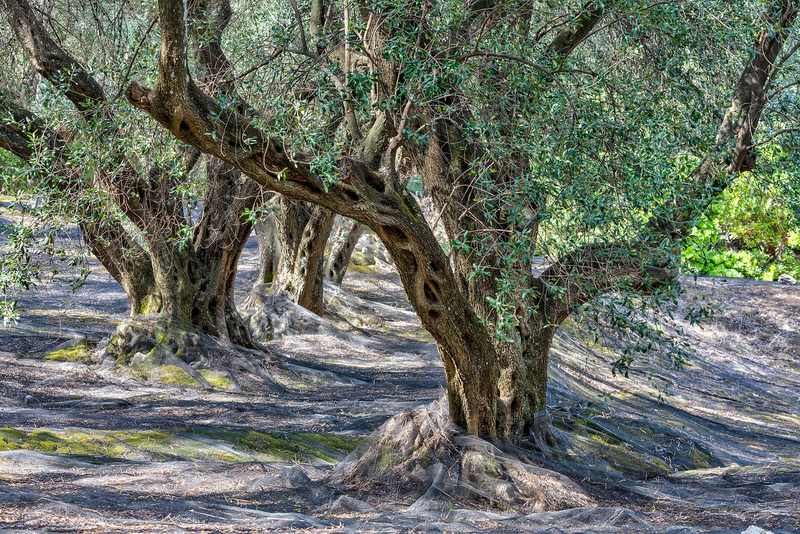
Kourounochori sits in the green Melanes valley, deep in the fertile interior of Naxos, the largest island of the Cyclades. Olive groves, natural springs and old watermills wrap the settlement, and stone lanes climb between low houses toward the Frankish-era Della Rocca tower. The village keeps a working farming character rather than a resort face, and its quiet order rewards travellers who leave the coast for the mountains. This inland corner also anchors the marble country around the Flerio quarries. Explore this authentic green village and the wider valley with My Greece Tours.
This guide places Kourounochori inside the Melanes valley and explains why the village matters to visitors who want the real interior of the island. Our Naxos travel guide frames the wider network of mountain villages, quarries and hiking routes that surround it. The sections below cover where the village sits and how to reach it, the Della Rocca tower, the Flerio kouros connection, the green watered setting and everyday village life, so you arrive with a clear plan.
Where is Kourounochori and how do you reach it?
Kourounochori lies about nine kilometres east of Naxos Town in the Melanes valley, reached by a short paved road through olive country. Drive, taxi or rent a car; buses serve the wider valley on limited schedules.
The village belongs to the Melanes cluster, a group of green settlements set below the marble mountains of the interior. From Naxos Town the drive climbs gently inland, trading the harbour for terraced groves and running water. The road passes through the broader district of Melanes before reaching Kourounochori, which sits on a rise above the valley floor. Signposts point toward the tower and the kouros site, so orientation stays easy. Parking waits at the village edge, since the stone lanes were built for mules rather than cars. The short distance makes the trip a half-day outing, easily combined with other stops in the fertile heart of the island.
A hire car gives the most freedom, because the inland bus network runs on a thin timetable. Taxis from the port reach the village in roughly twenty minutes and cost a modest fare. The route forms part of the classic interior loop that links the marble villages, so drivers often continue toward Kinidaros and the quarry country beyond. Cyclists and confident walkers also reach Kourounochori along quiet valley lanes, though the gradient asks for some effort in summer heat. Arrive in the morning to enjoy cool shade under the plane trees, then explore on foot. The compact scale means one central lane threads past the church, the tower and the tavernas without a long climb.
What is the Della Rocca (Frangopoulos) tower?
The Della Rocca tower is a fortified Frankish-era residence that dominates Kourounochori, later linked to the Frangopoulos family. Its square stone mass, high walls and defensive design recall the age when Venetian and Frankish lords held the Naxian interior.
The tower rises from the heart of the village as a solid rectangular block of grey stone. Thick walls, small windows and a proud height mark it as a defensive seat rather than a simple house. Frankish and Venetian nobility built such towers across the interior of the island to control land, water and the marble routes below. The Della Rocca name ties the structure to the medieval lords of the valley, while the Frangopoulos family connection reflects later Naxian ownership. Similar fortified towers survive in the surrounding villages of Naxos, forming a chain of rural strongholds.
The tower remains a private landmark, best admired from the lanes and the church square, where its scale frames the whole settlement against the green slopes.
The tower tells the story of the island after the Fourth Crusade, when Marco Sanudo founded the Duchy of the Archipelago and parcelled the interior among Catholic lords. These families raised fortified homes near springs and productive land, guarding olive oil, wine and marble against raiders. The Della Rocca seat commanded the fertile Melanes valley and its watered fields. Later Greek Orthodox families such as the Frangopoulos clan absorbed these estates as power shifted. Standing below the walls, a visitor reads centuries of layered rule in the stonework.
The tower pairs naturally with a walk toward the ancient quarries, since the same valley that drew medieval lords had drawn sculptors long before, making Kourounochori a place where two very different eras of power meet.
How is Kourounochori connected to the Flerio kouroi?
Kourounochori sits beside the Flerio marble quarries, where two giant unfinished kouroi still lie in the ground. A short walk or drive links the village to these ancient statues, the reclining marble youths of the Melanes valley.
The Flerio site lies a short distance from the village, in a shaded garden setting near the springs that feed the valley. Two colossal statues, carved in the Archaic period and never finished, rest where the sculptors abandoned them. The larger figure stretches over six metres, a bearded youth left half-emerged from the living marble. Visitors reach the Kouros of Flerio along a signed path lined with olive trees and running water. The site is open and free, framed by an old sanctuary to the gods of springs and quarries. Kourounochori serves as the natural base for the walk, offering shade, tavernas and parking before or after the visit to the ancient marble field.
The quarries reveal how the island shaped the marble that built temples across the Aegean. Naxian sculptors roughed out huge figures on site, then hauled them toward the coast for finishing and shipping. Cracks or flaws often halted the work, which is why the giants of Flerio remain in place, frozen mid-carving. This industrial heart of ancient Naxos sat exactly here, in the green Melanes valley, because water, workable stone and access roads met in one spot. Walkers can extend the route into wider hiking in Naxos, following old paths between kouroi, chapels and springs.
The pairing of a Frankish tower and Archaic statues in one small area gives Kourounochori a depth of history far beyond its modest size, rewarding curious travellers.
Why is the village so green and full of water?
Kourounochori lies in the Melanes valley, the most watered part of Naxos, fed by mountain springs. Terraced olive and citrus groves, plane trees and old watermills thrive on this abundant flow, giving the village a lush character rare in the Cyclades.
Springs rising in the marble mountains feed streams that run through the valley all year. This steady water turned the Melanes district into the garden of the island, where citrus, olives, vines and vegetables flourish on terraced slopes. Watermills once ground the valley’s grain, and their stone channels still trace the lanes around Kourounochori. Plane trees cast deep shade over the square, a sign of the moisture below. The greenery contrasts sharply with the arid coasts and treeless islands elsewhere in the Cyclades. Farmers here work the land in the traditional way, and the produce fills local kitchens and markets.
This fertile setting explains why lords, sculptors and villagers all chose the valley, since reliable water underpinned wealth, art and daily survival across every age of the settlement.
The watered landscape also shapes the pleasure of a visit. Cool air lingers under the plane trees even in high summer, and the sound of running water follows the walker along the lanes. Old fountains and washing basins survive at village corners, still fed by the springs. Kourounochori pairs with nearby green villages to form a walking country of shaded paths and orchard terraces, part of the wider villages of Naxos. The valley grows lemons, oranges, olives and famous Naxian potatoes, and roadside stalls sell the harvest in season. This abundance turns a simple stroll into a sensory experience of scent, shade and birdsong.
The green heart of the island rewards travellers who trade the beach for the mountains, offering a calm, living countryside rather than a staged attraction.
What is village life like in Kourounochori today?
Kourounochori keeps an authentic farming rhythm, with stone lanes, a village church, a handful of tavernas and working orchards. Locals tend groves and animals, and the pace stays slow, offering visitors a genuine slice of inland Naxian life.
Daily life centres on the church square and the shaded taverna tables beneath the plane trees. Villagers gather over coffee, farmers pass with tools and produce, and the tower watches over it all. The tavernas serve honest Naxian food, from local cheese and cured meats to vegetables grown in the valley below. Stone houses, arched passages and flower-filled courtyards line the narrow lanes, kept in traditional style rather than turned into resort décor. The scale stays small, so a visitor learns the village in an hour of wandering. This authentic character makes Kourounochori a fine stop on any tour of the interior, linked closely to Melanes and the marble villages spread across the mountain slopes above the coast.
Seasonal rhythms still govern the year, from the olive harvest to religious feasts at the village church. Visitors who linger meet a community that farms, cooks and celebrates on its own terms, far from the crowds of the port and the beaches. Combine the village with the tower, the kouroi and a valley walk for a full day in the green interior, then continue toward Kinidaros and the higher marble country. Kourounochori rewards slow travel, quiet observation and an appetite for real countryside over polished attractions. It stands as a small but rich window onto the fertile, historic soul of the island. Plan your visit and tours through our Naxos travel guide.
Frequently Asked Questions
Is Kourounochori worth visiting on a Naxos trip?
Kourounochori rewards travellers who want the authentic interior of the island rather than only its beaches. The village packs several attractions into a small, walkable area, which makes it an efficient and rewarding stop. The Frankish-era Della Rocca tower dominates the settlement, the ancient Flerio kouroi lie a short walk away, and the whole scene sits in the greenest, most watered valley on Naxos. Shaded lanes, old watermills, springs and honest tavernas complete the picture. A visit suits history lovers, hikers and anyone seeking a genuine village atmosphere. The green setting offers cool relief on hot summer days, a rare comfort in the Cyclades.
Half a day covers the tower, the statues and a leisurely lunch, though slower travellers happily stay longer. The village pairs well with other Melanes settlements, forming a satisfying inland loop that balances the coastal side of any Naxos holiday with real countryside and deep history.
Can you walk from Kourounochori to the Flerio kouroi?
Yes, the walk from Kourounochori to the Flerio marble quarries ranks among the easiest and most rewarding short excursions in the Melanes valley. A signed path leads from the village through olive groves and past running springs to the shaded garden where the two giant kouroi lie. The route is gentle, mostly level and suitable for families, taking around fifteen to twenty minutes at a relaxed pace. The larger statue stretches over six metres and rests where ancient sculptors left it unfinished, half-carved from the living rock. The site is open and free to visit, framed by an old sanctuary linked to the gods of springs and quarries.
Walkers should carry water and wear sturdy shoes, since the ground can be uneven in places. The combination of a short, shaded stroll and a genuine Archaic monument makes this one of the most memorable easy walks on the island, ideal before or after a village lunch.
What food and produce is Kourounochori known for?
Kourounochori and the wider Melanes valley are known for the rich produce that the abundant spring water makes possible. Terraced orchards yield lemons, oranges, olives and vegetables, and the district is famous across Greece for Naxian potatoes. Local groves press fine olive oil, while nearby villages produce cheese, wine and cured meats in the island tradition. The village tavernas serve this bounty simply and honestly, letting the quality of the ingredients lead. Expect fresh salads, grilled meats, local cheeses such as graviera and arseniko, and seasonal vegetable dishes. Roadside stalls and small shops sell honey, jams and citrus in season, straight from the valley farms.
Dining under the plane trees, with running water nearby and the tower overhead, turns a meal into part of the experience. This farming character, rooted in real water and real land, gives the food of Kourounochori an authenticity that beach resorts rarely match, rewarding visitors who seek the genuine flavours of inland Naxos.