
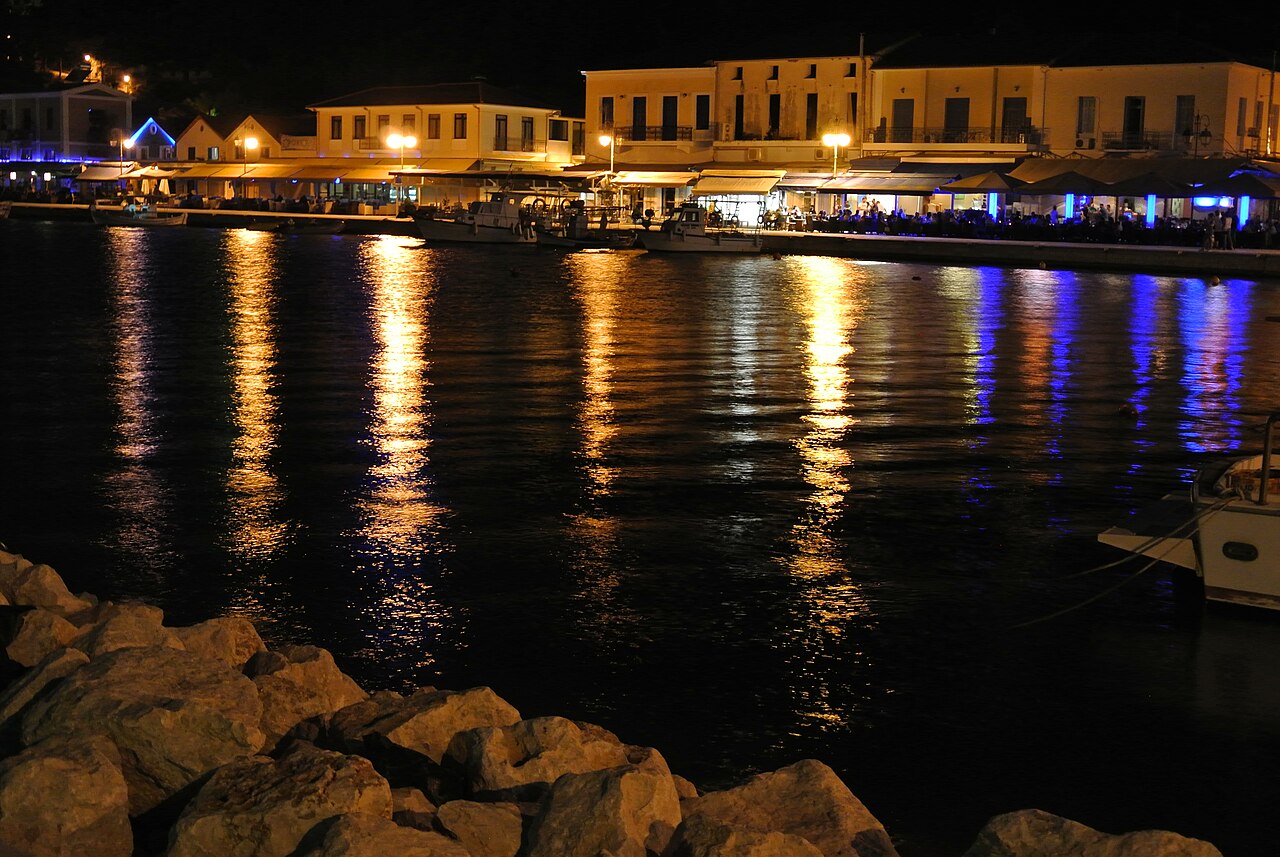
Katakolo is a small, colourful port town on the west coast of the Peloponnese, best known as the cruise gateway to Ancient Olympia. Though most visitors pass straight through it on their way inland to the great sanctuary, Katakolo is a pleasant place in its own right, with a walkable seafront of tavernas, cafés and shops, sandy beaches a short way off, fishing boats in the harbour, and a relaxed Ionian atmosphere. Cruise ships dock right beside the town, so passengers step ashore into its streets. This complete guide covers the port and town, what to do, the beaches, the facilities and whether Katakolo is worth time of its own.
This guide covers Katakolo port in full: the harbour and town, the shops and tavernas, the beaches, cruise facilities, and what to do beyond Olympia. Read it beside the full Ancient Olympia guide and the guide to Katakolo to Olympia, the short trip inland to the ancient site.
What is Katakolo port?
Katakolo is a small port town on the west coast of the Peloponnese, facing the Ionian Sea, with a population of only a few hundred. Its main role is as the cruise gateway to Ancient Olympia, which lies about thirty-five kilometres inland. A working fishing harbour and a marina sit beside the cruise pier, and a lively seafront of shops and tavernas lines the water.
It is a small port town. Katakolo is a modest coastal town of a few hundred people, so it feels intimate despite the cruise traffic.
It is the gateway to Olympia. The port’s main purpose is to bring cruise visitors to Ancient Olympia, so it is a busy call on Greek itineraries.
It has a lively seafront. A waterfront of shops and tavernas lines the harbour, so the town is pleasant to explore on foot.
Why do cruise ships stop at Katakolo?
Cruise ships stop at Katakolo almost entirely to visit Ancient Olympia, the birthplace of the Olympic Games and a UNESCO World Heritage Site, which lies under an hour inland. The small port has become one of the busiest cruise calls in Greece because it is the closest harbour to Olympia, so nearly every passenger comes ashore to make the short trip to the ancient sanctuary.
Olympia is the draw. The port exists on cruise routes because of Olympia, so most passengers head inland to the site.
It is the closest harbour. Katakolo is the nearest port to Olympia, so it is the natural gateway for cruise visitors.
It is a busy call. The link to Olympia makes Katakolo one of the busiest cruise ports in Greece, so many ships call here.
How walkable is Katakolo from the cruise ship?
Katakolo is very walkable from the cruise ship, as the pier opens directly into the town. From the gangway to the exit gates is only a short walk of a couple of hundred metres, and the seafront, shops and tavernas begin right there. There is no need for a shuttle, so passengers step off the ship straight into the town of Katakolo.
The pier opens into town. Ships dock beside the town, so passengers walk straight ashore.
The walk is short. Only a couple of hundred metres separate the gangway from the town, so no transport is needed.
The seafront begins at once. Shops and tavernas start right at the port exit, so the town is immediately at hand.
What is there to do in Katakolo town?
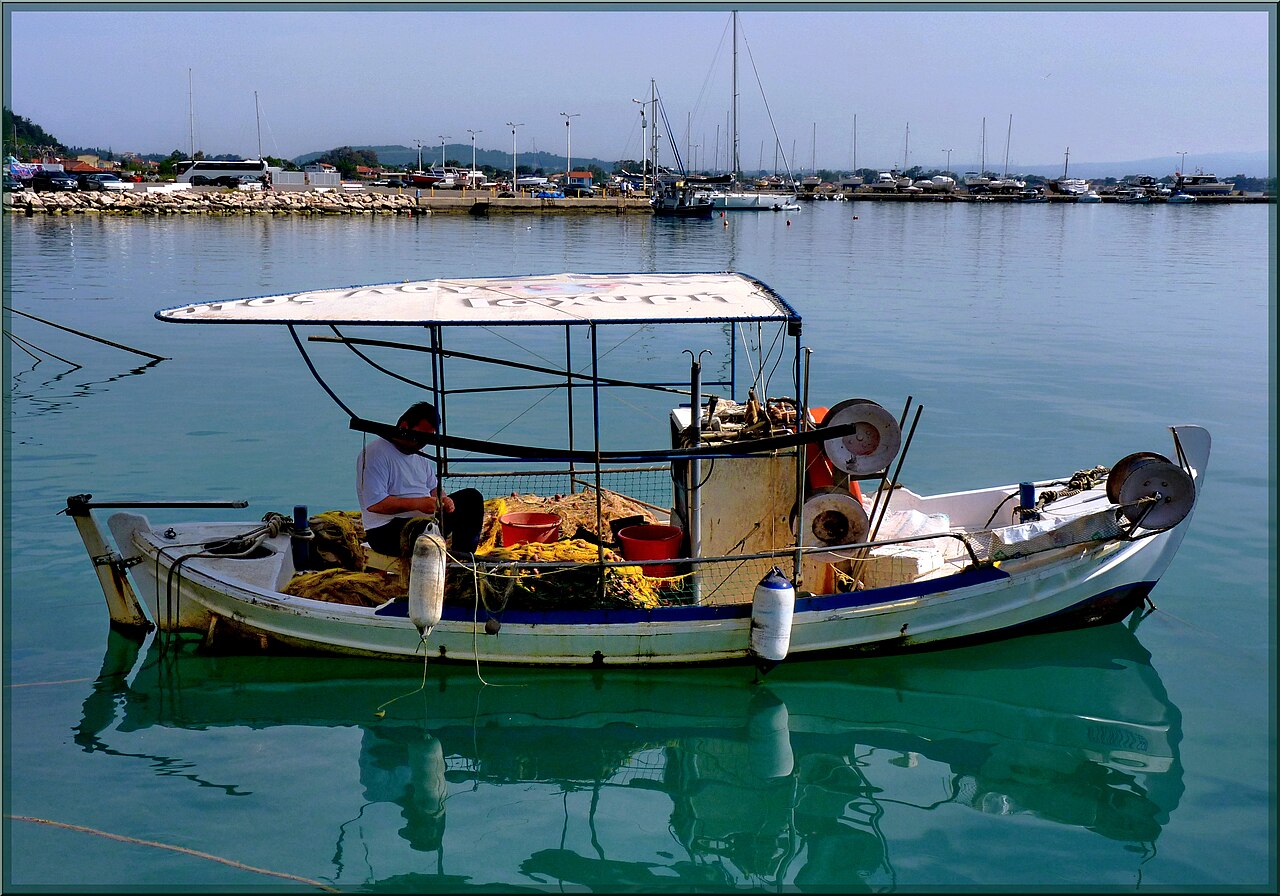
In Katakolo town you can stroll the waterfront promenade, watch the fishing boats in the harbour, browse the many souvenir shops, boutiques and galleries, sample fresh seafood in the tavernas, and relax at a café by the sea. The colourful buildings and the harbour make fine photographs, and the town has become one of the largest shopping villages in Greece thanks to the cruise trade.
Stroll the promenade. The waterfront walk past the harbour is the heart of the town, so a stroll takes in its best.
Browse the shops. Souvenir shops, boutiques and galleries line the streets, so the town is a place to shop.
Eat by the sea. Tavernas serve fresh seafood on the waterfront, so a meal is a pleasure in Katakolo.
What beaches are near Katakolo?
Sandy beaches lie a short walk or drive from Katakolo, along the west coast of the Peloponnese. The nearest offer soft sand and warm, shallow water, ideal for a swim on a hot day, with sunbeds and beach cafés at the busier spots. The long beach of Kourouta and other stretches of the Ilia coast lie a little further, so a beach day is easy to add to a port stop.
Beaches are close. Sandy beaches lie a short way from the town, so a swim is easy to reach.
The water is gentle. The warm, shallow sea suits families and swimmers, so the beaches are safe and pleasant.
Longer beaches lie near. Kourouta and the Ilia coast stretch a little further, so more sand is within reach.
What is the little train at Katakolo?
The little train at Katakolo is a local road train and a seasonal rail service linking the port to nearby attractions and to Ancient Olympia. In the cruise season a train runs the short line inland to Olympia, and small road trains and tourist services also operate around the town and coast, giving cruise passengers an easy, relaxed way to see the area beyond the port.
A train runs to Olympia. A seasonal rail service links Katakolo to Olympia, so passengers reach the site by train.
Road trains tour the area. Small tourist trains operate around the town and coast, so visitors see the area with ease.
It suits cruise visitors. The trains give a relaxed way to explore, so they are popular on a port day.
What cruise facilities does Katakolo have?
Katakolo has the facilities cruise passengers need close to the pier: taxis and tour operators waiting at the port, a train station for Olympia, cafés with wifi, shops selling local products and souvenirs, currency exchange and cash machines, and tavernas along the seafront. Everything lies within a short walk of the ship, so passengers arrange their day and find refreshments with ease.
Transport waits at the pier. Taxis, tours and the train station lie by the port, so onward travel is easy.
Shops and cafés are close. Souvenir shops, cafés and wifi cluster at the seafront, so passengers find what they need.
Money and food are on hand. Cash machines, exchange and tavernas line the town, so practical needs are met.
Is Katakolo worth spending time in beyond Olympia?
Yes, Katakolo is worth a little time beyond Olympia, especially for those with a longer port stay or who prefer the sea to the ruins. The pleasant seafront, the beaches, the fresh seafood and the relaxed harbour atmosphere make an enjoyable few hours. Many visitors spend the morning at Olympia and the afternoon in the town or on the beach, so Katakolo rounds out a port day nicely.
It has real charm. The colourful harbour and seafront are pleasant, so the town rewards a stroll.
It suits beach lovers. The nearby beaches offer a swim, so those preferring the sea enjoy the town.
It balances the day. Olympia in the morning and Katakolo in the afternoon make a varied port day, so the two combine well.
What food and drink can you try in Katakolo?
In Katakolo you can try the fresh seafood and Greek dishes of the western Peloponnese: grilled fish and octopus, Greek salads, meze, souvlaki and gyros, with local olive oil and wine. The seafront tavernas serve the catch of the day with a sea view, and cafés offer Greek coffee and sweets. The region’s olive oil, honey and wine make popular souvenirs to take home.
Seafood leads the menu. Grilled fish and octopus are the local specialities, so the tavernas serve the catch of the day.
Greek classics feature. Salads, meze, souvlaki and gyros fill the menus, so there is something for every taste.
Local produce stars. Olive oil, honey and wine of the region are sold in the shops, so they make fine souvenirs.
Where is Katakolo and how do you reach it?
Katakolo lies on the west coast of the Peloponnese, in the regional unit of Ilia, about thirteen kilometres from the city of Pyrgos and thirty-five kilometres from Ancient Olympia. Most visitors arrive by cruise ship, but the port is also reached by road and by a seasonal train from Pyrgos, so land travellers can visit the town and its beaches as well as cruise passengers.
It is on the Ilia coast. Katakolo sits on the west coast of the Peloponnese, so it faces the Ionian Sea.
It is near Pyrgos. The regional town of Pyrgos lies about thirteen kilometres away, so the port is close to the road network.
It is reached by sea and land. Cruise ships, roads and a seasonal train all serve Katakolo, so it is easy to reach, as the guide to Katakolo to Olympia sets out.
What museums are there in Katakolo?
Katakolo is home to a group of small, hands-on museums created by the inventor Kostas Kotsanas, devoted to the technology of the ancient Greeks. They display working reconstructions of ancient machines, automatic devices, musical instruments and early computing tools, along with ancient Greek musical and other inventions. Fascinating for adults and children alike, they make an engaging stop for cruise passengers who stay in the town.
They show ancient technology. The museums display reconstructions of ancient Greek machines, so they reveal the cleverness of the ancient world.
They are hands-on. Working models invite curiosity, so children and adults engage with them directly.
They suit a port day. Small and central, the museums make an easy stop, so they fill time for passengers who stay in Katakolo.
What is the atmosphere of Katakolo?
The atmosphere of Katakolo is relaxed and cheerful, a small Greek harbour town enlivened by the cruise trade. On days when ships are in, the seafront bustles with visitors, shops and music; when the ships leave, the town settles into the quiet rhythm of a fishing port. Colourful buildings, boats in the harbour and the Ionian light give Katakolo a bright, easygoing charm.
It is bright and cheerful. Colourful buildings and the sea light give the town an easygoing charm, so it feels welcoming.
It livens with the ships. On cruise days the seafront bustles with visitors, so the town is lively and busy.
It quiets when they leave. Once the ships depart, Katakolo returns to a calm fishing-port rhythm, so it has two moods.
How busy does Katakolo get?
Katakolo gets very busy on days when large cruise ships call, especially in the summer season, when thousands of passengers come ashore at once and fill the seafront and the road to Olympia. On quieter days, and outside summer, the town is calm. Arriving early or exploring in the afternoon, once the tour coaches have left for Olympia, gives the most relaxed experience of the town.
Cruise days are busiest. Large ships bring thousands ashore, so the town is crowded when they call.
Summer is the peak. The busiest days fall in the summer season, so crowds are largest then.
Quiet times exist. Early mornings, afternoons and off-season days are calmer, so timing gives a relaxed visit.
What day trips can you take from Katakolo?
The main day trip from Katakolo is to Ancient Olympia, under an hour inland, but the port also gives access to other sites of the western Peloponnese. The medieval Chlemoutsi Castle, the beaches of the Ilia coast, and the wineries and countryside around Olympia all lie within reach, so passengers with a longer stay, or independent travellers, can range beyond the ancient sanctuary.
Olympia is the main trip. The ancient sanctuary is the chief excursion, so most passengers head there first.
Castles and coast lie near. Chlemoutsi Castle and the Ilia beaches are within reach, so they add variety, as the guide to Chlemoutsi Castle describes.
Wineries reward a longer stay. The countryside and wineries around Olympia lie close, so a longer day can take them in.
Is Katakolo good for families?
Yes, Katakolo suits families well. The walkable, safe seafront lets children explore easily, the nearby beaches offer shallow, warm water for a swim, and the hands-on technology museums engage young minds. Combined with the short, easy trip to run the ancient stadium at Olympia, Katakolo gives families a varied and enjoyable port day of history, sea and discovery.
The town is safe and walkable. The flat, compact seafront suits children, so families explore with ease.
The beaches suit children. Shallow, warm water lies nearby, so a family swim is safe and pleasant.
The museums engage them. The hands-on technology museums fascinate children, so they add fun to a port day.
What is the best time to visit Katakolo?
The best time to visit Katakolo is late spring and early autumn, when the weather is warm, the sea is swimmable and the crowds are smaller than in high summer. The cruise season runs from spring to autumn, and summer brings the most ships and the largest crowds. Whatever the season, the mornings and late afternoons are the calmest and pleasantest times in the town.
Spring and autumn are mildest. The shoulder seasons bring warm weather and thinner crowds, so they are the pleasantest.
Summer is busiest. The most ships and crowds come in summer, so the town is at its liveliest then.
Mornings and evenings are calm. The quietest hours fall early and late, so they suit a relaxed visit.
What shopping is there in Katakolo?
Katakolo has become one of the largest shopping villages in Greece, its streets lined with shops selling jewellery, leather goods, clothing, art and souvenirs, alongside local products such as olive oil, honey, herbs and wine. Aimed largely at the cruise trade, the shops cluster along the seafront and the streets behind it, so passengers browse and buy within a short walk of the ship.
It is a shopping village. The cruise trade has filled the town with shops, so Katakolo is a place to browse and buy.
It sells local products. Olive oil, honey and wine of the region are widely sold, so they make authentic souvenirs.
The shops are central. The stores line the seafront and nearby streets, so they lie within a short walk of the pier.
How long do cruise ships stay at Katakolo?
Cruise ships usually stay at Katakolo for a port call of roughly five to nine hours, long enough to visit Ancient Olympia and still enjoy the town or the beach. The short transfer inland means passengers reach the site, tour it and return with time to spare. Checking the ship’s all-aboard time and allowing a safe margin for the return is always wise.
Calls last several hours. Ships typically stay five to nine hours, so there is time for both the site and the town.
The short transfer helps. Olympia is under an hour away, so passengers see it and return with time to spare.
A safe margin matters. Allowing extra time for the return protects against delays, so passengers reach the ship in good time.
Can you swim near Katakolo port?
Yes, you can swim near Katakolo, as sandy beaches with clean, warm and shallow water lie a short walk or drive from the port. The nearest beaches suit a quick dip on a hot day, while the long beach of Kourouta and other stretches of the Ilia coast offer more space and facilities. A swim is an easy and refreshing addition to a port day in Katakolo.
Beaches lie close. Sandy beaches sit a short way from the port, so a swim is easy to reach.
The water is warm and calm. The shallow, gentle sea suits swimmers, so it is safe and inviting.
Longer beaches lie near. Kourouta and the Ilia coast offer more sand and facilities, so a fuller beach day is possible.
What is the history of Katakolo?
Katakolo grew as the harbour of the Ilia region, exporting the currants and produce of the fertile plain in the nineteenth century, when it gained a rail link to the interior. In the modern era it has become one of Greece’s busiest cruise ports, thanks to its closeness to Ancient Olympia. So the town’s fortunes have long been tied to the sea and to the sanctuary inland.
It was a trading harbour. Katakolo shipped the produce of the Ilia plain, so it grew as a working port.
It gained a railway. A rail link to the interior boosted the port, so it connected the coast to the region.
It became a cruise port. Its closeness to Olympia made it a major cruise call, so the town thrives on visitors today.
Is Katakolo worth visiting without a cruise?
Yes, Katakolo is worth visiting without a cruise for those touring the western Peloponnese by car. Its beaches, seafront tavernas and relaxed harbour make a pleasant coastal base, close to Ancient Olympia, Chlemoutsi Castle and the Ilia coast. Outside the busiest cruise hours, independent travellers find a genuine small Greek port with good food, good beaches and easy access to the region’s sights.
It suits a road trip. Katakolo makes a pleasant coastal stop for those touring by car, so it rewards independent travellers.
It has beaches and food. The town’s beaches and tavernas are enjoyable in their own right, so it is more than a cruise gateway.
It is well placed. Close to Olympia, Chlemoutsi and the coast, Katakolo is a handy base, so the region is easily explored from it.
Who runs Katakolo port?
Katakolo port is run by the Municipal Port Fund of Pyrgos, the body that manages the harbour of the capital of Ilia. The port carries the name of the shipowner John Latsis, and it hosts a port police sub-office and a customs office.
The port fund dates the harbour to 1857, when Katakolo port was founded to serve commercial shipping. The harbour is artificial, and Katakolo port now handles cruise ships and pleasure craft more than cargo vessels.
The modern cruise berths owe their size to John Latsis, the shipping magnate from Katakolo, whose donation in 2003 renovated Katakolo port for larger ships. The port fund continues to modernise the harbour for rising cruise traffic, and the port applies approved security plans under the ISPS Code for ships and port facilities.
What cruise piers does Katakolo port have?
Katakolo port has three piers for cruise ships: two take vessels up to 300 metres long and one takes vessels up to 200 metres long. Depths along the piers range from 7.5 to 10.5 metres, and tugs and a pilotage service assist berthing ships.
The terminal building at Katakolo port stands two storeys high and holds the security and administration offices. A duty-free shop operates at the pier, and the harbour supplies ships with fresh water and handles solid and liquid waste.
Cruise schedules list days with five ships due at Katakolo port on the same day. Beside the berths, the port fund lists car rentals and day boats for local cruises among the services of Katakolo port.
Where exactly is Katakolo port?
Katakolo port sits at the head of Katakolo bay, also called the Gulf of Ichthys, on a headland of the Ilia coast that separates the Gulf of Kyparissia from the rest of the Ionian Sea, about 320 kilometres north-west of Athens.
The town centre begins 50 metres from the piers of Katakolo port. The port fund places the taxi rank 10 metres and the bus stop 50 metres from the cruise berths.
The headland, called Ichthys in antiquity, shelters two harbours: the small creek at Agios Andreas on its north side and the broad bay of Katakolo port on its south side. Map readers find Katakolo port at 37°38′41″ N, 21°19′1″ E.
Which cruise lines call at Katakolo port?
Cruise lines calling at Katakolo port include MSC Cruises, Norwegian Cruise Line, Viking, AIDA, Cunard, Celebrity Cruises, Royal Caribbean, Princess Cruises, Carnival, Oceania Cruises, Regent Seven Seas, Silversea, Seabourn, Holland America Line, Marella, Ponant and Celestyal, according to the published port schedule.
The schedule for Katakolo port names ships such as Norwegian Gem, MSC Fantasia, Viking Vesta, AIDAblu, Queen Victoria, Queen Anne, Celebrity Ascent, Brilliance of the Seas, Enchanted Princess and Seven Seas Mariner, along with Europa of Hapag-Lloyd Cruises.
Cruise ships started calling at Katakolo port in the 1940s, and the 2019 season brought an estimated 421,000 cruise passengers. The port fund ranks Katakolo port third in Greece for cruise traffic and publishes the season’s arrivals list on its website, katakoloport.gr.
How can you check which ships are in Katakolo port today?
Three online tools show the ships at Katakolo port: the CruiseMapper schedule lists arrival and departure times by month, VesselFinder tracks expected and docked ships under port code GRKAK, and a webcam aimed at the John Latsis port shows the berths live.
The CruiseMapper page for Katakolo port lists each ship with its arrival and departure time and links to the full itinerary. VesselFinder shows expected arrivals with their size, build year and estimated time of arrival, and it logs recent arrivals and departures at Katakolo port.
The webcam, listed on WorldCam and supplied by forecastweather.gr, watches the large cruise ships that call at Katakolo port. A check of one of these tools before a land visit shows whether cruise passengers will crowd the town that day.
Which airports are closest to Katakolo port?
The port fund puts the nearest airport 75 kilometres from Katakolo port. Araxos airport lies about 60 kilometres north-east of Pyrgos, Kalamata airport about 120 kilometres south of Pyrgos, and Zakynthos airport, on the island across the sea, about two hours away.
Andravida airport, near Amaliada, is the nearest airfield to Pyrgos and Katakolo port, but it serves military flights only. Passenger flights use Araxos and Kalamata instead, the two alternatives for the region.
Private transfers run from Katakolo port to Kalamata airport, to Athens airport and to the port of Piraeus, and the Kalamata airport transfers page lists the options for travellers landing in Messinia on their way to Katakolo port.
How do you travel between Katakolo port and Athens or Patras?
Road travel links Katakolo port with Athens, 320 kilometres away, and with the city of Patras, 70 kilometres north-east of Pyrgos. KTEL buses connect Katakolo with Pyrgos, where the KTEL Ileias bus terminal runs intercity routes to Athens, Patras, Kalamata, Ioannina and Thessaloniki.
Drivers leave Katakolo port on the Pyrgos–Katakolo regional road and join Greek National Road 9 at Pyrgos, which runs north to Patras and south to Kyparissia. National Road 74 runs east from Pyrgos to Tripoli by way of Olympia, and car rental offices stand close to the cruise terminal of Katakolo port. Pyrgos, the regional capital, lies 16 kilometres west of Olympia and 85 kilometres west of Tripoli.
Rail travel from Katakolo port ends at Pyrgos and Olympia, because passenger service on the Patras–Kalamata line through Pyrgos was suspended in 2011. Travellers continuing to Patras find the city’s sights on the Patras city tour page.
Cruise passengers who want a driver at the pier book one of the Katakolo port transfers, with private cars to Ancient Olympia, Kourouta beach, Kalamata and Athens.
What is the lighthouse above Katakolo port?
The lighthouse above Katakolo port is a stone tower built in 1865 on the hill behind the harbour. Still in service, it shines across a range of 19 nautical miles, and Greece has protected it as a historic listed monument since 2001.
A short uphill walk from Katakolo port reaches the lighthouse, which stands on the hill known as Mount Katakolon. The tower rises 30 feet among green slopes, and the top of the hill gives wide views over the Ionian Sea and the bay of Katakolo port.
The lighthouse marked the revival of Katakolo port in the late nineteenth century, when one of the first railways in Greece was also built here in 1881. The path climbs the forested hill behind the town, so the walk fits into a cruise stop.
What is the sunken city of Pheia near Katakolo port?
Pheia was a city of ancient Elis on the isthmus of Cape Katakolo, the ancient Ichthys, with its harbour at Agios Andreas, a walk from Katakolo port. An earthquake and tsunami destroyed it in 551, and its remains lie five metres under the sea.
Homer mentions Pheia, and Thucydides records that an Athenian fleet landed in the bay of Katakolo port in 431 BCE, the first year of the Peloponnesian War, before a storm drove the ships round the headland into the harbour of Pheia. The Athenians then used the town as a base against Elis, and Polybius names the small island in front of its harbour Pheias.
The Hellenic Institute of Marine Archaeology surveyed the bay of Agios Andreas near Katakolo port in 1973 and found building remains, amphora fragments, a Roman cemetery and a Byzantine coin. The same earthquake of 551 struck Patras and completed the ruin of the Temple of Zeus at Olympia, inland from Katakolo port.
The first excavations at Pheia began in 1911, and Nikos Yalouris explored the underwater remains in 1959. Two Cycladic marble figures of the Bronze Age came to light on the headland, with a kouros and a painted terracotta roof of the late Archaic period, and remains of Roman buildings lie on Tigani island off Katakolo port.
What is Pontikokastro, the castle above Katakolo port?
Pontikokastro, the Mouse Castle, is a Byzantine fortress on a hilltop near Katakolo port, built over the ancient walls of Pheia. The Franks took it around 1205 and called it Beauvoir or Belvedere for the wide sea views from its summit.
The Frankish rulers of the Principality of Achaea held the castle above Katakolo port after their conquest of the Morea in the thirteenth century. The site keeps overgrown earthworks and the bases of Byzantine towers in cloisonné masonry, and the castle’s original appearance remains a matter of guesswork.
The summit gives wide views over the coast and the inland plains of Ilia. A hat, water and sunscreen help on the climb in the summer heat, as on every excursion from Katakolo port, and the castle pairs with the lighthouse hill for walkers spending the day at Katakolo port.
Which churches and monasteries lie near Katakolo port?
The church of Agios Nikolaos, patron of sailors and of the town, stands on the central square by Katakolo port, and the Panagia Kremasti monastery, a seventeenth-century convent built on the edge of a cliff, lies within reach of a shore excursion.
The Agios Nikolaos church of Katakolo port stands between the harbour and the railway station, its white and blue walls bright in the sun, and its interior holds Greek Orthodox icons. Visitors light a candle bought at the entrance as a mark of respect.
Local legend says shepherds saw a light in the rock face and lowered a man on a rope, who returned with an icon of the Virgin Mary, so the monastery took the name Kremasti, meaning hanging. Nuns have lived there since the 1930s, and tours from Katakolo port combine the monastery with Olympia and a beach. Long trousers for men and covered shoulders and knees for women show respect at every church near Katakolo port.
Which wineries and olive mills lie near Katakolo port?
The Mercouri Estate, founded in 1864 on 180 acres of vineyards north of Katakolo port, is one of the oldest wineries in Greece, and the family-run Karambelas olive oil factory near Ancient Olympia offers tours with tastings of local extra virgin oil.
Theodoros Merkouris planted the first Mercouri vines with grapes imported from northern Italy, and the estate offers tours and tastings of its wines and olive oils. The Katakolo fun train stops at the Mercouri winery and at Agios Andreas beach, with a train every 30 minutes for the ride back to Katakolo port. The Karambelas factory was established in 2020 in woodland near Ancient Olympia, and its tastings come with small meze-style dishes.
Shore excursions from Katakolo port combine Olympia with boutique wineries, olive groves and cooking classes, and the Olympia olive oil tasting page covers the mills inland. Autumn brings the olive and grape harvests, when farms around Katakolo port hold special events.
What wildlife and nature surround Katakolo port?
Katakolo port sits at the northern tip of a beach that runs about 50 miles south to Kyparissia, backed by hills of olives, vines and pistachios. Mullet, damselfish and octopus live around the coastal rocks, and the Alfeios river mouth attracts birds such as hoopoes.
The Alfeios, one of the longest rivers of the Peloponnese, reaches the sea about 7 kilometres south of Pyrgos after a 70-mile course from its source near Megalopoli, and its banks shelter the European roller and the Eurasian hoopoe. Low hills of pine and cypress forest frame Katakolo port itself.
Thermal springs rise at Kaiafas, a 40-minute drive from Katakolo port, home to the Kaiafas lake and its beach. Beaches begin at the edge of the town and curve in one continuous arc around the Gulf of Kyparissia for at least 30 kilometres from Katakolo port.
Frequently Asked Questions About Katakolo Port
How far is Katakolo from Ancient Olympia?
Katakolo is about thirty-five kilometres from Ancient Olympia, a drive of thirty to forty minutes inland through the town of Pyrgos. This short distance is why the port is such a popular cruise call, as passengers reach the great archaeological site and return to their ship comfortably within a normal port day.
Because Olympia is under an hour away, the port and the ancient site are easily combined in a single day, as the guide to Katakolo to Olympia describes.
Can you stay overnight in Katakolo?
Yes, you can stay overnight in Katakolo, which has small hotels, guesthouses and apartments for those who wish to base themselves on the coast. An overnight suits travellers exploring the western Peloponnese by car, giving easy access to the beaches, Olympia and the wider region. Most cruise passengers, however, visit only for the day their ship is in port.
Because the town has beds and beaches, an overnight suits independent travellers, though cruise passengers usually come only for the day.
Is Katakolo just a cruise port?
Katakolo is mainly a cruise port, but it is also a genuine small Greek town with a fishing harbour, a marina, beaches and a resident community. Beyond the cruise trade, it has the relaxed character of a coastal Ilia town, so visitors who look past the souvenir shops find a pleasant seaside place with real local life, especially outside the busiest cruise hours.
Because it is both a busy cruise gateway and a real coastal town, Katakolo offers more than its port role suggests to those who take time to explore it.
Is Katakolo safe for visitors?
Yes, Katakolo is a very safe town for visitors. Like most of the Greek countryside it has low crime, and the compact, walkable seafront is easy and secure to explore on foot. The usual sensible care with belongings in busy crowds on cruise days is enough. Families, couples and solo travellers all move around the town comfortably and safely, day or evening.
Because Katakolo is a small, low-crime coastal town, visitors of every kind explore it in comfort and safety.
Do you need euros in Katakolo?
Yes, it helps to have euros in Katakolo, though many shops and tavernas accept cards. Cash is useful for small purchases, snacks, the local train and taxis, and cash machines and currency exchange are available in the town near the port. Carrying a small amount of euros smooths a visit, especially for the train, the beach or a quick bite.
Because cash is handy for small purchases and transport while cards work in most shops, carrying some euros makes a visit to Katakolo easy.
What is the difference between Katakolo and Katakolon?
Katakolo and Katakolon are two spellings of the same town, the port on the west coast of the Peloponnese. Katakolon is the older, formal transliteration of the Greek name, while Katakolo is the simpler modern form. Both refer to the same cruise port and gateway to Ancient Olympia, so the two names are used interchangeably in guides and on cruise itineraries.
Because the two spellings name the same place, travellers see both Katakolo and Katakolon used for the port, with no difference in meaning.
Can you visit Katakolo without going to Olympia?
Yes, you can spend a whole port day in Katakolo without going to Olympia, and some cruise passengers do just that. The seafront, the shops, the tavernas, the beaches and the technology museums fill an easy and relaxed day by the sea. For those who prefer a slower pace, or who have seen Olympia before, the town itself makes a pleasant alternative to the trip inland.
Because the town has beaches, shops, food and museums of its own, a port day spent entirely in Katakolo is an enjoyable option for those who skip the inland trip.
Is Katakolo a good base for the western Peloponnese?
Yes, Katakolo makes a good base for exploring the western Peloponnese by car. From the town, Ancient Olympia, the medieval Chlemoutsi Castle, the long beaches of the Ilia coast and the wineries around Olympia are all within easy reach. With its own beaches, tavernas and relaxed harbour, Katakolo combines a pleasant coastal stay with quick access to the region’s greatest sights.
Because it sits close to Olympia, castles, beaches and wineries, Katakolo is a handy and enjoyable coastal base for touring the western Peloponnese.