
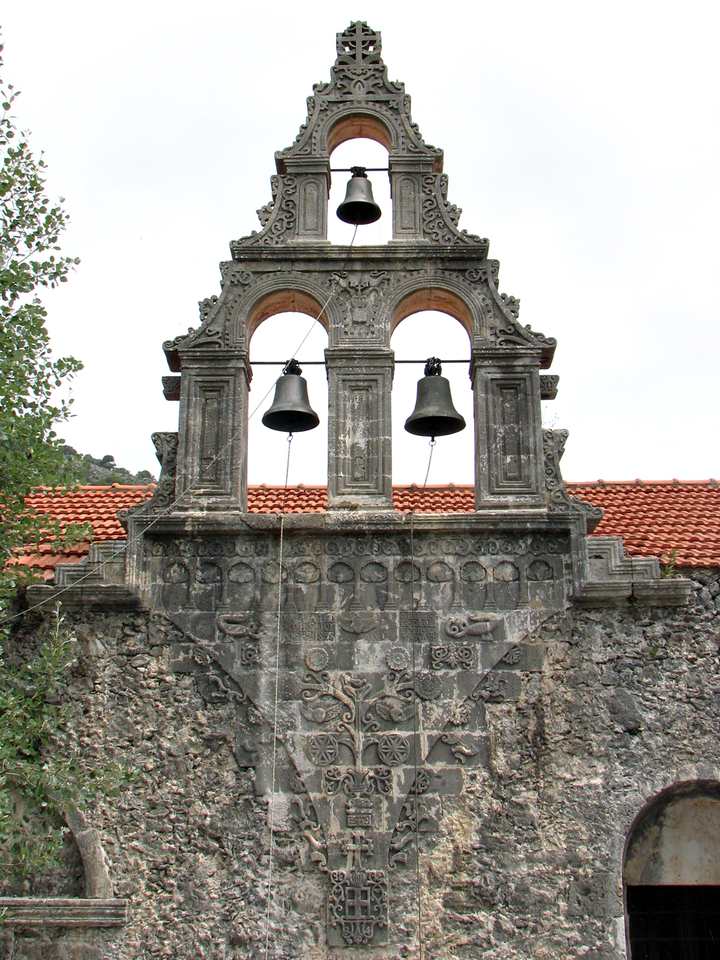
The Kallikratis Gorge is one of the quietest walking ravines in southern Crete, hidden in the Sfakia region on the border of the Chania and Rethymno districts. It runs from the high mountain village of Kallikratis, set on a plateau in the White Mountains, down to the coastal village of Patsianos near Frangokastello. The trail threads a rocky ravine of pines, oaks and wild herbs, passing old stone terraces, sheepfolds and a small chapel on its way to the Libyan Sea. Walkers who want the mountains without the crowds find a wild, solitary route here. Plan your descent, timing and coastal finish with My Greece Tours.
This ravine rewards confident hikers who enjoy rough, unmarked ground and a peaceful descent through unspoilt scenery. An old cobbled kalderimi path and the ruins of shepherds’ huts line the way, giving the walk a lived-in, historic feel. The village of Kallikratis played a part in the wartime resistance and keeps a memorial to it. The sections below cover the trail itself, how it compares to the famous western gorges, the wartime story of the village, and how to pair the walk with a swim below. For the wider picture, our Crete travel guide sets the mountain south in its full island context.
Where is the Kallikratis Gorge in Crete?
The Kallikratis Gorge sits in the Sfakia region of southern Crete, on the border of the Chania and Rethymno districts. It runs between the mountain village of Kallikratis and the coastal village of Patsianos near Frangokastello.
Kallikratis village stands on a high plateau in the White Mountains, well above the Libyan Sea coast that closes the walk. The gorge drops from this upland toward Patsianos, a small settlement near Frangokastello, so the route links high mountain country directly to the shore. This position on the Chania and Rethymno border places it between two of the island’s great walking regions, yet it draws only a trickle of the traffic that the western trails see. Reaching the top usually means a winding drive up from the coast road along the Sfakia shoreline. That climb gains height quickly and opens wide views back over the blue of the Libyan Sea.
The setting rewards travellers scanning the map for things to do in Crete that stay clear of the tour-bus circuit and reward a little effort.
The wider mountain district around the gorge is the heart of Sfakia, a rugged corner of the island known for shepherds, stone villages and a fierce independent streak. The plateau at Kallikratis grazes flocks and grows a scatter of terraced plots, and the ravine below has long carried people and animals between the highlands and the sea. Distances feel large here because the land rises so sharply, and phone signal thins out once you leave the village behind. The nearest fuel and supplies sit down on the coast, so it pays to arrive stocked and ready.
Travellers who base themselves near Frangokastello can reach the trailhead in under an hour, making the gorge a practical half-day out from the coast rather than a remote expedition that needs its own overnight plan.
What is the Kallikratis Gorge hike actually like?
The Kallikratis Gorge hike drops downhill through a rocky ravine of pines, oaks and wild herbs, taking around three hours. It passes old stone terraces, sheepfolds, ruined shepherds’ huts and a small chapel on an ancient cobbled path.
Most walkers tackle the gorge downhill, starting at Kallikratis village and ending near Patsianos and the coast, a descent of roughly three hours at a steady pace. The path threads pines and oaks, brushes past thickets of wild herbs, and follows stretches of old kalderimi, the cobbled mule track that once tied the mountain to the sea. Old stone terraces climb the flanks, and the ruins of shepherds’ huts and sheepfolds mark where flocks once sheltered. A small stone chapel breaks the descent, a quiet place to rest and take in the silence. The ground turns rough and unmarked in places, so this route suits confident walkers who read terrain well.
Anyone weighing up hiking in Crete should treat this as a quiet, self-reliant walk rather than a signposted day trail.
The reward is solitude. The gorge keeps a wild, lonely feel that the busy ticketed trails lost long ago, and walkers can pass a whole morning meeting little more than goats and the odd shepherd. Sturdy footwear matters, since the footing is stony and the markings are thin, and carrying water is essential because there is no kiosk or shade stop along the way. The light shifts as the walls of the ravine open and close, framing glimpses of the Libyan Sea far below. A pair of trekking poles steadies the loose sections and spares tired knees on the long drop.
Hikers hunting genuine hidden gems in Crete rate this descent highly, precisely because it asks a little more of them and hands back a stretch of mountain that still feels untouched and quietly its own.
How does Kallikratis compare to Crete’s famous gorges?
Kallikratis stays far quieter than the famous gorges of western Crete. It has no ticket gate, no crowds and no kiosks, keeping a wild, solitary feel across rough, unmarked ground rather than a busy, managed walking route.
The best-known ravines of the west run on a busy timetable, with entry fees, ranger posts and a steady file of walkers along well-worn paths. Kallikratis works the opposite way. There is no gate and no fee, the markings are sparse, and the sense of being alone in the mountains is the whole point. That freedom comes with a trade: no one is checking on you, the footing is rougher, and you carry your own water and route sense the entire way. The payoff is a mountain that feels wholly yours for a morning, unhurried and unwatched.
A close and gentler alternative in the same district is Imbros Gorge, a shorter and easier Sfakia walk that suits families and first-time gorge hikers who want a taste of the landscape without the solitude and rough ground of Kallikratis.
Choosing between them comes down to what a walker wants from the day. The famous trails deliver dramatic narrows and a guaranteed path, and they earn their fame. Kallikratis trades that polish for peace, handing back a ravine where the only schedule is the light and the only company is livestock and stone. It rewards walkers after a calm, unhurried descent through unspoilt scenery rather than a ticketed, headline experience. The pairing with the coast seals it: few of the celebrated gorges finish so cleanly at a swim in warm sea. That single detail wins the argument for return walkers who come back year after year.
Travellers who value quiet over spectacle, and who trust their own footing, tend to remember this walk longer than the crowded classics that fill the guidebook front pages every summer.
What is the history behind Kallikratis village?
Kallikratis village played a part in the wartime resistance of southern Crete and keeps a memorial to it. The mountain plateau, old stone terraces and shepherds’ huts along the gorge reflect a long pastoral life in the Sfakia highlands.
The village carries a heavy wartime memory. Kallikratis stood with the resistance during the occupation of Crete, and the settlement keeps a memorial that honours that chapter of its past. The high, hard-to-reach plateau that makes the place feel remote today also shaped its role then, giving shelter and cover in the mountains above the coast. The memorial itself is a simple, sober marker, easy to miss yet worth the pause. Walkers who stop at the memorial before starting down read the landscape differently afterwards, seeing the terraces and huts not just as scenery but as the working ground of a community that endured a brutal stretch of history.
The plateau’s isolation, its stone architecture and its long habit of self-reliance all belong to the same story that the memorial marks and the gorge quietly frames below.
Beyond the war, the gorge reads as a record of pastoral life. Old stone terraces step up the slopes where crops once grew, and sheepfolds and ruined shepherds’ huts cluster at the sheltered turns. The cobbled kalderimi shows the labour of hands that laid a road between mountain and sea long before any motor track. This is working country, shaped over generations by flocks and the seasons rather than by tourism. The small chapel on the path speaks to the same rhythm of daily life, a place of prayer for people who lived close to the land. Every ruin along the route adds a line to that story.
Reaching the shore, walkers meet the wartime frontier of Frangokastello, whose Venetian fortress and open beach close the descent with a second layer of Cretan history set right beside the Libyan Sea.
Can you swim at Frangokastello after the gorge?
Yes. The gorge links the high country to the Libyan Sea and ends near Frangokastello, so the walk pairs naturally with a swim below. Warm, calm water and an open sandy shore reward hikers at the foot of the descent.
The finish is the gorge’s quiet masterstroke. The ravine drops from the White Mountains to the coastal plain near Patsianos, a short step from the shore at Frangokastello, where the Libyan Sea runs warm and clear through the long Cretan summer. Walkers step off the rough mountain path and onto open sand, trading dust and stone for a swim that washes off the descent. The contrast between the high, lonely gorge and the bright, easy beach is part of what makes the route so satisfying, and it turns a demanding morning into a relaxed afternoon.
Few mountain walks on the island close so neatly at the water, and fewer still do it without a crowd waiting on the sand at the bottom of the trail.
Planning the swim into the day changes how you pack and time the descent. Setting off from Kallikratis early leaves the hot midday hours for the sea rather than the ravine, and a car left near the coast, or a lift arranged in advance, saves the long climb back up. Sunscreen, water and a change of clothes belong in the pack alongside sturdy boots, since there is little shade until the shore. The beach at Frangokastello is broad and gentle, well suited to a slow recovery swim after three hours downhill. A shaded taverna near the sand serves a late lunch once the swim is done.
Rounding off the walk this way gives the gorge a rare double reward, marrying a wild, solitary mountain descent to an easy, sunlit finish on the Libyan Sea.
Frequently Asked Questions
How long does the Kallikratis Gorge walk take?
The Kallikratis Gorge takes around three hours to walk downhill at a steady pace, from the mountain village of Kallikratis to the coast near Patsianos and Frangokastello. The route drops through a rocky ravine of pines, oaks and wild herbs, so the exact time depends on how often you stop for the old stone terraces, sheepfolds and the small chapel along the way. The ground turns rough and unmarked in places, which slows careful walkers, and the descent is long enough that most people treat it as a half-day outing rather than a quick stroll. Starting early helps, since there is little shade on the trail and the midday heat builds fast in summer.
Confident hikers comfortable with stony, self-reliant terrain will find the pace comfortable, while anyone wanting an easier introduction to the region’s gorges may prefer a gentler, shorter Sfakia walk before attempting this quieter, wilder descent to the Libyan Sea.
Is the Kallikratis Gorge suitable for beginner hikers?
The Kallikratis Gorge suits confident hikers rather than complete beginners. The trail runs over rough, unmarked ground in places, with a stony cobbled kalderimi, loose footing and thin waymarking that asks walkers to read the terrain for themselves. There is no ticket gate, no ranger post and no kiosk, so hikers carry their own water and route sense the whole way, and the wild, solitary feel that makes the gorge special also means little help is close at hand. Sturdy footwear is essential, and a basic head for rough mountain paths matters more than raw fitness.
Beginners keen to experience a Sfakia ravine without the solitude and the rougher ground often start with a shorter, gentler and better-marked gorge nearby, then graduate to Kallikratis once they are used to the terrain. Walkers who enjoy quiet, self-reliant days in the mountains, however, will find this one of the most rewarding descents in southern Crete.
What should I bring for the Kallikratis Gorge?
Bring ample water, sturdy hiking boots and sun protection for the Kallikratis Gorge, because there is no kiosk, no shade stop and little cover along the rough, unmarked descent. A hat, sunscreen and enough drinking water for three hours matter most, since the trail offers no place to refill and the southern Cretan sun is strong through the walking season. Good footwear handles the stony kalderimi and the loose ground where the path fades, and a small pack keeps hands free for scrambling over rougher stretches. Walkers planning to finish with a swim should add a towel, a change of clothes and beach gear for Frangokastello at the foot of the gorge.
A charged phone helps, though signal thins out in the mountains, so telling someone your plan before setting off is wise. Starting early beats the midday heat and leaves the warm afternoon hours free for the Libyan Sea below.