
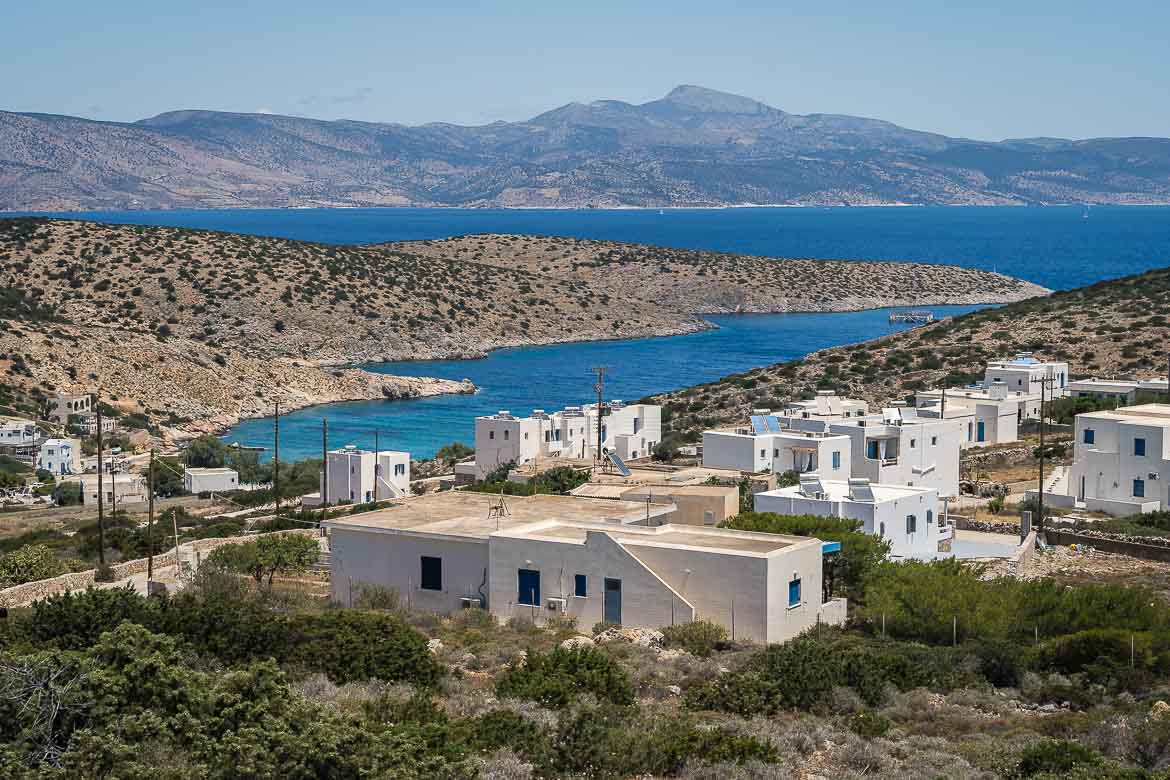
Discover Iraklia Island, Greece, with our expert travel guide. Plan your 3-day trip for serene beaches, scenic hikes, and authentic local charm.
Iraklia Travel Guide: Discover Greece’s Quiet Cycladic Gem — Beaches, Hikes, And How To Plan Your Trip
We’ve fallen for a handful of Greek islands, but Iraklia holds a different kind of charm: no cars honking, no package-tour crowds, just low white houses, wind-sculpted hills, and beaches that feel like private coves. This guide helps us plan a trip to Iraklia with practical details, honest recommendations, and an easy 3-day itinerary for first-time visitors. Whether we’re after lazy beach days, rewarding hikes, or slow evenings in a simple taverna, Iraklia rewards a curious, unhurried approach.
We’ll cover why this little Cycladic island deserves time in our itinerary, when to go, how to get there, where to stay, the best things to do, and tips that actually matter, from cash needs to phone signal. Read on to shape a relaxed trip that favors rhythm and discovery over ticking boxes.
The cruises below sail to Iraklia and the other Small Cyclades from Naxos and Santorini, with swim stops in the bays of the group.
Why Visit Iraklia: What Makes This Island Special
Iraklia isn’t about big attractions: it’s about atmosphere. The island’s appeal is its profound quietness and authenticity. Unlike Mykonos or Santorini, Iraklia (part of the Small Cyclades, near Naxos and Schinoussa) kept much of its traditional island life intact. We find stone chapels, narrow mule-track lanes, and small-scale agriculture, prickly pears, fava, and goats, still shaping daily routines.
What makes Iraklia special for us: intimacy, scale, and the sense that time slows. The main settlement, Hora, is compact and walkable: you can cross the island on foot in a day if you’re keen. There are fewer services, which is actually part of the charm: tavernas close early, shops are modest, and electricity can be limited during peak season, all reminders we’re visiting a working island, not a resort.
We also come for the beaches: crystalline water without the crowds, plus hiking terrain that rewards moderate effort with panoramic Aegean views. If we want a restorative island stay where we can read, swim, and watch changing light with a minimum of planning fuss, Iraklia fits perfectly.
Quick Facts And Practical Overview (Size, Population, Vibe)
Size and geography: Iraklia is small, roughly 18 square kilometers, but topographically varied. Low hills, goat paths, and an indented coastline give the island a pleasantly rugged profile. The highest point is around 420 meters, offering surprisingly broad views for a place this size.
Population and vibe: Permanent residents are few, typically several dozen to a few hundred depending on sources and season, swelling modestly in summer with returning families and independent travelers. The vibe is slow and local: expect barefoot evenings, friendly tavern owners who remember faces, and a relaxed schedule where services open and close around mealtimes.
Infrastructure: Hora is the administrative and social hub, with basic shops, a couple of small supermarkets, and tavernas. There’s limited nightlife, no clubs, no bars blasting music late into the night. Medical facilities are basic: for serious care, we’d plan to transfer to Naxos or the mainland, so travel insurance is sensible.
Who should visit: Couples seeking quiet beach time, hikers who enjoy exploring off-the-beaten-path trails, and anyone wanting a digital detox. Families with very young children may find limited services inconvenient, while travelers expecting big resort comforts will likely be disappointed.
When To Go: Best Months, Weather, And Seasonal Considerations
Peak season runs from late June to early September. That’s when ferries are most frequent, tavernas are reliably open, and the few guesthouses operate at full tilt. We’ll find warm, dry weather and sea temperatures ideal for swimming in July and August, but expect hotter days and slightly stronger meltemi winds in mid-summer.
Shoulder seasons: Late May–June and September–early October are our favorite windows. In these months, the island feels more relaxed, temperatures are pleasant (low-to-mid 20s°C / mid-70s°F), and the sea is warm enough for long swims. Many seasonal businesses either open or remain open after August, but we should verify availability in advance.
Off-season travel (November–April) is possible but limited: many accommodation options close, and ferry schedules shrink considerably. If we don’t mind quieter services and potential ferry cancellations due to weather, the island’s winter solitude can be beautiful.
Practical weather notes: The meltemi (northern wind) can be significant from June to August, great for cooling, but sometimes making sea crossings choppy and certain beaches wind-exposed. If calm swimming is a priority, aim for late May–June or September when winds are milder.
Getting There And Getting Around: Ferries, Connections, And Local Transport
Getting to Iraklia requires a little planning. There are no direct flights; we reach the island by ferry. The main gateway is Naxos, which has frequent ferry links from Piraeus (Athens) and other Cycladic islands: from Naxos, there are regular local ferries to Iraklia, and occasional connections from Schinoussa, Donoussa, and Amorgos.
Ferry tips: Book high-season tickets in advance if we need specific dates, but local ferries are often small, and seats are generally available on short notice outside peak weekends. Beware that ferry schedules change seasonally and can be affected by wind. For the most reliable planning, check updated timetables with Greek ferry operators or local booking sites a few days before travel.
On-island transport: Iraklia’s roads are limited. Hora, Agios Georgios (the main bay), and a handful of small settlements are linked by narrow paved or dirt roads. There’s no formal public bus network like on bigger islands: many visitors walk, rent scooters, or rely on occasional taxis/village jeeps. If we plan to explore multiple beaches and trailheads independently, renting a scooter or quad bike makes sense, but we should be comfortable driving on narrow, sometimes rocky tracks.
Transfers and luggage: Ferries stop at small harbors, pack light where possible, and be ready to carry luggage up short staircases at piers. If arriving late, confirm your accommodation’s check-in policy: some hostels and pensions offer flexible arrival times, but summer delays do happen.
Where To Stay: Villages, Accommodation Types, And Choosing Your Base
Choosing a base depends on how we plan to spend our time. Hora (the island’s main village) is the obvious pick for first-timers: it’s central, walkable, and has tavernas and basic shops. Staying here means easy evening strolls, simple grocery runs, and the chance to soak in everyday island life.
Agios Georgios (Aetos) and Alimia are small bays better suited for beach-focused stays. These spots offer immediate access to water and relaxed mornings, but fewer shops and quieter nights. If our priority is swimming and minimal walking, a guesthouse near Agios Georgios is ideal.
Accommodation types: Expect family-run pensions, renovated stone houses, and a handful of small hotels or studios. Rooms are often simple but clean, with air-conditioning in summer. Luxury options are minimal: Iraklia’s lodging leans toward authentic and affordable rather than boutique.
How to choose: If we want convenience and sociability, pick Hora. For peace, choose a bay-side studio. If hiking and exploring the interior appeals, a central location reduces transfer time to trailheads. Regardless of base, confirm basic amenities, private bathrooms, A/C, and breakfast availability before booking, and ask hosts about ferry pickups if we arrive late.
Top Things To Do On Iraklia
Iraklia’s pleasures are straightforward: beaches, hikes, and slow dining. We’ll outline the essentials, the beaches to prioritize, followed by hikes, villages, and cultural highlights that shape the island experience. Pack sensible shoes, a good hat, and a snorkeling mask: the rest is on island time.
What is the Cave of Agios Ioannis on Iraklia?
The Cave of Agios Ioannis is the largest cave in the Cyclades, a chamber of about 2,000 square metres decorated with stalactites and stalagmites, set in the south-west of Iraklia at the north-western foot of Mount Papas.
The walk from Panagia, the main village of Iraklia, to the cave covers 2.6 kilometres and takes an hour and a half on a marked path. A second trail reaches it from the Averou area in 45 minutes. Near the entrance lies a smaller cave that islanders call the Cave of the Cyclops. Bring a torch and shoes with grip: the entrance is narrow, and the floor inside is uneven and damp.
The cave is also a place of worship. Each year, on the eve of the feast of the Beheading of Saint John on 29 August, the people of Iraklia climb to the cave, light candles among the stalactites and celebrate the saint inside the rock. Outside the feast, the cave stays open to walkers, and the view from the path over the south coast of Iraklia repays the climb.
Which hiking trails cross Iraklia?
Iraklia has eight marked trails laid out on old paths, from a 30-minute walk to Selladi to the 1.5-hour routes to the Cave of Agios Ioannis, plus two paved roads that walkers use between Panagia, Livadi and the port of Agios Georgios.
The trails of Iraklia, with distance and walking time:
- Panagia to the summit of Papas: 2 km, 1 hour, to the highest point of Iraklia at 420 metres.
- Panagia to Ftero Merichas: 1.5 km, 45 minutes, to the cliffs above Merichas bay.
- Panagia to the Cave of Agios Ioannis: 2.6 km, 1.5 hours.
- Agios Athanasios to Selladi: 1 km, 30 minutes.
- Agios Athanasios to Averou: 3.4 km, 1.5 hours.
- Averou to the cave: 1.5 km, 45 minutes.
- Agios Georgios to Agios Athanasios: 2.9 km, 1 hour.
- Agios Georgios to Voreini Spilia: 1.3 km, 30 minutes, to a cove on the north coast.
Two paved roads complete the network of Iraklia: 4.5 kilometres from the port of Agios Georgios past Livadi to Panagia, and 2.3 kilometres from Panagia down to the beach of Tourkopigado. Start early in summer, carry water, and wear a hat, because the paths of Iraklia have almost no shade.
What is the history of Iraklia?
Iraklia was settled by 3000 BC within the Early Cycladic culture, served as a hideout for pirates under Ottoman rule, belonged for generations to the Monastery of Hozoviotissa on Amorgos, and was resettled from 1826 by farmers from Aegiali on Amorgos.
Remains of ancient settlements and graves survive across Iraklia. Above the bay of Livadi stands a fortress of the historical period, and the ground around it has produced finds reaching back to the Neolithic age. In later centuries the caves and coves of Iraklia sheltered pirates and smugglers, and bay names such as Tourkopigado still recall them.
In the 16th century the island, then called Irakleitsa, formed part of a patriarchal exarchy; in 1646 it passed to the Archdiocese of Sifnos. By the late 18th century Iraklia served the Monastery of Hozoviotissa on Amorgos as grazing land. From 1826 settlers from Aegiali cleared the fields, and in 1831 the monastery signed a ten-year contract with them, sharing the harvest half and half. Iraklia counted 227 residents in 1940 and 151 in 2001.
Which birds and wildlife live on Iraklia?
Iraklia is a haven for birds: 175 species had been recorded on the island by the end of 2010, 26 of them birds of prey, including the griffon vulture, Eleonora’s falcon and Bonelli’s eagle, which nest on its eroded sea cliffs.
The vertical cliffs of Iraklia, cut by erosion into ledges and hollows, give raptors safe nesting sites. The cliffs above Merichas bay on the south-east coast drop 100 metres into the sea, and the bay itself is a sheltered anchorage in westerly and northerly winds. Walkers on the Ftero Merichas trail see the falcons hunting along this coast in late summer and autumn.
The land of Iraklia supports the island’s farming life: cheeses, goat, lamb and pork, fava and thyme honey are its main products. Deposits of emery and iron ore and springs of fresh water have also been found on the island, and two springs rise at Merichas below Mount Papas.
What are the villages of Iraklia, and what is the Hydriada?
Iraklia has two living villages, Panagia at the foot of Mount Papas and the port of Agios Georgios, plus the near-empty hamlet of Agios Athanasios; the Hydriada, the first autonomous floating wind turbine with a desalination unit, began work in its port bay in June 2007.
Each village of Iraklia takes its name from its church. The church of Panagia, dedicated to the Presentation of the Virgin, was begun in 1919, built up to 1930 and completed in the 1980s. The church of Agios Georgios is older, dated to 1834 and renovated in 1987. At Agios Athanasios in the west, the houses have given way to sheepfolds, but the street plan still shows the Cycladic layout of the old hamlet.
The Hydriada combines wind and solar power to turn seawater into drinking water, the answer Iraklia found to the summer water shortages of the island. For the other islands of the group, see our Donousa page and our guide to the Small Cyclades from Naxos.
Practical Tips For Travelers: Money, Safety, Food, And Connectivity
Money and payments: Bring some cash. Many small tavernas and shops accept cards sporadically or have minimums: ATMs are not guaranteed on the island, so we should withdraw cash in Naxos or bring euros. Tipping is appreciated but modest; rounding up or leaving 5–10% in tavernas is fine.
Safety and health: Iraklia is safe for independent travel. Basic first-aid supplies and any personal medications are essential. Pharmacies may be absent, so carry enough prescription medicine for the stay. In case of a medical emergency, the nearest better-equipped centers are on Naxos or the mainland.
Food and dining: Taverna cooking focuses on fresh fish, grilled meats, grilled vegetables, and classic Greek staples like Greek salad, fava, and grilled octopus when available. Dining is relaxed, meals often start later in the evening, and portions are generous. If we have dietary restrictions, mention them politely: small kitchens are often flexible.
Connectivity: Expect intermittent mobile signal and spotty Wi‑Fi in some accommodations. If we need reliable work connectivity, confirm signal strength with our host before booking or plan a base in Naxos for guaranteed broadband.
Sustainability and etiquette: Respect local rhythms, keep noise down at night, avoid littering, and use water sparingly (island water is limited). If we rent vehicles, drive slowly and watch for goats and pedestrians.
Sample 3-Day Itinerary: Relaxed Pace For First-Time Visitors
Day 1, Arrival, Settling In, and a Gentle Introduction (Morning–Evening)
- Morning: Arrive from Naxos and walk the pier into Agios Georgios. Drop bags at our accommodation and take a short walk along the water to stretch out after the ferry.
- Lunch: Sit at a seaside taverna for grilled fish and a Greek salad: we’ll keep things simple.
- Afternoon: Spend a few hours at Livadi or Psili Ammos, swim, snorkel, and read under an umbrella.
- Evening: Return to Hora for a stroll and dinner. Watch the island settle into the night: grab a small pastry or a glass of local wine.
Day 2, Hike, Village Life, and Sunset (Full Day)
- Morning: Early hike from Hora toward the island’s eastern high point. Bring water, a hat, and a packed snack. The climb should take a few hours round-trip, depending on our pace.
- Lunch: Return to Hora for a late lunch: try local dishes like fava or grilled goat if available.
- Afternoon: Explore side trails, visit small chapels, or relax at a quieter bay.
- Evening: Head to a western vantage for sunset, then dinner at a family-run taverna. Ask hosts for recommendations on fresh-caught fish.
Day 3, Beach-Hopping and Departure (Morning–Afternoon)
- Morning: Check out early and leave luggage with the guesthouse if needed. Spend the morning at Almyriki or Melanes for calm water and snorkeling.
- Lunch: Picnic or taverna meal near the harbor. Savor a last swim if time allows.
- Afternoon: Collect luggage and catch the ferry back to Naxos (or the next island). Allow buffer time for ferry delays and last-minute changes.
Practical timing notes: Ferries can be delayed by wind, so avoid tight same-day connections for flights. We recommend at least three nights if we want a relaxed experience: four or five nights let us explore farther and accommodate weather variability.
Final thoughts and quick checklist: passports/ID, ferry confirmations, euros in cash, comfortable walking shoes, reef shoes, snorkeling mask, sun protection, basic meds, and a lightweight daypack. With that sorted, we’ll be set for a peaceful, restorative stay on Iraklia.
Iraklia Travel Guide FAQs
What makes Iraklia Island special compared to other Greek islands?
Iraklia offers a serene, authentic island experience without crowds, featuring quiet beaches, traditional island life, and a slow pace, unlike busier destinations like Mykonos or Santorini.
When is the best time to visit Iraklia for warm weather and fewer tourists?
Late May to early June and September to early October are ideal for pleasant temperatures, warm sea, and a relaxed atmosphere with fewer tourists.
How can I get to Iraklia Island, and are there direct flights available?
There are no direct flights to Iraklia; visitors typically take a ferry from Naxos, which connects to Piraeus and other Cycladic islands.
What are the recommended activities for a first-time visitor to Iraklia?
Top activities include relaxing on quiet beaches, hiking to panoramic viewpoints, exploring Hora village, and enjoying fresh local dining at tavernas.
What accommodation options are available on Iraklia, and where should first-timers stay?
Iraklia offers family-run pensions, stone houses, and small hotels. First-time visitors should stay in Hora for convenience and easy access to amenities.
Is Iraklia suitable for travelers seeking nightlife and extensive services?
No, Iraklia has limited nightlife with no clubs or late-night bars, and services are basic, making it ideal for travelers wanting peace and authenticity rather than resort comforts.
Find more experiences in My Greece Tours: