
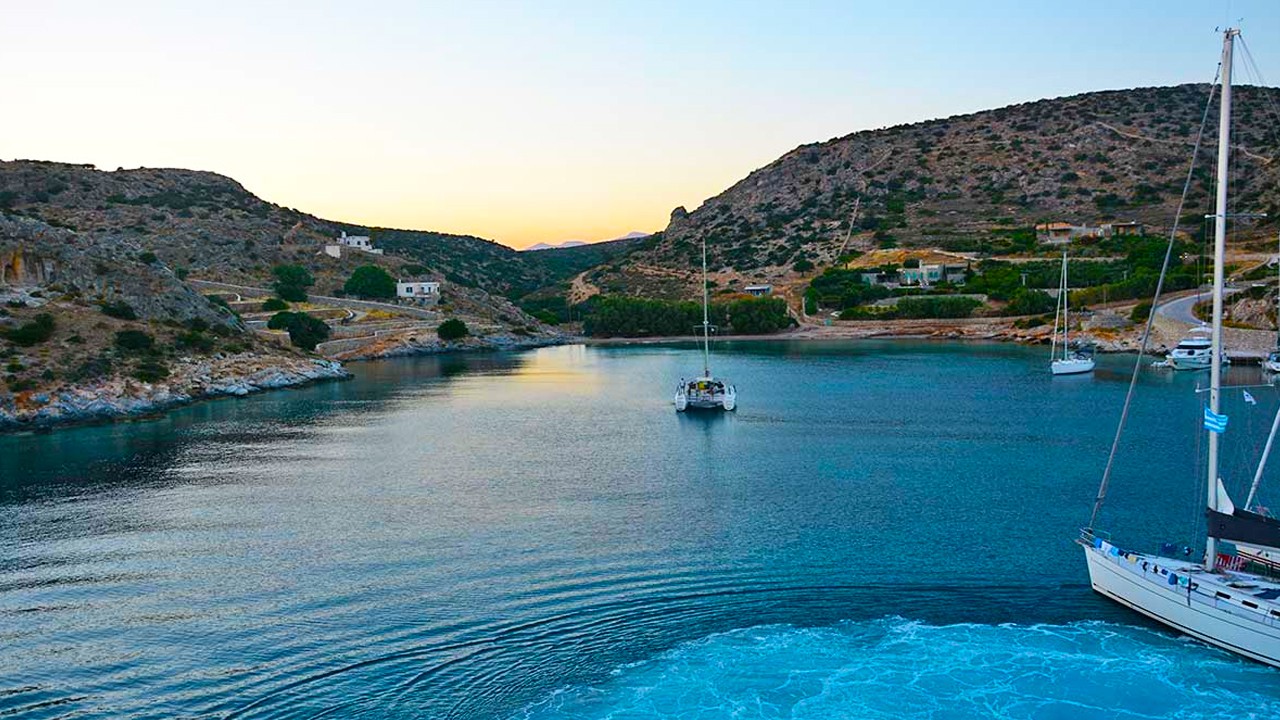
Explore Schinoussa Island with our travel guide: discover quiet beaches, authentic tavernas, scenic hikes, and easy island-hopping from Naxos and Ios.
Schinoussa Travel Guide: Explore Greece’s Untouched Cycladic Gem
Tiny, sun-baked, and deliciously undiscovered, Schinoussa is the kind of island that makes you want to slow down, breathe, and reorder your priorities. In this Schinoussa travel guide, my Greece tours show you why this small Cycladic isle, nestled between Naxos and Ios, has become a favorite for travelers who want authentic island life without the crowds.
Whether you’re planning an island-hopping route through the Greek islands, looking for quiet beaches after Santorini or Mykonos, or plotting a private, small-group Greece tour with a local twist, Schinoussa offers crystal waters, tavernas that feel like family, and walking paths that reward curiosity.
We’ve visited, tested routes, tasted the menus, and mapped the best beaches, hikes, and practical travel tips to help you add Schinoussa to your Greece itinerary. Read on for quick facts, top things to do, where to stay, and exactly how to get here with minimal fuss.
The cruises below stop at Schinoussa on routes through the Small Cyclades from Paros, Santorini and Koufonisia.
Why Visit Schinoussa: The Island’s Appeal And Quick Facts
Schinoussa’s appeal is straightforward: it’s small (about 8 square kilometers), low-key, and unapologetically Cycladic, with whitewashed houses, blue shutters, and a coastline that slides straight into the Aegean. But beyond looks, there’s an atmosphere many of the more famous islands have lost: quiet evenings, night skies thick with stars, and an approachable, unhurried pace.
Quick Facts
- Location: South of Naxos, north of Koufonisia and Ios, perfect for island hopping.
- Size & Population: Tiny, with only a few hundred year-round residents, so services are seasonal.
- Best for: Couples, solo travelers, small-group tours, and anyone wanting to escape tourist crowds.
- Language: Greek is the official language; English is widely understood in the tourism season.
- Currency: Euro (we’ll cover money tips later).
Why we recommend Schinoussa
- Genuine local life: Schinoussa retains working fishing families, small farms, and tavernas run by locals rather than franchises. That means frescoed menus, catch-of-the-day meals, and warm conversation over raki.
- Peaceful beaches and clear water: Beaches here are intimate, some are pebbly, others sandy, but most have remarkably clear water and minimal development. If your idea of a perfect beach day is tranquility rather than a beach party, this is your place.
- Easy island-hopping add-on: For travelers doing Greek islands tours or crafting a 7–10 day itinerary through the Cyclades, Schinoussa is an ideal low-key stop between busier islands like Naxos, Ios, and Santorini.
- Active but relaxed: There are short hikes, scenic coastal walks, and snorkeling opportunities. We found the hiking to be rewarding without requiring specialized gear, good for small group tours and families who want light adventure.
- Authentic food scene: Simple, seasonal cooking shines here. Expect tomato keftedes (fried tomato balls), local fish, fresh salads, and island cheeses, paired, of course, with Greek coffee and sweet loukoumi when appropriate.
When to consider Schinoussa on a Greece trip
- If you’re planning island hopping in Greece and want a quieter contrast to Santorini or Mykonos, add Schinoussa for 2–3 nights.
- If you prefer small group cultural tours or private tours in Greece that emphasize local life and cuisine, Schinoussa provides that intimate layer most packages miss.
- If your travel dates are flexible, aim for late May–early October. July and August are busiest (still low-key compared to major islands), while June and September offer the best balance of weather and fewer crowds.
A note on expectations
Schinoussa isn’t about luxury resorts or nightlife. It’s about seaside tavernas, walking to hidden coves, and sleeping to the sound of waves. We find that travelers who want an authentic, restful Greek island experience leave Schinoussa surprised at how refreshed they feel after just a couple of days.
Where is Schinoussa, and why is it one of the driest places in Greece?
Schinoussa lies in the middle of the Lesser Cyclades, south of Naxos and between Iraklia and Koufonisia; it covers 8.5 square kilometres, counted 229 residents at the 2021 census, and receives about 240 millimetres of rain a year, among the lowest totals in Greece.
The National Observatory of Athens classes the climate of Schinoussa as hot semi-arid, less than 50 millimetres of rain short of a desert climate. Winters are mild and summers are hot and dry. The highest point, Mylos, rises only 133 metres, so the island has no mountains, only low hills above its coves.
Schinoussa is the fourth-largest island of the Lesser Cyclades and second in population after Ano Koufonisi. It belongs to the Municipality of Naxos and the Lesser Cyclades. Its three settlements are close together:
- Chora: the capital, also called Panagia after the church of Panagia Akathi, built on a hill 1.2 kilometres from the port.
- Mesaria: the second village, 3 kilometres from Chora, known for its church of the Evangelistria.
- Mersini: the port, a deep bay that ranks among the safest small-craft shelters in the Aegean, 7 to 8 hours by ferry from Piraeus.
Schinoussa sits a short hop from its neighbours, so it pairs naturally with Iraklia and the rest of the group; our guide to the Small Cyclades from Naxos plans the whole chain.
What is the history of Schinoussa?
Schinoussa has been inhabited since antiquity, keeps ruins of ancient Greek, Roman and Byzantine buildings and a small medieval castle, and from the 11th century belonged to the Monastery of Hozoviotissa on Amorgos, which owned the island for generations.
The origin of the name is debated. One tradition ties Schinoussa to the schinos, the spiky rush that grows across the island; another links it to a Venetian lord named Schinoza, and a third to the ancient name Echinousa. Whatever its source, the name has stayed in use since antiquity, when the island was recorded as Schinoussa.
Pirate raids shaped the island. To watch the sea, the islanders built Chora on a hill inland rather than on the shore, and the houses kept the plain Cycladic form that still lines its lanes. The ties to Amorgos run deep: the Monastery of Hozoviotissa held the island’s land from the 11th century. Today the people of Schinoussa live from farming, livestock, fishing and a quiet summer tourism, and the island counts 15 beaches; from the port the coast runs past Mersini, Tsigouri, Livadi, Lioliou, Psili Ammos, Almyros and Fikio.
Dirt tracks lead to the outer beaches, which keeps the road network of Schinoussa small and the traffic light, and the walks between Chora, Mesaria and the coves follow the same tracks. In church matters the island belongs to the Holy Metropolis of Thira, Amorgos and the Islands, within the district of Amorgos, a last link to the monastery that once owned all of Schinoussa.
Top Things To Do, Best Beaches, Food, and A Mini Itinerary
We’ll break this into the essentials: beaches, activities, where to eat, and a compact itinerary you can adapt if you’re island hopping or staying longer.
Best Beaches (our picks)
- Tsigouri Beach: A soft-sand, family-friendly beach with clear shallow water, ideal for mornings when the sea is mirror-calm. It’s near the main settlement, making it convenient for a quick swim between exploring.
- Livadi Beach: Slightly pebbly and quieter, Livadi rewards snorkelers with interesting rock formations and small coves. We liked swimming here late afternoon when the light made the sea glow.
- Psili Ammos (Golden Sand): A classic name on many Greek islands, the sand is finer and more golden here. It’s a postcard-perfect spot, calm and great for sunbathing.
- Kalotaritissa & Mersini: These are smaller, more isolated coves that feel like private beaches. Access can be on foot or by small boats, perfect if you want a solitary beach day.
Top Activities
- Snorkeling and swimming: The water clarity is excellent, and we frequently saw colorful fish near the rocks. Bring reef shoes if you plan to enter rocky coves.
- Coastal walks: Trails between the villages and beaches offer panoramic views. Pack water, a hat, and good shoes; some paths are stony.
- Boat trip: Join a local boat for a half-day cruise to nearby islets or to reach secluded beaches only accessible by water. Small boat tours often include snorkeling stops and a fresh grilled fish picnic.
- Cultural stop: Visit the tiny main village (Chora) to wander alleys, ring the church bell, and chat with locals. The island’s small archaeological finds and local stories give texture to the place.
- Nightlife: Expect modest nightlife, mainly tavernas with live music on special nights. It’s more about relaxed evenings than late-night parties.
Food & Where to Eat
Schinoussa’s food scene is small but memorable. Taverna’s focus on fresh, seasonal ingredients: much of what we ate felt home-cooked and sincere.
- Must-try dishes: Fresh grilled fish (ask for the catch of the day), tomato keftedes, caper salads, fava (split pea purée), and local cheeses. Finish with a slice of revani (semolina cake) or Greek yogurt with honey.
- Recommended spots: There are family-run tavernas in Chora and along the waterfront; look for places with locals (always a good sign). If you’re on a private or small-group tour with a guide, ask them which family-run spot is serving that day’s special.
Mini Itinerary (2–3 days)
Day 1: Arrival and Chora
- Morning: Arrive by ferry, check into your guesthouse, and have a light lunch.
- Afternoon: Walk Chora’s lanes: relax at Tsigouri Beach. Swim and watch the light shift.
- Evening: Dinner at a seaside taverna, try the grilled fish and a local salad.
Day 2: Beach-hopping and boat trip
- Morning: Early breakfast: head to Psili Ammos for a sunrise swim.
- Midday: Join a half-day boat trip to small coves for snorkeling and a seaside lunch.
- Afternoon: Hike a coastal trail or nap at your accommodation.
- Evening: Sample small-plate meze at a family-run taverna: chat with locals about island life.
Day 3: Slow morning and departure (or extra adventures)
- Morning: Coffee and pastries in Chora: if you have time, visit a nearby chapel or take a short hike.
- Midday: Depart for your next island or mainland connection.
If you have more time
Stretch your stay to 4–5 days to include early-morning walks, extended boat trips to neighboring islets, and leisurely long lunches. We especially recommend combining Schinoussa with Naxos, Koufonisia, or Ios on an island-hopping route; each offers a contrasting energy: Naxos’ agricultural landscapes, Koufonisia’s clear lagoons, and Ios’ livelier evenings.
Tips for experiences and tours
- Private tours: A local private boat or guided walking tour gives more flexibility, great for those looking for a tailored Greek island experience.
- Small-group cultural tours: Many small-group tours that include lesser-known islands add a cultural element, cooking classes, farm visits, or local storytelling, which enrich the visit.
- Bookings: In high season, reserve your boat trips and preferred tavernas for dinners. We found that late-evening tables are easier to secure if you arrive earlier in the day and ask the owners directly.
Getting There And Practical Travel Tips
We’ve split this into how to reach and how to manage your time, money, and local customs once you arrive. Practicalities matter, especially on a small island with seasonal services.
How To Reach Schinoussa And Get Around The Island
Ferry options
- From Athens (Piraeus): There’s no direct high-speed line every day: most travelers connect via Naxos or Koufonisia. A typical route is Athens → Naxos (or Ios) → Schinoussa. Ferries vary by season. Expect journey times to range from 3–6 hours, depending on connections and whether you choose a conventional or high-speed ferry.
- From Santorini or Mykonos: There are seasonal connections, often via Naxos or Ios. If you’re island hopping, we suggest plotting Schinoussa between Naxos and Ios on your route for smoother transfers.
- From nearby islands: Koufonisia and Ios have the shortest sea links: Koufonisia, in particular, is a quick hop and makes for a convenient multi-island day or overnight trip.
Booking ferries
- Use reputable booking platforms or book through local agents. During July–August, book at least a few days to a week in advance. For shoulder seasons, same-day bookings can work, but expect limited schedules.
Arriving by private boat or charter
- Many travelers reach Schinoussa via private charter or small boat tour. There are mooring spots and sheltered coves: local captains know the best secluded beaches and snorkeling sites.
Getting around on the island
- Walking: Chora and nearby beaches are walkable. We loved exploring on foot, you see details buses miss.
- Scooters / ATVs: Popular and convenient for short distances: hire from the main village. Drive carefully, roads can be narrow and sometimes unpaved.
- Car rentals: Limited availability and often unnecessary unless you plan extensive exploring. If you rent, check insurance and road conditions.
- Local bus/taxi: Very limited: taxis may not be available at all times. If you rely on a taxi for a scheduled ferry connection, arrange it in advance.
Practical tips for transport
- Fuel & service: If you rent a vehicle, note that fuel stations may be absent; confirm refill options before heading out.
- Luggage handling: Ferries sometimes load/unload manually. Pack smart and keep essentials in a small daypack for quick disembarkation.
Where To Stay, When To Visit, Local Customs And Money Tips
Where to stay
- Chora: Our preferred base, close to tavernas, bakeries, and Tsigouri Beach. Guesthouses and small hotels are the norm: expect family-run accommodations with personalized service.
- Beachside rooms: Several guesthouses and studios sit near beaches for direct sea access. These are quiet and excellent for early morning swims and sunset watching.
- Booking advice: Because options are limited, book early in July–August. For June and September, you’ll find last-minute availability, but still check trusted platforms or local contacts.
When to visit
- Best months: June, September, warm sea, fewer crowds, many services open.
- Peak: July–August, liveliest, but still calm compared to major islands: book transport and lodging early.
- Off-season: November–April, most tourist services close: locals remain, but infrastructure is minimal.
Local customs and respectful behavior
- Dress and church visits: Dress modestly when visiting chapels and churches; covering shoulders and knees is appreciated.
- Tipping: Service is included in many bills, but we usually leave 5–10% for good service, rounding up for taxi drivers and exceptional tavernas.
- Conversation: Greeks are warm and hospitable. A few Greek phrases go a long way: “Kalimera” (good morning), “Efharisto” (thank you), and “Yamas” (cheers).
Money tips
- Cash vs card: Many tavernas and smaller shops accept cards, but some family-run spots prefer cash. Carry enough euros for meals and small purchases; ATMs are limited.
- ATMs: There may be only one ATM or none at all during the low season. Withdraw cash before arrival when possible.
- Prices: Expect modest prices relative to Santorini/Mykonos, though imported goods can be pricier due to transportation costs.
Safety and health
- Sun protection: The Aegean sun is strong; bring sunscreen, a hat, and a reusable water bottle.
- Water: Tap water is potable on many Cycladic islands, but if you prefer bottled water, it’s easily available.
- Medical facilities: Schinoussa has limited medical services; for anything beyond minor care, ferries to larger islands or transfers to a mainland hospital may be necessary. Carry basic meds and travel insurance that covers island evacuations if needed.
Connectivity
- Wi‑Fi & mobile: Many guesthouses offer Wi‑Fi; signal strength may be weaker than in major islands. If connectivity matters, arrange accommodations that advertise reliable internet.
Practical packing checklist (brief)
- Lightweight clothing, swimwear, reef shoes, sturdy sandals for trails
- Small daypack, refillable water bottle, sunscreen, hat
- Basic first-aid, any prescription meds, photocopies of travel documents
- Cash in euros and a card with low foreign transaction fees
Accessibility notes
- Mobility: The island’s terrain and narrow lanes make it less accessible for travelers with limited mobility. If accessibility is essential, contact accommodations in advance to confirm facilities and assistance.
Conclusion
Schinoussa is a reminder that some of the best Greek island experiences aren’t measured in nightlife or landmark sunsets but in leisurely swims, welcoming tavernas, and the luxury of space to think. For travelers building a Greece itinerary, whether on an island-hopping route, a private guided tour, or a small-group cultural trip, Schinoussa adds a restorative, authentic chapter.
We recommend 2–4 nights here: enough time to unwind, explore a few beaches, and savor island life. Book ferries thoughtfully, bring some cash, and leave room in your schedule to simply sit, watch the sea, and plan your next Greek adventure.
Schinoussa Travel Guide FAQs
What makes Schinoussa a unique destination in the Greek islands?
Schinoussa offers an authentic Cycladic experience with its small size, peaceful atmosphere, local tavernas, clear beaches, and no crowds, perfect for travelers seeking tranquility and genuine island life.
When is the best time to visit Schinoussa for good weather and fewer tourists?
The best time to visit Schinoussa is from late May to early October, with June and September providing the ideal balance of pleasant weather and fewer crowds.
How can I get to Schinoussa from Athens or nearby islands?
Travelers usually reach Schinoussa via ferry by connecting through Naxos or Koufonisia; routes from Athens typically take 3–6 hours, while seasonal connections are available from Santorini, Mykonos, and nearby islands like Koufonisia and Ios.
What are the top beaches to visit on Schinoussa?
Top beaches include Tsigouri for families, Livadi for snorkeling, Psili Ammos for golden sand and sunbathing, plus secluded coves like Kalotaritissa and Mersini, ideal for private beach days.
Are there any recommended activities or tours on Schinoussa?
Visitors can enjoy snorkeling, coastal hikes, boat trips to nearby islets with snorkeling stops and grilled fish picnics, as well as cultural experiences like exploring Chora village and local storytelling tours.
What should travelers know about money and payments when visiting Schinoussa?
While many tavernas accept cards, some family-run spots prefer cash. ATMs are limited, so it’s advisable to bring enough euros and withdraw cash before arrival for meals and small purchases.
Find more experiences in My Greece Tours: