
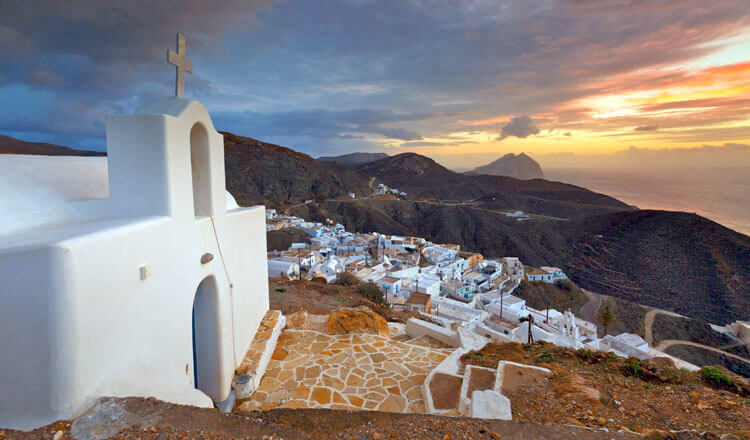
Discover Anafi Island, Greece, with our travel guide featuring quiet beaches, scenic hikes, and authentic local experiences for your perfect island getaway.
Anafi is one stop among the islands and mainland sights covered by Greece Tours, from ferry routes to guided walks.
Anafi Island Escape: The Complete Travel Guide To Greece’s Hidden Gem
We’ve long loved chasing quieter Greek islands that feel like discoveries rather than destinations everyone has ticked off a list. Anafi is one of those rare finds: tiny, rugged, sun-drenched and defiantly low-key. Located east of Santorini in the Cyclades, Anafi rewards visitors with dramatic cliffs, almost empty beaches, a handful of friendly tavernas, and hiking routes that end at ancient chapels with 360° sea views.
This Anafi travel guide lays out the quick facts, how to get there, practical tips, and our recommended things to do, including a compact 3-day itinerary designed for travellers who want authentic island time without the crowds. Whether you’re fitting Anafi into an island-hopping Greece tour from Athens or looking for a quiet base after Santorini or Mykonos, we’ll help you plan smartly so you get the most from this understated gem.
Why Visit Anafi? Quick Facts And What Makes It Special
Anafi feels like the Cyclades before tourism scaled up: slow mornings, working fishing boats, and a village that hasn’t been overbuilt for Instagram. Quick facts help set expectations. Anafi (population ~270) is situated about 20–30 nautical miles east of Santorini and belongs to the Thira regional unit together with Santorini and Thirassia. Limestone cliffs, scrubby plateaus, and a striking volcanic ridge define the island’s landscape. It’s known for long pebbled beaches, remote coves, and a network of footpaths linking chapels, watchtowers, and ancient ruins.
What makes Anafi special is the combination of scale and character. You won’t find five-star hotels or big yacht marinas: you’ll find small family-run pensions, simple tavernas, and locals who still fish and farm. The main village (Chora) perches on a hillside above the port, while the monastery of Panagia Kalamiotissa crowns the summit of Mount Kalamos at the eastern end of the island, a dramatic silhouette against the sky that’s visible from miles away. Hikes to the monastery and the island’s highest point, Mt. Kalamos (the reward is sweeping sea views), are among the best ways to experience Anafi’s raw beauty.
For travellers who book Greece tours, Anafi is a smart add-on for island-hopping itineraries that prioritise authenticity over nightlife. It’s ideal for couples seeking quiet beaches, small groups wanting outdoor walks and a touch of history, and cultural travellers who appreciate low-impact tourism. Practically: electricity and mobile service are reliable in Chora and places nearby, but expect fewer amenities in remote spots. If you want tranquillity, warm hospitality, and landscape-driven days, Anafi is one of the Cyclades’ best-kept secrets.
Getting There And Practical Tips
Getting to Anafi takes a little planning, but that’s part of its appeal. The island is reachable by regular ferry connections from Santorini and by more occasional services from other Cycladic islands and Piraeus (Athens). Ferries vary by season and vessel type, so timing and pets/vehicle transport rules differ. We’ll break down the main routes and share practical tips to make your trip smooth, whether you’re integrating Anafi into a broader Greece tour or visiting as a stand-alone stop.
Ferry Routes, Tickets, And Transfers
Most visitors arrive via ferry from Santorini: the trip takes roughly 1–2 hours, depending on whether you catch a conventional car ferry or a faster high-speed vessel (the latter can be more weather-dependent). In high season (June–Sept), there are more frequent connections and occasional direct services from Naxos or Ios. From Piraeus, ferries are less frequent and usually involve an overnight sea journey.
Booking: We recommend reserving tickets in advance for July–August when ferries can sell out, especially if you’re carrying a car or want assigned seating. Use reputable booking platforms or the ferry operator’s site, and confirm the vessel type. Transfers on arrival are simple: Anafi’s small port has a few taxis and mototaxis, but many hotels arrange pickups: check before you travel. If you’re island-hopping from Santorini or Naxos, allow time for ferry delays and add a buffer when booking onward flights from Athens.
Practical on-island transport: Anafi has a modest bus service in summer that links Chora, the port and main beaches. Renting a scooter or quad is the most flexible way to explore, but roads are narrow, and some routes are better suited to 4x4s. Bring good walking shoes: many paths are stone or uneven, and signage is basic. Cash is useful; small cafés and remote accommodations may not accept cards consistently.
Best Time To Visit, Weather, And What To Pack
We recommend visiting Anafi in late May–early July or September–early October for the best balance of sunshine, quieter beaches and fully open services without high-season crowds. July and August are the hottest and busiest: expect stronger Meltemi winds in July that can make some sea conditions choppy (and affect ferry schedules). Winter is very quiet with limited ferry service and many businesses closed.
Weather: summers are reliably dry and warm, with daytime highs commonly in the mid to high 20s°C (mid-70s to mid-80s°F). Spring and autumn are milder and excellent for hiking.
What to pack: lightweight clothes, sun protection, a windproof jacket for evenings and exposed ridges, sturdy walking shoes, a reusable water bottle (water taps exist, but carry some bottled water for remote hikes), a small first-aid kit, and a universal plug adapter. If you plan to rent a scooter, a light riding jacket and closed shoes are a good idea. Bring a daypack and headlamp if you want to visit chapels at sunrise or hike early. Finally, a small amount of cash will keep things frictionless.
What To Do, Where To Stay, And A Sample 3-Day Itinerary
Anafi is compact but richly rewarding: days here revolve around beaches, hikes, simple food, and slow afternoons in tavernas. Below, we cover standout activities, accommodation suggestions for different travel styles, and a practical 3-day itinerary that showcases the island’s highlights without rushing.
What to do
- Hike to the Monastery of Panagia Kalamiotissa and the high ridge: The path up Mount Kalamos from the Zoodochos Pigi monastery offers a dramatic panorama over the Aegean. Time it for sunrise or late afternoon light.
- Explore Klisidi and Roukounas beaches: Klisidi is a long, windswept pebbly beach ideal for walks; Roukounas is a sandier bay with shallow water, and both are usually quiet. Some hidden coves are reachable by boat or on foot.
- Visit the ancient acropolis of Kastrós and the ruins scattered across the island: You’ll find remnants of Hellenistic walls and traces of older settlements.
- Swim and snorkel: Water is clear: rocky bottoms near coves are good for spotting small marine life. Bring water shoes in some spots.
- Dine and sip local wine: Family-run tavernas serve fresh fish, grilled meats, and simple island produce. Try capers, local herbs, and the oft-sunny salad.
- Boat trips and island-hopping: Private or small-group boats can take you to secluded bays, and a day trip to Santorini is feasible if you want a sharp contrast, but we recommend staying longer to soak up Anafi’s calm pace.
Where to stay
- Budget-friendly pensions: Small pensions in Chora and near the port offer clean rooms and friendly hosts, perfect if you want to keep travel costs down and meet locals.
- Mid-range guesthouses: Family-run units with terraces, breakfasts and occasional sea views. These suit couples and small groups who want comfort without luxury.
- Small luxury retreats: Options are limited but growing, a few boutique stays emphasise seclusion, design and tailored experiences. Book well in advance in summer.
Sample 3-Day Itinerary (paced, not rushed)
Day 1, Arrival, Chora stroll & sunset at the monastery
- Arrive by ferry and drop bags at your accommodation. Spend the afternoon wandering Chora’s narrow alleys, visiting small shops and stopping at a kafeneio. Hike up to Panagia Kalamiotissa for sunset; the light across the caldera-like horizon is unforgettable.
Day 2, Beaches and archaeology
- Morning: Head to Roukounas for a relaxed swim and a late breakfast at a beachfront taverna. Midday: Visit the archaeological remains at Kastrós and then drive or walk to Klisidi for a long walk and photos. Evening: Choose a family-run taverna in Chora for grilled fish and local wine.
Day 3, Full-day hike or boat excursion
- Option A (land): Tackle the longer ridge hike toward Mt. Kalamos, pack water and snacks, and enjoy sweeping views: return for a restorative dip. Option B (sea): Book a local boat to explore hidden coves and snorkel: this is ideal if you want to combine sunbathing with sheltered swims.
We recommend building in flexibility: ferries sometimes run late, and local suggestions often lead to the best meals and experiences. If you’re on a private or small-group Greece tour, let the guide know your interests; many operators can add Anafi as a quieter counterpoint to busier islands like Mykonos and Santorini. For couples seeking romantic seclusion, plan for late afternoons on cliffs or private boat time: for families, prioritise calmer beaches and shorter walks.
What does the name Anafi mean?
The name Anafi comes from the Greek verb for “made appear”: in myth, Apollo lit up the island with his bow to reveal a shelter to the Argonauts during a storm. Another old explanation reads the name as “without snakes”, since Anafi has none.
The Argonaut story ties Anafi to Apollo, the god of light, and the island honoured him for centuries. The idea of an island “revealed” by a god links Anafi to Delos, whose name also comes from an ancient word for revealing. For a small, remote island, Anafi carries an unusual weight of myth, and the stories still shape how locals talk about their home.
The second explanation, “an ophis” or “without snakes”, comes from a plain observation of the island’s wildlife. Visitors hear both versions in Anafi, and the island’s festivals and chapels keep the link to Apollo alive in a Christian form. The name was also used in Latin times as Namfio, when Venetian lords ruled the island from the 13th century.
What is Mount Kalamos on Anafi?
Mount Kalamos is a huge limestone monolith of 420 metres on the eastern peninsula of Anafi, one of the largest single rocks in the Mediterranean, crowned by the church of Panagia Kalamiotissa and reached by a steep path from the monastery at its foot.
The rock dominates the eastern end of Anafi, rising almost straight from the sea. A French botanist who visited in 1700 called it one of the most terrible rocks in the world, and the view from the water still makes that description easy to understand. On clear days, the summit looks over to Santorini, Astypalaia and the open Aegean.
The climb to the top is the classic hike on Anafi. The path starts at the Zoodochos Pigi monastery below the rock and winds up the slope to the summit church, with steep sections and no shade, so walkers start early with plenty of water. At the top, the church of Panagia Kalamiotissa, rebuilt after an earthquake in the 1950s, rewards the effort with one of the widest views in the Cyclades.
What is the monastery of Panagia Kalamiotissa?
Panagia Kalamiotissa is the name of the Virgin Mary unique to Anafi, honoured at two sites: the summit church on Mount Kalamos, the “upper monastery”, and the Zoodochos Pigi monastery at the foot of the rock, the “lower monastery”, built inside the walls of an ancient temple of Apollo.
Tradition says the icon of the Virgin was found hanging on a reed, or kalami, on the peak of Kalamos, which gave the church its name. After a storm in 1887, the icon was moved down to the lower monastery, where it remains. Its feast on 8 September, the Birth of the Virgin, is the biggest celebration of the island year, with a service, food and music.
The lower monastery holds the other great treasure of Anafi: the walls of the temple of Apollo Aigletes, the “radiant” Apollo of the Argonaut myth. Large ancient blocks are built into the monastery walls, so the Christian site sits on the foundations of the pagan one. Visitors see both the monastery courtyard and the ancient stones on the same short visit before or after the Kalamos climb.
What is Chora on Anafi like?
Chora is the capital and only village of Anafi, built on a hillside at about 200 metres above the port, with white Cycladic houses, narrow lanes, the remains of a medieval castle above it and most of the island’s tavernas, cafes and shops.
The village climbs the slope in terraces, and its lanes open onto views over the south coast and the sea towards Santorini. Most visitors stay in or near Chora or by the beaches below the port, and a short bus or a walk links the two. The main street holds the island’s handful of shops, bakeries and tavernas, and the evening walk along it is the social event of the day.
Above the houses stand the ruins of the kastro, the fortifications attributed to William Crispo, a medieval lord of Anafi who later ruled the Duchy of Naxos as regent. A small archaeological collection in the village displays finds from the island, including statues from the ancient city at Kastelli. For a walk through Chora, allow an unhurried hour, and time it for sunset over the sea.
Which are the best beaches on Anafi?
The best-known beaches on Anafi are Klisidi, the sandy bay closest to the port and the busiest, Agios Nikolaos by the harbour, and Roukounas, a long beach on the south coast. All are unorganised, with clear water, and most are within walking distance of the port and Chora.
Klisidi is the easiest beach to reach, a short walk from the port with a couple of places to eat nearby. Roukounas is the favourite for a longer beach day, with a wide stretch of sand, shade from tamarisk trees and a relaxed atmosphere. Further east, a string of smaller coves sits along the south coast, reached by footpath or by boat.
No large beach clubs exist on Anafi, which is the appeal for most visitors. Bring shade, water and snorkel gear, and expect to share each bay with a few other swimmers even in August. The island’s quiet has made it a favourite with campers and walkers, and a beach day on Anafi feels very different from the busy sands of nearby Santorini.
What is the history of Anafi?
Anafi was settled in antiquity around the city at Kastelli, used as a place of exile in Roman times, ruled by Venetian lords after 1204, emptied by the Ottoman admiral Barbarossa in 1537 and resettled later, and it remained a small, isolated island until tourism began in the 1970s.
The ancient city stood at Kastelli, where ruins survive and from where statues were taken to the village collection and to museums abroad. In the Middle Ages, Anafi passed between Venetian families and the Byzantine Empire, until the raid of 1537 carried off the inhabitants as slaves. Resettled islanders later obtained privileges from the Ottoman court and lived largely on their own.
In the 19th century, men from Anafi left to work as builders in Athens after it became the capital of Greece, and they built their own houses on the slopes of the Acropolis. That quarter is still called Anafiotika, and its white houses and narrow lanes look like a piece of the island placed in the middle of Athens. From the 1920s, the island served as a place of internal exile, and electricity, harbour works and paved roads arrived only after 1974.
How is Anafi connected to Anafiotika in Athens?
Anafiotika is a small quarter on the north-east slope of the Acropolis in Athens, built in the 19th century by builders from Anafi who came to work on the new capital and recreated their island village with whitewashed houses and narrow stepped lanes.
The builders worked on the new royal and public buildings of Athens and needed homes close to the work. With no land of their own, they built quickly on the rocky slope below the Acropolis walls, using the style they knew from home. The result is a pocket of Cycladic architecture in the heart of the city, with cats, pots of flowers and views over the rooftops.
A walk through Anafiotika takes a few minutes and is a natural stop on any walk around the Plaka district. For visitors heading to the island, it is a good introduction: the lanes, the white walls and the small churches give a taste of Chora before the ferry. A good number of travellers first hear of Anafi in Anafiotika, then decide to see the original.
Which hiking trails cross Anafi?
Anafi is an island for walking, with old paths that cross the island from Chora to the beaches, the monasteries and Mount Kalamos. A detailed Greek walkers’ guide and a 1:15,000 hiking map in Greek and English cover the network.
The paths were once the only way to move around the island, linking fields, chapels and the harbour. Today they give walkers a way to cross Anafi without roads, from the village down to the south coast beaches and east towards Kalamos. The hiking map published by a Greek map company marks the routes and distances, and it is the best companion for independent walkers.
Spring and autumn are the best seasons for hiking on Anafi, when the heat is lower and the hills are green or golden. In summer, start at dawn and finish by late morning. Walkers who enjoy remote Cycladic islands also find quiet paths on Thirasia, the small island facing Santorini’s caldera, and across the other islands in our Cyclades tours guide.
What is Kastelli, the ancient city of Anafi?
Kastelli is the site of the ancient city of Anafi, on a hill in the south-east of the island, where the ruins of walls and buildings survive and from where statues found their way to the village collection in Chora and to museums abroad.
The ancient Anafiots built their city on high ground away from the shore, a common choice in the Aegean for defence against raiders. Inscriptions from the island mention Apollo under unusual local names, which scholars still debate. The site is reached on foot by old paths, and walkers find scattered stones, foundations and the outline of the settlement among the scrub.
Finds from Kastelli travelled far. One Hellenistic statue of a woman holding an incense vessel stands today in the Hermitage Museum in Saint Petersburg, taken from the island by collectors in past centuries. Others remain in the small archaeological room in Chora. A walk to Kastelli pairs well with a morning on Roukounas beach below it, joining history and a swim in one outing.
Conclusion
Anafi is exactly the sort of island we recommend when you want to trade crowds for character. It rewards slow travel: walkable villages, uncrowded beaches, and hikes that feel like personal discoveries. Whether you’re folding Anafi into an island-hopping Greece tour, adding it as a quiet contrast after Santorini, or choosing it as a standalone escape, planning around ferry schedules and packing for simple, outdoor days will make your visit seamless.
We’ve found that the best memories from Anafi come not from big attractions but from small moments, a late-afternoon swim, a taverna meal with attentive hosts, and a cliff-top sunset with the Aegean stretching endlessly. If you’re curating an authentic Greek islands experience, private tours, small-group itineraries, or customizable packages, give Anafi a spot on the map. It’s understated, memorable, and feels like a return to the Cyclades many of us came looking for.
Anafi Travel Guide FAQs
What makes Anafi Island a unique destination in Greece?
Anafi Island offers a rare, authentic Cyclades experience with its rugged landscape, quiet beaches, small family-run accommodations, and historic sites like the 14th-century monastery of Panagia Kalamiotissa. It’s ideal for travellers seeking low-impact tourism and a peaceful atmosphere away from crowds.
How can I get to Anafi Island from Santorini?
Most visitors reach Anafi by ferry from Santorini, with journeys taking 1–2 hours depending on the vessel. High-speed ferries are faster but weather-dependent. It’s best to book tickets in advance during peak season, especially if bringing a car or needing assigned seating.
When is the best time to visit Anafi for good weather and fewer tourists?
The best times to visit Anafi are late May to early July and September to early October. During these periods, the weather is pleasant, beaches are quieter, and services remain open without the heavy crowds of high summer.
What activities should I include in a 3-day Anafi itinerary?
A 3-day Anafi itinerary can include hiking to Panagia Kalamiotissa monastery and Mt. Kalamos, exploring Klisidi and Roukounas beaches, visiting archaeological sites like Kastrós, and enjoying family-run tavernas. Day trips via boat to hidden coves offer another relaxing option.
Are there transportation options on Anafi for visitors without a car?
Anafi has a modest summer bus service linking Chora, the port, and the main beaches. Renting a scooter or quad is popular for flexibility, but roads can be narrow. Taxis and mototaxis are limited, so many accommodations offer pickups from the port.
What should I pack when visiting Anafi Island?
Visitors should pack lightweight clothing, sun protection, sturdy walking shoes, a windproof jacket for evenings and ridges, a reusable water bottle, and some cash. For scooter riders, closed shoes and a light riding jacket are recommended. A daypack and headlamp are useful for early hikes.
Find more experiences in My Greece Tours: