
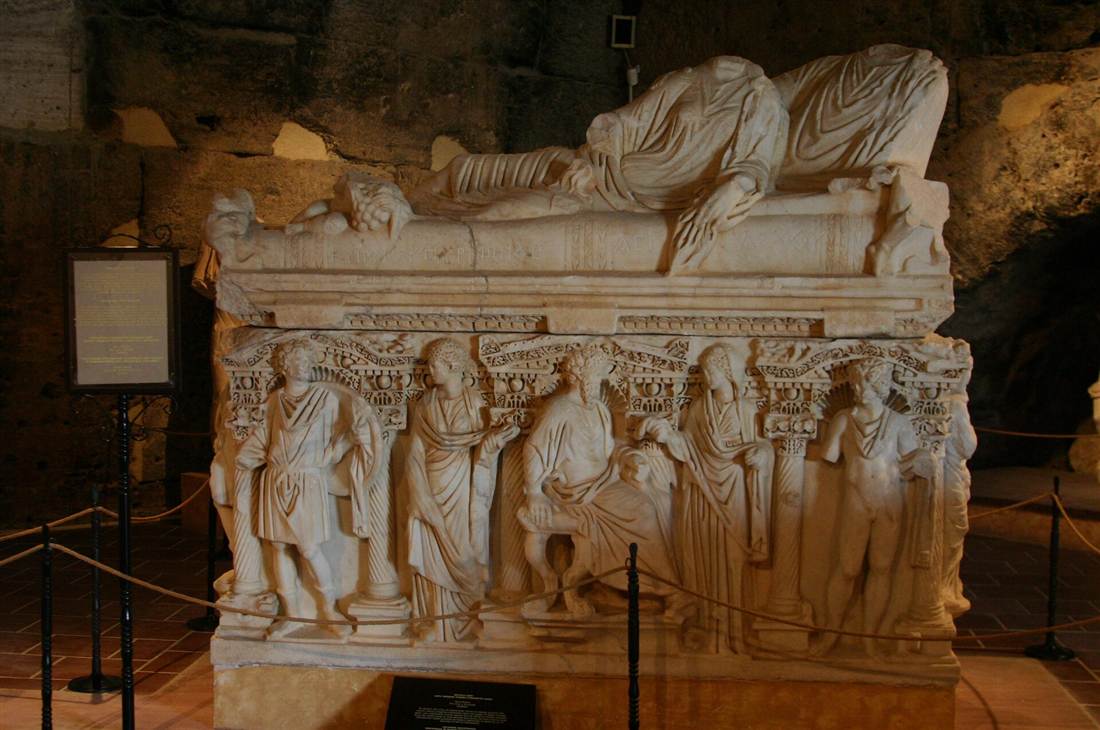
The Hierapolis Archaeology Museum at Pamukkale is housed in the restored Roman baths of Hierapolis, holding the sarcophagi, statues and reliefs unearthed at Hierapolis and Laodicea, with the celebrated sarcophagus of the Muses among its treasures. Plan the whole trip with Greece Tours.
This guide covers the Hierapolis Archaeology Museum in full: what it is and where it stands, the Roman bath building that houses it, the hall of sarcophagi and statues, the theatre friezes and marble masks, the small finds, the highlights, the opening hours and ticket, and how the museum fits a visit to the travertines and the theatre.
What is the Hierapolis Archaeology Museum?
The Hierapolis Archaeology Museum is the on-site museum at Pamukkale in Turkey that holds the finds from the ancient city of Hierapolis and the neighbouring city of Laodicea. It occupies the restored Roman bath complex beside the travertine terraces.
The museum gathers the sculpture, sarcophagi, inscriptions and everyday objects that archaeologists lifted from the ruins of Hierapolis and the surrounding Lycus valley. Italian and Turkish excavation teams filled its galleries with marble reliefs, portrait busts and grave monuments that once stood along the city streets and inside its temples.
Three main halls organise the collection by subject. One hall presents sarcophagi and statues, a second displays the sculptural decoration of the theatre, and a third houses the small finds of glass, coins, jewellery and tools. The arrangement lets a visitor read the life of a Roman city in a single circuit, from its monumental art down to the objects people carried in their hands.
The museum ranks among the leading archaeological collections of inland Anatolia. Its objects span the Hellenistic foundation of the city, its Roman peak and its long Byzantine afterlife, when Hierapolis became a Christian centre. The galleries hold work in marble, bronze, glass, gold and terracotta, a full material record of an ancient metropolis preserved in the shell of its own bathhouse.
Where is the Hierapolis Museum?
The museum stands inside the archaeological site at Pamukkale, directly beside the white travertine terraces, near the great theatre and the central plaza. It sits within the ruins themselves, a short walk from the main site entrance.
Pamukkale lies in Denizli province in south-western Turkey, and the ancient city of Hierapolis crowns the ridge above the calcite pools. The museum building rises at the heart of this ruin field, framed by colonnaded streets, the necropolis and the terraces that draw travellers to Pamukkale.
Its position places the collection within a few minutes’ walk of the principal monuments. The theatre climbs the hillside just above, the plaza and the sacred pool spread out nearby, and the long necropolis stretches along the northern approach. A visitor moves straight from the standing ruins into the galleries that explain them, without leaving the site.
Denizli airport and the modern town lie a short drive below the ridge, and coaches climb the road to the upper gate throughout the day. From that gate the paved way leads past the plaza to the museum door, so the building falls on the natural walking line through the ruins rather than off to one side.
What building houses the museum?
The museum occupies the restored Roman bath complex of Hierapolis, the great Thermae built in the second century AD. Its thick stone walls and vaulted halls, once heated bathing rooms, now shelter the sculpture and grave monuments of the city.
The Thermae ranked among the largest structures in Hierapolis, raised in massive travertine blocks with wide barrel vaults spanning the halls. Roman engineers built it as a public bathing establishment fed by the thermal springs that give Pamukkale its name. The scale of the surviving vaults reveals the ambition of the city’s builders.
Restoration converted three of the great vaulted chambers into exhibition halls. The stone masses that once held the heat of the caldarium and frigidarium now keep the galleries cool and dim, protecting the marble from the harsh sun outside. The building is itself the first exhibit, a standing Roman monument that frames the objects it displays.
Portions of the bath complex beyond the museum halls survive as roofless ruins, their arches open to the sky, so a visitor reads the full extent of the original structure while walking the site. The restored roof over the exhibition wing preserves the ancient vaulting overhead, and standing beneath it gives a rare sense of the height and volume of a Roman imperial bath.
What is in the Hall of Sarcophagi and Statues?
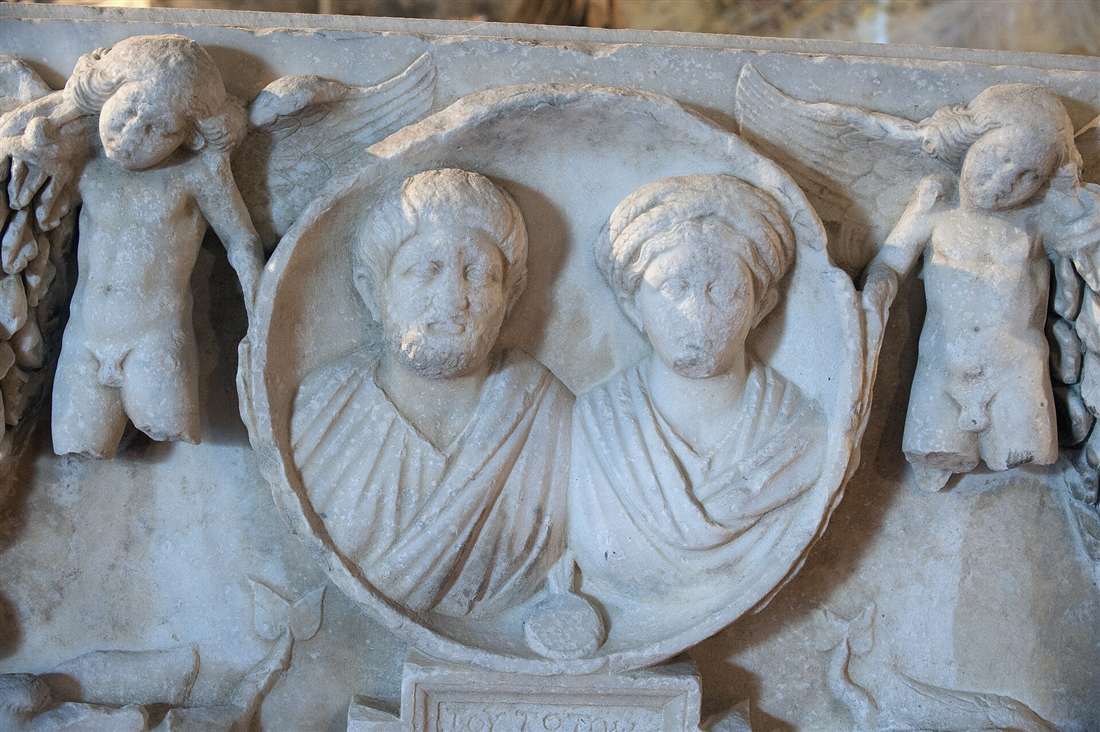
The first hall presents the sarcophagi and statues of Hierapolis and Laodicea, including grave monuments from the great necropolis, the celebrated sarcophagus of the Muses, and a line of portrait busts and honorific statues carved in marble.
Hierapolis owned one of the largest ancient cemeteries in Anatolia, and its stone coffins fill this gallery. The sarcophagi carry carved garlands, lions, portraits of the dead and inscriptions naming the families who commissioned them. Pieces recovered from Laodicea join them, extending the record across the whole Lycus valley.
The sarcophagus of the Muses stands out among the tombs, its front carved with the nine Muses in flowing drapery. Portrait busts of citizens and officials line the walls, and full statues of gods and civic benefactors complete the display. Together they show how the people of Hierapolis honoured their dead and their deities in stone.
What are the theatre friezes and masks in the museum?
The second hall displays the marble reliefs and statues that decorated the stage building of the Hierapolis theatre. The friezes from the scaenae frons, the carved theatre masks and statues of the gods form the centrepiece of this gallery.
The great theatre of Hierapolis carried an elaborate stage front sculpted with mythological scenes. Excavators recovered long relief panels that ran across the scaenae frons, depicting the myths of Apollo and Artemis, the patron deities of the city, alongside processions and divine figures rendered in high relief.
Marble theatre masks, carved as decorative elements of the stage, sit within this hall as vivid emblems of the performances once staged here. Statues of the gods that stood in the niches of the stage building accompany the friezes. The gallery reconstructs, panel by panel, the sculptural programme of one of Anatolia’s finest Roman theatres.
What are the small finds and everyday objects?
The third hall holds the small finds of Hierapolis: glass vessels, bronze and silver coins, gold and stone jewellery, oil lamps, and the metal tools and instruments that the excavations lifted from the houses, streets and graves of the ancient city.
This gallery turns from monumental art to the texture of daily life. Glass flasks and bottles, minted coins bearing the portraits of emperors, rings, earrings and bracelets fill the cases. The objects trace trade, religion and household routine across the centuries the city flourished.
Tools, weights, lamps and surgical or craft instruments round out the display, evidence of the workshops and trades that sustained the population. Inscriptions on stone and small votive pieces record the languages and beliefs of the inhabitants. The hall grounds the grand sculpture of the other galleries in the ordinary world of a working Roman town.
The coin cabinet traces the political history of the region through the portraits it strikes, from local mints under the emperors to imperial issues carried in trade. Gold ornaments and carved gemstones show the wealth of the leading families, while plain iron tools and clay lamps speak for the artisans and labourers who built and served the city day by day.
What are the highlights of the Hierapolis Museum?
The highlights are the sarcophagus of the Muses, the theatre friezes from the scaenae frons, and the gladiator and bull-fight reliefs recovered from Tripolis Street. These three groups define the museum and reward the closest attention.
The sarcophagus of the Muses draws visitors first, its carved figures preserving the fine drapery and quiet faces of the nine sisters. The theatre reliefs follow, their mythological panels ranking among the richest surviving stage sculpture from Roman Asia Minor.
The gladiator and bull-fight reliefs, found along Tripolis Street, record the games and spectacles that entertained the city. Combatants in armour, wild beasts and hunting scenes fill the carved panels with movement. These reliefs give a direct window onto the arena culture of Hierapolis and complete the museum’s account of the city at play.
A visitor with limited time heads for these three groups first. The Muses on their marble coffin, the mythological panels of the stage front and the armoured fighters of Tripolis Street together tell the story of the city in death, in worship and in spectacle, and each rewards a slow, close look at the carving.
What are the museum opening hours and ticket?
The museum opens daily, with longer summer hours in the warm months and shorter winter hours in the cold season. Entry carries a small separate fee beyond the main site ticket, and the Turkish Museum Pass covers admission.
Through the summer season the museum keeps extended daytime hours to match the long visiting day at Pamukkale. Through the winter season it closes earlier in the afternoon as daylight shortens. A visitor checks the posted hours at the gate on the day of the visit.
The Hierapolis Archaeology Museum charges its own entrance fee, distinct from the ticket that admits visitors to the Pamukkale site and travertines. Holders of the Museum Pass Turkey enter without a further charge, which makes the pass worthwhile for travellers touring the wider region. Tickets are bought at the museum door.
How does the museum fit a Pamukkale visit?
The museum sits at the centre of the Pamukkale ruins, a short walk from the theatre, the plaza and the sacred pool, and its cool vaulted halls give shelter from the sun. A visit slots naturally between the terraces and the standing monuments.
Most travellers reach Pamukkale for the white terraces and the thermal pool, then explore the Roman city above. The museum threads directly into that route, standing beside the plaza on the walk between the entrance and the theatre. Its collection explains the ruins a visitor has just crossed.
The thick stone walls of the old baths hold back the heat of the exposed hillside, so the galleries offer a cool pause in the middle of the day. Half an hour inside connects the scattered stones of the site to the finished sculpture they once carried, turning a walk through ruins into a reading of the whole ancient city.
A visitor pairs the museum with the terraces, the theatre and the necropolis in a single day on the ridge. Seeing the reliefs indoors sharpens the walk outside, and the objects lend faces and names to the streets and tombs. The Hierapolis Archaeology Museum is the key that unlocks the meaning of the wider Pamukkale site.
Frequently Asked Questions
What is the Hierapolis Archaeology Museum?
The Hierapolis Archaeology Museum is the museum of the Pamukkale-Hierapolis site, set in the restored Roman baths. Three vaulted halls hold the sarcophagi of Hierapolis and Laodicea, the sarcophagus of the Muses, and the friezes and masks of the theatre.
Where is the Hierapolis Museum?
The museum stands inside the Hierapolis archaeological site above the Pamukkale travertines, beside the plaza near the theatre and the main street, a short walk from the Cleopatra Pool.
Is there a separate ticket for the Hierapolis Museum?
The Hierapolis Museum charges a small entrance fee on top of the site ticket, and it is covered by the Turkey Museum Pass. The vaulted halls give welcome shade in the midday heat.