
An Evia (Euboea) day trip from Athens reaches Greece’s second-largest island in just 90 minutes by road, with no ferry needed, for Chalkida’s mysterious tidal current, fresh seafood tavernas, easy beaches and green countryside. Make it effortless with a guided tour or tickets from My Greece Tours.
This easy island escape is a rewarding option in the Athens travel guide. The sections below cover whether it is worth it, Chalkida and its strange current, the seafood, the beaches, Eretria and the sights, how to get there, and the best way to visit.
Is Evia worth a day trip from Athens?
Yes. Evia is reached in about 90 minutes by road with no ferry, as a bridge connects it to the mainland. Greece’s second-largest island offers Chalkida with its famous tidal current, great-value seafood, beaches and the ancient site of Eretria.
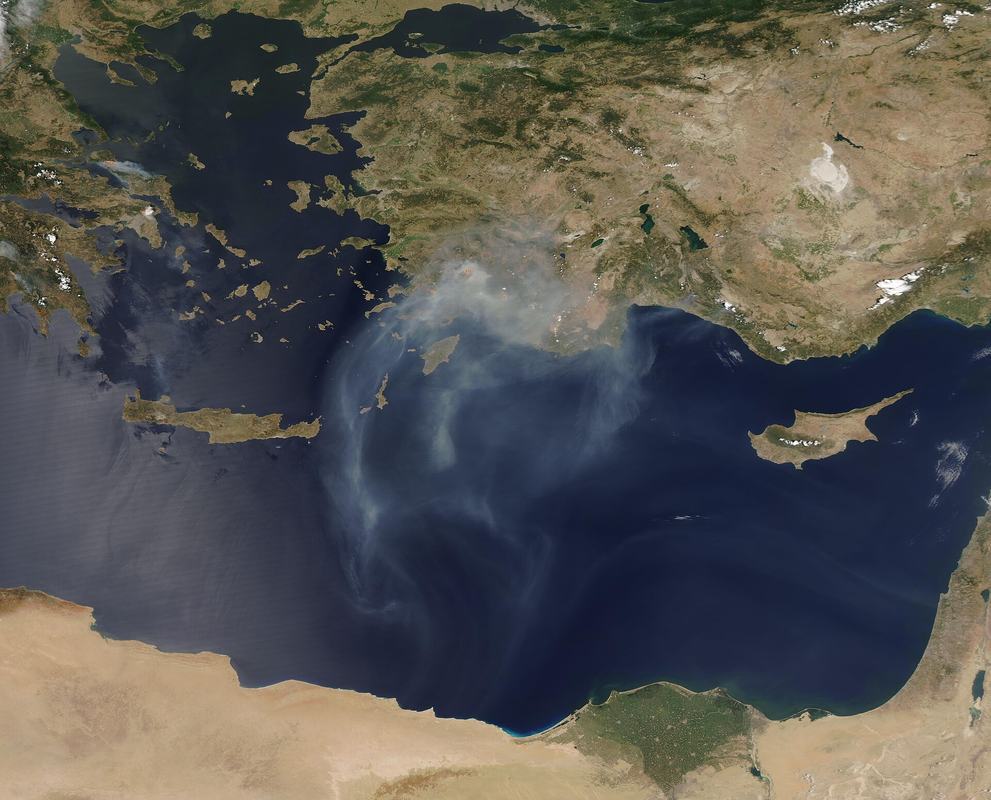
Evia suits travellers who want a taste of Greek island life without the time and expense of a ferry. Also spelled Euboea, it makes a surprisingly easy day trip from Athens, joined to the mainland by bridges and reached entirely by road. It is the second-largest of the Greek islands after Crete, a long, mountainous land of green valleys, pine forests, vineyards and a long coastline. Its nearest point, the capital Chalkida, lies only about ninety minutes from Athens. The island feels authentic and uncommercialised, far less touristy than the famous Cycladic islands, offering a glimpse of everyday Greek life.
The headline draws for a day visit are the waterfront city of Chalkida, with its strange tidal current beneath the old bridge and its rows of great-value seafood tavernas, along with beaches on the sheltered gulf, the green countryside, and the ancient ruins of Eretria nearby. The vast island cannot be seen in a day, yet the Chalkida area alone richly repays a visit. The capital city is the natural focus.
What is there to see in Chalkida?
Chalkida, the capital of Evia, is a lively waterfront city where the island almost touches the mainland. Its highlights are the old sliding bridge over the Euripus strait, the seafront promenade of cafés and tavernas, the old Kastro quarter and the archaeological museum.
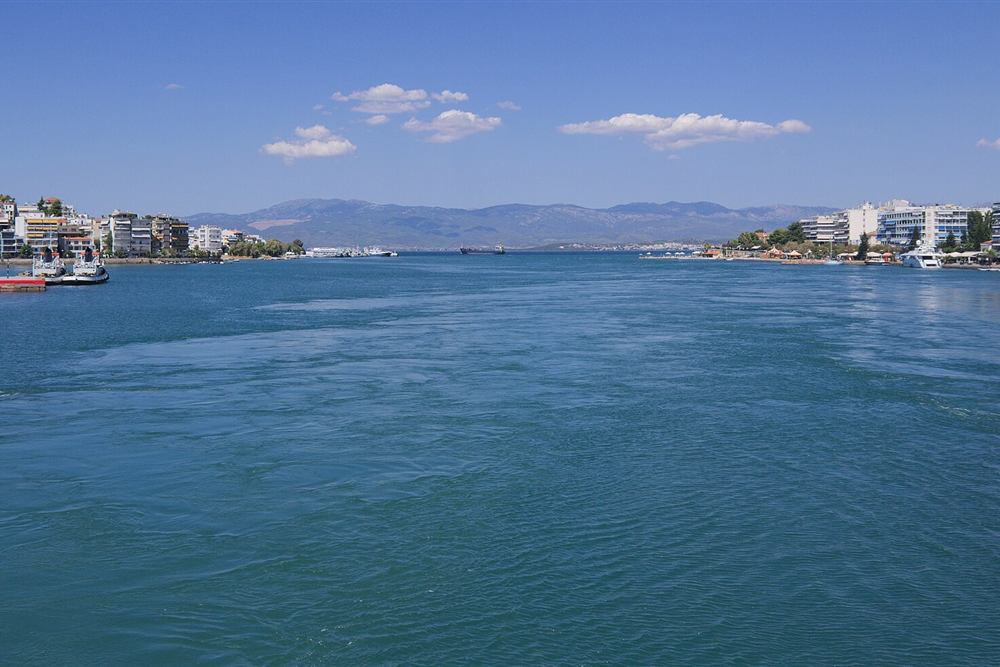
The natural focus of an Evia day trip is Chalkida, the island’s capital and largest town, built at the narrowest point of the Euripus strait, where Evia comes so close to the mainland that bridges link the two. The heart of the city is its long seafront promenade, lined with cafés, bars and restaurants where locals stroll. At its centre, the old sliding bridge spans the narrow channel separating island from mainland. Beyond the waterfront, the old quarter known as the Kastro repays exploration, with its atmospheric lanes, a surviving Ottoman mosque, old churches and the handsome nineteenth-century mansion called the Red House.
The town’s archaeological museum displays finds from across the island. The Karababa fortress on the mainland side overlooks the seafront and offers fine views. Chalkida is not a museum-piece resort but a working Greek city. Its appeal lies in the relaxed waterfront atmosphere, the boats and the current, and the food. It makes an ideal, walkable base for a day on the island. Its strangest attraction is entirely natural.
What is the strange tidal current of Chalkida?
The Euripus strait at Chalkida has a tidal current that switches direction about every six hours, the narrow channel flowing one way and then the reverse. Observed since antiquity and said to have puzzled Aristotle, it can be watched from the old bridge.
The most remarkable feature of Chalkida is the strange tidal current that flows through the narrow Euripus strait beneath the old bridge. It is a genuine natural wonder that draws curious visitors. The channel here is very narrow, and the water within it does not simply rise and fall like an ordinary tide but actually flows. It streams through the gap first in one direction, then, after roughly six hours, reverses to rush the opposite way. The current occasionally moves with surprising speed and force, creating visible swirls and eddies. This reversing current has been observed and discussed since antiquity, and tradition holds that it puzzled the philosopher Aristotle himself, who reportedly studied it.
Standing on the old sliding bridge to watch the waters change direction is a quietly mesmerising experience, and locals and fishermen still gauge the strait’s moods. The complex tides and the geography of the narrow channel between the two larger bodies of water on either side cause the phenomenon. It is a free spectacle unique to Chalkida. The waterfront also serves the island’s finest food.
What is the seafood like in Evia?
Chalkida and Evia are known for great-value seafood, and the tavernas lining the Chalkida seafront are among the best near Athens. Diners enjoy fresh fish, grilled octopus, calamari, shrimp and mussels, often cheaper than in the city, with ouzo and a sea view.
One of the greatest rewards of an Evia day trip is the food. Chalkida has a strong reputation as a seafood destination, and the long line of fish tavernas along its waterfront offers some of the best-value fresh seafood within an hour or so of Athens. As a fishing town on a strait famous for its rich waters, the city serves the daily catch at its many seaside restaurants. Diners settle at a table overlooking the water and enjoy fresh grilled fish, tender octopus, fried calamari, plump shrimp, mussels and an array of seafood mezedes, prepared in the Greek style with good olive oil and lemon.
Prices here are often gentler than in central Athens, making a seafood lunch an affordable pleasure, traditionally paired with chilled ouzo or local wine while watching the boats and the current. Beyond the seafood, the tavernas serve the full range of Greek dishes, and the island produces good wine and produce. Lingering over such a meal by the strait is the classic Chalkida experience. Beyond the city lie beaches and countryside.
What about the beaches and Eretria?
Beyond Chalkida, the Euboean Gulf coast has calm, swimmable beaches from late spring to autumn, with coves south toward Eretria and Amarynthos. The seaside town of Eretria, about 20 km away, adds an ancient site with a ruined city, a theatre and a museum.
Chalkida and its food are the heart of an Evia day trip, and the surrounding area adds beaches and history for a varied day, especially in the warmer months. The western coast faces the sheltered Euboean Gulf, so the sea here is generally calm rather than wild. That makes for safe, easy swimming from around late spring through to autumn, when the gulf warms quickly. South of Chalkida, along the coast toward Eretria and the town of Amarynthos, lies a series of pleasant beaches and coves. Some are organised with sunbeds and tavernas, others simple and quiet, ideal for a refreshing swim to break up the day.
A short drive of around twenty kilometres from Chalkida reaches the seaside town of Eretria, one of the most important ancient cities of Evia. Visitors explore the archaeological remains, including a theatre, temples and houses, and a museum displaying the finds, which adds a rewarding dose of history to the trip. Inland, the green mountains and villages invite further exploration for those with more time. This mix of swimming, ruins and scenery makes Evia satisfyingly varied.
How do you get to Evia, and what is the best way to visit?
Evia is reached from Athens in about 90 minutes to two hours by car via the national road, crossing a bridge into Chalkida, with no ferry needed. A suburban train also runs toward Chalkida, and KTEL buses serve the island from the Liosion terminal.
Getting to Evia is remarkably easy, a large part of its appeal as a day trip, because unlike most Greek islands it needs no ferry at all. By car, the journey from Athens to Chalkida takes roughly ninety minutes to two hours along the national road heading north, with a small toll, before crossing one of the two bridges over the Euripus strait into the city. Self-driving offers the most flexibility for combining Chalkida with the beaches and Eretria at your own pace. Public transport also works: a suburban railway line runs from the Athens area toward Chalkida, and intercity KTEL buses serve the island from the Liosion terminal in Athens. The capital is reachable without a car, though a vehicle helps for exploring beyond the city.
For a relaxed, logistics-free experience, an organised day tour from Athens is a good choice. As for timing, the late spring to autumn months are best if you want to swim in the gulf, while the city itself, its current and its seafood tavernas reward a visit at any time of year. With an early start, Evia delivers a full and rewarding day. The wider routes appear in the day trips from Athens guide. The questions below cover the points visitors ask most.
When is the best time to visit Evia?
Evia rewards a visit year-round, but late spring to early autumn, roughly May to October, is best. These months bring warm seas for swimming and mild weather. The city, its current and its seafood tavernas suit a trip in any season.
The timing of an Evia day trip depends on what you want from it. For swimming, the warm months from late spring through early autumn are best, when the sheltered Euboean Gulf heats up and the beaches south of Chalkida come into their own. Late spring, in May and June, brings green countryside, wildflowers and comfortable temperatures for combining a swim with sightseeing. High summer, in July and August, delivers the warmest sea and long sunny days, though Chalkida’s waterfront fills with Athenian visitors, especially on weekends.
Early autumn, in September and October, is a fine window, with the sea still warm and the crowds thinning after the summer peak. The city itself does not depend on the weather. Chalkida’s tidal current, its seafront promenade and its seafood tavernas reward a visit at any time of year, so even a cool winter day can make a rewarding trip focused on the food, the bridge and the strange current rather than the beach. This flexibility is part of what makes Evia such an easy escape from Athens.
What else can you do near Chalkida?
Near Chalkida you can visit the ancient site and museum at Eretria, swim at gulf beaches, and drive inland to green mountains and villages. The Karababa fortress overlooks the strait, and northern Evia has spa towns and forests for a longer stay.
A day trip focused on Chalkida can be broadened in several directions for those with the time or a car. The most popular add-on is the ancient city of Eretria, about twenty kilometres south along the coast, where ruins and a museum give a solid dose of history. Between the two towns, the gulf beaches and the seaside village of Amarynthos offer easy swimming and more taverna choices. Above the Chalkida seafront, the Karababa fortress on the mainland side is worth the short climb for its views over the strait and the bridges.
With a longer visit, the island opens up well beyond the capital. Inland, Evia’s green mountains, pine forests and traditional villages reward a scenic drive, and the north of the island is known for its spa towns, thermal springs and forested landscapes. The far south and the wild eastern coast hold quieter beaches and rugged scenery, though these lie too far for a single day from Athens. For most day-trippers, pairing Chalkida with Eretria and a gulf swim makes the fullest and most rewarding loop.
How big is Evia, and where do its old names come from?
Evia runs 180 km long and 6 to 50 km wide, and it covers 3,684 square kilometres. It ranks sixth in size among Mediterranean islands. Its old names include Negroponte under Venice and Egriboz under the Ottomans.
The name Euboea comes from the Greek words for good and ox, the land of well-fed cattle. Antiquity also called the island Macris and Doliche for its length. Negroponte is an Italian rendering of the Greek name for the Euripus.
A mountain chain crosses the island from end to end. It reappears south of Evia in Andros, Tinos and Mykonos. Ancient writers held that an earthquake split Evia from the mainland.
The drive from Chalkida to Edipsos in the north runs about 150 km. Two nights cover one end of the island, and four cover both.
Which ferries cross to Evia besides the Chalkida bridges?
Five ferry lines cross to Evia from the mainland: Rafina to Marmari, Agia Marina to Nea Styra, Oropos to Eretria, Arkitsa to Edipsos and Glyfa to Agiokampos. Each crossing takes 25 to 60 minutes. Kymi on the east coast runs the ferry to Skyros.
The Oropos to Eretria crossing takes 25 minutes. It is the shortest crossing from Attica. The Agia Marina boat reaches Nea Styra in 45 minutes across the South Euboean Gulf.
The Rafina to Marmari ferry takes about an hour. It is the fastest way to Karystos and the south. Rafina port lies 30 km east of Athens.
The Arkitsa ferry reaches Edipsos in about 40 minutes and serves the northern spa coast. The Kymi ferry reaches Skyros in about an hour and 45 minutes. It is the only regular link between Evia and the Sporades.
Which mainland sites pair with an Evia day trip?
An Evia day trip pairs with Aulis on the strait south of Chalkida, the Amphiareion of Oropos across the gulf from Eretria, Thebes 50 km west of Chalkida, and Thermopylae on the coast road north of the Arkitsa crossing.
Aulis stands on the mainland bank of the Euripus. Agamemnon’s fleet was held there by contrary winds before it sailed for Troy. A temple of Artemis stood at the site.
The Amphiareion is the healing sanctuary of the hero Amphiaraos. Patients slept in its long stoa to receive cures in their dreams. The sanctuary also keeps a small theatre.
Thebes holds a museum of Mycenaean palace finds and the Boeotian collection. Thermopylae keeps the monument to Leonidas and the hot springs beside the pass.
What history does Chalkida keep beyond its strait?
Chalkida, the bronze city, founded colonies in Italy, Sicily and the Chalcidice peninsula in the 8th and 7th centuries BC. Its alphabet travelled west to the Etruscans and then to Rome. Mehmed II took the town from Venice in 1470.
Chalkidian colonists founded Cumae, Rhegion and Zancle. They also founded thirty settlements on the Chalcidice peninsula, which still carries the name. Latin letters such as C, D, F, P, R, S and X follow Euboean forms.
The Karababa fortress above the mainland end of the bridge dates from 1684. It houses a folklore museum of weaving, costume and the history of the crossing.
The old town keeps the Emir Zade mosque and an aqueduct fountain. A synagogue served one of the oldest Jewish communities in Greece. Crusaders rebuilt the basilica of Agia Paraskevi in Gothic form. A Chalkida walking tour links these buildings in about 90 minutes.
What are the House of Mosaics and the theatre passage at Eretria?
The House of Mosaics at Eretria dates from about 370 BC and keeps pebble floors of griffins, panthers and a Nereid on a sea horse. The ancient theatre keeps a vaulted passage that runs from the orchestra under the stage.
Actors used the passage to rise into view as if from the underworld. A shelter protects the mosaic floors.
The Swiss School of Archaeology has excavated Eretria since 1964. Its museum on the main road holds the finds. The temple of Apollo Daphnephoros stood by the harbour. Its pediment group of Theseus carrying off Antiope is in the Archaeological Museum of Chalkida.
The Persians burned Eretria in 490 BC on their way to Marathon. They carried its people to Mesopotamia. Boats from the quay run Eretria boat cruises to the islets of the gulf.
What are the dragon houses of Evia?
The dragon houses of Evia are about twenty buildings in the south of the island, made of huge unmortared stone blocks with stone slab roofs. The house on Mount Ochi is the most complete. Others stand near Styra.
No ancient text mentions the dragon houses, and no date is agreed. The British geologist John Hawkins gave the first outside account in the 18th century. Local folklore gave them to dragons, meaning beings of superhuman strength.
The slopes of Ochi also held the quarries of Karystian cipollino, a green-veined white marble. Rome shipped it for the Forum and the imperial buildings. Half-finished columns still lie in the quarries at Aetos and Kylindroi.
Karystos lies 129 km south of Chalkida. Mount Ochi rises about 1,400 m above the town. Castello Rosso, the red castle, looks down from Myloi 4 km inland.
Can an Evia day trip reach Steni and Mount Dirfys?
Yes. Steni Dirfyos lies 31 km from Chalkida at 450 m, a village of plane trees and running water. It is the base for Dirfys, the highest mountain of Evia at 1,743 m, with chestnut and fir forest on its slopes.
The marked path to the summit takes about three hours from the refuge. Snow covers the top from December. The view runs from Skyros to Parnassos.
North of the ridge, Chiliadou is a long beach of white pebble under cliffs. A rough road and a footpath reach it. The Manikia gorge nearby is the canyoning ground of the island. Guided descents run through pools and small waterfalls from spring to autumn.
The Steni tavernas cook goat and mountain greens through the winter. The chestnut harvest falls in October and November.
Frequently Asked Questions
How far is Evia from Athens?
Evia (Euboea) is very close to Athens. Its capital, Chalkida, lies about 80 to 90 kilometres north of the city and is reached in roughly 90 minutes to two hours by car via the national road, crossing a bridge over the Euripus strait. No ferry is needed, as Evia is joined to the mainland by bridges, making it one of the easiest island day trips from Athens.
Do you need a ferry to get to Evia?
No, you do not need a ferry to reach the main city of Evia. Chalkida, the island’s capital, is connected directly to the mainland by two bridges over the narrow Euripus strait, so you can drive, take a suburban train or catch a bus straight across. Ferries do serve some other parts of the long island, but the easy day-trip area needs no boat.
What is the strange current at Chalkida?
The Euripus strait at Chalkida has a mysterious tidal current that turns about every six hours, the narrow channel of water streaming one way and then dramatically the reverse, sometimes rushing fast. Observed since antiquity and said to have puzzled Aristotle, this natural phenomenon can be watched for free from the old bridge over the strait.
Can you swim on an Evia day trip?
Yes. The sheltered Euboean Gulf south of Chalkida has calm, swimmable beaches, ideal from late spring to autumn. Coves toward Eretria and Amarynthos suit a dip between sightseeing and lunch. Pack swimwear in the warm months and combine a morning of sights with an afternoon by the water.
Is one day enough for Evia?
One day is enough to enjoy Chalkida, its tidal current, a seafood lunch and a nearby beach or the ruins at Eretria. The full island is large and mountainous, so a single day covers only the Chalkida area. For the northern spa towns or the wild eastern coast, an overnight stay works better.
Can you visit Evia without a car?
Yes. Chalkida is reachable from Athens by suburban train and by KTEL bus from the Liosion terminal, so a car-free day trip focused on the city works well. The seafront, the old bridge, the current and the seafood tavernas all sit within walking distance. A car helps only for reaching Eretria and the gulf beaches.
What is the best thing to do in Chalkida?
The best thing to do in Chalkida is to stroll the seafront promenade, watch the reversing tidal current from the old bridge, and settle into a waterfront taverna for a long seafood lunch. Add the old Kastro quarter, the archaeological museum and the view from the Karababa fortress for a full and easy day by the strait.
Is Evia touristy?
Evia is far less touristy than the famous Cycladic islands. Chalkida is a working Greek city rather than a resort, so a visit feels authentic and everyday, with good-value seafood and few foreign crowds. This relaxed, local character, combined with the ferry-free access, is a large part of the island’s appeal as a day trip.