
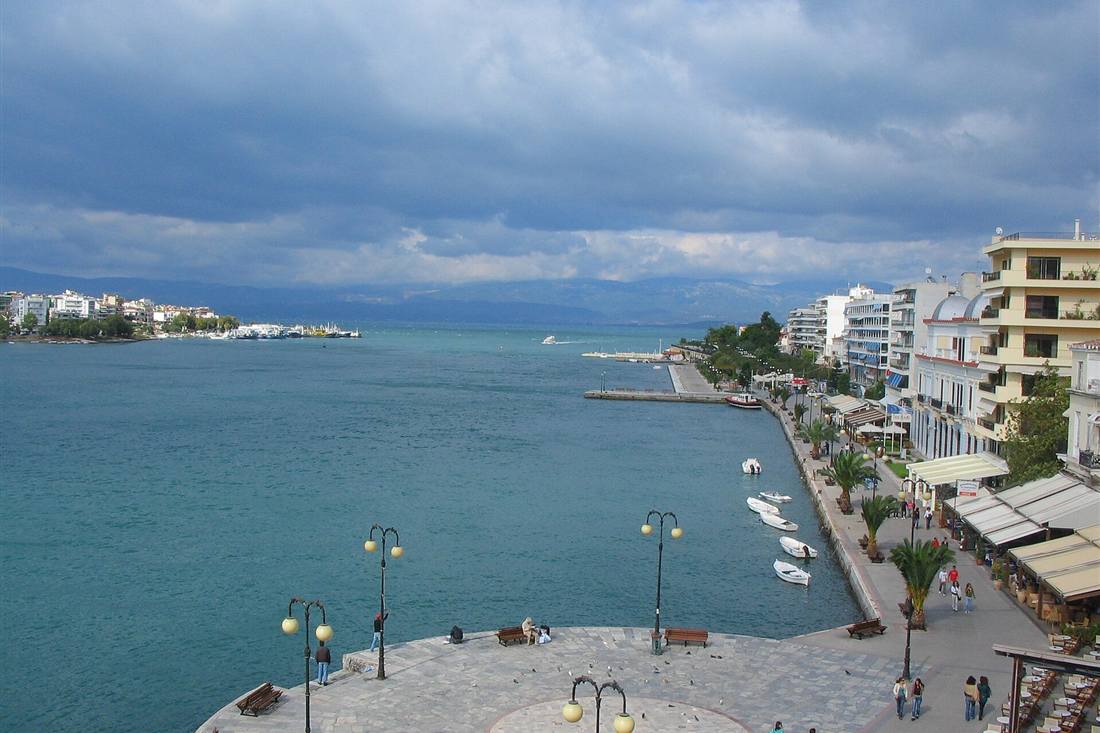
A Chalkida walking tour is a two to three hour guided walk of the Evia capital, built around the Euripus strait whose current reverses every six hours, the sliding bridge and the Ottoman and Jewish old quarter, priced from 30 euros a head. Plan the rest of the trip with Greece Tours.
This page covers the walk: what it costs, the route, the strait, the bridge, the Karababa fortress, the old quarter, the museum, the day trip from Athens and how to book.
What does a Chalkida walking tour cost?
From 30 to 60 euros a head for a two to three hour guided walk of the old town, 120 to 220 for a private walk for two to four, and 180 to 320 for a full day that adds Eretria and the Styra dragon houses.
The walking price covers the guide and the commentary, and museum entry is separate. A Chalkida walking tour is booked around it.
Private walks quote by the party and set their own pace. This is what a Chalkida walking tour delivers.
Full-day products include the vehicle and the drive down the island.
Children go half price on the shared departures.
Groups cap at eight to fifteen on the scheduled walks.
Athens-based operators run the same walk as part of a day trip.
What does a Chalkida walking tour cover?
The Euripus strait and its tidal current, the old sliding bridge, the Karababa fortress across the water, the Emir Zade mosque, the Agia Paraskevi basilica, the synagogue, the archaeological museum and the waterfront promenade.
The town sits at the narrowest point between Evia and the mainland. Every Chalkida walking tour is routed around this.
The old quarter behind the bridge holds the Ottoman, Venetian and Jewish buildings together in a few streets. Chalkida walking tour guides prepare for it.
The whole circuit is walked in two hours at a talking pace.
Most of the route is flat and the fortress is the only climb.
The waterfront runs a kilometre and is added on the three-hour version.
Guides time the walk to be at the strait when the current turns.
What is the Euripus strait?
The 38-metre channel separating Evia from the Greek mainland, where the tidal current reverses direction roughly every six hours, running up to nine kilometres an hour and reversing in minutes.
The strait is the narrowest point between a Greek island and the mainland. The Chalkida walking tour listing states it plainly.
Water runs north for about six hours, stills, then runs south. A Chalkida walking tour settles this at the meeting point.
The reversal happens in a few minutes and is watched from the bridge rail.
Irregular tides occur for a few days each month and confuse the pattern.
The phenomenon has been recorded since antiquity and studied since.
Standing on the bridge for the turn is the reason most walks stop there.
Why are they called the crazy waters?
Because the current reverses without warning, holds still for a few minutes, then runs the other way at full speed. Greeks call the strait the trelo nero, the mad water, and the name has stuck for centuries.
Aristotle studied the strait and a legend has him drowning in frustration at it. This is what a Chalkida walking tour delivers.
That story is a later invention and he died at Chalkida of illness in 322 BC. The Chalkida walking tour route is set by it.
Modern science explains the reversal through the tidal wave arriving from two directions.
Boats time their passage through the channel to the slack water.
The bridge opens for shipping when the current allows.
Cafes along the strait exist because people come to watch it.
What is the old bridge?
A sliding bridge over the Euripus channel, opened in 1962 and replacing a chain of earlier crossings back to 411 BC, which retracts sideways into the quays to let ships through the 38-metre gap.
The first crossing here was built during the Peloponnesian War. Chalkida walking tour guides prepare for it.
Venetians and Ottomans each rebuilt it in their turn. Guides raise it early on a Chalkida walking tour.
The bridge opens at night and on a schedule set by the shipping.
The high suspension bridge two kilometres north carries the main road traffic.
Walking across the old bridge takes a minute and is the town’s signature.
Cafes and tavernas line both quays beside it.
What is the Karababa fortress?
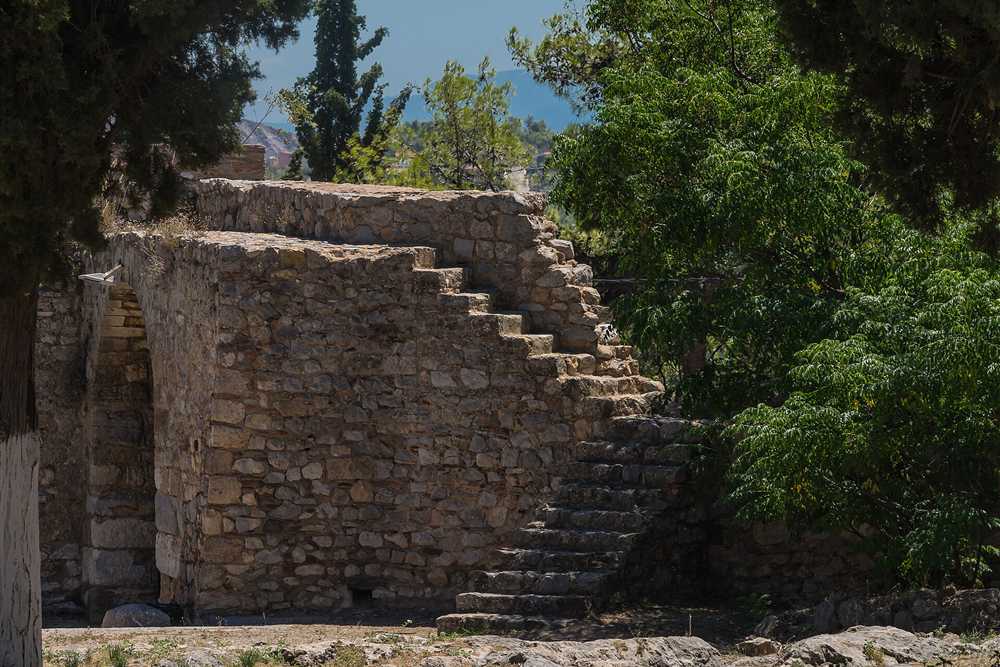
An Ottoman fortress of 1684 on the mainland hill across the strait, built to hold the crossing against Venice, with a bastioned circuit, a small museum and the view down over the bridge and the whole town.
The name means black father in Turkish and refers to a dervish buried on the hill. A Chalkida walking tour settles this at the meeting point.
The walls enclose a large open interior used for summer events. It decides which Chalkida walking tour suits the party.
Entry is free and the climb from the bridge takes 20 minutes on foot.
Ancient Chalkis had its acropolis on the same hill.
The view is the best photograph of the strait and the sliding bridge.
Walking tours drive or climb depending on the version booked.
What Ottoman and Jewish buildings survive?
The Emir Zade mosque of the fifteenth century with its marble fountain, the Ottoman aqueduct remains, and the Romaniote synagogue on Kotsou street serving a Jewish community recorded here since antiquity.
The mosque stands in the old quarter and holds a Byzantine collection. The Chalkida walking tour route is set by it.
Chalkida’s Jewish community is one of the oldest continuously recorded in Europe. The Chalkida walking tour price reflects it.
The synagogue was rebuilt in 1855 on a much older site.
The Jewish cemetery outside the town holds stones going back centuries.
Ottoman rule ran from 1470 to 1833 and shaped the street plan.
The heritage walk covers all three in twenty minutes of walking.
What is Agia Paraskevi basilica?
The town’s largest church, a Byzantine basilica rebuilt by the Crusaders in the thirteenth century as a Gothic cathedral, with pointed arches, a wooden roof and a marble screen, standing in the old quarter.
The Gothic elements are unusual in Greece and come from the Frankish period. Guides raise it early on a Chalkida walking tour.
The building sits over an early Christian basilica. A Chalkida walking tour fills first on that count.
Venetians used it as their cathedral and the Ottomans left it standing.
Entry is free and the interior takes fifteen minutes.
The church is the anchor of the old quarter’s street plan.
Guides use it to explain the Frankish century on Evia.
What is in the archaeological museum?
The finds of central Evia: sculpture from the temple of Apollo at Eretria, grave goods from Lefkandi and the Chalkida cemeteries, Roman portraits, and material from the Geometric period when Chalkis founded colonies across the Mediterranean.
Chalkis and Eretria sent the earliest Greek colonists to Italy and Sicily. It decides which Chalkida walking tour suits the party.
The Lefkandi material dates from the tenth century BC. The Chalkida walking tour calendar is shaped by it.
Entry is 3 to 6 euros and a visit takes 45 minutes.
The museum sits on Venizelou street in the modern centre.
Walking tours pass it and the longer versions go in.
The Chalkidian alphabet from here is one root of the Latin one.
What is the Chalkida waterfront like?
A promenade running a kilometre from the bridge along the strait, lined with cafes, ouzeri and fish tavernas, filling from early evening, with the current running visibly past the tables.
The strip is where Chalkida spends its evenings year round. The Chalkida walking tour price reflects it.
Fish from the strait is the standard order. Guests meet it within the first Chalkida walking tour hour.
Prices run below Athens by a third.
The promenade is flat and lit and walked after the tour ends.
Athenians drive up for dinner here on a Friday.
The town is a working city of 100,000 rather than a resort.
What do you eat in Chalkida?
Fish and seafood from the strait, mussels and shrimp from the Euboean gulf, souvlaki from the old-town grills, and the local cheese and honey of central Evia, taken at the waterfront ouzeri.
The strait’s current keeps the water moving and the shellfish clean. A Chalkida walking tour fills first on that count.
Ouzo and tsipouro are poured with meze rather than with a meal. That is the Chalkida walking tour advantage over a map.
A fish dinner runs 20 to 35 euros a head with wine.
The covered market behind the waterfront sells the day’s catch in the morning.
Food-focused versions of the walk add three or four tastings.
Chalkida eats late and the tables fill from nine.
How long is the Chalkida walking tour?
Two hours for the old-town circuit and three with the waterfront and the museum, covering two to three kilometres on flat ground, with the Karababa climb as the only ascent and that one optional.
The old quarter is compact and everything sits within 800 metres. The Chalkida walking tour calendar is shaped by it.
The bridge crossing takes a minute and the fortress climb twenty. A Chalkida walking tour covers the strait around it.
Streets are paved and largely traffic-free in the core.
Shade covers the old-town lanes in summer.
The waterfront section is level the whole way.
Tours skip the fortress on request.
What is Chalkida?
The capital of Evia and a city of about 100,000 on the strait, 80 kilometres from Athens, a Greek city since the Bronze Age, a colonising power in the eighth century BC, and today a working port and university town.
Chalkis founded colonies in Sicily, southern Italy and Halkidiki, which carries its name. Guests meet it within the first Chalkida walking tour hour.
The Lelantine War between Chalkis and Eretria was fought over the plain between them. The Chalkida walking tour season turns on this.
Venetians called the city Negroponte and held it until 1470.
The bridge makes it the only Greek island reached without a boat.
Athens commuters live here and the trains run to Athens in 80 minutes.
The city is a place people live in rather than visit, which is its character.
What is the Aristotle connection?
Aristotle spent his last year at Chalkida after leaving Athens in 322 BC and died here of a stomach illness, and the legend that he drowned in the strait after failing to explain its current is a later invention.
He left Athens saying the city was not to sin twice against philosophy. That is the Chalkida walking tour advantage over a map.
His mother’s family came from Chalkida and he had property here. A Chalkida walking tour is booked around it.
The strait’s reversal was studied in his lifetime and explained much later.
A statue and a square in the town carry his name.
Guides tell the story at the bridge rail while the current runs.
It is the anecdote every visitor takes away.
Can you visit Chalkida from Athens?
Yes, as an easy day: 80 kilometres and an hour by road over the bridge, 80 minutes by suburban train from Larissa station, and full-day tours that add Eretria, Steni or the Styra dragon houses.
The train runs five to seven times a day and costs 6 to 10 euros each way. A Chalkida walking tour covers the strait around it.
Driving takes the national road north and crosses the high bridge. Every Chalkida walking tour is routed around this.
Full-day products from Athens combine the town walk with a second stop.
The Steni chestnut forest on Mount Dirfys is 30 minutes inland.
Eretria and its ancient theatre sit 22 kilometres south.
The Eretria boat day sits at Eretria boat cruise.
When is the best time for a Chalkida walking tour?
April to June and September to October for 20 to 28 degrees, with morning and evening departures in July and August when the afternoon reaches 35. The city runs year round because it is not a resort.
Summer evenings on the waterfront are the town’s own season. The Chalkida walking tour season turns on this.
Winter walks run on request with shorter museum hours. The Chalkida walking tour listing states it plainly.
The current reverses whatever the month, so the strait always performs.
Athenian weekenders fill the tavernas from May.
Booking a day ahead works in every month.
Nothing here sells out.
What do you bring on a Chalkida walking tour?
Walking shoes for the old-town paving and the fortress climb, covered shoulders for the churches and the mosque, a hat and water in summer, and cash for the market and the tavernas.
Museum entry is separate and runs 3 to 6 euros. A Chalkida walking tour is booked around it.
Church dress rules are the standard Orthodox ones.
Card payment works across the city and the market prefers notes.
The fortress ground is uneven and unshaded.
Shade covers most of the old-town route.
Guides carry water on the summer departures.
What are the common Chalkida walking tour mistakes?
Missing the tide reversal by an hour, staying on the modern waterfront and never entering the old quarter, skipping the Karababa view, and treating the city as a stop on the way north rather than a destination.
Guides know the day’s reversal times and build the walk around them. Every Chalkida walking tour is routed around this.
The Ottoman, Venetian and Jewish quarter is behind the bridge, not on the promenade.
The fortress view is what most visitors remember afterwards.
Chalkida rewards an evening more than a lunch stop.
The fifth is coming in the August afternoon heat.
A morning walk and an evening on the waterfront is the whole visit.
How do you book a Chalkida walking tour?
Book a day or two ahead in summer and on the morning itself out of season. Shared departures cap at eight to fifteen, and the private and full-day versions confirm the route at booking.
Operators confirm the meeting point by message the evening before. The Chalkida walking tour listing states it plainly.
Free cancellation up to 24 hours ahead is standard on the platform listings.
Museum entries are named on the listing where they are included.
Groups of four or more take a private quote rather than separate seats.
Athens-based day trips state the pickup point in the city.
The wider island sits at Evia day trip from Athens.
Frequently Asked Questions
What does a Chalkida walking tour cost?
From 30 to 60 euros a head for a two to three hour guided walk of the old town, 120 to 220 for a private walk for two to four, and 180 to 320 for a full day adding Eretria and the Styra dragon houses.
What are the crazy waters?
The Euripus current, which reverses direction roughly every six hours, runs up to nine kilometres an hour and turns in a few minutes. Greeks call it the trelo nero, the mad water, and the guides time the walk to the turn.
How do you get there from Athens?
Eighty kilometres and about an hour by road over the bridge, or 80 minutes by suburban train from Larissa station at 6 to 10 euros each way. Chalkida is the only Greek island city reached without a boat.