
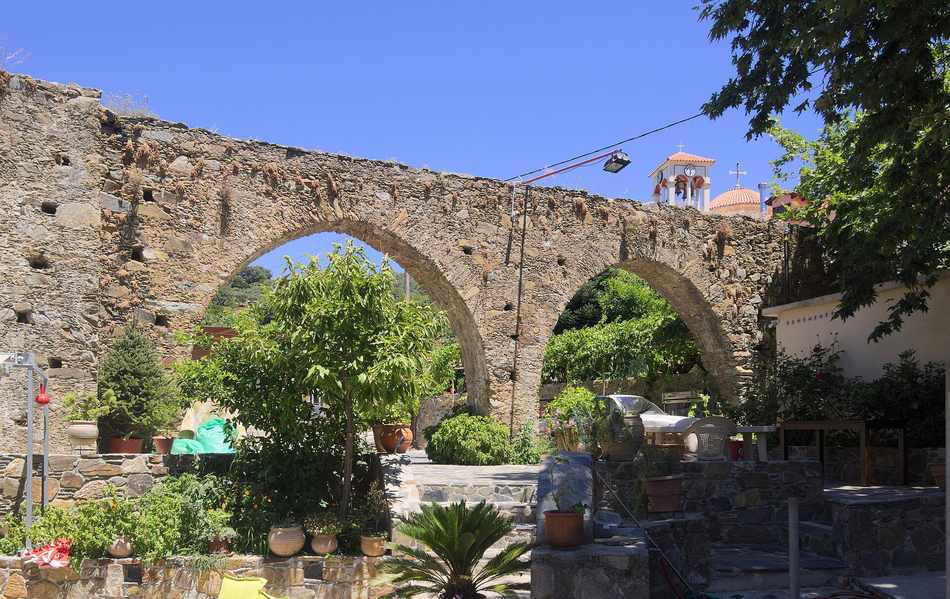
Elos stands among chestnut and plane trees in the mountains of far western Crete, the best known of the nine villages that make up the Enneachora region. This green settlement in the Kissamos area of Chania district offers shade, running water and old stone architecture far from the coastal crowds. The village celebrates its famous chestnuts each autumn with a festival of local food, wine, raki, music and dancing. Byzantine churches with frescoes and the ruins of a Venetian tower rise among the greenery. Travellers driving the scenic mountain road between Kissamos and the southwest beaches find Elos a cool, traditional stop with lived-in character. Discover authentic mountain villages with My Greece Tours.
The cool, well-watered valleys surrounding Elos grow chestnuts, walnuts, cherries and olives under the shade of ancient trees. Springs feed the village streets and create a microclimate distinct from the dry coastal plains below. Old stone houses cluster around the central square where locals gather under the plane trees. The sections below cover the chestnut heritage, Byzantine monuments, natural setting, seasonal festivals and practical travel information for this mountain village. Visitors heading to Elafonisi or Kedrodasos beaches pass through Elos on the winding mountain route. Our Crete travel guide helps you plan stops in traditional inland communities.
Why is Elos in Crete famous for chestnuts?
The cool mountain climate and abundant spring water around Elos create ideal conditions for chestnut cultivation. The village has grown chestnuts for generations and celebrates them each autumn with a festival featuring local food, wine and music.
Chestnut trees thrive in the well-watered valleys surrounding Elos, benefiting from the reliable springs and cooler temperatures at this elevation. The village has built its agricultural identity around chestnut cultivation, supplying markets across the island with the prized nuts each autumn. Locals harvest the chestnuts in October and November, roasting them over open fires and incorporating them into traditional sweets and savoury dishes. The annual chestnut festival draws visitors from across the region to taste roasted chestnuts, sample local wine and raki, and enjoy traditional music and dancing in the village square. Plane trees shade the festivities while vendors sell chestnut products, honey, olive oil and other mountain produce.
The chestnut groves around Elos represent a distinct agricultural landscape in western Crete, where most cultivation focuses on olives and grapes. Walnut trees, cherry orchards and vegetable gardens also flourish in the fertile valleys, creating a patchwork of green cultivation terraces. The village maintains traditional farming methods passed down through generations, with families tending the same groves their ancestors planted. Visitors exploring things to do in Crete find Elos offers a window into mountain agriculture and seasonal rhythms. The chestnut harvest marks the transition from summer to autumn, celebrated with communal roasting and shared meals that reinforce village bonds and welcome guests into local traditions.
What Byzantine churches and historical sites stand in Elos?
Byzantine churches with preserved frescoes dot the village and surrounding countryside. The ruins of a Venetian tower stand among the greenery, evidence of the strategic importance this mountain settlement held during the Venetian occupation of Crete.
The Byzantine churches in and around Elos preserve frescoes that date back centuries, offering glimpses of religious art traditions that flourished across Crete during the medieval period. These small stone chapels blend into the landscape, their whitewashed walls and terracotta roofs visible among the chestnut and olive groves. The frescoes inside depict saints, biblical scenes and religious narratives in the distinctive style of Cretan iconography. The Venetian tower ruins testify to the military and administrative networks that once controlled the mountain passes and agricultural valleys of western Crete. Stone walls and foundations remain visible, overtaken by vegetation but still recognizable as defensive architecture from the centuries of Venetian rule.
Old stone houses built in traditional Cretan mountain style line the narrow streets of Elos, their thick walls and small windows designed to maintain cool interiors during summer and retain warmth in winter. Arched doorways, wooden balconies and stone staircases reflect construction techniques adapted to the local climate and available materials. The village layout follows the contours of the hillside, with houses stepping down the slope and connected by cobbled pathways. Visitors travelling from Kissamos toward the southern beaches find Elos preserves architectural character increasingly rare in coastal settlements. The combination of Byzantine religious heritage, Venetian military remains and traditional domestic architecture creates layers of history visible in the built environment.
Where is Elos located in the Enneachora region of Crete?
Elos lies in the mountains of far western Crete, in the Kissamos area of Chania district. The village is the best known of the nine settlements that form the Enneachora, positioned on the scenic mountain road connecting the north coast to southwestern beaches.
The Enneachora region takes its name from the nine villages scattered across the mountains between Kissamos and the southwest coast. Elos occupies a central position among these settlements, benefiting from the convergence of mountain springs and the fertile valleys that radiate from the village. The elevation provides cooler temperatures than the coastal plains, creating a distinct microclimate that supports the chestnut groves and other crops requiring more water and moderate heat. The mountain road that passes through Elos connects the port town of Kissamos on the north coast with the beaches of Elafonisi and Kedrodasos on the southwest shore, making the village a natural stopping point for travellers crossing the western peninsula.
The journey from Kissamos to Elos climbs through olive groves and scrubland before entering the greener, more forested landscape of the Enneachora mountains. The road winds through valleys and over ridges, offering views of the surrounding peaks and glimpses of the sea in the distance. Continuing south from Elos, the route descends toward the coast and the famous pink sands of Elafonisi beach. The village serves travellers who want to break the drive with a stop in a traditional mountain community, offering shade, refreshment and a contrast to the coastal landscapes. The location makes Elos accessible as a day trip from coastal bases or as a waypoint on longer explorations of western Crete.
What makes Elos different from coastal villages in Crete?
Elos offers shade from chestnut and plane trees, running water from mountain springs, and cool temperatures distinct from the hot, dry coast. The village maintains traditional inland character with agriculture, old architecture and seasonal festivals focused on local harvests rather than tourism.
The abundance of water defines Elos and sets it apart from the arid landscapes common across much of Crete. Springs emerge from the mountainside and flow through the village, creating a soundscape of running water and supporting the lush vegetation that shades the streets and squares. Plane trees with massive trunks spread their canopies over gathering places, providing natural cooling and creating microenvironments where temperatures remain comfortable even during summer heat. The greenery extends into the surrounding valleys where chestnut groves, walnut trees and cherry orchards flourish in conditions impossible at lower elevations.
This verdant setting contrasts sharply with the olive-dominated landscapes and bare hillsides typical of coastal areas, offering visitors a different face of Cretan nature and agriculture.
The rhythm of life in Elos follows agricultural cycles rather than tourist seasons, with the chestnut harvest, olive pressing and wine making marking the passage of the year. Locals maintain connections to the land through cultivation, animal husbandry and the production of traditional foods that supply family tables and local markets. The village architecture reflects mountain building traditions, with stone construction, pitched roofs and layouts designed for the cooler, wetter climate. Travellers based in Chania or the coastal resorts find Elos provides insight into inland Cretan life, where communities developed around springs, forests and mountain passes rather than harbours and beaches. The lived-in character and working landscape offer authenticity increasingly rare in heavily touristed coastal settlements.
When should travellers visit Elos and the Enneachora villages?
Autumn brings the chestnut festival and harvest season, with comfortable temperatures and the landscape at its greenest after summer. Spring offers wildflowers and flowing water, while summer provides cool mountain refuge from coastal heat. Winter can bring rain and occasional cold.
The chestnut festival in autumn represents the peak cultural event in Elos, drawing visitors to celebrate the harvest with roasted chestnuts, local wine, raki and traditional music. The exact timing varies with the harvest, typically falling in October or November when the nuts ripen and fall from the trees. Autumn temperatures in the mountains remain comfortable for walking and exploring, with warm days and cool nights that invigorate after the summer heat. The landscape retains its green character from the previous winter’s rains, and the chestnut groves turn golden as leaves change colour. Spring brings wildflowers to the valleys and hillsides, with abundant water flowing from the springs and streams running full after winter precipitation.
The mild temperatures make spring ideal for hiking and exploring the countryside around the village.
Summer visitors find Elos offers refuge from the intense heat of the coast, with shade from the trees and cooler mountain air providing relief during the hottest months. The village serves as a pleasant stop for travellers driving between Kissamos and the southern beaches, offering tavernas, cafes and the chance to rest in the shade before continuing the journey. Winter brings rain to the mountains and occasional cold temperatures, with the village taking on a quieter character as locals focus on indoor activities and seasonal tasks. Travellers interested in hidden gems in Crete find Elos rewards visits across the seasons, each offering distinct experiences of mountain village life.
The combination of natural beauty, cultural events and traditional character makes the Enneachora region worth exploring beyond the standard coastal itineraries.
Frequently Asked Questions
How do I reach Elos from the main towns in western Crete?
Elos lies approximately twenty-three kilometres south of Kissamos on the mountain road toward Elafonisi and the southwest coast. The drive from Kissamos takes around thirty minutes, climbing through olive groves before entering the greener Enneachora landscape. From Chania, the journey covers roughly fifty kilometres and takes about an hour, heading west through Kissamos before turning south into the mountains. The road is paved but winding, with curves and elevation changes requiring careful driving. No public bus service connects Elos with coastal towns on a regular schedule, making a rental car or organized tour the practical options for visitors.
The village lies on the route between the north coast and Elafonisi beach, so travellers heading to the famous pink sands naturally pass through or near Elos. The mountain road offers scenic views and makes the journey itself part of the experience, with the landscape changing from coastal plains to forested valleys as you climb toward the village.
What can I eat and drink in Elos?
Tavernas in Elos serve traditional mountain dishes featuring local ingredients from the surrounding valleys and farms. Chestnut-based specialties appear on menus during autumn and winter, including roasted chestnuts, chestnut soup and sweets incorporating the local harvest. Grilled meats, stews and vegetable dishes prepared with olive oil, herbs and seasonal produce reflect the agricultural bounty of the region. Local wine and raki accompany meals, produced from grapes grown in the Enneachora villages and distilled according to traditional methods. Visitors interested in Cretan food find mountain cuisine differs from coastal offerings, with more emphasis on meat, dairy products from local flocks, and the chestnuts and walnuts that thrive in the cooler climate.
The village produces honey from bees that forage in the chestnut groves and wildflower meadows, offering a taste distinct from thyme honey common at lower elevations. Fresh spring water flows freely in the village, and locals take pride in the quality and abundance of their water sources.
Can I stay overnight in Elos or do I need to base elsewhere?
Elos offers limited accommodation compared to coastal resorts, with a few small guesthouses and rooms available for rent in traditional stone houses. The village suits travellers seeking quiet mountain lodging and authentic village atmosphere rather than resort amenities. Most visitors base themselves in Kissamos, Chania or the coastal settlements and visit Elos as a day trip or stopping point while driving to the southern beaches. The limited accommodation means advance booking is advisable, particularly during the autumn chestnut festival when the village attracts more visitors. Staying overnight allows you to experience the village in the evening and early morning when day-trippers have departed and locals gather in the square.
The cool mountain nights provide comfortable sleeping conditions during summer months when coastal areas remain hot and humid. The village has tavernas and cafes but limited nightlife or entertainment beyond conversation and traditional music during festivals. Basing in Elos works well for travellers who want to explore the Enneachora region, hike in the surrounding mountains and experience the slower pace of inland village life away from tourist crowds.