
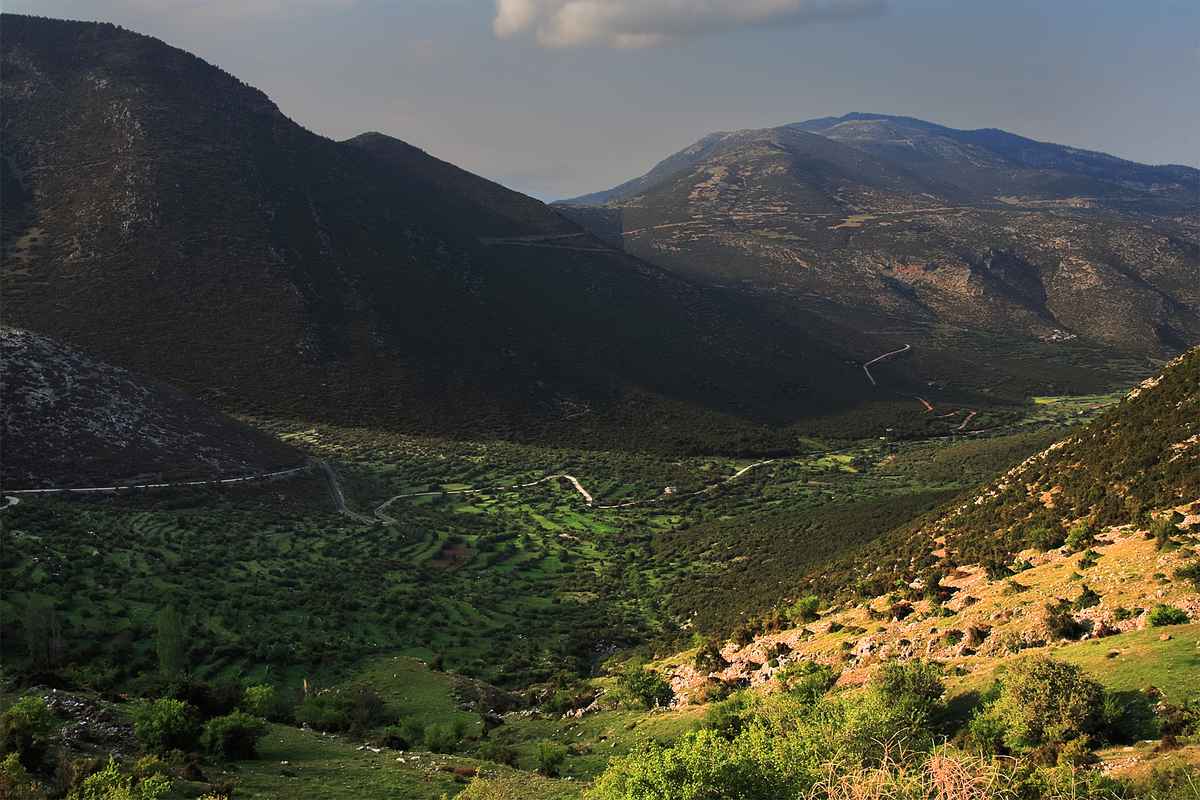
Damarionas sits in the heart of the Tragaea valley on Naxos, a green mountain village wrapped in olive groves and vineyards. Stone lanes climb between old houses, springs feed shaded gardens, and watermills mark the slopes above the road. The village keeps a working pottery tradition and a handful of Byzantine churches tucked among the terraces. Travellers reach it on the central highland road that links the coast to the interior, passing quiet squares and tavernas along the way. The pace stays slow and the mood stays authentic. This guide maps the village and its surroundings so you can plan an unhurried day here with My Greece Tours.
Damarionas rewards travellers who want the older, greener face of the island. Our Naxos travel guide places the village inside the Tragaea, the fertile upland basin that feeds much of the island. The sections below cover where the village sits, its pottery and craft heritage, the watermills and springs, the churches and stone architecture, and the tavernas and walks that fill an afternoon. Each part connects the village to nearby settlements and to the wider highland network, so a stop here reads as part of a larger route rather than a detour.
Where is Damarionas on Naxos?
Damarionas lies in the central Tragaea valley of Naxos, just south of Halki, roughly 16 kilometres from Naxos Town. The main highland road passes its green edge, linking the western coastal beaches with the eastern mountain interior beyond.
The village occupies a green shelf in the Tragaea, the wide upland basin that forms the agricultural core of Naxos. Mount Zas rises to the south, and terraced slopes of olive and vine surround the houses on every side. Damarionas sits at about 300 metres, high enough to stay cool through summer afternoons. The central road that crosses the island runs close by, so drivers pass the village on the way between the west-coast beaches and the eastern mountain roads. This position makes it an easy stop rather than a dead-end. Neighbouring Halki, the old commercial heart of the valley, stands a short drive north.
The setting explains the village character: water, shade, and farmland shape daily life more than tourism does, and the greenery marks a clear contrast with the arid coast.
Damarionas anchors the middle of a cluster of Tragaea settlements that share the same fertile floor. The Halki district to the north holds the citron distillery and the marble squares that once ran the valley economy. To the south the road climbs toward Filoti, the largest mountain village and the gateway to Mount Zas. Damarionas reads best as one link in this chain, reached along lanes lined with plane trees and stone walls. Reaching the village by car takes under half an hour from the port, and the drive itself passes through the greenest country on the island.
Buses serve the main highland route, though a rental gives far more freedom to pause at each square, spring, and church along the quiet valley floor as you go.
What is the pottery and craft tradition of Damarionas?
Damarionas carries a long pottery and ceramics tradition rooted in the local clay and the valley’s steady water supply. Family workshops once shaped everyday vessels, and a line of craftspeople still keep the wheel and kiln alive today here.
Clay from the Tragaea slopes and steady spring water gave Damarionas the raw materials for a working ceramics trade. Potters here produced storage jars, cooking pots, and water vessels used across the valley farms. The craft passed through families, and older houses still hold the marks of former workshops and drying yards. This heritage sits within a wider island story of hand-made goods, from woven textiles to marble and stone. Visitors curious about local production can trace the same thread through the villages of Naxos, each with its own trade. Damarionas stands out for keeping the potter’s craft close to the surface of village memory.
A stop here pairs well with the food traditions of the valley, where the same clay vessels once held oil, cheese, and wine from the surrounding terraces above.
The ceramics tradition ties directly to the land and its harvests. Olive oil, wine, and cheese from the Tragaea needed vessels for storage and transport, and the potters of Damarionas supplied them. This link between craft and produce runs through the whole valley economy. Travellers who enjoy the craft side of the village often extend the theme into local flavours, which our guide to Naxos food and wine sets out in full. The vineyards on the slopes above the village still yield grapes for household wine, and the olive groves press oil each autumn. Watching how clay, water, and farmland connect gives the village a coherence that a coastal resort cannot match.
The pottery here is not a museum exhibit but a surviving strand of an agricultural way of life.
What watermills and springs can you see in Damarionas?
Damarionas is fed by strong mountain springs that once powered a set of stone watermills on the slopes above the village. The water still runs through channels into gardens, fountains, and shaded corners around the settlement today.
Abundant water sets Damarionas apart from most Cycladic villages. Springs on the higher ground feed channels that thread through the terraces and into the heart of the village. These same flows once turned the wheels of stone watermills that ground the valley’s grain. Mill structures survive on the slopes, their thick walls and arched openings marking where water once dropped through the works. The greenery you see everywhere, from plane trees to garden plots, depends on this steady supply. Fountains and washing basins along the lanes show how central water was to daily routine. Walking uphill from the square, you follow the sound of running water as much as any marked path.
This hydrology explains why the Tragaea, and Damarionas within it, became the granary and orchard of the whole island.
The watermills tell a story of self-sufficiency that shaped the whole valley. Grain grown on the terraces was milled locally, and the flour fed the villages without reliance on the coast. Damarionas shared this network with neighbouring settlements, each drawing on the same spring-fed streams. The nearby village of Moni sits within the same watered uplands and rewards a linked visit. Tracing the channels and mills gives a clear picture of how mountain communities survived long before roads and pumps arrived. The springs also account for the cool microclimate, a welcome relief on hot days. The old mills stand quiet now, but their placement along the water’s course remains easy to read.
This landscape of moving water is one of the village’s most distinctive features and a highlight of any walk here.
Which churches and stone architecture define the village?
Damarionas holds a cluster of small Byzantine and post-Byzantine churches set among stone houses and terraces. Whitewashed chapels, carved lintels, and narrow paved lanes give the village a compact, historic core worth exploring slowly on foot.
The built fabric of Damarionas reflects centuries of valley life. Houses of local stone line lanes too narrow for cars, with arched doorways and small courtyards shaded by vines. Byzantine and later chapels stand among them, their plain exteriors hiding older frescoes and icons in places. This architecture belongs to the wider Tragaea, a valley often called an open-air museum of Byzantine churches. Damarionas contributes its own quiet examples, reached along stepped paths that reward slow exploration. The stonework, from field walls to church apses, uses the same materials that built the whole upland. Wandering here means climbing gently between levels, catching views over the olive terraces at each turn.
The village core stays residential and unpolished, which keeps its atmosphere honest. A short walk covers the main lanes and squares without any need for a plan at all.
The churches connect Damarionas to a religious landscape that spreads across the whole basin. Nearby Sangri holds some of the finest Byzantine chapels and the ancient Temple of Demeter, and the same tradition of stone building runs through both areas. In Damarionas the scale stays intimate: modest naves, simple bell gables, and worn thresholds mark generations of use. The lanes between them follow the contour of the slope, so the village layout itself records how people adapted to the terrain. Stone thresholds, marble spouts, and old ovens survive in corners throughout the settlement. This continuity of material and form gives the place a strong sense of age.
Exploring the churches on foot is the surest way to feel the depth of history that the Tragaea carries beneath its green surface.
Where can you eat and walk around Damarionas?
Damarionas offers a handful of village tavernas serving Tragaea produce, and its lanes open onto walking routes through the green valley. Trails link it with Halki, Filoti, and the springs above, ideal for a slow afternoon on foot.
The tavernas of Damarionas keep to the valley kitchen: local cheese, olive oil, garden vegetables, and slow-cooked meat. Tables sit under plane trees or in small squares where village life carries on around you. Meals here lean on ingredients grown within sight of the table, which matches the whole spirit of the place. The greenery and shade make the village a pleasant lunch stop between coast and mountain. Walking routes fan out from the settlement along old footpaths, following spring channels and terrace edges. A gentle loop links Damarionas with the churches and mills on the slopes above, while longer paths reach toward the neighbouring Tragaea villages. The absence of crowds gives these walks a genuine calm.
This combination of honest food and quiet trails is the core reason travellers seek out the village in the first place.
Longer routes tie Damarionas into the walking network that crosses the Tragaea floor. Paths lead north to the squares of Halki and south toward the foot of Mount Zas above Filoti, passing chapels, springs, and vineyards on the way. These trails follow lines walked for centuries, well shaded by plane trees and cool even in the summer heat. A day here can combine a village lunch, a short church walk, and a long stretch of valley path without any rush at all. The scale stays human throughout, with each turn revealing terraces, running water, and old stone.
Damarionas suits travellers who prefer slow discovery on foot over crowded viewpoints, and it fits neatly into a wider highland itinerary across the green valley. Plan your visit and tours through our Naxos travel guide.
Frequently Asked Questions
How do you get to Damarionas from Naxos Town?
Damarionas lies about 16 kilometres from Naxos Town, reached by the central highland road that crosses the island toward the Tragaea valley. The drive takes roughly 25 to 30 minutes by car and passes through steadily greener country as you climb inland. A rental car gives the most freedom, letting you pause at the squares, churches, and springs of the neighbouring villages along the way. Public buses serve the main highland route between the port and the mountain settlements, stopping near the larger villages of Halki and Filoti, from which Damarionas sits a short distance off. The road itself forms part of the appeal, winding between olive terraces, plane trees, and stone walls.
Damarionas sits just south of Halki, so a visit pairs naturally with the old commercial centre of the valley. Reaching the village fits easily into a half-day loop through the central Naxos highlands and its neighbouring green settlements.
What is Damarionas known for compared with other Tragaea villages?
Damarionas stands out for its green setting, its watermills and springs, and its surviving pottery tradition. The village sits lower-key than Halki or Filoti, which draw more visitors, and this keeps its atmosphere quiet and authentic. Abundant spring water feeds gardens, fountains, and the old mills on the slopes above, giving the settlement a lushness rare in the Cyclades. The ceramics heritage, rooted in local clay, ties the village to a working craft rather than a tourist showpiece. Stone lanes, Byzantine chapels, and terraced groves complete the picture of a farming community shaped by land and water.
The Tragaea as a whole is famed for its Byzantine churches and fertile soil, and Damarionas contributes a modest, honest share of both traditions. Travellers who value calm, greenery, and traditional life over resort amenities find the village a genuinely rewarding stop within the wider highland cluster of central Naxos and its surrounding green valley.
Is Damarionas worth visiting for a day trip?
Damarionas rewards travellers who want an authentic, unhurried side of Naxos away from the beaches. A visit suits a half-day or a relaxed full day, combining a village lunch, a short walk to the churches and mills, and a stretch of valley footpath. The green setting and running water make it a cool retreat on hot afternoons, and the slow pace offers a genuine change from the coast. The village works best as part of a wider Tragaea loop, linked with Halki to the north and Filoti to the south, so you can explore several highland settlements in one outing. Food is simple and local, walks are gentle and shaded, and the atmosphere stays quiet throughout the day.
Travellers seeking crowded sights or nightlife should look elsewhere, but those drawn to craft, history, and landscape find Damarionas among the most characterful villages of the central highlands. It fits neatly into any inland Naxos itinerary you build.