
Amitis Beach sits on the north-northwest coast of Naxos, near the village of Galini, a long ribbon of pale sand and fine pebble washed by clear open-sea water. The shore stays wild and largely undeveloped, backed by low dunes and a small seasonal wetland that colours the flat land behind the beach. Amitis faces the meltemi head-on, so its character swings between glassy calm and lively surf within a single day. Walkers, swimmers seeking space, and travellers who prefer raw coast over sunbeds return here often. This guide maps the sand, the water, the wind, the wildlife, the access, and the neighbouring bays, planned for real days out with My Greece Tours.
Amitis rewards travellers who read the weather and time their arrival, and it pairs naturally with a wider island plan drawn from our Naxos travel guide. The beach carries no organised strip of tavernas or loungers, so preparation shapes the whole visit. The sections below cover what the beach actually is, how the sand and water behave, when the wind favours a swim, the dune-and-wetland habitat and its birds, the drive and parking, and the closest alternative shores worth combining into one north-coast route.
What is Amitis Beach on Naxos?
Amitis is a long, wild north-coast beach near Galini on Naxos, mixing pale sand with fine pebble, backed by dunes and a small wetland. It stays largely undeveloped, open, and exposed to the sea.
Amitis stretches for roughly 800 metres along the north-northwest shore of Naxos, one of the largest undeveloped beaches on the island. The name appears locally as Ammitis or Amiti, all pointing to the same broad bay below Galini. No hotel strip, no sunbed rows, and no beach bar frame the sand, which keeps the setting raw and quiet even in high summer. The beaches of Naxos range from organised family shores to bays like this one, and Amitis anchors the wild end of that spectrum. Space defines the experience here. Groups spread far apart, footprints outnumber people, and the horizon carries open water rather than moored boats.
The beach suits swimmers, walkers, and photographers who value emptiness over amenities.
Geography sets Amitis apart from the busy south-coast strands. The bay opens toward the north, so it collects the full Aegean swell rather than the sheltered lagoon water found near Plaka beach on the west coast. Low hills and farmland roll down behind the shore, giving way to dunes at the sand line. A shallow gradient means the water stays waist-deep for a good distance out, which helps swimmers on calm mornings. The seabed mixes soft sand with patches of pebble and small stones, so water shoes ease the walk to deeper water.
Amitis reads as a natural coast rather than a resort beach, and that raw quality is precisely why walkers and independent travellers seek it out across the north of the island.
What are the sand and water like at Amitis?
Amitis has pale, coarse sand blended with fine pebble and small stones, sloping gently into clear, open-sea water. The bottom stays shallow for metres out, and clarity is high on calm, wind-free days.
The sand at Amitis runs pale gold to near-white, coarser than the powder found on sheltered southern bays. Fine pebble and small rounded stones mix through it, thicker near the waterline and along the tide-worked edge. This texture drains fast and stays firm underfoot, which makes the beach comfortable for long walks from end to end. Water shoes help across the pebbled stretches near the shore break. The gradient is gentle, so the water deepens slowly and holds a wadeable depth well out from the sand. Colour shifts from pale turquoise over the sandy shallows to deeper blue where the seabed drops.
The open exposure keeps the water fresh and cool, a welcome contrast to warmer, stiller southern shallows during peak summer heat.
Clarity at Amitis is excellent on calm days, when the flat sea lets you see the rippled sand bottom several metres down. Wind changes that quickly. A stiff meltemi stirs the shallows, lifts sand and pebble into the water column, and turns the clear turquoise cloudy within an hour. Timing the visit for a settled morning delivers the best swimming and snorkelling. The open bay carries no rock reef of note, so the draw is space and clean water rather than marine structure. Compared with the calmer sands at Abram beach further along the coast, Amitis feels more exposed and elemental.
Swimmers who enjoy a little movement in the water thrive here, while those wanting mirror-flat conditions should watch the forecast and arrive before the afternoon breeze builds.
When should you visit Amitis, and how windy does it get?
Visit Amitis on calm mornings or on days the meltemi drops, ideally June, early summer, or September. The north-facing bay catches strong summer winds head-on, so afternoon gusts often build waves and chop.
The meltemi, the dry north wind of the Aegean, governs Amitis through July and August. The bay faces almost directly into it, so a windy day turns the beach into a surf-swept, sand-blown shore that empties fast. That same exposure delivers dramatic waves and a cooling breeze for walkers who enjoy raw coast. Reading a marine forecast the night before pays off. Calm windows open most reliably in the early morning, before the meltemi strengthens through midday and peaks in the afternoon. Wind-free spells arrive more often in June and September, the shoulder months when the Aegean settles and crowds thin across the island.
Those two months give the finest balance of warm water, clear air, and swimmable calm at this north-coast bay.
Shelter is limited once the wind rises, since the flat dune land offers little cover from blown sand. Bringing a low windbreak and pinning down towels helps on breezier days. Walkers often prefer Amitis precisely when it blows, because the empty sweep of sand and the crashing sets make a bracing coastal hike. A day plan drawn from the beaches of Naxos can pair Amitis with a sheltered south-coast bay, so you swim wherever the wind allows. Checking conditions before driving out saves a wasted trip. On a settled day the reward is a vast, near-private beach with clean water; on a blowing day it becomes a wild, wind-scoured landscape that photographers actively chase across the north coast.
What is the dune and wetland setting, and what birdlife lives there?
Amitis is backed by low sand dunes and a small seasonal wetland, a rare undeveloped coastal habitat on Naxos. The reeds and shallow water draw migrating and resident birds, especially in spring and autumn.
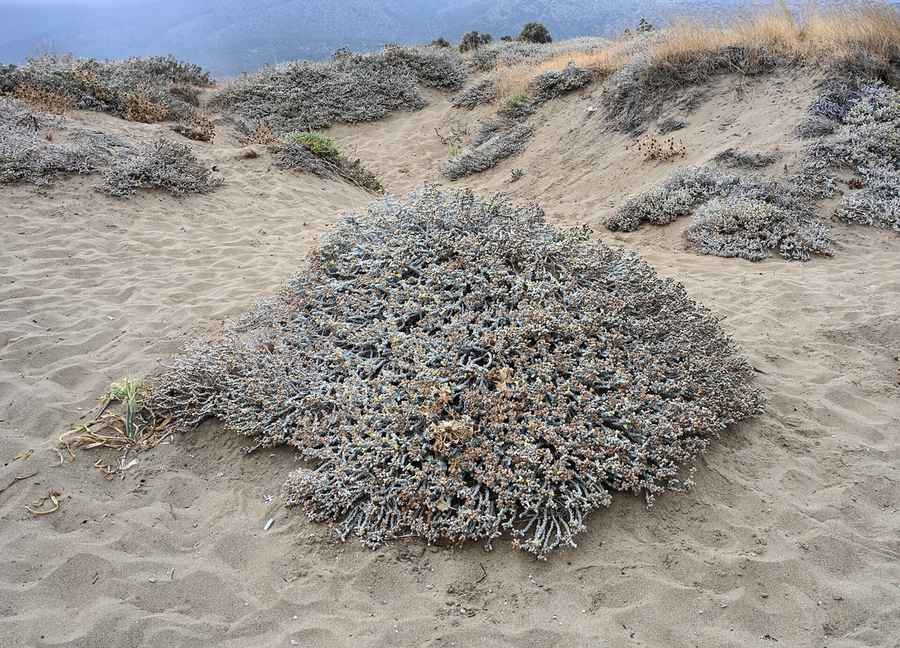
Behind the sand at Amitis lies a belt of low dunes stabilised by hardy coastal plants, sea daffodils, marram-type grasses, and salt-tolerant shrubs. These dunes are fragile, so walkers stay on established sandy paths rather than trampling the vegetation that holds the sand together. Beyond the dune line sits a small seasonal wetland, a flat, reed-fringed depression that fills after winter rain and shrinks through the dry summer. This pairing of dune and wetland is uncommon on Naxos, where most coast meets farmland or rock directly. The habitat supports a quiet band of biodiversity that beach visitors tend to overlook.
The mix of freshwater, brackish edges, and open sand creates feeding and resting ground for wildlife that depends on undisturbed coastal margins across the Cyclades.
The wetland draws birdlife, especially during the spring and autumn migration windows when the Cyclades sit on flyways between Africa and Europe. Herons, egrets, waders, and small passerines use the reeds and shallow pools as a rest stop. Early morning is the best time to watch, when light is soft and activity peaks before the heat. Keeping distance and moving slowly protects both the birds and the fragile ground. This natural richness gives Amitis a second identity beyond swimming, as a small nature spot on an island better known for its sand and villages.
Travellers exploring inland from bases like Apollonas can fold a quiet wetland stop into a wider north-coast day, adding a layer of habitat and birdwatching to a straightforward beach trip.
How do you reach Amitis, and which beaches lie nearby?
Reach Amitis by car from Naxos Town on the north-coast road toward Galini and Apollonas, roughly 30 to 40 minutes, then a short track to the sand. Abram and other north bays lie close by.
Amitis sits off the main coastal road that runs north from Naxos Town toward Apollonas, near the village of Galini. Driving is the practical way in, taking roughly 30 to 40 minutes from town along a paved route with sea views for much of the way. A signed turn and a short unpaved track lead down to the sand, where informal roadside parking sits near the beach. No bus service drops directly at the shore, so a rented car or scooter makes the visit far easier. Fuel up and carry water, since the immediate area has no shops or tavernas at the beach itself.
A base in Naxos Town puts Amitis within an easy half-day loop combined with lunch in a coastal village on the way back.
The north coast strings quiet bays within a short drive of Amitis, which makes a beach-hopping day easy to plan. Abram beach lies close along the same coast, offering a small taverna and calmer, more sheltered swimming when the meltemi blows at Amitis. Continuing north reaches Apollonas, the fishing village with its famous unfinished kouros statue and a pebbled bay. The inland village of Eggares, with its old olive press, sits near the route and adds a cultural stop. This cluster lets you match the beach to the day’s wind and mood across one drive. Plan your visit and tours through our Naxos travel guide.
Frequently Asked Questions
Is Amitis Beach suitable for families with children?
Amitis suits families on calm, wind-free days, though it demands more preparation than an organised resort beach. The shallow, gently sloping seabed lets small children wade safely far out on a settled morning, and the vast open sand gives kids room to run and dig. The mix of fine pebble and small stones near the waterline means water shoes protect little feet, so pack a pair for each child. The beach has no lifeguard, no sunbeds, no shade, and no shop or taverna at the sand, so families must bring their own umbrella, water, snacks, and sun protection. The meltemi is the main caution.
A windy afternoon builds waves and blows sand, which unsettles young children quickly, so plan the visit for early morning before the breeze strengthens. On a calm day, with the right kit and an eye on the forecast, Amitis rewards families with a spacious, uncrowded, natural beach that feels a world away from the busier southern strands.
Are there any tavernas, sunbeds, or facilities at Amitis Beach?
Amitis is a wild, undeveloped beach with no organised facilities directly on the sand. There are no sunbeds, no umbrellas for hire, no beach bar, no toilets, and no lifeguard service. This absence of infrastructure is the beach’s defining trait and the reason it stays quiet and natural through even the busiest summer weeks. Visitors bring everything they need: water, food, shade, and sun protection. The nearest reliable services sit in surrounding villages rather than at the shore. Galini lies close by, and the fishing village of Apollonas further north offers tavernas beside its harbour.
Abram beach, a short drive along the coast, has a small taverna and a more sheltered setting, which makes it a natural lunch or fallback stop when Amitis turns windy. Fuel up and stock supplies in Naxos Town before the drive out, since the immediate area around the beach carries no shops. This self-sufficiency is a fair trade for the space, quiet, and clean open water that Amitis delivers on a settled day.
How does Amitis compare with other beaches on Naxos?
Amitis represents the wild, exposed north coast, in contrast to the long organised sands of the west and southwest. West-coast beaches like Plaka and Agios Prokopios offer shallow, sheltered lagoon water, sunbeds, tavernas, and easy bus access, which suits families and first-time visitors seeking convenience. Amitis trades all of that for solitude, raw scenery, and a natural dune-and-wetland backdrop found on few other island beaches. Its north-facing bay catches the meltemi head-on, so it swims best on calm mornings, while the sheltered western shores stay swimmable in more conditions. Compared with nearby Abram beach on the same coast, Amitis is larger, wilder, and less sheltered, whereas Abram adds a small taverna and calmer water.
Travellers who want amenities and reliable calm choose the west; those who want space, quiet, and a coast that feels untouched choose Amitis. The smartest plan carries both, matching the beach to each day’s wind and mood across a wider tour of the island’s varied shores.